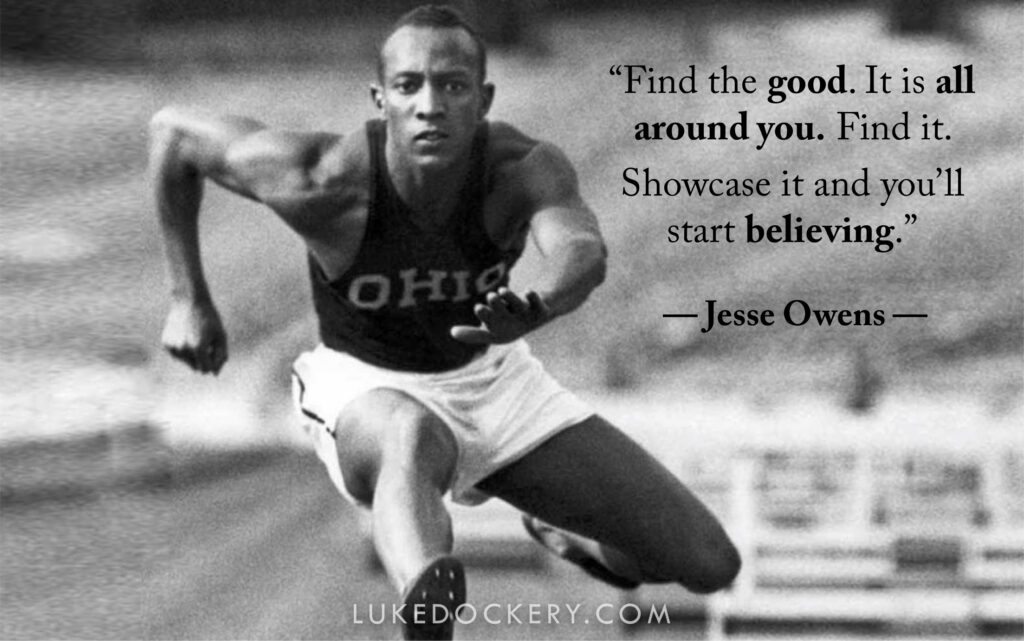
The online journal of Luke Dockery

Category: Reading (Page 1 of 33)

Reflections on 25 Youth Ministry Summers

In August, I wrapped up my 20th year of youth ministry. When you take into account summer internships from my college days, though, that’s actually 25 years of youth ministry summers. As I am currently on sabbatical[1] from both ministry and teaching responsibilities, I have had some much-appreciated time for reflection on this ministry milestone.

What follows is, by definition, somewhat self-indulgent—these are reflections on my own life in ministry after all. I process things best by writing, though, and additionally, thought this might be of interest for those who know me, might be encouraging for others in youth ministry, and who knows, maybe my kids will read this one day!

Overview

It’s hard to believe now, but I never intended to go into ministry. My dad was a preacher when I was growing up. He was (and still is) an excellent preacher and I have the utmost respect for him, but I also saw the way that he carried stress from ministry and I didn’t want that in my life. I ignored promptings and encouragement from others to consider ministry and ultimately ended up double majoring in International Business and Spanish (I had no idea what I wanted to do). I did need work in the summer though, and the summer after my freshman year of college, I began doing youth ministry internships (the first of which I was offered based on my father’s reputation).

It’s not like I was immediately hooked on youth ministry from my first internship, and there were certainly some twists and turns in my journey, but the simplified summary is that I gradually began to discern a calling to ministry. What began as summer jobs to help me earn some money until my “real” career started actually ended up as my real career. Chronologically, that career has looked like this:

Youth Ministry Internships:

  • Farmington Church of Christ (2002)
  • Center Street Church of Christ (2003)
  • Farmington Church of Christ (2004–2006)

Youth Ministry (this is where the 20-year clock starts):

  • Farmington Church of Christ (August 2006–May 2019)
  • Cloverdale Church of Christ (June 2019–Present)

Things Change; Things Stay the Same

It’s interesting; a lot has changed in youth ministry over the last 25 years:

  • When I began, I had a flip phone, I hated teaching, I was single, my teens thought of me as a cool older brother, and I had no clue what I was doing (but didn’t realize it at the time).
  • Now, AI is trying to take over the world, teaching Bible class is one of my favorite things, I am married with three wonderful children, my teens think of me as some sort of hybrid uncle/professor/washed up athlete who is decidedly middle-aged and not-so-cool, and I know much more than I once did, but am also aware of how much I don’t know.
  • I spend less time cramming the calendar full of youth events, but the events that we have are much more focused and intentional.
  • I spend less time playing basketball with teens (though I still do!).
  • I spend more time trying to equip parents to disciple their kids.
  • I spend more time investing in younger youth ministers and college students who are training for ministry.

Other things are still very similar:

  • I still find myself sleeping on air mattresses and bunks at student retreats and weekend trips.
  • I still find myself riding roller coasters with students as part of my job (helping nervous students overcome their fear of thrill rides is something of a specialty at this point!).
  • I still find myself feeling so very privileged that I can point teens to Jesus on a regular basis and play a small part in their spiritual journeys.
  • I still love my students.
  • I still hate lock-ins.

Other Things I Might Have Done with My Life

By definition, when you spend your life doing a thing, you necessarily exclude other things that you could have done. I am a youth minister, I feel called to youth ministry, and I don’t regret the path that I have chosen (or, maybe more accurately, that I have found myself on). I have no current plan to leave youth ministry, and intend to do this as long as I believe God is calling me to do so.

At the same time, if I could clone myself, here are some other things I would have liked to do:

  • Remained as a youth minister at my first church: I worked for 13 years at the Farmington Church of Christ (not counting internships; see above), and I deeply love that church. Although our move to Searcy has been a blessing for our family in so many ways and we love the Cloverdale Church, I also wish that I could have stayed and continued this long-tenured and fruitful ministry.
  • Preaching: I used to greatly dislike preaching, but have come to enjoy it. It is such a special opportunity to plan and craft the biblical teaching that a family of believers receives on a regular basis, and it is a profound responsibility. There are aspects of the typical preaching job that are less appealing to me, and I do not currently feel called to preach, but maybe someday.
  • University Professor: It was once my life ambition to be a Bible Professor at Harding University. I now work at Harding part-time as an Adjunct Instructor of Youth Ministry, and I love the combination of doing youth ministry full-time and teaching a class on the side. But I could imagine myself as a full-time teacher in a college setting.
  • Full-Time Author/Publisher/Editor: Two significant side projects that I have devoted time to are Deeper Youth Ministry and Regnum Media. Essentially, both of these are publishing endeavors. Deeper works to provide resources and curriculum for youth ministries, while Regnum seeks to provide high-quality adult Bible class material for churches. I am humbled by the way God has used these efforts to bless so many churches, but cannot help but wonder how much greater the reach could be if I could devote myself to one or both of these efforts full-time.
  • Church Planting: By nature and personality, I tend to have strong views about the way things should be. In this regard, planting a church that I think aligns closely with biblical teaching and pulls from the best of the Christian tradition is something that has appealed to me for many years. Dispositionally, though, I think I would make a terrible church planter.
  • Associate Minister: I love congregational ministry and in addition to youth ministry or preaching, could see myself in some sort of Associate or “Third Minister” role (Education, Involvement, Administrative). In 20 years of ministry I have had opportunity to dabble in lots of different kinds of ministry and grow as an administrator. The combination of not having to leave my family for youth trips or receive the spotlight attention of preaching makes a role like this appealing.
  • Medicine/Medical Research: This is totally different from all the rest! I was always a really good student in school, but enjoyed subjects like history, geography, literature, and writing so much that I never really considered going into math or science fields. Now, having a daughter with a significant genetic illness has changed my perspective. Part of me wishes that I had stewarded the gifts God has given me differently and gone on to practice medicine or some sort of research that seeks to alleviate the suffering of people.
  • Second Baseman for the Atlanta Braves: Obviously.

A Special Summer

This summer, my 25th in youth ministry, was a special one. It was not easy, or always smooth. I like to tell my youth ministry students that some youth ministers live for the summer, and others hope to be alive at the end of the summer; I belong to the latter group! I enjoy extra time with my youth group students and some of the special things we get to do when they are out of school, but summer is also exhausting, it requires me to be absent from my family more than I would like, and it disrupts my regular routines that I have for the rest of the year (and miss when they are gone!).

It was special because we had a good summer doing the significant things that happen in a youth ministry summer: I got to work with and invest in two great interns, we got to go to camp, we got to host an outreach camp for kids in our community, we got to plug our teens into meaningful service and intergenerational connection, and we got to equip parents to disciple their own kids. All of these are great.

Additionally, there were some personal milestones this summer:

  • With my youth group, I got to summit Mt. Elbert, the tallest mountain in Colorado, and my very first 14er.
  • I learned to swim! People who know me well know that I never learned to swim as a kid, and this has brought me shame for my entire life. A youth group mom and family friend convinced me to let her give me lessons in her pool, and this was one of the greatest gifts of my life. We kept it a secret from the youth group, and surprised them at a pool party. When they saw me swim across the pool for the first time, I came up out of the water and they were all cheering—it was a special memory. (Note: I am still not good at swimming, and have a lot of work to do to improve. But I am in a fundamentally different category than I have been in for my entire life.)
  • I published another book, my first attempt at a devotional book.

Gratitude

The older I get, the more I am convinced that gratitude is the key to contentment in life. I have much to be grateful for, but as I reflect back on 25 youth ministry summers, here is a partial, imperfect list:

  • My parents, who raised me in faith and modeled a life of ministry for me.
  • A church that took a chance on an 18 year-old kid and kept inviting me back, and elders who gave me space and opportunity to grow and loved me despite my mistakes.
  • Thursday lunches in Fayetteville with my dad, Robb Hadley, and a rotation of others. I never realized it at the time, but these lunches where we would talk about life, ministry, and the challenges and frustrations of ministry (without ever a hint that we might leave ministry despite those challenges and frustrations) were a significant contributor to my longevity in ministry.
  • The excellent training I received at Harding School of Theology.
  • The two preachers I worked with at Farmington: Larry Krudwig and Mike Raine. Larry tried to convince me that I had gifts for ministry early on, but I did not have ears to hear. He also taught me how to deeply love a church. Mike is the most generous man I have ever met, and taught me so much about ministry.
  • Dear friends in Northwest Arkansas who we hated to leave.
  • My friend and current preacher, Karl McLarty, who (without me knowing it) prayed for me to come to Cloverdale to be their youth minister. The prayer of this righteous man availed much, and led to God funneling blessings in my life in new and unexpected ways.
  • My bosses at Harding who allow me to teach youth ministry.
  • The youth ministers I have helped train in class, and especially through internships and apprenticeships at Cloverdale. There are many now working in churches, and I am so proud of them.
  • Generations of youth group parents who have entrusted their kids to me.
  • Dear friends in Searcy, including old college friends that God in His grace has seen fit to bring back together, along with spiritual mentors that I didn’t know I needed.
  • An eldership that sees the value in giving sabbaticals to ministers.
  • My youth group students over the years: “I have no greater joy than to hear that my children are walking in the truth” (3 John 4). Special bonus to those students who have helped me bridge the difficult divide and have become friends in adulthood.
  • My wife Caroline, who has been my greatest encourager, supporter, rebuker, example, and co-worker. Whatever success I have had in youth ministry, she is significantly responsible for.

I have thought a lot recently about the song, “The Goodness of God.” As I reflect on the last 25 years and look at the list above (knowing that there is so much more in addition to this to be grateful for), I am overwhelmed by God’s goodness and benevolence in my life. Looking ahead, perhaps I will have another 25 youth ministry summers. Perhaps I will spend time in one or more of the other career paths I listed above. Either way, I will seek God’s leading and be thankful for His gracious provision. When has He not been faithful?


[1] At Cloverdale, ministers are eligible for sabbaticals after seven years. Our elders are also encouraged to take them. These are intended to be times of rest and renewal where we take a break from regular responsibilities and come back refreshed and ready for continued service. For ministers, we are encouraged to have a project we work on during sabbatical (it’s not just an extended vacation). In my specific case, I am using my 10-week sabbatical to do research and writing on a youth ministry textbook that I hope to publish next year.
The Joy Is Stronger (If I Have Eyes to See It)

Some things that bring me down:

  • AI-generated everything wherever I look
  • Spending time scrolling on social media
  • The division and malice throughout our society
  • When Christians don’t act like Jesus
  • Sickness and death

Some things that bring me joy:

  • Spending time with my wife and kids
  • Reading a good book
  • Baseball
  • When Christians remind me of Jesus
  • The sure hope of resurrection

The joy is stronger, and it is there, all around me, if I have the eyes to see it. Will you join me?

Sober Reflections from Psalm 90

At the end of last year, I purchased a nice, leather-bound Psalter, and I have made a goal of reading through the Book of Psalms each month (a few psalms each morning and evening). I have been loving this practice so far, and as I had hoped, this has been an excellent way of framing my day and helping me to stay more spiritually centered throughout the day.

This morning I read Psalm 90, and was struck by much of it. Here are some selections from this beautiful and poignant psalm:

Lord, you have been our dwelling place in all generations.
Before the mountains were brought forth,
or ever you had formed the earth and the world,
from everlasting to everlasting you are God.

You return man to dust
and say, “Return, O children of man!”
For a thousand years in your sight
are but as yesterday when it is past,
or as a watch in the night.

You sweep them away as with a flood; they are like a dream,
like grass that is renewed in the morning:
in the morning it flourishes and is renewed;
in the evening it fades and withers.

The years of our life are seventy,
or even by reason of strength eighty;
yet their span is but toil and trouble;
they are soon gone, and we fly away.

So teach us to number our days
that we may get a heart of wisdom.
Satisfy us in the morning with your steadfast love,
that we may rejoice and be glad all our days.

I’m sure there is much that could be said from Psalm 90, but I was struck by the way it promotes urgency and humility:

(1) Life is a gift, and it passes quickly. We are here on this earth for such a brief amount of time, and life itself is fragile. That doesn’t mean we should cling to it tightly, desperate lest it slip through our fingers. It is slipping through our fingers regardless! Make the most of it.

(2) If you think you are of great, lasting significance, you are not. We would like to think that we matter a lot, that we will leave a lasting legacy, and that we will be remembered for a long time. For the vast majority of us, this simply isn’t true. Our lives will pass quickly, and within another few generations, we will be forgotten. This numbering of our days should help us to order our lives: we should seek to make a tangible impact on those within our sphere of influence, but always with a view toward eternity, the realm of the God who is from everlasting to everlasting.

Reading and Walking in 2025

One of the (many) strange things about me is that I walk around the auditorium of the church building where I work…a lot. This started back in April 2013, when I started walking laps around the church auditorium while studying or reading. I found this helped me to stay awake when reading late at night, focus better, and also it was a good way to be a little less sedentary while at work.

Each lap around the auditorium was approximately 74 yards:

In 2019, I moved to a new city and began working at a new church with a different-sized auditorium (each lap is now 118 yards).

My 2025 totals decreased somewhat from 2024:

Total Laps in 2025: 7,800 (approximately 118 yards per lap)

Total Distance in 2025: 522.95 miles

Total Distance to date: 6,458 miles

In 2025, my were the equivalent of walking from Stockbridge to Atlanta (to catch a Braves game), then up to Chattanooga, Tennessee, over to Nashville (to see all my Nashville friends), and then down to Birmingham and over to Tuscaloosa, Alabama (to suffer through an Alabama football game with my wife).

The last two years I have aimed for (and failed to reach) 600 miles. In the fall of 2026, I am scheduled to have a sabbatical for several weeks, which means I will be out of the church office more in 2026 and my laps should go down quite a bit (though I will still walk a lot in other places). If I can reach 400 miles this year, I will be pleased with that.

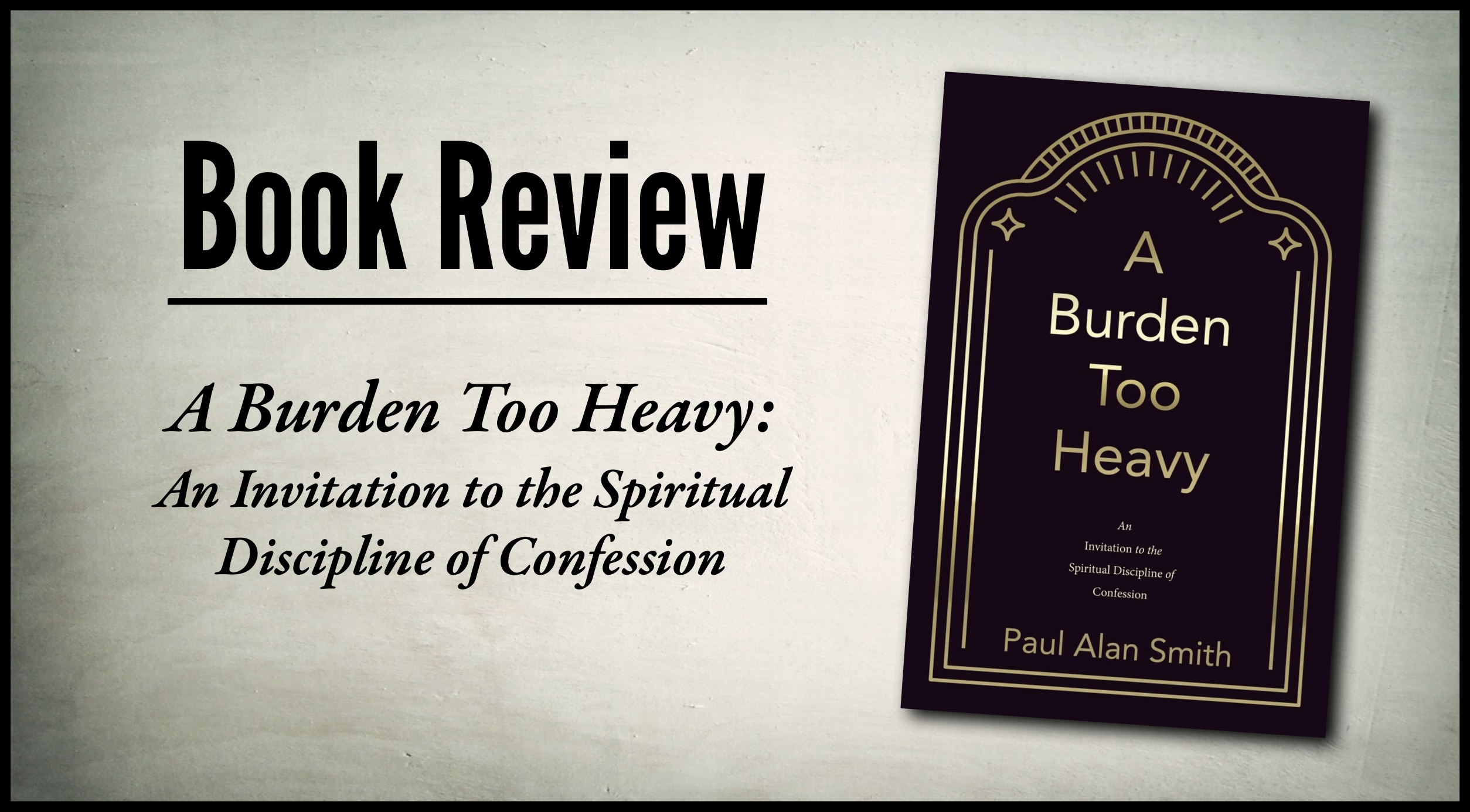
Book Review: A Burden Too Heavy

A while back, I was contacted by Paul Smith, who asked if I would be interested in reading and reviewing a book that he had recently written. I’ve never met Paul in person, but have interacted with him over the years on the web and have enjoyed his writing, so I was happy to agree. And I was not disappointed—his book, A Burden Too Heavy: An Invitation to the Spiritual Discipline of Confession, was an enjoyable read and offers needed corrective teaching to the church.

The word “confession” brings to mind different ideas, so Smith begins by helpfully defining what he means by the term:[1]

I believe the concept of “confession” has at least four applications found in Scripture.…First there are declarative confessions: adoration and praise to God, the declaration of faith in God, and the profession of the truth of a proposition. Second, there is the offering of thanksgiving and gratitude. Third, there is a recognition of physical and spiritual hardship, yet assertion of hopeful faith, through lamentation. Finally, there is a negative connotation of the acknowledgement of sin. In addition to these biblical usages of the word confession, there is another meaning of the word, that of a specific Confession of Faith, which serves to give identity to one assembly of Christians as distinct from others who observe a different confession of faith. (pp. xiv-xv)

Ultimately, what Smith hopes to impress upon the reader is the necessity of developing a confessional lifestyle, characterized by “a pervasive sense of the power of confession and an acceptance of the practices of confession” (xv). The book is structured in three parts.

Smith ministers and lives within the context of Churches of Christ, and those in Churches of Christ are the primary audience of the book, so in Part 1, he offers a brief (but excellent) history of the Stone-Campbell Restoration Movement (chapter 1) followed by an analysis of why the peculiarities that history made Churches of Christs resistant to the spiritual discipline of confession (chapter 2). To put it succinctly, a movement centered on the idea that we could perfectly restore God’s church through human effort led to a pride and arrogance that minimized the transcendence of God and made the admission of mistakes or errors very difficult—both elements of a confessional posture. This section of the book makes evident that the critiques offered by Smith throughout the book come from a place of deep affection for Churches of Christ and admiration for the spiritual ancestors of the Stone-Campbell Movement.[2]

Part 2 is comprised of three chapters. Chapter 3 provides a survey of the Bible, and examines how praise, thanksgiving, lament, and confession of sin are present in Scripture, particularly in the Psalms, but also in other places in the Old and New Testaments. Chapter 4 surveys confessional literature outside of Scripture, from the Early Church Fathers through the Medieval Period and Reformation and up through the Modern and Postmodern periods. Sadly, Churches of Christ have often been guilty of “neglecting the wisdom of the Christian centuries” (80), which means that strong historical emphasis on confessionalism has largely been missed. The historical record, however, is clear:

“The uniform message from many different theological perspectives promoting all forms of confession is an indication that confession has always been a critical component of any Christian theology.” (80)

Chapter 5 takes up the example of Dietrich Bonhoeffer as a case study. Although Bonhoeffer has no direct connection to the Stone-Campbell Movement, this chapter, in addition to being a fascinating survey study of Bonhoeffer in its own right,[3] serves to illustrate what a confessional lifestyle looks like “on the ground,” and how it would benefit Churches of Christ.

Part 3 is where things get practical: what is looks like for the principles emphasized in the book to be played out in life, and Paul addresses this by looking at confessionals in the life of the individual disciple (chapter 6) and the church (chapter 7). Chapter 6 reads much like a standard book on spiritual disciplines, with discussion of Lectio Divina, Meditation Prayer, Ignatius’s Spiritual Exercises, Fasting, and using a Spiritual Director.[4] Chapter 7 looks at how the “acts of worship” can shape a church confessionally, and helpfully examines the connection between confession and the Lord’s Supper, congregational prayer, singing, preaching, and giving.

A Burden Too Heavy ends with a conclusion summarizing the book’s key arguments, and especially why this matters for Churches of Christ:

“The twenty-first-century Churches of Christ share a unique opportunity and problem. The opportunity is to present the vision of men such as Elias Smith, Abner Jones, Barton W. Stone, and Thomas and Alexander Campbell to a culture where the reality of a divided Church is a stumbling block to accepting the gospel of Christ. The problem is that for over two centuries the vision of a restored and united Church has been distorted. It has been distorted by a number of issues, but primary among them has been the lack of a clear, focused and intentional theology of confession. A disposition toward arrogance, numbers acrimonious divisions, and a crippling identity crisis are all results of this lack of a confessional theology.” (146-47)

In addition to the quotations included above, there were several noteworthy quotations throughout the book that I thought were worth sharing (my own thoughts are added in bold):

“…This hermeneutic [command, example, necessary inference] elevated the human deductive reasoning that Thomas Campbell sought to minimize in the Declaration and Address. With the addition of “necessary implication” or “necessary inference” as a part of this restoration hermeneutic, Moses Lard negated the intent of Thomas Campbell to wean Christians off dependency on “the wisdom of men.” (12-13) This point might be a bit technical for some, but as a Restoration History hobbyist, I thought it was profound: basically, within 50 years, a key original tenet of the Restoration Movement was turned on its head.

“Praise is fundamentally an act of confession: a confession that someone or something is higher than the one offering the praise.” (44)

“…Confession is the antidote to the number one impediment of the life of faith—human pride.” (62)

“A church that has no sense of its history cannot own the positive features of its history nor can it confess the errors of its history.” (78) This is such a good point—when we don’t know our history, we truly do not know who we are. We can neither draw from our strengths or learn from our weaknesses.

“…If a preacher is unable to address his own joy and thanksgiving, as well as his doubts and fears, in the most intimate of worship settings, it will be impossible for his congregation to move toward a fully confessional lifestyle.” (131) This is an important reminder that leaders must actually lead. You cannot impart what you do not possess.

“A confessional theology is a theology that has the ability to admit its own failings. Confession praises God’s perfection and simultaneously acknowledges human weakness.” (142)

I really enjoyed A Burden Too Heavy. It was not a lengthy read (just under 150 pages), but Smith accomplished much in a short space: a penetrating analysis of the Stone-Campbell Movement, a survey of Biblical literature and the Christian tradition, a review of the life and theology of Dietrich Bonhoeffer, a summary of spiritual disciplines, and practical advice for congregational worship. And, most impressively of all, all of these seemingly disparate elements fit together as part of a coherent and forceful argument: the spiritual discipline of confession is a vital element that is largely missing in the ecclesiology of Churches of Christ and the individual lives of its members.

Smith’s work is a valiant attempt to reclaim that missing element. I fear—for the same reasons he mentions in his analysis of Churches of Christ—that many will be resistant to the sort of changes he proposes. But perhaps some will listen, and for that reason, I hope this book enjoys the widest possible readership.


[1] In this post, I will post page numbers in parentheses after quotations, and reserve footnotes for purposes of explanation. The italics in the following quotations are from the original.

[2] I point this out because it has been my experience that sometimes authors speak of the Restoration Movement with thinly veiled contempt, which I find to be off-putting. Smith is clearly writing this book out of a desire to help a fellowship that he loves and to which he is indebted.

[3] Bonhoeffer has long been a personal hero and area of study for Smith, so I was delighted (but not surprised!) to see this chapter in the book. Interestingly, I had just finished reading Bonhoeffer’s Life Together when I read this, and this summary helped emphasize some of the key ideas in Life Together.

[4] After talking about Spiritual Direction, Smith includes a section on “Redeeming the Role of Spiritual Director Within the Churches of Christ,” where he addresses the Boston Movement/International Churches of Christ, and issues of spiritual abuse in the past, and explains how different spiritual direction is from these abusive practices. This is a helpful section and I am glad it was included, but I fear it will be insufficient to soothe the concerns of those with direct experience with this movement.

« Older posts

© 2026 The Doc File

Theme by Anders Noren — Up ↑