The online journal of Luke Dockery

Category: Reading (Page 18 of 33)

Reading and Walking in 2015

One of my somewhat unusual practices is that I walk laps around the auditorium in the church building while reading for school, or in sermon or lesson preparation, studying Greek or Hebrew vocabulary words, or talking or texting on my phone. I started this back in April 2013, and although I admit that it probably looks a little weird when you see me doing it, it is something I enjoy because the exercise is good for me and it also helps me to better focus on what I am reading/studying.

Each lap around the auditorium is approximately 74 yards. In 2013 I walked a total of 5,608 laps, which amounts to a total distance of 235.8 miles. As I mentioned in my report at the start of 2014, that is basically the equivalent of traveling from Fayetteville, Arkansas to Kansas City, Missouri on foot. In 2014, I walked a total of 10,497 laps, or 441.4 miles, which got me from Kansas City, Missouri to the outskirts of Joliet, Illinois.

In 2015, I didn’t make it quite as far as I did the previous year, but I came close:

Total Laps in 2014: 9,774

Distance per Lap: approximately 74 yards

Total Distance: 411.0 miles

So, in 2013 I walked from Fayetteville, Arkansas to Kansas City, Missouri, and in 2014, I headed toward Chicago, Illinois and almost got there, stopping just short of Joliet. In 2015, I made it through Chicago, and continued walking on to Cleveland, Ohio (see map above).

I wasn’t too disappointed that my 2015 total was less than my 2014 total, because in 2015, I started working out in the mornings 3-4 times per week, which meant that I was often tired in the office and not as interested in walking. I was actually pleasantly surprised that I got as close to my 2014 total as I did. Still, my goal for 2016 is to pass the 10,000 lap milestone again.

Reading in 2015

Somewhat ironically, right after writing a post about my intention to write more on my blog in 2016, I learned that my blog had become infected with malware and then the process of removing it took a few weeks. All of that means that it is now late January, and I have some catching up to do.

It has become a tradition on The Doc File at the beginning of each year for me to share a list of the books I read in the previous calendar year. Without further ado, here was my reading list for 2015:

  1. Take Route, by Philip Jenkins
  2. Dust and Shadow: An Account of the Ripper Killings, by Lindsay Faye
  3. The Irresistible Revolution: Living as an Ordinary Radical, by Shane Claiborne
  4. Scarred Faith, by Josh Ross
  5. Sons of Dust: The Roots of Biblical Manliness, by Chris Clevenger
  6. Gorky Park, by Martin Cruz Smith
  7. The Lunch Ladies: Cultivating an Actsmosphere, by Philip Jenkins
  8. Intergenerational Christian Formation: Bringing the Whole Church Together in Ministry, Community and Worship, by Holly Catterton Allen and Christine Lawton Ross
  9. A Parent’s Guide to Understanding Social Media: Helping Your Teenager Navigate Life Online, by Mark Oestreicher and Adam McLane
  10. Torn Asunder: The Civil War and the 1906 Division of the Disciples, by Ben Brewster
  11. Destiny of the Republic: A Tale of Madness, Medicine, and the Murder of a President, by Candice Millard
  12. I Died Last Night, by John Orr
  13. Women in the Church, by Everett Ferguson
  14. Megan’s Secrets: What My Mentally Disabled Daughter Taught Me About Life, by Mike Cope
  15. Family Ministry Field Guide: How Your Church Can Equip Parents To Make Disciples, by Timothy Paul Jones
  16. “If A Man Dies Will He Live Again?” A Study of Eternal Life, by Bobby Deason
  17. Primer on Biblical Methods, by Corrine L. Carvalho
  18. The One Minute Manager, by Kenneth Blanchard and Spencer Johnson
  19. Justification Reconsidered: Rethinking a Pauline Theme, by Stephen Westerholm
  20. Writing on the Tablet of the Human Heart, by David Carr*
  21. God’s Word in Human Words: An Evangelical Appropriation of Critical Biblical Scholarship, by Kenton L. Sparks
  22. Introduction to the Hebrew Bible, Second Edition, by John J. Collins
  23. These People Should be Dead, by Scott Bond
  24. More Than A Conquerer: The Ups and Downs of a Christian Manic Depressive, by Tom Kelton
  25. The Worldly Church, by C. Leonard Allen, Richard T. Hughes, and Michael R. Weed
  26. Bringing Heaven to Earth: You Don’t Have to Wait for Eternity to Live the Good News, by Josh Ross and Jonathan Storment
  27. A Week in the Life of Corinth, by Ben Witherington III
  28. Am I Ready to Be Baptized?, by Kyle Butt & John Farber
  29. First Corinthians: A Bible Commentary for Teaching and Preaching, by Richard B. Hays
  30. 1 Corinthians: Baker Exegetical Commentary of the New Testament, by David E. Garland
  31. Conflict & Community in Corinth: A Socio-Rhetorical Commentary on 1 and 2 Corinthians, by Ben Witherington III
  32. 2 Corinthians: An Exegetical and Theological Exposition of Holy Scripture (The New American Commentary), by David E. Garland
  33. The Pouting Preacher, by Michael Whitworth
  34. Alabama Moon, by Watt Key
  35. Renewing God’s People: A Concise History of Churches of Christ, by Gary Holloway & Douglas A. Foster
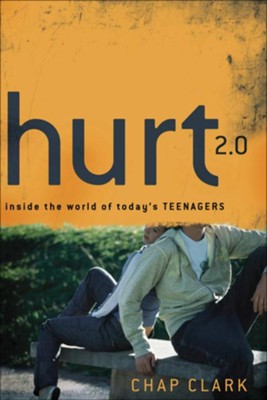
  36. Hurt 2.0: Inside the World of Today’s Teenagers, by Chap Clark
  37. Before I Go: Notes from Older Preachers, edited by Jeff and Dale Jenkins
  38. Five Minutes With God, by Rusty Hills
  39. Living & Longing for the Lord, by Michael Whitworth
  40. Leaving Behind Left Behind: The False Fear of the Rapture and the True Hope of the Return of Christ, by Omar Rikabi
  41. When Mountains Won’t Move: How to Survive a Struggling Faith, by Jacob Hawk
  42. 5 Discipleship Principles I Live By, by Neil Reynolds
  43. Beautiful, by Abbé Utter
  44. From Mule Back to Super Jet with the Gospel, by Marshall Keeble
  45. Good News of Great Joy: Daily Readings for Advent, by John Piper
  46. Gorky Park, by Martin Cruz Smith
  47. The Complete Calvin and Hobbes Book Four, by Bill Watterson
  48. Restoring New Testament Christianity, by Adron Doran

A few major observations before I talk about a couple of specific books.

In some ways, I was disappointed with my reading in 2015:

  • My total number of books dropped from 56 to 48. Ultimately, the point of reading is for learning and enjoyment rather than reading as many books as possible, but I do like to compete with myself and was a little disappointed at how my total number of books dropped. The reasons for this were understandable though. First, I read several books (commentaries, Old Testament introduction texts) that were several hundred pages long and each equivalent to 3-4 regular books. Second, I did a ton of reading of articles this year for grad school classes, and that reading is not reflected in the list above. Finally, I spent significant portions of 2015 involved in two large writing projects and two large editing projects, and those efforts (also not reflected above) took a lot of the time that would typically go to my reading.
  • I didn’t read much in 2015 that really blew me away. There were several books that I thought were interesting, or useful, or contained some good information, but not much that I thought was just outstanding.

As is typical for me, a lot of books that I read were related to the fields of Bible study, theology, and ministry. My favorite book of 2015 was probably Megan’s Secrets: What My Mentally Disabled Daughter Taught Me About Life, by Mike Cope. Mike writes as a minister from Churches of Christ and shares his experiences as the parent of a special needs child and the lessons he learned from her all-too-brief life. As the parents of a beautiful, incredible special needs daughter myself, this book hit close to home for me, and in fact, it took me about 2 1/2 years to summon up the courage to read it. I basically cried through the entire thing, but I thought it was beautiful, poignant, and important.

Another great book I read this past year was The Lunch Ladies: Cultivating an Actsmosphere, by Philip Jenkins. Though the book is primarily geared toward youth ministry, the principles apply to ministry and the work of the church in general. Succinctly put, in Lunch Ladies, Philip describes the culture of neglect that existed within the youth ministry at the church where he serves and how they went about changing that to a culture where everyone is cared for and where everyone belongs. This is the best book on youth ministry I read this year, and it has implications far beyond youth ministry; we are in the process of implementing a lot of these ideas in our youth ministry at Farmington. If you are involved in youth ministry in any way (minister, deacon, shepherd, parent, whatever), small groups ministry, or church involvement, I would highly recommend this work.

In Churches of Christ, the vigorous discussion over the role of women in the church continues on, and earlier in the year I read Women in the Church by Everett Ferguson. Ferguson’s scholarship is impeccable, and in addition to his careful exegesis of biblical texts, also brings his wealth knowledge on the practices of the early Christian church to the discussion. Perhaps most important was Ferguson’s tone and perspective, in which he frames the entire discussion by first focusing on all the ways women did serve in the early church and how vital they are to the work of the church today, before moving on to other areas in which the biblical text and early church practice limit the role of women in specific areas. Again, this is another book that I would highly recommend.

Additionally, I did read a few commentaries and works on specific New Testament books this past year which are worth mentioning.

I have written about Michael Whitworth’s books before, and have recommended them because the way he excels at balancing readability with good study and research. This year I read Living & Longing for the Lord, which is a study of 1-2 Thessalonians, and it was great. Michael is a friend of mine, and I have been blessed by his books over the last few years. I think The Derision of Heaven, Michael’s book on the the Book of Daniel, is still my favorite, but Living & Longing for the Lord might come in second place.

I took a grad school class on 1-2 Corinthians and read literally thousands of pages related to those epistles. A Week in the Life of Corinth by Ben Witherington III is a charming little book which gives the reader a good grasp of the cultural context of first century Corinth. First Corinthians: A Bible Commentary for Teaching and Preaching by Richard B. Hays, was enjoyable because of its focus on bringing points out of the text that are specifically relevant for teaching and preaching in the modern church. Conflict & Community in Corinth: A Socio-Rhetorical Commentary on 1 and 2 Corinthians by Ben Witherington III was interesting because it explored 1-2 Corinthians through the lens of ancient rhetoric, and brought a lot of historical background information into the discussion. For those interested in better understanding 1-2 Corinthians, all of these are helpful resources in my opinion.

That was my year in reading in 2015!

For comparison’s sake if you are interested, you can see my reading lists from previous years:

I have already started reading some good stuff in 2016, and I have a large number of books on my “To-Read” shelf that I am hoping to get to. What are some of the best books you read this past year?

*Books that I did not read in their entirety, but read significant portions of.

Book Review: Before I Go: Notes From Older Preachers

While taking a few vacation days last week, I read The Jenkins Institute’s Before I Go: Notes From Older Preachers. I like the work that TJI is doing (helping to train and equip preachers), and I like gleaning wisdom from learned people who have come before me, so I was glad to have the opportunity to read it.

Strengths

The premise of Before I Go is that several experienced preachers write on certain topics and share what they have learned from their many years of working in congregations. Combined, the authors represent over 1,000 combined years of preaching with 100,000 lessons preached. Clearly, these are preachers who have been in the trenches and have some valuable advice to share.

Before I Go is a quick, easy read. One of the good things about preachers is that they know (or should know) how to communicate well, which makes each chapter easy to understand. Furthermore, the book is only 182 pages long, and the type font is pretty large, so it did not take me long to read.

Weaknesses

As mentioned above, Before I Go is an anthology with a different author writing each chapter. The problem with having different authors in each chapter is that it gives the book a very uneven feel: some authors write better than others, and significant differences in writing style and organization from one chapter to the next can have a jarring effect on the reader. I find this to be frequently true of anthologies (and is the reason why I am generally not a big fan of them).

Also, I thought the editing could have been better: there were several typographical errors that I found reading through the book.

Quotations

In a book of practical advice from older preachers, you would expect to find some good quotations, and I certainly did. Some of my favorites are below, along with occasional commentary from me in brackets:

“I try to choose my battles carefully because not everything is worth going to mat for.” (26)

“Place the best interpretation possible on what others say and do; give them the benefit of the doubt. The judging of hearts in in good hands, not yours and mine.” (36)

“You must never be the source of a leak of information which is obviously confidential. This is especially true when elders disagree over a matter. You should never say anything to anyone that indicates that not all the elders thought a matter should have been done.” (52)

“Don’t harm His beautiful bride just to make yourself feel better. Leave so peacefully that perhaps someday they will invite you back for a homecoming or to preach in a gospel meeting. His bride is far more important than the hurt you feel when you are asked to leave.“ (53-54) [This is in the context of a preacher being fired and being careful about how he responds and leaves the congregation.]

“If I want to serve beyond my death, I had better build relationships with people who will outlive me.” (61)

“The preacher’s education should never stop; for if it does so, his message will grow stale.” (95)

Before I Go is a helpful addition to a minister’s library (especially a young preacher), and I recommend it. Learning from those who have gone before us is a key component of education in general, and I think that is especially true for ministers.

Healthy Parent-Teen Conflict

I do a lot of reading and research on issues related to youth ministry, teenagers, the development of young people, parenting, etc., and I like to share helpful information that I come across.

I am currently reading Chap Clark’s Hurt 2.0: Inside the World of Today’s Teenagers. It is a pretty well-known book in youth ministry circles, and in it, Clark engages in extensive qualitative research to enter the world of teenagers today and seek to understand and describe the pervasive sense of isolation and abandonment they feel from the adult world as a whole.

The book is a challenging read, in large part because of the disturbing claims it makes. I have some questions about some of Clark’s research methods and conclusions (especially the very generalized nature of the latter), but I think he has some really good things to say, and he brings up issues that should make anyone who works with teenagers pause and reflect (parents, youth ministers, teachers, coaches, etc.).

Any parent of a teenager knows that conflict with your kids is an inevitable thing, and I thought the following quotation provides some helpful thoughts for ways in which the inevitable conflicts of parenting can be dealt with in a way that doesn’t damage the parent-child relationship at the specific developmental time when teens need their parents the most:

“Research has shown that parent-child conflict increases during adolescence, especially during midadolescence [ages 15-18]. These conflicts are often rooted in how a parent deals with a growing adolescent rather than in a specific issue.

What matters most in the lives of adolescents, then, is how parents deal with conflict. Most midadolescents rapidly get over the day-to-day conflicts they experience at home, especially if they feel close to their parents. But parents are not as resilient. For many parents, even simple conflicts can push their buttons and drive a wedge in their relationships with their children. Over time, midadolescents pick up on this general sense of separation. This causes them to pull away from their parents.

Parents have a tremendous responsibility not to be thrown off or emotionally entrapped by parent-adolescent conflict. Adolescents know that their parents are supposed to be the adults, those who are to lead and guide them, without letting any conflict or emotion get out of hand. Far too often students described their parents as “out of control,” “always mad,” or “totally upset.” They responded by backing down to avoid conflict and becoming relationally disengaged. When pressed, few midadolescents wanted a distant relationship with their parents, yet most feel they have no choice but to distance themselves from emotional entanglement with their families.”

–Chap Clark, Hurt 2.0: Inside the World of Today’s Teenagers (99)

Hurting With God: Faith and Lament, Part 2

The Disappearance of Lament

In addition to the examples we looked at in the last post, there are many, many more that we could look at just in the Book of Psalms. In fact, there are more lament psalms in the Book of Psalms than any other type!

  • Psalms of Lament: 60 out of 150 (40%)
  • Psalms of Praise: 41 out of 150 (27.3%)
  • Psalms of Thanksgiving and Trust: 27 out of 150 (18%)
  • Miscellaneous Psalms (teaching, wisdom, worship, etc.): 22 out of 150 (14.7%)*

We know that the Book of Psalms functioned much like a songbook for worship in both the lives of the Israelites and also the early church; with 40% of their songs containing lament, clearly lament was an acceptable part of their worship and their lives!

What about us? Are we as comfortable with the language of lament as our spiritual ancestors?

A research assistant at Abilene Christian University did a project where he examined some modern hymnals (song books), divided the songs into different categories, and compared them to the Book of Psalms. One of the books he examined was Songs of Faith and Praise, which is the hymnal we use at the congregation where I work, and is a popular hymnal in Churches of Christ.

Of the 885 songs in Songs of Faith and Praise: 

  • Songs of Thanksgiving and Trust: 392 out of 885 (44%)
  • Songs Praise: 264 out of 885 (30%)
  • Miscellaneous Songs (songs on worship, invitation songs, patriotic, about Christ): 197 out of 885 (22%)
  • Songs of Lament: 32 out of 885 (<4%)

Compared to the Book of Psalms, 40% of which is comprised of lament psalms, Songs of Faith and Praise includes lament songs 1/10 as often! I know this is not the most scientific study, but I still think it shows a general truth, which is that we have largely lost the biblical language of lament. Something which is a huge part of the Book of Psalms, and thus a major part of the worship of God’s people in the Old Testament and the early church has largely been removed from the way we speak to each other and to God.

If you think about it, really the only time where we lament together is in the aftermath of a death, but even then in our modern funerals we’ve gotten to where we hardly leave room for lament. Instead, we try to have upbeat “memorial services” where we tell funny stories about the departed, and we expect that after a few weeks people ought to “get over” their grief and get on with their lives. We live in a culture that does everything it can to avoid death, suffering, or discomfort, and a lot of times, that’s how it is in the church as well.

There is no room for lament in our lives.

Now some people might think that this is a good thing: “Well, sure there are a lot of these laments in Psalms and Jeremiah, Habakkuk, etc., but those are in the Old Testament! We live under the new covenant; as Christians, we shouldn’t say things like this because we have victory through Jesus! We should be able to face any trial with a smile on our face!”

Historically though, we know that the early church valued the Book of Psalms as much as the Jews did. New Testament writers refer to the book of Psalms over 400 times, and as already mentioned, the Book of Psalms served as the hymnbook of the early church. The Psalms were very important to the early Christians.

Furthermore, Jesus, our example in all things, shows the characteristics of lament in his life. When His friend Lazarus dies, Jesus weeps, despite the fact that he knew he would raise Lazarus from the dead! If it was okay for Jesus to show emotion and be upset when He was troubled, it’s certainly okay for us as well.

When Jesus approaches Jerusalem before the Triumphal Entry, He laments over it because He knows it will be destroyed. Soon after that, in the Garden of Gethsemane, contemplating His coming arrest and crucifixion, Jesus cries out to God and says, in effect, “Father, if there is any way You can save Me from the horror of what’s coming, please do so!” That is lament.

On the cross, in the midst of his torment, Jesus famously cries out, “My God, My God, why have You forsaken Me?” This is a direct quote from Psalm 22, which is one of the lament Psalms.

In addition to the value of the psalms in the early church, we can see clearly that lament was a part of the life of Jesus. Lament is not just an Old Testament phenomenon, it is a biblical phenomenon. It’s a part of faith.

Bringing Lament Back Into Our Lives

And we can see that it’s a part of faith by looking at the laments themselves. In the laments we read together, there is a pattern which arises and this is generally true in the laments:

  1. They are addressed to God recognizing that He is the One who is in control.
  2. They involve a complaint; something is wrong in the life of the one who is lamenting.
  3. They contain a request: the lamenter wants God to do something about the complaint.
  4. Usually, the laments close with confidence and praise: having turned their request over to God, the lamenter is confident that God is in control, and praises Him for His watchful care.

Seeing these different parts of lament shows that laments are different from just whining and complaining: lament is not about pouting because we don’t get our way. Instead, lament is what occurs when deep faith confronts deep suffering: we suffer, and in our faith, we turn to the Only One who can do anything about our suffering, the God who is in charge and who cares for us.

This faith language which we have lost is something that we need to reclaim.

Think about it this way: you can tell how close your relationship with another person is based on how honest you can be with that person. With that in mind, how honest can you be with God? I think that we’ve gotten the impression that somehow it is wrong or irreverent when bad things happen to ask God questions or to express our frustration or even anger with Him. And because of that, when times get tough, people either walk away from their faith, or they just bury their emotions and pretend that everything is okay.

But God knows us better than we know ourselves. He knows when we questions. He knows when we are frustrated. He knows when we are angry with Him. And He can handle that. And rather than us trying to swallow these feelings and pretend they don’t exist, God wants us to bring that to Him. 1 Peter 5.7 tells us to cast all of our anxieties on God, because He cares for us.

And Scripture shows us how to do that. Through the language of lament, we can see how we can cry out to God in our suffering in ways that are honest, but in ways that are still faithful.

Conclusion

Is the church meant to be a place of support and healing where we can be honest with one another about what is going on in our lives and honest with God? Or is it a place of white-washing and mask-wearing, where we put on a brave face and pretend everything is okay even when it most definitely is not?

In these last two posts, we have looked at lament:

We’ve seen how it is a biblical practice, a language of faith that we see throughout Scripture, and especially in the Psalms. We’ve noted the disturbing way in which lament has largely disappeared from the songs we sing, from our culture at large, and even from funerals sometimes. And hopefully, we’ve seen that lament is something we need to reclaim and bring back as a part of our lives of faith. Lament emphasizes that God is in control, that He is the One who can do something about our suffering, and that as a result, it only makes sense that we bring it to Him.

I want to close with three suggestions for how lament can aid us when we go through difficult times in life. When the tough times come, I urge you:

  1. Be open with your brothers and sisters in Christ about what is going on and how you feel. If we are serious about being the family of God, then that means we are here for one another, and we need to support one another.
  2. Read through the Psalms. We just looked at a few examples, but 40% of the book is lament. There is a wide array of language which is used to cover a wide array of problems; see how people of faith voiced their suffering to God.
  3. And most importantly, be honest with God about your suffering. Maybe using some of that same lament language from Psalms, take your suffering and lay it at His feet. He is the one who can handle it and do something about it.

*As I mentioned in the last post, these thoughts (and also the statistics) are greatly informed by Glenn Pemberton’s Hurting With God: Learning to Lament with the Psalms.
« Older posts Newer posts »

© 2026 The Doc File

Theme by Anders Noren — Up ↑