The online journal of Luke Dockery

Category: Reading (Page 17 of 33)

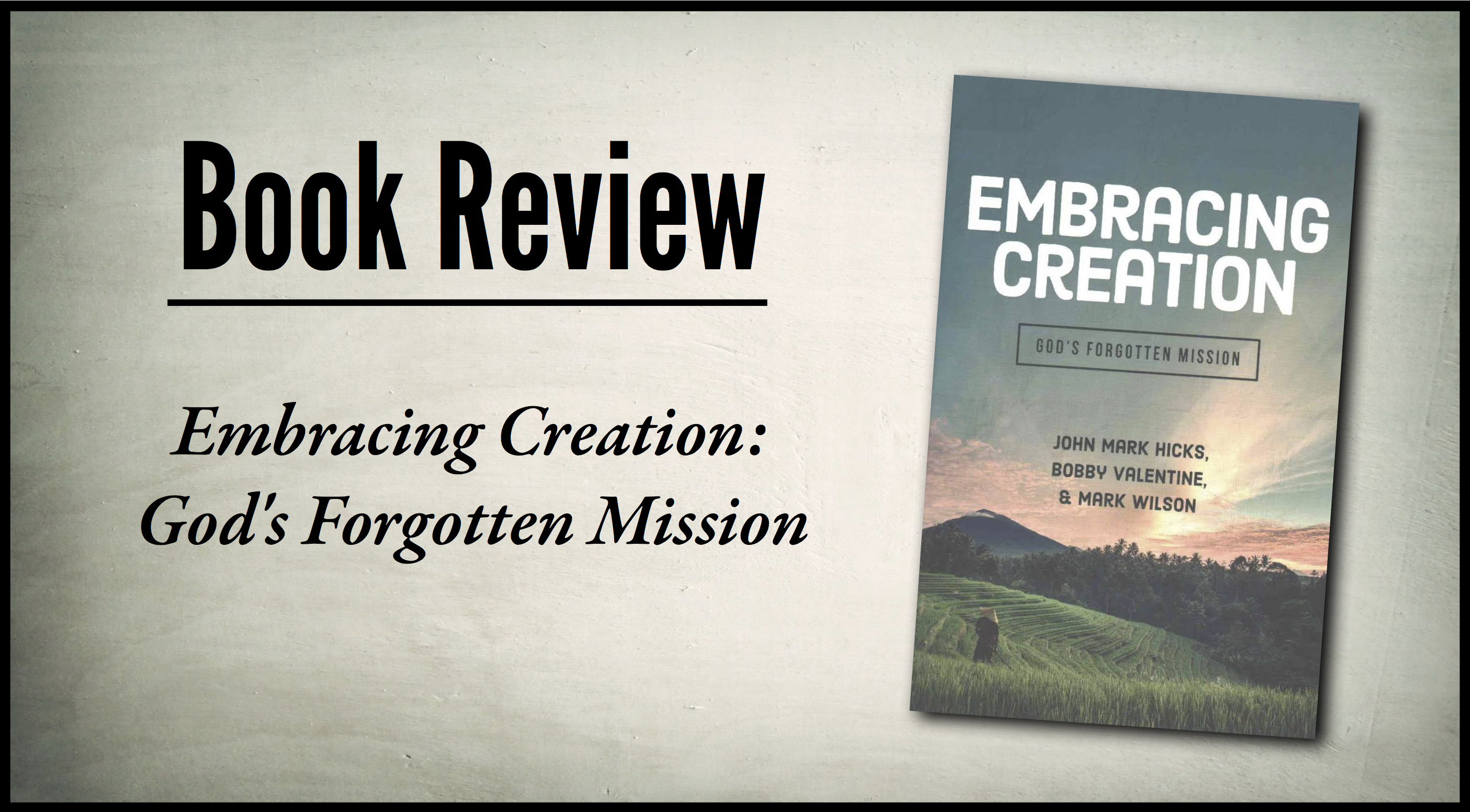
Book Review: Embracing Creation

At the end of December, I finished one of the better books I read in 2016: Embracing Creation: God’s Forgotten Mission, by John Mark Hicks, Bobby Valentine, and Mark Wilson. Dr. Hicks is a former professor of mine, and I “know” Bobby through social media. Both men have written much that has challenged me, and I have been blessed by their thoughts on the Stone-Campbell Restoration Movement (Hicks and Valentine), suffering and the problem of evil (Hicks), and the “Jewishness” of Christianity (Valentine). I had not previously read anything by Wilson.

I will go ahead and jump to my overall conclusion and recommendation: this is an important book, deserving of a wide readership (especially within Churches of Christ, which is the primary intended audience). Although Embracing Creation is more complex than I am indicating here, it largely comes down to two significant arguments, which are both based on the biblical reality that God cares deeply about what He has created.

First, humans are to reflect God’s care and concern for creation, and should practice thoughtful stewardship of our planet. Truly, this should not be a controversial claim, but because conversations surrounding care for the environment are frequently hijacked for political purposes, it often is made out to be controversial. Embracing Creation does not argue for a godless environmentalism that holds up nature as something to be worshipped; it does encourage a deep, biblical care for a creation that God calls good, but has been too often treated as expendable and unimportant by humans.

Second, God does not intend that His creation be destroyed, but will redeem and recreate it, and will dwell with creation in the New Heavens and New Earth. This will also be a controversial claim for many, but again, it need not be.* Hicks, Valentine, and Wilson argue (and effectively, in my opinion) that the notion of an annihilated and completely destroyed earth and an eternal existence for God’s saints in an other-worldly heaven is actually a fairly modern notion, and does not reflect the biblical text, the belief of the early church, or the beliefs of pioneers in the Stone-Campbell Restoration Movement. Instead, these witnesses all point to a redeemed earth, which will be refined and recreated in a way that is analogous to our own resurrection bodies, and will serve as the location of our joyous eternal existence with God. Three texts which are generally brought up to refute this perspective—John 14.2-3, 2 Peter 3.6-7,13; 1 Thessalonians 4.16-17—are all addressed (and quite adequately, I thought).

Here are some of my favorite quotations from the book:

Creation does not belong to human beings. It belongs to God, and it is the Messiah’s inheritance. We are only stewards and junior partners, though we are coheirs with Christ. (16)

Too often we hear “dominion” in tyrannical, oppressive, militaristic, or manipulative ways, but this is not how God rules. As images of God, we rule in the likeness of God. (39)

Above all, Psalm 104 reveals an astounding truth: creation, animate and inanimate, is the object of divine love. If God, like an artist, dotes so tenderly over it, then should not those created in God’s image reflect the same divine delight, love, and care for creation? (53)

The resurrection of Jesus, then, is the pledge of a future harvest, a preview of coming attractions. It is God’s answer to creation’s lament. (91)

Though chaos remains in the old creation, chaos will disappear in the new. (130)

God’s promise is “See, I am making all things new” (Rev. 21:5). The text does not say that God will make new things. Rather, God will make all things new. This is restoration, healing, and renewal. (131)

Creation is intrinsically good, and this goodness is not based on its utility for humans. (139)

On one level, it does not matter if “global warming” is real or imagined, caused by nature or humans. Caring for God’s good world is a matter of obedience and discipleship…If the Father is mindful of the death of even a single sparrow (Matt. 10:29), then we, who reflect the divine image, will care as well. (140)

Scripture never says heaven, separated from the earth, is the eternal destiny of the redeemed. Forecasting a doomed earth and an eternal celestial abode can result in an escapist outlook that hunkers down until we “fly away,” diminishing support for creation stewardship. (166)

Before closing, there were a couple areas of the book which I thought were weaknesses. First, I think Embracing Creation is a very challenging read for the average Christian. I have spent years (and years!) in grad school reading books on Scripture, theology, and ministry on a regular basis, and felt right at home with this work, but I found myself wondering how well I would have followed it if I had read it as a young minister before I had any sort of seminary training. Now, the exact intended audience of the book is never stated directly (that I can remember), but because I feel the two main points described above are so important and so often neglected, I wish the book would have been written at a somewhat simpler level to make it more accessible.

Second, there is an intriguing chapter at the end of the book entitled, “God’s Restoration Movement: Revisioning the Restoration Plea.” This chapter will be of special interest for readers from Churches of Christ (or other branches of the Stone-Campbell Restoration Movement), and basically argues that we should view the concept of Restoration not as a return to the practice and beliefs of the first century church (i.e., a look back to restore the church), but rather, a working towards the time when God will come and redeem all of creation (i.e., a look ahead to restore the entire cosmos). This is a thought-provoking proposal, but ultimately, I think it presents an either/or dichotomy which is not necessary: can we not be a people who seek to follow the basic design, practice, and spirit of the early church while also eagerly anticipating and working toward the day when God will make all things new? Interestingly, throughout Embracing Creation, early Restoration pioneers such as Alexander Campbell, Walter Scott, and David Lipscomb are quoted as men who understood God’s plan of Restoration for all creation, and yet they still held to the idea of Restoration as we have typically conceived and discussed it. Can we not do the same?

With these gentle critiques in mind, the fact remains that Embracing Creation is a compelling and important book. It is a book that not everyone will agree with, but perhaps for that reason alone, it should be read by many people. And as I described above, I think its two main points are scripturally spot-on, and their understanding is greatly needed in the church today.


*Some will hear this and associate it with some version of Premillennialism or Jehovah’s Witness eschatology. What Embracing Creation proposes has nothing to do with either.
Reading and Walking in 2016

In April 2013, I started walking laps around the church auditorium while studying or reading. I found this helped me to focus better (read: stay awake), and also it was a good way to be a little less sedentary while at work.

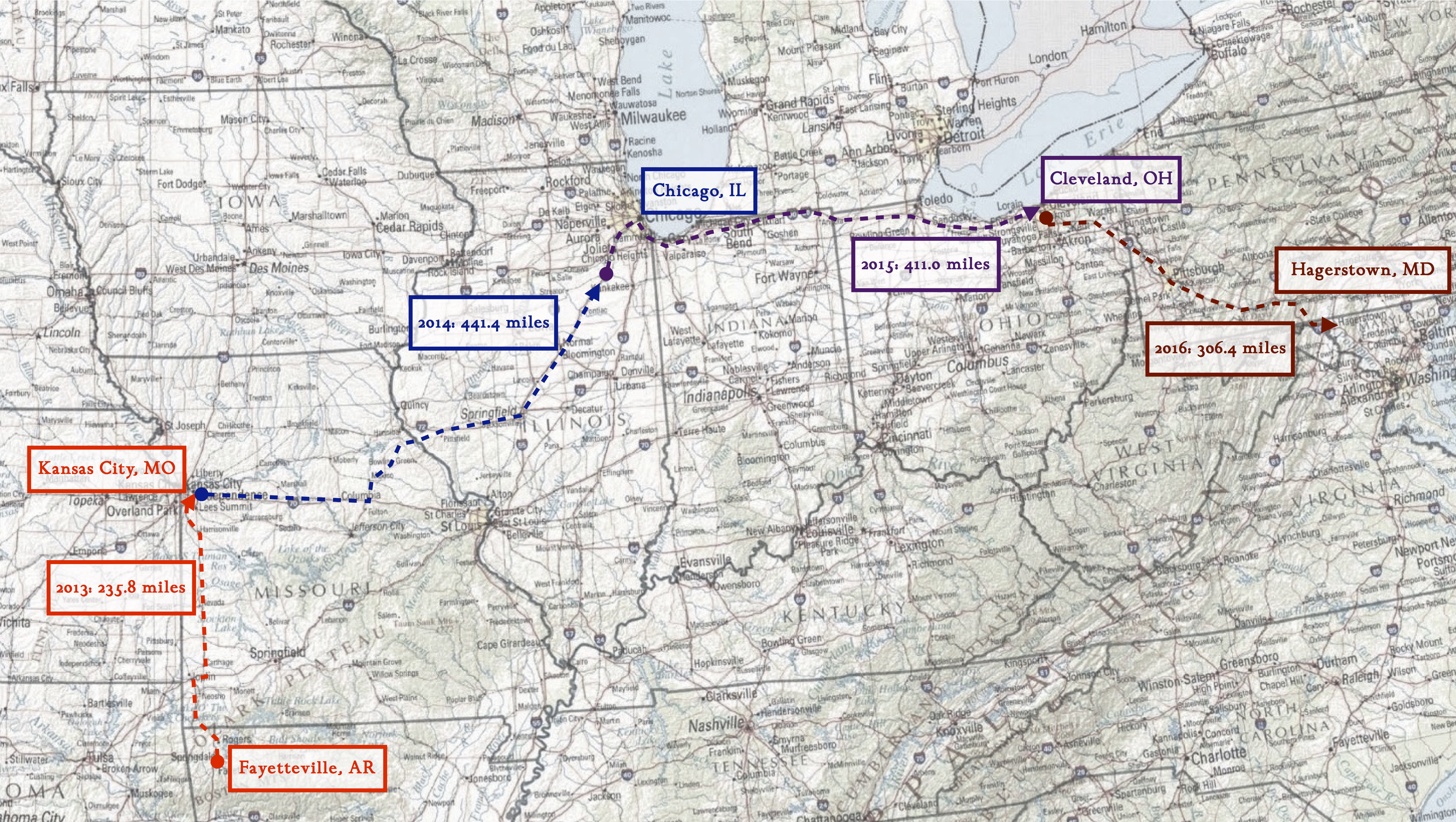
Each lap around the auditorium is approximately 74 yards. In 2013 I walked a total of 5,608 laps, which amounts to a total distance of 235.8 miles. As I mentioned in my report at the start of 2014, that is basically the equivalent of traveling from Fayetteville, Arkansas to Kansas City, Missouri on foot. In 2014, I walked a total of 10,497 laps, or 441.4 miles, which got me from Kansas City, Missouri to the outskirts of Joliet, Illinois. In 2015, I walked 9,774 laps, of 411.0 miles, which got me all the way to Cleveland, Ohio.

This year was a little bit strange, in that we built a new (larger) auditorium at our church, and so part of the time I walked around the old auditorium, and part of the time around the new one. Still, for consistency’s sake, I converted new auditorium laps to their equivalent in the older, smaller auditorium.

My goal for the year was to eclipse the 10,000 lap mark again, but I didn’t even come close to this:

Total Laps in 2016: 7,288

Distance per Lap: approximately 74 yards

Total Distance in 2016: 306.4 miles

Total Distance to date: 1394.6 miles

So, in 2016, I left Cleveland, Ohio, walked through Pittsburgh, Pennsylvania, and made it just past Hagerstown, Maryland (that might sound like a random location, but I am heading to Washington D.C.).

I was disappointed in the drop-off in my mileage this past year, but I still walked over 300 miles while at work, which is certainly a healthy practice. My disappointment is also mitigated by the knowledge that I suffered a significant leg injury in June, and this cut into my totals during the summer. In 2017, I again hope to accumulate 10,000+ laps: I have fewer grad school classes this year, which could lead to less reading time, but I also have a bunch of theology/ministry books that I have been wanting to read for some time and haven’t been able to. So it will be interesting to see how I do.

Reading in 2016

A quirk of my personality is that I like to keep track of certain things in my life, and for several years, one of those things is the list of books that I read each year. Somewhat surprising to me, people actually seem to enjoy reading the list of what I read, so I have been sharing that for several years.
Here was my reading list for 2016:

  1. A Slaughtered Lamb: Revelation and the Apocalyptic Response to Evil and Suffering, by Gregory Stevenson
  2. Scribbles and Sketches, No. 2, by Ruby Tobey
  3. Dogmatics in Outline, by Karl Barth*
  4. Fables Don’t Leave Footprints: Following a Trail of Archaeological Discoveries from Genesis to Jesus, by Jan Sessions
  5. The Book of Revelation, by Chris Koelle (Illustrator), Mark Arey (Trans), and Philemon Sevastiades (Trans.)
  6. A Missional Church: Assessing and Developing a Missional Culture in an Established Church, by Matthew Morine
  7. Just As I Am: Married, Divorced, and Remarried, by Wayne Dunaway
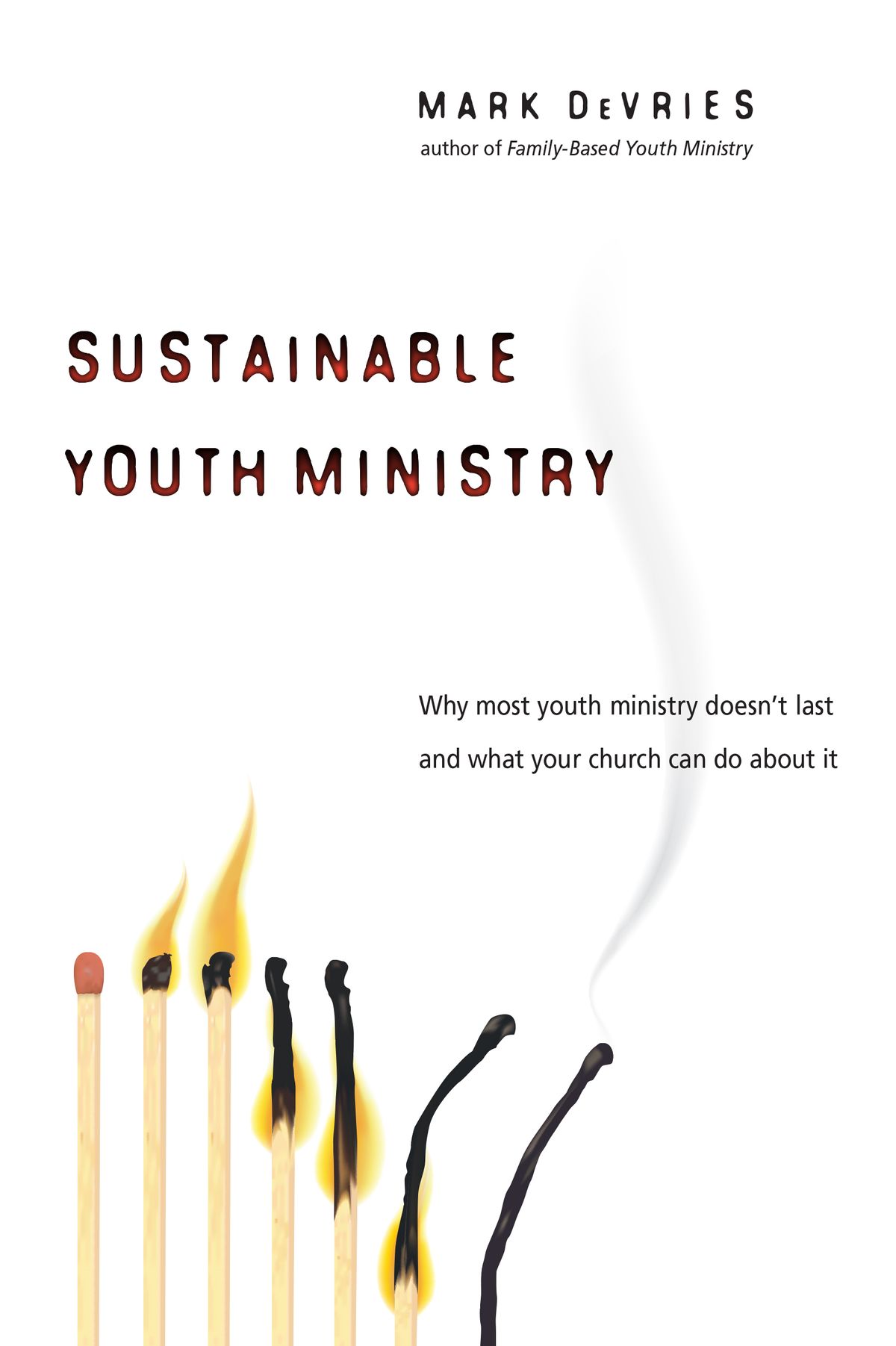
  8. Sustainable Youth Ministry: Why Most Youth Ministry Doesn’t Last And What Your Church Can Do About It, by Mark DeVries
  9. God of the Possible: A Biblical Introduction to the Open View of God, by Gregory A. Boyd
  10. Food & Faith: A Theology of Eating, by Norman Wirzba*
  11. The Nature of Doctrine: Religion and Theology in a Postliberal Age, by George A. Lindbeck*
  12. Pentecostal Theology and the Christian Spiritual Tradition, by Simon Chan*
  13. Four Views on the Historical Adam, by Denis O. Lamoureux, John H. Walton, C. John Collins, and William D. Barrick
  14. Change of Heart: Seven Money Truths to Help Teens from the Inside Out, by Joey Sparks
  15. #NoFilter, by Scott Utter
  16. Dead Wake: the Last Crossing of the Lusitania, by Erik Larson
  17. Learning the Art of Helping: Building Blocks and Techniques, by Mark E. Young
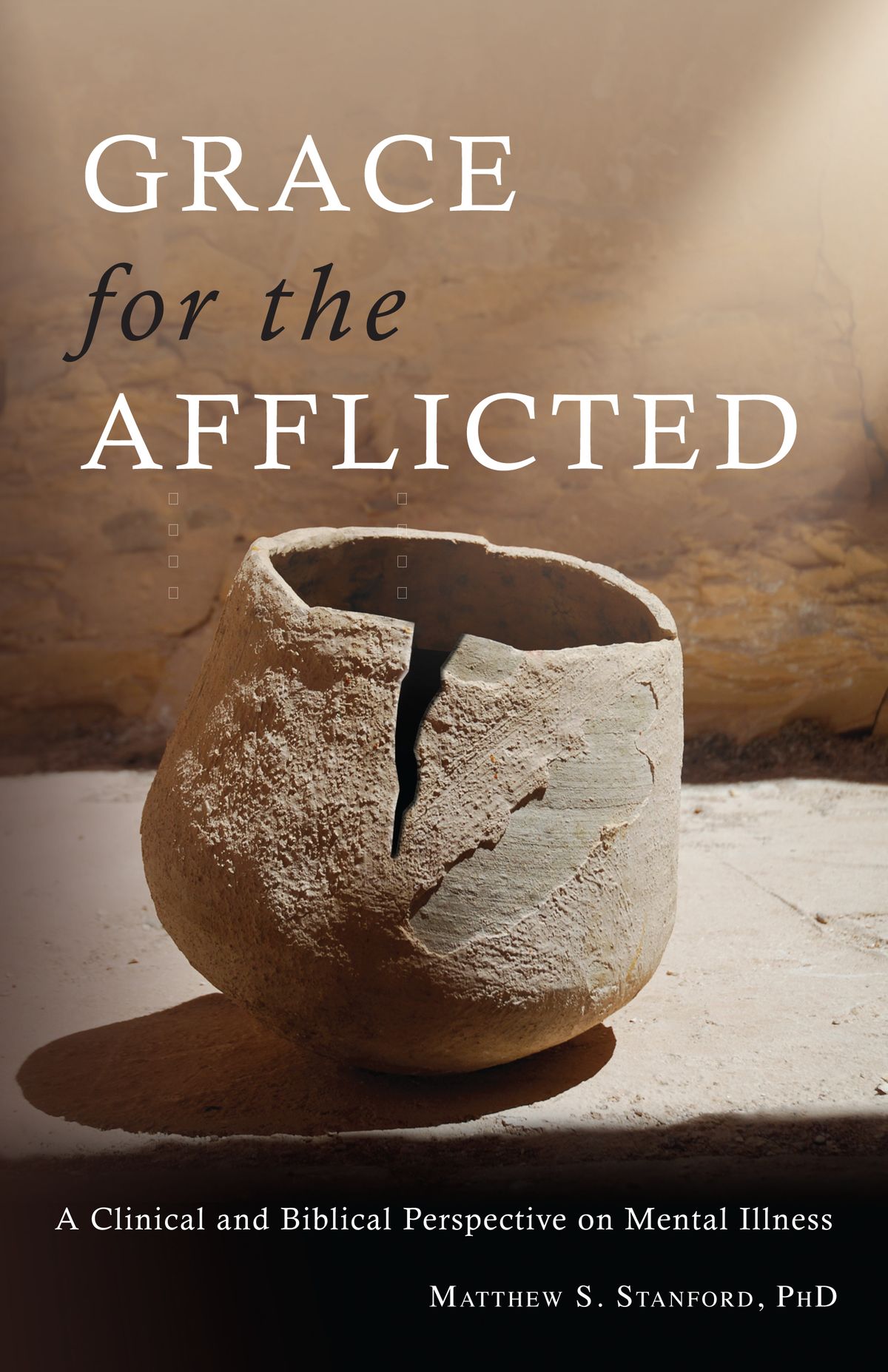
  18. Grace for the Afflicted: A Clinical and Biblical Perspective on Mental Illness, by Matthew S. Stanford
  19. Competency-Based Counseling: Building on Client Strengths, by Frank Thomas and Jack Cockburn
  20. The Practice of the Presence of God with Spiritual Maxims, by Brother Lawrence
  21. Where Is God When It Hurts? by Philip Yancey
  22. The Bombay Boomerang, by Franklin W. Dixon
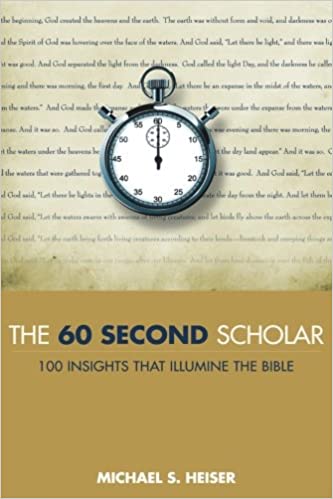
  23. The 60 Second Scholar: 100 Insights that Illumine the Bible, by Michael S. Heiser
  24. Essay on Negro Slavery, by James O’Kelley
  25. Firestorm: Preventing and Overcoming Church Conflicts, by Ron Susek
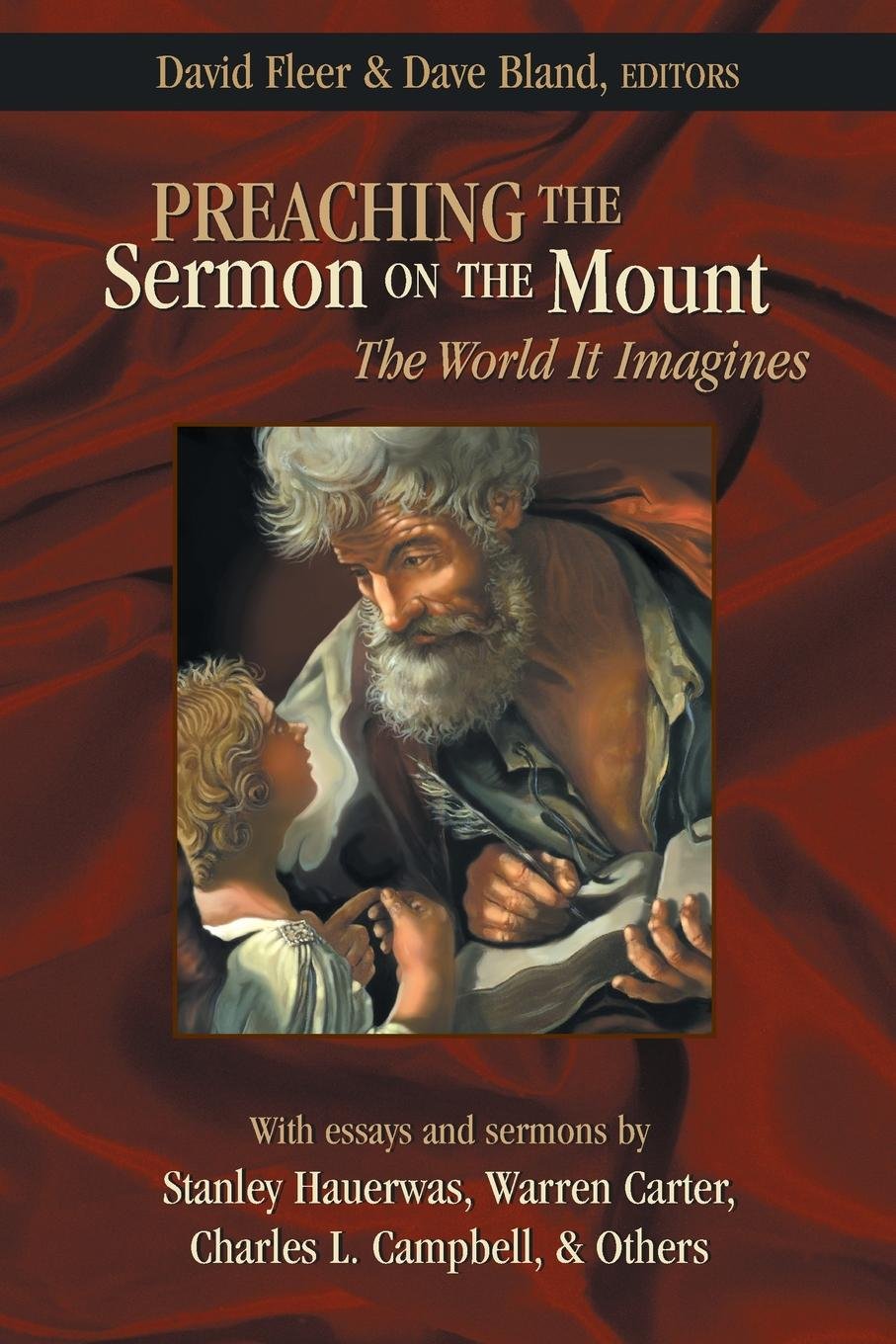
  26. Preaching the Sermon on the Mount: The World It Imagines, edited by David Fleer and Dave Bland
  27. Discover Your Conflict Management Style, by Speed B. Leas
  28. Congregational Leadership in Anxious Times: Being Calm and Courageous No Matter What, by Peter L. Steinke
  29. The Gospel of Matthew, Volume 1, by William Barclay*
  30. The Anatomy of Peace: Resolving the Heart of Conflict, by the Arbinger Institute
  31. Guiding People Through Conflict, by Ken Sande and Ted Kober
  32. Building Conflict Competent Teams, by Craig E. Runde and Tim A. Flanagan*
  33. Living Jesus: Doing What Jesus Says in the Sermon on the Mount, by Randy Harris
  34. Why I Value the Bible, by Kerry Holton
  35. The Beatitudes: Jesus’ Formula for Happiness, by Rubel Shelly
  36. Managing Church Conflict, by Hugh F. Halverstadt*
  37. 11 Youth Ministry Hacks So You Can Spend More Time on What Matters Most, by Kindred Youth Ministry
  38. The Listeners’ Bible ESV, read by Max McLean
  39. Don’t Quit on a Monday, by Jeff and Dale Jenkins
  40. How to Read the Bible For All It’s Worth, by Kerry Holton
  41. Christian Counter-Culture: The Message of the Sermon on the Mount, by John R.W. Stott
  42. Centered in God: The Trinity and Christian Spirituality, by Mark E. Powell
  43. Coming Clean: A Story of Faith, by Seth Haines
  44. Paul: Jewish Law and Early Christianity, edited by Margaret Warker
  45. Paper Covers Rock, by Jenny Hubbard
  46. A Christmas Carol, by Charles Dickens
  47. The Story, by Biblica
  48. Embracing Creation: God’s Forgotten Mission, by John Mark Hicks, Bobby Valentine, and Mark Wilson
  49. The Castle Corona, by Sharon Creech
  50. The Big Field, by Mike Lupica
  51. Advent and Christmas, by Thomas Merton

A few major observations before I talk about a couple of specific books:

  • My reading total increased slightly from 2015, when I read 48 books. I actually think I read less total, however, because I did not do as much reading of articles or long commentaries. Still, I did a lot of writing and editing this past year on various projects, and I know that cut into my reading time somewhat.
  • Looking back, I think there were more books that I read this past year that I really enjoyed than in 2015. My Top 10 books for the year are highlighted in bold above, but there are several in the list above that did not make that cut that I still enjoyed.

Of those Top 10 books, I would like to highlight a few (Note: I previously reviewed Centered in God, and hope to review 2-3 others in the near future):

Grace for the Afflicted: A Clinical and Biblical Perspective on Mental Illness, by Matthew S. Stanford: I read this book for a counseling class,  and it might have been the best book I read all year. It helped me consider mental illness from a more biblical and theological perspective, and also discussed various mental illnesses clinically as well. I really think this is a book that all Christians should read, as mental illness of various types is prevalent in our society and thus in the church as well, and traditionally, we have not done well showing grace and compassion to those who suffer from these illnesses that we generally struggle to see or understand.

Sustainable Youth Ministry, by Mark DeVries: I have been a youth minister for over a decade now, and I have tried to become a student of youth ministry in an effort become more effective at helping young people develop lifelong faith. With that in mind, I have read quite a few books on youth ministry over the years. Mark DeVries became one of my favorite Youth Ministry thinkers with his Family-Based Youth Ministry, but it is possible that I enjoyed Sustainable Youth Ministry even more. The basic idea of the book is simple: youth ministries should not be built upon the foundation of a specific person (the youth minister), but should rather be constructed in such a way that they are able to survive for the long term and not be dependent on one person. There is a lot in this book to digest and I am still determining how best to implement some of the ideas, but the key principle is outstanding.

The 60 Second Scholar: 100 Insights that Illumine the Bible, by Michael S. Heiser: I am not a huge fan of the title of this book, because it makes it sound shallow or not serious. It is not, however, as the material that Heiser presents represents solid biblical and theological scholarship. Honestly, I felt like much of what has taken me years of college and graduate school courses to learn was condensed in this one, very readable, volume.

I did a lot of study on the Sermon on the Mount this year, and read several books and commentaries as a part of that study. Preaching the Sermon on the Mount: The World It Imagines, edited by David Fleer and Dave Bland, was a good read that presented some excellent background information, and some challenging sermons based on the Sermon.

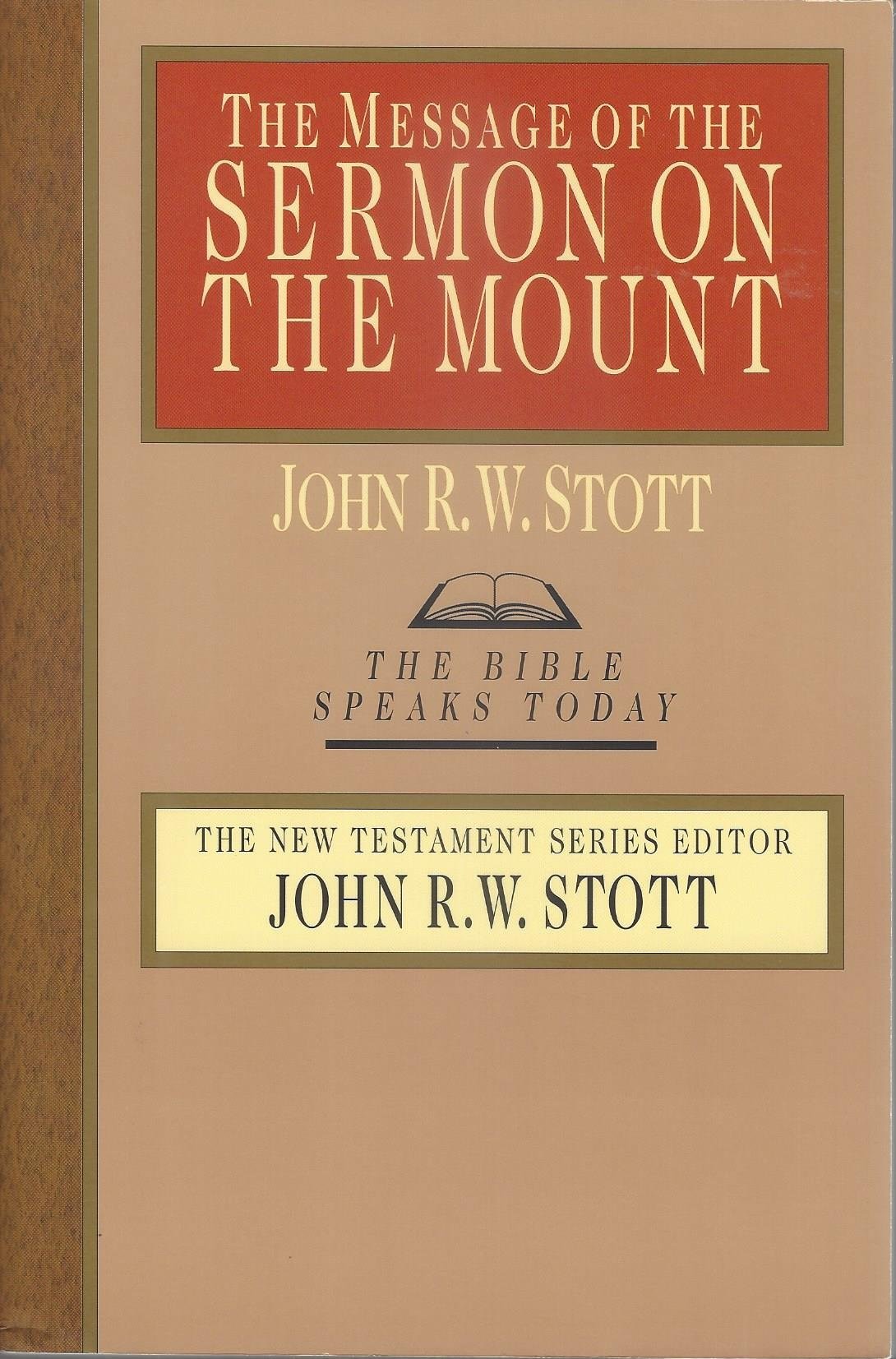
But easily the best resource I read was Christian Counter-Culture: The Message of the Sermon on the Mount, by John R.W. Stott. Stott writes with penetrating insight and a gentle spirit, and with rare exceptions, I thought his interpretations of the SOTM were dead on (the book pictured and linked to above is a different edition than what I read).

So, that was my reading for 2016. For comparison’s sake if you are interested, you can see my reading lists from previous years:

I have a ton of books I have accumulated over the last few years that I am anxious to read, and for the first half of the year I do not have any graduate courses so I am hopeful that I will actually get to read some of them! I am looking forward to reading a diversity of works, and in particular, I am hoping to read more fiction this year.

What are some of the best books you read this past year?

*Books that I did not read in their entirety, but read significant portions of.

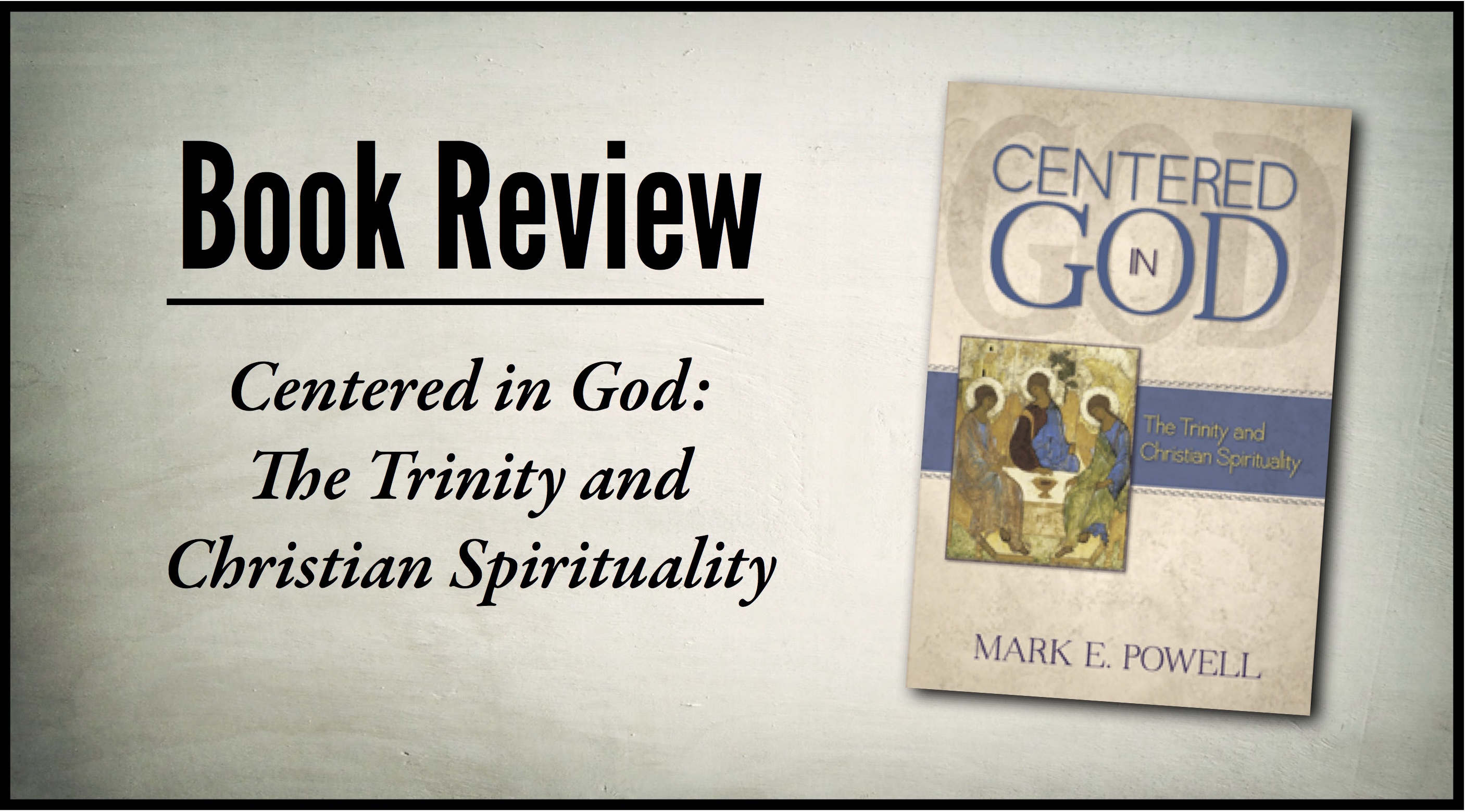
Book Review: Centered in God

The doctrine of the Trinity is one that is frequently neglected in churches. For some, it seems theologically murky, and anything we can’t fully understand is to be avoided. For others, the idea of the Trinity seems impractical and irrelevant to our daily lives. For others (perhaps especially those from a Restorationist heritage), the word “Trinity” is not used in Scripture and it is not the most clearly revealed of teachings, and there might be a level of discomfort with the entire idea. Regardless of the reason, I am confident in my opening assertion that it is a neglected area of Christian teaching and reflection.

In light of this, Mark Powell’s Centered in God: The Trinity and Christian Spirituality is a needed and important book. Dr. Powell, who teaches at Harding School of Theology, has done significant research on the Trinity and emphasizes it in his classes, and with Centered in God has offered a great gift to the church.

The book is written in a way that makes it accessible to the interested church member.[1] The first (shorter) section provides a framework for the rest of the book, discussing the doctrine of the Trinity itself and its historical development in the early church. The second section is where the real value of the book comes, as it moves from the theoretical to the practical, with essays on how a Trinitarian vision of God impacts the way we look at creation, worship, ministry, holiness, love, submission, suffering, and more.

Below I have included a sampling of quotations from that section to give you a taste of the flavor of the book:

This ambiguity toward creation explains two common religious responses. One is to confuse creator and creation, and view creation as divine. The other is to disparage creation, and seek to transcend and escape it. (58)

Like our bodies, creation itself will experience death and resurrection, the result being a glorified creation where God dwells with his people. (67)

Jesus is not a third party who stands between God and humanity, but it is rather the divine one who became human. (86)

Many contemporary critics of the cross, who see it as portraying a blood-thirsty God bent on vengeance, miss the point altogether because they fail to recognize that it is God himself who died on the cross for us. (86)

If we are constantly disappointed with the church, maybe the church is not the problem—maybe we are. (101)

While the study of Christian preaching rightly takes note of developments in rhetoric, and while preachers rightly give attention to matters of form, presentation, and cultural analysis, it is the Holy Spirit who makes Christian preaching effective. (111)

We cannot be holy apart from the gracious initiative and working of God, but God will not impart holiness without us. (150)

If pride is viewing ourselves more highly than we ought and low self-esteem is viewing ourselves more lowly than we ought, humility is viewing ourselves rightly and placing our value and confidence in God. (170)

The leading of the Spirit is not confined to the words of scripture, but the Spirit of God will not lead us away from scripture’s witness to the way of Jesus. (193)

The people we are becoming, however, is more important to God than the things we decide or accomplish. God not only wants to accomplish great things through us, he wants to accomplish great things in us—God wants to transform us into the image of his Son. (196)

The Trinitarian God is not far away from us when we suffer, but is closer than we ever imagined. Jesus mourned with us in the sufferings he encountered during his earthly life. Jesus suffered rejection and death on the cross, and the Father suffered the death of the Son. Because we are united with Christ, our present sufferings are shared and carried by Jesus. Because of the indwelling Holy Spirit, our groans have become God’s groans. A Trinitarian vision of God changes our perspective on suffering. Suffering is no less real, but we can know that we are not alone. Our God has suffered for us and continues to suffer with us in our trials. (208)

I was blessed by my reading of Centered in God, and again, I see it as a great gift to the church in that it makes the foundational doctrine of the Trinity accessible to Christians in the pews, and enables them to see why it is foundational in the first place. I highly recommend it.


[1]By “interested church member” I mean to say that you don’t need to be a theologian or theology student to understand the book and appreciate its implications and conclusions. At the same time, it is not a work that will be appreciated by just anyone.

Book Review: Fables Don’t Leave Footprints

Last week, a friend from college sent me a copy of a new book that his mother had written on biblical archaeology. I told him I would be happy to read it, but honestly, I had no idea what to expect.

The book, Fables Don’t Leave Footprints, by Jan Sessions, turned out to be a very pleasant surprise. The book is well-researched, and provides an excellent first step for beginners into the world of biblical archaeology. Early on in the book, Sessions states: “[Christians] go through life believing the Bible is true but are generally unaware of the vast array of outside-the-Bible evidences that verify the Bible as ‘real history’” (16). Sessions became aware of that evidence through her studies of archaeology, and wants to share it with her readers.

Here are some of the strengths of this book, and a reason why I think it is an excellent resource for the average Christian-in-the-pews who is interested in the evidence for the historical reliability of the biblical witness:

First, the book is incredibly readable. The book is only 198 pages total (including footnotes), with excellent pictures and charts that illustrate the archaeological discoveries that the author describes. Furthermore, the chapters are short, which keeps the pace of the book moving along.

Second, the book is really attractive. A lot of times when people self-publish books, they frankly do not look very good. That is not the case here. I am picky about things like typography, page layout, and graphic design, but the work on this book was very nice.

Third, and most importantly, Fables does a great job of introducing the reader to a variety of different types of archaeological discoveries which bolster the historicity of the biblical accounts. I want to emphasize the word introducing: this is not a scholarly book, and it does not attempt to enter into technical archaeological debate. But it does introduce you to some of those issues, and also provides footnotes for the reader who wishes to study further.

If you are a Christian who is already aware of archaeological discoveries that are relevant to Scripture, then Fables might not teach you a lot of new information, but it is a helpful review of the vast array of important discoveries that have been made. And if your exposure to biblical archaeology is minimal, then the book could very well be a real eye-opener.

« Older posts Newer posts »

© 2026 The Doc File

Theme by Anders Noren — Up ↑