The online journal of Luke Dockery

Category: Reading (Page 23 of 33)

N.T. Wright on the Myth of Progress

I am currently reading through N.T. Wright’s Surprised By Hope: Rethinking Heaven, the Resurrection, and the Mission of the Church. It has been an enjoyable and challenging read thus far, and I wanted to share one quotation that stuck out to me the other day.

Wright was speaking against the “myth of progress,” the once-popular (and still popular in some circles) idea that with human advances in technology, education, etc., the world is gradually becoming a better and better place leading to some sort of utopia:

“Only in the Christian story itself—certainly not in the secular stories of modernity—do we find any sense that the problems of the world are solved not by a straightforward upward movement into the light but by the creator God going down into the dark to rescue humankind and the world from its plight.”

(p.87)

This is a primary message of Scripture (though people still miss it sometimes): things are messed up, and we are not capable of fixing them. God has to come and rescue us from our plight.

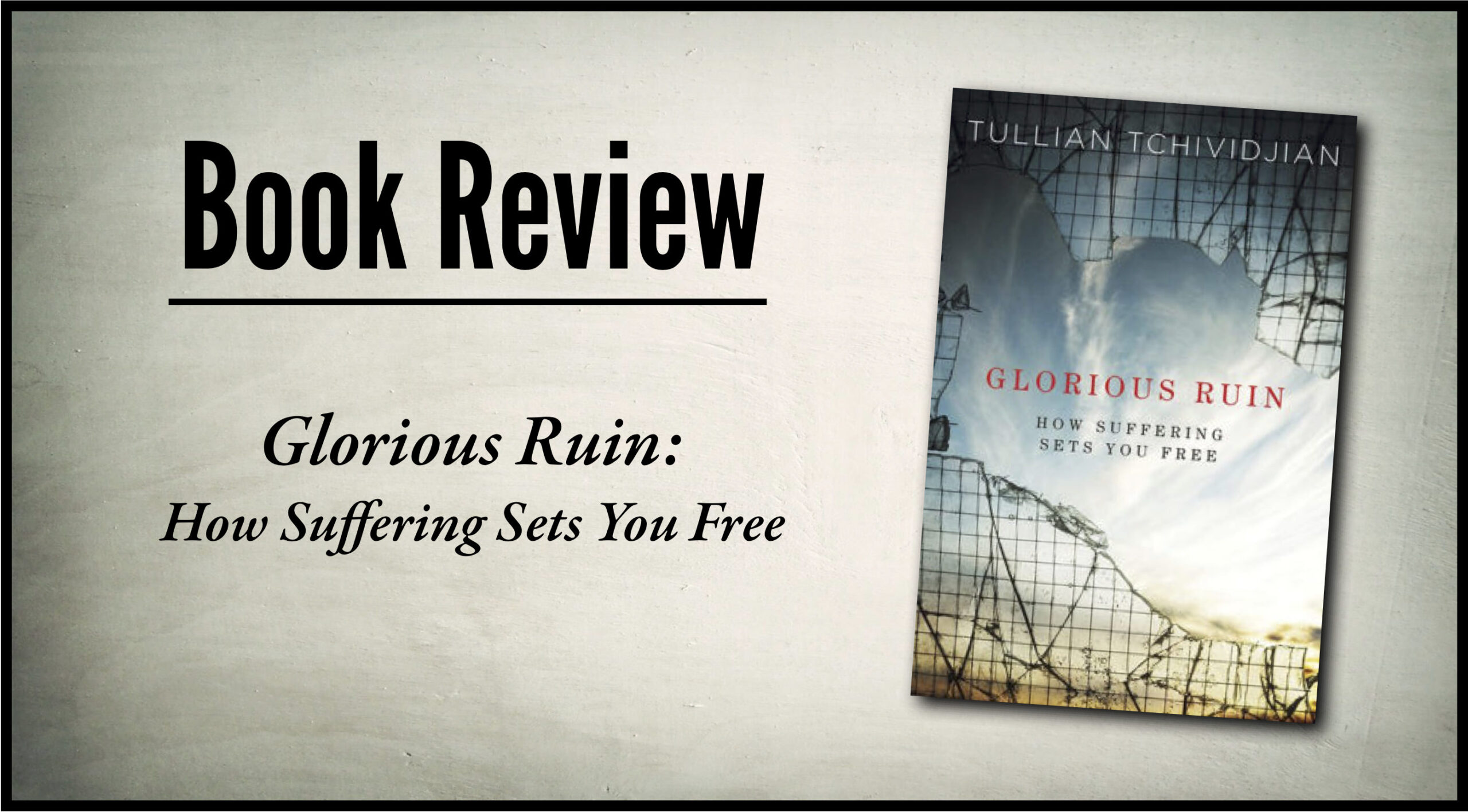
Book Review: Glorious Ruin

At the very end of last year, I read Tullian Tchividjian’s Glorious Ruin: How Suffering Sets You Free. The topic of suffering  has been on my mind a lot over the last year or so, and I was interested in seeing what Tchividjian (who is Billy Graham’s son-in-law, by the way) had to say.

In many ways, this was a challenging read for me that pushed my thinking, but I thought it was helpful. Again and again, Tchividjian (type that name five times fast!) argues that the answer to suffering is not stoicism or seeking some silver lining; rather it leaves us broken and therefore more open to meeting Jesus.

And here are some of my favorite quotations from the book [with my comments added in brackets]:

“The required cheerfulness that characterizes many of our churches produces a suffocating environment of pat, religious answers to the painful, complex questions that riddle the lives of hurting people.” (p.7) [Of all places, people should feel safe to share their hurts at church!]

“…This side of heaven, suffering often points to a deeper reality, an indicator of both personal and cosmic discord.” (p.8) [I think suffering is the only wake-up call that some people ever hear.]

“So what would a God who was present in suffering look like? First and foremost, He would be a God who suffers Himself. Maybe even dies. A God who meets people in their suffering, rather than on the other side of it. Pain might even be one of His primary avenues for reaching people.” (p.11)

“…The gospel is not ultimately a defense from pain and suffering; rather, it is the message of God’s rescue through pain.” (p.21)

“While God does indeed use the suffering in our lives, He is interested in much more than improvements in your personality or circumstantial happiness. He is interested in saving you.” (p.44)

“Contrary to popular belief, Christianity is not about good people getting better. If anything, it is about bad people coping with their failure to be good.” (p.51)

“The gospel is not a means to an end, it is an end in itself.” (p.52)

“When the bottom falls out of our lives, we don’t necessarily find it comforting when people try to cheer us up. No matter how well intended, such overtures create pressure that adds to our distress. Not only are we suffering, but we now feel bad about how we make those around us feel or, at least, about the disconnect between where they would like us to be and where we actually are.” (p.82) [From a pastoral perspective, this is huge: ministers (and anyone, really) need to take it easy on always trying to cheer up those who are suffering. Sometimes, we just need to let them grieve.]

“There’s nothing like suffering to remind us how not in control we actually are, how little power we ultimately have, and how much we ultimately need God. In other words, suffering reveals to us the things that ultimately matter, which also happen to be the warp and woof of Christianity: who we are and who God is.” (p.96) [Yes, absolutely.]

“The Lord mercifully put to death Job’s final idol—the idol of explanation. God liberated Job from the prison of Why. He liberated Job from himself. It was a glorious ruin.” (p.103)

“Brokenness precedes usefulness. It just does. Who reaches out to parents who have lost children to drunken driving accidents? Other parents who have lost children to drunken driving accidents. When we go through something painful and when God breaks us, it makes us both more useful to others and more willing to be used.” (p.120) [I am firmly convinced that we become better witnesses for God when we have suffering in our pasts.]

“Suffering…has a way of liberating us from the petty concerns and worries that bog down our everyday existence.” (p.121)

“Perhaps the only solace you can draw from suffering is that you begin to see that we were truly made for another world.” (p.132)

“And yet, our hope does not ultimately lie in our present liberation. There is no guarantee that we will experience relief from pain. I wish I could say there was. This life may feel like one long, painful death. All you can do is hang on, and sometimes you can’t even do that. Fortunately, the good news of the gospel is not an admonition to hang on to God with all your strength and willpower and you’ll be okay. The good news of the gospel is not some gnostic encouragement to view your suffering in the right way, or understand the theology of the cross more deeply. No, the good news is that God is hanging on to you. He’s not waiting for you to save yourself or mature into someone who no longer needs Him. He will not let you go, come what may. Jesus will never, ever leave you or forsake you.” (p.138) [He brings it all home here; this was really powerful to me.]

Sadly, we live in a fallen world, and as a result of that, suffering is all around us. Because of this, it is easy to find books on how to deal with suffering, or how to grow or improve yourself through suffering. What sets Glorious Ruin apart is that it suggests that, ultimately, suffering leads us to God, not a better version of ourselves.

The Problem(s) With Worry

I’m in the process of reading Fit For The Pulpit: The Preacher & His Challenges, which covers several topics that preachers deal with in ministry (time, stress, criticism, family, etc.). I may or may not write a review when I finish the book, but I wanted to go ahead and share some really good words on worry (emphasis is mine):

“1. Worry is irreverent. It fails to recognize that God is still on his throne and works in the lives of his children (cf. Rom. 8:28).

2. Worry is irresponsible. It wastes energy and burdens us so that we cannot be engaged in constructive and creative problem solving.

3. Worry is irrelevant. It cannot change anything. It has been estimated that 50% of the things we worry about never happen, that 30% are about the past which we cannot change, that 12% are too petty to affect the future, and that just 8% legitimately deserve our concern.”

(p.48)

In addition to the characteristics of worry mentioned above, for me worrying is also easy, which is why I found these reminders to be so helpful.

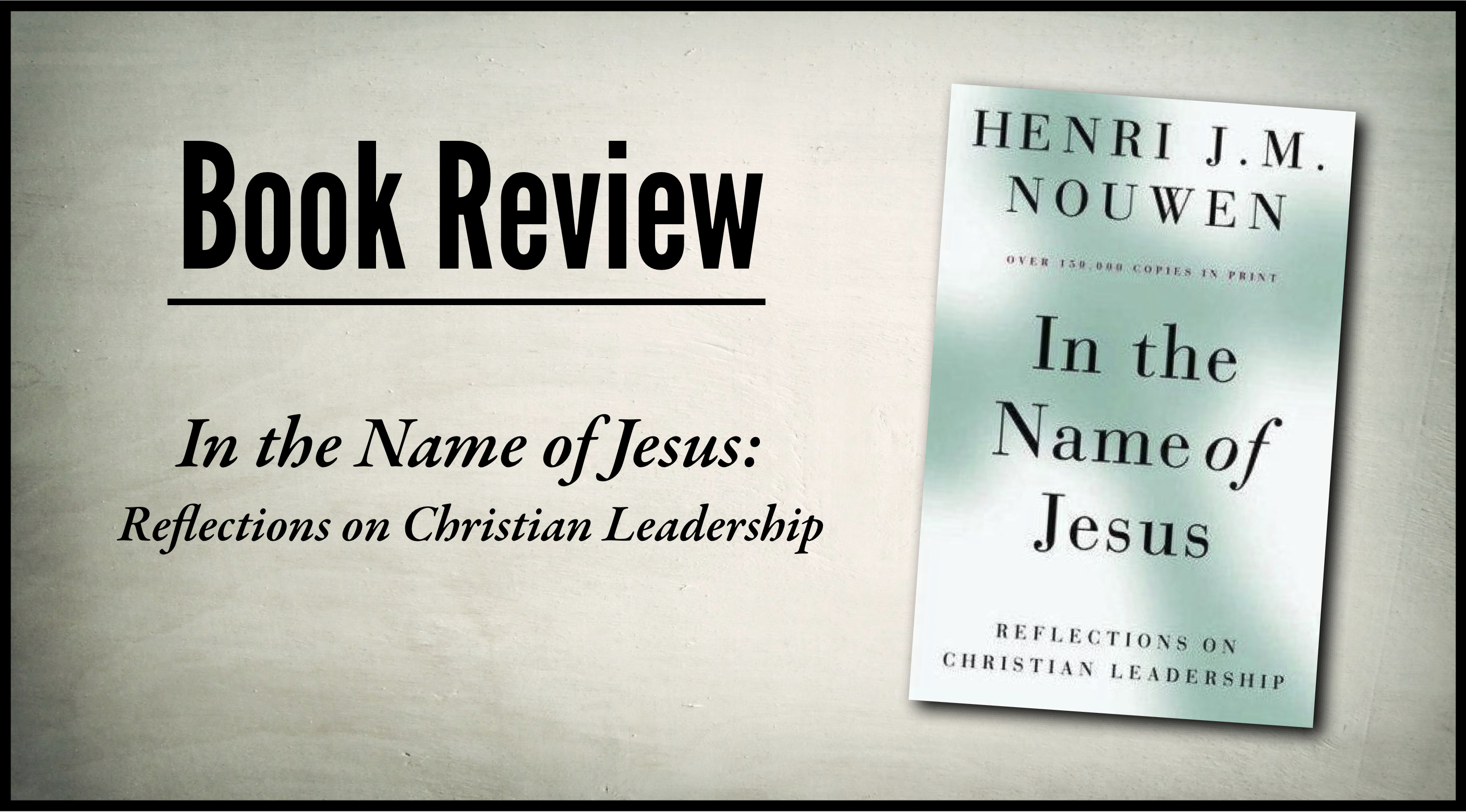
Book Review: In the Name of Jesus

Last month I posted my reading list for 2013, and in the comment section an old college friend recommended In The Name of Jesus: Reflections on Christian Leadership by Henri Nouwen. I was interested, because (a) it was on leadership, and (b) Nouwen, a Catholic priest, was a well-known writer whom I had never read before.

Furthermore, I was interested to read what he had to say because of what I assumed would be an interesting perspective. Nouwen was a respected professor at Notre Dame, Yale, and Harvard, but he chose to leave that behind to live and work with developmentally disabled people.

And I was correct—he did have an interesting perspective. In the Name of Jesus offers some radical views on Christian leadership, and by that, I mean that it takes seriously the things that Jesus says in Scripture.

Here are some quotations [my comments in brackets]:

“I am deeply convinced that the Christian leader of the future is called to be completely irrelevant and to stand in this world with nothing to offer but his or her own vulnerable self. That is the way Jesus came to reveal God’s love. The great message that we have to carry, as ministers of God’s word and followers of Jesus, is that God loves us not because of what we do or accomplish, but because God has created and redeemed us in love and has chosen us to proclaim that love as the true source of all human life.” (p. 18) [The message of irrelevance is hard to hear in our success-driven society. But to the degree that we emphasize and prop up our successes, how much do we alienate ourselves from the downtrodden who are most in need of God’s Good News?]

“Indeed, whenever we minister together, it is easier for people to recognize that we do not come in our own name, but in the name of the Lord Jesus who sent us.” (p. 36)

“We are not the healers, we are not the reconcilers, we are not the givers of life. We are sinful, broken, vulnerable people who need as much care as anyone we care for. The mystery of ministry is that we have been chosen to make our own limited and very conditional love the gateway for the unlimited and unconditional love of God.” (p. 37) [I love that—“the mystery of ministry.” As someone who is very aware of my own faults, I have certainly been struck by that irony before.]

“The way of the Christian leader is not the way of upward mobility in which our world has invested so much, but the way of downward mobility ending on the cross.” (p. 50) [Wow. Gut check.]

“Powerlessness and humility in the spiritual life do not refer to people who have no spine and who let everyone else make decisions for them. They refer to people who are so deeply in love with Jesus that they are ready to follow him wherever he guides them, always trusting that, with him, they will find life and find it abundantly.” (p. 50) [This is a helpful perspective: the Christian is not called to be listless or apathetic, but so trusting in God that we can appear to be unconcerned at times.]

“The task of future Christian leaders is not to make a little contribution to the solution of the pains and tribulations of their time, but to identify and announce the ways in which Jesus is leading God’s people out of slavery, through the desert to a new land of freedom.” (p. 54)

This was an easy read (only about 80 pages including a delightful personal story that was woven throughout the book), but it was also very challenging. There are a lot of leadership books out there, but not many of them follow the model of our Leader, who emptied Himself and became lowly on our behalf.

Book Review: Exegetical Fallacies

Of all the books I read in 2013, D.A. Carson’s Exegetical Fallacies was near the top of the list. It has a rough title and a terrible cover design, but the content is outstanding.

As readers of this blog know, in addition to being a full-time minister, I am also a theology graduate student. In the course of those studies (and my less formal studies as a minister) I have spent hours and hours learning the original biblical languages of Greek and Hebrew, as well as other skills to help me to better interpret (or exegete—see the book’s title above) the text of the Bible.

In the course of those studies, as I have grown better skilled and more careful about interpreting the Bible. At the same time, I have become dismayed by witnessing so frequently what I would consider to be ill-informed, haphazard, and shoddy biblical work. Sometimes this is done by people who have never studied original languages and yet presume to teach about them, and other times it is done by brilliant people who make careless errors. But either way, it happens all the time (and to be fair, I’m sure I do it too, but hopefully I do it less frequently than I once did).

Written by respected New Testament scholar D.A. Carson, Exegetical Fallacies addresses a lot of these interpretative problems, and I strongly believe that it is a book which should be read by all preachers, teachers, and studious Christians (a heavy recommendation, I know). The book is divided into four main sections.

Word-Study Fallacies

In my opinion, this section was vitally important because preachers and authors so frequently appeal to Hebrew and Greek words to make their arguments, and they so frequently do it poorly. Here are a couple of good quotations, some of which will refer to some ideas that you may have heard before [with my comments in brackets]:

“There is nothing intrinsic to the verb ἀγαπαω (agapao) or the noun ἀγαπη (agape) to prove its real meaning or hidden meaning refers to some special kind of love.” (p. 32) [How many times have you heard that Christians are supposed to exhibit agape love, which is a higher and purer kind of love than what is described by other Greek words?]

“Our word dynamite is etymologically derive from δυναμις (dynamis, power, or even miracle). I do not know how many times I have heard preachers offer some such rendering of Romans 1:16 as this: “I am not ashamed of the gospel, for it is the dynamite of God unto salvation for everyone who believes…”—often with a knowing tilt of the head, as if something profound or even esoteric has been uttered. This is not just the old root fallacy revisited. It is worse: it is an appeal to a kind of reverse etymology, the root fallacy compounded by anachronism. Did Paul think of dynamite when he penned this word? And in any case, even to mention dynamite as a kind of analogy is singularly inappropriate. Dynamite blows things up, tears things down, rips out rock, gouges holes, destroys things.” (p. 33-34) [And the implication is that it is not dynamite or a similar force that raises us from the dead and transforms us into the likeness of Christ. It is power of an entirely different sort.]

“It is methodologically irresponsible to read the meaning of a Hebrew word into its Greek equivalent without further ado. The case must be argued.” (p. 62) [You should be a little suspicious when someone refers to a word from the Old Testament and says “The same word in the New Testament is…” or vice-versa.]

“As important as word studies are, it is very doubtful if profound understanding of any text or of any theme is really possible by word studies alone.” (p. 64) [Words ultimately derive their meaning from context; you can’t divorce words from their context without also stripping away much of the meaning.]

Grammatical Fallacies

Again, this is an important part of the book, for similar reasons to those mentioned above. Often times, the biblical languages are abused in ways that misunderstands the grammar of those languages rather than specific words.

I won’t include any quotations from this part of the book, but as an example of this type of problem, it is common to hear or read the claim that the aorist tense of the verb in Greek refers to a “once for all” or “completed” action, and then some grand theological point is made from this. The problem is that the aorist tense is incredibly flexible and means a great variety of things. Frequently in the New Testament aorist verbs are used to described ongoing or repeated actions.

Carson provides examples of several other types of grammatical fallacies as well.

Logical Fallacies

I found this section to be less helpful, just because I had studied logical fallacies multiple times before in communication classes. I would imagine that this chapter would still be very helpful if this was a subject you hadn’t previously studied before.

Carson covers a variety of fallacies including appeal to selective evidence, purely emotive appeals, the non sequitur, and simplistic appeals to authority.

Presuppositional and Historical Fallacies

This was another very important section for me. Increasingly, I have witnessed preachers and scholars use their historical reconstruction of the supposed setting of a biblical text (i.e. something which might have influenced the text but which we don’t actually know for sure) to trump what the text actually says. This is poor exegesis.

“The fallacy is in thinking that speculative reconstruction of first-century Jewish and Christian history should be given much weight in the exegesis of the New Testament documents…a little speculative reconstruction of the flow of history is surely allowable if we are attempting to fill in some of the lacunae left by insufficient evidence; but it is methodologically indefensible to use those speculations to undermine large parts of the only evidence we have.” (p.131-32)

Concluding Thoughts

Again, I think this is a really important book, and so I’ll just repeat what I said above: I strongly believe that it is a book which should be read by all preachers, teachers, and studious Christians.

Having said that, reading about so many potential exegetical problems can have its drawbacks: (1) It will make you more critical of the sermons you hear (and, if you’re not careful, in an unhealthy way), and (2) It will make you more hesitant about your own biblical interpretation and exegesis. But, helpful as always, Carson has good words on this topic as well:

“A little self-doubt will do no harm and may do a great deal of good: we will be more open to learn and correct our mistakes. But too much will shackle and stifle us with deep insecurities and make us so much aware of methods that we may overlook truth itself. I have no easy answer to this dilemma. But we will not go far astray if we approach the Bible with a humble mind and then resolve to focus on central truths. Gradually we will build up our exegetical skills by even handed study and a reverent, prayerful determination to become like the workman ‘who correctly handles the word of truth.’” (p. 142)

« Older posts Newer posts »

© 2026 The Doc File

Theme by Anders Noren — Up ↑