The online journal of Luke Dockery

Category: Reading (Page 24 of 33)

Walking to Kansas City

Back in April, I mentioned here on the blog that I had begun the practice of walking laps in the church auditorium while doing reading for grad school or preparation for Bible classes, sermons, etc. Once I started taking Hebrew in the fall, I realized that this also worked well for memorizing vocabulary words, and I continued to walk quite a few laps each week.

I have gotten some jokes about ruining the carpet in the auditorium or wearing grooves into the floor, but I have kept at it, partially because I know the exercise is good for me, and partially because it helps me stay alert and read better (than if I’m reclining in my chair or lying on my couch).

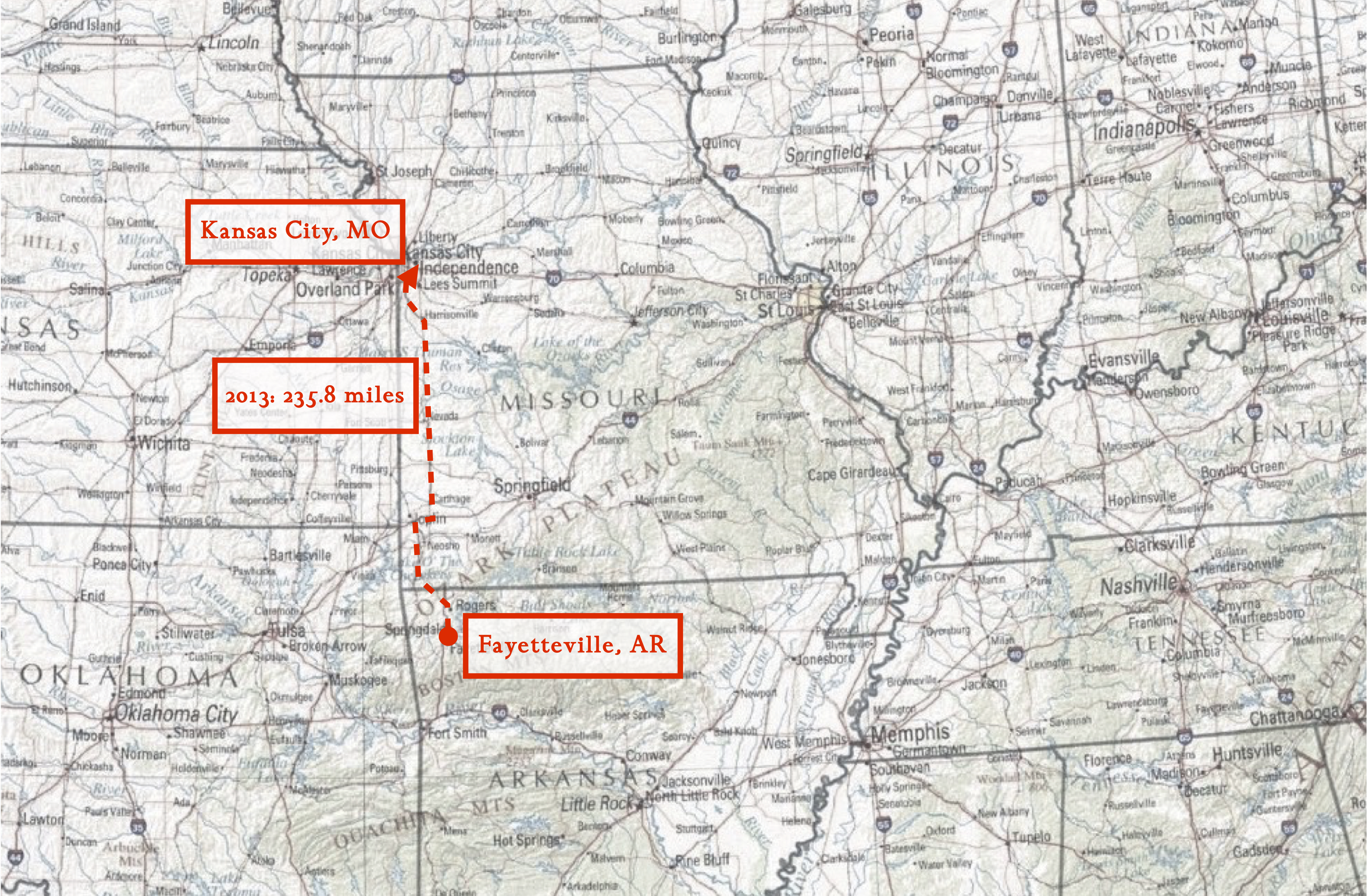
Being the person that I am, I kept meticulous records of the number of laps I walked each day, and man, it is amazing how it all adds up! Keep in mind that I didn’t start doing this until April and therefore missed out on 1/4 of the year:

Total Laps in 2013: 5608

Distance per Lap: approximately 74 yards

Total Distance: 235.8 miles

What all of this means is that in 2013, while at work (and while actually doing work), I did the equivalent of traveling from Fayetteville, Arkansas, to Kansas City, Missouri on foot. Pretty cool.

I am excited to see how many laps I can accumulate in a full year!

Product Review: ESV Single Column Journaling Bible

Just before Christmas, I became aware of Crossway’s ESV Single Column Journaling Bible, and added it to my wish list at the last minute. I received it from my in-laws, and I’m glad I did! I find it to be ideal for daily Bible reading.

In the first place, I like how sturdy it is. If you’re going to use a Bible for daily reading, it is likely to get treated fairly rough—moved around a lot, opened and closed frequently, shoved in and out of bags. I like that this Bible is hardback and has rounded corners which are less likely to get blunted or bent. Also, an elastic strap helps keep the Bible shut, which lessens the likelihood of pages getting bent or the covers being moved in a way that places shearing stress on the binding.

Outside of the Bible, showing the hardback cover and elastic closing strap.

Another thing about this Bible I really appreciate is the single-column reading format. Having multiple columns might be good for fitting a lot of text in a limited space, but it is less pleasing to the eye and, at least for me, more difficult to read.

Inside of the Bible with the single-column format.

This is a journaling Bible, and my favorite characteristic of it is the space for writing notes off to the side. A lot of Bibles (at least, if they are single column) provide space on the side where you can take notes. What I prefer about this Bible is that lines are provided to help keep your notes neat (for someone like me with borderline obsessive tendencies, this is a good thing), and the paper is thicker than normal Bible paper, which means you can use a variety of pens and not have to worry about them bleeding through. Currently, the Sharpie pen is my favorite, and even it doesn’t bleed through to a significant degree despite the fact that it is basically a fine-tipped marker (see the picture below).

In addition to the notes I keep as I go through my daily readings, I am also using this Bible to keep basic notes of the sermons I listen to during worship this year. I am really enjoying it so far.

Here you can see some of my notes from Genesis 5-6.

Finally, the back of the Bible, though very limited on “helps” (it is, after all, a journaling Bible, not a study Bible), contains an excellent One Year Bible Reading Plan that I am using this year. I often get bogged down with Bible reading plans that just start at Genesis and slavishly plug away through the entire Bible. With this plan, every day I have a reading from the Old Testament, the Psalms, and the New Testament (see below for an idea). This provides more variety in the daily readings, which is nice, and to me, helps maintain a “big picture” focus on Scripture as I go through specific verses and chapters.

A sampling of the Bible reading plan in the back.

All in all, I love this product, and would recommend it highly. Currently, I have no significant criticisms at all.

Reading in 2013

For several years now, I have kept track of the reading I do and then, at the beginning of each year, posted the list of the previous year’s reading. For some reason, keeping track of stuff like this is fun for me, and shockingly, this is always one of my more popular posts each year, so apparently it is interesting to others as well.

Without further ado, here is my reading list for 2013:

  1. Scandalous: Lessons in Redemption From Unlikely Women, by Sean Palmer
  2. When To Leave: How To Know It’s Time To Move On (Before You Stay Way Too Long), by Wade Hodges
  3. Soul Work: Confessions of a Part-Time Monk, by Randy Harris
  4. The Mission of God’s People: A Biblical Theology of the Church’s Mission, by Christopher J.H. Wright
  5. Understanding the Love Chapter, by Adam Faughn
  6. The Shepherd’s Pipe: Songs from the Holy Night, by Georg Johannes Gick
  7. Size Transitions in Congregations, edited by Beth Ann Gaede
  8. 25 Questions Every Youth Minister Should Ask, by Chad Landman
  9. The Good News from North Haven: A Year in the Life of a Small Town, by Michael Lindvall
  10.  The Middle-Sized Church: Problems & Prescriptions, by Lyle E. Schaller
  11.  The Rechurching of Rural America: A report of the restudy of rural churches in America, by Gary Farley, John Bennett, Jere Giles, and Arnold Parks
  12.  Effective Youth Ministry: A Congregational Approach, by Roland D. Martinson
  13.  Building Together: Developing Your Blueprint for Congregational Youth Ministry, by Carol Duerksen
  14.  Small, Strong Congregations: Creating Strengths and Health for Your Congregation, by Kennon L. Callahan
  15.  Technology in Youth and Family Ministry, by Joey Sparks and Scott Bond
  16.  Turnaround and Beyond: A Hopeful Future for Small Membership Churches, by Ron Crandall
  17.  The Indispensable Guide for Smaller Churches, by David R. Ray
  18.  Thriving Youth Ministry in Smaller Churches: Secrets for Cultivating a Dynamic Youth Ministry, by Rick Chromey and Stephanie Caro
  19.  The Churches of Christ in the 20th Century: Homer Hailey’s Personal Journey of Faith, by David Edwin Harrell, Jr.
  20.  Family-Based Youth Ministry, revised edition, by Mark DeVries
  21.  Grandpa was a Preacher, by Leroy Brownlow
  22.  Reading the Gospels Wisely: A Narrative and Theological Introduction, by Jonathan T. Pennington
  23.  Know Who You Are: Discover Your Identity in the Book of Ephesians, by Robbie Mackenzie
  24.  Prima Scriptura: An Introduction to New Testament Interpretation, by N. Clayton Croy
  25.  1 Peter, by David G. Horrell
  26.  The Blockade Runners, by Jules Verne
  27.  Gorky Park, by Martin Cruz Smith
  28.  Star Wars: Jedi Academy, by Jeffrey Brown
  29.  Sing His Praise! A Case for A Cappella Music as Worship Today, by Rubel Shelly
  30. Why They Left: Listening to Those Who Have Left Churches of Christ, by Flavil R. Yeakley Jr.
  31. The Noticer, by Andy Andrews
  32. The Epic of God, by Michael Whitworth
  33. Crispin: The Cross of Lead, by Avi
  34. City of Darkness, by Kim Wright
  35. Polar Star, by Martin Cruz Smith
  36. Sequels: Love After First Sight, by Jonathan Storment
  37. Muscle and a Shovel, by Michael Shank
  38. The Derision of Heaven, by Michael Whitworth
  39. Calico Joe, by John Grisham
  40. Centered: Christ in Colossians, by Joseph Horton
  41. Exegetical Fallacies, by D.A. Carson
  42. Moonwalking with Einstein: The Art and Science of Remembering Everything, by Joshua Foer
  43. Bible Wines, or The Laws of Fermentation, by William Patton
  44. 1 Peter: A Handbook on the Greek Text, by Mark Dubis
  45. Genesis in Space and Time, by Francis A. Schaeffer
  46. The Story of Churches of Christ, by Douglas A. Foster
  47. The Complete Calvin and Hobbes Book One, by Bill Watterson
  48. Almost Christian: What the Faith of Our Teenagers is Telling the American Church, by Kenda Creasy Dean
  49. The Christ of Christmas: Readings for Advent, by Calvin Miller
  50. Glorious Ruin: How Suffering Sets You Free, by Tullian Tchividjian

One thing about 2013 that was a little different than years past is that I got into eBooks more. Some eBooks are pretty short, which makes for quick reading, while others are longer. One thing that’s nice about them either way is that if you have them on an iPad/tablet or even your smart phone, you can read them in all sorts of places where you just have a few minutes of extra time and didn’t have the foresight to bring a book with you. This is a cool thing. In general though, I much prefer reading out of a book with pages than on a tablet.

You’ll notice from the list above that 2013 was a year where I read a lot about ministry (I think 16 in all). Of course, this is greatly influenced by the fact that I am a minister, and that I took a ministry grad school class early in the year that required a ton of reading. Of these books, some were poor, most were helpful, and two were outstanding. First,  Family-Based Youth Ministry by Mark DeVries has become a youth ministry classic, and with good reason. I would highly recommend it to any youth ministers reading this, or anyone who may not technically be a “youth minister” but is interested in working with young people and helping them to become disciples of Jesus Christ. And also, Why They Left: Listening to Those Who Have Left Churches of Christ was really, really good.

In addition to the ministry books, I read several good books on theology and the Bible (if you search for these titles in my blog you’ll see that I quoted from many of them): The Mission of God’s People: A Biblical Theology of the Church’s Mission, Reading the Gospels Wisely: A Narrative and Theological Introduction, The Epic of God, The Derision of Heaven, Exegetical Fallacies, and Glorious Ruin: How Suffering Sets You Free (I hope to write reviews of the last two soon).

Concerning other books in no way related to ministry, grad school, or theology, City of Darkness was a fun mystery placed against the backdrop of the Jack the Ripper killings in 1880s London. Gorky Park is, in my opinion, a masterpiece: in addition to providing a thrilling and thoughtful mystery, it also provides a brilliant look at the USSR during the decline of the 1980s. Polar Star, a sequel to Gorky Park, was good, but not as good. And for Christmas I got the Complete Calvin and Hobbes and read the first volume by year’s end; it was glorious, as Calvin and Hobbes always is.

My overall book total increased from 45 in 2012 to 50 in 2013. I pushed hard to get to the 50-book mark, and honestly, I think is about my limit with all of the other things I have going on. In fact, I expect to read less in 2014 than I did in 2013.

I have already started reading in 2014, and my to-read shelf already has over 30 books on it (these are books I already own; there’s even more on my Amazon wish list), but I always like to hear the recommendations of others. What were your favorite books from 2013 (or whenever you read them)?

For comparison’s sake, you can see the books I read in 2012, 2011, 2010, 2009, and 2008.
Book Review: The Derision of Heaven

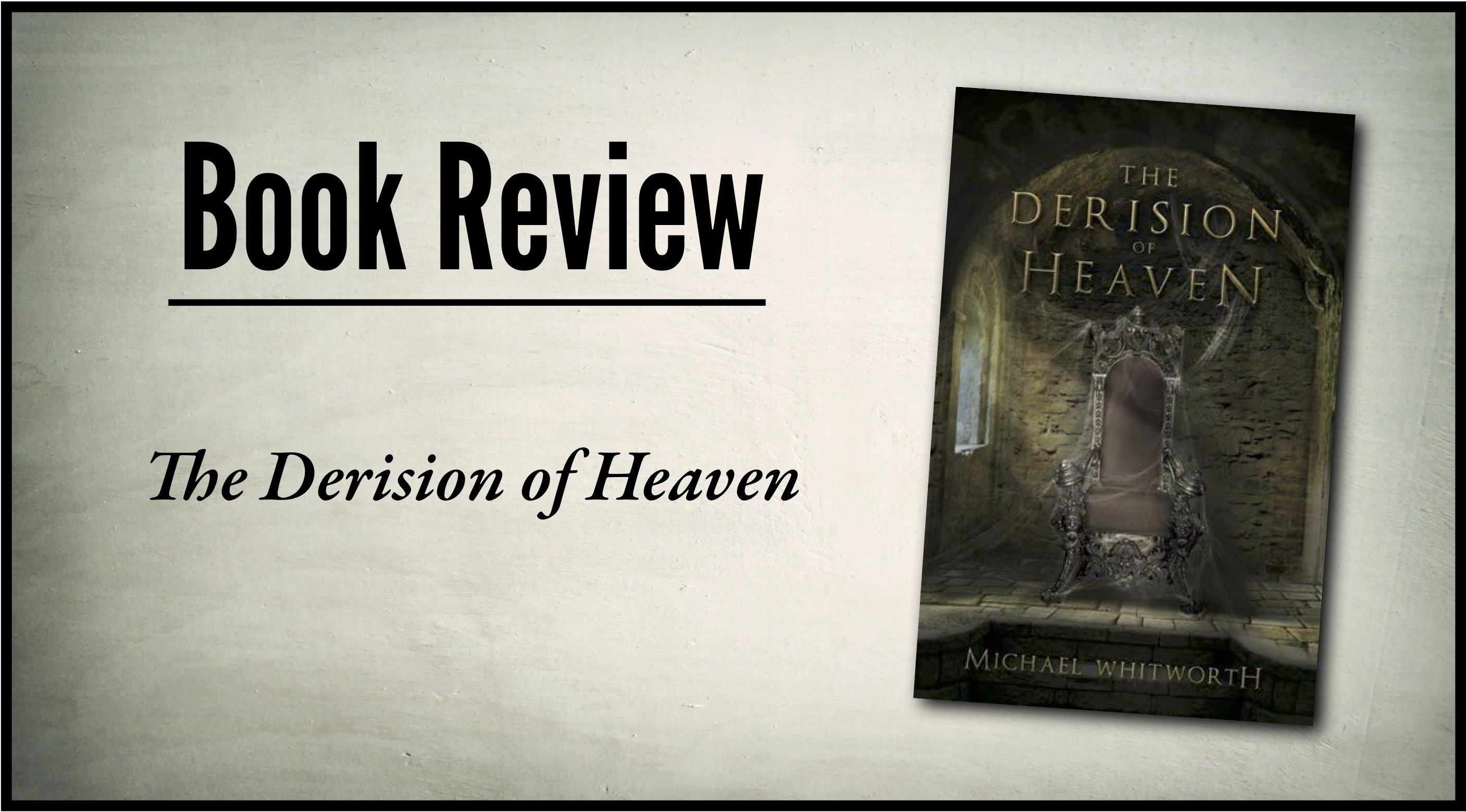
I am a little behind on posting this because I had a very busy week last week, but I just wanted to share The Derision of Heaven by Michael Whitworth. I had previously read and reviewed The Epic of God, Whitworth’s book on Genesis, and since I enjoyed that book so much, I made sure to check out The Derision of Heaven, which focuses on the Book of Daniel.

If anything, I think I liked Derision even more than Epic. Part of this may have been because I read it in paperback rather than a digital version (I am old school when it comes to reading), but it was a really good book, and possessed the same tandem of qualities that made its predecessor such a joy to read as well: a balance between style and substance. By that, I mean that the book is very readable while still being very well-researched.

Before I get into the good stuff (sharing my favorite quotations), let me just add one point. The Book of Daniel is 12 chapters long. The first six chapters consist of relatively straightforward historical narrative, while the last six are filled with wild apocalyptic prophecy. Based on those last six chapters, all sorts of people have predicted all sorts of things, usually with little success. One of the things I appreciated most about this book was the author’s humility in interpreting these difficult passages while still covering them thoroughly and repeatedly emphasizing their main theme: God is at work behind the scenes, and is in control of the universe.

Now, on to the quotations (with my comments in brackets):

“As long as God lives and reigns, his people have hope. Christians should never fear the state; the book of Daniel assures us God has numbered the days of every wicked leader who wields power irresponsibly.” (6)

“Whether in times of disaster or disorientation, we can navigate turbulent waters, not by being the strongest, savviest, or most obnoxious, but by being faithful to God and bringing him glory as Daniel did.” (25)

“Being a light in the darkness doesn’t require our being a burr under the saddle.” (27)

“To pretend that our own political leaders hold office by the will of the people and not also by the will of God is to foolishly assume that these two things are mutually exclusive. They are not.” (38)

“Our personal talents and abilities matter less than our humble willingness to be used by God for his glory.” (39)

“Empires and superpowers rise and fall at God’s will. It’s this realization that causes me to be quite concerned about those Christians who seem prouder to be an American than a member of the church, God’s eternal kingdom, one that cannot be shaken…it’s not a sin to be a patriot unless patriotism becomes your idol. I wonder if some Christians aren’t bigger fans of the Constitution than the gospel.” (48-49) [I agree with his concern and frustration. Many who claim to be Christians take to social media with more passion over some political issue than they ever show on behalf of Christ. Sad but true.]

“Our attitude and behavior when under trial is a powerful testimony to the glory and love of God.” (65)

“In God’s way of working, progress and success often occur so slowly that they are unobservable.” (98)

“I want you to appreciate the tension that exists between “God can” and “God will.” We live our lives within that tension. We know God can do something about our suffering, but will he? In this tense area of in-between is where Satan thrives. In this soil, he plants seeds of doubt in our hearts and nurtures them until they have borne the ugly fruit of indignation, rebellion, and death. But there is something we can place in that gap to frustrate Satan’s schemes—not faith in God’s deliverance, for he does not always do so, but confidence that God will do what’s ultimately best for us. God always does whatever will bring him glory, and God glorifying himself is what is ultimately best for us.” (111) [This is such an important idea, I think, that I gave it its own post. The sooner we can understand and embrace this tension, the better it will be for our spiritual maturity and our own peace of mind.]

“You and I would be better off if we spent less time worrying about gun control, runaway deficit spending, and where/how long the president spends his vacation. We would be better served worrying less about how Liberals, Conservatives, Muslims, Atheists, or others not like us are destroying America. Instead, how would things be different if we confessed daily that Jesus, even now, held dominion over all the earth? What would it look like if we spent more time urging people to willingly kneel before King Jesus now before being compelled to do so on the final day? What would it look like if more Christians spent less time griping about earthly empires destined for history’s trash heap, and celebrated instead Jesus’ indestructible and eternal kingdom?” (132) [This is kind of a soapbox, but a much needed one. I completely agree with him.]

“In the dark days that lie ahead, let us resolve to fight God’s way, not the world’s way.” (185)

 Hopefully, these quotations give you a taste of the book, and make you want to get a copy to read yourself. It would be an invaluable resource for anyone preparing to teach or preach on Daniel, but also beneficial for personal Bible study as well.

Book Review: The Epic of God


Last night I finished reading Michael Whitworth’s The Epic of God, which is a guide to the Book of Genesis (rather than a full commentary), and it was a really good book.

The Epic of God is not written to be a scholarly commentary, and there’s absolutely nothing wrong with that. In fact, I would argue that what Whitworth has done is equally if not more valuable: he has produced a text which is informed and supported by scholarship (it is a well-researched book) but is easily read and understood by the average Christian. This is an important accomplishment, and I am always appreciative of efforts that bridge the gap between the church and the academy.

Anyway, I wrote a somewhat more in-depth review on the book’s Amazon page, but here I just wanted to do what I enjoy—share good quotations! Here they are (with my comments in brackets):

“After Adam was created and placed in Eden, he was given the task of working and keeping the garden. Work is often though to be a consequence of the Fall, but notice that in the perfect world that God created, man was created to work as a means of glorifying the Lord.” (26) [Amen! Work is a good thing!]

“Sin is not a blunder we can flippantly dismiss with ‘Everyone makes mistakes.’ A mistake is wearing two socks that don’t match; sin is an offense and abomination against a holy God. Our sins cost God the life of his Son.” (79)

“There is never an excuse to be selfish with God’s blessings.” (120)

“The God of Abraham has fixed an appointed time, unknown to all but him, when all suffering will come to a fantastic end! It will be the moment when the Son comes to be glorified with his church and render awestruck all who have put their faith in him…knowing that our heartache will eventually give way to hallelujahs can help us bear the pain a little while longer. God sees. God knows. God cares. He has appointed a time when he will visit his people in their distress and bring with him the redemption of the ages!” (165) [One of the definite strengths of the book is the way the author ties the story of Genesis into God’s greater story of the redemption and salvation of his creation.]

“And this is the truth that Abraham discovered on that occasion, that God’s commitment to justice is greater than our own…But his commitment to mercy is equally greater than our own.” (167-68)

“The life of faith is an odyssey of unexpected twists and turns.” (190) [This has certainly been true in my life!]

“If you are having difficulty surrendering to God what is most valuable to you, perhaps you have never acknowledged it as coming from him to begin with.” (215) [Ouch.]

“Prayer is for our benefit, not God’s. Praying for something that is in the will of God shapes us spiritually in ways few other things can. God’s desires become our own, and we start to see things as he does.” (232-33)

“It is natural and healthy for parents to want their children to succeed in every area. But what shall it profit a child if he becomes a Rhodes scholar or wins the Heisman trophy, yet loses his soul? (303) [Yeah, I wish every youth group parent I have or will ever have would read this quote about three times a day.]

“It is not healthy, not does it deepen our faith, to play the what-if game…when we find ourselves in the throes of suffering and pain, we must refuse to play the what-if game. Ask instead, ‘What if God is greater than my current circumstances? If God is indeed working out a plan to bring Himself greater glory, how should I react?’ Then respond accordingly, confident that he can use our disappointments to deepen our faith and bring our lives into greater harmony with him.” (327) [This was very helpful for me to read, as I struggle with playing the what-if game.]

“We frail and pathetic humans have a bad habit of gauging God’s presence based on our circumstances…But veterans of the life of faith know that circumstances are no better a barometer of whether God is with you than overcast skies are proof that the sun has vanished completely.” (329) [Wow.]

I know that was a lot of quotations, but as I said, it was a really good book! The Epic of God will deepen your understanding of the Book of Genesis, but more importantly, it will deepen your faith as well!

« Older posts Newer posts »

© 2026 The Doc File

Theme by Anders Noren — Up ↑