The online journal of Luke Dockery

Category: Reviews (Page 10 of 16)

Book Review: George MacDonald

George MacDonald was a Scottish author, poet, and Christian minister. I was aware of him primarily because he had a major influence on C.S. Lewis, and in fact, Lewis has said that MacDonald’s writings were instrumental in his acceptance of the Christian faith.

At one point, Lewis compiled an anthology of his favorite excerpts from MacDonald’s works, and that is what this volume is: 365 short readings taken from various books, sermons, and plays, and arranged and edited by Lewis himself.

Below are some of my favorite quotations [with my comments inserted in brackets]. I have included a lot of them because most are very short (and yes, I do realize that some irony is involved in me sharing my favorite quotations from a book which is essentially C.S. Lewis’s favorite quotations):

“For He regards men not as they are merely, but as they shall be; not as they shall be merely, but as they are now growing, or capable of growing, toward that image after which He made them that they might grow to it.” (p.3)

“It may be an infinitely less evil to murder a man than to refuse to forgive him. The former may be the act of a moment of passion: the latter is the heart’s choice. It is spiritual murder, the worst, to hate, to brood over the feeling that excludes, that, in our microcosm, kills the image, the idea of the hated.” (p.7) [This is a helpful perspective: refusing to forgive is truly a premeditated, cold-blooded act. It is soul-destroying.]

“Truth is truth, whether from the lips of Jesus or Balaam.” (p.8) [I think this speaks strongly against the idea that, if we disagree with someone about something, we can’t cooperate with them in any sense, affirm anything they say, or applaud anything they do. I think truth belongs to God, and should be affirmed whenever we hear it, regardless of the source.]

“But it is not the rich man only who is under the dominion of things; they too are slaves who, having no money, are unhappy from the lack of it.” (p.38) [Materialism can crush the rich and poor alike.]

“However bad I may be, I am the child of God, and therein lies my blame. Ah, I would not lose my blame! In my blame lies my hope.” (p.64)

“Of all things let us avoid the false refuge of a weary collapse, a hopeless yielding to things as they are. It is the life in us that is discontented: we need more of what is discontented, not more of the cause of its discontent.” (p.70) [I think N.T. Wright would be in full agreement with this!]

“If the Lord were to appear this day in England as once in Palestine, He would not come in the halo of the painters of with that wintry shine of effeminate beauty, of sweet weakness, in which it is their helpless custom to represent Him.” (p.91)

“…Dare I give quarter to what I see to be a lie because my brother believes it?” (p.105)

“While a satisfied justice is an unavoidable eternal event, a satisfied revenge is an eternal impossibility.” (p.121)

“It is not by driving away our brother that we can be alone with God.” (p.127)

“Our human life is often, at best, but an oscillation between the extremes which together make the truth.” (p.134) [So many problems and so many false teachings come about as a form of extremism. Balance is important.]

“Dissociate immortality from the living Immortality, and it is not a thing to be desired.” (p.141) [I think too many people see the primary benefit of eternal salvation as getting to live forever. But I think the Bible is clear that the primary benefit is getting to be with God forever. Without the latter, the former would be a punishment, not a reward.]

“There are those who in their very first seeking of it are nearer to the Kingdom of Heaven than many who have for years believed themselves of it. In the former there is more of the mind of Jesus, and when He calls them they recognize Him at once and go after Him; while the others examine Him from head to foot, and finding Him not sufficiently like the Jesus of their conception, turn their backs and go to church or chapel or chamber to kneel before a vague form mingled of tradition and fancy.” (p.144-45) [Ouch.]

“By obeying one learns how to obey.” (p.154)

“With every morn my life afresh must break the crust of self, gathered about me fresh.” (p.158) [Christianity is about dying to self. Every. Single. Day.]

“A beast does not know that he is a beast, an the nearer a man gets to being a beast the less he knows it.” (p.160)

“We are often unable to tell people what they need to know, because they want to know something else.” (p.168)

On the whole, I enjoyed reading George MacDonald, though the nature of the book meant that the quotations were, necessarily, removed from their fuller context and made for choppy reading if you read it as a regular book (which I did) rather than reading one excerpt per day. I do think it would be a helpful devotional book to read on a daily basis. The readings are short (5-6 words to a page) but powerful, and could do much to properly orient your perspective before you plunge into the world (say, right before you get out of the car when you are at work).
Book Review: Sticky Faith

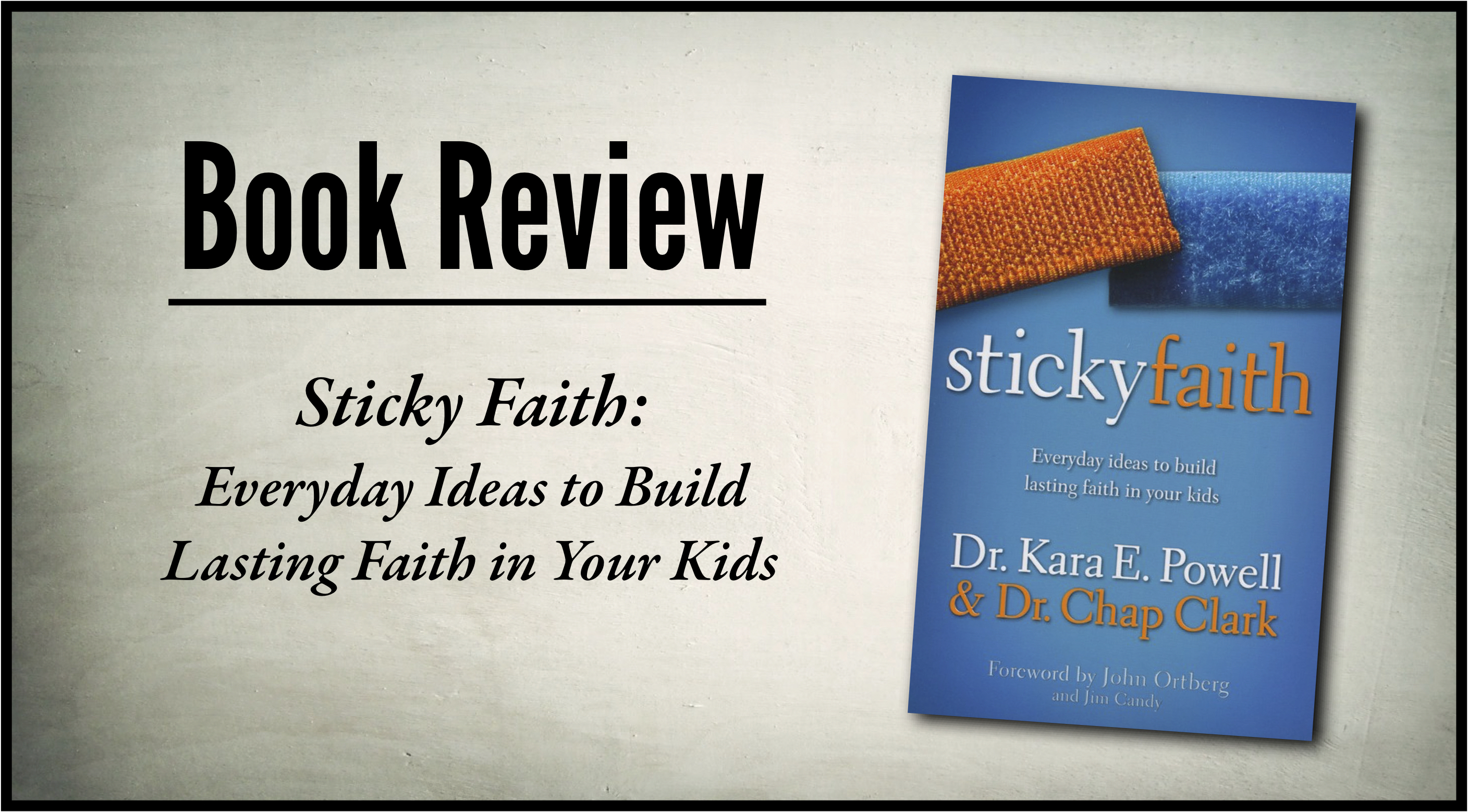
I have just finished reading Sticky Faith: Everyday Ideas to Build Lasting Faith in Your Kids for the second time. Looking back, I was surprised that I hadn’t reviewed it here on my blog previously (though I have referenced it several times), so I thought I would quickly do so today. Quite simply, Sticky Faith is an outstanding book, and it’s one that I think all parents should read. I’m actually co-teaching a class on it right now at church, and along with 2-3 other sources, it forms the core of my youth ministry library.

Sticky Faith is written for parents (though there are other versions for youth workers and students), and is all about helping you to instill a lasting faith (or a faith that “sticks”, hence the title) in your children. And I’m sure there are a lot of books like that, but what I really like about Sticky Faith is that (1) it is based on extensive research, and (2) it offers incredibly practical suggestions of tangible things you can do to help faith development in your kids.

Like any book, there are some ideas and suggestions in Sticky Faith that I disagree with, and I’m sure it will be that way for you too. But that doesn’t change the fact that, overall, it is an incredibly helpful resource for Christian parents.

Here are some of my favorite quotations from the book [my comments are added in brackets]:

“…Our conclusion is that 40 to 50 percent of kids who graduate from a church of youth group will fail to stick with their faith in college…only 20 percent of college students who leave the faith planned to do so during high school. The remaining 80 percent intended to stick with their faith but didn’t.” (pp. 15-16) [There are a lot of other alarming statistics which they gather from their research. These helpful numbers describe a big problem, which the rest of the book then sets about trying to address.]

“How you express and live out your faith may have a greater impact on your son or daughter than anything else.” (p. 25)

“…A performance-based Christianity can last only so long.” (p. 36)

“The greatest gift you can give your children is to let them see you struggle and wrestle with how to live a lifetime of trust in God.” (p. 46)

“If I had to choose between living out my faith or talking about my faith in front of my kids, I’d choose the former every time. But I don’t have to choose. And neither do you. We can do both.” (p.70)

“The closest our research has come to that definitive silver bullet is this sticky finding: for high school and college students, there is a relationship between attendance at church-wide worship services and Sticky Faith.” (p. 97) [Parents, this should make you think twice before missing church for a hunting trip, or a baseball tournament, or some other family outing. It matters. Youth ministers, this should make us think twice before frequently removing our youth groups from our congregational worship gatherings. A big part of being the Body of Christ is being present with the Body of Christ.]

“Over and over, students have told us that the first two weeks at college are when they make key decisions about drinking and other high-risk behaviors, right along with choosing whether to go to church or to a campus ministry.” (p. 151)

“It’s okay to go through periods of doubt and distrust and disillusionment. It’s okay to go through periods of questioning and confusion. Don’t run away from them. At the same time, don’t go off the deep end. Do the intellectual and spiritual soul searching within the context of a secure community of people who truly love you.” (p. 172) [This quote actually came from a student who was part of the research study—a lot of wisdom here!]

“But [kids] soon come to know that faith is ultimately meaningless unless they choose it for themselves.” (p. 179) [Yes. We must own our faith, rather than simply inherit the faith of our parents.]

“Especially during their lowest times, your kids need to know that, above all else, you are there for them, regardless of what they are going through.” (p. 180)

“If your family has served Christ through much of your child’s life, the seeds you have planted are potent and real.” (p. 187)

I could go on and on—large sections of my copy of Sticky Faith are highlighted or underlined—but these quotations should give you an idea of what the book is like. In short, I would recommend it to any Christian parent, or anyone who works closely with teens.

Book Review: Fit for the Pulpit

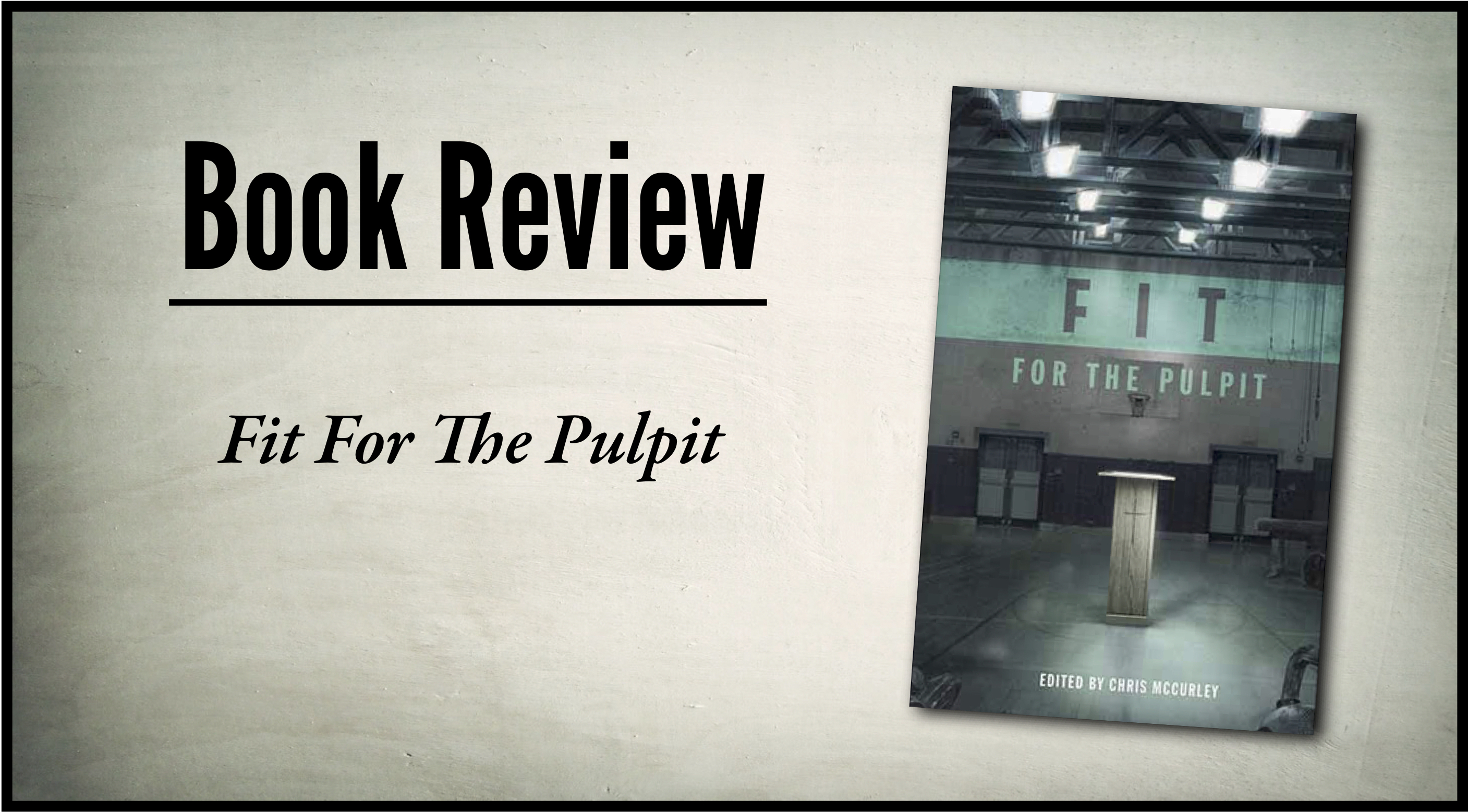
I recently finished reading Fit For The Pulpit: The Preacher & His Challenges, a book written for preachers, by several preachers, and edited by Chris McCurley.

As the title would indicate, this little volume (138 pages of actual text) focuses on different challenges faced by preachers, and offers guidance and advice on how to deal with each. The topics of time management, relationships, discouragement, stress, criticism, family, finances, sin, attitude, laziness, and the “core” of the preacher are covered.

Technically, I am not a “preacher,” but I am a minister who preaches on occasion, and virtually all of this material applied to me in some way. I have read a lot of books on ministry of one sort or another, and while I wouldn’t consider this to be a great book (more on that below), it is still a good book, and fits in well alongside other books on ministry.

I’ll share three gentle criticisms of this book that I had, and then share some good quotations.

First, the book is an anthology, with ten different ministers writing the eleven chapters. I’m sure the idea was to get the voices and perspectives of several different experienced preachers on the various topics which were covered, but honestly, the cumulative effect for me was that the writing was somewhat choppy and disjointed. Some chapters are better than others in large part because some writers were better than others. Also, one particular biblical story regarding Elijah was used as an illustration in three different chapters, which seemed pretty repetitive. I don’t think this would happen with one author.

Secondly, there is a very practical chapter on the preacher and his family which provides some valuable suggestions and insights on how a preacher can care for and be the spiritual leader of his family. This was definitely a needed chapter: there are a lot of good, well-meaning men who have devoted their lives to ministry but who forgot to devote much of anything to their families and as a result, have a variety of tragic issues to deal with (divorce, faithless children, addiction, etc.). What I disliked about this chapter was that I thought it too easily glossed over the inherent tension between our devotion to Jesus and our devotion to our families. Jesus said some tough things about the importance of our families relative to Him, and part of the true difficulty of being a minister is identifying those things which are “just” work and should therefore be a lower priority than our families, and those things which are directly tied to our answer to the call of Christ and therefore are of the utmost importance. Certainly not everything in ministry should come before our families, but I think the clear biblical teaching is that some things should. Unfortunately, this chapter didn’t address this crucial topic.

Finally, on a book about preaching, I wish there would have been a chapter devoted directly to the practice of Bible study and putting a sermon together. Look, preachers do a lot of things and wear a lot of hats in their jobs, but none of them compares to the public proclamation of God’s word. Unfortunately, we have gotten to the point where too often, the preacher is so busy with other things that he has to squeeze in his sermon preparation into a couple hours at the end of the week, which is just not enough. Even worse, the ready availability of hundreds or thousands of free sermons online has made it easy for some preachers to frequently skip Bible study altogether. This is a real problem, and though the importance of preaching and Bible study was mentioned multiple times throughout the book, a good chapter explicitly focused on the centrality of preaching and the task of sermon preparation would have been a good feature.

Here are some of the good quotations from the book [with my comments added in brackets]:

“The local preacher’s primary responsibility is to preaching; therefore, he must give the proper amount of time and attention to study of God’d Word.” (p.13) [As you can surmise by my statements above, I am in full agreement with this quotation. I just wish it would have been fleshed out more in a full chapter devoted to sermon preparation.]

“Time management must include the ability to say “No!” to some things…Many things are important, but not everything is a priority or a must.” (p.20) [This is a ministry lesson I am still learning!]

“…In establishing a long stay with a church, the preacher should also choose his battles carefully. Every issue that arises in ministry is not worth “going to the mat” for.” (p.51)

“[Preachers] live with the realization that everyone who accomplishes anything worthwhile will face criticism.” (p.60)

“We are rich in our country, and we were not blessed to increase our comfort, but to bless others.” (p.85)

“Watching for Satan starts with knowing our personal weaknesses.” (p.97)

“We can seek to restore New Testament Christianity in our worship, our leadership structures, or in any other category. But if we don’t have love, we have no legitimate claim to be the “of Christ” designation on our church signs.” (p.107) [It would probably benefit me, and you too, to read this statement every day of our lives.]

Despite the criticisms I mentioned above, Fit For The Pulpit is a good book with helpful, practical advice. I would recommend it to other ministers, but also to church members, who would do well to get a better idea of “what the preacher does all week” and the challenges he faces.

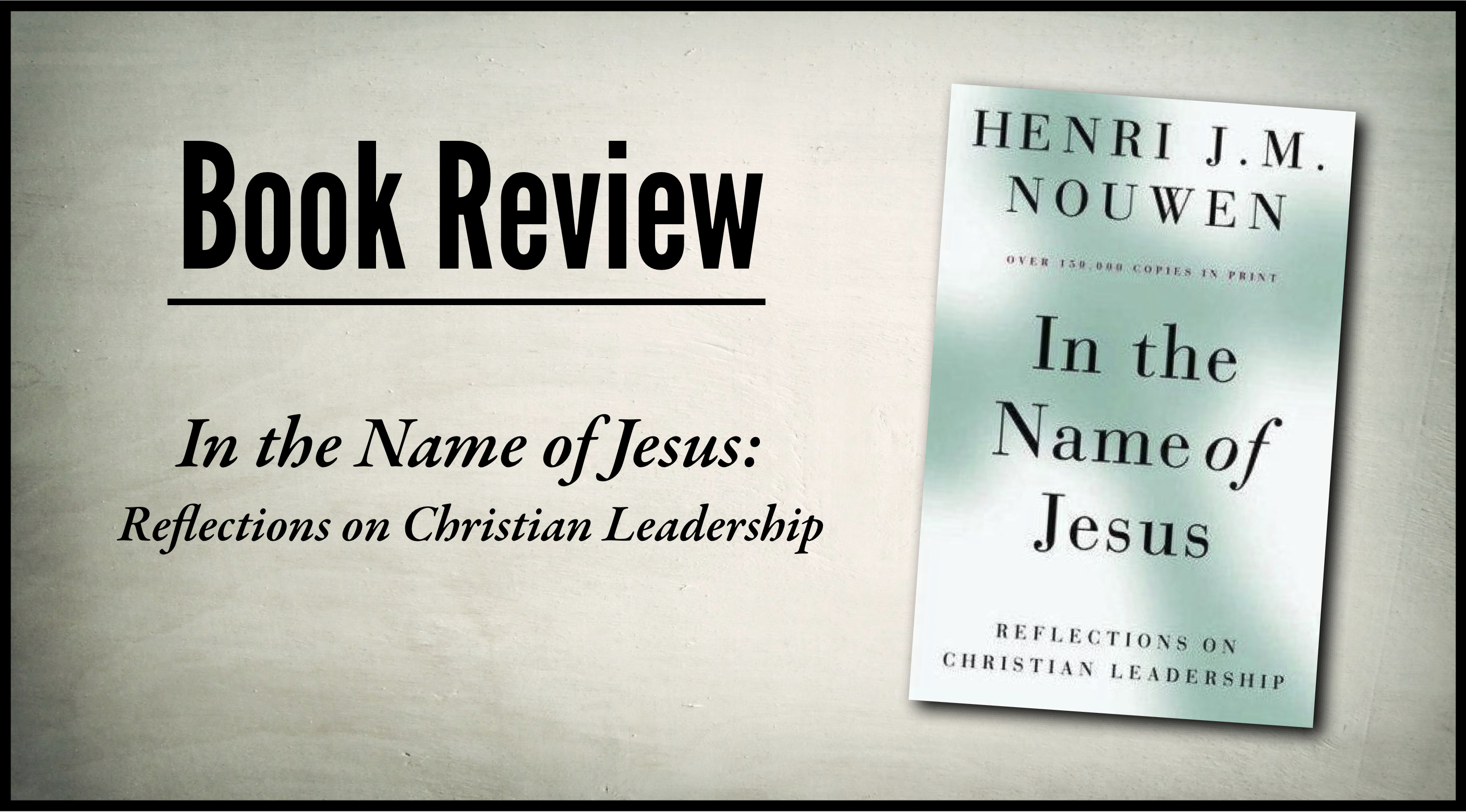
Book Review: In the Name of Jesus

Last month I posted my reading list for 2013, and in the comment section an old college friend recommended In The Name of Jesus: Reflections on Christian Leadership by Henri Nouwen. I was interested, because (a) it was on leadership, and (b) Nouwen, a Catholic priest, was a well-known writer whom I had never read before.

Furthermore, I was interested to read what he had to say because of what I assumed would be an interesting perspective. Nouwen was a respected professor at Notre Dame, Yale, and Harvard, but he chose to leave that behind to live and work with developmentally disabled people.

And I was correct—he did have an interesting perspective. In the Name of Jesus offers some radical views on Christian leadership, and by that, I mean that it takes seriously the things that Jesus says in Scripture.

Here are some quotations [my comments in brackets]:

“I am deeply convinced that the Christian leader of the future is called to be completely irrelevant and to stand in this world with nothing to offer but his or her own vulnerable self. That is the way Jesus came to reveal God’s love. The great message that we have to carry, as ministers of God’s word and followers of Jesus, is that God loves us not because of what we do or accomplish, but because God has created and redeemed us in love and has chosen us to proclaim that love as the true source of all human life.” (p. 18) [The message of irrelevance is hard to hear in our success-driven society. But to the degree that we emphasize and prop up our successes, how much do we alienate ourselves from the downtrodden who are most in need of God’s Good News?]

“Indeed, whenever we minister together, it is easier for people to recognize that we do not come in our own name, but in the name of the Lord Jesus who sent us.” (p. 36)

“We are not the healers, we are not the reconcilers, we are not the givers of life. We are sinful, broken, vulnerable people who need as much care as anyone we care for. The mystery of ministry is that we have been chosen to make our own limited and very conditional love the gateway for the unlimited and unconditional love of God.” (p. 37) [I love that—“the mystery of ministry.” As someone who is very aware of my own faults, I have certainly been struck by that irony before.]

“The way of the Christian leader is not the way of upward mobility in which our world has invested so much, but the way of downward mobility ending on the cross.” (p. 50) [Wow. Gut check.]

“Powerlessness and humility in the spiritual life do not refer to people who have no spine and who let everyone else make decisions for them. They refer to people who are so deeply in love with Jesus that they are ready to follow him wherever he guides them, always trusting that, with him, they will find life and find it abundantly.” (p. 50) [This is a helpful perspective: the Christian is not called to be listless or apathetic, but so trusting in God that we can appear to be unconcerned at times.]

“The task of future Christian leaders is not to make a little contribution to the solution of the pains and tribulations of their time, but to identify and announce the ways in which Jesus is leading God’s people out of slavery, through the desert to a new land of freedom.” (p. 54)

This was an easy read (only about 80 pages including a delightful personal story that was woven throughout the book), but it was also very challenging. There are a lot of leadership books out there, but not many of them follow the model of our Leader, who emptied Himself and became lowly on our behalf.

Book Review: Exegetical Fallacies

Of all the books I read in 2013, D.A. Carson’s Exegetical Fallacies was near the top of the list. It has a rough title and a terrible cover design, but the content is outstanding.

As readers of this blog know, in addition to being a full-time minister, I am also a theology graduate student. In the course of those studies (and my less formal studies as a minister) I have spent hours and hours learning the original biblical languages of Greek and Hebrew, as well as other skills to help me to better interpret (or exegete—see the book’s title above) the text of the Bible.

In the course of those studies, as I have grown better skilled and more careful about interpreting the Bible. At the same time, I have become dismayed by witnessing so frequently what I would consider to be ill-informed, haphazard, and shoddy biblical work. Sometimes this is done by people who have never studied original languages and yet presume to teach about them, and other times it is done by brilliant people who make careless errors. But either way, it happens all the time (and to be fair, I’m sure I do it too, but hopefully I do it less frequently than I once did).

Written by respected New Testament scholar D.A. Carson, Exegetical Fallacies addresses a lot of these interpretative problems, and I strongly believe that it is a book which should be read by all preachers, teachers, and studious Christians (a heavy recommendation, I know). The book is divided into four main sections.

Word-Study Fallacies

In my opinion, this section was vitally important because preachers and authors so frequently appeal to Hebrew and Greek words to make their arguments, and they so frequently do it poorly. Here are a couple of good quotations, some of which will refer to some ideas that you may have heard before [with my comments in brackets]:

“There is nothing intrinsic to the verb ἀγαπαω (agapao) or the noun ἀγαπη (agape) to prove its real meaning or hidden meaning refers to some special kind of love.” (p. 32) [How many times have you heard that Christians are supposed to exhibit agape love, which is a higher and purer kind of love than what is described by other Greek words?]

“Our word dynamite is etymologically derive from δυναμις (dynamis, power, or even miracle). I do not know how many times I have heard preachers offer some such rendering of Romans 1:16 as this: “I am not ashamed of the gospel, for it is the dynamite of God unto salvation for everyone who believes…”—often with a knowing tilt of the head, as if something profound or even esoteric has been uttered. This is not just the old root fallacy revisited. It is worse: it is an appeal to a kind of reverse etymology, the root fallacy compounded by anachronism. Did Paul think of dynamite when he penned this word? And in any case, even to mention dynamite as a kind of analogy is singularly inappropriate. Dynamite blows things up, tears things down, rips out rock, gouges holes, destroys things.” (p. 33-34) [And the implication is that it is not dynamite or a similar force that raises us from the dead and transforms us into the likeness of Christ. It is power of an entirely different sort.]

“It is methodologically irresponsible to read the meaning of a Hebrew word into its Greek equivalent without further ado. The case must be argued.” (p. 62) [You should be a little suspicious when someone refers to a word from the Old Testament and says “The same word in the New Testament is…” or vice-versa.]

“As important as word studies are, it is very doubtful if profound understanding of any text or of any theme is really possible by word studies alone.” (p. 64) [Words ultimately derive their meaning from context; you can’t divorce words from their context without also stripping away much of the meaning.]

Grammatical Fallacies

Again, this is an important part of the book, for similar reasons to those mentioned above. Often times, the biblical languages are abused in ways that misunderstands the grammar of those languages rather than specific words.

I won’t include any quotations from this part of the book, but as an example of this type of problem, it is common to hear or read the claim that the aorist tense of the verb in Greek refers to a “once for all” or “completed” action, and then some grand theological point is made from this. The problem is that the aorist tense is incredibly flexible and means a great variety of things. Frequently in the New Testament aorist verbs are used to described ongoing or repeated actions.

Carson provides examples of several other types of grammatical fallacies as well.

Logical Fallacies

I found this section to be less helpful, just because I had studied logical fallacies multiple times before in communication classes. I would imagine that this chapter would still be very helpful if this was a subject you hadn’t previously studied before.

Carson covers a variety of fallacies including appeal to selective evidence, purely emotive appeals, the non sequitur, and simplistic appeals to authority.

Presuppositional and Historical Fallacies

This was another very important section for me. Increasingly, I have witnessed preachers and scholars use their historical reconstruction of the supposed setting of a biblical text (i.e. something which might have influenced the text but which we don’t actually know for sure) to trump what the text actually says. This is poor exegesis.

“The fallacy is in thinking that speculative reconstruction of first-century Jewish and Christian history should be given much weight in the exegesis of the New Testament documents…a little speculative reconstruction of the flow of history is surely allowable if we are attempting to fill in some of the lacunae left by insufficient evidence; but it is methodologically indefensible to use those speculations to undermine large parts of the only evidence we have.” (p.131-32)

Concluding Thoughts

Again, I think this is a really important book, and so I’ll just repeat what I said above: I strongly believe that it is a book which should be read by all preachers, teachers, and studious Christians.

Having said that, reading about so many potential exegetical problems can have its drawbacks: (1) It will make you more critical of the sermons you hear (and, if you’re not careful, in an unhealthy way), and (2) It will make you more hesitant about your own biblical interpretation and exegesis. But, helpful as always, Carson has good words on this topic as well:

“A little self-doubt will do no harm and may do a great deal of good: we will be more open to learn and correct our mistakes. But too much will shackle and stifle us with deep insecurities and make us so much aware of methods that we may overlook truth itself. I have no easy answer to this dilemma. But we will not go far astray if we approach the Bible with a humble mind and then resolve to focus on central truths. Gradually we will build up our exegetical skills by even handed study and a reverent, prayerful determination to become like the workman ‘who correctly handles the word of truth.’” (p. 142)

« Older posts Newer posts »

© 2026 The Doc File

Theme by Anders Noren — Up ↑