The online journal of Luke Dockery

Category: Reviews (Page 11 of 16)

Product Review: ESV Single Column Journaling Bible

Just before Christmas, I became aware of Crossway’s ESV Single Column Journaling Bible, and added it to my wish list at the last minute. I received it from my in-laws, and I’m glad I did! I find it to be ideal for daily Bible reading.

In the first place, I like how sturdy it is. If you’re going to use a Bible for daily reading, it is likely to get treated fairly rough—moved around a lot, opened and closed frequently, shoved in and out of bags. I like that this Bible is hardback and has rounded corners which are less likely to get blunted or bent. Also, an elastic strap helps keep the Bible shut, which lessens the likelihood of pages getting bent or the covers being moved in a way that places shearing stress on the binding.

Outside of the Bible, showing the hardback cover and elastic closing strap.

Another thing about this Bible I really appreciate is the single-column reading format. Having multiple columns might be good for fitting a lot of text in a limited space, but it is less pleasing to the eye and, at least for me, more difficult to read.

Inside of the Bible with the single-column format.

This is a journaling Bible, and my favorite characteristic of it is the space for writing notes off to the side. A lot of Bibles (at least, if they are single column) provide space on the side where you can take notes. What I prefer about this Bible is that lines are provided to help keep your notes neat (for someone like me with borderline obsessive tendencies, this is a good thing), and the paper is thicker than normal Bible paper, which means you can use a variety of pens and not have to worry about them bleeding through. Currently, the Sharpie pen is my favorite, and even it doesn’t bleed through to a significant degree despite the fact that it is basically a fine-tipped marker (see the picture below).

In addition to the notes I keep as I go through my daily readings, I am also using this Bible to keep basic notes of the sermons I listen to during worship this year. I am really enjoying it so far.

Here you can see some of my notes from Genesis 5-6.

Finally, the back of the Bible, though very limited on “helps” (it is, after all, a journaling Bible, not a study Bible), contains an excellent One Year Bible Reading Plan that I am using this year. I often get bogged down with Bible reading plans that just start at Genesis and slavishly plug away through the entire Bible. With this plan, every day I have a reading from the Old Testament, the Psalms, and the New Testament (see below for an idea). This provides more variety in the daily readings, which is nice, and to me, helps maintain a “big picture” focus on Scripture as I go through specific verses and chapters.

A sampling of the Bible reading plan in the back.

All in all, I love this product, and would recommend it highly. Currently, I have no significant criticisms at all.
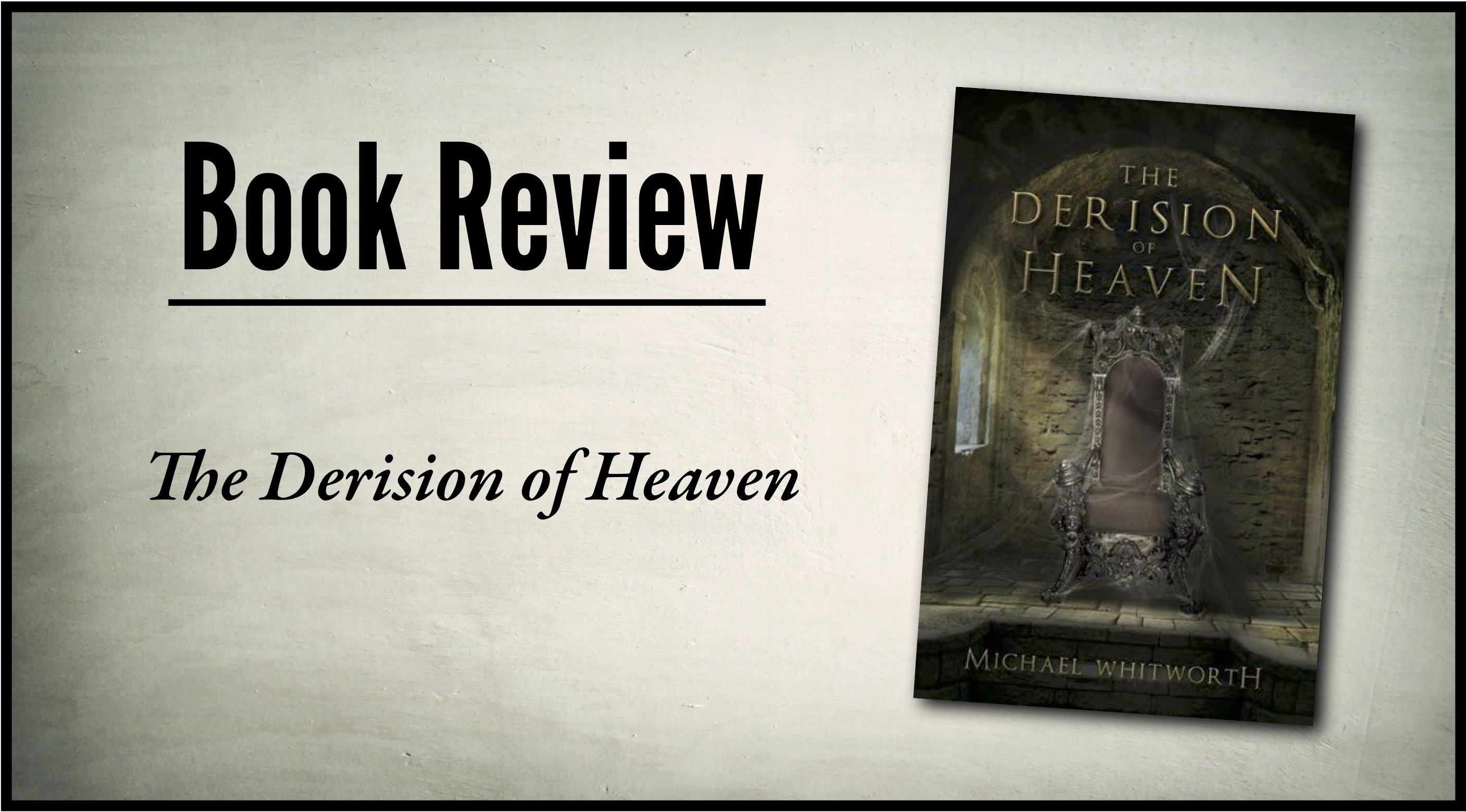
Book Review: The Derision of Heaven

I am a little behind on posting this because I had a very busy week last week, but I just wanted to share The Derision of Heaven by Michael Whitworth. I had previously read and reviewed The Epic of God, Whitworth’s book on Genesis, and since I enjoyed that book so much, I made sure to check out The Derision of Heaven, which focuses on the Book of Daniel.

If anything, I think I liked Derision even more than Epic. Part of this may have been because I read it in paperback rather than a digital version (I am old school when it comes to reading), but it was a really good book, and possessed the same tandem of qualities that made its predecessor such a joy to read as well: a balance between style and substance. By that, I mean that the book is very readable while still being very well-researched.

Before I get into the good stuff (sharing my favorite quotations), let me just add one point. The Book of Daniel is 12 chapters long. The first six chapters consist of relatively straightforward historical narrative, while the last six are filled with wild apocalyptic prophecy. Based on those last six chapters, all sorts of people have predicted all sorts of things, usually with little success. One of the things I appreciated most about this book was the author’s humility in interpreting these difficult passages while still covering them thoroughly and repeatedly emphasizing their main theme: God is at work behind the scenes, and is in control of the universe.

Now, on to the quotations (with my comments in brackets):

“As long as God lives and reigns, his people have hope. Christians should never fear the state; the book of Daniel assures us God has numbered the days of every wicked leader who wields power irresponsibly.” (6)

“Whether in times of disaster or disorientation, we can navigate turbulent waters, not by being the strongest, savviest, or most obnoxious, but by being faithful to God and bringing him glory as Daniel did.” (25)

“Being a light in the darkness doesn’t require our being a burr under the saddle.” (27)

“To pretend that our own political leaders hold office by the will of the people and not also by the will of God is to foolishly assume that these two things are mutually exclusive. They are not.” (38)

“Our personal talents and abilities matter less than our humble willingness to be used by God for his glory.” (39)

“Empires and superpowers rise and fall at God’s will. It’s this realization that causes me to be quite concerned about those Christians who seem prouder to be an American than a member of the church, God’s eternal kingdom, one that cannot be shaken…it’s not a sin to be a patriot unless patriotism becomes your idol. I wonder if some Christians aren’t bigger fans of the Constitution than the gospel.” (48-49) [I agree with his concern and frustration. Many who claim to be Christians take to social media with more passion over some political issue than they ever show on behalf of Christ. Sad but true.]

“Our attitude and behavior when under trial is a powerful testimony to the glory and love of God.” (65)

“In God’s way of working, progress and success often occur so slowly that they are unobservable.” (98)

“I want you to appreciate the tension that exists between “God can” and “God will.” We live our lives within that tension. We know God can do something about our suffering, but will he? In this tense area of in-between is where Satan thrives. In this soil, he plants seeds of doubt in our hearts and nurtures them until they have borne the ugly fruit of indignation, rebellion, and death. But there is something we can place in that gap to frustrate Satan’s schemes—not faith in God’s deliverance, for he does not always do so, but confidence that God will do what’s ultimately best for us. God always does whatever will bring him glory, and God glorifying himself is what is ultimately best for us.” (111) [This is such an important idea, I think, that I gave it its own post. The sooner we can understand and embrace this tension, the better it will be for our spiritual maturity and our own peace of mind.]

“You and I would be better off if we spent less time worrying about gun control, runaway deficit spending, and where/how long the president spends his vacation. We would be better served worrying less about how Liberals, Conservatives, Muslims, Atheists, or others not like us are destroying America. Instead, how would things be different if we confessed daily that Jesus, even now, held dominion over all the earth? What would it look like if we spent more time urging people to willingly kneel before King Jesus now before being compelled to do so on the final day? What would it look like if more Christians spent less time griping about earthly empires destined for history’s trash heap, and celebrated instead Jesus’ indestructible and eternal kingdom?” (132) [This is kind of a soapbox, but a much needed one. I completely agree with him.]

“In the dark days that lie ahead, let us resolve to fight God’s way, not the world’s way.” (185)

 Hopefully, these quotations give you a taste of the book, and make you want to get a copy to read yourself. It would be an invaluable resource for anyone preparing to teach or preach on Daniel, but also beneficial for personal Bible study as well.

Book Review: The Epic of God


Last night I finished reading Michael Whitworth’s The Epic of God, which is a guide to the Book of Genesis (rather than a full commentary), and it was a really good book.

The Epic of God is not written to be a scholarly commentary, and there’s absolutely nothing wrong with that. In fact, I would argue that what Whitworth has done is equally if not more valuable: he has produced a text which is informed and supported by scholarship (it is a well-researched book) but is easily read and understood by the average Christian. This is an important accomplishment, and I am always appreciative of efforts that bridge the gap between the church and the academy.

Anyway, I wrote a somewhat more in-depth review on the book’s Amazon page, but here I just wanted to do what I enjoy—share good quotations! Here they are (with my comments in brackets):

“After Adam was created and placed in Eden, he was given the task of working and keeping the garden. Work is often though to be a consequence of the Fall, but notice that in the perfect world that God created, man was created to work as a means of glorifying the Lord.” (26) [Amen! Work is a good thing!]

“Sin is not a blunder we can flippantly dismiss with ‘Everyone makes mistakes.’ A mistake is wearing two socks that don’t match; sin is an offense and abomination against a holy God. Our sins cost God the life of his Son.” (79)

“There is never an excuse to be selfish with God’s blessings.” (120)

“The God of Abraham has fixed an appointed time, unknown to all but him, when all suffering will come to a fantastic end! It will be the moment when the Son comes to be glorified with his church and render awestruck all who have put their faith in him…knowing that our heartache will eventually give way to hallelujahs can help us bear the pain a little while longer. God sees. God knows. God cares. He has appointed a time when he will visit his people in their distress and bring with him the redemption of the ages!” (165) [One of the definite strengths of the book is the way the author ties the story of Genesis into God’s greater story of the redemption and salvation of his creation.]

“And this is the truth that Abraham discovered on that occasion, that God’s commitment to justice is greater than our own…But his commitment to mercy is equally greater than our own.” (167-68)

“The life of faith is an odyssey of unexpected twists and turns.” (190) [This has certainly been true in my life!]

“If you are having difficulty surrendering to God what is most valuable to you, perhaps you have never acknowledged it as coming from him to begin with.” (215) [Ouch.]

“Prayer is for our benefit, not God’s. Praying for something that is in the will of God shapes us spiritually in ways few other things can. God’s desires become our own, and we start to see things as he does.” (232-33)

“It is natural and healthy for parents to want their children to succeed in every area. But what shall it profit a child if he becomes a Rhodes scholar or wins the Heisman trophy, yet loses his soul? (303) [Yeah, I wish every youth group parent I have or will ever have would read this quote about three times a day.]

“It is not healthy, not does it deepen our faith, to play the what-if game…when we find ourselves in the throes of suffering and pain, we must refuse to play the what-if game. Ask instead, ‘What if God is greater than my current circumstances? If God is indeed working out a plan to bring Himself greater glory, how should I react?’ Then respond accordingly, confident that he can use our disappointments to deepen our faith and bring our lives into greater harmony with him.” (327) [This was very helpful for me to read, as I struggle with playing the what-if game.]

“We frail and pathetic humans have a bad habit of gauging God’s presence based on our circumstances…But veterans of the life of faith know that circumstances are no better a barometer of whether God is with you than overcast skies are proof that the sun has vanished completely.” (329) [Wow.]

I know that was a lot of quotations, but as I said, it was a really good book! The Epic of God will deepen your understanding of the Book of Genesis, but more importantly, it will deepen your faith as well!

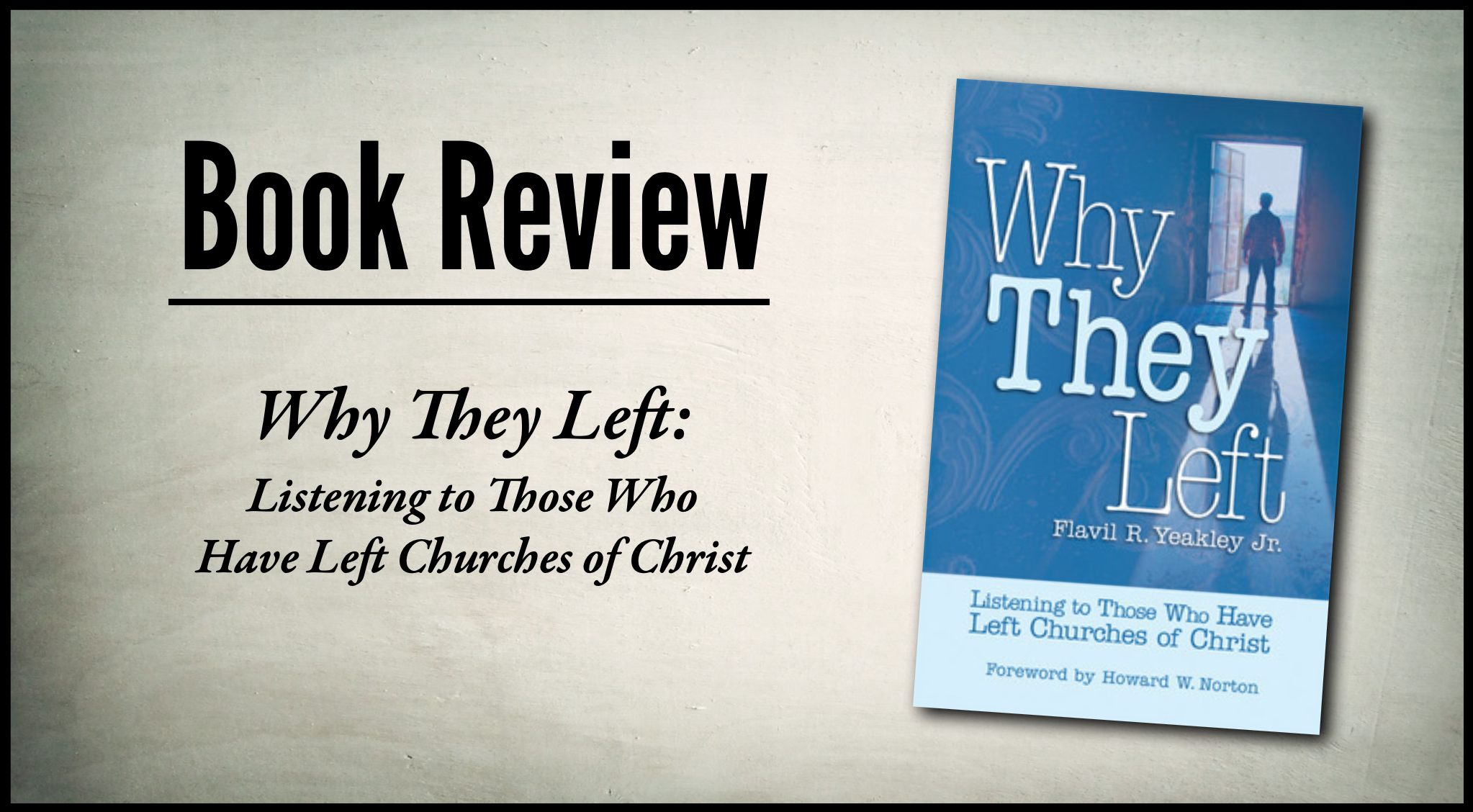
Book Review: Why They Left


For quite some time I’ve wanted to read, “Why They Left: Listening to Those Who Have Left Churches of Christ,” by Flavil R. Yeakley Jr. This week I finally got around to doing so, and am glad that I did—it’s a great book.

The title is pretty self-explanatory, but basically, Dr. Yeakley (a long-time preacher, university professor, and statistician) conducted 325 surveys of people who had left the fellowship of Churches of Christ and then categorized and responded to the reasons they had for doing so.

The insights gleaned from those who left are helpful, but equally useful (if not more so) in the book are Yeakley’s brief but thoughtful responses to some of the issues which those who have left brought up. The book is an easy read, and I was surprised at how good of a writer Yeakley was (I don’t know why I was surprised; I guess I assumed that a statistician would produce a boring book, but it was an excellent read overall).

Here are some of my favorite quotations from the book (with random thoughts by me in brackets):

“When the average parents in the congregations attend regularly and have specific church work assignments, their children are much more likely to remain in Churches of Christ after they grow up and leave home. The retention rate in those churches was around 75 to 80 percent. In congregations where the average family has one parent who is an active and involved member but the other is not, the retention rate was around 50 percent. In churches where the typical family was one in which neither parent was active and involved, the retention rate was around 20 to 25 percent.” (40) [The youth ministers reading this are amen-ing out loud and trying to figure out the best way of sharing this quotation with all of their parents.]

“…We should recognize that campus ministries are partners in Christian higher education. We should support the few campus ministries that Churches of Christ already operate, and we should establish many more.” (44)

“The conclusion based on these positive and negative references to judging [in the New Testament] seems obvious to me. Christians should judge to distinguish between truth and error, right and wrong, or good and evil. It is acceptable for Christians to judge to settle disputes between or among brethren. Christians must judge the conduct of other Christians who sin and refuse to repent in spite of repeated admonitions. Christians must judge doctrines and practices. But we are not supposed to judge the heart, the motives or the eternal destiny of another person. We must leave it to God to pronounce the final judgment.” (62-63). [This is excellent. Yeakley’s discussion of NT passages on judging and his synthesis of them is almost an aside to the book, but the book would be worth reading just for this.]

“Grace must never be used as an excuse for failing to correct known errors in our lives or in our understanding of God’s will.” (63) [I love this. It is almost worthy of a t-shirt or a bumper sticker.]

“Churches of Christ reject…‘Once saved always saved’…but a doctrine of ‘If saved, barely saved’ is just as wrong.” (70)

“My personal observation is that in far too many Churches of Christ, the elders are doing deacons’ work; the deacons have very little to do; and the church-supported ministers do most of the pastoral work. If strategic planning is done at all, it is done by ministers.” (141) [I think this is an accurate statement. I am thankful that the leaders of my congregation are working hard to get away from this mindset.]

“Christ did not accept us on the basis of our perfect understanding or our perfect obedience. He accepted us because of our acceptance of Him.” (201)

“The more friends new members make in the church the less likely they are to leave the church…the sooner new converts get involved in some area of ministry the more likely they are to stay in the church.” (208)

If you are a member of a church of Christ and are concerned about the future of Churches of Christ and are interested in doing what you can to help minister to the people in our churches, I highly recommend this book.

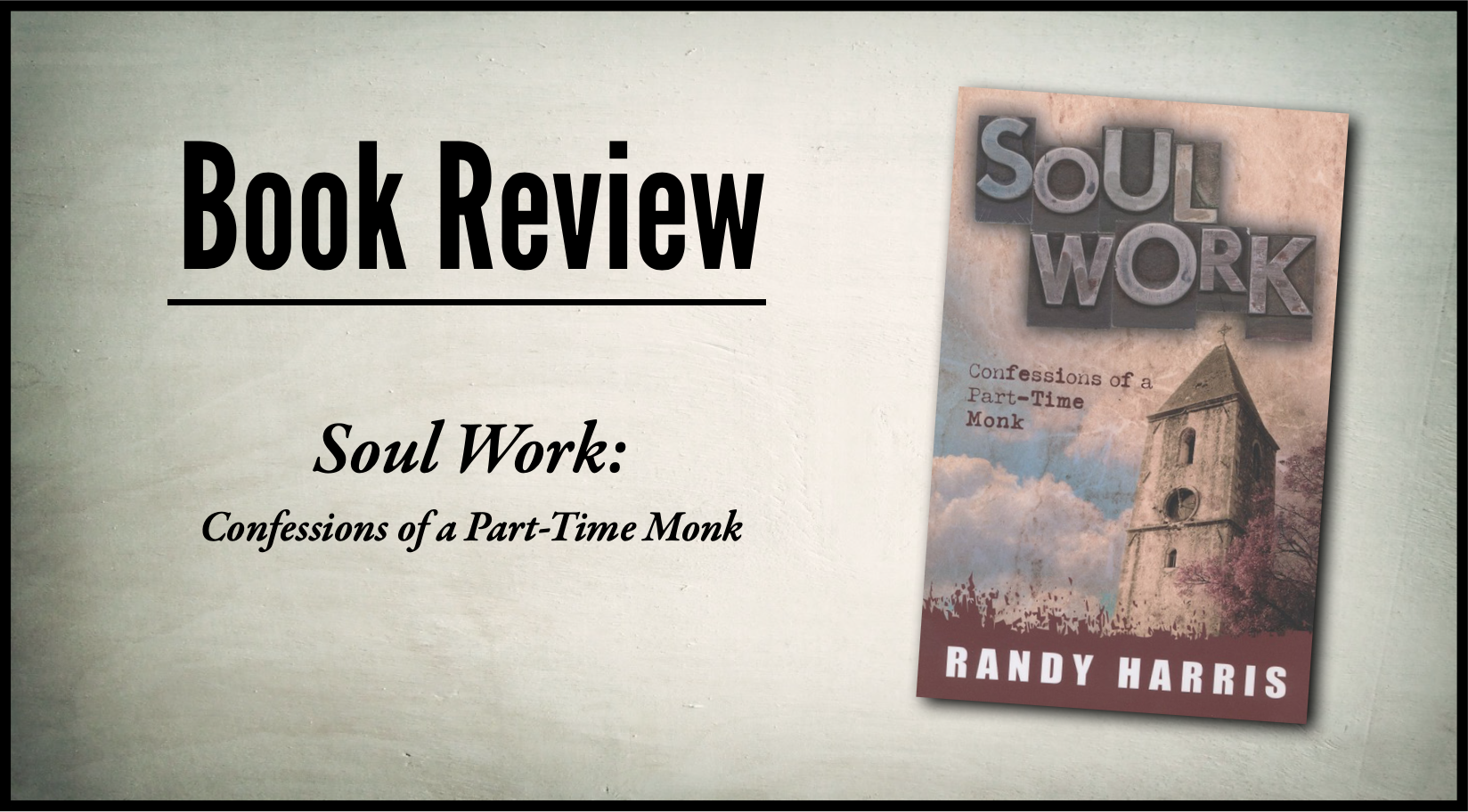
Book Review: Soul Work

As I mentioned in this post, I intend to do somewhat better in 2013 in regards to writing about books which I read. I really don’t enjoy writing book reviews (probably because it reminds me too much of school), but from time to time I will try to write very informal reviews and share some quotations which I found to be helpful or insightful.

I recently finished reading Soul Work: Confessions of a Part-Time Monk, by Randy Harris, which focuses on prayer and spiritual living. Harris has spent considerable time among monks and religious hermits (making him somewhat of an oddity for a Church of Christ minister and professor) to gain insight on the disciples of prayer, silence, and solitude, and in Soul Work, he shares some of the lessons he has learned.

Harris has an easy-to-read style, is full of humor, and doesn’t take himself too seriously at all. Parts of the book were a little mystical for me, but he had a lot of good things to say. Here are some of my favorite quotations (with random thoughts by me in brackets):

“One of the reasons that I think we struggle with prayer so much is that we think we need it so little.” (p. 13) [Ouch.]

“If you’re willing to walk and talk and spend time with God, he’ll start to remake your life even when you don’t know what’s going on.” (17)

“Obedience and submission aren’t really tested until you have to submit or obey in situations where you’re pretty sure you know a better way.” (56)

“We often give ourselves credit for obedience when we do what we’ve already wanted to do anyway—when the real test of obedience is doing what we don’t want to do.” (57) [Ouch, again.]

“Optimism depends on human beings and hope depends on God. And while I don’t see any reason to be optimistic, I see every reason to be hopeful.” (66)

“We would get healthier if we committed to fewer things over longer periods of time.” (72)  [Our obsessed-with-activity culture would benefit greatly from this wisdom.]

“Things are learned in suffering that can be learned in no other way.” (99)

“What would we lose if we lost all suffering in the world? There’s no longer any courage. There’s no longer any compassion. There’s no one to be compassionate towards. There’s no longer any patience. There’s no longer any endurance. There’s no longer the love that doesn’t give up when life goes badly. I don’t know about you, but it sounds like you give up an awful lot.” (100) [Great perspective on suffering.]

“Many of the most important events in your life are going to be ones over which not only do you have no control but which you’re not even going to see coming. And there is nothing like one of those events to burst your illusion about being one of those people who’ve got things under control. Nobody expects that their children will die before them. No one looks for that debilitating disease.” (102-103) [Wow, this really rang true to me.]

“Often the greatest ministry you do is while you’re on the way to do what you think is the important ministry.” (147) [I have found this to be true in my ministry as well.]

“The goal is not to have us praying more. The goal is to have us aware of and practicing God’s presence every moment of every day.” (154)

If you are interested in examining your prayer life and looking at prayer from several perspectives that you likely haven’t before, I recommend this book.

« Older posts Newer posts »

© 2026 The Doc File

Theme by Anders Noren — Up ↑