The online journal of Luke Dockery

Category: Reviews (Page 12 of 16)

Review: Hashtag Youth Series

Our youth group recently finished up the Hashtag Youth Video Series, which served as the summer curriculum for our Wednesday night Junior and Senior High Bible Class (we were gone a few Wednesday nights because of special activities, so we ended up getting behind and finishing in September).

Some dedicated youth ministers from Churches of Christ (primarily in Tennessee) put a lot of work into the conception and production of Hashtag, and I thought I would take a few moments to review the series now that we have completed it.

Strengths

To start with, I should mention that the Hashtag Youth Series was entirely free. Thirteen videos, usually 10-15 minutes in length, and all accompanied by discussion guides and manuscripts, all were available for download free of cost. If you have any experience in finding and ordering Bible class material, you know that it can be very expensive, especially if you’re looking for videos.

Furthermore, Hashtag is incredibly easy to use. Summer can be a crazy time for youth ministers. With students out of school, it seems to be a time for constant activity, ranging from summer camps, to mission trips, to Vacation Bible School, to summer fun trips, and all of that on top of all the regular activities a youth group participates in. In the midst of all the busyness, it’s nice to be able to show a video series where you don’t have to put a ton of time into preparation and basically are able to just focus on leading a group discussion based on the video which was seen. The ease of use is also a huge benefit when it comes to finding substitute teachers—I had to be away a couple of weeks for travel or to speak elsewhere, but it was easy to find someone to take my spot, show the videos, and lead the class in discussion.

Finally, the videos themselves were of high quality. Watching the videos, it didn’t seem like you were using a free product at all. The graphic design and typography was awesome, and the video production was very good too. Nothing about the videos seemed amateurish at all.

Suggestions for Improvement

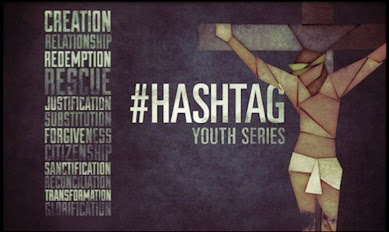
The videos were basically in the format of a summer series, where each week you have a different speaker focus on a certain topic. What I have generally found to be true with summer series also applied to Hashtag: the speakers were somewhat hit and miss. The video topics included some theologically deep concepts (see the banner at the top of this post for the topics which were covered), and although most (if not all) of the speakers were youth ministers, some did a much better job of communicating the topic at a teenage level than others.* Furthermore, the basic format of the videos was lecture: the speakers sat in a room talking to a camera. Generally, the speakers who provided visual aids or incorporated a narrative style into their lessons were better received by the audience (at least, in our case).

Also, some of the discussion guides were better than others. Some of the guides were great, providing interesting ice-breakers to introduce the videos and excellent questions for discussing them. At other times, I felt like the majority of the questions were unhelpful as discussion starters and I had to basically generate my own questions.

Overall Assessment

All in all, I think the Hashtag Video Series was a significant accomplishment, and I would definitely recommend it to those who are looking for Bible class curriculum for teens. I’m sure that the work required to coordinate a project involving so many different ministers was extensive, and the developers should be proud of the completed project.

That the series was available free of charge meant that many congregations were able to use it which wouldn’t have been able to otherwise. The ease of use likely helped many youth ministers catch a breath in the middle of busy summers while still providing a quality Bible class (I know that was the case for me). And lastly, the technical quality of the videos went a long way towards keeping the attention of the audience—shoddy videos are easy to immediately write off, but the professional quality of the Hashtag series earned respect and attention.

Even those areas where there is some room for improvement should not be barriers to those who are considering using the videos. While some of the speakers were better than others, none of them were bad, and a few of them really were excellent. And although some of the discussion guides need work, it’s really not hard to flesh out that part of the lesson yourself, especially when you are mindful of the fact that you got all of the material at no cost in the first place.

Overall, I’m thankful that I stumbled upon Hashtag at the beginning of the summer, and am very grateful to those whose diligent work made it happen.


*To be fair, I know from personal experience that communicating at a “teenage level” is incredibly difficult. Middle schoolers who are 12 or 13 operate on a completely different level than juniors or seniors in high school. Something that is on the level of one group may not (and often won’t be) on the level of the other. Our youth group is currently skewed young, and I felt like some of the series speakers were talking over their heads.
Book Review: Biggest Brother

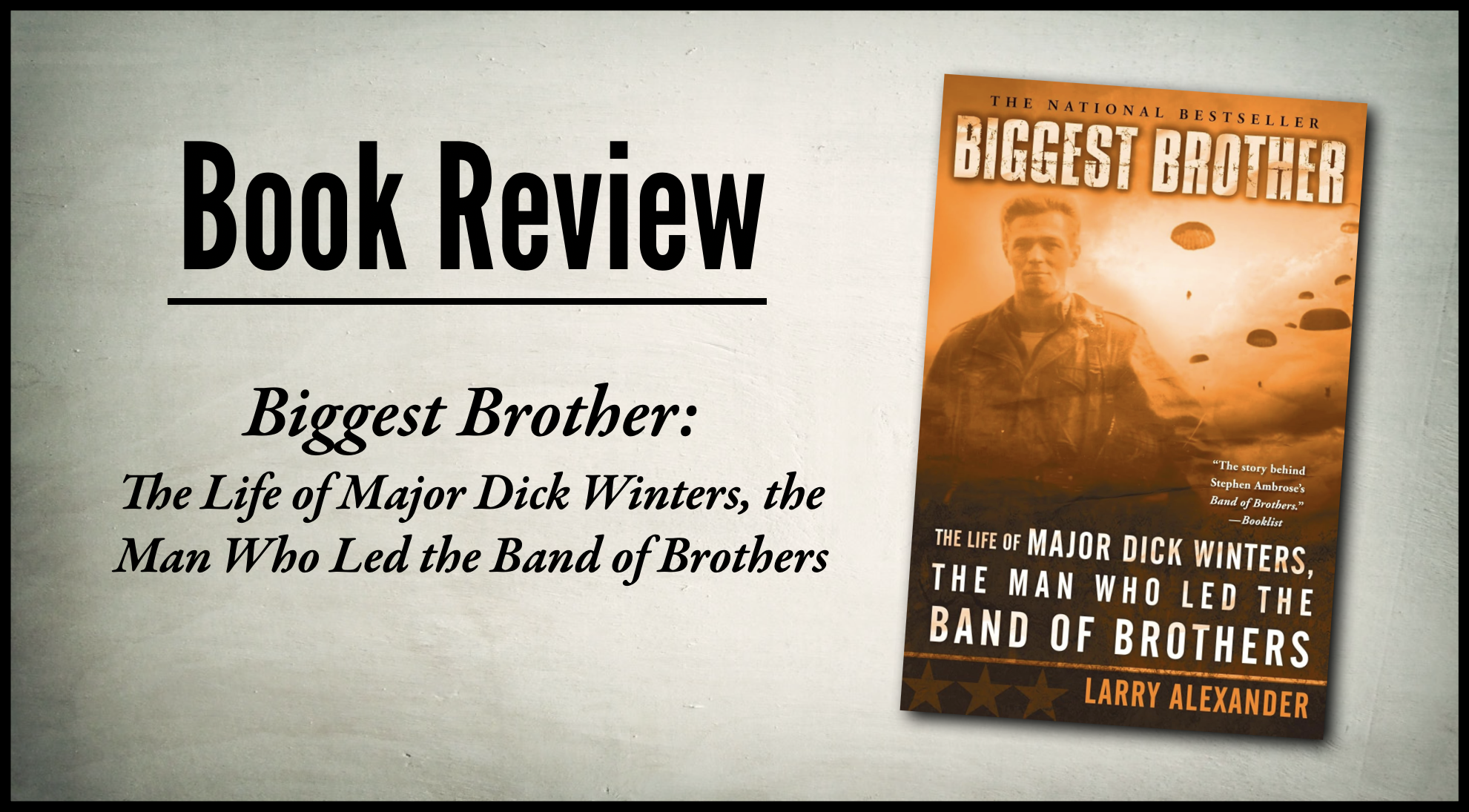
I recently finished reading Biggest Brother: The Life of Major Dick Winters, the Man who Led the Band of Brothers by Larry Alexander.

Winters is a main character in the Band of Brothers book written by Stephen E. Ambrose and the HBO miniseries of the same name produced by Steven Spielberg and Tom Hanks, and in Biggest Brother, Alexander goes beyond Winters’ time in WWII and gives a biographic account of his life.

All in all, I thought Biggest Brother was good, but I didn’t love it. First, the account of the most exciting part of Winters’ life—his time with Easy Company of the 101st Army Airborne—is fairly redundant if you have already read or seen Band of Brothers. Also, in Biggest Brother Winters loses a bit of his virtuous luster, holding old grudges and giving frank and sometimes very negative evaluations of his fellow soldiers and friends. It is certainly true that becoming aware of some of Winters’s faults and shortcomings makes him more human, but it was nice seeing him as the idyllic American hero.

Of course, Winters still was a hero, and I think my favorite parts of the book were quotations from his own writing which underscore how dutiful and responsible he was:

“In three years, I’ve aged a great deal. It seems as if the college days and the days of civilian life when I did as I pleased are long gone. It must have been a dream, a small, short, but beautiful part of my life. All I do is work to improve myself as an officer, and them as fighters and as men, make them work to improve themselves. As a result, I am old before my time. Not old physically, but hardened to the point where I can make the rest of them look like undeveloped high school boys. Old to the extent where I can keep going after my men fall over and go to sleep from exhaustion, and I can keep going like a mother who works on after her sick and exhausted child has fallen asleep. Old to the extent where if it’s a decision or advice needed, my decisions are taken as if the wisdom behind them was infallible. Yes, I feel old and tired from training these men to the point where they are efficient fighters. I hope it means some will return to that girl back home.”

After Germany surrendered, Japan continued to fight on, and Winters tried to explain to his mother why he felt like it was his duty to continue to fight, despite all of the work he had already done:

“I feel that God has been good enough to let me get through this war. As a result I am combat wise and in a position to do some good to help a lot of men. I know I can do the job, better than or as well as any of the rest. How can I sit back and watch others take men out and get them killed because they don’t know; they don’t have it? Maybe I’ll get hurt or killed for my trouble, but so what if I can make it possible for many others to go home. Their mothers want them too, the same as mine. So what else can I do and still hold my own self respect as an officer and a man?”

Especially in comparison to today’s society, where words like duty and responsibility are almost entirely foreign concepts, Winters’ character shines as an example to emulate.


While reading Biggest Brother, I was struck (somehow, for the first time) how young these guys were who went out and basically saved the world. For those who have seen Band of Brothers, here are the ages of some of the major characters on June 6, 1944 (D Day).

  • Colonel Robert Sink–39 (who seemed so incredibly old in the movie)
  • Major Dick Winters–26
  • Captain Lewis Nixon–25
  • First Lieutenant Harry Welsh–25
  • Captain Ronald Speirs–24
  • Second Lieutenant Carwood Lipton–24
  • Staff Sergeant Denver “Bull” Randleman–23
  • First Lieutenant Lynn “Buck” Compton–22
  • Sergeant Donald Malarkey–22
  • Staff Sergeant Bill Guarnere–21
  • Staff Sergeant Darrell “Shifty” Powers–21

Book Review: Jesus and Jonah by J.W. McGarvey

In an earlier post, I mentioned that I wanted to do a better job in 2012 of writing about some of the books I read. I’m not sure how well I will stick to that goal for the year, but here’s a brief review of one book I read last month.

Jesus and Jonah was published by J. W. McGarvey in 1896, and was actually a compilation of several articles he wrote in The Christian Standard. McGarvey is a well-known author and scholar within the Restoration Movement (and close associate of Robert Graham), and was one of the first conservative scholars to actively oppose the trends of liberal theology and higher criticism that were growing in popularity around the turn of the 20th century.

In Jesus and Jonah, McGarvey argues against a “symposium” of scholars who had denied the historicity of the biblical account of Jonah.

The book isn’t exactly a page-turner—McGarvey spends the majority of the book examining the arguments of the scholars he disagrees with, and as those scholars basically all use some form of the same 2-3 arguments, McGarvey’s responses quickly become repetitive. Nevertheless, McGarvey’s argument is sound—since Jesus certainly seems to consider the Jonah account to be historical in Matthew 24.38-39, those who argue that it isn’t are basically forced to hold to one of two positions:

  • Jesus spoke of the events of Jonah as if they were historic when He knew they were not, in which case He was being deceptive (McGarvey makes this point especially well).
  • Jesus spoke of the events of Jonah as if they were historic because He thought they were, but was mistaken. This position raises lots of questions about the nature of Jesus and the knowledge He possessed while on earth (these are questions which are easily dismissed by a lot of liberal scholars today who question or reject the divinity of Christ, but would not be as easily dismissed by the less radical scholars McGarvey was addressing in Jesus and Jonah).

A third possibility that the book didn’t really address might be that Jesus wasn’t being deceptive because both He and His audience might have had a shared understanding of Jonah as some sort of satirical fable. With that common understanding, Jesus could have referred to Jonah as if he were a real character in order to prove a point (kind of like I might refer to Robin Hood or Scrooge McDuck) and His audience would have followed right along. It seems that a lot of work would need to be done to establish that this is what was happening, though.

All in all, Jesus and Jonah was a worthwhile read—a short book which, in my opinion, successfully argued for the historicity of Jonah and also provided an interesting analysis of the biblical Jonah story.

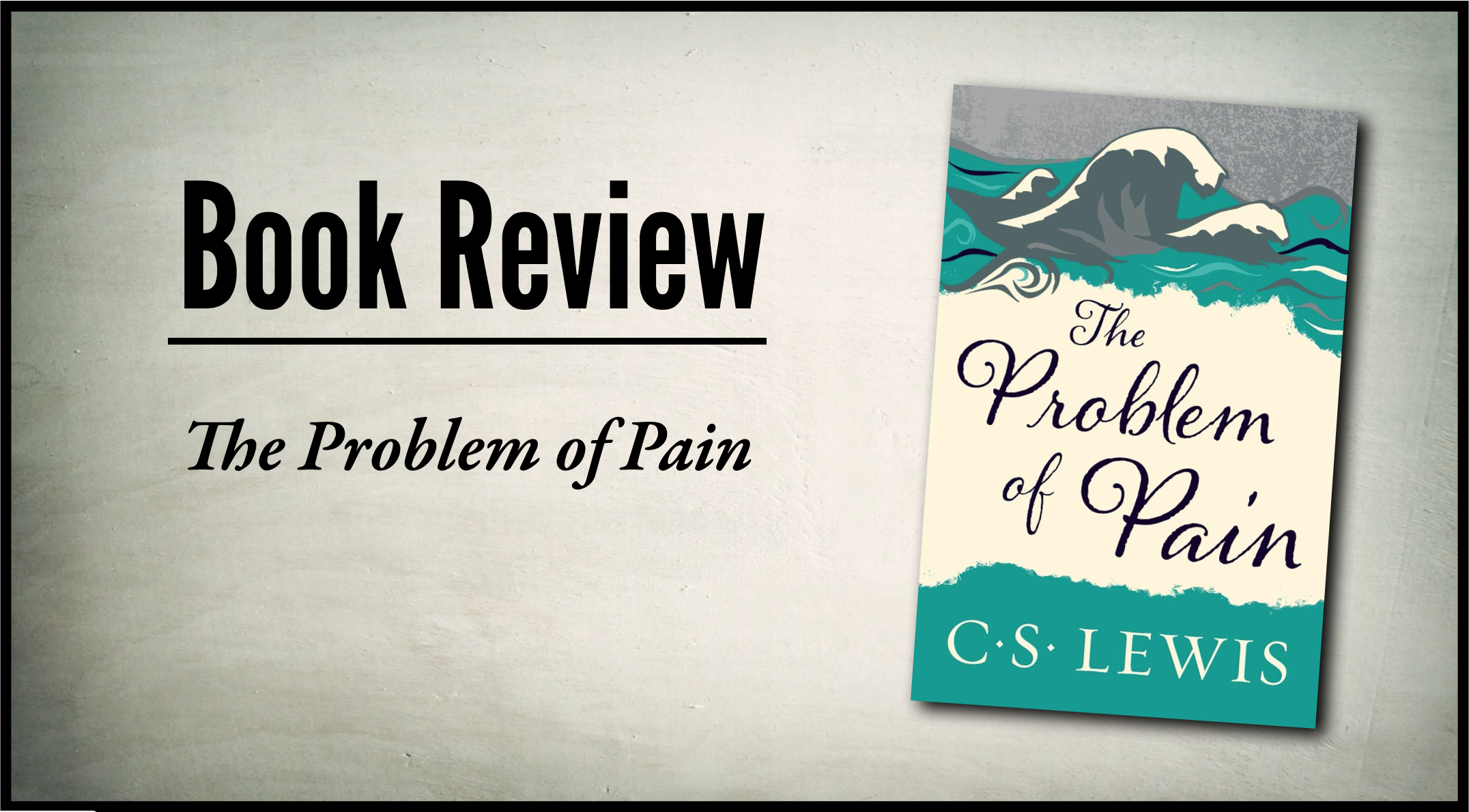
Book Review: The Problem of Pain

I just finished reading C.S. Lewis’s The Problem of Pain, and rather than wait six months to write about a book like I normally do, I thought I’d go ahead and post some brief thoughts.

Compared to some of his other works (Narnia, Mere Christianity, The Screwtape Letters), The Problem of Pain really wasn’t my favorite—parts of it are somewhat hard to follow, there’s a semi-weird chapter on animals, to an extent, Lewis seems to undermine the doctrine of the Fall, and he also suggests a Christology that is lower than I am comfortable with.

Nevertheless, it’s still C.S. Lewis, which means that there is a lot of good stuff in The Problem of Pain. Below are some quotations that I particularly enjoyed.

Free will necessitates suffering.

“Try to exclude the possibility of suffering which the order of nature and the existence of free wills involve, and you find that you have excluded life itself.” (25)

On what we wish God was like:

“What would really satisfy us would be a God who said of anything we happened to like doing, ‘What does it matter so long as they are contented?’ We want, in fact, not so much a Father in Heaven as a grandfather in heaven—a senile benevolence who, as they say, ‘liked to see the young people enjoying themselves’, and whose plan for the universe was simply that it might be truly said at the end of each day, ‘a good time was had by all’.” (31)

One of the more famous C.S. Lewis quotes that I had heard and like before but never knew where it came from is found in The Problem of Pain:

“A man can no more diminish God’s glory by refusing to worship Him than a lunatic can put out the sun by scribbling the word ‘darkness’ on the walls of his cell.” (46)

Lewis suggests and then explains what he calls “the humility of God”:

“…It is a poor thing to strike out colors to God when the ship is going down under us; a poor thing to come to Him as a last resort, to offer up ‘our own’ when it is no longer worth keeping. If God were proud He would hardly have us on such terms: but He is not proud, He stoops to conquer, He will have us even though we have shown that we prefer everything else to Him, and come to Him because there is ‘nothing better’ now to be had…It is hardly complimentary to God that we should choose Him as an alternative to Hell: yet even this He accepts.” (95-96)

Is it suffering of good people the hardest thing to explain? For Lewis, the answer is “no”:

“The sacrifice of Christ is repeated, or re-echoed, among His followers in very varying degrees, from the cruellest martyrdom down to a self-submission of intention whose outward signs have nothing to distinguish them from the ordinary fruits of temperance and ‘sweet reasonableness’. The causes of this distribution I do not know; but from our present point of view it ought to be clear that the real problem is not why some humble, pious, believing people suffer, but why some do not.” (104)

On the Christian’s submission of his own will:

“Christian renunciation does not mean stoic ‘Apathy’, but a readiness to prefer God to inferior ends which are in themselves lawful. Hence the Perfect Man brought to Gethsemane a will, and a strong will, to escape suffering and death if such escape were compatible with the Father’s will, combined with a perfect readiness for obedience if it were not.” (113)

An allusion to the “least of these” passage in Matthew 25 and the ethical implications of following Jesus:

“In the fullest parabolic picture which He gave of the Judgement, Our Lord seems to reduce all virtue to active beneficence: and though it would be misleading to take that one picture in isolation from the Gospel as a whole, it is sufficient to place beyond doubt the basic principles of the social ethics of Christianity.” (114)

And in reference to the flak that Christians often take for their hope of heaven (I love this quote):

“We are very shy nowadays of even mentioning heaven. We are afraid of the jeer about ‘pie in the sky’, and of being told that we are trying to ‘escape’ from the duty of making a happy world here and now into dreams of a happy world elsewhere. But either there is ‘pie in the sky’ or there is not. If there is not, then Christianity is false, for this doctrine is woven into its whole fabric.” (149)

Of course, there are other good parts to the book, but the excerpts above at least give a taste of the book’s contents.

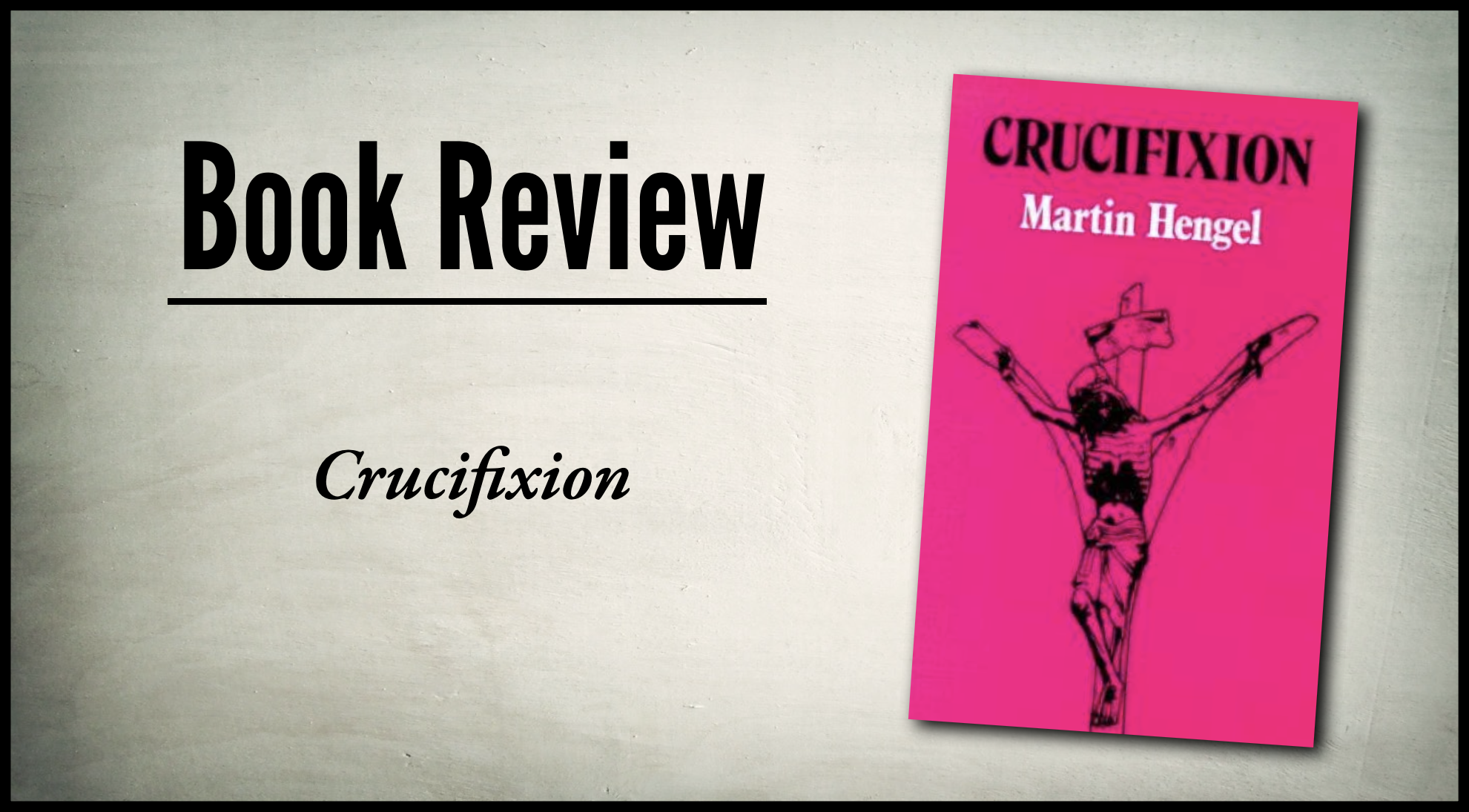
Book Review: Martin Hengel’s Crucifixion

A while back, I read Martin Hengel’s Crucifixion, which is a short little book that gives scholarly treatment to the practice of crucifixion in the ancient world. In some ways, I was a little disappointed—I had hoped for more of a detailed description of what a “historically accurate” crucifixion looked like, and Hengel didn’t really provide that (largely because crucifixion was a widespread practice in the ancient world that differed depending on time, location, and whim). That being said, the book was very interesting, specifically in three respects:

(1) Crucifixion as a Deterrent

In the Roman Empire, crucifixion was rarely used on Roman citizens and was primarily used on criminals of the lowest classes and slaves. This is pretty common knowledge, and Hengel supports it. What is particularly fascinating is the degree to which Hengel argues that the use of crucifixion on slaves was a means of stirring up fear among the enslaved in hopes of preventing any sort of rebellion. In places like Rome, where the slave population outnumbered those who were free, the fear of rebellion was real, and keeping the slaves paralyzed with the fear of crucifixion was seen as necessary.

(2) Crucifixion as Taboo

Hengel also makes the argument that crucifixion was so horrific, so feared, and so reviled, that it was essentially the sort of thing that was not spoken of or written about. This leads to what may seem like a surprising lack of references to it in ancient sources. This lack of references doesn’t mean that the use of crucifixion wasn’t widespread (it was), but simply that it was so horrible that people avoided writing about it:

“Crucifixion was widespread and frequent, above all in Roman times, but the cultured literary world wanted to have nothing to do with it, and as a rule kept quiet about it.”

(Hengel, p. 38)

(3) Crucifixion (of Jesus) as Folly

The overarching claim of Hengel’s book is that the Apostle Paul’s claim in 1 Corinthians 1.18 that the “word of the cross is folly” to unbelievers is a reflection of the repeated reception that Paul would have received as he went about preaching the message of a crucified Christ.

Crucifixion was so hated and despised that, for the ancient world, following and worshipping someone who had been crucified was sheer madness—it was not a message that easily attracted followers. This part of the message has been downplayed somewhat today (largely because we fail to grasp the level of shame and horror associated with crucifixion) but at its core, the message of the gospel is completely shocking:

“…In the death of Jesus of Nazareth God identified himself with the extreme of human wretchedness, which Jesus endured as a representative of us all, in order to bring us to the freedom of the children of God…This radical kenosis of God was the revolutionary new element in the preaching of the gospel. It caused offense, but in this very offense it revealed itself as the centre of the gospel.”

(Hengel, p.89)

This last point alone makes Crucifixion worth the read, as Hengel seeks to reclaim the scandal of Christianity as central to the message of the Gospel—God loved us so much that Jesus identified with the lowest extreme of humanity in order to reclaim us.

And, of course, this is why the day that the Son of God was murdered can be called Good Friday: Jesus has fundamentally transformed the meaning of the cross, despising its shame in order to bring about reconciliation and overcoming the condemnation of death in His resurrection.

This is why the day that the Son of God was murdered can be called Good Friday: Jesus has fundamentally transformed the meaning of the cross, despising its shame in order to bring about reconciliation. Share on X
« Older posts Newer posts »

© 2026 The Doc File

Theme by Anders Noren — Up ↑