The online journal of Luke Dockery

Category: Sports (Page 9 of 16)

“Smoltz Deserved Better From The Braves”

Here’s a really good column in the Atlanta Journal-Constitution.

For those of you who don’t follow baseball too closely, John Smoltz, the face of the Atlanta Braves, is close to signing with the Boston Red Sox after Atlanta failed to offer him a competitive contract for the 2009 season.

It’s been hard to root for the Braves the last couple of seasons, but this is a new low. I’ve been a Braves fan since 1987 (which is basically when I first became aware of them), but my fan-dom has reached a crisis point.

Good luck in Boston, Smoltzie.

Thanks to Jared for sending me the link.

Maddux Calls It A Career

Greg Maddux announced his retirement from Major League Baseball on Monday.

I grew up watching Maddux and the other members of Atlanta’s Big Three, Tom Glavine and John Smoltz, baffle hitters and win lots of games.

Maddux was my least favorite of the three (he arrived in Atlanta last and always seemed somewhat like a hired gun), but he was also the best, and he put up some historically shocking numbers in the mid 1990s.

Really, Maddux was also most representative of the great Atlanta teams of the 90s and early 2000s—an absolute terror over the long course of the season who suddenly became mortal when the playoffs rolled around (Maddux was just 11-11 in the postseason during his 11 seasons with the Braves).

Maddux retired with 355 career victories, 8th on the all-time list and one ahead of Roger Clemens, which I think is significant, and appropriate.

Significant because I think Maddux wanted to finish ahead of the Rocket, and appropriate because I think he deserved to.

For much of the two pitchers’ careers, the debate raged about which was the greatest pitcher of the era. Over recent years, the argument had tilted in favor of Clemens, who continued to be one of the best pitchers in the game while Maddux increasingly looked like a 40 year-old who used to be good (eerily similar to what happened with Barry Bonds and Ken Griffey Jr.).

Of course, then all the allegations of Clemens’ steroid use came out, and Roger joined the ranks of Bonds, Mark McGwire and the rest of the baseball stars who have fallen from grace.

And his sudden distancing of himself statistically from Maddux late in their careers made a lot more sense.

Clemens (like Bonds) was a great player who possibly could have been the best of his era, but Maddux (like Griffey) came by his numbers cleanly and deserves the distinction instead.

And really, maybe that would be the most fitting legacy of all for the Steroid Era.

Preacher Roe (1915-2008)

I discovered yesterday that Preacher Roe had passed away on Sunday at the age of 92.

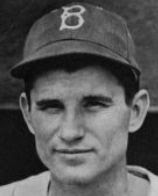
Roe was a left-handed pitcher who played in the Major Leagues in the 1940s and 50s, making five All-Star teams, leading the league in strikeouts once, and had a personal best record of 22-3 in 1951 with the Brooklyn Dodgers.

For his career, Roe accumulated 127 wins against 84 losses, a good record that likely would have been more impressive had he not missed time for service in World War II.

But the reason I know about Preacher Roe and the reason I thought all of this would be interesting to the majority of my readership is that Preacher Roe is the only Harding student to play in the Major Leagues. When I was at Harding, his old Dodgers jersey was on display in the Ganus Athletic Center, and I bet it’s still there.

Roe seems to have been an interesting character.

Born Elwin Charles Roe, he got his lifelong nickname at the age of 3 when his uncle returned from the first World War and asked his little nephew what his name was. Roe responded that his name was “Preacher” (apparently because he liked the local preacher who would take him on horse and buggy rides), and the nickname stuck.

He suffered a major setback early in his career when he was still with the Pittsburgh Pirates. In the 1945 off-season, while coaching a high school basketball game (baseball players didn’t make as much then as they do now), he suffered a skull fracture after getting into a fight with the referee. He struggled through the next few seasons.

He turned his career around in Brooklyn, however, where he began throwing the (illegal) spitball as his signature pitch, and played alongside Jackie Robinson.

In an interview later in life, Roe expressed his pride in getting to play with Robinson: “I just felt if Jackie hit a home run while I was pitching, it counted just as much for me as if Pee Wee Reese hit it or some of the other guys that were white…I’d say, ‘You never have seen a good ballplayer until you’ve seen him.’ He was that good.”

If you look closely at the picture below, the setting might be familiar to some of you…it was taken at Camp Tahkodah.

Arthur Ashe On Suffering


Late in his life, during his battle with AIDS (he had contracted HIV during a blood transfusion), one of Ashe’s fans asked him, “Why does God have to select you for such a bad disease?”

Ashe replied:

“The world over, 50,000,000 children start playing tennis, 5,000,000 learn to play tennis, 500,000 learn professional tennis, 50,000 come to the circuit, 5,000 reach the Grand Slam, 50 reach Wimbledon, 4 to the semifinals, 2 to the finals. When I was holding a cup, I never asked God ‘Why me?’ And today in pain I should not be asking God, ‘Why me?’”

Richard Ben Cramer on Joe DiMaggio: The Mirror Of A Nation


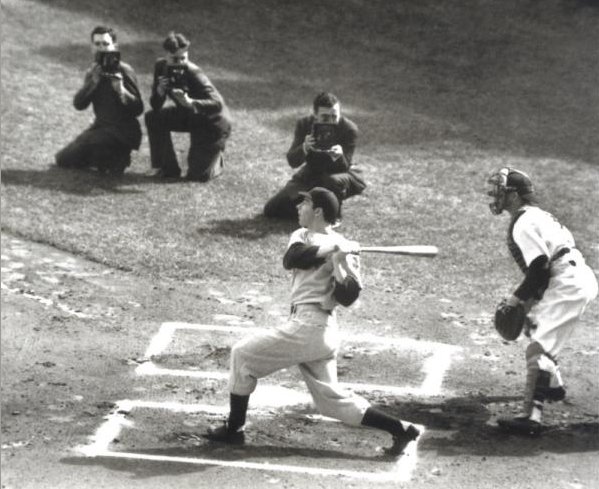
A while back, I wrote a post about Joe DiMaggio.

Then, while reading an article written about him after his death, I found a quote that I really liked:

“In Joe, the nation found a mirror for its best self. In the hard-knuckled ’30s, he was the Sicilian immigrant’s son who came from nothing, made it big. As the war drew nearer, he was our can-do poster boy, getting hits every day through the summer of ’41. In the war, he sacrificed his best years but came back as a winner—bigger than ever. In postwar wealth and ease, he was our Broadway Joe, squiring Miss Americas at the Stork Club…until he wooed and won, in Marilyn Monroe, the most beautiful girl America could dream up. And even when he lost that girl for good, in 1962, he was us, at the start of our decade of assassination and bereavement. He was, at every turn, our idea of the American hero—one man we could look at, who made us feel good. For it was always about how we felt…with Joe. That’s how it worked. No wonder we strove, for six decades—the nation, its presidents, its citizens, almost everyone—to give Joe the hero’s life. It was always about us.”

« Older posts Newer posts »

© 2026 The Doc File

Theme by Anders Noren — Up ↑