The online journal of Luke Dockery

Category: Theology (Page 22 of 58)

Pardon, Not Acquittal: Jesus and the Woman Caught in Adultery

Introduction

One of my favorite stories in Scripture is found in our modern Bibles in John 8, and is generally referred to as something like “Jesus and the Woman Caught in Adultery.” I love this story because it is a good example of how Jesus was so different from what people expected, and how He always did the right thing in any given situation.

Maybe you are like me: there are so many times in life when I find myself in a situation where I simply do not know what to do. Maybe I don’t know how to answer a certain question, or respond to a problem that someone is having, or face a crisis in my own life. I want to do the right thing, I want to do the thing that honors God, but sometimes, in the moment, it can be hard to have the wisdom to know what that thing is.

But not with Jesus. He often had people intentionally trying to put Him in impossible situations, but He would always know the right thing to do or say.

And that is certainly the case in this story.

Does This Story Belong In the Bible?

Before we launch into examining the story itself, we first need to answer the question, “Does this belong in the Bible?” And that might seem like a crazy question at first, because, after all, it is in our Bibles, so surely it belongs there…right?

We don’t have the original editions of the Bible. Instead, what we have are thousands and thousands of handwritten copies called manuscripts. We have fragments that date back to the early second century, but the best comprehensive manuscripts we have that contain most or all of the New Testament date back to the fourth and fifth centuries.

Compared to other ancient works, this is incredible. There are some ancient works of famous philosophers or poets of which we may only have a handful of copies, but there are thousands and thousands of biblical manuscripts. There are a lot of differences between the different manuscripts because they were copied down by hand, but since there are so many copies, we can compare them and with a very high degree of accuracy, determine what the original text said.

The study of these manuscripts is called textual criticism, and the earlier manuscripts are better, because they are closer to the original copies of the books of the New Testament, and thus give us a more accurate picture of what the original documents said.

The vast majority of differences between manuscripts are differences in things like spelling (basically the modern equivalent of a typo) where it is still very obvious what is supposed to be said. There are only a handful of places in the New Testament where there is a whole verse or verses that we are not sure about, and even in those, there is no point of doctrine that is compromised either way. So the biblical text that we have is very reliable.

But the story of the Woman Caught in Adultery, found in John 7.53-8.11, is one of those instances where different manuscripts disagree with one another. In most modern Bibles, John 7.53-8.11 will be included in brackets with a note next to it that says something like, “the earliest manuscripts do not include John 7.53-8.11.” What’s going on here?

The problem is that the earliest and best manuscripts we have do not put this story after John 7.52. Some do not contain the story at all, other manuscripts place it after John 21.25, one manuscript puts it after John 7.36, and some actually put it in the Gospel of Luke, after 21.38 (keep that in mind). So in this case, textual criticism tells us that this story about Jesus and the woman caught in adultery was almost certainly not originally at the end of John 7 and beginning of John 8.

But just because we don’t think this story is in the right place doesn’t mean that it isn’t a true story. It seems authentic; it certainly seems in keeping with the character of Jesus as we read in other places. It is referred to in other writings outside of the New Testament, so we know that it was a very early story, known in the second century.[1]

Some have suggested that this was preserved as a true story about Jesus, but wasn’t attached to a specific gospel, so different scribes who copied the manuscripts by hand added it at different places.

I think there is pretty good evidence that it was originally written by Luke. If you remember, earlier I mentioned that this story is included in some manuscripts of Luke, after Luke 21.38 (and if you look, it actually fits quite well there). But also, the theme, vocabulary, and style of writing in this story are more common to the books of Luke-Acts than they are the rest of John.[2] Luke’s gospel reflects a special interest on women, as this story obviously does, and there are various words and expressions used in this story that don’t appear elsewhere in John, but appear multiple times in Luke-Acts.[3]

But if Luke wrote this, why is it not in the earliest and most comprehensive manuscripts?

Well, Luke tells us at the beginning of his gospel (Luke 1.1-3) that he compiled his account of the life of Jesus based on the testimony of eyewitness accounts and that he took what he had collected and wrote it down. Luke would have compiled notes that he later collected and collated into a full text, sort of like if you can imagine having a folder with all of these stories of miracles and teachings of Jesus that you take and then compile together on one scroll.

This particular story fits in very well after Luke 21.38 (where it is in some manuscripts) but this point in Luke’s Gospel is also right before his telling of the betrayal, death, and resurrection of Jesus—the central elements of the Jesus story.

Luke’s Gospel in its current form is just about the right size for a typical ancient scroll, so it’s possible that Luke removed this story from his Gospel simply for the practical reason that he saw that he was running out of writing room, and he wanted to make sure that he covered the most important stuff.[4]

The story of Jesus and the Woman caught in adultery was still preserved as important and authentic, and was apparently widespread, which is how it got added to so many manuscripts in different places. None of this should make us uncomfortable or worried about the accuracy of our Bibles, but it should remind us that while the Bible is inspired by God, it is also a human product that God uses to reveal Himself to us.

The True Colors of the Pharisees

So while this story doesn’t really fit in the Gospel of John, I feel very confident that it is authentic, and that it fits in our Bibles. Let’s examine it more closely:

Early in the morning he came again to the temple. All the people came to him, and he sat down and taught them.

The scribes and the Pharisees brought a woman who had been caught in adultery, and placing her in the midst they said to him, “Teacher, this woman has been caught in the act of adultery. Now in the Law Moses commanded us to stone such women. So what do you say?”

This they said to test him, that they might have some charge to bring against him.

Here the Pharisees, the supposed keepers of the Law, slip up and show themselves to be less concerned with the integrity of the Law than they are in trapping Jesus in a difficult situation. You see, the Law of Moses did require that a woman caught in adultery be put to death, but it also required the same punishment for the man (Leviticus 20.10; Deuteronomy 22.22). Since the woman was “caught in the act of adultery,” the Pharisees clearly knew who the other guilty party was, and by not bringing him forward for punishment, showed that they weren’t too concerned with what the Law said.

Furthermore, despite what the Law said, “there is little evidence that it was carried out very often in first-century Palestine, especially in urban areas.”[5] Part of the reason for this is that the Jews were under Roman authority, and didn’t have the legal authority to execute people on their own (we see this again in the execution of Jesus).

So the Pharisees likely had no intention of executing the woman and weren’t really concerned about the Law of Moses. Instead, they were trying to trap Jesus between a rock and a hard place, forcing Him to either disregard the Law of Moses, or be the one who pronounced the woman’s death sentence (and thus, likely cause problems for him with the Roman authorities).

Jesus has been placed in a hard situation; out of nowhere, He is surrounded by an angry mob, asking Him to perform some on-the-spot biblical interpretation with massive implications. What is the right thing to do? How will He respond?

Writing on the Ground

Jesus bent down and wrote with his finger on the ground. And as they continued to ask him, he stood up and said to them, “Let him who is without sin among you be the first to throw a stone at her.” And once more he bent down and wrote on the ground.

Twice in this passage, it specifically mentions Jesus stooping down to write with His finger on the ground. It’s an interesting detail that is included, and helps the scene come to life for the reader. It is also one of the little characteristics of this story that make it seem genuine. Seeing that Jesus wrote on the ground but not necessarily knowing what it is that He wrote—this is the sort of detail that an eyewitness would remember and share.

Scholars and commentators have pounced on this little detail over the years and offered various interpretations of it:

  • Some have suggested that Jesus was writing out the 10 Commandments.
  • Some have argued that this was a direct reference to Jeremiah 17.13, where those who forsake God are “written in the dust”, and that Jesus is making a specific judgment against the Pharisees.
  • Some have proposed that the words Jesus writes are actually the specific sins of the scribes and Pharisees who have brought the adulterous woman before Him.

All of these suggestions (and others have been made as well) are interesting and, I guess, possible, but ultimately, we aren’t told what it is that Jesus writes on the ground. Personally, I’ve always been inclined to think that perhaps Jesus didn’t write anything of consequence on the ground at all, but just the act itself and the pause it produced helped to diffuse the energy and volatility of the situation and made the Pharisees more prepared to hear and respond to what Jesus says.

Sometimes when we find ourselves in a difficult situation, or perhaps when someone says something to us that just sets us off and makes our blood boil, the most important thing that we can do is to do nothing right then. Instead, the wise course of action is to take a deep breath and slow our heart rate before we respond (if we respond at all!).

Jesus says that He who is without sin is to cast the first stone. This is a reference to Deuteronomy 13.9 and 17.7—it is the witnesses of the crime who must be the first to throw the stones, and they cannot have been participants in the crime itself.[6]

So Jesus puts it back on those who were trying to trap Him: which of the woman’s accusers felt confident enough in their own sinlessness that they would take up the stone and begin the execution?

Pardon vs. Acquittal

But none of them do.

But when they heard it, they went away one by one, beginning with the older ones, and Jesus was left alone with the woman standing before him.

Jesus stood up and said to her, “Woman, where are they? Has no one condemned you?”

She said, “No one, Lord.”And Jesus said, “Neither do I condemn you; go, and from now on sin no more.”

The story of Jesus and the Woman caught in Adultery ends on a high note, as Jesus’ response to the Pharisees leaves them speechless. Seemingly, He awakens their consciences, and in shame, the slink away, realizing that they are in no place to pronounce judgment upon the woman.

“Woman, where are they? Has no one condemned you?”

“No one, Lord.”

“Neither do I condemn you; go, and from now on sin no more.”

Of course, Jesus is the One who is without sin, and is the One who actually has the right and authority to pronounce judgment. But He doesn’t condemn her. In fact, this is in keeping with the reason Jesus came into the world:

“For God did not send his Son into the world to condemn the world, but in order that the world might be saved through him.”

(John 3.17)

Jesus came on a rescue mission to seek and save those who were lost.

And what Jesus says here is incredibly important—Jesus pardons the woman, but He doesn’t say that her sin doesn’t matter or that it isn’t a big deal. Instead, He specifically addresses the sin—by telling her to “sin no more,” He indicates that He knew that she was indeed guilty of adultery and that she needed to change her life.

Which leads to an important idea that is central to the Gospel—Jesus offers us pardon, not acquittal:

  • If someone is acquitted of a crime, then they are declared to be “not guilty.” No punishment is due that person, because no sentence of guilt was passed.
  • If someone is pardoned of a crime, then they have been found guilty, but the punishment for the crime is taken away.

This is a central element to the gospel of Jesus Christ. Jesus doesn’t come to us and say, “Your sin is not a big deal; no crime has been committed, you are innocent.” Instead, He says, “Your sin is significant; it must be paid for, but you don’t have to pay the price.”

Our sin is such a big deal that Jesus paid the price for it on the cross; because of that sacrifice, pardon can be offered to the adulterous woman, and to the rest of us as well. And when we receive that pardon for our sins and appreciate it, we should be motivated, as Jesus told the woman, to go and sin no more.

Conclusion

The story of the woman caught in adultery is an interesting one. It presents textual problems, and we may be unsure of exactly where it fits in Scripture. But what a powerful story it is, and what important lessons it teaches us.

It teaches us about the nature of Jesus’ enemies. They were less interested in keeping God’s word than they were in trying to entrap Him. And in a similar way, we may find ourselves at times in difficult situations not because other people are trying to do the right thing, but because they are actively trying to cause problems for us.

This passage also teaches us something about how to respond to difficult situations. Jesus, the wisest of all men, doesn’t explode or react impulsively. Instead, He takes His time and calmly responds, diffusing the situation while applying biblical truth with clarity and grace.

And perhaps most of all, it shows us something about the kind of judge that Jesus, the Judge of all the World, is: He is looking to save, not to condemn. I think many people have an idea of God where He is distant and removed, watching us closely and just waiting for us to mess up so He can zap us. But this is not the picture of God that the Bible repeatedly offers. God is merciful and gracious, slow to anger, and abounding in steadfast love and faithfulness. God does not wink at sin or pretend that it doesn’t matter, but He is eager to pardon it, and He paid the price for it, Himself.

Each of us stands guilty in the sense that we have been convicted of sin in our lives. That is unquestionable. So the only real question is, have we received the pardon that God offers?


[1]Frank Pack, The Gospel According to John, Part I, The Living Word Commentary (Austin, TX: Sweet Publishing, 1975), 136.

[2]Ibid., 136; D. A. Carson, The Gospel According to John, The Pillar New Testament Commentary Series (Grand Rapids: Eerdmans, 1991), 334; http://www.tektonics.org/af/adulterypericope.php

[3]“Mount of Olives”, “scribes and Pharisees,” “eldest,” “accusers,” “early,” “all of the people”

[4] http://www.tektonics.org/af/adulterypericope.php

[5]Carson, 335.

[6]Ibid., 336.

If This Is All There Is: An Easter Reflection on Hopeful Courage

After describing the resurrection as “of first importance” in 1 Corinthians 15, Paul goes on to get even more specific:

 “…If Christ has not been raised, then our preaching is in vain, your faith also is vain…if Christ has not been raised, your faith is worthless; you are still in your sins…if we have hoped in Christ in this life only, we are of all men most to be pitied.”

(1 Corinthians 15.14,17,19)

I once had a very well-meaning Sunday school teacher who said something to the effect that if it turns out that Christianity is not true, there is still no better way to live. His basic point, I think, was that a life characterized by Christian virtue, service, and sacrifice is a worthwhile way to spend our time on earth, even if we are ultimately incorrect about everything we claim and there is no eternity in view afterwards. I appreciate the sentiment, but I disagree, and the reason I disagree is that in light of Paul’s words above, I am pretty sure he would disagree.

If Jesus was not raised and this is all there is, Paul wouldn’t say, “Oh well, we were mistaken, but there’s no better way that we could have lived.” Instead, he would say that life was all a tragic joke, and that Christians were the butt of it. Of all people, we are most to be pitied.

This, I think, is cause for reflection: what if this is all there is?

If this is all there is, my career is a waste of time. I am nothing more than a delusional mentor to young people, feeding them false information and false hope, encouraging them to grow up to be as deluded as I am.

If this is all there is, I am foolish for staying in such a meaningless career that doesn’t compensate me nearly as well as countless others would.

If this is all there is, efforts at self-denial make no sense. Why should I deny myself anything? I have a limited time of existence, and I need to make the most of it by doing what I want, for as long as I can, as often as I can.

If this is all there is, then my beautiful daughter’s diseased and disabled life is the random byproduct of cosmic chance. There is no meaning, and no hope for something better in the future.

If this is all there is, any notion of turning the other cheek or loving my enemies is dangerous nonsense that should be disregarded immediately. Love those who would do me harm? Not retaliate when I am attacked? These are not natural responses, and they are not generally beneficial to me.

If this is all there is, why should I forgive? Oh sure, there are people who are an important part of my life who I want to be on good terms with and sometimes forgiveness is necessary to keep the peace and make life more pleasant. But a lot of times it is easier to write people off and forget about them than to forgive them.

If this is all there is, why spend so much time and effort in how I interact with people? Why be so careful about what I say and how I say it on social media? Why be careful about the way I act when I drive? Why be careful about the way I respond to people with whom I disagree?

If this is all there is, why the sleepless nights of concern over my students and the decisions they make, or over problems at church?

If this is all there is, I am giving up a lot of good opportunities for sleep on Sunday mornings.

If this is all there is, why spend my life doing anything but those things that make me happy, or bring me some level of satisfaction, or enforce my standards and values upon the world?

But.

I do not believe this is all there is.

Because the tomb was empty.

That gives me hope that there is more to the Story than the Broken Now, and that hope gives me the courage to continue to live in a way that makes no sense if this is all there is.

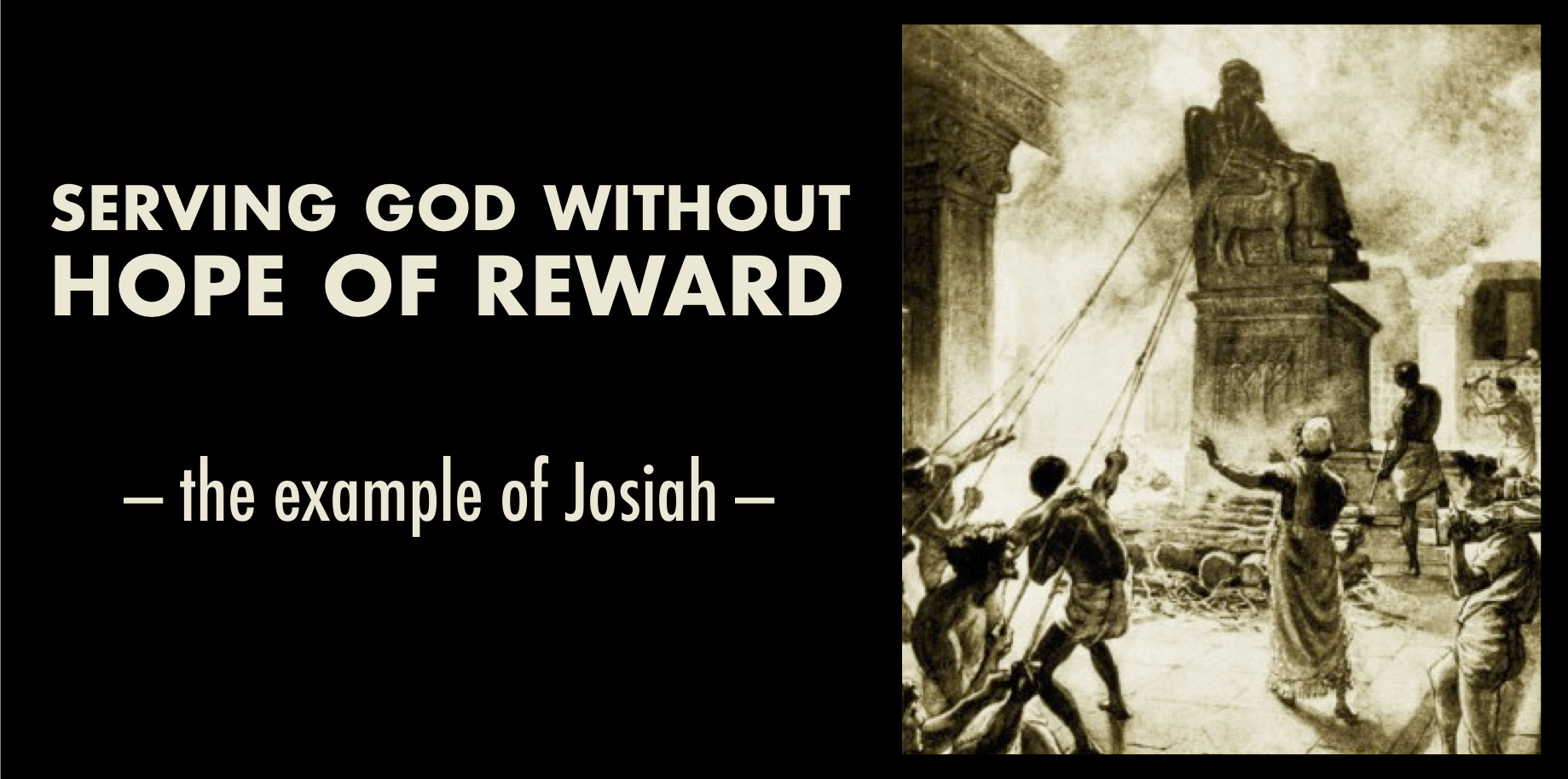
Serving God Without Hope of Reward: The Example of Josiah

A while back, I wrote a research paper on King Josiah, and ever since then he has been one of my favorite biblical characters.

Josiah came to power in the Southern Kingdom of Judah around 640 BC. This is a long time after the time of David and Solomon: the kingdom had been divided for almost 300 years, the Northern Kingdom of Israel has already been conquered by Assyria, and the Southern kingdom isn’t too far behind—a long series of mostly unfaithful kings (including Josiah’s father, Amon) have led Judah away from God, and before long, Babylon will begin to conquer them.

This is the situation when Josiah comes to power at the age of 8. Even though he’s young, and even though he had a wicked father, the Bible tells us in 2 Kings 2.22 that Josiah was a good and faithful king:

“He did right in the sight of the LORD and walked in all the way of his father David, nor did he turn aside to the right or to the left.”

According to 2 Kings 22, in the 18th year of his reign, Josiah begins a project to repair and restore the Temple, and during the construction project, the book of the law is found. Scholars and commentators disagree on exactly what this means, but basically, the Law of Moses has been found—either the entire Torah (the books of Genesis through Deuteronomy), or at the very least, the Book of Deuteronomy on its own. Either way, what this means is that the Law of Moses—the record of the covenant that God made with His people and the laws He gave them to follow—has been found and is read to King Josiah for the first time. It shows just how bad things had gotten under Josiah’s wicked father that Josiah apparently hadn’t been exposed to the Torah before now!

A covenant is an agreement or a promise made between two parties. To put it simply, in God’s covenant with the Israelites, God promised to be their God and protect them, and in return, the people were to be faithful and obedient to His commands. When Josiah hears the words of the Law, he tears his clothes because he realizes just how unfaithful Judah has been—they haven’t followed the commands of the Law of Moses, and they’ve worshipped gods other than Yahweh. In short, they haven’t kept up their part of the bargain.

So Josiah sends to Huldah the prophetess to inquire of the LORD—what does God say about the situation? Huldah responds in 2 Kings 22.15-20, but it isn’t good news:

“‘Thus says the LORD, the God of Israel: ‘Tell the man who sent you to me, Thus says the LORD, Behold, I will bring disaster upon this place and upon its inhabitants, all the words of the book that the king of Judah has read. Because they have forsaken me and have made offerings to other gods, that they might provoke me to anger with all the work of their hands, therefore my wrath will be kindled against this place, and it will not be quenched.

But to the king of Judah, who sent you to inquire of the LORD, thus shall you say to him, Thus says the LORD, the God of Israel: Regarding the words that you have heard, because your heart was penitent, and you humbled yourself before the LORD, when you heard how I spoke against this place and against its inhabitants, that they should become a desolation and a curse, and you have torn your clothes and wept before me, I also have heard you, declares the LORD.

Therefore, behold, I will gather you to your fathers, and you shall be gathered to your grave in peace, and your eyes shall not see all the disaster that I will bring upon this place.’’

And they brought back word to the king.”

So basically, God says that for all their wickedness, the people of Judah will be punished, but because Josiah humbled himself before God, he won’t have to witness the destruction of his country and will die before it happens.

Put yourself in the place of Josiah: what do you do next? No matter what you do, it’s too late for Judah and they’re going to be punished for their past sins after you die. It seems like whatever you do doesn’t matter, because the same negative consequence will happen either way. This is Josiah’s situation; what will he do next?

And this is why Josiah is one of my favorite Bible characters, and why he is such a good example for us: even when he knows that there’s no reward coming his way, he still does the right thing because of his devotion to God.

In 2 Kings 23, Josiah goes out and reads the Book of the Law in front of all the people and along with them, reestablishes the covenant with God. Then, he sets about in a systematic way to make things right. He goes throughout Judah and even into the northern territory of Israel and does away with unauthorized worship practices, destroying idols and pagan altars and getting rid of idolatrous priests. He removes the mediums and spiritists from the land as well, and also re-institutes the Passover feast:

“For no such Passover had been kept since the days of the judges who judged Israel, or during all the days of the kings of Israel or of the kings of Judah. But in the eighteenth year of King Josiah this Passover was kept to the LORD in Jerusalem.”

Josiah does all of this despite the knowledge that Judah is going to be punished no matter what, and sure enough, after Josiah is killed in a battle against Egypt, Judah is quickly overthrown.


Josiah’s life underscores how important it is to serve God because we love Him, not because we’re hoping to get something for doing so. I think a lot of times people get the idea that as Christians, we spend our lives doing good things for God and that He then pays us back by granting us eternal life.

To be clear, the Bible does speak of eternal life as a reward and the hope of living eternally in God’s presence should help to motivate us to keep going, especially when times get rough. But if the only reason you’re serving God is so He’ll pay you back with eternal life, then you really have the wrong perspective on things. Serving God will seem like a chore and, before long, you’ll fool yourself into thinking that God owes you something, when nothing could be further from the truth.

Reading in 2017

I have enjoyed seeing several people post lists of the books that they read in 2017, or their top books from the past year. As someone who likes to read and keep track of what I read, it is fun to see what other people are reading as well.
Here is my list from 2017:

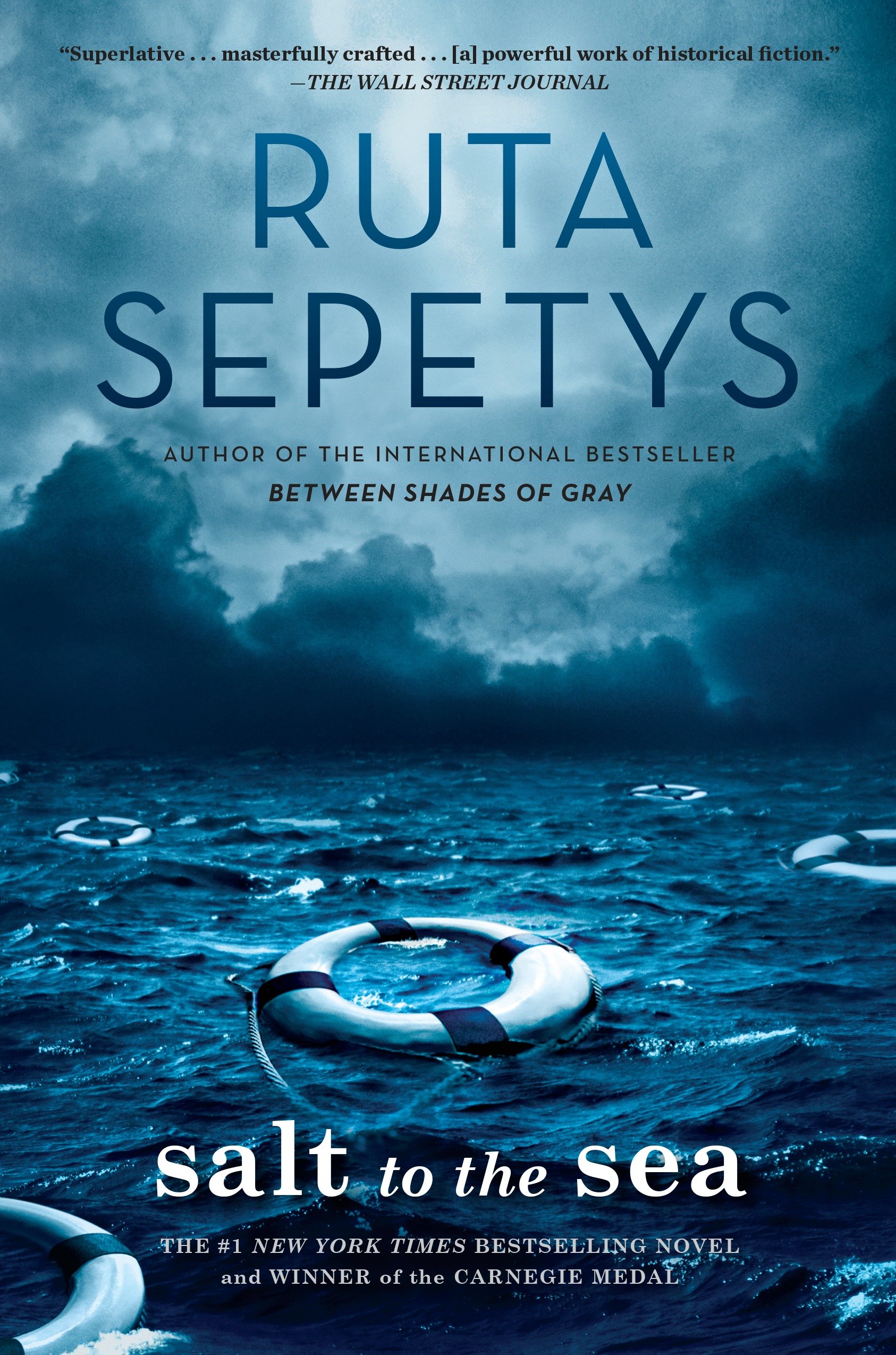
  1. Salt to the Sea, by Ruta Supetys
  2. Jonah: God’s Scandalous Mercy, by Kevin J. Youngblood
  3. Wild in the Hollow: On Chasing Desire & Finding the Broken Way Home, by Amber C. Haines
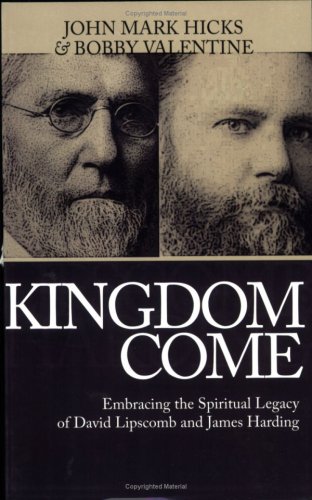
  4. Kingdom Come: Embracing the Spiritual Legacy of David Lipscomb and James Harding, by John Mark Hicks and Bobby Valentine
  5. City of Thieves, by David Benioff
  6. The Case for Easter: A Journalist Investigates the Evidence for the Resurrection, by Lee Strobel
  7. Digging Deeper Into the Word: The Relevance of Archaeology to Christian Apologetics, by Dale W. Manor
  8. Paul, by Edgar J. Goodspeed
  9. Babe: The Legend Comes to Life, by Robert W. Creamer
  10. Truth Speaks to Power: The Countercultural Nature of Scripture, by Walter Brueggemann
  11. The Need For College Ministry: Awakening the Church to One of the Most Receptive Mission Fields in the World, by Neil Reynolds
  12. The Phantom Tollbooth, by Norton Juster
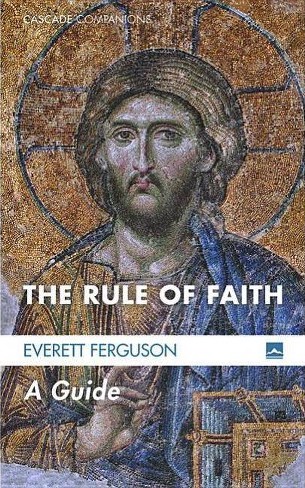
  13. The Rule of Faith: A Guide, by Everett Ferguson
  14. Hear Me Out, by Philip Jenkins, et. al
  15. All The Light We Cannot See, by Anthony Doerr
  16. The Teammates: A Portrait of a Friendship, by David Halberstam
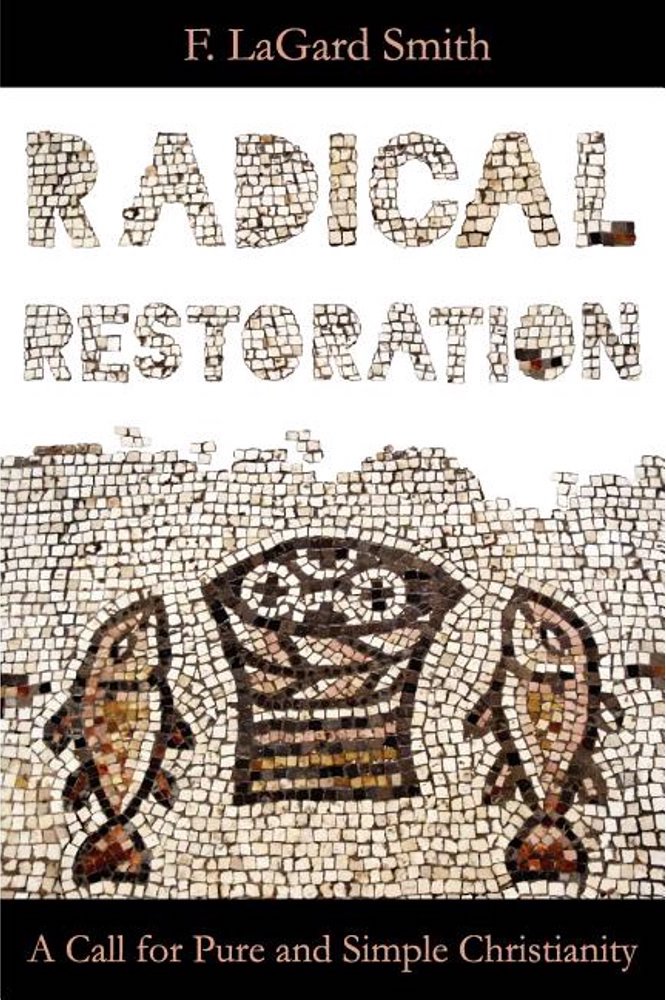
  17. Radical Restoration: A Call for Pure and Simple Christianity, by F. LaGard Smith
  18. Murder at Fenway Park, by Troy Soos
  19. Little League Confidential, by Bill Geist
  20. The Big Four, by Agatha Christie
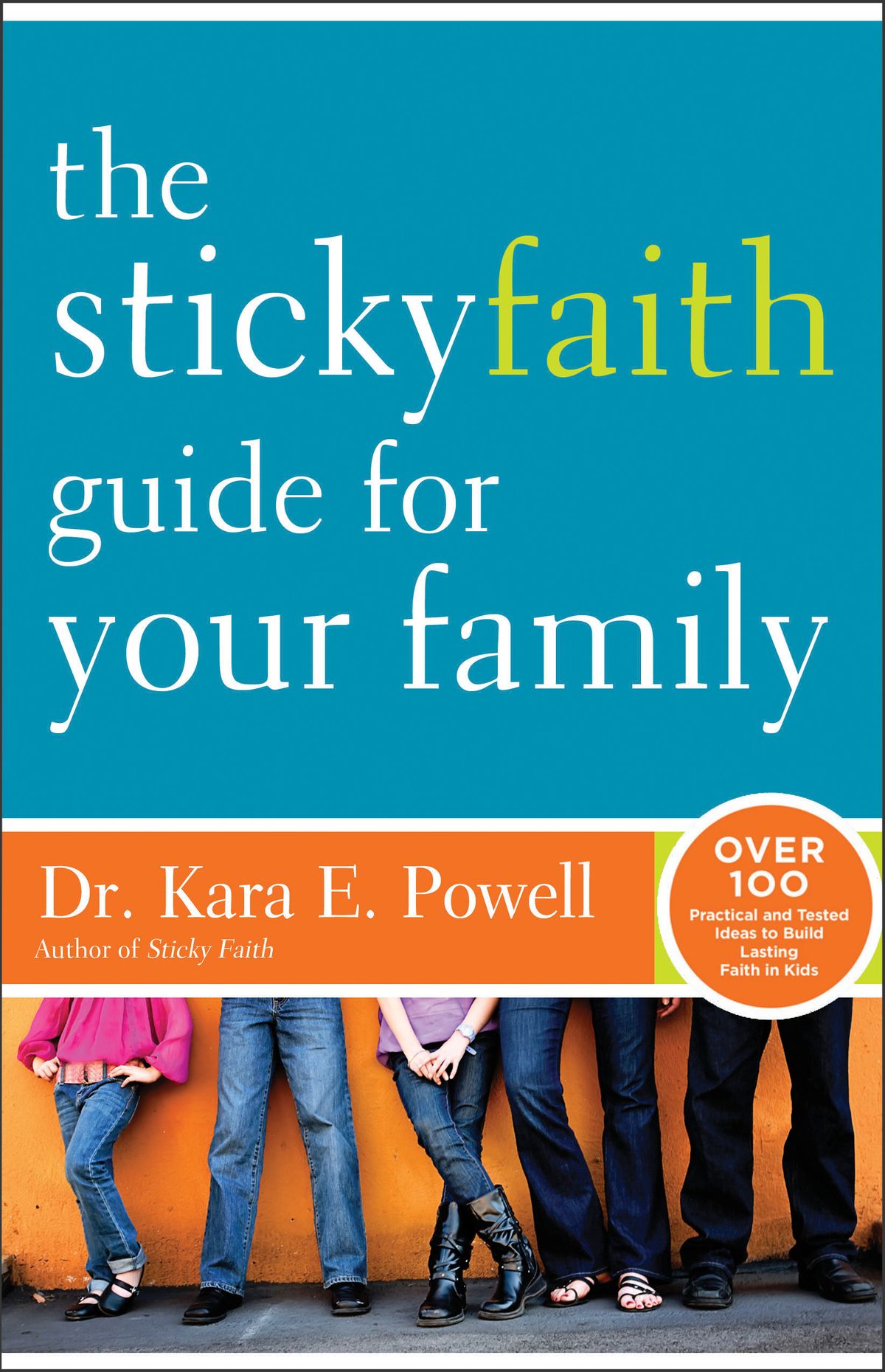
  21. The Sticky Faith Guide for your Family, by Kara Powell
  22. Velvet Elvis: Repainting the Christian Faith, by Rob Bell
  23. A Biblical Pattern for Church Growth: A Study of Ephesians 4.1-16, by Earl Lavender
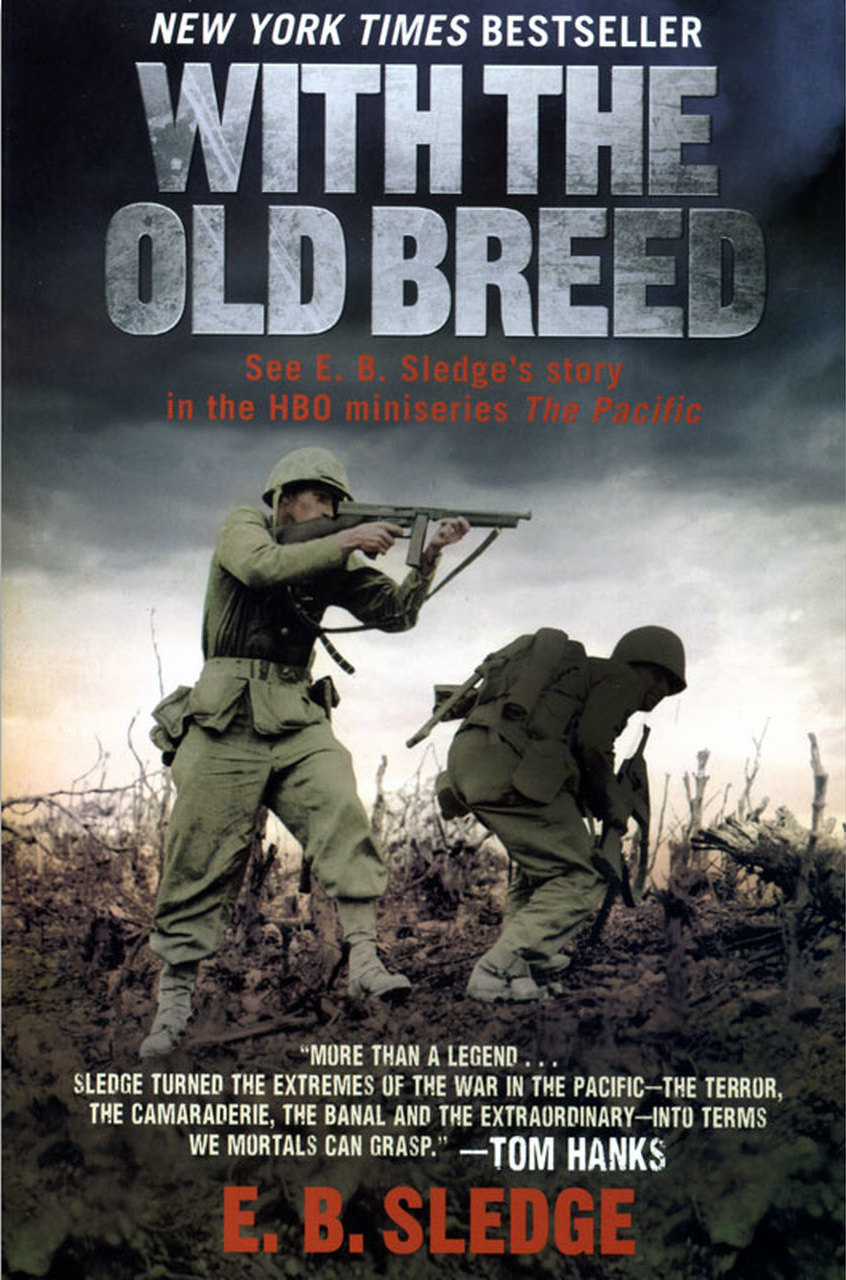
  24. With the Old Breed, by E. B. Sledge
  25. Ballplayer, by Chipper Jones with Carroll Rogers Walton
  26. Hillbilly Elegy, by J.D. Vance
  27. Lead Small: Five Big Ideas Every Small Group Leader Needs to Know, by Reggie Joiner and Tom Shefchunas
  28. The Didache
  29. First Apology, by Justin Martyr
  30. Against Heresies, by Irenaeus*
  31. Prescription Against Heretics, by Tertullian
  32. The Stone-Campbell Movement, by Leroy Garrett
  33. On First Principles, by Origen*
  34. Oration in Praise of the Emperor Constantine, by Eusebius
  35. Conference 1, by St. John Cassian
  36. The Rule of St. Benedict
  37. The Trinitarian Controversy, ed. by William G. Rusch*
  38. Ten Tips To Preaching To Students, by Frank Gil
  39. Confessions, by Augustine*
  40. The Distraction Slayer, by Michael Hyatt
  41. The Christological Controversy, ed. by Richard A. Norris, Jr.*
  42. I Had a Hammer: The Hank Aaron Story, by Hank Aaron with Lonnie Wheeler
  43. Proslogion, by Anselm of Canterbury
  44. Why God Became Man, by Anselm of Canterbury
  45. Gorky Park, by Martin Cruz Smith
  46. The Bridge of Sighs, by Olen Steinhauer
  47. Harry Potter and the Sorcerer’s Stone, by J.K. Rowling
  48. Youth Ministry in a Post-Christian World: A Hopeful Wake-Up Call, by Brock Morgan
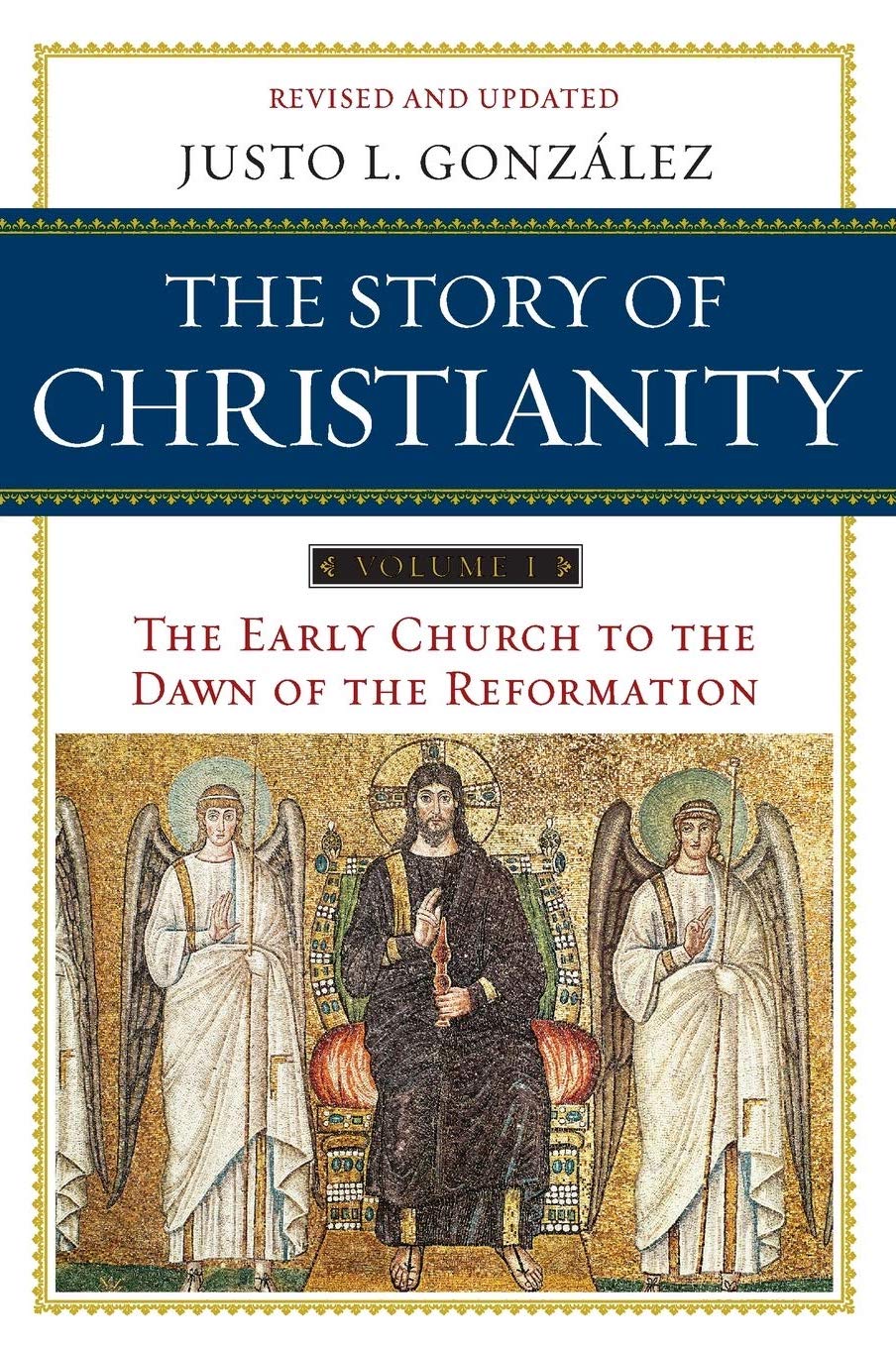
  49. The Story of Christianity, Volume 1: The Early Church to the Dawn of the Reformation, by Justo L. González
  50. Harry Potter and the Chamber of Secrets, by J.K. Rowling
  51. Advent: Seasonal Readings, by N.T. Wright
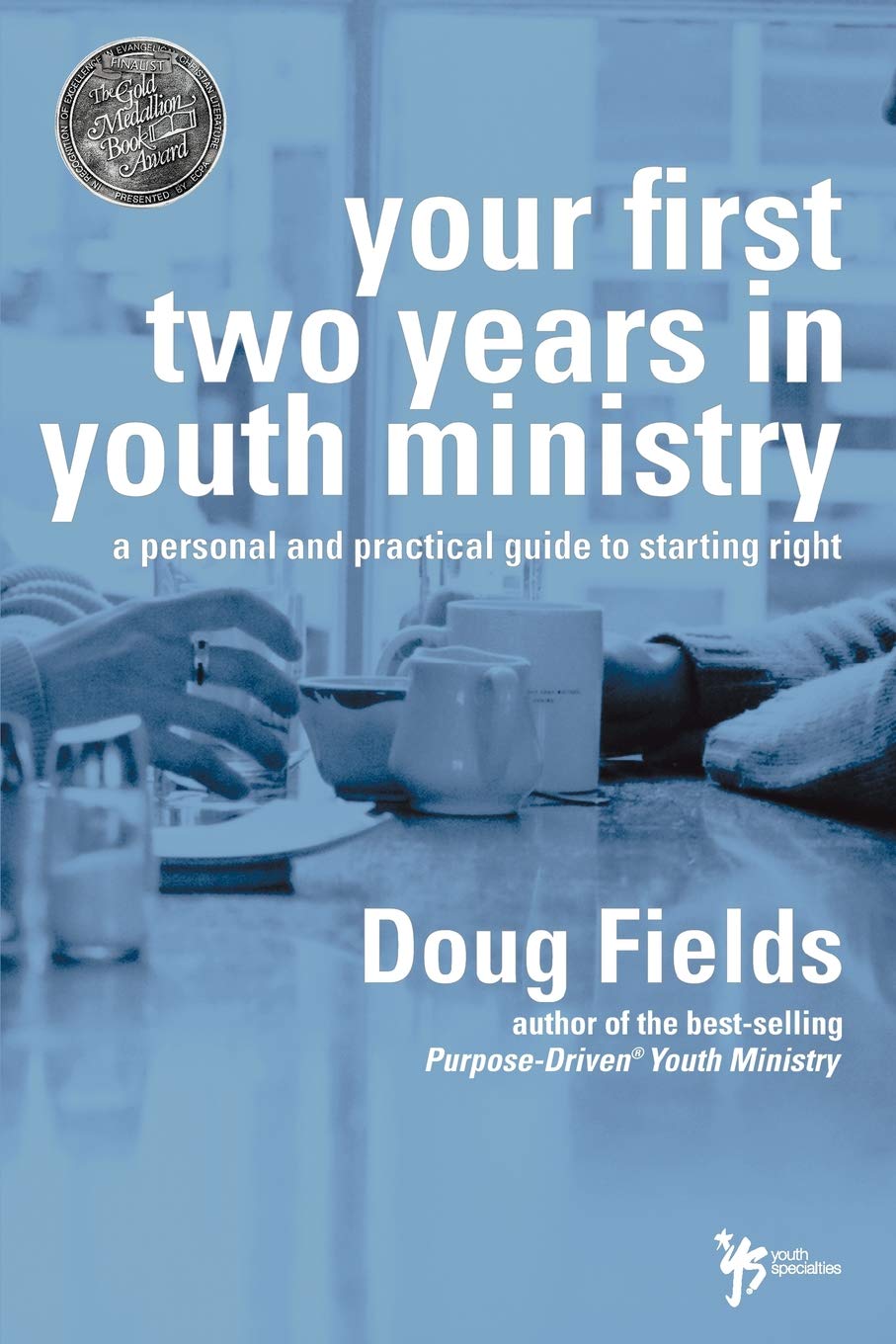
  52. Your First Two Years in Youth Ministry, by Doug Fields

A few major observations before I talk about a couple of specific books:

  • My reading total increased from 51 books in 2016 to 52 books in 2017. And this included a couple of very large volumes of 700-800 pages.
  • I really enjoyed my reading in 2016, and felt that 2017 was a little bit of a step down. My Top 10 books for the year are highlighted in bold above, but there are several in the list above that did not make that cut that I still enjoyed.
  • My reading was a little more varied this year, which probably reflects that I wasn’t in grad school until August, and thus had more free time to read what I wanted.

Regarding my Top 10 books for the year, here are some brief thoughts on those (presented in order of when I read them, not ranked 1-10):

Salt to the Sea, by Ruta Sepetys: This is a novel, set in the closing days of WWII, with the interesting narrative device of four different characters who alternate as narrators with different perspectives and individual stories that converge into the main plot of  he book. The characters are interesting, the story is compelling, and the short chapters made it a compelling read that was hard to put down.

Kingdom Come: Embracing the Spiritual Legacy of David Lipscomb and James Harding, by John Mark Hicks and Bobby Valentine: Maybe this is cheating because this was actually a re-read for me, but Kingdom Come was still one of my favorite books of the year. As regular readers of this blog are aware, I am a bit of a Restoration Movement history buff, and this book does a great job of telling the stories of two second generation Restoration leaders, and suggesting ways in which embracing some of their ideas can be beneficial to Churches of Christ moving forward.

The Rule of Faith: A Guide, by Everett Ferguson: This is a short book, but somewhat dense, and it provides a series of excerpts from early church fathers in which they describe the “rule of faith”—the basic content of Christian belief that had been received from the apostles. This was not a formalized creed that would later be required for catechumens or accompany baptism, but was simply the basic contours of Christian orthodoxy that had been handed down from one generation to the next. This is a fascinating read especially for those who (like me) believe that Christian unity is important, that unity must be based on at least some certain common beliefs, and that those beliefs should be present in the early, historical manifestations of Christianity.

Radical Restoration: A Call for Pure and Simple Christianity, by F. LaGard Smith: Smith is always worth reading to me, because he is such a keen and original thinker. This book is especially intended for those who see the value in attempting to emulate the practices of the early church, and boldly confronts a lot of current practices that would be very foreign to the biblical worldview. I actually wrote about this book a bit earlier in the year, and described it as an “endearing combination of brilliant insights and prolonged axe-grinding,” which I still think is the best description I can give it.

The Sticky Faith Guide for Your Family, by Kara Powell: I have written about Sticky Faith (the “parent” of this book) many times over the years, and this is a worthy companion to the original volume. Based on the same research, it is slightly different in emphasis: if Sticky Faith is 2/3 theory and commentary and 1/3 practical ideas, The Sticky Faith Guide for Your Family is the reverse. Simply put, it is filled with ideas of practical steps you can take at home with your kid to build a faith that will “stick” with them throughout their lives.

With the Old Breed, by E. B. Sledge: This is a WWII memoir that focuses specifically on the Pacific Theatre. The battle accounts are a punch in the gut, but Sledge provides thoughtful reflection throughout as he wrestles with the horrors of war while maintaining the necessity of it, at times.

Hillbilly Elegy, by J.D. Vance: This book has been criticized in some quarters, and perhaps rightly so in that at times it paints with too broad a brush, and perhaps make claims that can’t truly be justified based on the anecdotal evidence of one family. At the same time, the story is remarkably poignant, and undoubtedly unveils important truths about certain swaths of American society. As the descendant of Ozark hillbillies, the story certainly resonated with me.

I Had a Hammer: The Hank Aaron Story, by Hank Aaron with Lonnie Wheeler: I tend to like baseball biographies and have read several over the years, but this was one of the better ones. From Aaron’s unflinching evaluations of his teammates, to his discussion of his transformation into a true home run hitter, to his singleminded focus on race, I found this to be a book filled with new and fascinating information. In particular, despite being a baseball history buff and a lifelong Braves fan, I had never realized the degree to which Aaron considered himself a race man, with the specific task of carrying on the legacy of Jackie Robinson.

The Story of Christianity, Volume 1: The Early Church to the Dawn of the Reformation, by Justo L. González:  I took a church history course as part of my grad school program this past fall, and this was one of the texts we used. You can probably find something to quibble with in any text that covers 1500 years, but on the whole I thought this provided an excellent overview and was an enjoyable read. I am a nerd, but I still don’t generally sit around reading textbooks. Nevertheless, this one was so good that I even went back and read chapters that weren’t assigned. If you are looking for a thorough and solid overview of church history, I highly recommend this book.

Your First Two Years in Youth Ministry, by Doug Fields: This is a youth ministry classic, and shame on me for reading it after being a youth minister for a decade! I was still able to learn new things from it, but boy, I wish I would have read it back when I started. This is simply a must-read for any new youth minister (or foolish veteran like myself who missed it early on!).

So, that was my reading for 2017. For comparison’s sake if you are interested, you can see my reading lists from previous years:

I have already laid out the first 15 or so books that I am hoping to read in 2018, and after I (knock on wood) graduate in May, I should have more control over how I choose to spend my reading time. I am looking forward to that.

What are some of the best books you read this past year?

*Books that I did not read in their entirety, but read significant portions of.

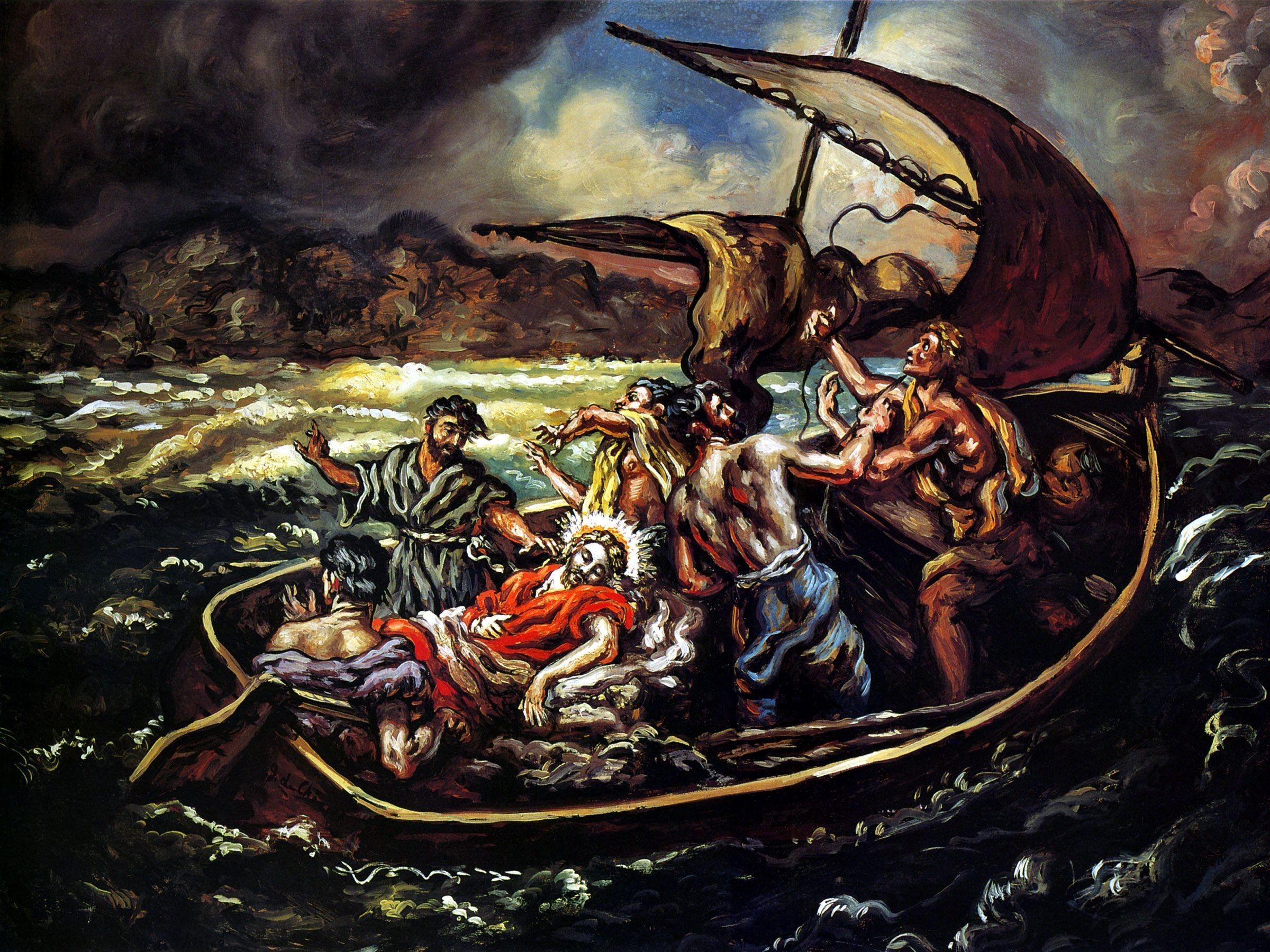
Asleep In The Storm

There are a couple of different instances recorded in the gospels where Jesus and His disciples are caught up in a storm while on the Sea of Galilee. Both of these are fascinating stories, and they have a way of captivating the imagination.

Matthew 14 recounts the story of Jesus walking on the water and Peter’s stumbling efforts to walk towards Him. He succeeds for a moment, but then, overwhelmed by the waves and the wind around him, takes his eyes off of Jesus and begins to sink. Jesus rescues him, rebukes his faith, gets into the boat, and the storm ceases. It is a fascinating event from the life of Jesus, and one from which we can undoubtedly learn much, but it is actually the other “storm” story I want to focus on.

This one drawn from Luke 8/Matthew 8/Mark 4 is likely familiar to you as well. Jesus and His disciples are out on the sea when a storm arises. The disciples are alarmed, and seemingly with good reason—the waves were breaking into the boat so that it was filling (Mark 4.37), swamped (Matthew 8.24), and they were in danger (Luke 8.23).

But Jesus was unconcerned, even unaware (or so it seemed) of their plight—He was asleep on a cushion in the boat. Asleep in the storm.

In such circumstances, the apostles do what seems sensible to them in the moment. They awaken Jesus, and in the face of His seeming lack of concern, ask, “Do you not care that we are perishing?”

In light of the life, teachings, service, and, ultimately, the sacrifice of Jesus, it seems like a ludicrous question, but imprisoned in the circumstances of the moment, it seemed like a fair question to the disciples. Jesus was asleep; He didn’t seem to care. He seemed absent from their suffering. Of course, we know the truth: He was there all along.

•  •  •

If I am honest, I can identify with the apostles here more than I might like to admit. As I have written recently, this has been a tough year for my daughter. She has experienced seizures for most of her life, but this year they have gotten worse, and we have struggled to control them. What’s worse, the frequency of the seizures and/or the many medications she is on to try to control them has led to a lessening of her energy, a muting of her (delightful) personality, and even some regressions in the abilities she has worked so hard to develop over the last few years.

Some days are better, with fewer seizures, more energy, and more personality, but other days are really hard. The emotional roller coaster is exhausting. This has been our situation for several months, despite the constant prayers of Caroline and myself and the faithful intercession on her behalf from countless friends and family (both physical and spiritual). You could say that we are experiencing our own “storm” right now, and have been for a while.

At times, it feels like we are drowning with grief, about to capsize, and the question the apostles asked Jesus seems like an appropriate one: “Lord, do you not care that we are perishing?” It can seem that God is absent.

The other day, I read through Luke’s version of the story recorded above, and it struck me in a way I had never thought of before (which, by the way, is one of the remarkable things about Scripture—as you read it and reread it, new insights constantly avail themselves to us; it is a transformative book!). So often in life, when we are living through a storm, we ask God to take it away from us, and when He doesn’t, we are left to wonder whether He cares about us at all.

But I think Luke 8 offers us a different perspective—in the midst of the storm, Jesus is neither distant, nor uncaring. He is right there with us, in the boat, riding out the storm. His seeming absence obscures His glorious presence. And while He certainly has the power to take the storm away (and we earnestly pray that He does so!), He asks us for faith, faith that His presence will protect us from being overwhelmed by the storms of life.

“Christ and the Storm,” by Giorgio de Chirico (1914)

« Older posts Newer posts »

© 2026 The Doc File

Theme by Anders Noren — Up ↑