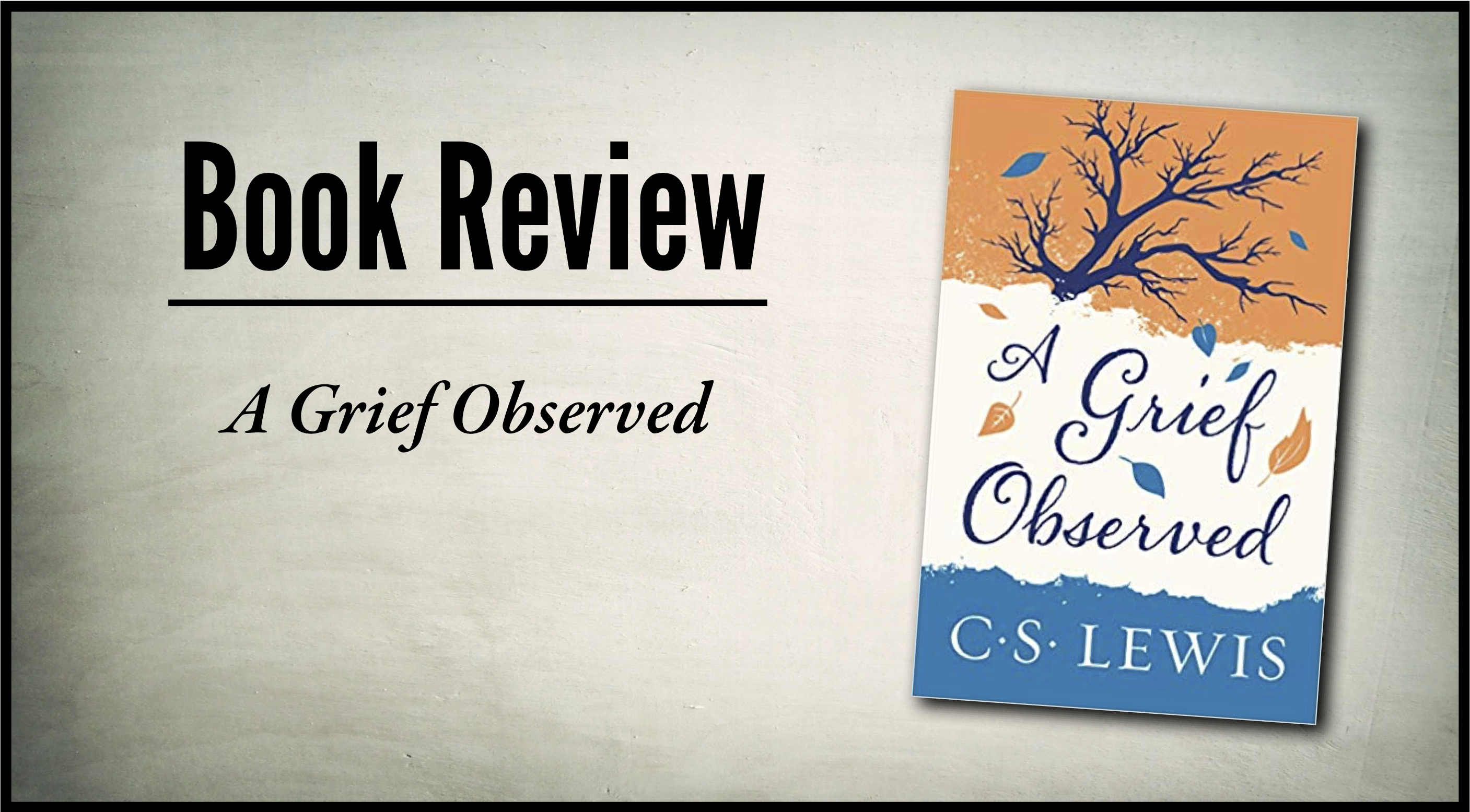
I recently finished reading A Grief Observed by C.S. Lewis. Basically the book comes from journaling done by Lewis following the death of his wife and the grief he experienced following that event.
One thing that is interesting about the book is that it was written late in Lewis’s own life. To me, that makes his questions and frustrations that much more real, because this is after Lewis was already well-known as a Christian apologist and theologian (i.e. even C.S. Lewis struggled with grief).
I enjoyed this little book because I found it to be very personal and honest in the way it dealt with grief. Lewis didn’t try to explain his grief away or wrap it up in a neat package. This isn’t Lewis’s only book on this topic: The Problem of Pain addresses the issue of suffering in a more general, scholarly, and intellectual way; A Grief Observed is a more specific, personal, and raw treatment of the issue.
Here are some quotations I found to be helpful or insightful:
I not only live each endless day in grief, but live each day thinking about living each day in grief. (10)
Aren’t all these notes the senseless writings of a man who won’t accept the fact that there is nothing we can do with suffering except to suffer it? (33)
What’s wrong with the world to make it so flat, shabby, worn-out looking? Then I remember. (36)
What do people mean when they say, ‘I am not afraid of God because I know He is good’? Have they never even been to a dentist? (43)
You can’t see anything properly while your eyes are blurred with tears. (45)
We want to prove to ourselves that we are lovers on the grand scale, tragic heroes; not just ordinary privates in the huge army of the bereaved, slogging along and making the best of a bad job. (53)
Sorrow, however, turns out to be not a state but a process. (59)
My idea of God is not a divine idea. It has to be shattered time after time. He shatters it Himself. He is the great iconoclast. Could we not almost say that this shattering is one of the marks of His presence? The Incarnation is the supreme example; it leaves all previous ideas of the Messiah in ruins. (66)
I know the two great commandments, and I’d better get on with them. (69-70)
When it comes to grief and grieving, I find that people are very different, and thus, some books “work” better for some people than others. On the whole, I’m not sure if A Grief Observed was a powerful book for me, but I think it would certainly be very beneficial for some who were coping with grief.










