The online journal of Luke Dockery

Category: Theology (Page 32 of 58)

Book Review: George MacDonald

George MacDonald was a Scottish author, poet, and Christian minister. I was aware of him primarily because he had a major influence on C.S. Lewis, and in fact, Lewis has said that MacDonald’s writings were instrumental in his acceptance of the Christian faith.

At one point, Lewis compiled an anthology of his favorite excerpts from MacDonald’s works, and that is what this volume is: 365 short readings taken from various books, sermons, and plays, and arranged and edited by Lewis himself.

Below are some of my favorite quotations [with my comments inserted in brackets]. I have included a lot of them because most are very short (and yes, I do realize that some irony is involved in me sharing my favorite quotations from a book which is essentially C.S. Lewis’s favorite quotations):

“For He regards men not as they are merely, but as they shall be; not as they shall be merely, but as they are now growing, or capable of growing, toward that image after which He made them that they might grow to it.” (p.3)

“It may be an infinitely less evil to murder a man than to refuse to forgive him. The former may be the act of a moment of passion: the latter is the heart’s choice. It is spiritual murder, the worst, to hate, to brood over the feeling that excludes, that, in our microcosm, kills the image, the idea of the hated.” (p.7) [This is a helpful perspective: refusing to forgive is truly a premeditated, cold-blooded act. It is soul-destroying.]

“Truth is truth, whether from the lips of Jesus or Balaam.” (p.8) [I think this speaks strongly against the idea that, if we disagree with someone about something, we can’t cooperate with them in any sense, affirm anything they say, or applaud anything they do. I think truth belongs to God, and should be affirmed whenever we hear it, regardless of the source.]

“But it is not the rich man only who is under the dominion of things; they too are slaves who, having no money, are unhappy from the lack of it.” (p.38) [Materialism can crush the rich and poor alike.]

“However bad I may be, I am the child of God, and therein lies my blame. Ah, I would not lose my blame! In my blame lies my hope.” (p.64)

“Of all things let us avoid the false refuge of a weary collapse, a hopeless yielding to things as they are. It is the life in us that is discontented: we need more of what is discontented, not more of the cause of its discontent.” (p.70) [I think N.T. Wright would be in full agreement with this!]

“If the Lord were to appear this day in England as once in Palestine, He would not come in the halo of the painters of with that wintry shine of effeminate beauty, of sweet weakness, in which it is their helpless custom to represent Him.” (p.91)

“…Dare I give quarter to what I see to be a lie because my brother believes it?” (p.105)

“While a satisfied justice is an unavoidable eternal event, a satisfied revenge is an eternal impossibility.” (p.121)

“It is not by driving away our brother that we can be alone with God.” (p.127)

“Our human life is often, at best, but an oscillation between the extremes which together make the truth.” (p.134) [So many problems and so many false teachings come about as a form of extremism. Balance is important.]

“Dissociate immortality from the living Immortality, and it is not a thing to be desired.” (p.141) [I think too many people see the primary benefit of eternal salvation as getting to live forever. But I think the Bible is clear that the primary benefit is getting to be with God forever. Without the latter, the former would be a punishment, not a reward.]

“There are those who in their very first seeking of it are nearer to the Kingdom of Heaven than many who have for years believed themselves of it. In the former there is more of the mind of Jesus, and when He calls them they recognize Him at once and go after Him; while the others examine Him from head to foot, and finding Him not sufficiently like the Jesus of their conception, turn their backs and go to church or chapel or chamber to kneel before a vague form mingled of tradition and fancy.” (p.144-45) [Ouch.]

“By obeying one learns how to obey.” (p.154)

“With every morn my life afresh must break the crust of self, gathered about me fresh.” (p.158) [Christianity is about dying to self. Every. Single. Day.]

“A beast does not know that he is a beast, an the nearer a man gets to being a beast the less he knows it.” (p.160)

“We are often unable to tell people what they need to know, because they want to know something else.” (p.168)

On the whole, I enjoyed reading George MacDonald, though the nature of the book meant that the quotations were, necessarily, removed from their fuller context and made for choppy reading if you read it as a regular book (which I did) rather than reading one excerpt per day. I do think it would be a helpful devotional book to read on a daily basis. The readings are short (5-6 words to a page) but powerful, and could do much to properly orient your perspective before you plunge into the world (say, right before you get out of the car when you are at work).


Transformers and the Apostle Paul

Last weekend was the ARK Retreat, and our theme for the weekend was “Different.” My task was to introduce the topic for the weekend, from Romans 12.2. You can see part of what I offered the students below.

Tonight’s main verse (and really the theme verse for our entire weekend together) is Romans 12.2:

“Do not be conformed to this world, but be transformed by the renewal of your mind, that by testing you may discern what is the will of God, what is good and acceptable and perfect.”

That verse introduces two concepts which are important for us to think about and understand as we discuss the idea of being different: conformity and transformation.

Conformity

We’ve already discussed this word, and it’s defined in your notebooks. To conform is “to behave according to socially acceptable conventions or standards.” In other words, to conform means to fit in, to blend in, to be like everyone else.

And conformity is a powerful influence, because deep down, we all want to fit in. Some people feel the pull of conformity more than others, some people worry about fitting in more than others do, but we all feel it, right?

Parents feel it too. So do youth ministers. We don’t really like to stick out and be different. Even those of us with unique personalities who pride ourselves on how unique we are tend to find other people who are “unique” like we are to hang out with! We all like to fit in.

Transformation

But Paul says in Romans 12 that we are not to be conformed to this world, but transformed. The prefix trans means “change”, so the word “transform” literally means to change forms. As Christians, we are not to have the form of the world; we’re not supposed to look like the world. We’re supposed to change our forms.

The word “transform” has a special meaning to me, because growing up, my favorite cartoon on TV was Transformers (Before your time, I know, but it used to be a cartoon before it was a series of CGI blockbuster movies). I watched the show, I bought and collected transformer toys, and I even pretended that I was a transformer.

What was cool about transformers is that they had two forms. And one form was something normal, like a car, or a plane, or a tape player, or a microscope. It was a form that easily fit in to everyday life. But then the car, or plane, or tape player would transform into a robot. It would change it’s form; it would be something that didn’t conform to everyday life.

I loved transformers; those were my favorite toys.

So you can imagine how excited I was the other day when I was at the church building, and a found a transformer car that had been left in the church office. I was stoked.

So naturally I reached for it and started to play with it, but to my shock and dismay, it wasn’t really a transformer at all! It didn’t do anything! It was just a regular car that said “transformer” on it!

Despite its claims to the contrary, this car does NOT transform.

#WorstToyEver

And you know, if it was just supposed to be a regular car, if it was just supposed to conform and be like any other toy car, it would be fine. It’s a pretty color and you can even pull it back and it winds up and takes off when you let go. But it says transformer on it, which means it should be different. It shouldn’t conform, it should transform into something different, something unique, something that stands out.

“Christians” and Transformation

The reason I’ve been going on and on about this is not because I am desperately trying to relive my childhood (though I do like to do that at times); it’s because a lot of so-called Christians are just like this lame toy car.

Because there are a lot of people who wear the name “Christian”—just like this car wears the name “Transformer”—but the name doesn’t describe who they really are, because they do nothing more than conform to the world around them:

  • The world says that if you want to have sex with your boyfriend or girlfriend, that’s fine, and so they conform to what the world says.
  • The world says that life is all about acquiring as much money, or power, or influence as you can, and so they conform to those values and spend their lives chasing those things.
  • The world says that service is for suckers, and that life is about what you can get, not what you can give, and so they conform to those ideas.
  • The world says that when someone does you wrong, you pay them back, you get revenge, so they conform to what the world says.
  • The world says that you need to be popular, and that if you want to be popular, you need to go to that party, you need to drink what’s in that red solo cup, you need to take a hit of that. And so they conform to what the world says.

And you know what? I guess all that would be okay if Christians were supposed to conform to the culture around us. But we’re not. We’re supposed to be transformed. We’re supposed to be different.

And we’re not supposed to be different for the sake of being different; we’re supposed to be different because Christians should look like Jesus. And Jesus was different. So we should be different too.

That’s what this weekend is about. And really, our whole lives.

Optimus Prime Image credit: EspenG

N.T. Wright on What the Bible Is (and Is Not)

I recently finished reading N.T. Wright’s Surprised By Hope: Rethinking Heaven, the Resurrection, and the Mission of the Church. For a variety of reasons, it has taken me far too long to read, but it has challenged me and I have enjoyed it. I haven’t decided yet whether or not I’m going to do an actual review of it, but I wanted to share the following quotation about what the Bible is and is not:

“The Bible is not, in other words, simply a list of true doctrines or a collection of proper moral commands—though it includes plenty of both. The Bible is not simply the record of what various people thought as they struggled to know God and follow him, though it is that as well. It is not simply the record of past revelations, as though what mattered were to study such things in the hopes that one might have one for oneself. It is the book whose whole narrative is about new creation, that is, about resurrection, so that when each of the gospels ends with the raising of Jesus from the dead, and when Revelation ends with new heavens and new earth populated by God’s people risen from the dead, this should come not as a surprise but as the ultimate fulfillment of what the story had been about all along.”

(pp. 282-83)

There is a balance to that perspective that I really like. There are many things which the Bible does or contains that do not comprise its primary focus. That doesn’t make them unimportant, but we should try to keep things in their proper place. For example, it makes me very uncomfortable when I hear the Bible described as “God’s rule book for how to live.” Certainly the Bible contains rules and it does tell us how to live, but isn’t it more that that?

The Perfect Church

A lot of people really struggle with the idea of the church.

You have the I-love-Jesus-but-hate-the-church crowd who are under the (mistaken) impression that somehow they can be faithful to Christ without being associated with His Body. Then you have the disgruntled church members who hop from one church to another whenever they get upset or offended by something or someone.

And honestly, I get a lot of the frustration that people have with the church. The church is made up of people, and thus, by definition, is imperfect and riddled with problems. I love the congregation where I work and worship, but it has its problems—sometimes people gossip, there are some people who struggle to get along with other people, some people have anger issues, etc. And I would venture to guess that your church is pretty similar.

G.K. Chesterton, the famous author and theologian, was once asked, “What’s wrong with the world?” He thought about it and then replied, “Dear Sirs, I am.” His point could just as easily be made about the church—the problem with the church is me and people like me, and the fact that we bring our problems into it. So before you start yearning for a perfect church, it’s probably worth remembering that it would cease to be perfect once you joined it!

It’s also probably worth remembering that the church, as imperfect as it seems to us, is also described in the New Testament as the Bride of Christ. What does Christ think about His Bride? Paul gives us an indication:

Husbands, love your wives, as Christ loved the church and gave himself up for her, that he might sanctify her, having cleansed her by the washing of water with the word, so that he might present the church to himself in splendor, without spot or wrinkle or any such thing, that she might be holy and without blemish.

(Ephesians 5.25-27)

If Christ sees the church as splendid, holy, and without blemish, spot, or wrinkle, what does that suggest? To me, it doesn’t suggest that He has poor eyesight and is just missing all of our flaws and imperfections; rather, it suggests that He has redeemed us, sanctified us and made us His own, and that His Spirit is working on us collectively and individually to make us what we ought to be. In other words, we don’t possess the characteristics mentioned above because we ourselves are perfect or amazing; we possess them because He gives them to us. He transforms us into what He wants us to be.

And it also suggests that if Christ can look at the church and love her and place great pride in her, then I can too, and that I can quit obsessing about perfection. Which is good, because any church I am a part of will fall short of that standard.

Photo credit: http://www.sharefaith.com

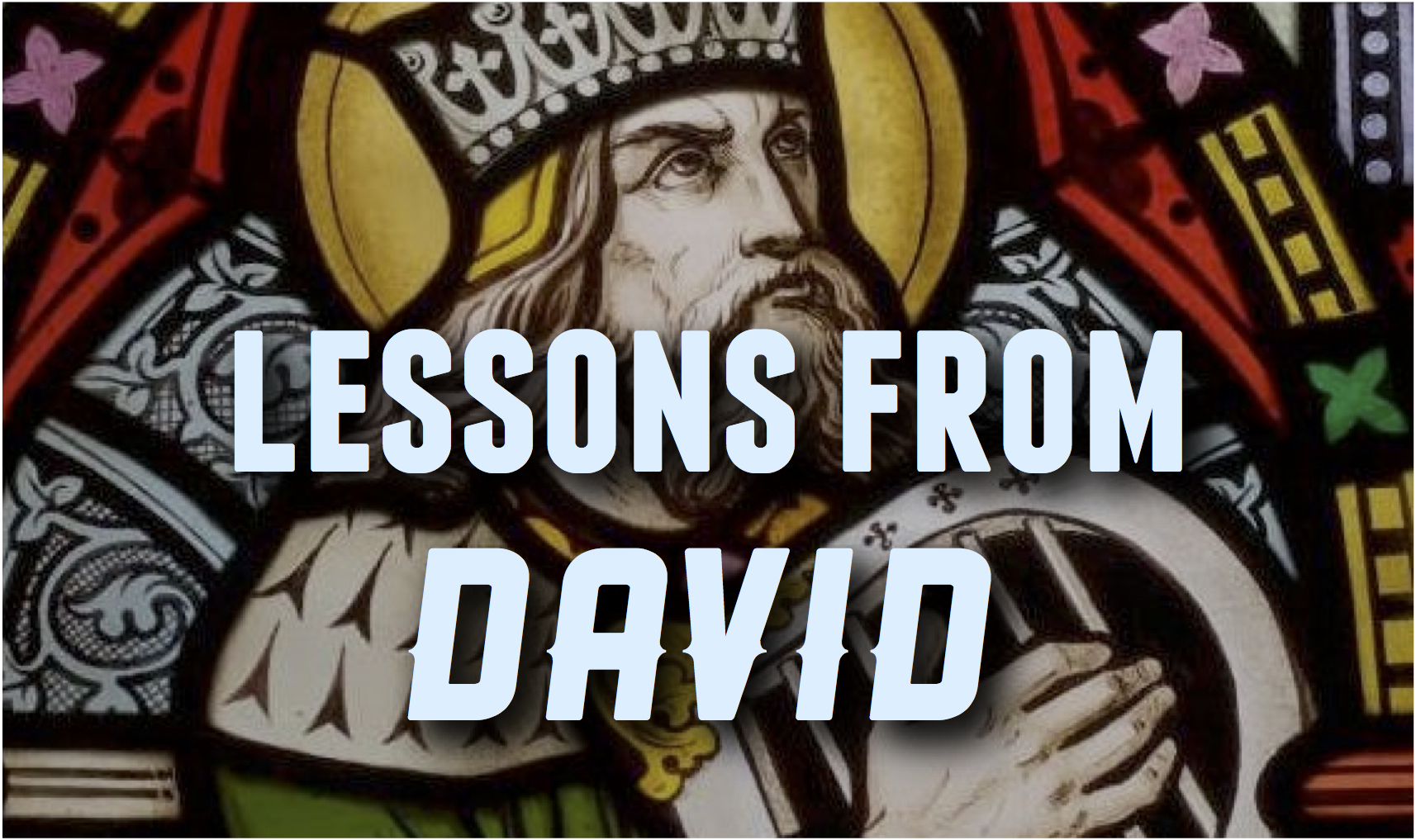
Lessons from David: Sin Can Be Forgiven

In our quick look at some of the many lessons that could be learned from the life of King David, we have noted that God Can Use Unlikely People To Accomplish His Will, and somewhat somberly, that Sin Has Consequences. Today we conclude this series on an upbeat note by pointing out one of Scripture’s central truths: Sin Can Be Forgiven.

David’s guilt was plain in the matter of Bathsheba and Uriah the Hittite: he lusted after Bathsheba, he committed fornication, he abused his power as king, and ultimately, he had Uriah killed to cover up what he had done.

But ultimately, God forgave David of his great sin:

“Then David said to Nathan, ‘I have sinned against the LORD.’ And Nathan said to David, ‘The LORD also has taken away your sin; you shall not die.’”

(2 Samuel 12.13)

The Book of Psalms records David’s words of repentance:

“Be gracious to me, O God, according to Your lovingkindness; According to the greatness of Your compassion blot out my transgressions. Wash me thoroughly from my iniquity and cleans me from my sin. For I know my transgressions, and my sin is ever before me.

Create in me a clean heart, O God. And renew a steadfast spirit within me. Do not cast me away from Your presence. And do not take your Holy Spirit from me. Restore to me the joy of Your salvation And sustain me with a willing spirit.”

(Psalm 51.1-3; 10-12)

God was willing to forgive David of his sins, and the good news for us is that He will do the same for us if we repent. Some of my favorite verses in all of the Bible speak to this truth:

“As far as the east is from the west, so far has He removed our transgressions from us.”

(Psalm 103.12)

“…If we walk in the light as He Himself is in the light, we have fellowship with one another and the blood of Jesus His Son cleanses us from all sin.”

(1 John 1.7)

That forgiveness doesn’t mean that all of the physical consequences of sin will necessarily go away. David’s child still died, no matter how hard he prayed about it. The drunk driver who takes a life will still face prison time, and will still have to deal with the guilt of having killed someone for the rest of his life. The pregnant teenage girl will still have to face the trials and stigma of being a single parent. No matter how hard the woman tries, she may never be able to completely undo the damage of hateful words.

But, the eternal, spiritual consequences can disappear.

Jesus died on the cross to bridge the gap that sin had created between us and God, and when He did that, He received the punishment for sin so that we would not have to. The Bible’s best-known verse, John 3.16, says, “For God so loved the world, that He gave His only begotten Son, that whoever believes in Him shall not perish, but have eternal life.”

As mentioned in the last post, our wages—what we deserve in return for our sin—is death. But thanks to Jesus, we don’t have to get what we deserve; we can have eternal life with Him instead.

« Older posts Newer posts »

© 2026 The Doc File

Theme by Anders Noren — Up ↑