The online journal of Luke Dockery

Category: Theology (Page 40 of 58)

God Is The One Upon Whom We Should Rely: Lipscomb On Human Government

David Lipscomb was a very influential leader within Churches of Christ in the late 19th and early 20th centuries. Lipscomb served as a minister, an educator (a co-founder of the Nashville Bible School, which exists today as Lipscomb University), and an editor of the very influential Gospel Advocate.

Lipscomb was also a pacifist, and in some sense, a Christian anarchist: he believed that Christians had no business interacting with government, including voting in elections or serving on juries. My own views on government are not as extreme as Lipscomb’s, but I do think his thoughts serve as a helpful corrective to what I see from a lot of people.

It has been distressing to me during this election cycle to see so many Christians who (based on their comments on Facebook or Twitter) seem to be placing so much of their hope for the betterment of our world in political candidates (regardless of which party they happen to support). To these folks, Lipscomb offers some helpful words:

“Everyone who honors and serves the human government and relies upon it, for good, more than he does upon the Divine government, worships and serves the creature more than he does the Creator.”

On Civil Government, 50

With all due respect to Lipscomb, I believe that it is appropriate for Christians to vote and that, ideally, Christians should use their vote to reinforce the values of the Kingdom. And sometimes it can be easy to get pretty wrapped up in the political process because those values can mean a lot to us.

But I think he is right on the money about this: let us never think that the president we elect or the government we put into place is the ultimate source to which we should look for guidance, protection, or good. Those things come from God, and He still sits firmly on His throne, in control of all the things we debate and worry about.
Church Signs Revisited

I have previously shared my thoughts about church signs—you know, the ones where you can change the letters and put up (ideally) clever or inspirational messages.

Generally speaking, I’m not a big fan of them because I tend to think they have more influence in a negative sense than a positive one. In other words, people driving by are more likely to be turned off by a hokey saying on a church sign than they are encouraged by a thoughtful one.

Sometimes, though, a church sign goes beyond being hokey or lame and actually promotes bad theology. I saw an example of that this week. A church sign in my neck of the woods is currently displaying the following message:

RELIGION: A MIRAGE
JESUS: A REALITY

This is yet another manifestation of a common theme that you hear these days, where people are desperately trying to divorce Jesus from the church, or separate being religious (which is supposedly a bad thing) from being spiritual (which is supposed to be the ideal). There was even a YouTube video on this topic that went viral a while back (see this article which has the video embedded along with an excellent response).

Here’s the key point though: the whole Religion vs. Jesus thing is a false dichotomy because you don’t have to (and in fact, can’t) choose between them. Jesus himself was very religious (and spiritual!). Furthermore, the church was purchased with his blood (Acts 20.28), so it has great, great value to him.

End of rant.

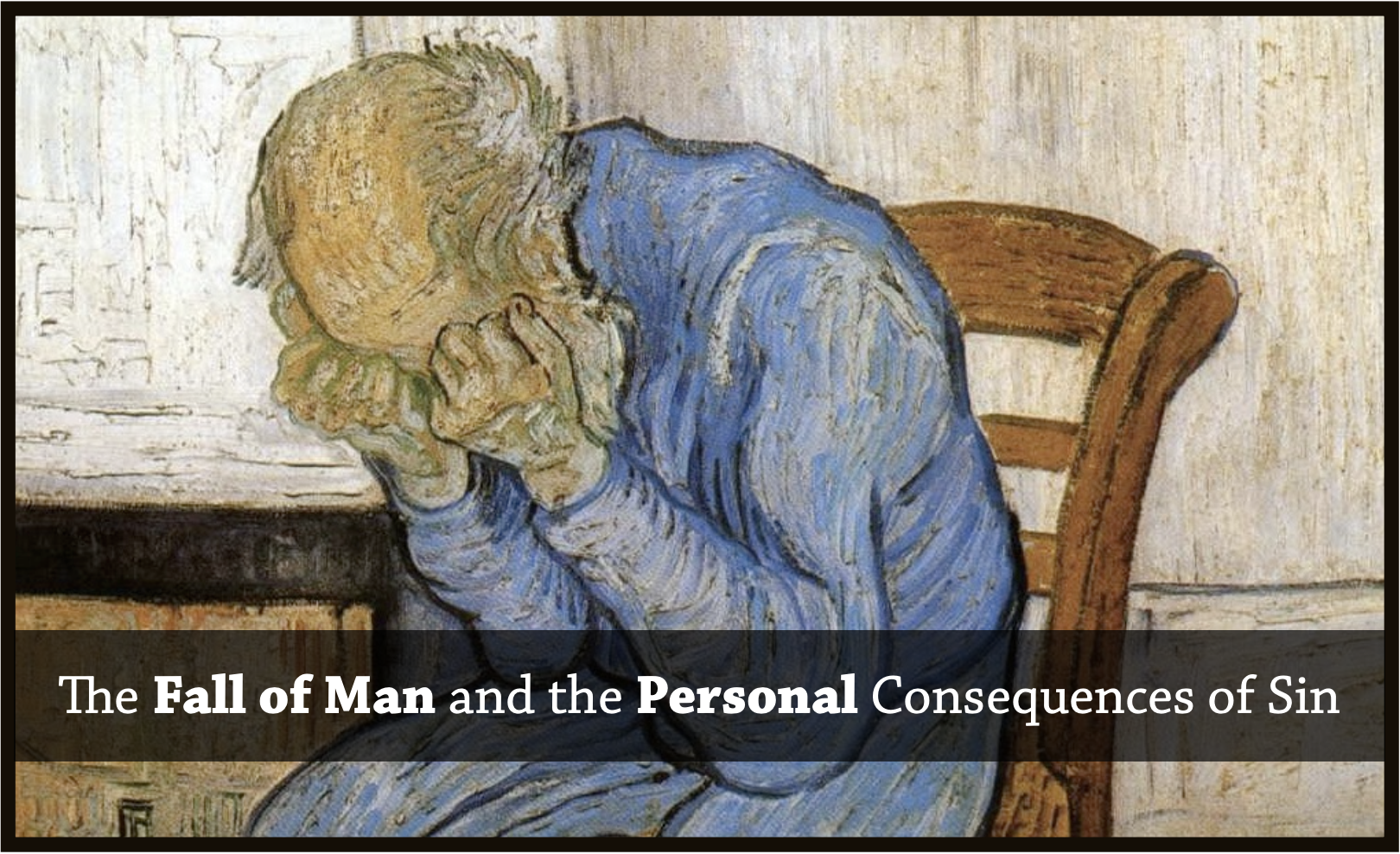
The Fall of Man and the Personal Consequences of Sin

As I discussed in the introduction to this series, Genesis 3 relates the story of the Fall of Man, where Adam and Eve commit sin in the Garden of Eden by eating fruit from the tree of knowledge of good and evil after God had specifically commanded them not to.

A whole host of negative effects befall Adam and Eve (and consequently, the rest of us) as a result of their disobedience, and the point of this series is to examine some of those effects in more detail. Basically, sin messes everything up.

In the last post, we focused on the theological consequences that came about as the result of Adam and Eve’s sin: our relationship with God is destroyed and we become slaves to sin instead.

Next, we want to turn our attention to the personal consequences of sin (which, as well shall see, are closely related to the theological consequences). Returning to our text in Genesis 3, this aspect of sin’s destructiveness is hinted at in Genesis 3.7, 10-11 where Adam and Eve realize they are naked, sew together fig leaves to make loincloths and then, because of their nakedness, hide from God when He enters the garden.

What was so bad about Adam and Eve being naked? After all, it was the way God had created them, so clearly He had no problem with it! The problem came from Adam and Eve themselves: after they sin by eating the forbidden fruit, they become self-conscious and immediately feel that there is something wrong with them, and they are ashamed of themselves.* Ever since then, men and women have felt the same way: we exist in a state of inner conflict, lacking the self-confidence and self-acceptance that we should have as God’s creatures.

Basically, the process looks something like this:

  1. Humans were created for the purpose of living in relationship with God.
  2. Sins distorts and destroys that relationship.
  3. Without a relationship with God, we are inherently unfulfilled, because we are not living out the purpose for which we were created.
  4. We feel bad about ourselves and follow all sorts of false avenues looking for fulfillment.

Just consider our world today. People desperately want to feel happy or significant or fulfilled, so they are willing to try anything: fame, fortune, career accomplishment, relationships, children, sex, drugs, sports, whatever. Why do you think the self-help industry generates billions of dollars each year? It’s because deep down, we all feel like there’s something wrong with us. We struggle with self-confidence and self-image, and we are convinced that we are deeply flawed.

And, biblically speaking, people are messed up; we are deeply flawed. But flatter abs, a more secure retirement, or a better relationship with your boyfriend won’t provide the answer. Oh sure, you might feel a little better about yourself for a while, but it won’t last. We were created to live in relationship with God, and only in the context of that relationship can we find the solution to our deep flaws.


*It is important to note that, according to the biblical account, Adam and Eve are ashamed of their nakedness, not of their sin (it should have been the other way around). Sin had fundamentally changed the way they viewed themselves.

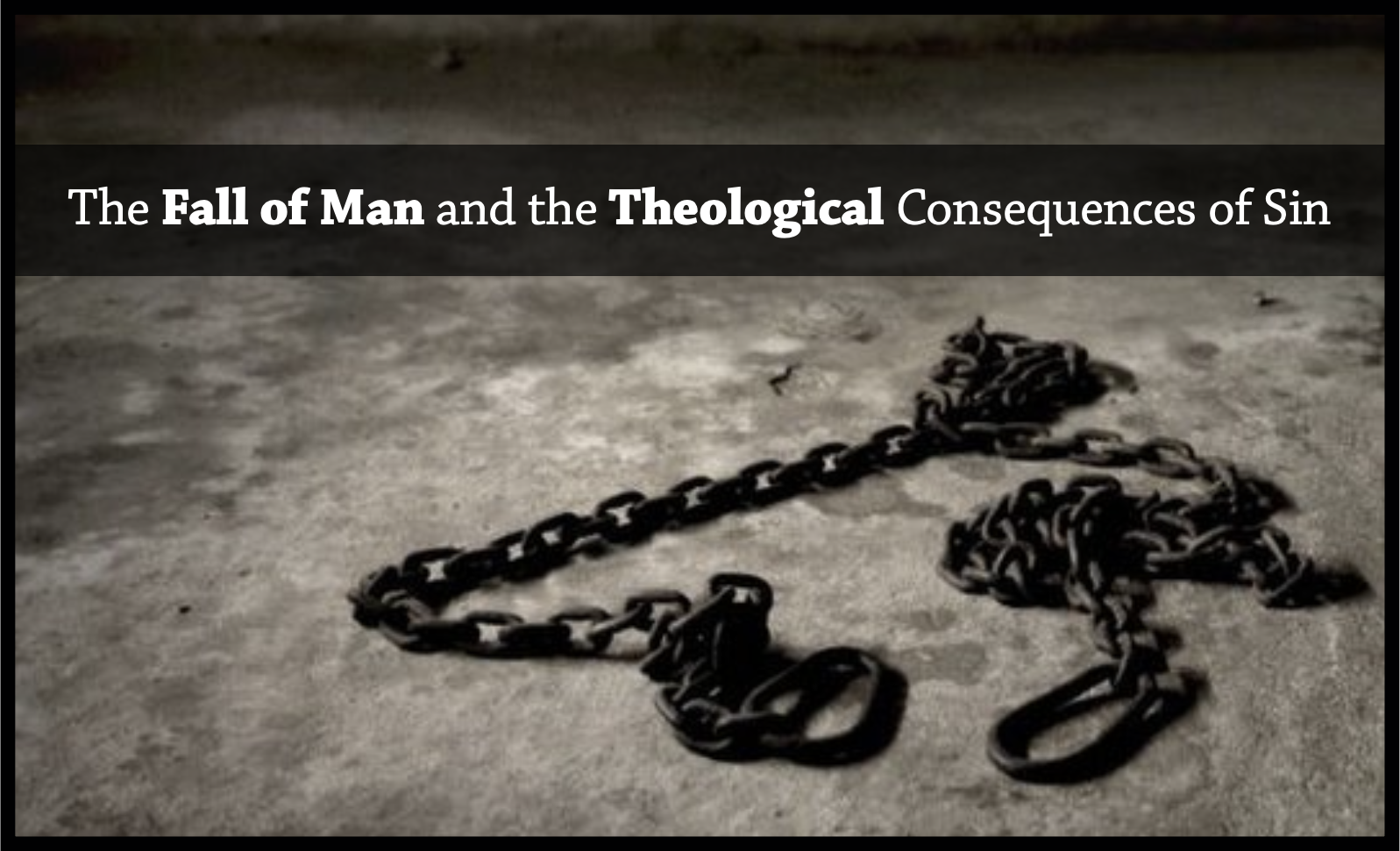
The Fall of Man and the Theological Consequences of Sin

As I discussed in the introduction to this series, Genesis 3 relates the story of the Fall of Man, where Adam and Eve commit sin in the Garden of Eden by eating fruit from the tree of knowledge of good and evil after God had specifically commanded them not to.

A whole host of negative effects befall Adam and Eve (and consequently, the rest of us) as a result of their disobedience, and the point of this series is to examine some of those effects in more detail. Basically, sin messes everything up.

In the first post, I mentioned five different categories of consequences that came about as the result of Adam and Eve’s sin: theological, personal, sociological, ecological, and physical. Those categories come from a reading of the biblical text in Genesis 3:

  • Genesis 3.8-10: Adam and Eve hide from God because they are afraid (theological effects).
  • Genesis 3.10-11: Adam and Eve realize they are naked (personal effects).
  • Genesis 3.12-13, 16: Adam and Eve refuse to take responsibility and their relationship is changed (sociological effects).
  • Genesis 3.17-19: Creation itself becomes cursed (ecological effects).
  • Genesis 3.22-23: Adam and Eve are kicked out of the garden and separated from the tree of life (physical effects).

In this post, I want to look in more detail at the theological consequences of sin. This category probably won’t require as much explanation as some of the others, since this (along with physical effects) tends to be the area we hone in on.

Simply put, what I mean by “theological consequences” is that sin affects our relationship with God. Just as Adam and Eve hide from the presence of God after eating the fruit when they hear Him walking through the garden, so we too are unfit for God’s presence. Scripture repeatedly affirms that our sin separates us from God (Isaiah 59.2; Romans 3.23), and this is a big deal, because we were specifically created to live in relationship with God. With that intended relationship destroyed, people desperately seek out all sorts of ways of living out their desires in order to find meaning and fulfillment in life.

In the process, we become enslaved to sin (John 8.34; Romans 6), which is a powerful and disturbing image—the very desires that we follow after in hopes of finding fulfillment become our masters, and on our own, we are powerless to escape their bondage. It’s a desperate situation to be in, and in large part accounts for a society where there are so many people who are completely lost without any hope or direction in life.

Sin destroys our relationship with God.

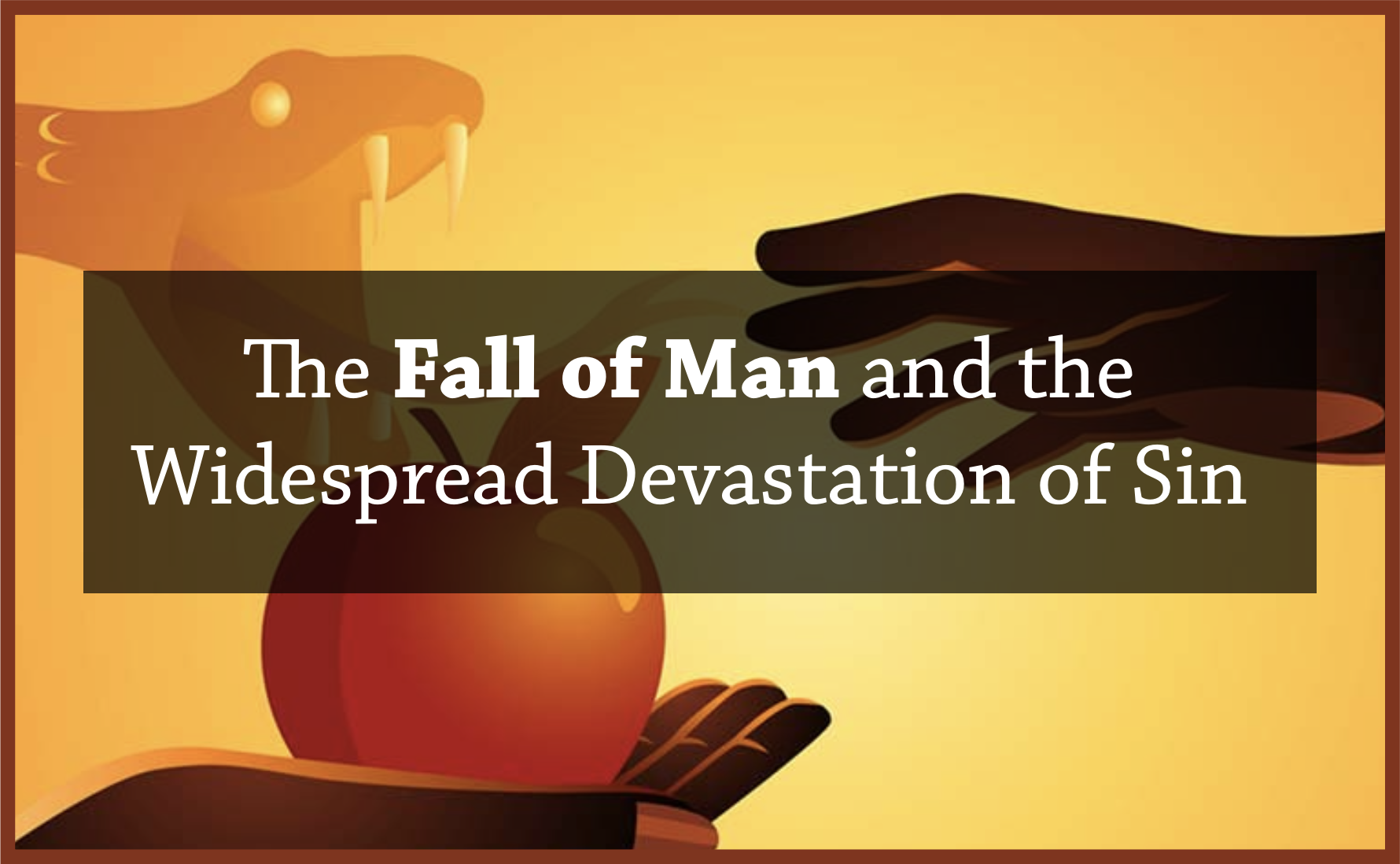
The Fall of Man and the Widespread Devastation of Sin: An Introduction

Most Christians are generally familiar with the story of the Fall of Man as related in Genesis 3. Adam and Eve are placed in a garden paradise to live with only one prohibition: they are not to eat from the tree of knowledge of good and evil (Genesis 2.16-17). But then, the crafty serpent, who elsewhere in the Bible is equated with Satan,[1] comes along and entices Eve to disobey God and eat the forbidden fruit. Eve shares the fruit with her husband, and Adam violates the command of God as well.

Usually, when we talk about this event, we focus on it in a couple of predictable ways: the disobedient act of eating the fruit represents the first human sin, and as a result, the spiritual relationship between humanity and God is ruptured, and physical death comes to mankind as a result.

Both of those things—the disruption of our relationship with God and our mortality—are important, and are certainly framed as results of Adam and Eve’s sin in Genesis 3. But the consequences of sin don’t stop there; they are widespread, and affect all areas of life. To put it another way, sin messes everything up, and as a result, we live in a messed-up world.[2]

Over the next few posts, I’d like to look at the theological, personal, sociological, ecological, and physical consequences of sin,[3] and these categories come directly from the account in Genesis 3:

  • Genesis 3.8-10: Adam and Eve hide from God because they are afraid (theological effects).
  • Genesis 3.10-11: Adam and Eve realize they are naked (personal effects).
  • Genesis 3.12-13, 16: Adam and Eve refuse to take responsibility and their relationship is changed (sociological effects).
  • Genesis 3.17-19: Creation itself becomes cursed (ecological effects).
  • Genesis 3.22-23: Adam and Eve are kicked out of the garden and separated from the tree of life (physical effects).

Hopefully, this series will help us take sin more seriously, and see how all-destructive it is.


[1] See, for example, Revelation 12.9.

[2] One of the biggest problems I have with folks who consider Genesis 1-11 to be allegorical rather than historical (i.e., they don’t believe that the first 11 chapters of Genesis relate actual, historical events) is that such a view strips away the Bible’s explanation for the reason why our world is the way it is. The Bible repeatedly affirms that sin is a huge problem, and our own observations repeatedly affirm that our world in its current state is fundamentally jacked up. Genesis 3 provides the biblical explanation for the enormity of sin, and a groaning creation (cf. Romans 8.22).

[3] This series of posts is based in considerable part on the lectures of Dr. Mark Powell in his Systematic Theology class which I took at Harding School of Theology.

« Older posts Newer posts »

© 2026 The Doc File

Theme by Anders Noren — Up ↑