The online journal of Luke Dockery

Category: Theology (Page 39 of 58)

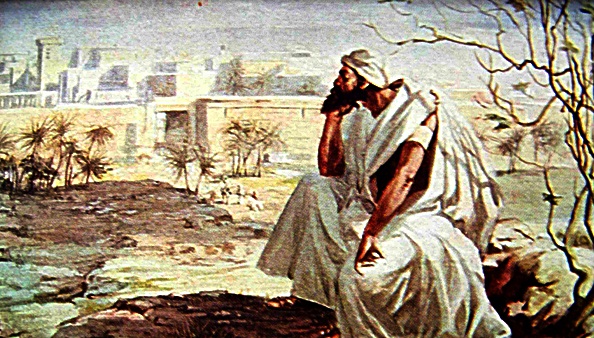
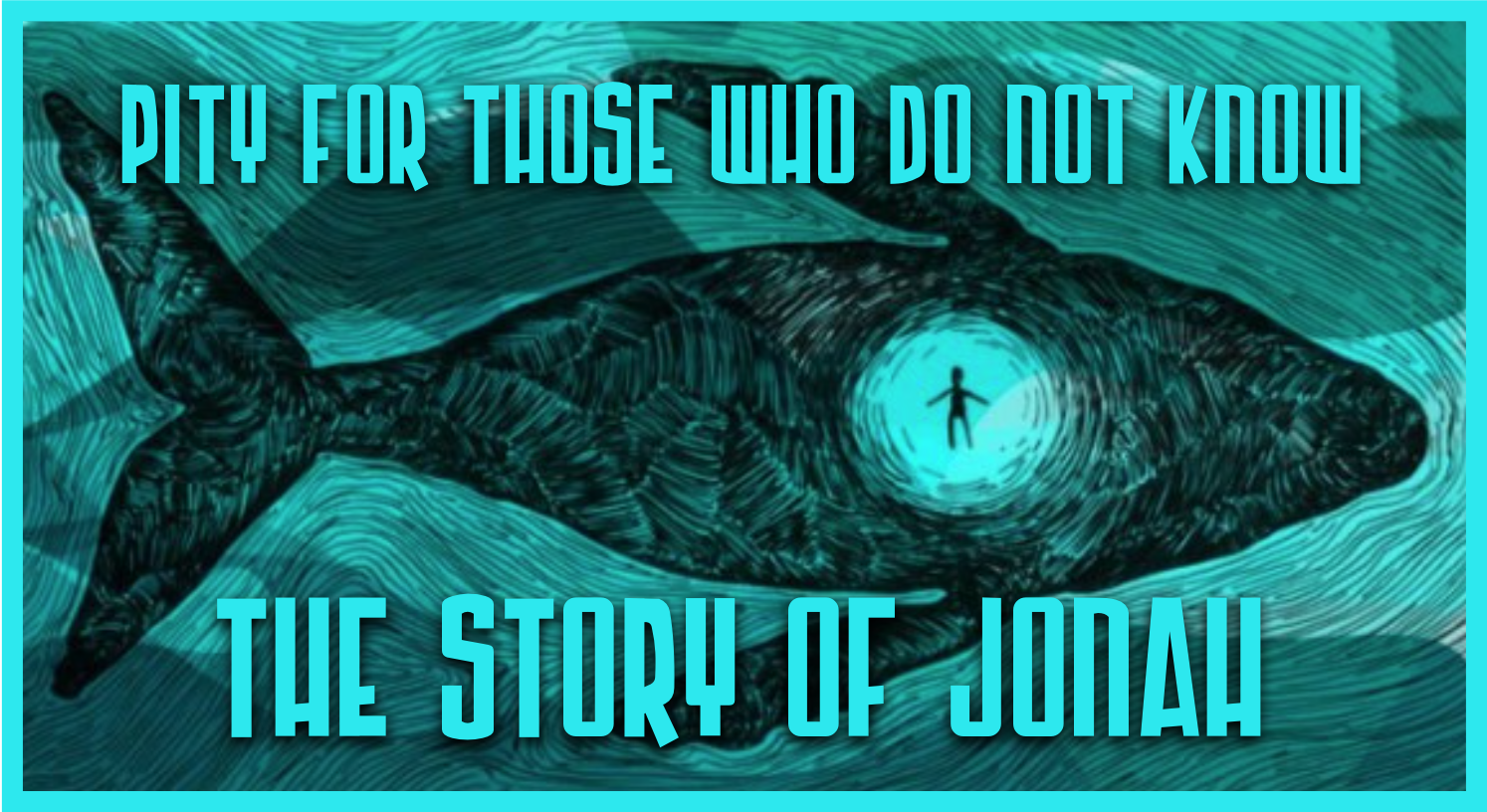
Pity for Those Who Do Not Know: The Story of Jonah, Part 2

In Part 1, we summarized the story of Jonah and noted that Jonah’s attitude toward his mission was very disappointing and not what we would expect from a prophet of God. Jonah was all mixed up about what was important.

But then I think: what about us?

There are over 7 billion people in the world today. Christianity is the world’s largest religion (though not the fastest-growing) with a little over 2 billion adherents. Now, even if we could take that number at face value, that means there are over 5 billion people—16 times the population of the United States—who don’t claim to have a relationship with Christ at all.

And of the 2 billion who claim to be Christians, a lot of those are people that you work with and go to school with and see everyday—people who say they are Christians, but who make no real attempt to be obedient to what God says in his Word. For them Christianity is not something that affects their daily lives, but is rather a box that they check on a census survey. We know that the number of real, faithful Christians is much, much smaller.

It is staggering when you realize just how many people in our world need a relationship with Jesus Christ.

And yet, for the vast majority of us, we hear those statistics, and perhaps we think things like, “That’s too bad” or “What a tragedy” or “I really should do something about that”, but that’s all we do. Why is that?

Maybe there are some people who we just aren’t concerned about. We talked about how the Ninevites were the enemies of Jonah and his people and how this affected his view of them. What about us? You might not have enemies in your life in a classic sense, but you certainly have people who you don’t care for as much. What about your boss at work who treats you unfairly and acts like a jerk? How motivated are you to share Jesus with that person? Or the person at school with a bad reputation, or perhaps the unpopular kid that no one likes—how likely are you to talk about your faith with that person? Let’s be honest—there are some people that we just don’t care about very much!

Maybe our culture has made us feel bad about sharing the Good News of Jesus. In a postmodern culture where people argue that there’s no such thing as absolute truth and that one person’s beliefs are just as valid as another’s, evangelism has almost become a dirty word. People who share their beliefs with others are regarded as pushy, nosy, Bible-thumpers. We’ve all heard the jokes about religious groups who go door to door to spread their faith—we don’t want people making jokes like that about us! It’s actually reached the point that most churches have to have a special Invite-a-Friend Day in order for their members to make much of an effort to reach out to others—what’s up with that? Do people have less of a need to hear the Gospel at other times? Or are we just so impacted by our culture that it takes a special occasion for us to work up the courage?

Maybe we get so distracted by other things that we just forget. You know, Jonah was so concerned about the precious plant that grew up over his head and gave him shade that he didn’t really have enough concern left over for the people of Nineveh! We as a people are so busy; we have so many things going on in our lives that it’s easy for us to get distracted and lose perspective. When we’re so concerned about issues going on at work, or our squabbles with our spouses, or our children’s athletic careers, how can we have concern left over for those who are lost?

As the people of God, I think we can get mixed up too. Just like Jonah was.

Part 3

Pity for Those Who Do Not Know: The Story of Jonah, Part 1

Jonah is not one of my favorite characters in the Bible, and I think it’s because he reminds me too much of myself.

The story of Jonah is a familiar one—it’s a story that many of us have known since childhood when we learned it in Sunday School.

God calls Jonah to go and preach to the Ninevites, but Jonah doesn’t want to, so instead he goes down to Joppa and hops on a boat bound for Tarshish in the other direction. Of course, the boat has trouble at sea, the sailors become afraid and go and wake up Jonah, who was taking a nap, and implore him to cry out to his God. Then they decide to cast lots to see whose fault it is that this storm has come upon them, and the lot falls to Jonah. Jonah confesses that he is running from Jehovah, the God of heaven who made the sea and the dry land. At this point, the men become terrified and they ask Jonah what they should do in order to make the sea quiet down. He tells them that they should throw him overboard into the sea, and after the men unsuccessfully attempt to row back to the land, they reluctantly throw Jonah overboard.

Then comes the most famous part of the story, where God appoints a great fish to come and swallow Jonah, and Jonah is stuck inside the belly of the fish for three days and three nights. There, Jonah prays to the Lord, and then God has the fish spit Jonah up on dry land.

And from there, Jonah goes to Nineveh, and preaches to the city, and the people believe him! They begin to fast and put on sackcloth and the king of Nineveh covers himself in sackcloth, sits in ashes, and commands that no man or beast be allowed to eat or drink. And when God sees the repentance of the Ninevites, He decides not to destroy them after all.

And you know, in Sunday School, that’s where we tend to stop…with a happy ending.

But that’s not the ending, and Jonah isn’t happy at all. Rather than being happy that his preaching has led to the repentance of the Ninevites and has saved them from destruction, he is angry—“exceedingly angry” the Scripture says.

So he prays to the LORD and says, “This is why I ran away in the first place, because I knew that you are a gracious and merciful God, slow to anger and abounding in love…I knew you would forgive them!” Then Jonah goes on to say that he is so upset that he would rather die than live.

And God asks Jonah an interesting question: “Do you do well to be angry?” And obviously, it’s the sort of question that isn’t meant to be answered, but is supposed to make Jonah think.

You know, people have wondered why this seems to make Jonah so angry. We know from 2 Kings 14 that Jonah was a prophet to the Northern Kingdom of Israel, and Assyria (of which Nineveh was the capital city) was a long-standing enemy of Israel. In fact, it would ultimately be Assyria who conquered Israel in 722 BC. So it makes some sense that Jonah would be hesitant for the Ninevites—his enemies—to be saved. He didn’t think they deserved it.

At this point, Jonah goes outside the city and makes a little booth for himself there so he can watch and see what happens. Perhaps he wanted to see if the Ninevites would remain faithful in their repentance or if they would turn back to evil and maybe God would still punish them. And while he is there watching, God appoints a plant to grow up over Jonah, so that it provided him with shade and made him comfortable. Scripture says that Jonah was exceedingly glad because of the plant.

But then the next day, God has a worm come to attack the plant so that it withered, and then a scorching east wind comes and beats upon the head of Jonah and Jonah is miserable again. Once again he tells God that it would be better for him to die than live, and once again God asks him a question: “Do you do well to be angry for the plant?”

And all of this language brings into clear comparison Jonah’s reactions to the salvation of Nineveh and the destruction of the plant:

  • Jonah was “exceedingly angry” about the salvation of Nineveh, but “exceedingly glad” about the appearance of the plant.
  • Both when the city was spared and when the plant withered, Jonah was so upset that he said it would be better for him to die than to live.
  • And after both episodes, God tried to get him to reflect on his attitude by asking him if he did well to be angry.

And this second time, Jonah answers the question, belligerently stating that he does do well to be angry, angry enough to die! The plant shaded him from the sun; its value is clear to him. But the Ninevites, on the other hand, why would God want to save them? They’re worthless!

What a disappointing attitude for a prophet of God to have!

Jonah is mixed up.

Part 2

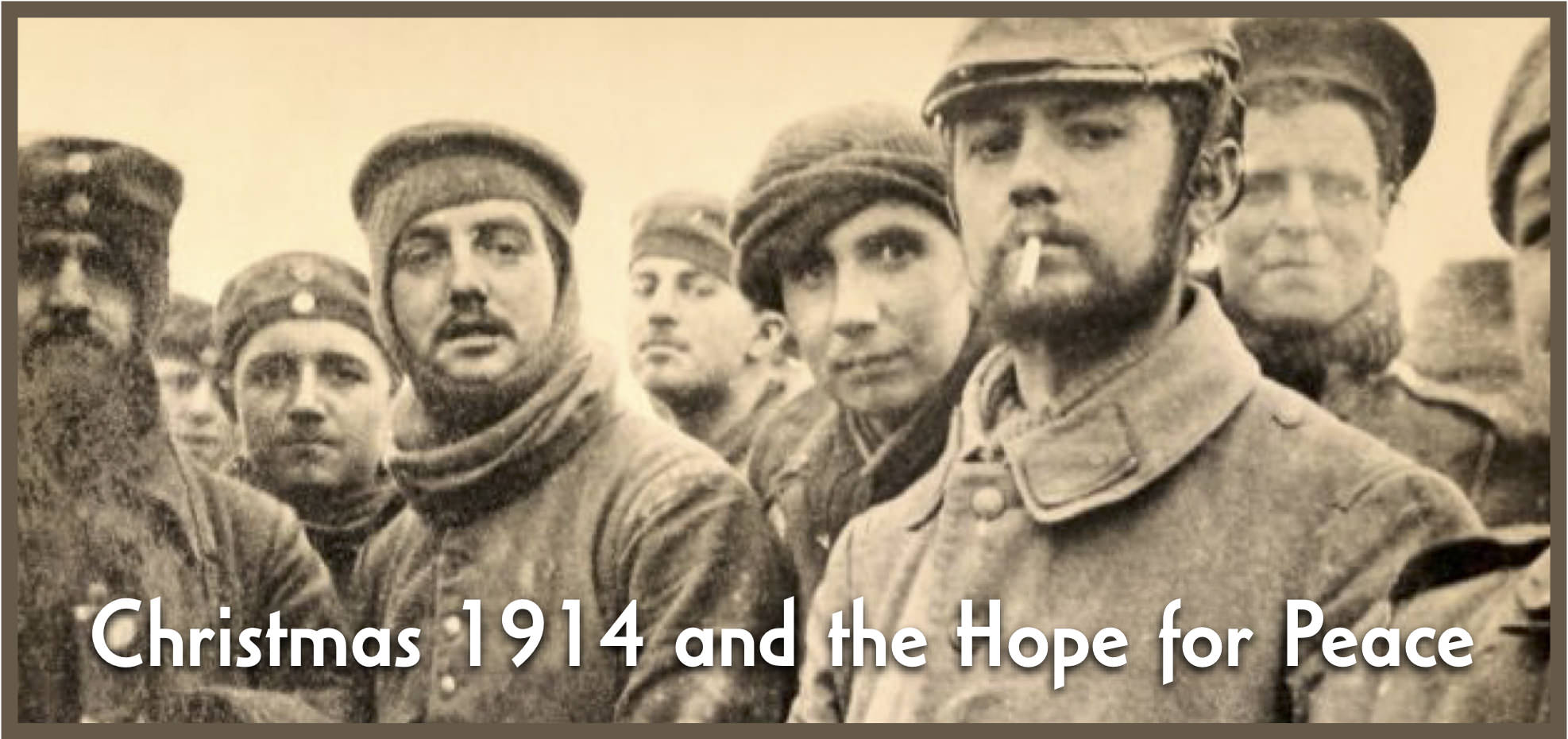
Christmas 1914 and the Hope for Peace

The Christmas Truce of 1914 is fairly well-known; my brother once wrote about it here:

“The First World War broke out in August of 1914. Many rushed to war almost gleefully, confident in victory for their particular side. Many thought the war would be over by Christmas. But when Christmas came the war was still young. It would last another four years and claim the lives of some 8 million soldiers before it was through.

In the midst of this bloodshed, though, a remarkable thing happened. In many places along the Western Front, particularly where the British and the Germans faced each other, unofficial Christmas truces were made in 1914. And here, for a brief few hours, the killing ceased.

Instead of firing bullets at each other, the mortal enemies sang Christmas carols to one another on Christmas Eve. German soldiers even decorated their trenches with candles and with Christmas Trees—tannebaum, they called them. On Christmas morning, soldiers from both sides met in no man’s land and exchanged what gifts they had: buttons and medals, candy and tobacco and liquor. Soldiers who had once been barbers gave free haircuts. One German soldier who had been a juggler in happier times gave a performance in no man’s land.

The goodwill between enemies was only temporary. In a matter of days they were back to the grim business of trying to blow one another apart. But for a few brief hours, the influence of the Prince of Peace had been felt.”

Moments like these where the Kingdom of God breaks into the twisted and fallen world in which we live don’t seem to come often enough. But they are made possible by the fact that 2000 years ago, the Word became Flesh and the Son of God came to earth. The baby Jesus grew to be a man, lived a perfect life, and then died on our behalf, and for Christians, that is a source of great hope.

A lot of times we don’t understand the concept of biblical hope very well, because in everyday usage, the word hope means something very different than what it means in the Bible. We use hope as a synonym for wish, as in “I hope I win the lottery”, or “I hope our economy gets better soon”—both of these are things that people wish would happen, but they don’t actually expect either of them to happen.

Biblical hope is something different though—it is a confident expectation of something that will happen because it has been promised by God. And the entrance of Jesus into the world and His subsequent death and resurrection are a source of great hope for Christians because they make possible a Day of Peace—a day when there will be no more suffering, no more disease, no more school shootings, and no more war. For those who have made peace with God, it is a day to look forward to—an everlasting day which will find the faithful in the presence of the Heavenly Father. That’s the hope—the confident expectation— that Christians have.

And in the meantime, as we wait for that day to come, Christians have a lot to do to keep busy:

  • We gather together to remind one another of that hope and to pledge our devotion to the cause of Christ…
  • We work to instill the values of the heavenly Kingdom into our earthly surroundings, so that our friends and neighbors can taste the peace of God for themselves…
  • And we celebrate the small down payments on the promise of peace that God has given us…such as the few blessed hours when the armies of the world ceased their strife and remembered the Baby of Bethlehem.

Merry Christmas to you and your family this holiday season! Glory to God in the highest, and on earth peace and good will toward men!

Thanksgiving: Enzo the Baker, the Men of Jabesh-Gilead, and Gratitude

Some previously-published (and slightly edited) thoughts on Thanksgiving:

One of my all-time favorite movie scenes occurs fairly early in Francis Ford Coppola’s iconic classic, The Godfather.
Vito Corleone, Don of the Corleone crime family and the “Godfather” of the movie’s title, is in the hospital, having barely survived an attempt on his life. His youngest son, Michael, comes to visit him, but discovers that his father is unguarded and all by himself, and realizes that another attempt is about to be made on his life.

Michael calls his older brother on the phone and tells him to send reinforcements, and then hides his father in another hospital room.

About this time, Enzo the Baker arrives.

Earlier in the movie, the Godfather had used his considerable influence to take care of some immigration issues that Enzo was struggling with, and now the young Sicilian has come to pay his respects to the ailing Don.

Michael tries to warn Enzo of the danger he is in, but Enzo refuses to leave:

“You better get out of here, Enzo, there’s gonna be trouble.”

“If there is trouble, I stay here to help you. For your father. For your father.”

The two men go outside and wait on the front steps, posing as bodyguards. A car of would-be assassins pulls up, but confused by the appearance of guards where they weren’t expecting to find any, they drive on.

Scared to death, Enzo begins to shake and struggles to light a cigarette. He is out of place in the world of organized crime, but a debt of gratitude has compelled an ordinary man to act in an extraordinary fashion, risking his life to save someone else.


We talk a lot about being thankful, or grateful, at this time of year, but I wonder if we don’t often mistake appreciation for gratitude.

Sure, we’re glad that we are able to gather with family, and we appreciate the fact that we have a lot of blessings—we certainly wouldn’t want to try living without those blessings—but often that’s as far as it goes.

But gratitude goes a step further than appreciation. From Wikipedia:

“Gratitude is the substance of a heart ready to show appreciation, or thankfulness; it is not simply an emotion, which involves a pleasant feeling that can occur when we receive a favor or benefit from another person, but rather the combination of a state of being and an emotion; often accompanied by a desire to thank them, or to reciprocate for a favour they have done for you.”

Gratitude is a feeling of appreciation accompanied by a desire to act. It was a deep feeling of gratitude that drove Enzo to disregard his own safety in order to help the man who had helped him.

One of my favorite Old Testament stories illustrates gratitude very well, and focuses on the men of Jabesh-Gilead.

Just after Saul has been anointed as the first king of Israel, the Ammonites come and besiege the town of Jabesh-Gilead. The elders of Jabesh know that they can’t withstand the Ammonites, and they also know that they will be treated harshly if they surrender, so they send messengers throughout Israel, hoping that someone will come to their aid.

When Saul hears the news, he becomes angry and promises to deliver the town in 1 Samuel 11.9,11:

“They said to the messengers who had come, “Thus you shall say to the men of Jabesh-gilead, ‘Tomorrow, by the time the sun is hot, you will have deliverance.’” So the messengers went and told the men of Jabesh; and they were glad.

The next morning Saul put the people in three companies; and they came into the midst of the camp at the morning watch and struck down the Ammonites until the heat of the day. Those who survived were scattered, so that no two of them were left together.”

Saul’s rescuing of the town of Jabesh-Gilead serves to cement himself as the King of Israel, but if you were to stop reading there, you would be unaware of the debt of gratitude that the men of Jabesh apparently felt toward him.

In fact, you have to go many years into the future, to the very end of Saul’s reign, before Jabesh-Gilead is mentioned again.

This time, Saul has gone to war against the Philistines, and the fighting has gone very badly for the Israelites: three of Saul’s sons are killed, and Saul takes his own life after being badly wounded by an archer.

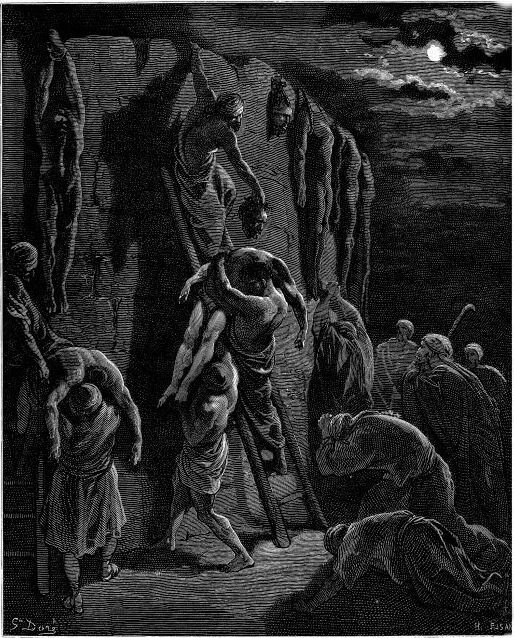
When the Philistines come upon the body of Saul, they cut off his head and take his weapons. The weapons end up in a temple to a false god, and Saul’s body is hung as a war trophy on the wall of the town of Beth-Shan.

It is at this point, many years after Saul had rescued them from the Ammonites that the men of Jabesh-Gilead make their appearance in 1 Samuel 31.11-13:

“Now when the inhabitants of Jabesh-gilead heard what the Philistines had done to Saul, all the valiant men rose and walked all night, and took the body of Saul and the bodies of his sons from the wall of Beth-shan, and they came to Jabesh and burned them there. They took their bones and buried them under the tamarisk tree at Jabesh, and fasted seven days.”

When the men of Jabesh-Gilead hear what has happened to Saul, they remember the debt of gratitude they owe him, walk all night into enemy territory, retrieve his body, and bury it honorably.

This act of gratitude is even more impressive when you realize that this is a debt that they have been waiting to pay for 40 years—the entire length of Saul’s reign. It seems likely that some of the valiant men who made the journey that night weren’t even born yet when Saul had saved their town, and yet they are still willing to risk their lives to protect his honor.

Gratitude compels people to act.


As a Christian, I believe that Jesus sacrificed Himself to cleanse me of sin and to make reconciliation with God possible.

I very much appreciate that sacrifice, but more than that, I am grateful for it—I wish there was something I could do to repay the debt of gratitude that I feel.

But there isn’t. The best I can do is to try to live each day for Jesus, to live as He Himself did.

I fail often, and sometimes I fail miserably, but I am still compelled to try. Gratitude will permit nothing less.

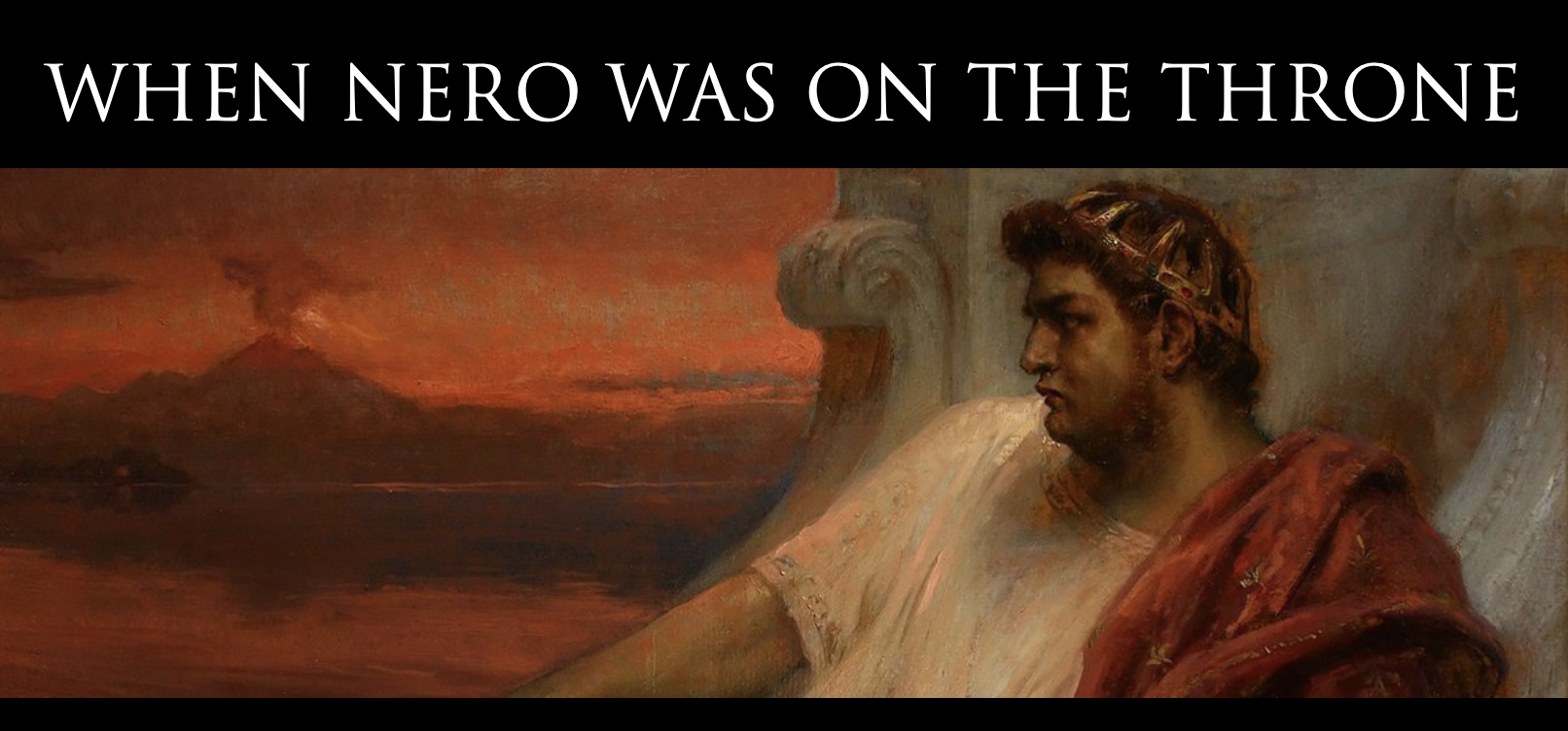
When Nero Was On The Throne

It has been interesting to me over the last 12 hours or so to read Facebook status updates and tweets from my Christians friends about yesterday’s presidential election. The fact that some of these Christians are celebrating the reelection of President Obama while others are lamenting it tell me that either:

  1. Applying Christian values to voting is a difficult and murky process.
  2. Christians aren’t very aware of what “Christian values” actually are.
  3. Both 1 and 2 are partially true.

But I digress. If your candidate won yesterday, be happy, be thankful, and try not to gloat too much. If your candidate did not win yesterday (and if you are in this group, you are the real audience for this post), remember that as a Christian, you can glorify God by showing respect to the one who is in authority, even if he wasn’t your choice:

“Let every person be subject to the governing authorities. For there is no authority except from God, and those that exist have been instituted by God. Therefore whoever resists the authorities resists what God has appointed, and those who resist will incur judgment. For rulers are not a terror to good conduct, but to bad. Would you have no fear of the one who is in authority? Then do what is good, and you will receive his approval, for he is God’s servant for your good. But if you do wrong, be afraid, for he does not bear the sword in vain. For he is the servant of God, an avenger who carries out God’s wrath on the wrongdoer. Therefore one must be in subjection, not only to avoid God’s wrath but also for the sake of conscience. For because of this you also pay taxes, for the authorities are ministers of God, attending to this very thing. Pay to all what is owed to them: taxes to whom taxes are owed, revenue to whom revenue is owed, respect to whom respect is owed, honor to whom honor is owed.”

(Romans 13.1-7)

Paul’s words here are pretty hard to swallow for Christians who struggle to respect and submit to their leaders. When we think about leaders that we don’t like much, it can be difficult for us to affirm statements like, “the authorities are ministers of God” and that resisting them means that we are resisting “what God has appointed”. But that’s exactly what Paul says.

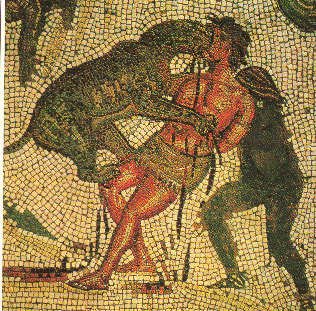
Mosaic depicting a Christian martyr

And to those who are inclined to think that Paul just didn’t understand about bad leaders, realize that he wrote these words to the Christians in Rome while Nero was Emperor. Nero was a vile man and a dedicated persecutor of Christians who was known for using the bodies of captured Christians as fuel for the fires which lit his garden at night. No President that our nation has ever had could hold a candle to Nero when it comes to sheer wickedness*, and it was most likely during the reign of Nero that Paul himself was executed. And yet, to a man such as this, Paul urges Christians to be in subjection.

If your candidate didn’t win yesterday, it’s okay to be disappointed. It’s okay to disagree with the policies of the current President, and it’s okay to hope for a better outcome next time. But respect your President, and be in subjection to him. Even if it is hard.


*Please do not interpret this to mean that I am suggesting that President Obama is somehow equivalent to Nero. I am not.

« Older posts Newer posts »

© 2026 The Doc File

Theme by Anders Noren — Up ↑