The online journal of Luke Dockery

Category: Theology (Page 53 of 58)

Moderation


In Ecclesiastes 7.16-18, Solomon writes:

“Do not be overrighteous, neither be overwise—why destroy yourself? Do not be overwicked, and do not be a fool—why die before your time? It is good to grasp the one and not let go of the other. The man who fears God will avoid all extremes.”

Those verses come in the context of a longer passage on wisdom, and Solomon suggests that avoiding extremes is a wise thing to do.

Generally speaking, I consider myself to be a moderate sort of guy.

Politically, there are a few issues that I am very, very conservative on, but for the most part, I’m not dead-set on a lot of things and can see both sides of a lot of issues.

Religiously, in the broad spectrum of Christianity, I would certainly be considered conservative, but in my specific religious fellowship, I’m pretty much in the middle (in the past, I would’ve thought I was pretty conservative, but over the last few years, I’ve come into contact with more and more people who have verified my middle-of-the-road-ness).

I say all that to say this: the problem with moderation is that when you’re in the middle, you have to deal with the people on both extremes.

It can be a frustrating endeavor.

Observation #3

If Jesus “went about doing good” (Acts 10.38), He probably wants more from me than just holding the right positions on doctrinal issues.

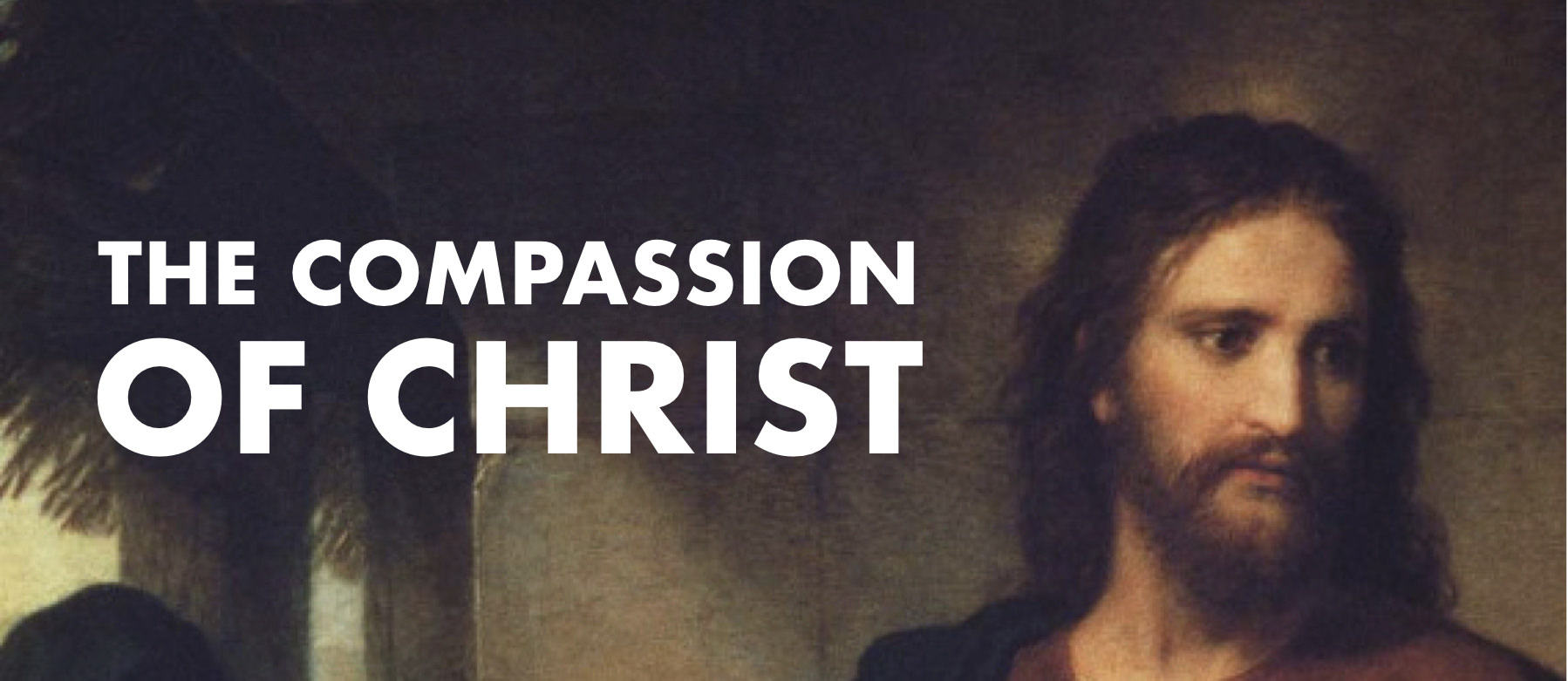
The Compassion Of Christ


There are a lot of passages from the gospels that I could use to expound upon the title of this post, but recently, I was struck by a passage from the book of Matthew.

Matthew 14 starts off with the narration of the death of John the Baptist. John has been imprisoned for speaking out against the unlawful marriage of King Herod, and now, at the request of Herod’s daughter, is beheaded.

John’s disciples take and bury his body, and then go and tell Jesus what has happened.

The Bible doesn’t tell us too much about the specific interactions between John the Baptist and Jesus, but we know that their ministries and lives were closely connected.

In addition to the fact that they were relatives, we know that John baptized Jesus, and that Jesus later had very complimentary things to say about him, proclaiming in Matthew 11.11, “among those born of women there has not arisen anyone greater than John the Baptist!”

It shouldn’t surprise us then, that “…when Jesus heard about John, He withdrew from there in a boat to a secluded place by Himself” (Matthew 14.13).

Jesus was God’s Son, but He was human as well, and sometimes we forget that He felt the same feelings that we do. When He heard that John had been killed, Jesus must have been terribly upset—after all, John was likely a close friend of His and was possibly the one person on earth who somewhat understood Who Jesus was and why He had come. He was upset, and He wanted to be alone.

But by now, Jesus was popular, and the people wouldn’t let Him be alone. When they figured out where He went, they followed on foot. Jesus leaves His boat and comes ashore, and then comes Matthew 14.14, which, in the context we’ve just described, is amazing to me:

“When He went ashore, He saw a large crowd, and felt compassion for them and healed their sick.”

Apparently, at the sight of the people, Jesus immediately forgets His own sorrows and sees only the troubles of those around Him. He feels compassion for the multitudes, and subordinates His own needs to the needs of the people. He heals their sick, and goes on to satisfy their hunger by miraculously multiplying five loaves and two fish.

What an example Jesus provides for us! We should never be so engulfed by personal tragedies, political considerations and economic uncertainties that we lessen our ability to feel compassion for the plight of others around us.

Oh, that Christians were characterized by the compassion of Christ!

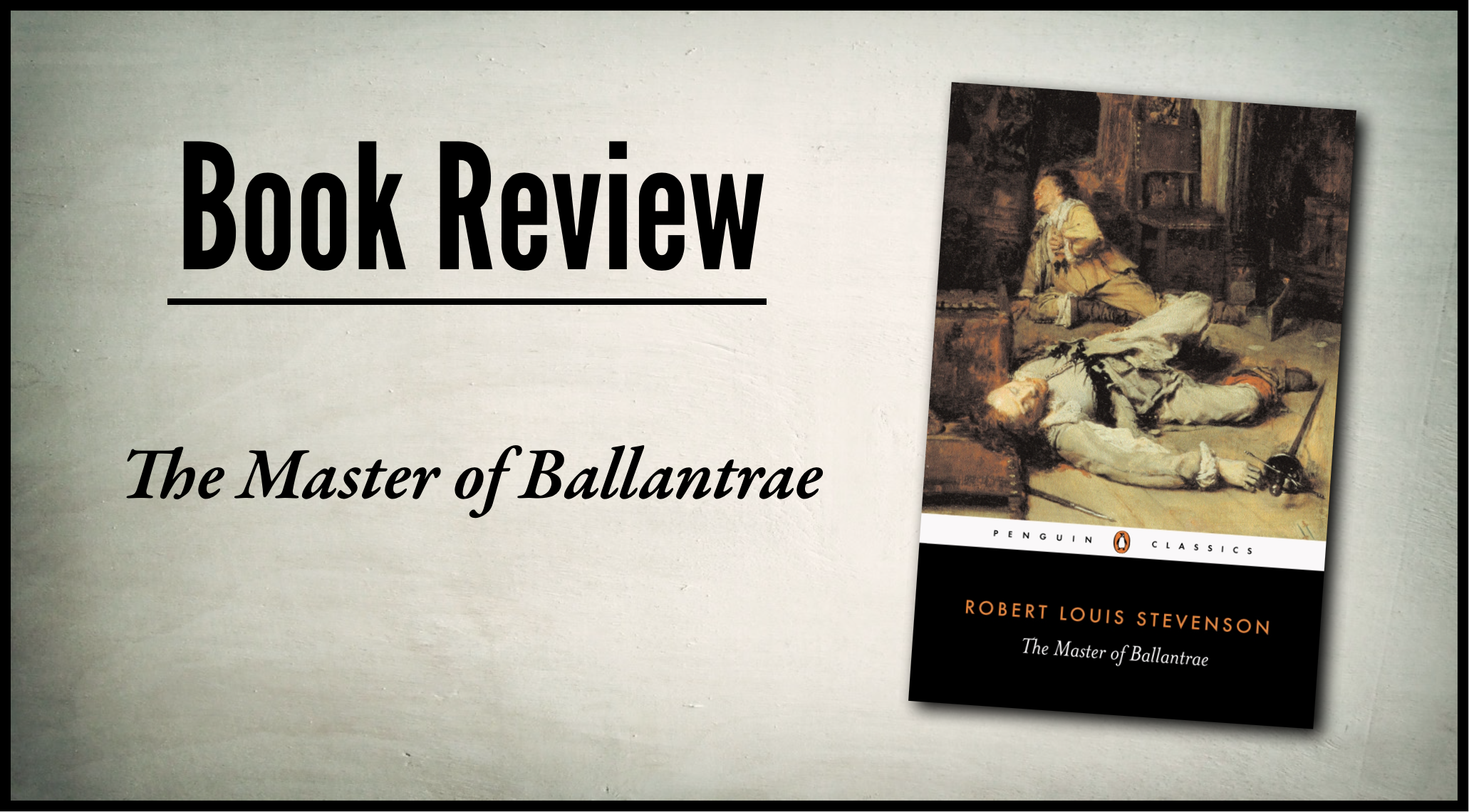
Book Review: The Master Of Ballantrae

Sunday night, I finished Robert Louis Stevenson’s The Master of Ballantrae.

I’m a fan of Stevenson—I’ve written before how much I appreciate his work, and The Strange Case of Dr. Jekyll and Mr. Hyde is one of my all-time favorite works of fiction—but I was a little disappointed in this one.

The Master of Ballantrae is a tale of two brothers of noble Scottish birth, and is also somewhat of a retelling of the Biblical story of Jacob and Esau, with the rivalry and conflict between the two brothers being the central plot of the story.

Parts of the book read very slowly, but there is a lot to keep the reader interested as well: the setting jumps all over the place, with events unfolding in Scotland, the High Seas, India, and, finally, colonial America, and as with other Stevenson stories, multiple narrators are used which helps to give different perspectives on events.

Perhaps most interesting of all is the character of the older brother, The Master of Ballantrae himself, who is the antagonist of the story. Stevenson thoroughly investigated the nature of evil in the character of Mr. Hyde, but in The Master of Ballantrae, the idea is a little more complex. Speaking of his villain, Stevenson said, “The Master is all I know of the devil,” and indeed, the Master’s intelligence, powers of manipulation, and seductive charm greatly resemble the malevolent force described in the Bible, and distinguish him from a Mr. Hyde type of evil.

Unfortunately, for me, all of these good aspects of the book were wasted to some degree by an incredibly disappointing climax.

If you’re a big Robert Louis Stevenson fan, The Master of Ballantrae might be worth reading, but otherwise, skip it—he has much better stuff to offer.

Arthur Ashe On Suffering


Late in his life, during his battle with AIDS (he had contracted HIV during a blood transfusion), one of Ashe’s fans asked him, “Why does God have to select you for such a bad disease?”

Ashe replied:

“The world over, 50,000,000 children start playing tennis, 5,000,000 learn to play tennis, 500,000 learn professional tennis, 50,000 come to the circuit, 5,000 reach the Grand Slam, 50 reach Wimbledon, 4 to the semifinals, 2 to the finals. When I was holding a cup, I never asked God ‘Why me?’ And today in pain I should not be asking God, ‘Why me?’”

« Older posts Newer posts »

© 2026 The Doc File

Theme by Anders Noren — Up ↑