The online journal of Luke Dockery

Category: Theology (Page 57 of 58)

A Less Significant Sacrifice

Every six months or so, we have a blood drive at our church, and since I am the type of person who is willing to give blood if it is exceptionally convenient, I donated at our blood drive yesterday afternoon.

If you’re lucky, you get a free t-shirt when you give blood, and yesterday, I was lucky (or so I thought). I didn’t really look at it until I got home. It said, “He gave His. I gave mine,” and then had a Jesus fish underneath it.

I dunno, there’s something about comparing my convenient gift of a superfluous pint of blood to Jesus’ sacrifice on the cross for all mankind that just irks me.

Design a new t-shirt.

A Titanic Joke

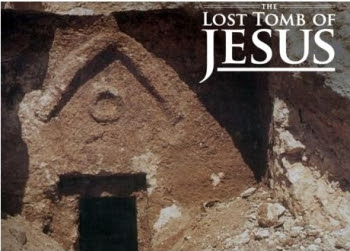
There has been a big uproar over the last few days about an upcoming documentary by filmmaker James Cameron which airs on the Discovery Channel this Sunday night and chronicles the discovery of the supposed tomb of Jesus of Nazareth. Cameron is famous for directing the highest-grossing film of all time, Titanic, which told the story of a big boat that sunk after a collision with an iceberg tore a gaping hole in it.

His new film, The Lost Tomb of Jesus, is somewhat similar, but this time, it’s Cameron’s unfounded theory that’s filled with holes.

Self-billed as the “Archaeological Discovery of the Millennium,” the documentary focuses on the 1980 discovery of a tomb in the Talpiot neighborhood of Jerusalem. This tomb contained ten ossuaries, which are basically limestone boxes that contain skeletal remains. Six of the ten ossuaries are inscribed with significant New Testament names, and according to the documentary, this supposedly proves it to be the family tomb of the Jesus of the New Testament.

I’m not really interested in going into great detail debunking the Cameron crew’s ridiculous claims in The Lost Tomb; that has already been done by people who are much more knowledgeable than I am, and there will be even more debunking after the documentary appears on TV.

I do, however, want to make a few quick observations that I’ve had about the Talpiot Tomb issue:

The “evidence” supporting Cameron’s claim is laughable.

Once again, I don’t want to go into great detail on this, but here is an example of the type of scientific reasoning used to back this theory:

One of the ossuaries has the name “Matthew” on it. The problem with this is that we don’t know of any person related to Jesus named Matthew. Rather than come to the explanation that a Matthew has no place in the family tomb of Jesus of Nazareth, and maybe this tomb belongs to some other Jesus, the Cameron bunch instead use this as evidence that the tomb must be authentic, because after all, Jesus of Nazareth did know a guy named Matthew! That must prove it!

Similarly, one of the boxes has a variation of the name “Mary” on it. DNA evidence has shown that this person was not related to the person in the “Jesus” ossuary. So what conclusion does the documentary make? This “Mary” must be Mary Magdalene, who we now plainly see must have been Jesus’ wife! Never mind the fact that, outside of fictional novels, there is no evidence that Jesus was ever married!

According to the circular logic of the Lost Tomb theorists, the presence of an unrelated Mary in the tomb proves that she is the wife of Jesus, and the fact that the now-proven wife of Jesus is found in the tomb proves that it really is the authentic tomb.

Don’t worry; it’s not just you. It really doesn’t make any sense.

This is too big to just ignore.

The implications of the “discovery” are massive: if the skeletal remains of the Jesus of the New Testament were to be found, it would show the Resurrection to be a sham. And as the Apostle Paul pointed out, if Christ was not raised from the dead, then our faith (and, consequently, Christianity) is worthless.

I’ve heard some people say that this isn’t really an issue, because people who really believe aren’t going to be shaken by such pseudo-science and will reject the claims, while people who don’t believe are just going to use it as another reason for why they don’t.

I agree, but what about people who haven’t made up their minds yet? There are undoubtedly some people who won’t give Christianity an honest hearing because they have been turned off by “scientific proof.” I mean, just look at the repercussions of The DaVinci Code—and it even claimed to be a work of fiction!

As Christians, we can’t just completely ignore this. Just because we recognize it as foolishness, doesn’t mean that other well-meaning people won’t be deceived by it.

James Cameron’s ability to annoy me has reached new heights.

I accounted for about $7.50 of the $600,000,000+ that Titanic roped in, and honestly, I didn’t regret it at the time. Sure, the first half of the movie was painful, dominated by a cheesy love story, and yes, I did cheer when the Leonardo DiCaprio character finally froze to death, but the whole sinking ship part was pretty cool.

Of course, then the movie received a bazillion awards, James Cameron was all over TV being full of himself, Earth’s female population under the age of 16 became Leonardo-obsessed, and I got really tired of the movie.

But none of that compares to my annoyance with the man now.

See, if James Cameron was actually seeking truth, or even if he hated Christianity and really wanted to disprove it somehow, I could accept him making the documentary. I still wouldn’t like it, but I could accept his motives. But I don’t think he’s doing it for either of those reasons; it’s all about recognition and money. If it wasn’t, he wouldn’t be releasing a Resurrection-denying documentary in the middle of Lent, a month before Easter, and we would be hearing more about the actual archaeologists who worked on the project rather than just the man who made the movie about them.

Making a documentary that denies the Resurrection and unleashing Celine Dion’s My Heart Will Go On on an unsuspecting world. Yep, this guy is going to have a lot to answer for.

Double Standards

Double Standards are, by definition, unfair, which I suppose is why most people don’t like them.

I, too, dislike double standards, though I’ll admit that sometimes, my ire towards injustice is slow to awaken when I belong to the party that is benefitting from it. For example, when I was at Harding, I was never too concerned about violating curfew, because I knew that since I was a guy, it wouldn’t be that big of a deal. Had I been a girl, it would’ve been a different story; I would’ve been in trouble.

That was a double standard, but since I was a guy, it didn’t bother me too much.

Former NBA star Tim Hardaway’s statements this past week have made me think about a couple of double standards concerning homosexuality. For those of you who aren’t familiar with Hardaway’s comments, he said the following during a radio interview after being asked how he would deal with a gay teammate:

“First of all I wouldn’t want him on my team. Second of all, if he was on my team I would really distance myself from him because I don’t think that’s right and I don’t think he should be in the locker room when we’re in the locker room.”

When the interviewer was critical of Hardaway’s remarks, and referred to them as bigoted and homophobic, Hardaway responded:

“Well, you know, I hate gay people. I let it be known I don’t like gay people. I don’t like to be around gay people. I’m homophobic.”

The fallout following Hardaway’s words has been considerable: he was removed from All-Star Weekend activities, barred from future NBA appearances, and fired from his job as the Chief Basketball Operations Advisor of the CBA Indiana Alleycats. And he’s been publicly condemned by just about everyone.

First off, let me start of by saying that I don’t condone Hardaway’s words. While I can understand his concerns about undressing and showering around homosexuals in the locker room, he was way overboard in saying that he hates them. Even if his hatred stems from a belief that homosexuality is wrong, the Bible is pretty clear that we’re not supposed to hate anyone.

That being said, the degree of the outcry against Hardaway serves as evidence of the politically correct culture that we live in.

What I mean is this: if he had made basically the same statement, but about Christians instead of homosexuals, do you think he would face the same consequences? No way.

The truth is, there are some things in our society that are okay to publicly criticize without fear of serious repercussions, while other things like homosexuality (or Islam, or whatever is politically correct at the time) are completely taboo.

That’s a double standard, and I don’t like it.

The second double standard hits a little closer to home for me.

As a Christian, I absolutely believe that homosexuality is wrong, but the Tim Hardaway interview reminds me that sometimes we (Christians) tend to look at it from a skewed perspective.

From the way many Christians talk and act, you would think that homosexuality is some sort of unforgivable sin and that gay people are a group to whom we owe nothing. Some people who claim to follow Christ even seem to believe that His command to love our neighbors doesn’t apply to homosexuals, and live their lives in ways that could be summed up by Hardaway’s comments.

We’re understanding with people who lie, or are greedy, or even steal or commit adultery, but we treat gay people as if they are irreedemable, as if there is no hope for them.

That’s also a double standard, and I don’t like it either.

The truth is that all forms of sin—including homosexuality, but also including things like lying, gossiping and adultery—separate us from God, and make us deserving of death.

Thankfully, Christ was willing to experience death in our stead, and bridge the gulf that our sins had created between us and God. That death gives the hope of redemption to liars, gossips, thieves and adulterers. Homosexuals too.

Remembered At Our Worst

What if the only thing you were remembered for was your worst moment?

Although Fred Merkle broke into the major leagues with the New York Giants in 1907, he was still practically (and technically) a rookie in the fall of 1908 when the Giants were locked in a tight pennant race with their arch-rivals, the Chicago Cubs.

On September 23, the Giants hosted the Cubs at the Polo Grounds in New York. The game was just like the whole season had been: a tense, hard-fought struggle between two teams of equal caliber.

With the score tied 1-1 with two outs in the 9th inning, Merkle singled, advancing Moose McCormick from first base to third. The next batter, Al Bridwell, also singled, which allowed McCormick to score and seemed to seal the crucial victory for the Giants. Jubilant New York fans stormed through the center field exit and onto the field in celebration.

Fred Merkle, seeing the rush of oncoming fans and convinced that the game was over, headed to the dugout without touching second base.

This was noticed by Johnny Evers, the Cubs’ crafty second baseman, who alerted umpire Hank O’Day and went after the ball. Evers fought through fans, claimed the ball, and relayed it to Chicago shortstop Joe Tinker at second base.

According to baseball rules, since Merkle had not touched second base and Tinker touched the base while holding the ball, Merkle was out on a force play, and Moose McCormick’s game-winning run was nullified. Merkle’s base-running error would cost the Giants the game, which was ruled a tie, to be replayed at the end of the season only if the two teams were tied in the standings.

Of course, they were, and when the game was replayed, Chicago won, and the 19 year-old Merkle was blamed for losing the pennant. The Cubs went on to win the World Series that year, although they haven’t managed to win another in the 98 seasons since.

Fred Merkle would go on to have a respectable year major league career that would span 18 seasons, one which produced 1,580 hits, 290 doubles and a .273 batting average (statistics more impressive when you consider that the majority of his career was played in the dead ball era), but he would never live down the “Merkle Boner,” as his 1908 mistake came to be known. In fact, it’s really the only thing he is remembered for today.

Sometimes, history can be pretty unforgiving like that—a lot of people are remembered only for their worst or most inept moments. That is one advantage of not being famous: we “normal” folk don’t have thousands or millions of people scrutinizing our every move and waiting to jump all over us when we mess up. Of course, even if we aren’t famous, we can still make some mistakes that have serious and far-reaching consequences.

But that is one of the most comforting aspects of Christianity; we may still make mistakes, but those are not what God remembers about us. In 2 Corinthians 5.17, the Apostle Paul says, “Therefore if anyone is in Christ, he is a new creature; the old things passed away; behold, new things have come.”

I’ve always felt sorry for Fred Merkle, and have thought that it isn’t fair that he is remembered only at his worst, for a mistake that he made as a 19 year-old kid. But his story reminds me of this: thanks to the blood of Christ, we don’t have to be remembered for our worst moments; they can be wiped away.

The picture above is a 1909-1911 T-206 Fred Merkle tobacco card, and was one of my favorite Christmas gifts this year. Thanks Jared!

Sources for the statistics and historical dates and names used in this article include Baseball Reference and Wikipedia.

Double Meaning

“Hast thou not known? hast thou not heard, that the everlasting God, the LORD, the Creator of the ends of the earth, fainteth not, neither is weary? there is no searching of his understanding.

He giveth power to the faint; and to them that have no might He increaseth strength.

Even the youths shall faint and be weary, and the young men shall utterly fall: But they that wait upon the LORD shall renew their strength; they shall mount up with wings as eagles; they shall run, and not be weary; and they shall walk, and not faint.”

Isaiah 40. 28-31

« Older posts Newer posts »

© 2026 The Doc File

Theme by Anders Noren — Up ↑







