The online journal of Luke Dockery

Tag: Baseball History (Page 2 of 2)

Determined To Be The Best

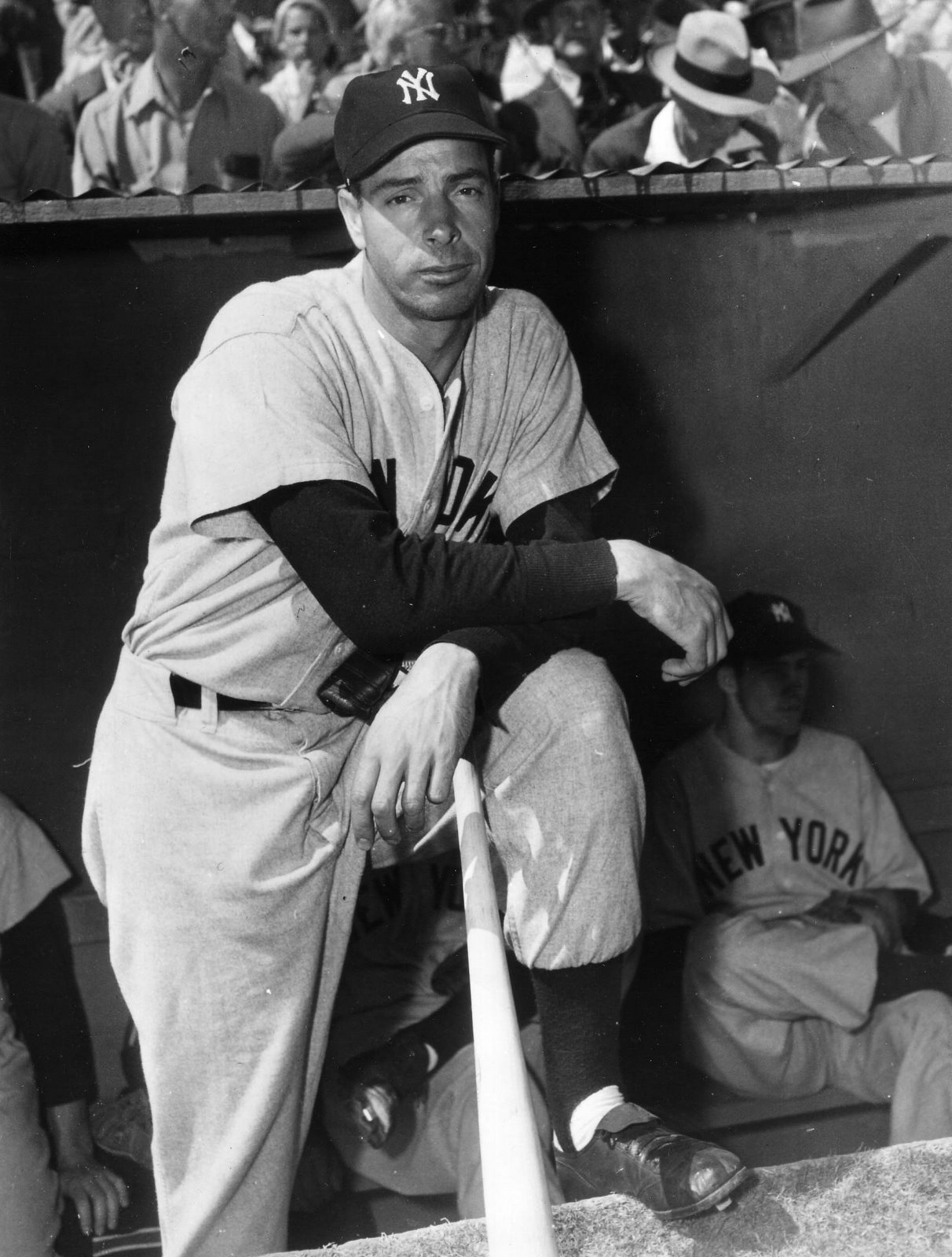
One of my favorite all-time baseball players is Joe DiMaggio. In the history of baseball, there have been other players who were better, but there have been few, if any, who so excelled in every facet of the game.

DiMaggio put up impressive numbers. He was a three-time MVP. He led the league in home runs and batting average twice. In 1941, he got a hit in 56 consecutive games—widely considered the most unbreakable record in professional sports. And he was a winner. In his 13 seasons with the Yankees, they won 10 Pennants and 9 World Series.

When it came to baseball, Joe DiMaggio was it. He was the peak; the pinnacle; as good as it got. And he knew it.

Pride and vanity can certainly be negative traits, and they were traits that DiMaggio possessed in abundance, but in his case, they spurred him to greatness. He liked the legend he had created for himself, and he was absolutely determined to live up to it. He did so by playing incredibly hard, while still making it look like everything he did on the field was effortless. The graceful way he played earned him the nickname, “The Yankee Clipper.”

DiMaggio always battled injuries, and late in his career, it got harder and harder for him to stay in the lineup and put up the impressive numbers that everyone was used to. Finally, in 1951 at a relatively young 36 years of age, DiMaggio walked away from the game, not content to just be an average player. As teammate Lefty Gomez put it, he retired because “he couldn’t be Joe DiMaggio anymore.”

There’s a lot to be said for setting high expectations for yourself and not settling for anything less, and in a time when our heroes seem to let us down all too often, it’s comforting to think about a guy like Joltin’ Joe, the hero who never did.

Once, late in a season when the Yankees had already clinched the American League Pennant and were just finishing out the rest of the season, one of Joe’s teammates asked him, “Why do you play so hard in a game that means nothing for your team?”

He replied, “Because there’s at least one person in the stands that has never seen Joe DiMaggio play before.”

I love that quote, and the idea it represents.

Too Young

Each year in Japan, the Eiji Sawamua Award is given to the best pitcher in Nippon Professional Baseball (Japan’s highest baseball league), just like the Cy Young Award is given to the best pitchers in Major League Baseball.

Sawamura vaulted to national stardom in November 1934 when, as a 17-year-old, he pitched against a visiting team of Major League All-Stars and struck out, in succession, Charlie Gehringer, Babe Ruth, Lou Gehrig and Jimmie Foxx—four players who combined for over 11,000 hits, over 7,500 runs scored, and over 1,900 home runs in their Major League careers. Sawamura lost the game 1-0 in a Lou Gehrig home run in the seventh inning, but his heroics made him a national idol.

He went on to pitch in the newly formed Japanese Baseball League and became its star, tossing the first no-hitter in the league’s history and winning the Most Valuable Player Award in 1937 after compiling a record of 24-4 with a 0.81 ERA.

Sawamura continued to dominate throughout the late 1930s and early 1940s, but by that time, the world had changed. All-Star teams from the United States on exhibition tours were no longer welcome in Japan.

The fires of World War II had begun.

For its part, Japan was anxious to extend its empire by flexing its military might, and it needed young men to do so.

Having already served three tours of duty, Sawamura was killed in 1944 when the transport ship he was on was sunk by American warships. He was 27, just ten years removed from the November afternoon that made him a hero.

From Hussein to Hitler, to many years before, young men have always had to die in attempts to realize the ambitions of tyrants.

But it never gets easier to accept.

Sources for this post include Baseball-Reference and Wikipedia.

Remembered At Our Worst

What if the only thing you were remembered for was your worst moment?

Although Fred Merkle broke into the major leagues with the New York Giants in 1907, he was still practically (and technically) a rookie in the fall of 1908 when the Giants were locked in a tight pennant race with their arch-rivals, the Chicago Cubs.

On September 23, the Giants hosted the Cubs at the Polo Grounds in New York. The game was just like the whole season had been: a tense, hard-fought struggle between two teams of equal caliber.

With the score tied 1-1 with two outs in the 9th inning, Merkle singled, advancing Moose McCormick from first base to third. The next batter, Al Bridwell, also singled, which allowed McCormick to score and seemed to seal the crucial victory for the Giants. Jubilant New York fans stormed through the center field exit and onto the field in celebration.

Fred Merkle, seeing the rush of oncoming fans and convinced that the game was over, headed to the dugout without touching second base.

This was noticed by Johnny Evers, the Cubs’ crafty second baseman, who alerted umpire Hank O’Day and went after the ball. Evers fought through fans, claimed the ball, and relayed it to Chicago shortstop Joe Tinker at second base.

According to baseball rules, since Merkle had not touched second base and Tinker touched the base while holding the ball, Merkle was out on a force play, and Moose McCormick’s game-winning run was nullified. Merkle’s base-running error would cost the Giants the game, which was ruled a tie, to be replayed at the end of the season only if the two teams were tied in the standings.

Of course, they were, and when the game was replayed, Chicago won, and the 19 year-old Merkle was blamed for losing the pennant. The Cubs went on to win the World Series that year, although they haven’t managed to win another in the 98 seasons since.

Fred Merkle would go on to have a respectable year major league career that would span 18 seasons, one which produced 1,580 hits, 290 doubles and a .273 batting average (statistics more impressive when you consider that the majority of his career was played in the dead ball era), but he would never live down the “Merkle Boner,” as his 1908 mistake came to be known. In fact, it’s really the only thing he is remembered for today.

Sometimes, history can be pretty unforgiving like that—a lot of people are remembered only for their worst or most inept moments. That is one advantage of not being famous: we “normal” folk don’t have thousands or millions of people scrutinizing our every move and waiting to jump all over us when we mess up. Of course, even if we aren’t famous, we can still make some mistakes that have serious and far-reaching consequences.

But that is one of the most comforting aspects of Christianity; we may still make mistakes, but those are not what God remembers about us. In 2 Corinthians 5.17, the Apostle Paul says, “Therefore if anyone is in Christ, he is a new creature; the old things passed away; behold, new things have come.”

I’ve always felt sorry for Fred Merkle, and have thought that it isn’t fair that he is remembered only at his worst, for a mistake that he made as a 19 year-old kid. But his story reminds me of this: thanks to the blood of Christ, we don’t have to be remembered for our worst moments; they can be wiped away.

The picture above is a 1909-1911 T-206 Fred Merkle tobacco card, and was one of my favorite Christmas gifts this year. Thanks Jared!

Sources for the statistics and historical dates and names used in this article include Baseball Reference and Wikipedia.

Newer posts »

© 2026 The Doc File

Theme by Anders Noren — Up ↑







