The online journal of Luke Dockery

Tag: Bible Class Curriculum (Page 2 of 2)

Getting Students Into the Word: A New Bible Class Approach (At Least, For Me)

In my years of youth ministry, one of the most alarming trends I have noticed is how little most teenagers actually know about the Bible. Sure, they’ll know some major characters and a few significant doctrines, but on the whole, it isn’t pretty.

And this is a big deal, because how can we claim to live by the Bible (which we do), if we don’t know what it says?

I haven’t done extensive research, but I suspect that there are several reasons for this trend:
  • Kids don’t actually read anymore. Seriously. Between TV, game consoles, the Internet, and iPhones, most young people find plenty to occupy their time without ever picking up a book.
  • Christian parents do less Bible study and teaching in the homes with their children. Families have busy schedules between school events, sports, and TV shows, and family devotional time tends to get squeezed out. Besides, what’s the point of having a youth minister if he isn’t going to teach our kids?
  • More and more, Bible class curriculum tends to be topical rather than textual. This isn’t always a bad thing, but taken to the extreme, all your students get are a lot of words on morality and only a little of the Word.
  • A significant portion of church members and families don’t even bother going to Bible class in the first place (this varies from church to church, but at our congregation, roughly 1/4 to 1/3 of our people don’t attend Bible class on Sunday morning).

All of that to say, this issue is something that I’ve become very convicted about over the years, and as a result, I have put a lot of emphasis on and effort into teaching the Bible to my youth group kids and getting them to read Scripture for themselves. This past quarter, we tried something a little different on Sunday mornings which actually turned out quite well, and I just wanted to share it very quickly.

I got the idea from a friend in youth ministry, who pointed me to a new rendering of the NIV translation of the Bible that has the chapter and verse numbers removed to make the text more readable. Of course, the original manuscripts of the Bible didn’t come with chapter and verse markers; those were added later to help organize the material and make it easier to reference. Without the chapter and verse numbers, I found the text much less choppy, and it read much more like a story. Biblica, the company which released this new format, provided a free sample of the books of Luke and Acts, and this is what we studied over the past quarter.

Using the free PDF download of Luke-Acts, I worked up a cover, an introduction to our study, and a reading schedule for our students, and bound them as individual books (they were about 100 pages long). Then for the whole quarter, our Bible class consisted of us talking about the things they read from the previous week (Bible stories and events they had never read before, things they liked, things they didn’t understand, things that bothered them).

Obviously, for this class format to be successful, the students actually needed to have read ahead of time. Especially since my youth group is currently skewed toward younger ages, I was a little concerned about them remembering to actually do the weekly reading assignments. To encourage this, I kept track of those who had done their reading assignments from week to week, and promised that we would take a reward trip at the end of the quarter for those who had done their homework throughout (yes, I absolutely believe in rewarding people for good behavior).

On the whole, I was pleased with the results. I had six students (out of 15-20) who read their assignments almost every week and qualified for the trip, and several others who missed the cut but still read about half the time. The quality of our class discussions fluctuated based on how many people had read, but on the whole, the students had a lot to talk about, as many of them were reading these chapters in depth for the first time (if that seems surprising to you, re-read my lamentations at the beginning of this post).

Currently, I don’t think this is a sustainable class model year round, as the level of readership tended to decline as the quarter progressed and the freshness wore off. Still, I think it’s something that I’ll try for at least one quarter a year.

Our group at the Oklahoma Aquarium as part of the reward for doing their Bible reading.

Friday Summary Report, November 2

Today’s installment will be brief, as I am in the midst of a particularly busy day:

(1) Yesterday, Harding University (my alma mater) announced that Bruce McLarty has been selected as the next President of the school. It has been interesting to me to read the array of responses from various parties about the announcements. I think Bruce firmly grasps Harding’s identity in the context of Churches of Christ, Christian colleges, and education in general, and it is my belief that he will continue to steer Harding on the unique course which it has chosen. In general, my feeling is this: if you love what Harding is, then I think Bruce is a great choice; if you are critical of Harding, then probably he is not your ideal candidate. Personally, I am excited.

(2) Here is an outstanding post from Scott Bond on “Why Little Girls Need Their Dad.” As a fairly recent father of a little girl, the post was especially meaningful for me, but I think it’s a good read for any Christian father.

(3) Last month set an all-time record in traffic here at The Doc File. This was a pleasant surprise, as my school workload really slowed down my posting after the first few days of the month. Thanks to all who continue to read!

(4) This post on Hashtag Media has gotten some attention. If you haven’t read it yet, check out the good things that these guys are doing.

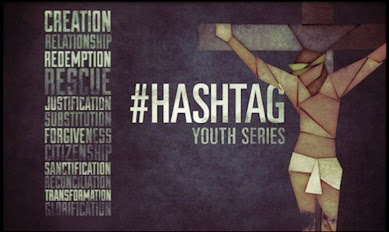
Review: Hashtag Youth Series

Our youth group recently finished up the Hashtag Youth Video Series, which served as the summer curriculum for our Wednesday night Junior and Senior High Bible Class (we were gone a few Wednesday nights because of special activities, so we ended up getting behind and finishing in September).

Some dedicated youth ministers from Churches of Christ (primarily in Tennessee) put a lot of work into the conception and production of Hashtag, and I thought I would take a few moments to review the series now that we have completed it.

Strengths

To start with, I should mention that the Hashtag Youth Series was entirely free. Thirteen videos, usually 10-15 minutes in length, and all accompanied by discussion guides and manuscripts, all were available for download free of cost. If you have any experience in finding and ordering Bible class material, you know that it can be very expensive, especially if you’re looking for videos.

Furthermore, Hashtag is incredibly easy to use. Summer can be a crazy time for youth ministers. With students out of school, it seems to be a time for constant activity, ranging from summer camps, to mission trips, to Vacation Bible School, to summer fun trips, and all of that on top of all the regular activities a youth group participates in. In the midst of all the busyness, it’s nice to be able to show a video series where you don’t have to put a ton of time into preparation and basically are able to just focus on leading a group discussion based on the video which was seen. The ease of use is also a huge benefit when it comes to finding substitute teachers—I had to be away a couple of weeks for travel or to speak elsewhere, but it was easy to find someone to take my spot, show the videos, and lead the class in discussion.

Finally, the videos themselves were of high quality. Watching the videos, it didn’t seem like you were using a free product at all. The graphic design and typography was awesome, and the video production was very good too. Nothing about the videos seemed amateurish at all.

Suggestions for Improvement

The videos were basically in the format of a summer series, where each week you have a different speaker focus on a certain topic. What I have generally found to be true with summer series also applied to Hashtag: the speakers were somewhat hit and miss. The video topics included some theologically deep concepts (see the banner at the top of this post for the topics which were covered), and although most (if not all) of the speakers were youth ministers, some did a much better job of communicating the topic at a teenage level than others.* Furthermore, the basic format of the videos was lecture: the speakers sat in a room talking to a camera. Generally, the speakers who provided visual aids or incorporated a narrative style into their lessons were better received by the audience (at least, in our case).

Also, some of the discussion guides were better than others. Some of the guides were great, providing interesting ice-breakers to introduce the videos and excellent questions for discussing them. At other times, I felt like the majority of the questions were unhelpful as discussion starters and I had to basically generate my own questions.

Overall Assessment

All in all, I think the Hashtag Video Series was a significant accomplishment, and I would definitely recommend it to those who are looking for Bible class curriculum for teens. I’m sure that the work required to coordinate a project involving so many different ministers was extensive, and the developers should be proud of the completed project.

That the series was available free of charge meant that many congregations were able to use it which wouldn’t have been able to otherwise. The ease of use likely helped many youth ministers catch a breath in the middle of busy summers while still providing a quality Bible class (I know that was the case for me). And lastly, the technical quality of the videos went a long way towards keeping the attention of the audience—shoddy videos are easy to immediately write off, but the professional quality of the Hashtag series earned respect and attention.

Even those areas where there is some room for improvement should not be barriers to those who are considering using the videos. While some of the speakers were better than others, none of them were bad, and a few of them really were excellent. And although some of the discussion guides need work, it’s really not hard to flesh out that part of the lesson yourself, especially when you are mindful of the fact that you got all of the material at no cost in the first place.

Overall, I’m thankful that I stumbled upon Hashtag at the beginning of the summer, and am very grateful to those whose diligent work made it happen.


*To be fair, I know from personal experience that communicating at a “teenage level” is incredibly difficult. Middle schoolers who are 12 or 13 operate on a completely different level than juniors or seniors in high school. Something that is on the level of one group may not (and often won’t be) on the level of the other. Our youth group is currently skewed young, and I felt like some of the series speakers were talking over their heads.

Newer posts »

© 2026 The Doc File

Theme by Anders Noren — Up ↑