Introduction
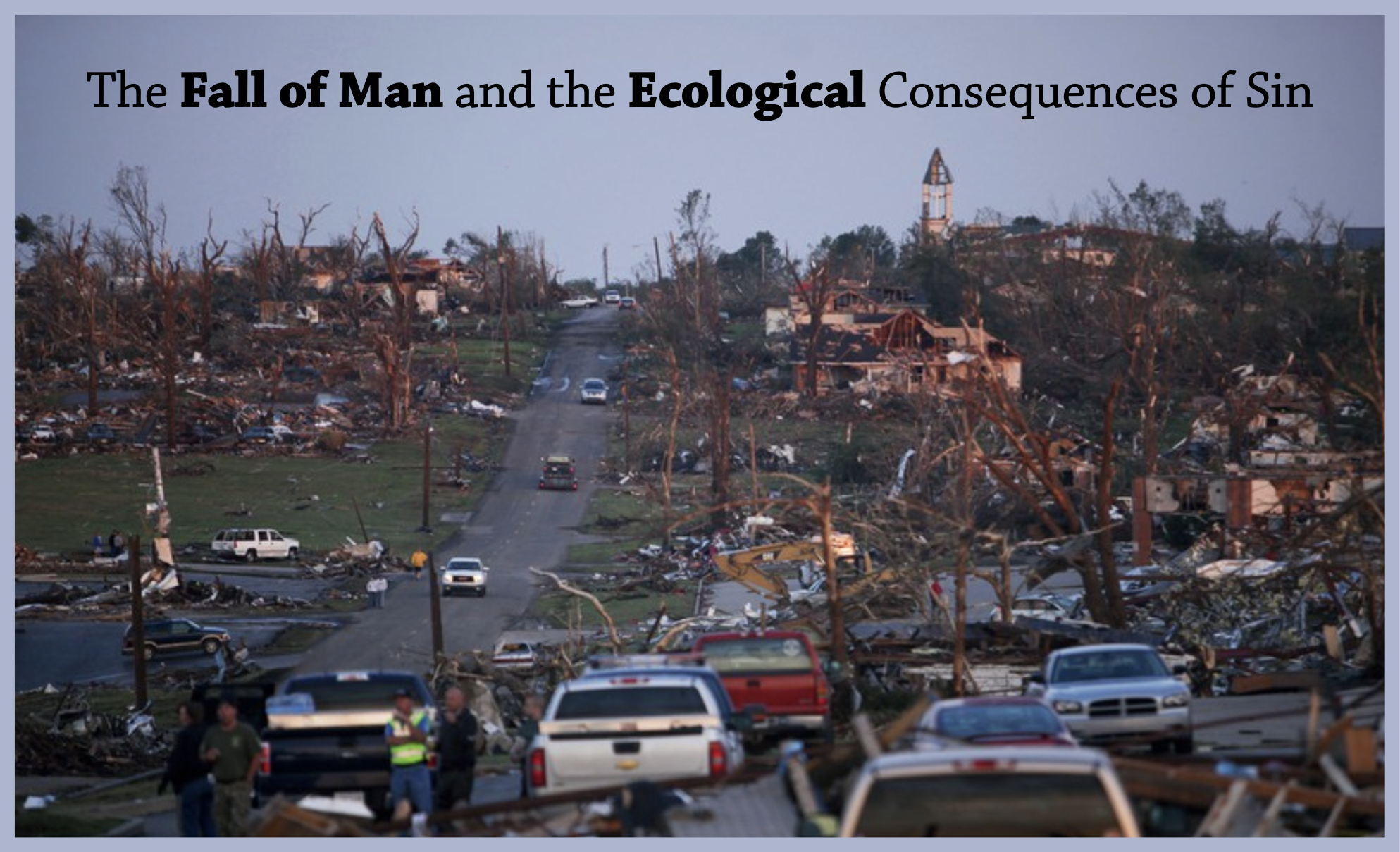
In the last post of this series, I talked about the Problem of Evil, and the two categories of evil which philosophers and theologians usually talk about: moral evil and natural evil. Generally speaking, moral evil refers to the evil acts that people choose to commit which lead to the suffering of others, while natural evil refers to those seemingly random (or, chaotic) things which occur as a result of the way the world works which bring about suffering. A man killing his wife would be classified as moral evil, while a tornado destroying a house and killing the family inside would be natural evil.
If you take the idea of free will seriously (which I certainly do), moral evil is pretty easy to explain: bad things happen because people abuse the freedom of will which they have been given. We might not like it when a terrorist blows up a building, and we might even wish that God would have taken the terrorist’s free will away in order to prevent the horrific act, but ultimately, we know that people should be blamed for the bad things to do.
Natural evil is tougher to explain away, though. It is clear that we live in a world where chaotic things occur and leave great destruction in their wake: hurricanes, tornados, tsunamis, cancer, genetic diseases. They question is, Why does our world work like this? People do not cause these things to happen—did God design the world to be like this? And if so, why?
There are, I think, four basic perspectives on the idea of creation, chaos, and suffering:
Chaos as the Result of Sin
The traditional view (also called the Augustinian view) is that God created the world perfect, without sin or chaos anywhere. Living in a perfect garden, eating from the Tree of Life, Adam and Eve did not have to worry about tornados or skin cancer (which is a good thing, since they didn’t wear any clothes).
But then sin entered the world through their disobedience, and as a result, creation itself was cursed (Genesis 3.17-19). No longer was the earth the ideal home for mankind which God had intended it to be. Sin had far-reaching consequences, including death and chaotic destruction.
Until very recently, this was the view I held, but as you’ll see below, I think it needs to be nuanced a little.
Chaos as part of the Design of Creation
At the opposite extreme from the Augustinian perspective is the argument that chaos (and suffering) were always present, and were simply a part of the way God made the world. This is the argument set forth by Terence E. Fretheim in Creation Untamed: The Bible, God, and Natural Disasters.
Fretheim points out that God created the world good; He did not create it perfect. In other words, God created an earth that suited His purposes; not one that was necessarily flawless or without chaos present in any way.
Furthermore, man is given the task of keeping and tending the garden (Genesis 2.15). This suggests that creation was not a perfect, finished product, but something which required the keeping and ordering of Adam. Is that not a suggestion of a certain level of chaos?
And finally, what is the presence of the serpent in the garden if not an element of chaos? If creation was absolutely perfect, why would it contain a tempter? Instead, the doorway to sin which the serpent provided and the possible ramifications of that sin strongly suggest a chaotic element in creation even from the beginning.
Having said that, I think Fretheim goes too far. In my mind, it is a huge leap from the hints of chaos listed above to the claim that volcanoes, tsunamis, and genetic conditions were present from the beginning (a claim that Fretheim makes many times in the book).
Chaos Outside of the Garden
The last two perspectives are basically hybrids; midpoints between the two viewpoints already described above.
It is possible that the Garden of Eden was an environment free from chaos, but that the rest of creation was not. When Adam and Even sinned, they were cast out of the Garden (Genesis 3.23-24) and forced to live in the “real world.” Outside of the special haven God had prepared for them, Adam and Eve and their descendants had to live with the harsh realities of the world which included natural disasters and disease.
This perspective is intriguing because it marks a clear distinction between the Garden and the rest of creation (and Scriptures seems to do that as well), but I think it has the same problems as the first viewpoint because as Fretheim points out, there do seem to be some elements of chaos in the description of the Garden
Chaos in Creation but Intensified by Sin
This last option is also somewhere in the middle of the spectrum, and best describes my current understanding of the relationship between creation and chaos.
It seems to me that chaos was always present to an extent, but was intensified and multiplied after Adam and Eve sinned. As the “Chaos as Result of Sin” view accurately points out, creation itself was cursed because of Adam and Eve’s sin, and that fundamentally altered the way things worked.
Water is a chaotic thing, and always had the potential for danger (I would suggest that even in the Garden, if Adam’s lungs filled with water he would have drowned), but after the Fall, hurricanes and tsunamis and the true destructive power of water was unleashed. In the Garden, Adam and Eve grew hungry, and if they had refused to eat, they would have died. But after the Fall, they had to grow their food by the sweat of their brow, and sometimes the ground would fail to yield properly. Famine and suffering result.
Concluding Thoughts
I don’t think it is wise to be too dogmatic about this, because the Bible doesn’t explicitly lay out the relationship between chaos and creation. There is a lot we don’t know and thus, our conclusions can never be certain.
Still, it seems to me that there are a few conclusions that we can draw with relative certainty:
(1) From the beginning, there was a degree of chaos. Creation was good, not perfect. Satan slithered around. The Garden needed to be tended and kept.
(2) That chaos was intensified by the Fall. After Adam and Eve sinned, a curse was placed on creation. It is only logical that this made conditions worse. I do not see natural disasters and devastating illness in the chaos of the Garden, but it is easy for me to see them in a chaos intensified and magnified by the Fall.
(3) Outside of the Garden, life involved suffering. Regardless of the amount of chaos that occurred in the Garden, the Garden also possessed the Tree of Life, and presumably, the fruit of that tree would counteract any illness. In fact, it was access to this tree and the immortality to offered which directly led God to banish Adam and Eve from the Garden (Genesis 3.22).
For us, the reality is that we have to navigate life in a world which is filled with chaos. Outside of the Garden, we suffer. Modern technology has revolutionized health care, and yet there are illnesses and diseases against which we are powerless. Modern technology has allowed us to predict dangerous storms with increasing accuracy, and yet people still die.
As Christians, we look forward to when suffering ceases, chaos is conquered, and Christ returns.
Come, Lord Jesus!