The online journal of Luke Dockery

Tag: Creation (Page 1 of 2)

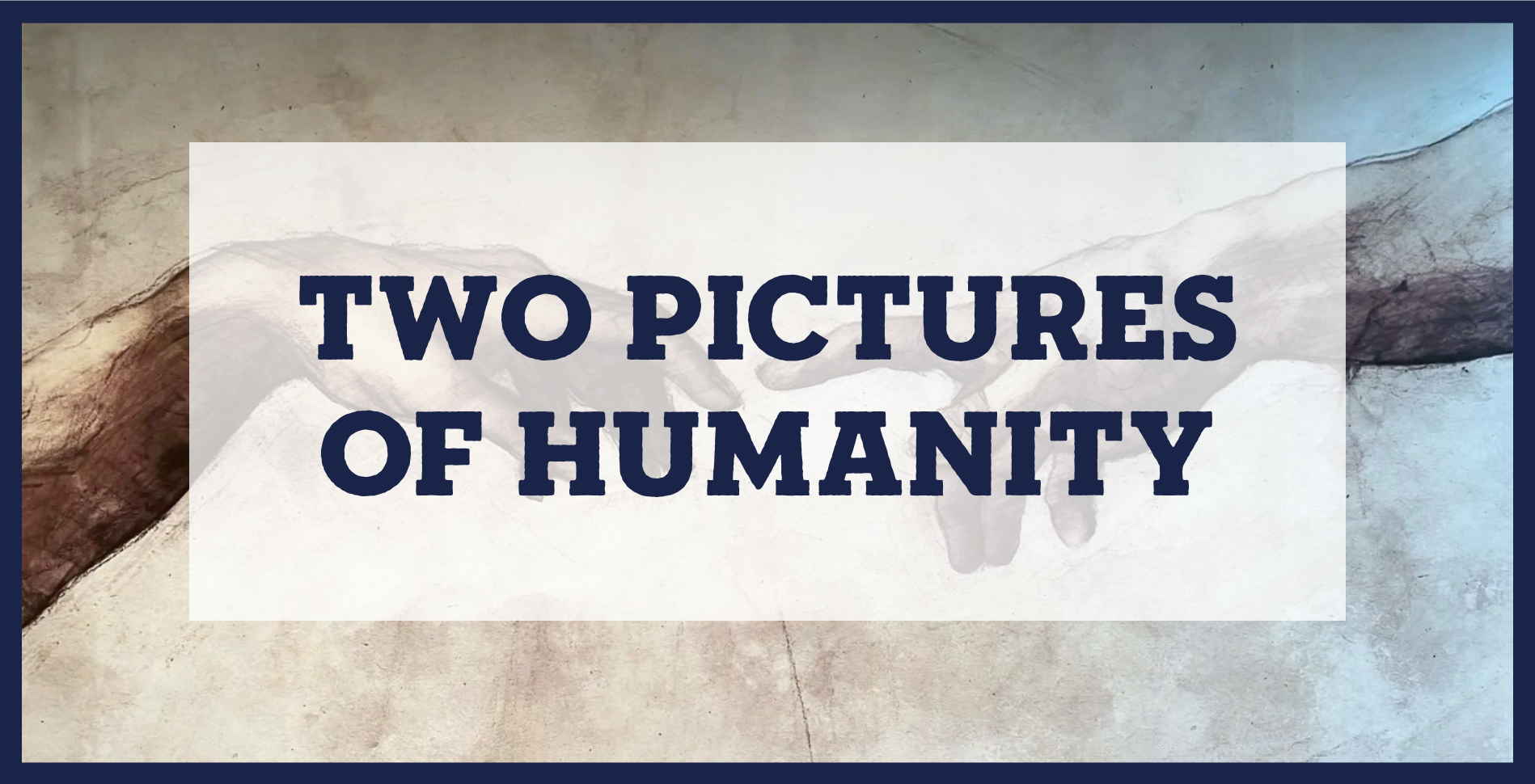
Two Pictures of Humanity

Creation Stories

It is commonly understood that the first two chapters of Genesis give us two creation accounts, but there is not much consensus as to how these two accounts are to be understood in relation to one another.

Some have suggested that these two accounts are from two different sources, presented side-by-side by a later editor, perhaps Moses or someone else. Of those who hold this view, some find the two accounts to be complementary, while others see them in great tension with one another. Others see the two accounts as coming from a single source and meshing seamlessly together, but with two different purposes: Genesis 1 takes the 30,000 foot view, providing a summary of the seven days and describing how God fashioned a good creation out of what was previously “formless and void”, while Genesis 2 zooms in, describing the creation of humanity in more detail.

I incline toward the latter view, though I don’t claim to know for certain. What I do feel confident about is that Genesis 1 and 2 give us two different perspectives on humanity that need to be held together in tension if we are to understand who we are.

In Genesis 1, humanity is presented as the pinnacle of God’s creation, formed on the sixth day. Male and female are “created in God’s image”, a theologically pregnant term that conveys great meaning. To be Imago Dei, means that we resemble our Father and that we are His representatives to rule over His creation in His name as He would have us to do. Creation is good, but when God reflects on humanity, He rates us as very good. What a glorious status we possess—God-imaging creatures.

But Genesis 2 tells us another aspect of the story, because humans are also…dirt. God forms the man out of the dust of the ground. This is actually where the name Adam comes from; he is formed from the ground (Hebrew: adamah). And what is it that humanity is called to do? If Genesis 1 gives us the lofty idea of ruling creation, in Genesis 2 it looks a lot more like…gardening. We are reminded of our earthy, creaturely nature, and it is fitting that, drawn from the dust of creation itself, we should be called to minister and serve in the context of that creation.[1]

In summary, we might say that Genesis 1 presents the grandeur of humanity, while Genesis 2 reminds us of our humility. If Genesis 1 raises us up to the heavens, Genesis 2 brings us back down to earth. This is the odd paradox of humanity—fashioned in the image of the Creator of the universe, but fashioned from dirt.

Genesis 1 presents the grandeur of humanity, while Genesis 2 reminds us of our humility. If Genesis 1 raises us up to the heavens, Genesis 2 brings us back down to earth. Share on X

Adam’s Story, Our Story, Christ’s Story

As we reflect on the nature of humanity, we can see this truth for ourselves, right? We catch glimpses of the glory of humanity—the capacity for extraordinary generosity or sacrifice, stunning creativity or beauty—but also of human frailty, failure, and folly. There are moments where we see marvelous things that other people accomplish, and we can feel immensely proud: “One of us did that!” But then there are other moments when we hang our heads in shame at the depths of human depravity.

In Prince Caspian, C.S. Lewis captures this seeming paradox in a conversation between Aslan and the young Caspian:[2]

“You come of the Lord Adam and the Lady Eve,” said Aslan. “And that is both honour enough to erect the head of the poorest beggar, and shame enough to bow the shoulders of the greatest emperor on earth. Be content.”

As the Narnia books so often do, this idea reflects biblical teaching. As the psalmist puts it in Psalm 84.4-6:

4 What is man that you are mindful of him,
and the son of man that you care for him?
5 Yet you have made him a little lower than the heavenly beings
and crowned him with glory and honor.
6 You have given him dominion over the works of your hands;
you have put all things under his feet…

Ultimately, this paradox, this tension baked into the creation narratives of Genesis 1-2, points ahead to and is fulfilled in Jesus Christ. This is made helpfully clear when the Hebrews writer takes the psalm quoted above and applies it directly to Jesus in Hebrews 2:

9 But we do see Jesus, who was made lower than the angels for a little while, now crowned with glory and honor because he suffered death, so that by the grace of God he might taste death for everyone.

Paul makes a similar point in Philippians 2.5-11, borrowing from what is believed by many to be an ancient Christian hymn:

5 Have this mind among yourselves, which is yours in Christ Jesus, 6 who, though he was in the form of God, did not count equality with God a thing to be grasped, 7 but emptied himself, by taking the form of a servant, being born in the likeness of men. 8 And being found in human form, he humbled himself by becoming obedient to the point of death, even death on a cross. 9 Therefore God has highly exalted him and bestowed on him the name that is above every name, 10 so that at the name of Jesus every knee should bow, in heaven and on earth and under the earth, 11 and every tongue confess that Jesus Christ is Lord, to the glory of God the Father.

Jesus perfectly images the Father, showing us exactly what it looks like to carry out our God-given vocation. But He does so as a lowly human, made of dust, subject to pain, fatigue, grief, and suffering.

Or, to use the words of Lewis once more: “The Son of God became a man to enable men to become sons of God.”[3]


In this loose series of Scripture Reflections, I am sharing brief thoughts spurred on by my Bible reading. By way of reminder, my goal for these brief posts is two-fold:

(1) To remark on aspects of the biblical text that I find to be of interest that the reader may or may not have thought about previously.

(2) When possible, to point to the work and person of Jesus Christ. I believe the Bible is a unified story that points to Jesus, which means that He is frequently alluded to or foreshadowed in some way throughout the biblical canon.


[1] Many scholars have pointed out that the “gardening” task of humanity is also a priestly task, and that Adam and Eve are given the job of ministering in the “Temple” of Eden. Indeed, the words translated “to work” (Hebrew: ‘abad) and “to keep” (Hebrew: shamar), are commonly used in religious contexts related to the ministerial work of priests and Levites. See Shara Drimalla and BibleProject Team, “Were Adam and Eve Priests in Eden?” BibleProject, April 12, 2021, https://bibleproject.com/articles/were-adam-and-eve-priests-eden/
[2] C.S. Lewis, Prince Caspian (New York: HarperTrophy, 1951), 233.

[3] C. S. Lewis, Mere Christianity (New York: HarperOne, 1952), 178.

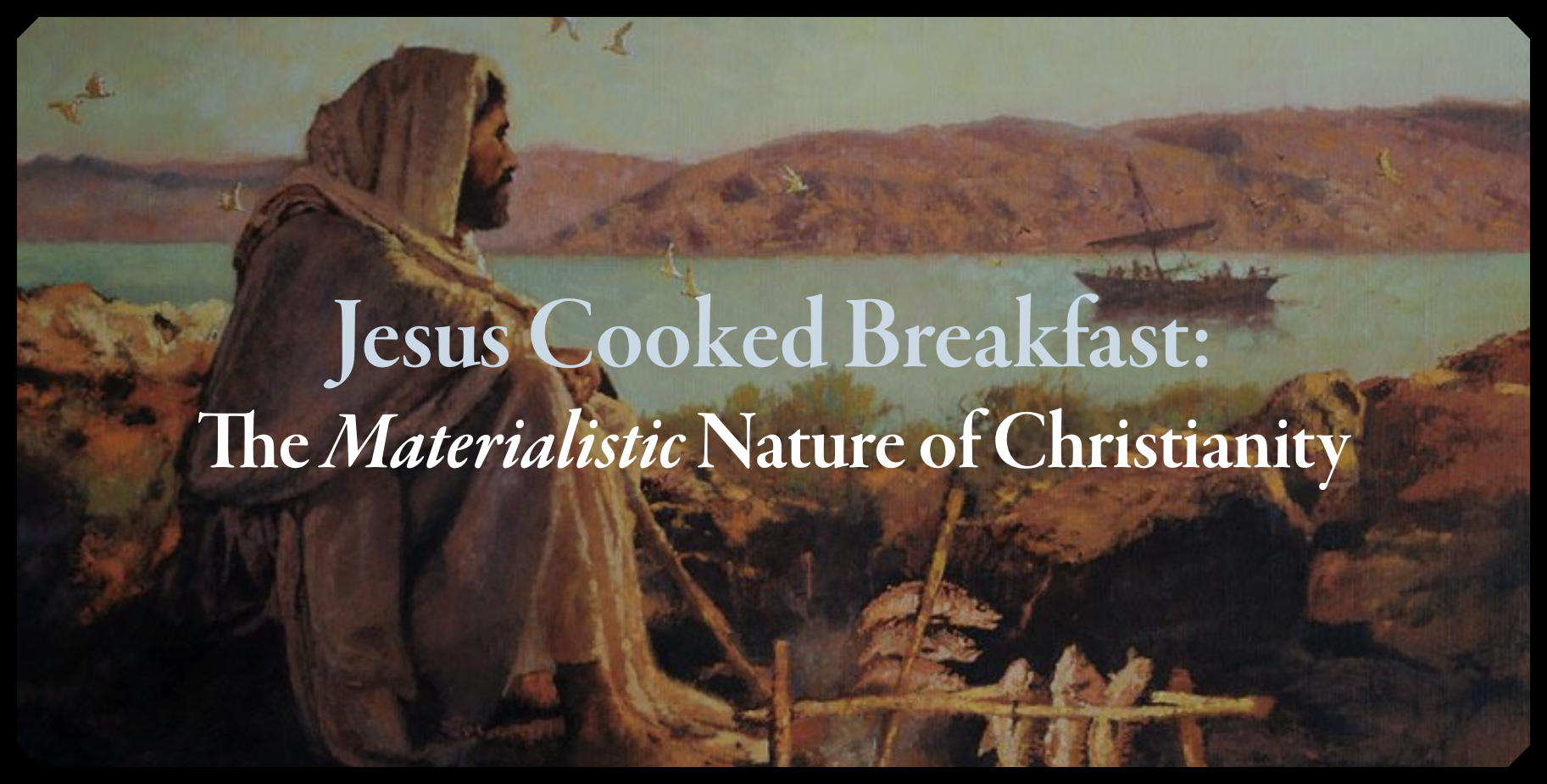
Jesus Cooked Breakfast: The Materialistic Nature of Christianity

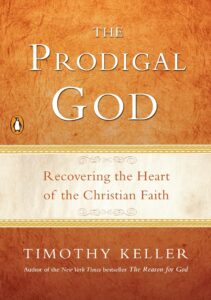
This is the third and final post in a short series based on a rereading of Tim Keller’s The Prodigal God. Although I liked the book well enough the first time, I found it to be particularly insightful the second time I read it; you can read the previous posts, “The Elder Brother We Need” and “Exiled from Home.”


Something that I have observed frequently in my life as a Christian is the elevation of “spiritual” things in a way that trivializes things that are material. This seemed normal and right to me for a long time, until I became a better student of theology and Christian history and realized that attempts to downplay “physical” and “material” things as unimportant are actually echoes of ancient Christian heresies like gnosticism or reflect influence from Greek platonism rather than being a genuine representation of the historic Christian faith, which emphasizes the goodness of creation and God’s intention to redeem it.

One of the things I loved about The Prodigal God was Keller’s section, “Salvation Is Material.”[1] In this section, he makes a brief but strong case for the material nature of Christianity. In fact, Keller claims that Christianity is perhaps the most materialistic of the world’s faiths. Here he does not mean materialism in the sense of being focused on wealth and possessions, but rather that the Christian faith values what is created and tangible.

Keller begins with the significance of meals in the Christian faith, and then traces God’s love for the material world through the biblical narrative (words in bold reflect my own emphasis):

A meal is a very physical experience. Jesus left a meal, the Lord’s Supper, to be remembered by, and the final goal of history is a meal, the wedding supper of the Lamb (Revelation 19). The resurrected Christ ate with his disciples when he met with them (Luke 24:42–43; John 21:9). What does it all mean? It is a sign that, for Jesus, this material world matters.

The book of Genesis tells us that when God made this world he looked upon the physical creation and called it “good.” He loves and cares for the material world. The fact of Jesus’s resurrection and the promise of a new heavens and new earth show clearly that he still cares for it. This world is not simply a theater for individual conversion narratives, to be discarded at the end when we all go to heaven. No, the ultimate purpose of Jesus is not only individual salvation and pardon for sins but also the renewal of this world, the end of disease, poverty, injustice, violence, suffering, and death. The climax of history is not a higher form of disembodied consciousness but a feast. God made the world with all its colors, tastes, lights, sounds, with all its life-forms living in interdependent systems. It is now marred, stained, and broken, and he will not rest until he has put it right.

Distinct from other world religions and philosophies, ministry of Jesus emphasized his care and concern for what happened to people in this material existence:

If the material world were only an allusion, as Eastern philosophy says, or only a temporary copy of the real, ideal world, as Plato says, then what happens in this world or in this life would be unimportant. All that would matter would be issues of soul or spirit. However, Jesus was not simply saved “in spirit” but was resurrected in body. God has made both soul and body and is going to redeem both soul and body. Everything about the ministry of Jesus demonstrated this fact. Jesus not only preached the world, but also healed the sick, fed the hungry, and cared for the needs of the poor.

In Matthew 25, Jesus describes Judgment Day. Many will stand there and call him “Lord,” but Jesus says, stunningly, that if they had not been serving the hungry, the refugee, the sick, and the prisoner, then they hadn’t been serving him (Matthew 25:34–40). This is no contradiction to what we have heard from Jesus in the Parable of the Prodigal Son. He is not saying that only the social workers get into heaven. Rather, he is saying that the inevitable sign that yo know you are a sinner saved by sheer, costly grace is a sensitive social conscience and a life poured out in deeds of service to the poor. Younger brothers are too selfish and elder brothers too self-righteous to care for the poor. 

I love what Keller says about the miracles of Jesus: rather than somehow overwhelming natural law and the way things are supposed to work, they were actually revelations of the way things are supposed to work—a restoration of the way God designed things from the beginning. And indeed, Jesus reveals a determination to deal with the broken aspects of life on earth, and his followers should have a similar determination:

Christianity, therefore, is perhaps the most materialistic of the world’s faiths. Jesus’s miracles were not so much violations of the natural order, but a restoration of the natural order. God did not create a world with blindness, leprosy, hunger, and death in it. Jesus’s miracles were signs that someday all these corruptions of his creation would be abolished. Christians therefore can talk of saving the soul and of building social systems that deliver safe streets and warm homes in the same sentence. With integrity.

Jesus hates suffering, injustice, evil, and death so much, he came and experienced it to defeat it and, someday, to wipe the world clean of it. Knowing all this, Christians cannot be passive about hunger, sickness, and injustice. Karl Marx and others have charged that religion is “the opiate of the masses.” That is, it is a sedative that makes people passive toward injustice, because there will be “pie in the sky bye and bye.” That may be true of some religions that teach people that this material world is unimportant or illusory. Christianity, however, teaches that God hates the suffering and oppression  of this material world so much, he was willing to get involved in it and to fight against it. Properly understood, Christianity is by no means the opiate of the people. It’s more like the smelling salts. 

The Christian faith, as revealed and embodied in Jesus of Nazareth, doesn’t pretend that suffering doesn’t matter or that it doesn’t exist. Rather, it helps wake us up to the reality of the brokenness of the world in which we live, and stirs us to action as representatives of a different sort of world where evil will be defeated and suffering will be no more.[2]

Tim Keller: Properly understood, Christianity is by no means the opiate of the people. It’s more like the smelling salts. Share on X

[1] The quoted portions are from Timothy Keller, The Prodigal God: Recovering the Heart of the Christian Faith (New York: Dutton, 2008), 110-13.

[2] In The Silver Chair in the Chronicles of Narnia, Puddleglum sticks his foot into the fire, and the suffering he experiences breaks the enchantment of evil that has overshadowed he and his companions. I believe C.S. Lewis was making a similar point to Keller, that suffering through a Christian lens “wakes us up” to the reality of the brokenness of our world.

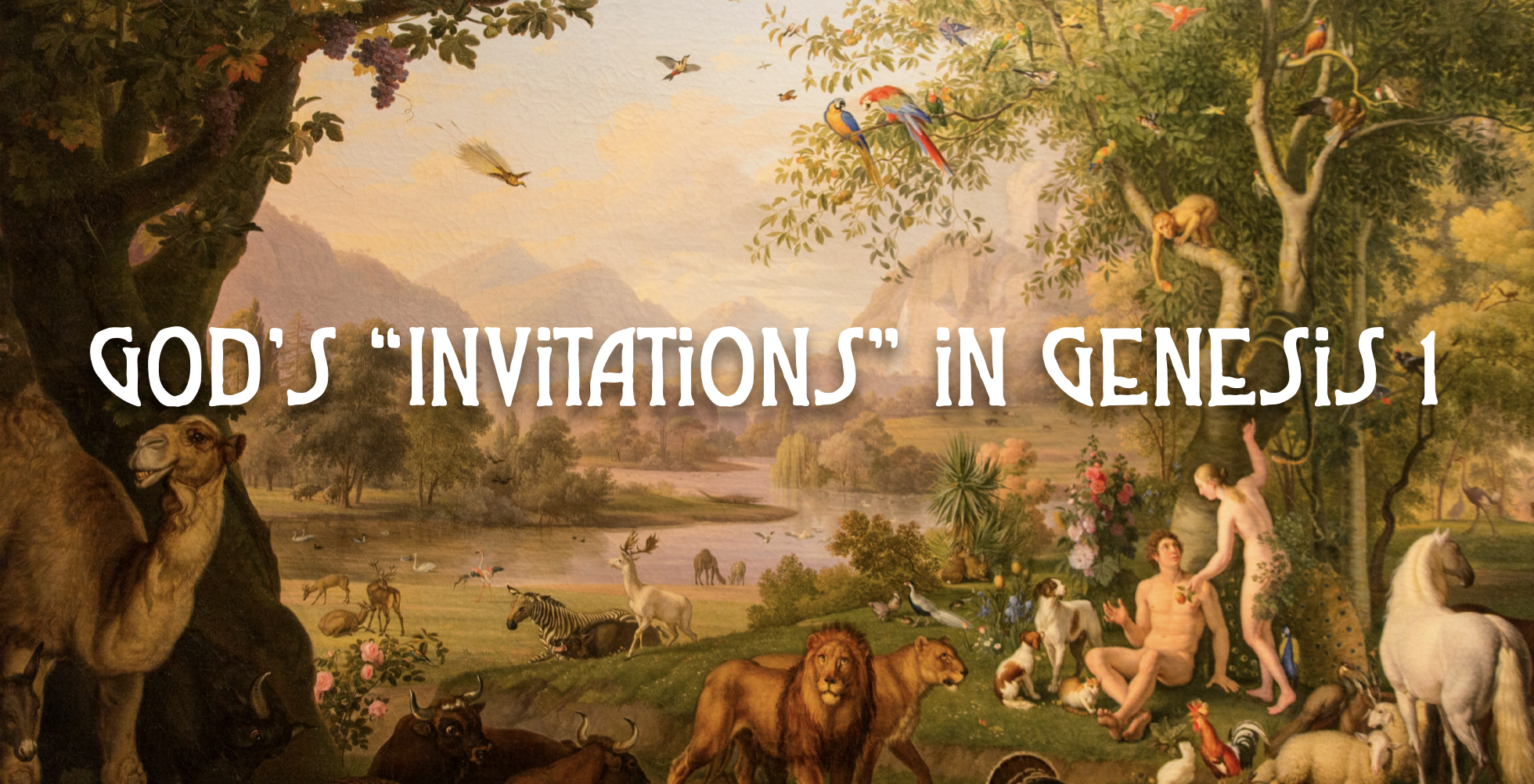
Scripture Reflections: God’s “Invitations” in Genesis 1

This year as part of my daily Bible reading I am doing some journaling and notetaking, and I thought it might be a useful discipline to share some of my reflections here on The Doc File. I use the word discipline because this is a habit I would like to cultivate that I hope will be beneficial for myself and readers alike (I did something similar several years ago but fizzled out after a few posts).

So, my goal for these brief posts will be two-fold:

(1) To remark on aspects of the biblical text that I find to be of interest that the reader may or may not have thought about previously.

(2) When possible, to point ahead to the work and person of Jesus Christ. I believe the Bible is a unified story that points to Jesus, which means that He is frequently alluded to or foreshadowed in some way throughout the biblical canon.


One of the things I love about reading Scripture is how you can notice something in a very familiar text that you had never noticed previously. Genesis 1 is one such text: I have no idea how many hundreds of times I have read it in my life, but its depths seem to be endless, constantly offering up new discoveries. This time, as I was reading through, I was struck by the rhythmic quality of the text: over and over again, God speaks, “Let there be” (light, an expanse, the sprouting of vegetation, etc), and over and over again, we have the repeated narrative comment, “And it was so.”

It is as if God is inviting creation to take place and unanimously, automatically, creation responds to the invitation of the Creator: God speaks, and it is so.

On the sixth day, God speaks into existence the pinnacle of creation: humanity, created in God’s own image. As image-bearers, humans are given a divine vocation: to rule over creation (under God’s authority), to fill the earth, master it, till and tend the garden of Eden, and give names to the animals (Genesis 1.26, 28; 2.15, 20).

Such creatures obviously possess enormous potential for cooperation in God’s good plans, but ironically, it is in this pinnacle of creation where we see a break in the pattern of the unanimous, automatic response to God’s invitation of how things are supposed to work. As we see in Genesis 3, rather than accepting God’s invitation to rule under His authority, Adam and Eve fail to reflect the divine image and seek to establish their own autonomy and authority instead. They eat of the forbidden fruit with disastrous consequences.

This has remarkable implications. That God allows His image-bearers to ignore His invitations of co-rule shows how He honors humanity with freedom. Far from an automatic response where God reveals His will and humans unanimously and immediately respond in accordance with that will, God invites us to reflect His wisdom and authority but does not force it upon us. He does all that can be done to bring us around to His side, but He allows us to pave the path to our own destruction. He is grieved by our poor choices, but He honors us too much to prevent them.

What a marvel to be given such ability with such freedom, such potential for good or evil!

As C.S. Lewis says in Prince Caspian:

“You come of the Lord Adam and the Lady Eve,” said Aslan. “And that is both honour enough to erect the head of the poorest beggar, and shame enough to bow the shoulders of the greatest emperor on earth. Be content.”

Or, in the words of George MacDonald:

“However bad I may be, I am the child of God, and therein lies my blame. Ah, I would not lose my blame! In my blame lies my hope.”

What humanity desperately needs is an exemplar, someone who will harness the dangerous gift of freedom, submit to the wisdom and authority of God, and in so doing, perfectly reflect the divine image.

Of course, we have such a Someone; His name is Jesus.

Creation and New Creation: Connections Between Genesis and Revelation

Introduction: The Bible as Literature

I recently preached a sermon in which I was discussing literary techniques that we see in Scripture. Sometimes people read the Bible in a flat, wooden sort of way, almost like they were reading a police report or something similar, where all you have is a list of facts and no sort of interpretation.

I think that is unfortunate, because the Bible is really a library of books all telling the same grand Story, and within that library, there are various types or genres of literature, and different genres of literature need to be read in certain ways if we are to understand and apply them faithfully. Much could be written both about different types of literature that we see in the Bible—wisdom literature, history, ancient biography, prophecy, poetry, apocalypse, epistles, etc.—and also different types of literary devices that biblical authors used to tell their stories in more powerful ways.*

Examining either of those in detail is beyond the scope of this post, but one literary technique that I do want to focus on here is what I call echoing, or the frequent practice of the authors of Scripture to refer back to an earlier event in the Bible by repeating certain language, or telling stories in similar ways, or comparing certain characters.


Creation and New Creation

One powerful example of echoing can be seen in a comparison between Genesis 1-3, which talks the Creation of the heavens and the earth, and Revelation 21-22, which talks about the New Creation of the New Heavens and New Earth. I shared this particular example in the sermon that I mentioned above, and considering the feedback I got from people who had never noticed these strong connections before, I thought it would be worth sharing here.

Simply put, in the description of the New Heavens and New Earth in Revelation 21-22, over and over again you have echoes of what occurred in the creation of the heavens and earth  Genesis 1-3:

  • In Genesis 1.4, there is a division of light and darkness; in Revelation 21.25, there is no night.
  • In Genesis 1.10, there is a division of land and sea; in Revelation 21.1, there is no more sea.
  • In Genesis 1.16, the rule of the sun and moon is described; in Revelation 21.23, we learn that there is no need for the sun or moon.
  • In Genesis 2.10, we are told about a river flowing out of the Garden of Eden; in Revelation 22.1, we are told about a river flowing from God’s throne.
  • Genesis 2.9 describes the Tree of Life in the midst of the garden; Revelation 22.2 describes the Tree of Life throughout the city.
  • Genesis 2.12 tells us that God and precious stones are in the land; Revelation 21.19 tells us that gold and precious stones are throughout.
  • God walks in the garden, among His creation as described in Genesis 3.8; Revelation 21.3 states that God’s dwelling will be with His people.
  • Following Adam and Eve’s sin, Genesis 3.17 states that the ground itself will be cursed; in the New Creation, there will be no more curse (Revelation 22.3).
  • As a result of sin and the curse, life in creation is characterized by pain and sorrow (Genesis 3.17-19); in the new creation, there will be no more sorrow, pain, or tears (Revelation 21.1-4).
  • Additionally, the sin results in death, described as a returning to the dust (Genesis 3.19); in the New Heavens and New Earth, there is no more death (Revelation 21.4).
  • Adam and Eve are banished from the garden, and cherubim guard the entrance to it (Genesis 3.24); angels actively invite into the city in Revelation 21.9.

There are actually many more points of comparison that could be made, but I think these are sufficient to prove the point: in Revelation, John is clearly describing the eternity that God’s people will spend with Him in the New Heavens and New Earth in language that echoes back to the story of creation and fall in Genesis 1-3.

In making these connections between Revelation and Genesis, John is making a significant and profound theological point: the creation that God created good but that was tainted by sin, He is going to redeem, recreate, and perfect!


*When I discuss Scripture as literature or as story, I am not suggesting that these characteristics somehow diminish its truth. I believe the Bible relates the truest Story of all, but it is still told as story, and employs a variety of literary techniques in the telling of it.

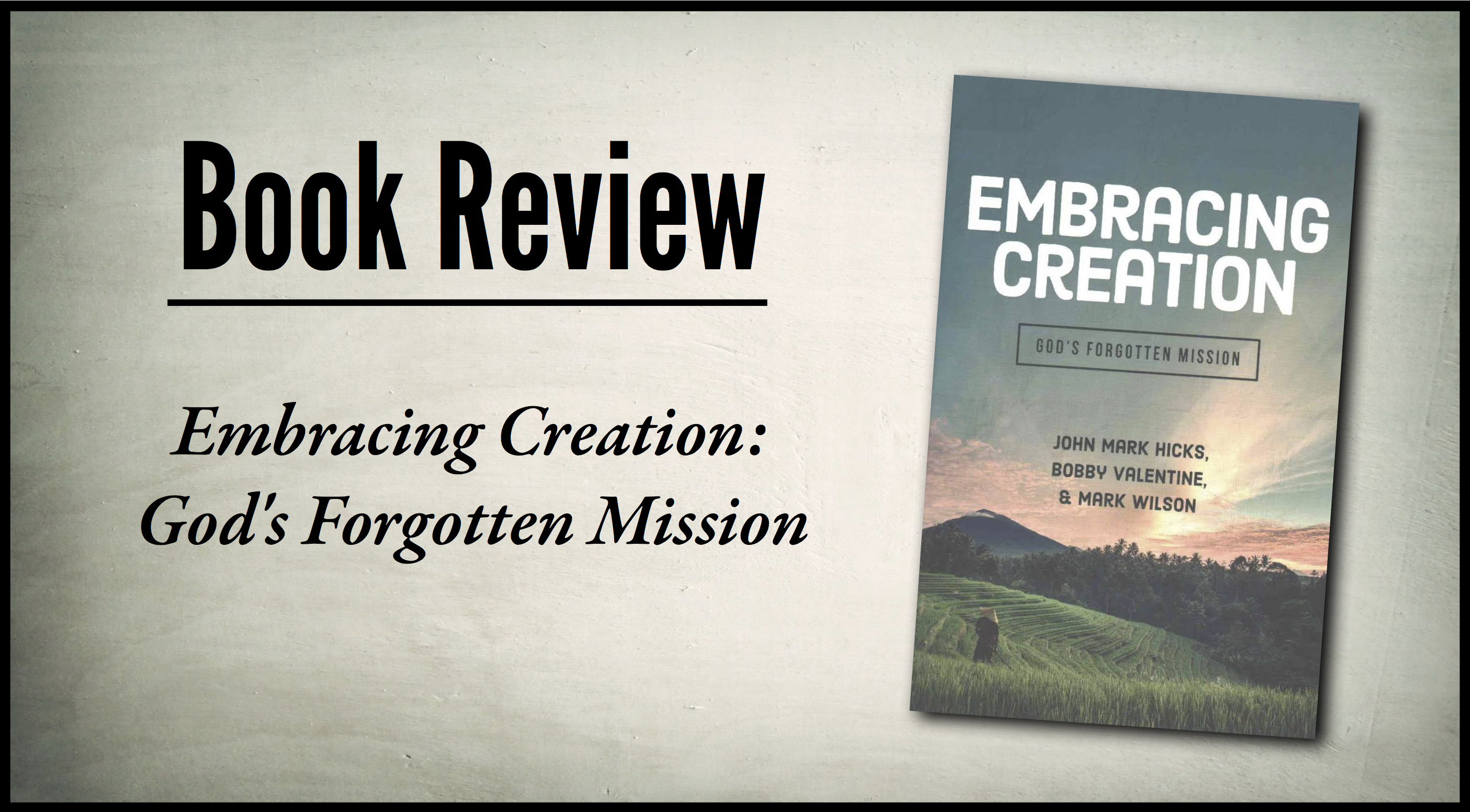
Book Review: Embracing Creation

At the end of December, I finished one of the better books I read in 2016: Embracing Creation: God’s Forgotten Mission, by John Mark Hicks, Bobby Valentine, and Mark Wilson. Dr. Hicks is a former professor of mine, and I “know” Bobby through social media. Both men have written much that has challenged me, and I have been blessed by their thoughts on the Stone-Campbell Restoration Movement (Hicks and Valentine), suffering and the problem of evil (Hicks), and the “Jewishness” of Christianity (Valentine). I had not previously read anything by Wilson.

I will go ahead and jump to my overall conclusion and recommendation: this is an important book, deserving of a wide readership (especially within Churches of Christ, which is the primary intended audience). Although Embracing Creation is more complex than I am indicating here, it largely comes down to two significant arguments, which are both based on the biblical reality that God cares deeply about what He has created.

First, humans are to reflect God’s care and concern for creation, and should practice thoughtful stewardship of our planet. Truly, this should not be a controversial claim, but because conversations surrounding care for the environment are frequently hijacked for political purposes, it often is made out to be controversial. Embracing Creation does not argue for a godless environmentalism that holds up nature as something to be worshipped; it does encourage a deep, biblical care for a creation that God calls good, but has been too often treated as expendable and unimportant by humans.

Second, God does not intend that His creation be destroyed, but will redeem and recreate it, and will dwell with creation in the New Heavens and New Earth. This will also be a controversial claim for many, but again, it need not be.* Hicks, Valentine, and Wilson argue (and effectively, in my opinion) that the notion of an annihilated and completely destroyed earth and an eternal existence for God’s saints in an other-worldly heaven is actually a fairly modern notion, and does not reflect the biblical text, the belief of the early church, or the beliefs of pioneers in the Stone-Campbell Restoration Movement. Instead, these witnesses all point to a redeemed earth, which will be refined and recreated in a way that is analogous to our own resurrection bodies, and will serve as the location of our joyous eternal existence with God. Three texts which are generally brought up to refute this perspective—John 14.2-3, 2 Peter 3.6-7,13; 1 Thessalonians 4.16-17—are all addressed (and quite adequately, I thought).

Here are some of my favorite quotations from the book:

Creation does not belong to human beings. It belongs to God, and it is the Messiah’s inheritance. We are only stewards and junior partners, though we are coheirs with Christ. (16)

Too often we hear “dominion” in tyrannical, oppressive, militaristic, or manipulative ways, but this is not how God rules. As images of God, we rule in the likeness of God. (39)

Above all, Psalm 104 reveals an astounding truth: creation, animate and inanimate, is the object of divine love. If God, like an artist, dotes so tenderly over it, then should not those created in God’s image reflect the same divine delight, love, and care for creation? (53)

The resurrection of Jesus, then, is the pledge of a future harvest, a preview of coming attractions. It is God’s answer to creation’s lament. (91)

Though chaos remains in the old creation, chaos will disappear in the new. (130)

God’s promise is “See, I am making all things new” (Rev. 21:5). The text does not say that God will make new things. Rather, God will make all things new. This is restoration, healing, and renewal. (131)

Creation is intrinsically good, and this goodness is not based on its utility for humans. (139)

On one level, it does not matter if “global warming” is real or imagined, caused by nature or humans. Caring for God’s good world is a matter of obedience and discipleship…If the Father is mindful of the death of even a single sparrow (Matt. 10:29), then we, who reflect the divine image, will care as well. (140)

Scripture never says heaven, separated from the earth, is the eternal destiny of the redeemed. Forecasting a doomed earth and an eternal celestial abode can result in an escapist outlook that hunkers down until we “fly away,” diminishing support for creation stewardship. (166)

Before closing, there were a couple areas of the book which I thought were weaknesses. First, I think Embracing Creation is a very challenging read for the average Christian. I have spent years (and years!) in grad school reading books on Scripture, theology, and ministry on a regular basis, and felt right at home with this work, but I found myself wondering how well I would have followed it if I had read it as a young minister before I had any sort of seminary training. Now, the exact intended audience of the book is never stated directly (that I can remember), but because I feel the two main points described above are so important and so often neglected, I wish the book would have been written at a somewhat simpler level to make it more accessible.

Second, there is an intriguing chapter at the end of the book entitled, “God’s Restoration Movement: Revisioning the Restoration Plea.” This chapter will be of special interest for readers from Churches of Christ (or other branches of the Stone-Campbell Restoration Movement), and basically argues that we should view the concept of Restoration not as a return to the practice and beliefs of the first century church (i.e., a look back to restore the church), but rather, a working towards the time when God will come and redeem all of creation (i.e., a look ahead to restore the entire cosmos). This is a thought-provoking proposal, but ultimately, I think it presents an either/or dichotomy which is not necessary: can we not be a people who seek to follow the basic design, practice, and spirit of the early church while also eagerly anticipating and working toward the day when God will make all things new? Interestingly, throughout Embracing Creation, early Restoration pioneers such as Alexander Campbell, Walter Scott, and David Lipscomb are quoted as men who understood God’s plan of Restoration for all creation, and yet they still held to the idea of Restoration as we have typically conceived and discussed it. Can we not do the same?

With these gentle critiques in mind, the fact remains that Embracing Creation is a compelling and important book. It is a book that not everyone will agree with, but perhaps for that reason alone, it should be read by many people. And as I described above, I think its two main points are scripturally spot-on, and their understanding is greatly needed in the church today.


*Some will hear this and associate it with some version of Premillennialism or Jehovah’s Witness eschatology. What Embracing Creation proposes has nothing to do with either.

« Older posts

© 2026 The Doc File

Theme by Anders Noren — Up ↑