
Rereading books is such an interesting enterprise for me. Multiple times, I have been surprised at how much more I appreciate a book the second time I read it, and that is certainly the case with Timothy Keller’s The Prodigal God. I first read this book over 15 years ago when I was still a new minister, and back then, I thought it had some good things to say but wasn’t overly impressed. I reread it earlier this year, and several things have changed significantly since I first read it, including that I am now a father, I have been in the trenches of ministry for nearly two decades, I have developed a deep appreciation for the ministry and wisdom of Tim Keller, and I have developed a keen awareness of my own sinfulness. Taken together, this means that The Prodigal God struck me differently the second time through—I loved it.
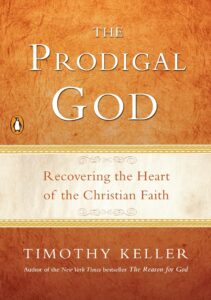
In The Prodigal God, Keller uses Jesus’s famous parable of the Prodigal Son as a lens to examine the heart of the Christian gospel. It is a short book—less than 150 pages—and can easily be read in a few hours, but it is packed with wisdom and insight. I’d like to write a few short posts to focus on some of the ideas that struck me most.
In popular tellings of the Prodigal Son, much of the attention is given to the younger son, who demands his share of his father’s inheritance, moves off to a far country, squanders everything he has, and then returns home to his father when he is destitute. When he returns, his father welcomes him back and throws a party for him, and this element of the story emphasizes key aspects of the gospel story—our sinfulness and lack of gratitude, and the love, generosity, mercy, and forgiveness of God.
All of this is important, but of course, in Jesus’s telling of the story, there are two sons, and they are both important if we are to understand the nature of humanity and the truth of the gospel. There is also an elder brother who stays at home dutifully working for his father, and who is embittered when his younger brother returns and is celebrated by his dad. If the younger brother represents the “tax collectors and sinners” that Jesus spent so much time with, the elder brother represents the Pharisees and religious leaders who were dutiful but hard-hearted and misunderstood the nature of God.
From Keller:
By putting a flawed elder brother in the story, Jesus is inviting us to imagine and yearn for a true one.
And we have him. Think of the kind of brother we need. We need one who does not just go to the next country to find us but who will come all the way from heaven to earth. We need one who is willing to pay not just a finite amount of money, but, at the infinite cost of his own life to bring us into God’s family, for our debt is so much greater. Either as elder brothers or as younger brothers we have rebelled against the father. We deserve alienation, isolation, and rejection. The point of the parable is that forgiveness always involves a price—someone has to pay. There was no way for the younger brother to return to the family uniless the older brother bore the cost himself. Our true elder brother paid our debt, on the cross, in our place.
There Jesus was stripped naked of his robe and dignity so that we could be clothed with a dignity and standing we don’t deserve. On the cross Jesus was treated as an outcast so that we could be brought into God’s family freely by grace. There Jesus drank the cup of eternal justice so that we might have the cup of the Father’s joy. There was no other way for the heavenly Father to bring us in, except at the expense of our true elder brother.[1]
Jesus is the elder brother we so desperately need: He goes to great lengths to pursue us, assumes our debt Himself, and celebrates our return.
[1] Timothy Keller, The Prodigal God: Recovering the Heart of the Christian Faith (New York: Dutton, 2008), 84-85.
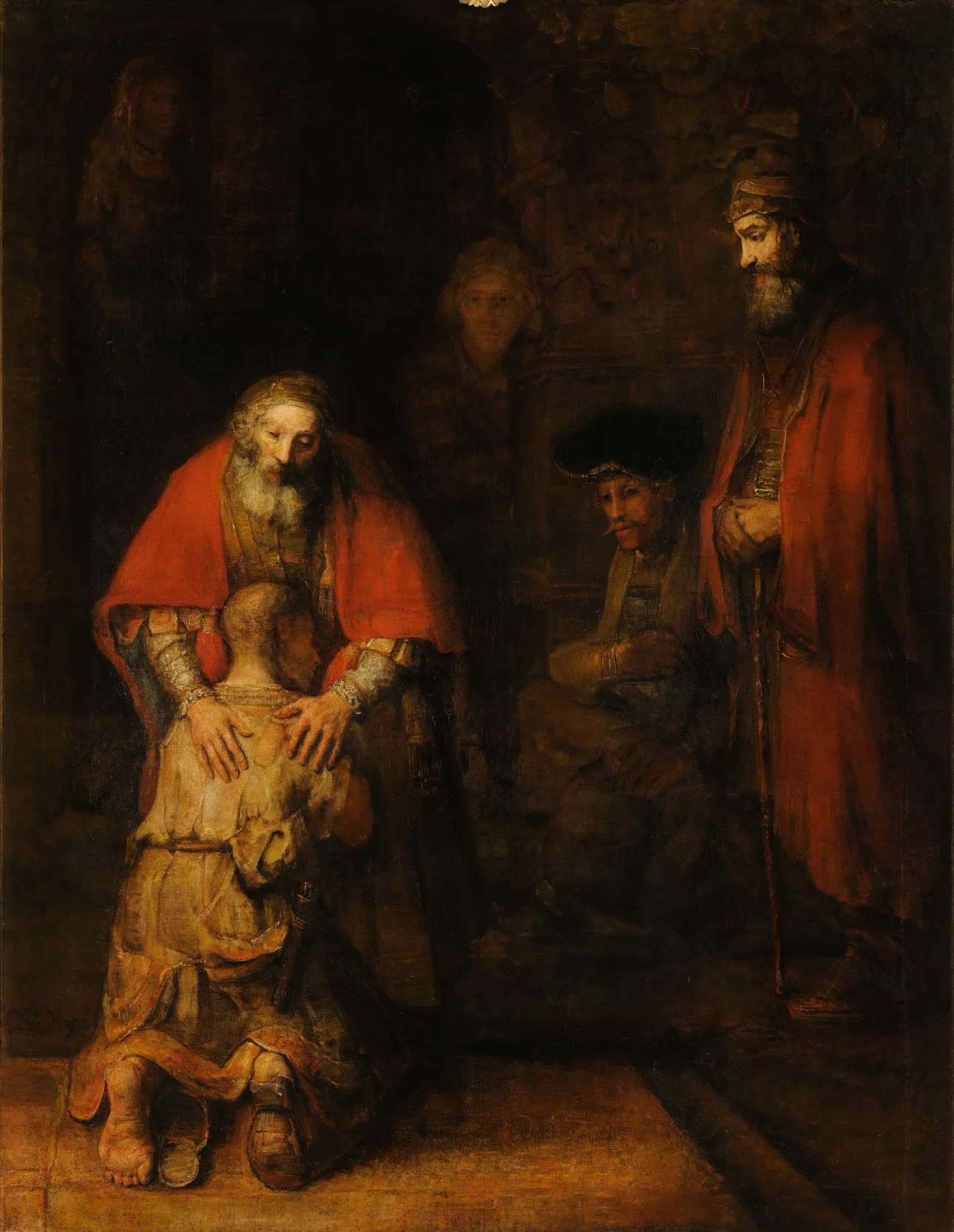
The image above is from Rembrandt’s 1669 masterpiece, “The Return of the Prodigal Son.” The elder brother stands on the right, literally and figuratively looking down on his younger brother.








I’ve always admired his writing, Keller has a way of gently pushing me beyond the confines of my own small perspectives. Who would have thought to take the perspective of being the perfect older brother and absorbing the cost, brilliant.
When it comes to the story of the Prodigal Son, I’ll admit I’m far more comfortable reflecting on the younger brother. His failures and return, though profound, don’t unsettle me quite so much. I don’t wrestle with his issues “too” much, don’t we always want to focus on the sins that don’t entangle us personally?
But the elder brother? That hits a little too close to home. His struggle, feeling spiritually superior, harboring resentment toward those less ‘dedicated,’ or even envying the one who comes to God in complete humility, that’s a mirror I’d rather not look into. As a preacher, those are not the sermons I find easy to preach. And judging by the many dozens of sermons I’ve heard on Luke 15, I don’t think I’m alone. It seems most of us would rather leave the elder brother standing in the shadows, unexamined.
I always enjoy your words, keep writing.
Keith,
I agree with all that you said here, both about Keller and the comfortable and uncomfortable parts of this parable. The elder brother is deeply unsettling, and something I wrestle with a lot when I am tempted toward smug self-righteousness (which happens more than I would like to admit).