This is the second in a short series of posts based on a rereading of Tim Keller’s The Prodigal God. As I mentioned in the first post, although I liked the book the first time I read it, I suspect that I wasn’t quite at the place in life to fully appreciate it and I enjoyed it much more the second time around.
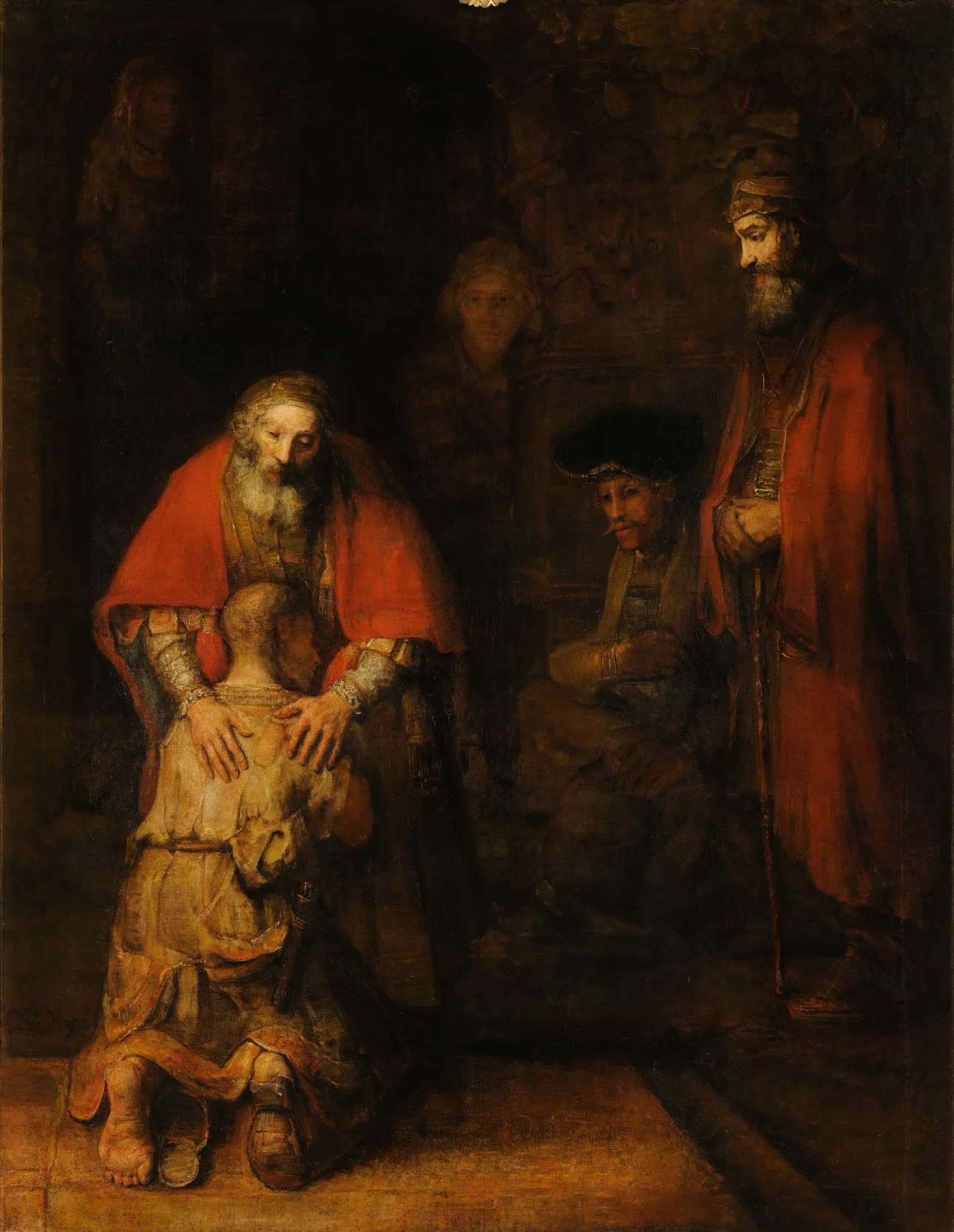
In The Prodigal God, Keller describes how all of us can identify with the younger brother. This doesn’t mean that we have dramatic departures from home, characterized by reckless, sinful living in the far country. Indeed, I personally don’t identify with this aspect of the younger son; it has always been the elder brother that strikes a little too close to home for me.
But there is another sense that we are like the younger brother: we feel like we are away from home, and there is a yearning that nothing quite seems to meet. Indeed, this element of being exiled from home is a key feature of the biblical narrative:[1]
We are all exiles, always longing for home. We are always traveling, never arriving. The houses and families we actually inhabit are only inns along the way, but they aren’t home. Home continues to evade us.
Why would “home” be so powerful and yet so elusive for us? The answer can be found as we examine one of the most pervasive themes of the Bible. The experience we have been describing is the trace in our souls of this larger story.
In the beginning of the book of Genesis we learn the reason why all people feel like exiles, like we aren’t really home. We are told there that we were created to live in the garden of God. That was the world we were built for, a place in which there was no parting from love, no decay or disease. It was all these things because it was life before the face of God, in his presence. There we were to adore and serve his infinite majesty, and to know, enjoy, and reflect his infinite beauty. That was our original home, the true country we were made for.
However, the Bible teaches that, as in Jesus’s parable, God was the “father” of that home and we chafed under his authority. We wanted to live without God’s interference, and so we turned away, became alienated from him, and lost our home for the same reason the younger brother lost his. The result was exile.
So, this is another element of tragedy that comes from the story of rebellion and fall in the Garden of Eden. In addition to the devastating effects of sin, the feeling of being exiled from home becomes a defining characteristic of our lives. Like the younger son, we rebel against our father, and like the younger son, we suffer from homelessness as a result.
The Bible says that we have been wandering as spiritual exiles ever since. That is, we have been living in a world that no longer fits our deepest longings. Though we long for bodies that “run and are not weary,” we have become subject to diseases, aging, and death. Though we need love that lasts, all our relationships are subject to the inevitable entropy of time, and they crumble in our hands. Even people who stay true to us die and leave us, or we die and leave them. Though we long to make a difference in the world through our work, we experience endless frustration. We never fully realize our hopes and dreams. We may work hard to re-create the home that we have lost, but, says the Bible, it only exists in the presence of the heavenly father from which we have fled.
Here, Keller comes to the crux of our existential crisis: we have been living in a world that no longer fits our deepest longings. Keller mentions three aspects of this:
- The physical decay of our bodies, ultimately resulting in death
- The disintegration of our valued relationships
- The ultimate futility of our desire to leave a legacy or make a difference in the world
This is straight out of the book of Ecclesiastes: the hebel or vanity of life.
This is an element of The Prodigal of God that resonates much more deeply as I read this now than when I was in my mid-20s. I am aware of the physical decay of my body and the overall fragility of life. I am not as fast as I used to be, I have to work harder to be strong, I get injured more easily, and it takes longer to recover. I am too keenly aware of people whose lives are snuffed out at a young age through accident, illness, or tragedy, and I have witnessed more and more people that I care about pass away.
In my mid-20s, my friendships seemed so healthy and even “old friendships” seemed very recent, but since then I have seen how they are “subject to the inevitable entropy of time.” I have witnessed the dissolution of the marriages of couples that I have loved, and the ending of many of my friendships—sometimes abruptly through events I don’t even understand, sometimes through a change in lifestyle and values, and sometimes just the slow fade caused by geographical distance. And, as Keller points out, even the very best and most faithful relationships end in death (theirs or ours).
In my mid-20s, it seemed like my whole life was ahead of me, and I had plenty of time to make my mark on the world (whatever that would look like). Now, I am days away from my 42nd birthday, decidedly middle-aged, and keenly aware that I am not going to find lasting significance in my work or accomplishments and that I will be forgotten shortly after I die (echoes of Ecclesiastes again). I am incapable of accomplishing everything I want to, regardless of how hard I work.
And these are universal feelings:
This theme is played out again and again in the Bible. After Adam and Eve’s exile from the ultimate home, their son Cain was forced to restlessly wander the earth because he murdered his brother Abel. Later Jacob cheated his father and brother and fled into exile for years. After that, Jacob’s son Joseph and his family were taken from their homeland into Egypt because of a famine. There the Israelites were enslaved until, under Moses, they returned to their ancestral home. Centuries after this, David, before he became king, lived as a hunted fugitive. Finally the whole nation of Israel was exiled again, taken captive to Babylon by King Nebuchadnezzar.
It is no coincidence that story after story contains the pattern of exile. The message of the Bible is that the human race is a band of exiles trying to come home. The parable of the prodigal son is about every one of us.
Now, all of this sounds depressing, but none of this should drive us to despair. It should, however, help us “come to our senses” (Luke 15.17), realize how good things are with our Father, and come home to Him!
Or, in the words of C.S. Lewis: “If we find ourselves with a desire that nothing in this world can satisfy, the most probable explanation is that we were made for another world.”[2] These longings that we have are not inappropriate or outrageous, but we will not find them here.
So, the Christian is like the prodigal son: there is an uneasy realization that we are exiles far from home, and we are trying to get home to our Father (and the Elder Brother that we need). And one glorious day, we will be exiled no longer.
[1] The quoted portions are from Timothy Keller, The Prodigal God: Recovering the Heart of the Christian Faith (New York: Dutton, 2008), 95-98.
[2] C.S. Lewis, Mere Christianity (San Francisco: HarperOne, 2001), 136-37.