The online journal of Luke Dockery

Tag: Exile

Exiled from Home

This is the second in a short series of posts based on a rereading of Tim Keller’s The Prodigal God. As I mentioned in the first post, although I liked the book the first time I read it, I suspect that I wasn’t quite at the place in life to fully appreciate it and I enjoyed it much more the second time around.
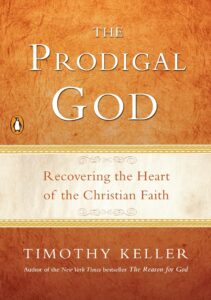


In The Prodigal God, Keller describes how all of us can identify with the younger brother. This doesn’t mean that we have dramatic departures from home, characterized by reckless, sinful living in the far country. Indeed, I personally don’t identify with this aspect of the younger son; it has always been the elder brother that strikes a little too close to home for me.

But there is another sense that we are like the younger brother: we feel like we are away from home, and there is a yearning that nothing quite seems to meet. Indeed, this element of being exiled from home is a key feature of the biblical narrative:[1]

We are all exiles, always longing for home. We are always traveling, never arriving. The houses and families we actually inhabit are only inns along the way, but they aren’t home. Home continues to evade us.

Why would “home” be so powerful and yet so elusive for us? The answer can be found as we examine one of the most pervasive themes of the Bible. The experience we have been describing is the trace in our souls of this larger story.

In the beginning of the book of Genesis we learn the reason why all people feel like exiles, like we aren’t really home. We are told there that we were created to live in the garden of God. That was the world we were built for, a place in which there was no parting from love, no decay or disease. It was all these things because it was life before the face of God, in his presence. There we were to adore and serve his infinite majesty, and to know, enjoy, and reflect his infinite beauty. That was our original home, the true country we were made for.

However, the Bible teaches that, as in Jesus’s parable, God was the “father” of that home and we chafed under his authority. We wanted to live without God’s interference, and so we turned away, became alienated from him, and lost our home for the same reason the younger brother lost his. The result was exile.

So, this is another element of tragedy that comes from the story of rebellion and fall in the Garden of Eden. In addition to the devastating effects of sin, the feeling of being exiled from home becomes a defining characteristic of our lives. Like the younger son, we rebel against our father, and like the younger son, we suffer from homelessness as a result.

The Bible says that we have been wandering as spiritual exiles ever since. That is, we have been living in a world that no longer fits our deepest longings. Though we long for bodies that “run and are not weary,” we have become subject to diseases, aging, and death. Though we need love that lasts, all our relationships are subject to the inevitable entropy of time, and they crumble in our hands. Even people who stay true to us die and leave us, or we die and leave them. Though we long to make a difference in the world through our work, we experience endless frustration. We never fully realize our hopes and dreams. We may work hard to re-create the home that we have lost, but, says the Bible, it only exists in the presence of the heavenly father from which we have fled.

Here, Keller comes to the crux of our existential crisis: we have been living in a world that no longer fits our deepest longings. Keller mentions three aspects of this:

  1. The physical decay of our bodies, ultimately resulting in death
  2. The disintegration of our valued relationships
  3. The ultimate futility of our desire to leave a legacy or make a difference in the world

This is straight out of the book of Ecclesiastes: the hebel or vanity of life.

This is an element of The Prodigal of God that resonates much more deeply as I read this now than when I was in my mid-20s. I am aware of the physical decay of my body and the overall fragility of life. I am not as fast as I used to be, I have to work harder to be strong, I get injured more easily, and it takes longer to recover. I am too keenly aware of people whose lives are snuffed out at a young age through accident, illness, or tragedy, and I have witnessed more and more people that I care about pass away.

In my mid-20s, my friendships seemed so healthy and even “old friendships” seemed very recent, but since then I have seen how they are “subject to the inevitable entropy of time.” I have witnessed the dissolution of the marriages of couples that I have loved, and the ending of many of my friendships—sometimes abruptly through events I don’t even understand, sometimes through a change in lifestyle and values, and sometimes just the slow fade caused by geographical distance. And, as Keller points out, even the very best and most faithful relationships end in death (theirs or ours).

In my mid-20s, it seemed like my whole life was ahead of me, and I had plenty of time to make my mark on the world (whatever that would look like). Now, I am days away from my 42nd birthday, decidedly middle-aged, and keenly aware that I am not going to find lasting significance in my work or accomplishments and that I will be forgotten shortly after I die (echoes of Ecclesiastes again). I am incapable of accomplishing everything I want to, regardless of how hard I work.

And these are universal feelings: 

This theme is played out again and again in the Bible. After Adam and Eve’s exile from the ultimate home, their son Cain was forced to restlessly wander the earth because he murdered his brother Abel. Later Jacob cheated his father and brother and fled into exile for years. After that, Jacob’s son Joseph and his family were taken from their homeland into Egypt because of a famine. There the Israelites were enslaved until, under Moses, they returned to their ancestral home. Centuries after this, David, before he became king, lived as a hunted fugitive. Finally the whole nation of Israel was exiled again, taken captive to Babylon by King Nebuchadnezzar.

It is no coincidence that story after story contains the pattern of exile. The message of the Bible is that the human race is a band of exiles trying to come home. The parable of the prodigal son is about every one of us.

Now, all of this sounds depressing, but none of this should drive us to despair. It should, however, help us “come to our senses” (Luke 15.17), realize how good things are with our Father, and come home to Him!

Or, in the words of C.S. Lewis: “If we find ourselves with a desire that nothing in this world can satisfy, the most probable explanation is that we were made for another world.”[2] These longings that we have are not inappropriate or outrageous, but we will not find them here.

So, the Christian is like the prodigal son: there is an uneasy realization that we are exiles far from home, and we are trying to get home to our Father (and the Elder Brother that we need). And one glorious day, we will be exiled no longer.


[1] The quoted portions are from Timothy Keller, The Prodigal God: Recovering the Heart of the Christian Faith (New York: Dutton, 2008), 95-98.

[2] C.S. Lewis, Mere Christianity (San Francisco: HarperOne, 2001), 136-37.
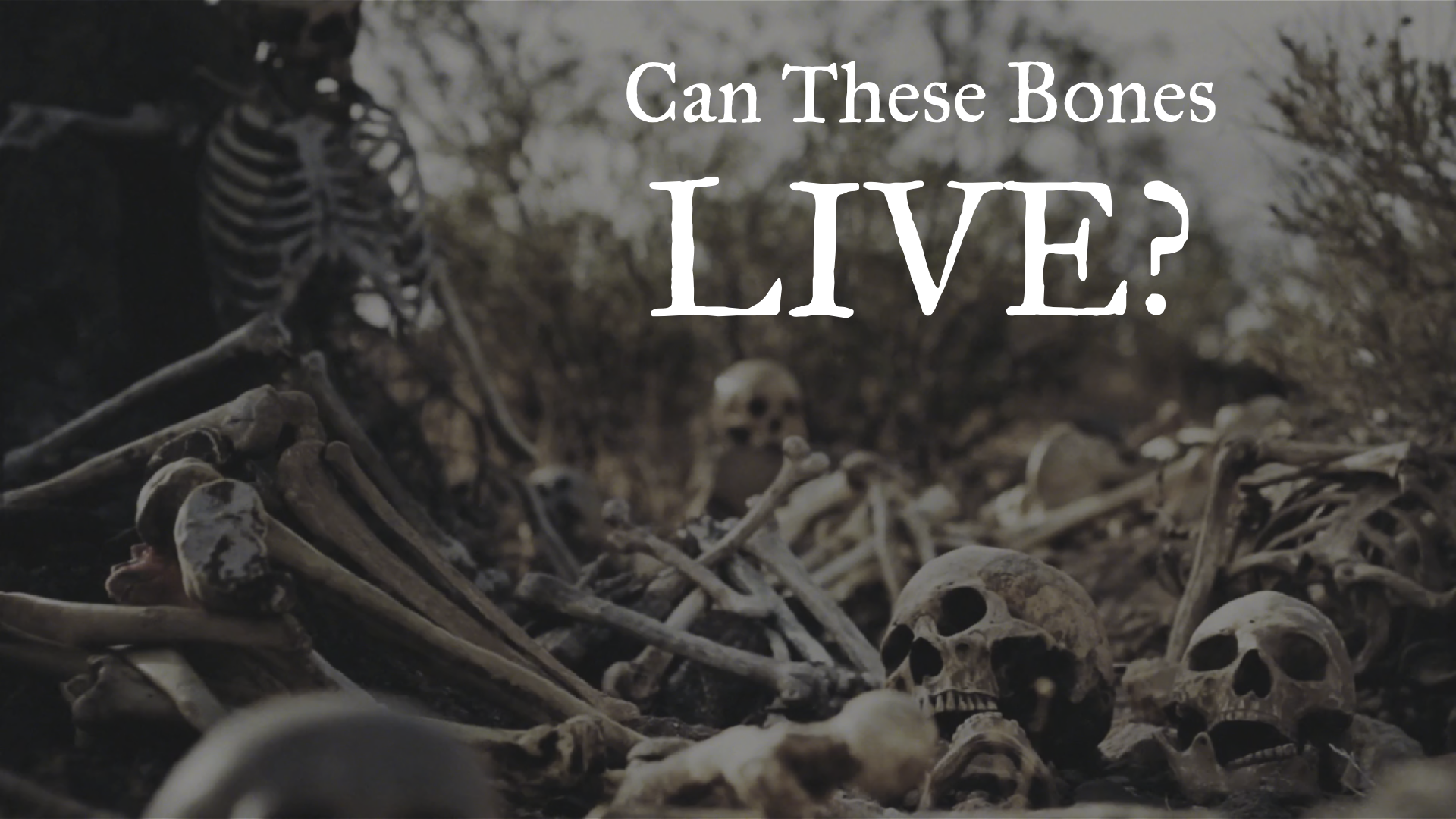
Can These Bones Live?

Ezekiel 37 recounts what must be one of the creepiest stories in the entire Bible:

1 The hand of the Lord was upon me, and he brought me out in the Spirit of the Lord and set me down in the middle of the valley; it was full of bones. 2 And he led me around among them, and behold, there were very many on the surface of the valley, and behold, they were very dry. 3 And he said to me, “Son of man, can these bones live?” And I answered, “O Lord God, you know.” 4 Then he said to me, “Prophesy over these bones, and say to them, O dry bones, hear the word of the Lord. 5 Thus says the Lord God to these bones: Behold, I will cause breath to enter you, and you shall live. 6 And I will lay sinews upon you, and will cause flesh to come upon you, and cover you with skin, and put breath in you, and you shall live, and you shall know that I am the Lord.”

7 So I prophesied as I was commanded. And as I prophesied, there was a sound, and behold, a rattling, and the bones came together, bone to its bone. 8 And I looked, and behold, there were sinews on them, and flesh had come upon them, and skin had covered them. But there was no breath in them. 9 Then he said to me, “Prophesy to the breath; prophesy, son of man, and say to the breath, Thus says the Lord God: Come from the four winds, O breath, and breathe on these slain, that they may live.” 10 So I prophesied as he commanded me, and the breath came into them, and they lived and stood on their feet, an exceedingly great army.

11 Then he said to me, “Son of man, these bones are the whole house of Israel. Behold, they say, ‘Our bones are dried up, and our hope is lost; we are indeed cut off.’ 12 Therefore prophesy, and say to them, Thus says the Lord God: Behold, I will open your graves and raise you from your graves, O my people. And I will bring you into the land of Israel. 13 And you shall know that I am the Lord, when I open your graves, and raise you from your graves, O my people. 14 And I will put my Spirit within you, and you shall live, and I will place you in your own land. Then you shall know that I am the Lord; I have spoken, and I will do it, declares the Lord.”

(Ezekiel 37.1-14)

This is a crazy story, but it’s actually quite fitting for Ezekiel’s crazy life: taken into captivity in Babylon, Ezekiel experiences frequent visions, is called to radical forms of preaching to a people who he knows will not listen or repent, and suffers great personal loss. And then, after all this, Ezekiel gets the news that Jerusalem has fallen—Babylon has conquered the city and destroyed the Temple.

This is the context for the creepy story in Ezekiel 37: Ezekiel is out in the middle of nowhere in a valley filled with dry, scorched bones. He is commanded to preach to them (which, by this point, probably doesn’t even seem that strange to him!) and the bones begin to rattle around and then come together, joined by ligaments, tendons, and muscles, and are covered with flesh. Then the breath of the wind comes upon them and they become living people. 

These dry bones in Ezekiel 37 are a metaphor for Israel’s spiritual state: exile and death, yes, but God’s Spirit is coming to bring His people back to life. It recalls the story in Genesis 2 where God creates humans out of dirt and breathes life into them with His Spirit. And the rest of the book of Ezekiel continues with a message of hope. Earlier, judgment was the emphasis: the people have been unfaithful, they haven’t loved God and other people, they won’t listen to correction, they have hard hearts of stone, and there will be consequences for their wickedness: Babylon is going to conquer them.

But now there is an emphasis on hope, because exile is not the end. The dry bones can live again. God is going to restore Israel, a new Israel with a new heart, He’s going to defeat evil in the nations, and He’s actually going to redeem all of creation as well. The book of Ezekiel ends with a vision of a new temple with a stream flowing out from it that becomes a mighty river that flows into the Dead Sea Valley—a desert place of barrenness where nothing can live in the water because it’s so salty—and it turns it into a lush paradise, a new garden of Eden called, “The Lord is there.”

And that’s how Ezekiel ends.

This story of dry bones coming to life in Ezekiel 37, a story of judgment and hope, exile and return, death and new life, is really a powerful summary of the whole story of the Bible. This is the story of Scripture over and over again. God asks Ezekiel, “Son of man, can these bones live?” and the answer is a resounding Yes!

  • Yes, when humans rebel and get kicked out of the garden, God promises to enact a plan to bring them back!
  • Yes, there is life and freedom after slavery in Egypt!
  • Yes, there is a return after exile in Babylon!
  • Yes, after the sinless Messiah is betrayed, arrested, beaten, and crucified, there is an empty tomb and a resurrected life!

And this isn’t just the story of the Bible, it’s our story too. Yours and mine. “Son of man, can these bones live?” Yes! 

  • Can a damaged friendship, a broken relationship, a betrayed marriage—can these come back to life? Is there any hope? Can these bones live? With God’s help, yes they can!
  • Can a church that is beset by controversy, quarreling, or just indifference, a church that dwindles and shrinks—is there any hope for such a church? Can these bones live? Yes, they can!
  • Can the sin that keeps you in bondage, the sin that enslaves you, that you say over and over that you won’t do it again and yet you keep coming back to it—can you ever be free of that? Can these bones live? Yes, they can!
  • As we go through this life filled with difficulties and delights, and as we march relentlessly toward the death that awaits all of us…is there anything for us beyond the grave? Can these bones live? Quite literally, yes they can!

Our story connects to God’s story. That’s part of what Paul talks about in Romans 6. There, he describes how when we are baptized into Christ, we die to sin. The old person we were who was enslaved to sin dies, and a new creation replaces that. This has implications for the present because right now, in our lives as parts of God’s new creation, we live differently, set free from sin. But it also has implications for the future because “if we have been united with Christ in a death like his, we shall certainly be united with Him in a resurrection like his” (Romans 6.5).

Christ died and was placed in a tomb, and then rose again to new life, not as some sort of spirit or ghost floating around, but with a new body. After His resurrection, Jesus specifically says that He’s not a ghost, that He has flesh and…bones.

One day you and I, if Jesus doesn’t return before then, will die. It may happen soon in a surprising way, or it may happen many years from now as our bodies age and weaken, we grow sick and feeble, and we pass away. Then our bodies will be buried in the ground and slowly begin to decompose. And eventually, we will be nothing more than dry bones.

Son of man, can these bones live?

If you belong to Jesus, the answer is Yes! Our bodies, which were “planted” in the ground corruptible and perishable, will be raised incorruptible and imperishable (1 Corinthians 15.42-44). God’s Spirit will breathe into them, and we will be alive again, suitable and prepared, ready for an eternity in God’s presence, in that new garden of Eden paradise that Ezekiel talked about: “The Lord is there.”

Son of man, can these bones live? The answer is Yes! This is God’s story, and it can be our story too.


In this loose series of Scripture Reflections, I am sharing brief thoughts spurred on by my Bible reading. By way of reminder, my goal for these brief posts is two-fold:

(1) To remark on aspects of the biblical text that I find to be of interest that the reader may or may not have thought about previously.

(2) When possible, to point to the work and person of Jesus Christ. I believe the Bible is a unified story that points to Jesus, which means that He is frequently alluded to or foreshadowed in some way throughout the biblical canon.


Return From Exile

My friend Smith Hopkins preaches for the Oliver Creek Church of Christ in Bartlett, Tennessee, and there are so many things I appreciate about him as a thinker, a minister, and a leader. During this season of pandemic and quarantine, he has been producing a series on YouTube called Light In The Darkness, and recently, he invited me on to have a conversation about the transition out of quarantine and back into some semblance of normalcy.

From my perspective, the biblical notion of Exile is instructive for us as we think about living during a pandemic and the interruptions and struggles that come with that. But in Scripture, following the period of the Exile, we have the Return from Exile, seen especially in the historical books of Ezra and Nehemiah. I think there are some lessons from that biblical period that are helpful for us as we begin to think what our own “return” looks like. Here is a hint: don’t place your hope in the wrong things.

I hope this discussion is helpful for you!

Links Between Daniel And Esther

The Book of Daniel has been one of my favorite biblical books for a while now, and I’ve always enjoyed the Book of Esther as well. A while back, I heard a lesson on Esther which got me to thinking about the striking similarities between the two: 

Faithful Living in a Hostile Environment

Many of the following similarities can be traced to the overriding similarity in the setting of both books. The Book of Daniel follows the lives of Daniel and his three friends as they live godly lives during a time of captivity in Babylon, working in conjunction with powerful kings (first Nebuchadnezzar, then Belshazzar, then Darius).

The Book of Esther focuses on the lives of Esther and Mordecai as they live in Susa under the reign of Ahasuerus/Xerxes.


Emphasis on the Physical Beauty of Young People

Daniel 1.3-6 mentions that Daniel, Hananiah, Mishael, and Azariah were chosen for the king’s service because they were, among other things, “without blemish, of good appearance.” They were taken aside and were to be given special training and a special diet to prepare them to assist the king.

Similarly, Esther was chosen as part of the harem of Ahasuerus based on her great beauty (Esther 2.3, 8) and was similarly treated with a special diet and also given cosmetic treatment (vv. 9-12).

The Changing of Names

Daniel 1.7 is clear that Daniel and his friends are given new names in Babylon (Daniel becomes Belteshazzar, Hananiah is called Shadrach, Mishael is now Meshach, and Azariah is called Abednego) which seems to be an attempt to change the identity and allegiances of the young men. Allusions to Yahweh, the God of the Israelites, were removed from their names and were replaced with references to false Babylonian gods.

The Book of Esther is not as explicit, but Esther 2.7 mentions that Mordecai was “bringing up Hadassah, that is Esther….” Hadassah is a Hebrew name, which indicates that her name must have been changed to Esther at some point while she was under Persian influence and authority.

Accusations Against God’s People

In both Daniel and Esther, we have the theme of wicked men bringing accusations against God’s people. In Daniel, political officials who are jealous of the level of authority that Daniel has achieved under Darius realize that the only way they can get him in trouble is to outlaw his devotion to Jehovah, and they then inform Darius that he has violated the law by continuing to pray to his God (Daniel 6.1-14).

In Esther 3, Haman’s rage over Mordecai’s refusal to bow before him leads him to propose a scheme to Ahasueras to eradicate the Hebrew people (Also, this incident could be compared to the refusal of Shadrach, Mishael, and Azariah to bow to King Nebuchadnezzar’s golden image in Daniel 3).

God’s Ability to Save in Difficult Situations

In Daniel 3, Shadrach, Mishael, and Azariah are confident that God has the ability to rescue them from the fiery furnace. Later, in Daniel 6, Daniel seems to be unfazed by his punishment of being thrown in the lion’s den.

When Mordecai learns of Haman’s plan to wipe out the Jewish people, he reflects a similar attitude, telling Esther that the Jews will be delivered one way or another (Esther 4.13-14).*

Stubborn, Determined Faith

One awesome theme of both books is the portrayal of determined, defiant faith from the characters. Shadrach, Meschach, Abednego, and Esther all realize the possibility of dying for their actions, but are determined to remain faithful regardless. Their declarations of stubborn faith in Daniel 3.16-18 and Esther 4.16 are among my favorite passages in Scripture.

Promotion of God’s People to Places of High Authority

A final related theme of both Daniel and Esther is the way that God leads his faithful followers to places of high authority in their respective foreign lands. Daniel, Shadrach, Meschach, and Abednego (Daniel 1.20, 2.46-49, 3.30, 5.29, 6.1-4, 6.25) all find favor in the sight of their superiors and are elevated to positions of high authority.

Similarly, Esther and Mordecai (Esther 2.1-18, 5.1-8, 6.10-11, 10.2-3) are appreciated by their superiors and granted power and authority as well.

Conclusion

These are just some of the similarities that struck me between the two books; I’m sure there are more that could be listed. As I mentioned above, I think a lot of the similarities stem from the overall similarity in setting, as we have the stories of people trying to be faithful to God in a surrounding culture which doesn’t always support that lifestyle. In that sense, I think the books of Daniel and Esther are incredibly relevant to Christians today as we strive to live as “sojourners and exiles” in our world (1 Peter 2.11).

*Much has been made of the fact that Esther is the only biblical book which does not explicitly mention God. While this is interesting, I don’t think it is particularly significant, as the idea of God providentially caring for His people is as central to the Book of Esther as it is to the Book of Daniel.


The image above is from a series of Esther mosaics by Lilian Broca.

© 2026 The Doc File

Theme by Anders Noren — Up ↑