The online journal of Luke Dockery

Tag: Genesis (Page 1 of 4)

Two Pictures of Humanity

Creation Stories

It is commonly understood that the first two chapters of Genesis give us two creation accounts, but there is not much consensus as to how these two accounts are to be understood in relation to one another.

Some have suggested that these two accounts are from two different sources, presented side-by-side by a later editor, perhaps Moses or someone else. Of those who hold this view, some find the two accounts to be complementary, while others see them in great tension with one another. Others see the two accounts as coming from a single source and meshing seamlessly together, but with two different purposes: Genesis 1 takes the 30,000 foot view, providing a summary of the seven days and describing how God fashioned a good creation out of what was previously “formless and void”, while Genesis 2 zooms in, describing the creation of humanity in more detail.

I incline toward the latter view, though I don’t claim to know for certain. What I do feel confident about is that Genesis 1 and 2 give us two different perspectives on humanity that need to be held together in tension if we are to understand who we are.

In Genesis 1, humanity is presented as the pinnacle of God’s creation, formed on the sixth day. Male and female are “created in God’s image”, a theologically pregnant term that conveys great meaning. To be Imago Dei, means that we resemble our Father and that we are His representatives to rule over His creation in His name as He would have us to do. Creation is good, but when God reflects on humanity, He rates us as very good. What a glorious status we possess—God-imaging creatures.

But Genesis 2 tells us another aspect of the story, because humans are also…dirt. God forms the man out of the dust of the ground. This is actually where the name Adam comes from; he is formed from the ground (Hebrew: adamah). And what is it that humanity is called to do? If Genesis 1 gives us the lofty idea of ruling creation, in Genesis 2 it looks a lot more like…gardening. We are reminded of our earthy, creaturely nature, and it is fitting that, drawn from the dust of creation itself, we should be called to minister and serve in the context of that creation.[1]

In summary, we might say that Genesis 1 presents the grandeur of humanity, while Genesis 2 reminds us of our humility. If Genesis 1 raises us up to the heavens, Genesis 2 brings us back down to earth. This is the odd paradox of humanity—fashioned in the image of the Creator of the universe, but fashioned from dirt.

Genesis 1 presents the grandeur of humanity, while Genesis 2 reminds us of our humility. If Genesis 1 raises us up to the heavens, Genesis 2 brings us back down to earth. Share on X

Adam’s Story, Our Story, Christ’s Story

As we reflect on the nature of humanity, we can see this truth for ourselves, right? We catch glimpses of the glory of humanity—the capacity for extraordinary generosity or sacrifice, stunning creativity or beauty—but also of human frailty, failure, and folly. There are moments where we see marvelous things that other people accomplish, and we can feel immensely proud: “One of us did that!” But then there are other moments when we hang our heads in shame at the depths of human depravity.

In Prince Caspian, C.S. Lewis captures this seeming paradox in a conversation between Aslan and the young Caspian:[2]

“You come of the Lord Adam and the Lady Eve,” said Aslan. “And that is both honour enough to erect the head of the poorest beggar, and shame enough to bow the shoulders of the greatest emperor on earth. Be content.”

As the Narnia books so often do, this idea reflects biblical teaching. As the psalmist puts it in Psalm 84.4-6:

4 What is man that you are mindful of him,
and the son of man that you care for him?
5 Yet you have made him a little lower than the heavenly beings
and crowned him with glory and honor.
6 You have given him dominion over the works of your hands;
you have put all things under his feet…

Ultimately, this paradox, this tension baked into the creation narratives of Genesis 1-2, points ahead to and is fulfilled in Jesus Christ. This is made helpfully clear when the Hebrews writer takes the psalm quoted above and applies it directly to Jesus in Hebrews 2:

9 But we do see Jesus, who was made lower than the angels for a little while, now crowned with glory and honor because he suffered death, so that by the grace of God he might taste death for everyone.

Paul makes a similar point in Philippians 2.5-11, borrowing from what is believed by many to be an ancient Christian hymn:

5 Have this mind among yourselves, which is yours in Christ Jesus, 6 who, though he was in the form of God, did not count equality with God a thing to be grasped, 7 but emptied himself, by taking the form of a servant, being born in the likeness of men. 8 And being found in human form, he humbled himself by becoming obedient to the point of death, even death on a cross. 9 Therefore God has highly exalted him and bestowed on him the name that is above every name, 10 so that at the name of Jesus every knee should bow, in heaven and on earth and under the earth, 11 and every tongue confess that Jesus Christ is Lord, to the glory of God the Father.

Jesus perfectly images the Father, showing us exactly what it looks like to carry out our God-given vocation. But He does so as a lowly human, made of dust, subject to pain, fatigue, grief, and suffering.

Or, to use the words of Lewis once more: “The Son of God became a man to enable men to become sons of God.”[3]


In this loose series of Scripture Reflections, I am sharing brief thoughts spurred on by my Bible reading. By way of reminder, my goal for these brief posts is two-fold:

(1) To remark on aspects of the biblical text that I find to be of interest that the reader may or may not have thought about previously.

(2) When possible, to point to the work and person of Jesus Christ. I believe the Bible is a unified story that points to Jesus, which means that He is frequently alluded to or foreshadowed in some way throughout the biblical canon.


[1] Many scholars have pointed out that the “gardening” task of humanity is also a priestly task, and that Adam and Eve are given the job of ministering in the “Temple” of Eden. Indeed, the words translated “to work” (Hebrew: ‘abad) and “to keep” (Hebrew: shamar), are commonly used in religious contexts related to the ministerial work of priests and Levites. See Shara Drimalla and BibleProject Team, “Were Adam and Eve Priests in Eden?” BibleProject, April 12, 2021, https://bibleproject.com/articles/were-adam-and-eve-priests-eden/

[2] C.S. Lewis, Prince Caspian (New York: HarperTrophy, 1951), 233.

[3] C. S. Lewis, Mere Christianity (New York: HarperOne, 1952), 178.

2024 Harding University Lectureship Recap

Every year, I write a post recapping Harding’s annual Bible Lectureship, which occurs in late September–early October. This year, due to significant busyness on my part, I did not get that done in a timely fashion. At this point, this post may not particularly relevant but it is still helpful to me to chronicle the event (and I don’t like leaving tasks unfinished).

Harding rebranded the Lectureship as “Inspire,” and with that came a slightly different approach with a greater emphasis on tracks rather than standalone lectures. The theme of this year was The Genesis of All Things, and focused on (surprise!) the book of Genesis.

I got to attend a variety of lectures and classes, and here is a brief recap of what I went to, along with some takeaway quotes:

Creation (Genesis 1-2), Devin & Elijah Swindle: Devin teaches Bible at Harding and directs the Center for Preaching, and his son Elijah is a senior Bible major. The evening keynotes traced the biblical metanarrative (Creation, Fall, Redemption, Mission), and the father-son duo tag-teamed the opening keynote of Lectureship and did a great job. They addressed how the biblical text provides answers to life’s big questions:

  1. God is the sovereign, only, benevolent Creator.
  2. We are royal priests made in God’s image.
  3. Our responsibilities are to promote God’s agenda, protect God’s creation, and provide blessing to God’s people.
  4. Of this He has given assurance to all through Jesus Christ, the incarnate Word of God and risen Lord.

Neller Preaching Workshop, John Walton: Walton is a renowned Old Testament scholar, influential for his work on Genesis and the Ancient Near East. I attended all three sessions he delivered at the Neller Preaching Workshop (“Preaching God’s Word from Genesis: Best Practices for Faithful Methodology,” “The Message of Scripture in Genesis 1-11,” and “The Message of Scripture in Genesis 12-50”), and two sessions that he gave the next day (“Recovering the Lost World of Genesis 1” and “Recovering the Lost World of Genesis 2-3”). I won’t try to review all of that material (I took pages and pages of notes), but instead just offer some general thoughts.

First, I should note that Harding came under some sharp criticism after Inspire for having Walton speak, purportedly because he was teaching theistic evolution. There were cries of lament that Harding had lost its way and no longer cared about the teachings of Scripture, and fervent appeals to Harding board members to straighten out the heresy. I don’t have the time or inclination to respond to all of that here, other than to say that I don’t have a lot of patience for the gatekeeping mentality that some (well-intentioned, I’m sure) believers have to always straighten out the (perceived) errors of others. I especially don’t have patience when that gatekeeping is based on false claims or, at the very least, on uncharitable takes. Speaking of Walton’s presentations specifically:

  1. Walton didn’t “teach theistic evolution.” He does, however, interpret Genesis 1-2 in such a way that it is not speaking of material origins, and thus, opens the door for alternate explanations (including theistic evolution).
  2. Walton takes the Bible very, very seriously. Part of what that means is that he is at great pains to read and interpret the biblical text the same way that the original audience would have heard and interpreted it. Literal reading of the English text divorced from its historical context is not the most faithful way to read it.
  3. Walton repeatedly stated that the strongest interpretation of a biblical text is the one with the most evidence. He encouraged his audience to test his own conclusions in their own study rather than blindly accept them.

I have read Walton’s material before and been blessed by it (he made my Top 10 book list in 2020), and I heard a lot of good content at the five lectures I attended. I also heard numerous things that made me scratch my head, and a few that I disagreed with and rejected. And such is the task of legitimate Bible study, or any exercise in critical thinking. We learn by being exposed to new ideas, wrestling with those, and ultimately, either (a) altering our previous perspectives to accommodate those new ideas, or (b) shoring up our previous perspectives through the process of examining those new ideas. Walton helped me do both of those things, and I was glad that I had the opportunity to hear him speak.

Fall (Genesis 3), Orpheus Heyward: Bro. Heyward speaks at a large and growing congregation in the Atlanta area, and delivered the Monday keynote. Heyward’s treatment of the fall was helpful, as he emphasized that salvation represents both a rescue and a recovery. Death being introduced into human existence as a result of the fall means that there is now something over which man does not have dominion; humanity needs someone who can recover that which was lost, and that someone has to conquer death. Jesus is the one who does this, tasting Death on our behalf, and destroying it as the last enemy, giving us back what we lost.

The Ink Is Dry, Rubel Shelly: Shelly has been a longtime preacher and academic within Churches of Christ, and he did three sessions related to his recent book, The Ink Is Dry, which basically holds to a historically orthodox Christian sexual ethic in dialogue with the wildly divergent sexual views in 21st-century America. This is a topic I have read quite a bit on, so there wasn’t too much here that was new, but these were excellent presentations, grounded in solid biblical and historical study.

“No one has ever made a positive case for same sex behavior from Scripture.”

“Christianity advances by persuasion, not civic legislation.”

“Holiness is to live with the grain of God’s own character.”

Jesus-Centered Youth Ministry, Daniel Parrish: Daniel is a friend and an excellent young minister, and spoke as part of the youth ministry track. He offered some really helpful principles to resist the temptation to “be God” in our own stories (this is something that youth ministers can certainly be susceptible to, building youth ministries that are centered on ourselves rather than Jesus):

  1. Check your posture. We can put ourselves under the illusion that we are higher than God, and feel like we can do youth ministry without trusting God. Spiritual disciplines help us to maintain a correct posture.
  2. Embrace your weaknesses. It is important for us to share our weaknesses in community—our message begins with our mess (1 Corinthians 12.9).
  3. Know who you are. We don’t have anything to prove if we trust that God values us. Serving did not cause Jesus to question His value; He knew the value He had in His Father’s eyes.

“Ultimately, youth ministry is about following Jesus and asking people to come with you.”

Best Practices for Fostering Lasting Faith in Children, Alicia Williamson: Alicia is a new member of the Bible faculty at Harding, and teaches a variety of courses including spiritual formation and children’s ministry. Her doctoral research focuses on spiritual formation in children and adolescents, and she used this session to highlight and summarize some of her research. I went to this session to learn, and also to support Alicia, who is one of my youth group parents. (Can I tell you how blessed/spoiled I am to have a resource like Alicia as we constantly work to improve our youth ministry?!)

Alicia’s class was excellent, and talked about the role that parents, grandparents, the church, and God’s creation all play in the spiritual formation of children.

“God has huge shoulders; He can handle our hard questions.”

Mission (Genesis 12), Nathan Bills: Nathan is the dean of the School of Human Development and associate professor of theology and ministry at Heritage Christian University College in Accra, Ghana. Nathan concluded the lectureship by speaking on the biblical theme of mission, emphasizing that blessing is the most used keyword in the story of the call of Abram in Genesis 12—blessing was always God’s goal. However, although God’s call to Abraham is about blessing, it begins with a departure—Abram is told to go! And so are we. As we are involved as agents in God’s mission of blessing the world, it necessitates that we go into the world to bring that blessing about.


In addition to attending all of the lectures described above, I also had the opportunity to speak on a panel discussion about Adult Education and Discipleship.

I got to hear a lot of good material at Inspire this year; I’m not sure how I feel about the new format, as I found it to be pretty exhausting to take in so many multi-part tracks. As always, it was a blessing to get to see so many old friends. Lectureship…er, I mean, Inspire, is always a highlight of my autumn.

Lord’s Supper Meditations

The Lord’s Supper is a central act of Christian worship, calling to mind the redemptive death of Christ on the cross, and also anticipating His return, when believers will feast with Him again. One of my favorite things about the worship of Churches of Christ is that the Lord’s Supper is observed weekly, which was a practice of the early church.

While it is good to observe the Lord’s Supper regularly, doing so with such frequency can also make it formulaic, and many congregations employ the practice of having a short reading from Scripture or biblical message to help focus the minds of those who are about to partake.

On the Free Resources page of this site, I have now added a series of Lord’s Supper Meditations that I have offered in the past. Feel free to use these in your setting (whether publicly or privately) if they can be helpful to you. I hope to add more to this list as time goes on:

Discerning the Body (PDF): In 1 Corinthians 11, Paul seeks to correct the selfish way in which some of the Christians in Corinth are observing the Lord’s Supper by reminding them of its vertical and horizontal dimensions.


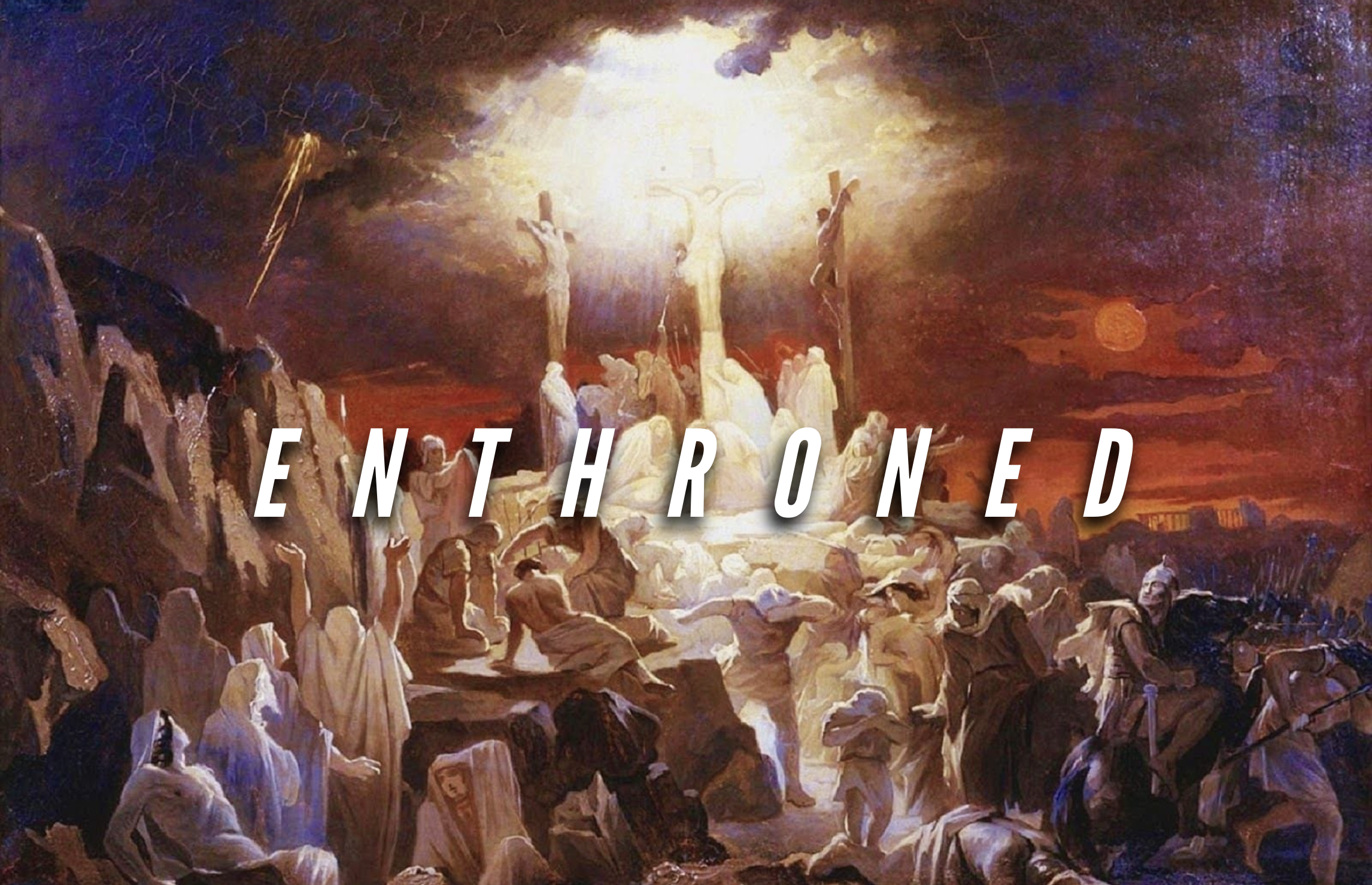
Enthroned (PDF): The crucifixion of Jesus was a subversive exaltation. The enthronement of the King of the Jews casts doubt upon the ways in which the world elevates and seeks to accumulate power.


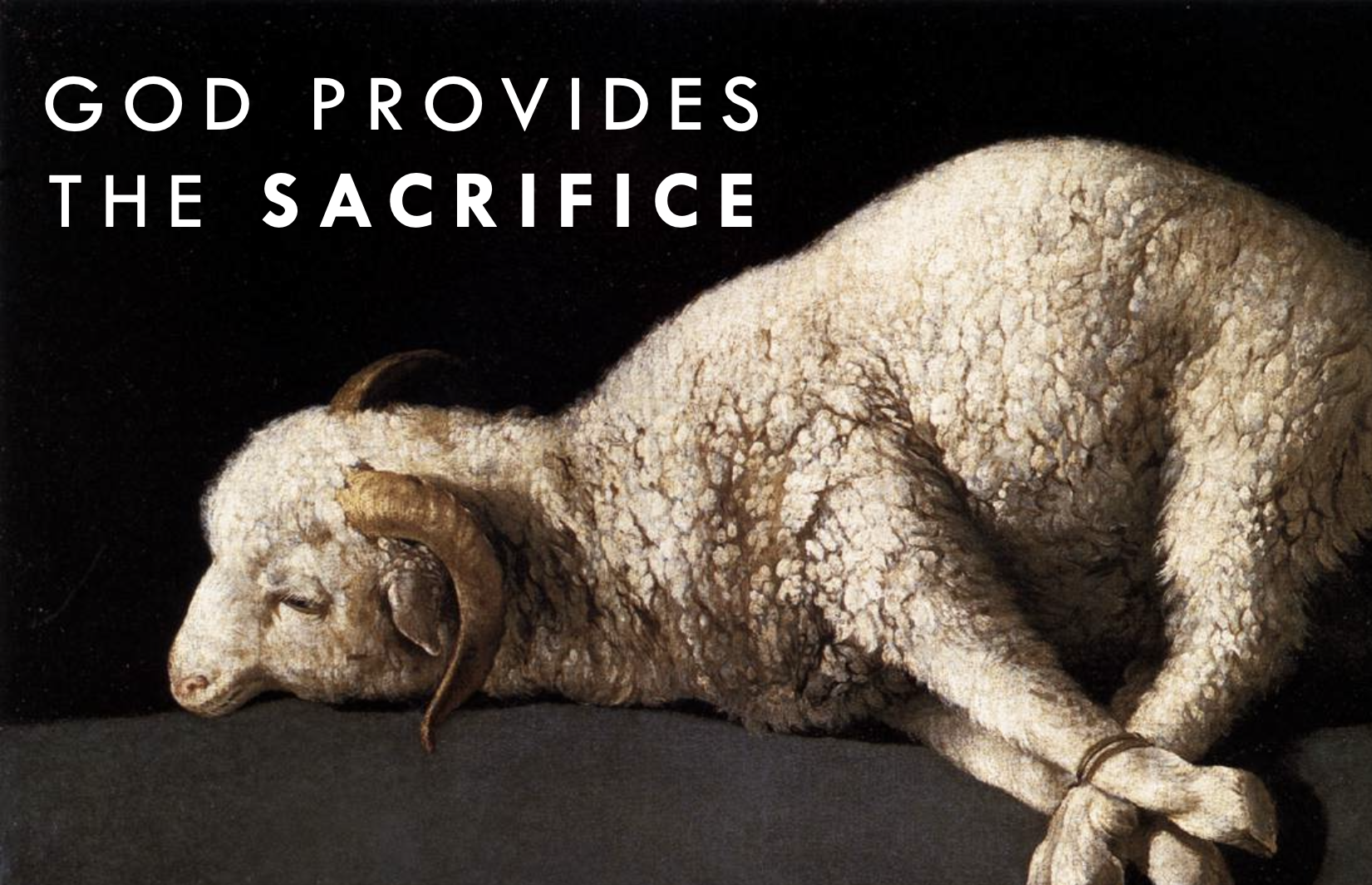
God Provides the Sacrifice (PDF): The Binding of Isaac in Genesis 22 foreshadows another sort of offering, on another sort of altar. In both instances, it is God who provides the sacrifice, but the Son is not always spared.


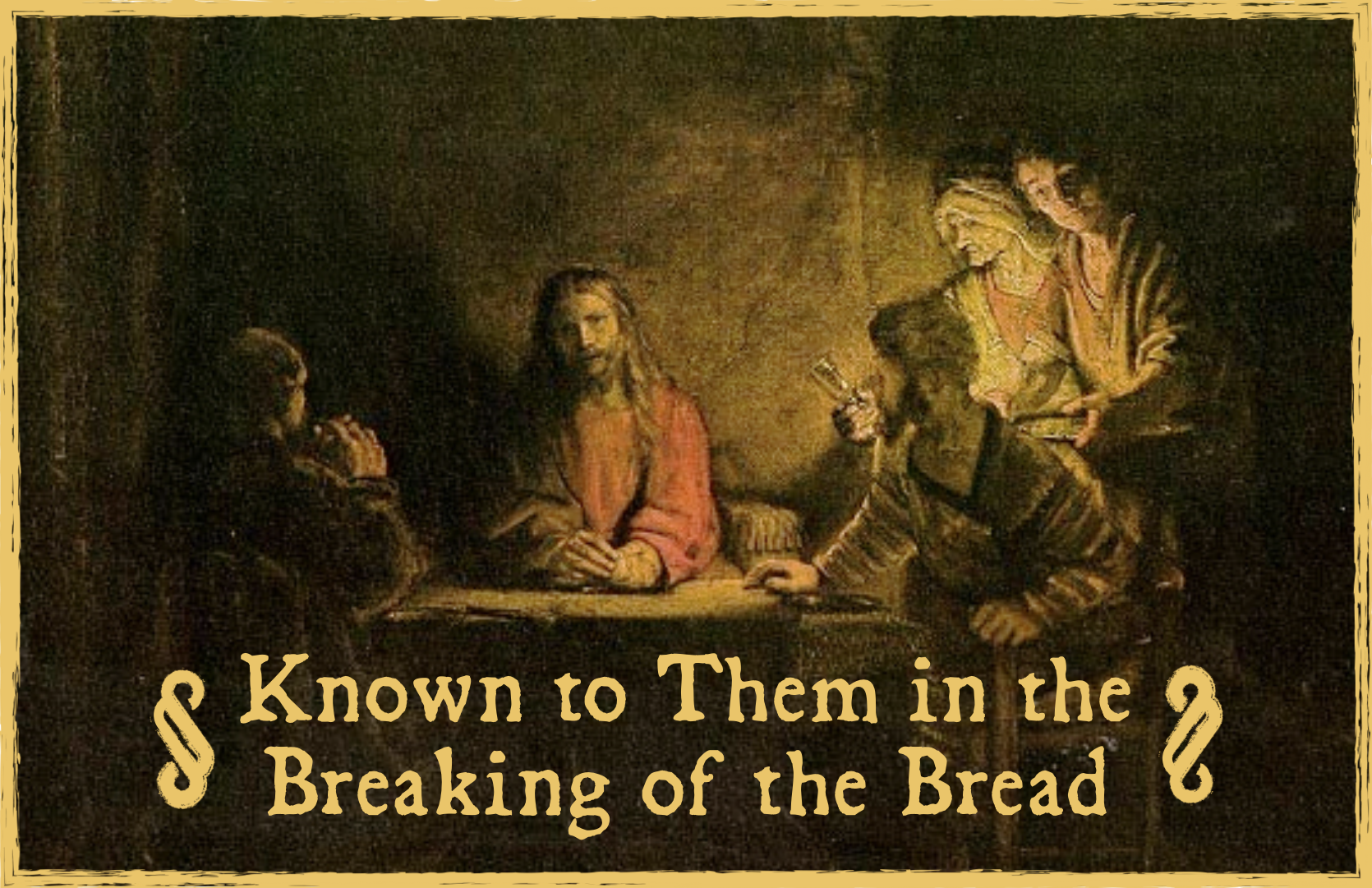
Known to Them in the Breaking of the Bread (PDF): For the disciples that Jesus met on the road to Emmaus following His resurrection, it was at the table that Jesus was made known to them. It is the same for us.


Reconciliation through the Cross (PDF): In a bitterly-divided world, the observance of the Lord’s Supper can seem impractical and disconnected. Really, though, nothing could be more needed or relevant.

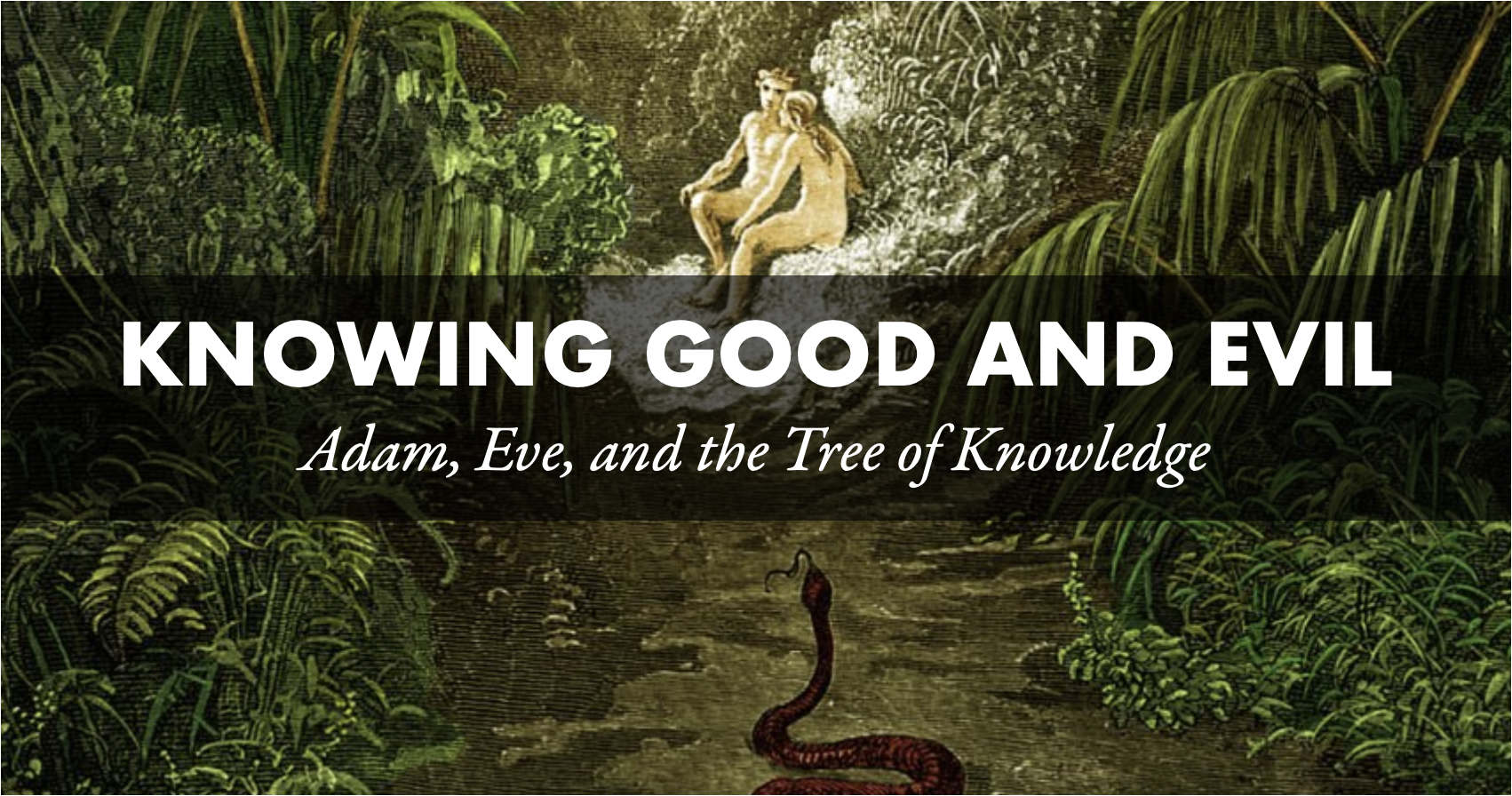
Knowing Good and Evil: Adam, Eve, and the Tree of Knowledge

The story of Adam, Eve, and the serpent in the Garden of Eden is one of the fundamental elements of the Story of Scripture—the Bible’s account for how things got to the messed up state that they are in. This story is well known, but, in my experience, an important detail of this story is not as well understood.

In Genesis 2, God tells humanity:

You may surely eat of every tree of the garden, but of the tree of the knowledge of good and evil you shall not eat, for in the day that you eat of it you shall surely die.

(Genesis 2.16b-17)

We hear a little more about this prohibition in a conversation between Eve and the crafty serpent at the beginning of Genesis 3:

He said to the woman, “Did God actually say, ‘You shall not eat of any tree in the garden’?” And the woman said to the serpent, “We may eat of the fruit of the trees in the garden, but God said, ‘You shall not eat of the fruit of the tree that is in the midst of the garden, neither shall you touch it, lest you die.’”

But the serpent said to the woman, “You will not surely die. For God knows that when you eat of it your eyes will be opened, and you will be like God, knowing good and evil.”

(Genesis 3.1b-5)

Often, you can hear this explained as the tree giving Adam and Eve the ability to recognize the difference between good and evil. However, when you think about it, this interpretation doesn’t make a lot of sense: how is it a bad thing to recognize the difference between good and evil? Isn’t a fundamental part of parenting helping our children learn the difference between good and evil, right and wrong? Doesn’t the biblical text frequently implore followers of God to pursue the way of blessing rather than the way of curses? The narrow way rather than the broad way? The fruit of the Spirit rather than the work of the flesh? Indeed, a significant aspect of preaching is helping the church to recognize the difference between good and evil.


Instead, a better understanding is that eating the fruit of the Tree of Knowledge represents defining good and evil for oneself. In other words, what the serpent tempted Adam and Eve with was moral autonomy: the right to decide for ourselves what is best.

As Christopher J.H. Wright states:

It is the prerogative of God in the supreme goodness of his own being to decide and define what constitutes goodness and therefore conversely what constitutes evil. Humans however, in choosing to decide for ourselves what we will deem good or evil usurp the prerogative of God in rebellious moral autonomy. And at the same time, of course, by making our own definitions in a state of rebellion and disobedience, we end up in the moral perversions and chaos that pervade fallen human life.[1]

Defining good and evil is God’s job; not ours. When we determine for ourselves what is right and wrong, we are seeking to climb onto a throne that rightly belongs to God alone.

Wright continues:

This interpretation of the phrase is supported by the way God recognizes the nature of what has happened: “The man has now become like one of us, knowing good and evil” (Gen 3:22). God accepts that humans have indeed breached the Creator-creature distinction. Not that humans have now become gods, but that they have chosen to act as though they were—defining and deciding for themselves what they will regard as good and evil. Therein lies the root of all other forms of idolatry: we deify our own capacities, and thereby make gods of ourselves and our choices and all their implications.[2]

Understanding the sin of Adam and Eve in this way helps us to see more clearly why it was such a big deal. Eating the fruit was not some curious attempt to learn something important that God had withheld from His human partners. It’s not that Adam and Eve were hopeless to recognize and distinguish good from evil: God had already told them. He had already defined for them what was good, and placed boundaries around what was not good for them. It was God’s definitions that the parents of humanity sought to challenge; they wanted the ability to define things for themselves. Indeed, eating the fruit was an act of rebellion, not curiosity.

Understanding the sin of Adam and Eve in this way also helps us to see how we are just like them. It can be easy to be hard on our ancestors for their sinful behavior and the way in which it has messed everything up in our world, but the reality is that every time we choose to do things that God has defined for us as evil, we become Adam and Eve; we reenact their rebellion. This is why the oft-heard statement, “I could never follow a God who…” is so dangerous: it inherently places ourselves upon the throne, defining what “good” should be like, and what God should be like. Ultimately, it creates a God in our image, rather than us reflecting the God in whose image we were created.

Every time we choose to do things that God has defined for us as evil, we become Adam and Eve; we reenact their rebellion. Share on X The oft-heard statement, “I could never follow a God who…” is so dangerous: it inherently places ourselves upon the throne, defining what “good” should be like, and what God should be like. Share on X

[1] Christopher J. H. Wright, The Mission of God: Unlocking the Bible’s Grand Narrative (Downers Grove, IL: IVP Academic, 2006): 164. Emphasis in the original.

[2] Ibid.

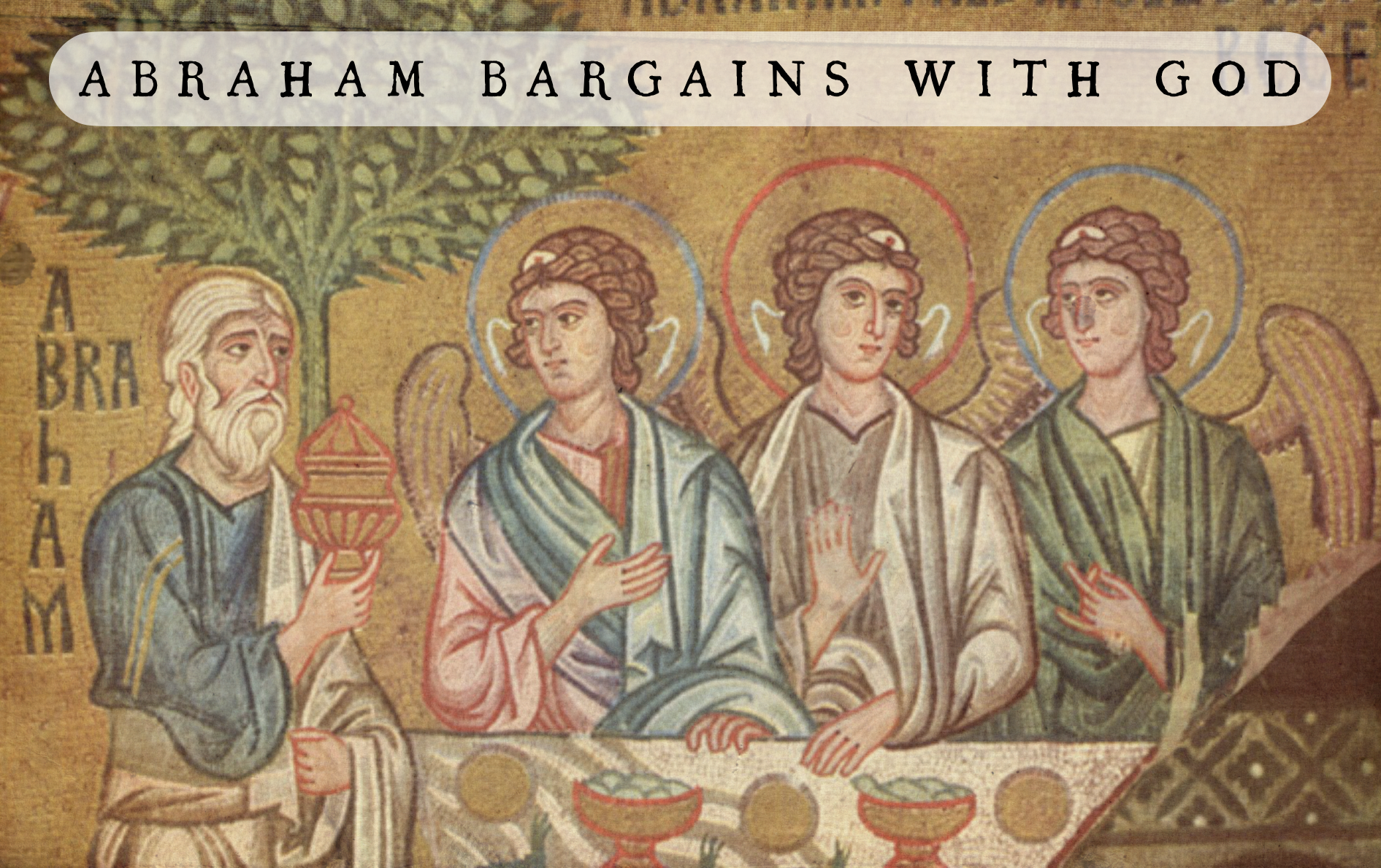
Abraham Bargains With God

The end of Genesis 18 contains an interesting interaction between Abraham and God: after Abraham learns that God intends to destroy the wicked city of Sodom, he decides to intercede for Sodom, asking the LORD, “Will you indeed sweep away the righteous with the wicked?”, implying that there are some righteous people in Sodom who don’t deserve to be destroyed with the rest of the city.

And so, a bargaining process begins (my paraphrase of Genesis 18.24-32):

Abraham: God, will you destroy Sodom if there are 50 righteous people in it?

God: If there are 50, I will spare the city.

Abraham: Hmm, it’s not my place to tell you how to do things, but what if there are 45 righteous people? Five can’t make much of a difference, right?

God: If there are 45, I will spare the city.

Abraham: What about 40?

God: If there are 40, I will spare the city.

Abraham: Don’t be angry with me for haggling, God, but what if there are 30 righteous people?

God: If there are 30, I will spare the city.

Abraham: Be patient with me: what about 20?

God: If there are 20, I will spare the city.

Abraham: OK, let me ask one more time: what if there are 10 righteous people?

God: If there are 10 righteous, I will spare the city.

And at that point, the haggling comes to an end.

This episode is interesting to me for at least three reasons.

First, it is interesting to me that in Genesis 18.23, Abraham seems to mildly reprove God for being willing to destroy an entire city that might contain righteous people, and yet, it seems that Abraham’s mercy was exhausted before God’s was. At least, Abraham quit asking to lower the bar for how many righteous people would save the city. Would God have been willing to spare the city if five righteous people were found? Or three? Or one person? We don’t know, because Abraham quit asking before God quit agreeing. It’s a helpful reminder to me that God is always more merciful than I am.

Related to the first point, the things we ask of God have the potential to change His plans. Depending on where you are on the spectrum of how God’s sovereignty works this is a debatable point, but a straightforward reading of the text certainly indicates that Abraham’s requests were influencing God’s plans regarding the destruction of Sodom. And again, it seems possible that Abraham could have continued to bargain with God until He relented from destroying the city altogether. So this is helpful as well, because it brings about a certain degree of resolve in my life: if the deep desires of my heart are denied to me, it won’t be because I am not asking God for them.

And finally, I’m left to wonder: why is it that we assume that God grows impatient with our repeated requests of Him? Abraham certainly assumed and feared God’s impatience: four times he apologized or asked for patience in some way. I think we often do the same thing. But over and over again God tells us to come to Him in prayer, and in the New Testament, Jesus praises the persistence of a widow and uses her as an example of how we should repeatedly come to the Father in prayer. So I am also reminded by this narrative that I should not project my impatience on God: he patiently (and eagerly) hears my repeated requests. 

I love this narrative episode, because it is so revealing of the nature of God: as Father, God is merciful toward His children, influenced by their desires, and wants to hear their requests. I am a father, and this totally makes sense to me when I think of my own children, but when I see these characteristics portrayed in the Creator of the universe, I am driven to my knees in praise and thanksgiving.

God is a Father: He is merciful toward His children, influenced by their desires, and wants to hear their requests. Share on X

In this loose series of Scripture Reflections, I am sharing brief thoughts spurred on by my Bible reading this year. By way of reminder, my goal for these brief posts is two-fold:

(1) To remark on aspects of the biblical text that I find to be of interest that the reader may or may not have thought about previously.

(2) When possible, to point ahead to the work and person of Jesus Christ. I believe the Bible is a unified story that points to Jesus, which means that He is frequently alluded to or foreshadowed in some way throughout the biblical canon.

« Older posts

© 2026 The Doc File

Theme by Anders Noren — Up ↑