The online journal of Luke Dockery

Tag: Harding School of Theology (Page 1 of 2)

2026 Harding University Lectureship Recap

One of my yearly traditions on The Doc File is to write a post that recaps Harding’s annual Bible Lectureship, which occurs in late September. This year’s lectureship occurred early in my sabbatical, and soon after it was over my wife and I took a 20th anniversary trip and then I returned and was buried (in a delightful way) in research and writing on my sabbatical project and I just never got around to writing about the Inspire Lectureship. It is now late enough that what I write here is somewhat dated, but it is helpful for me to reflect on the things I heard, so I will proceed anyway. Maybe there will be something here to benefit others as well.

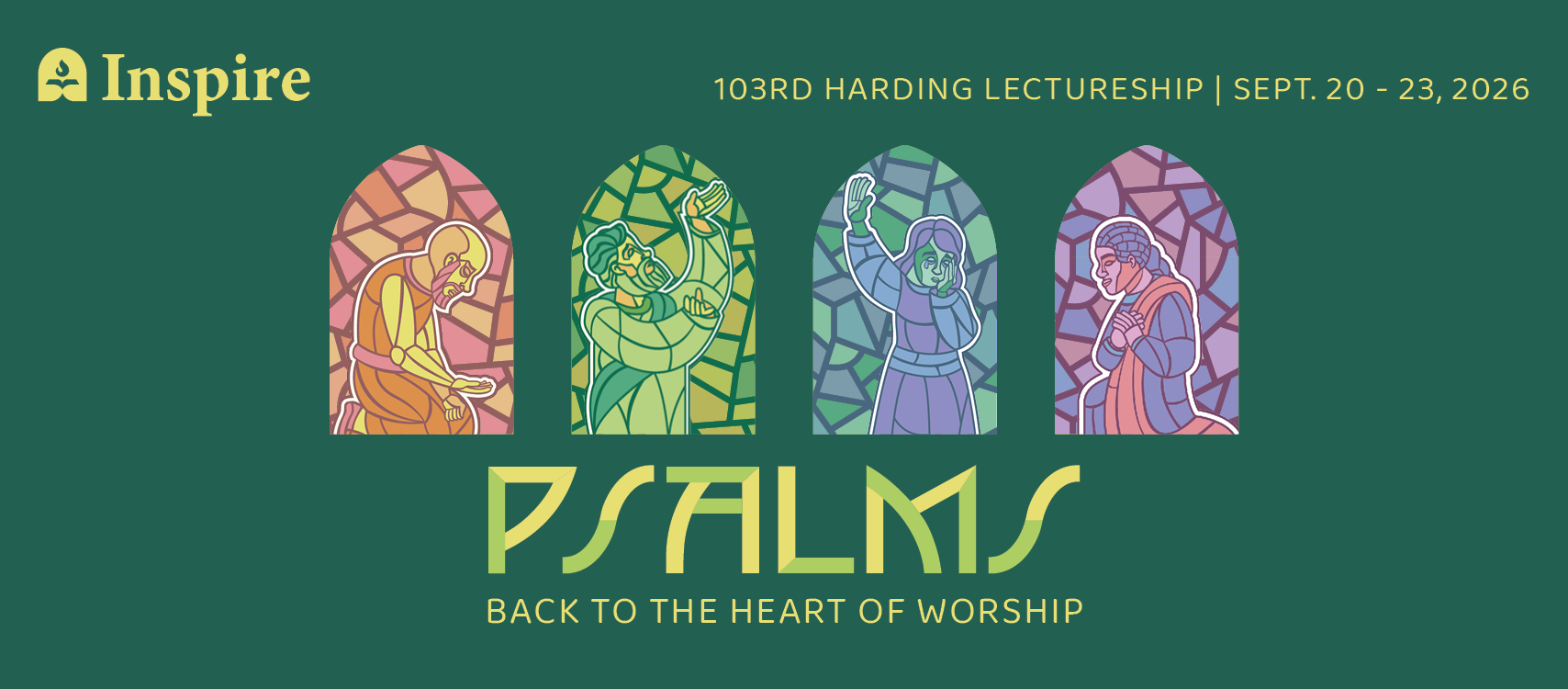
This year’s theme was Psalms: Back to the Heart of Worship, and there was a significant focus on, well, Psalms and worship. Before I jump into a recap of the sessions I attended, here are a few summary thoughts:

  1. After the controversy surrounding last year’s Lectureship, I really didn’t hear much at all this year. This was nice.
  2. I thought one of the great strengths of this year’s program was the exposition of a bunch of different individual psalms. I felt like I came away having heard a lot of valuable biblical teaching, and I think that those who attended several of these sessions received a really good feel for the book of Psalms.
  3. This year, they brought back morning keynotes and actively discouraged Lectureship attendees from going to student chapel (which was the same time as the morning keynotes). I thought this was a really unfortunate move. Especially for a Lectureship themed on worship, denying participants the option of worshiping in chapel seemed like an obvious misstep to me (there were likely good reasons for this of which I am unaware).
  4. This was the second year that there was a great emphasis on multi-session tracks rather than standalone sessions. I understand reasons for this, but I personally dislike it. There are a lot of topics that I am interested in for one session, and far fewer that I want to stay around and listen to for three hours. And, depending on how tightly coherent the different sessions are, if you miss the first one, it may not be worth it to go to others. In short, the multi-session tracks are great if there is a track you love and there is nothing else you really want to go to at the same time; if either of these things is not true, it is problematic.

Now, on to the main thing!


I got to attend a variety of lectures and classes, and in what follows I will provide a brief recap of what I went to, along with some takeaway points and meaningful quotations:

His Presence: Psalm 100, Ammar Saheli: I had never gotten to hear Saheli before, who has been a minister at the West Oakland Church of Christ for 25 years. I thought he did a great job of introducing the theme for the week and also the Psalter itself, the “hymn book of Israel.” Saheli said that the Psalter shaped the culture of Israel and shaped the culture of Jesus, and that it would be great if it shaped the culture of our churches as well. He then looked at Psalm 100 in more detail, and emphasized the importance of worship and being in God’s presence as we navigate the difficulties of life:

“Regardless of what is going on in my life, when I enter His presence, God is still good!”

“‘I’m just going to do me.’ You don’t know you!”

“We worship our way through our hurts.”

This was not a profound lecture because it taught something new, but because it taught something fundamental so well: God is still good despite my problems, and worship and gratitude help to orient us to this reality.

Fearfully and Wonderfully Made, Justin Bland: I spent Monday morning (other than the morning chapel keynote) attending three sessions by Justin, who teaches Exercise Science at Harding and is one of my best friends. Justin excels at blowing your mind with fascinating human physiology, and then making insightful theological connections. I took tons of notes and it is hard to sum up here what he talked about, but I’ll try to provide a brief overview of the three sessions:

  • From the Womb: This session focused on the way a mother’s entire physiology adapts to support another life and what can be learned from that:
    1. We are fearfully and wonderfully made.
    2. Self-sacrifice is built into the mother’s physiology.
    3. We are deeply connected.
    4. An appreciation for the “mother” language God uses (Exod 34.6; Matt 23.27).
  • Sustained by the Heart: This session focused the heart, which is the servant of the body. Many of these observations are physiological, but the theological and ecclesiological implications are clear and powerful:
    1. The heart develops through challenge and adversity.
    2. The heart has several redundant systems to ensure continued beating.
    3. The heart takes on new function at birth.
    4. The heart receives oxygen and nutrients during rest.
    5. The heart responds to the needs of the body.
    6. A diseased heart signals muscle wasting.
    7. When your heart is full, you will thirst no more.
    8. The physical embodiment of love is the servant of the body.
  • Made to Work: This final session focused on the physiology of work, and the fact that we were made to move and are shaped by movement. Again, a lot of good takeaways here:
    1. We do things that are hard to get better for the sake of something bigger.
    2. Discussions of stress and mental health must include exercise!
    3. Stress is the perception of a physical threat, and your perception is shaped by what we believe; what if we actually believed that Jesus is the Good Shepherd?
    4. I do not worship this body, but with this body I worship!
    5. The heart of worship is embodied loyalty.

Justin crushed it! I was so proud of him and am so blessed to be his friend.

His Love Endures Forever: Psalm 136, Mac Sandlin: Mac is one of the excellent professors in the College of Bible and Ministry at Harding. He introduced Psalm 136 by talking about music and how the chorus makes the song—the most powerful and popular songs are those with catchy and moving choruses. Mac challenged us with this question: “If you were to write a story song about God, what would the chorus be?” After weighing some different options—How God Gives Success, How God Makes Me Feel, God Rules Over All, How Bad Our Enemies Are, God Is Transcendent—he put forth his thesis from Psalm 136: the chorus of the story of God is “His love endures forever.” This is the heartbeat of Scripture.

“God’s love burns but never burns out.”

Worshipping the Goodness of God, Part 1: In Good Places–Rest and Righteousness, Evertt Huffard: I first knew Dr. Huffard as the Dean of Harding School of Theology when I began my graduate work there when the school was still in Memphis, and more recently, as a member of the church where I work! He is a long-time expert on missions and church dynamics, and has also had a career interest in studying the kavod (כָּבוֹד) of God (often translated “glory,” but which Huffard believes is better translated “honor”). I was only able to go to the first session, but Dr. Huffard was presenting some of the arguments from his new book. The basic argument as I understand it (I haven’t read his book yet), is that God’s kavod is about His goodness (His character) in addition to His greatness (His power). This is important, because as we seek to be like God, we actually cannot approximate Him in power, but we can seek to emulate Him in character. In this session, Huffard focused specifically on ideas of rest and righteousness from Psalm 23, and left me with the following takeaways:

  1. Restoration cannot come without submission to spiritual authority.
  2. God equips others with spiritual gifts to restore my soul.
  3. Through the consensus of those who care about me, God restores me.
  4. Constructive criticism can be a tool for learning and restoration.
  5. Working in a church under spiritual authority gives structure to my restoration.

These were helpful thoughts to reflect on in the midst of my sabbatical!

Stop Whispering! Psalm 107, Kristopher K. DarDar, Sr.: DarDar serves as the Senior Minister for the East Pointe Church of Christ in Fort Worth and delivered the Tuesday morning keynote. Focusing on Psalm 107 (“Give thanks to the LORD, for He is good…”), DarDar emphasized that the redeemed ought to say so (v.2)—there should be nothing quiet when we reflect on the goodness of God. He then emphasized all the different kinds of people that God has gathered (v. 3), but that none of us is better than another because God has given a seat to all of us.

Archaeology in the Psalms: Artifacts, Dale Manor: I try to listen to Dr. Manor teach whenever I can, and the opportunities are rarer now that he has moved from Searcy to Arizona. He was in his wheelhouse in this session, showing us pictures and actual artifacts of various elements referenced in the Psalms—weapons, footstools, cherubim, musical instruments, and more. He taught with his typical knowledge and humor, but also with poignancy: particularly moving was when he discussed God’s bottles to collect our tears (Psalm 56.8–9). Dr. Manor got choked up at this point, as he lost his dear wife earlier this year. I am always deeply moved when I see the humanity and courageous faith of men that I deeply respect and admire. Dr. Manor is in that category, and this was one of the most powerful moments of this year’s lectureship for me.

What Is A Doctrinally Sound Church of Christ, Erik Tryggestad: Tryggestand works with The Christian Chronicle and this was part of a series that stemmed from his observations from different events he had attended associated with different “branches” of Churches of Christ. There were some interesting tidbits here, but, honestly, what struck me most was that for someone who had taken on as a major project trying to take the pulse of the spectrum of Churches of Christ, he seemed surprisingly unaware of the terrain.

Breathing Underwater: Spirituality and the 12 Steps, Monte Cox and Rachel Wisdom: At last year’s Lectureship, Dr. Cox (the Dean of COBAM) and Wisdom (his daughter) did some amazing presentations from The Anxious Generation, and I made the major mistake of only going to one of them. This year, they teamed up to talk about Alcoholics Anonymous from a spiritual perspective. I confess that I don’t have great interest in the 12 Steps, but I went because I thought the presenters would be compelling. They were—their chemistry is incredible (maybe not surprising since they are father and daughter; or maybe even more surprising?), but I still didn’t love the content enough to stay for the other two sessions. The session I attended went over the first two steps, and was sufficient to accomplish what I suspect was a major goal of the track: If I was before, I am not now leery of AA, and I certainly see how churches that host AA meetings could use these as an opening for spiritual conversations and a bridge to faith.

How the Psalms Shaped Early Christian Proclamation, Kevin Burr: Kevin is another of my best friends, and is the newly appointed Assistant Dean of the College of Bible and Ministry. In this track he was actually speaking along with a couple of his students, which I thought was neat, though I only stayed for his session. He basically looked at how the Psalms resonate throughout Christian preaching in the New Testament, and took a special look at Peter’s sermon in Acts 2, which was carefully crafted using Old Testament allusions and quotations—including from Psalms—in order to make the point that Jesus is Lord. In fact, Jesus’s eternal kingship is the theme that runs throughout the New Testament, and the Psalms are employed repeatedly to teach this motif.

How Can We Sing the Songs of the LORD in a Foreign Land? Psalm 137, Monte Cox: The Tuesday night keynote was special as it was delivered by Monte Cox, who is retiring this year as Dean of COBAM. I had heard Dr. Cox preach from this text before, and it is one of my favorite sermons. The context of Psalm 137 is that God’s people are lamenting as they are taken away in exile to Babylon while their captors mock them, demanding that they “Sing us one of the songs of Zion!” How is this possible, though? How can we sing the songs of the LORD in exile? In a world where Christians increasingly feel (or should feel) like exiles, it is a pressing question, and it seems like there are a few different possible responses:

  1. Sing really loudly! Blow them away! This is kind of the culture war approach—fight for our rights and do everything we can through legislation to make Babylon look like we think it should.
  2. Retreat quietly, don’t bother anyone, and sing quietly. This might be akin to the rise of the “nones,” those who increasingly disaffiliate from faith communities, while remaining “spiritual but not religious.”
  3. Learn to sing the songs of Babylon. This is basically salt losing its saltiness—we just blend in with our surroundings and adopt the values of the world.
  4. Learn to sing the songs of the LORD in Babylon. This is hard, but is the way forward for those in exile. It is the practice of Daniel, Hananiah, Mishael, and Azariah, who faithfully served the king in Babylon but also remembered who they were as servants of the LORD, and knew what their limits were. It is the way of Jeremiah, who encouraged Israel to seek the peace and prosperity of the city (Jer 29.4–7).

“A cozy relationship between church and state is good for the state and bad for the church.” (G.K. Chesterton)

“You’re going to worship gods you have to carry instead of the God who carried you?”

“False gods never fail to fail.” (Chris Wright)

“The antidote for idolatry is always worship.”

I strongly believe Christian need to embrace the paradigm of exile to help us process our place and perspective in the current cultural moment, and there was a lot of good wisdom to chew on in this lesson.

Praying the Psalms with Bonhoeffer: Lord, Teach Us to Pray, Mac Sandlin: This year has had a bit of a Bonhoeffer flavor for me, as I have read three books that either focused on Bonhoeffer or significantly engaged with his works, so I was interested to check out this session. Really, though, this session was less about Bonhoeffer or the Psalms (though both were touched on) and more about the task of prayer itself as illumined by the Lord’s Prayer. The key takeaway from this session is that prayer is hard! When Jesus’s disciples came to Him and said, “Lord, teach us to pray,” it’s not like they had never prayed before—these were people who grew up praying! The very fact that they are asking points to the reality that prayer is difficult. Jesus tells them, “Pray like this…” We learn to talk by mimicking others who know how to talk, and we learn to pray by mimicking Jesus.

“Prayer is not emptying the heart to God, but learning how to talk to God whether the heart is full or empty.”

Falling in Love with God’s Law: Psalm 119, Kevin Youngblood: Dr. Youngblood is a brilliant scholar, and his topic focused on the longest Psalm (or chapter) of the Bible, and the Torah that it praises. There was a lot of good content here, but I thought Dr. Youngblood’s four main points were great:

  1. God is not a policeman, but a liberator (Ps 119.32).
  2. Torah is not a tightrope, but a freeway (Ps 119.32, 45).
  3. Obedience is not a drudgery, but a delight (Ps 119.24; “Delight occurs 9x in Ps 119).
  4. Our pain is not pointless, but purifying (Ps 119.23, 98, 121, 157, 161).

“Torah lenses help us to see better—if we don’t get Torah right, we won’t get the Gospel right.”

“Salvation by grace is first taught in the Pentateuch.”

“On the Mount of Transfiguration, Moses and Elijah help us to clearly see Christ’s brilliance.”

The Psalms and the Life of Jesus Christ, Peter Rice: Peter is the Dean of Harding School of Theology, is a good friend, and is my favorite preacher to listen to. I try to hear him whenever I can. Peter focused on Jesus’s use of Psalms in His life. Jesus quotes from or alludes to the Psalms a lot, but what really stood out was that in all but four or five cases, Jesus quotes the Psalms during Holy Week, roughly half of the references are during the crucifixion, and over half of the references discuss Jesus’s suffering and rejection. Jesus’s use of Psalms helps explain his relationship to David as He is the messianic king who must suffer, and who takes on the pain and humiliation of the Psalms as His own. From this, we can learn at least one really important lesson:

“The Psalms are a resource for the darkest times of life.”

God’s Favorite Scripture: Psalm 23, Anthony Walker: Walker preachers at the Hwy 231 S Church of Christ in Murfreesboro, TN and also works with Renew.org, and closed out Lectureship with the Wednesday night keynote, talking about the most famous psalm of all. Walker emphasized parallels between Psalm 23 and Luke 15 that I had never noticed before (shepherd, father, banquet) but found really interesting. I really enjoyed the way he worked through Psalm 23 itself, and will try to provide a sense of that below:

  • The LORD is my shepherd, I shall not want: I am a sheep and my security is found only in God, but God cares for each sheep.
  • He makes me lie down in green pastures; He leads me beside still waters: God provides and protects, and thus I can have peace. He leads me to water that will sustain me, not startle me.
  • He restores my soul; He leads me in paths of righteousness for His name’s sake: God brings me back, and I need Him to get back. God leads me in the right paths.
  • Yea, though I walk through the valley of the shadow of death, I will fear no evil: Valleys are on the path and they must be addressed and faced. Gethsemane is the valley in the shadow of Calvary.
  • For You are with me; Your rod and Your staff, they comfort me: God is here with us. He protects me from enemies and keeps me.
  • You prepare a table before me in the presence of my enemies. You anoint my head with oil. My cup overflows: God prepares a table before me, in spite of my enemies, and hours me in a special way like a special guest.
  • Surely goodness and mercy will follow me all the days of my life, and I will dwell in the house of the LORD forever: I am followed by goodness when I return, forever and into the future.

I really enjoyed ending Lectureship with these thoughtful reflections from the most famous psalm.

The Inspire Lectureship was a bit strange for me this year, as it fell near the beginning of my sabbatical, and I struggled a little bit with how to balance things. Still, I got to hear a lot of good sessions and connect with old friends and professors. In the midst of a season of blessings, Harding Lectureship was one of them.

Reflections on 25 Youth Ministry Summers

In August, I wrapped up my 20th year of youth ministry. When you take into account summer internships from my college days, though, that’s actually 25 years of youth ministry summers. As I am currently on sabbatical[1] from both ministry and teaching responsibilities, I have had some much-appreciated time for reflection on this ministry milestone.

What follows is, by definition, somewhat self-indulgent—these are reflections on my own life in ministry after all. I process things best by writing, though, and additionally, thought this might be of interest for those who know me, might be encouraging for others in youth ministry, and who knows, maybe my kids will read this one day!

Overview

It’s hard to believe now, but I never intended to go into ministry. My dad was a preacher when I was growing up. He was (and still is) an excellent preacher and I have the utmost respect for him, but I also saw the way that he carried stress from ministry and I didn’t want that in my life. I ignored promptings and encouragement from others to consider ministry and ultimately ended up double majoring in International Business and Spanish (I had no idea what I wanted to do). I did need work in the summer though, and the summer after my freshman year of college, I began doing youth ministry internships (the first of which I was offered based on my father’s reputation).

It’s not like I was immediately hooked on youth ministry from my first internship, and there were certainly some twists and turns in my journey, but the simplified summary is that I gradually began to discern a calling to ministry. What began as summer jobs to help me earn some money until my “real” career started actually ended up as my real career. Chronologically, that career has looked like this:

Youth Ministry Internships:

  • Farmington Church of Christ (2002)
  • Center Street Church of Christ (2003)
  • Farmington Church of Christ (2004–2006)

Youth Ministry (this is where the 20-year clock starts):

  • Farmington Church of Christ (August 2006–May 2019)
  • Cloverdale Church of Christ (June 2019–Present)

Things Change; Things Stay the Same

It’s interesting; a lot has changed in youth ministry over the last 25 years:

  • When I began, I had a flip phone, I hated teaching, I was single, my teens thought of me as a cool older brother, and I had no clue what I was doing (but didn’t realize it at the time).
  • Now, AI is trying to take over the world, teaching Bible class is one of my favorite things, I am married with three wonderful children, my teens think of me as some sort of hybrid uncle/professor/washed up athlete who is decidedly middle-aged and not-so-cool, and I know much more than I once did, but am also aware of how much I don’t know.
  • I spend less time cramming the calendar full of youth events, but the events that we have are much more focused and intentional.
  • I spend less time playing basketball with teens (though I still do!).
  • I spend more time trying to equip parents to disciple their kids.
  • I spend more time investing in younger youth ministers and college students who are training for ministry.

Other things are still very similar:

  • I still find myself sleeping on air mattresses and bunks at student retreats and weekend trips.
  • I still find myself riding roller coasters with students as part of my job (helping nervous students overcome their fear of thrill rides is something of a specialty at this point!).
  • I still find myself feeling so very privileged that I can point teens to Jesus on a regular basis and play a small part in their spiritual journeys.
  • I still love my students.
  • I still hate lock-ins.

Other Things I Might Have Done with My Life

By definition, when you spend your life doing a thing, you necessarily exclude other things that you could have done. I am a youth minister, I feel called to youth ministry, and I don’t regret the path that I have chosen (or, maybe more accurately, that I have found myself on). I have no current plan to leave youth ministry, and intend to do this as long as I believe God is calling me to do so.

At the same time, if I could clone myself, here are some other things I would have liked to do:

  • Remained as a youth minister at my first church: I worked for 13 years at the Farmington Church of Christ (not counting internships; see above), and I deeply love that church. Although our move to Searcy has been a blessing for our family in so many ways and we love the Cloverdale Church, I also wish that I could have stayed and continued this long-tenured and fruitful ministry.
  • Preaching: I used to greatly dislike preaching, but have come to enjoy it. It is such a special opportunity to plan and craft the biblical teaching that a family of believers receives on a regular basis, and it is a profound responsibility. There are aspects of the typical preaching job that are less appealing to me, and I do not currently feel called to preach, but maybe someday.
  • University Professor: It was once my life ambition to be a Bible Professor at Harding University. I now work at Harding part-time as an Adjunct Instructor of Youth Ministry, and I love the combination of doing youth ministry full-time and teaching a class on the side. But I could imagine myself as a full-time teacher in a college setting.
  • Full-Time Author/Publisher/Editor: Two significant side projects that I have devoted time to are Deeper Youth Ministry and Regnum Media. Essentially, both of these are publishing endeavors. Deeper works to provide resources and curriculum for youth ministries, while Regnum seeks to provide high-quality adult Bible class material for churches. I am humbled by the way God has used these efforts to bless so many churches, but cannot help but wonder how much greater the reach could be if I could devote myself to one or both of these efforts full-time.
  • Church Planting: By nature and personality, I tend to have strong views about the way things should be. In this regard, planting a church that I think aligns closely with biblical teaching and pulls from the best of the Christian tradition is something that has appealed to me for many years. Dispositionally, though, I think I would make a terrible church planter.
  • Associate Minister: I love congregational ministry and in addition to youth ministry or preaching, could see myself in some sort of Associate or “Third Minister” role (Education, Involvement, Administrative). In 20 years of ministry I have had opportunity to dabble in lots of different kinds of ministry and grow as an administrator. The combination of not having to leave my family for youth trips or receive the spotlight attention of preaching makes a role like this appealing.
  • Medicine/Medical Research: This is totally different from all the rest! I was always a really good student in school, but enjoyed subjects like history, geography, literature, and writing so much that I never really considered going into math or science fields. Now, having a daughter with a significant genetic illness has changed my perspective. Part of me wishes that I had stewarded the gifts God has given me differently and gone on to practice medicine or some sort of research that seeks to alleviate the suffering of people.
  • Second Baseman for the Atlanta Braves: Obviously.

A Special Summer

This summer, my 25th in youth ministry, was a special one. It was not easy, or always smooth. I like to tell my youth ministry students that some youth ministers live for the summer, and others hope to be alive at the end of the summer; I belong to the latter group! I enjoy extra time with my youth group students and some of the special things we get to do when they are out of school, but summer is also exhausting, it requires me to be absent from my family more than I would like, and it disrupts my regular routines that I have for the rest of the year (and miss when they are gone!).

It was special because we had a good summer doing the significant things that happen in a youth ministry summer: I got to work with and invest in two great interns, we got to go to camp, we got to host an outreach camp for kids in our community, we got to plug our teens into meaningful service and intergenerational connection, and we got to equip parents to disciple their own kids. All of these are great.

Additionally, there were some personal milestones this summer:

  • With my youth group, I got to summit Mt. Elbert, the tallest mountain in Colorado, and my very first 14er.
  • I learned to swim! People who know me well know that I never learned to swim as a kid, and this has brought me shame for my entire life. A youth group mom and family friend convinced me to let her give me lessons in her pool, and this was one of the greatest gifts of my life. We kept it a secret from the youth group, and surprised them at a pool party. When they saw me swim across the pool for the first time, I came up out of the water and they were all cheering—it was a special memory. (Note: I am still not good at swimming, and have a lot of work to do to improve. But I am in a fundamentally different category than I have been in for my entire life.)
  • I published another book, my first attempt at a devotional book.

Gratitude

The older I get, the more I am convinced that gratitude is the key to contentment in life. I have much to be grateful for, but as I reflect back on 25 youth ministry summers, here is a partial, imperfect list:

  • My parents, who raised me in faith and modeled a life of ministry for me.
  • A church that took a chance on an 18 year-old kid and kept inviting me back, and elders who gave me space and opportunity to grow and loved me despite my mistakes.
  • Thursday lunches in Fayetteville with my dad, Robb Hadley, and a rotation of others. I never realized it at the time, but these lunches where we would talk about life, ministry, and the challenges and frustrations of ministry (without ever a hint that we might leave ministry despite those challenges and frustrations) were a significant contributor to my longevity in ministry.
  • The excellent training I received at Harding School of Theology.
  • The two preachers I worked with at Farmington: Larry Krudwig and Mike Raine. Larry tried to convince me that I had gifts for ministry early on, but I did not have ears to hear. He also taught me how to deeply love a church. Mike is the most generous man I have ever met, and taught me so much about ministry.
  • Dear friends in Northwest Arkansas who we hated to leave.
  • My friend and current preacher, Karl McLarty, who (without me knowing it) prayed for me to come to Cloverdale to be their youth minister. The prayer of this righteous man availed much, and led to God funneling blessings in my life in new and unexpected ways.
  • My bosses at Harding who allow me to teach youth ministry.
  • The youth ministers I have helped train in class, and especially through internships and apprenticeships at Cloverdale. There are many now working in churches, and I am so proud of them.
  • Generations of youth group parents who have entrusted their kids to me.
  • Dear friends in Searcy, including old college friends that God in His grace has seen fit to bring back together, along with spiritual mentors that I didn’t know I needed.
  • An eldership that sees the value in giving sabbaticals to ministers.
  • My youth group students over the years: “I have no greater joy than to hear that my children are walking in the truth” (3 John 4). Special bonus to those students who have helped me bridge the difficult divide and have become friends in adulthood.
  • My wife Caroline, who has been my greatest encourager, supporter, rebuker, example, and co-worker. Whatever success I have had in youth ministry, she is significantly responsible for.

I have thought a lot recently about the song, “The Goodness of God.” As I reflect on the last 25 years and look at the list above (knowing that there is so much more in addition to this to be grateful for), I am overwhelmed by God’s goodness and benevolence in my life. Looking ahead, perhaps I will have another 25 youth ministry summers. Perhaps I will spend time in one or more of the other career paths I listed above. Either way, I will seek God’s leading and be thankful for His gracious provision. When has He not been faithful?


[1] At Cloverdale, ministers are eligible for sabbaticals after seven years. Our elders are also encouraged to take them. These are intended to be times of rest and renewal where we take a break from regular responsibilities and come back refreshed and ready for continued service. For ministers, we are encouraged to have a project we work on during sabbatical (it’s not just an extended vacation). In my specific case, I am using my 10-week sabbatical to do research and writing on a youth ministry textbook that I hope to publish next year.

2025 Harding University Lectureship Recap

Every year, I write a post recapping Harding’s annual Bible Lectureship, which occurs in late September–early October. Since I am writing this post in November, I am a little behind, but it is still a helpful practice for me, and perhaps others will find something of interest here as well.

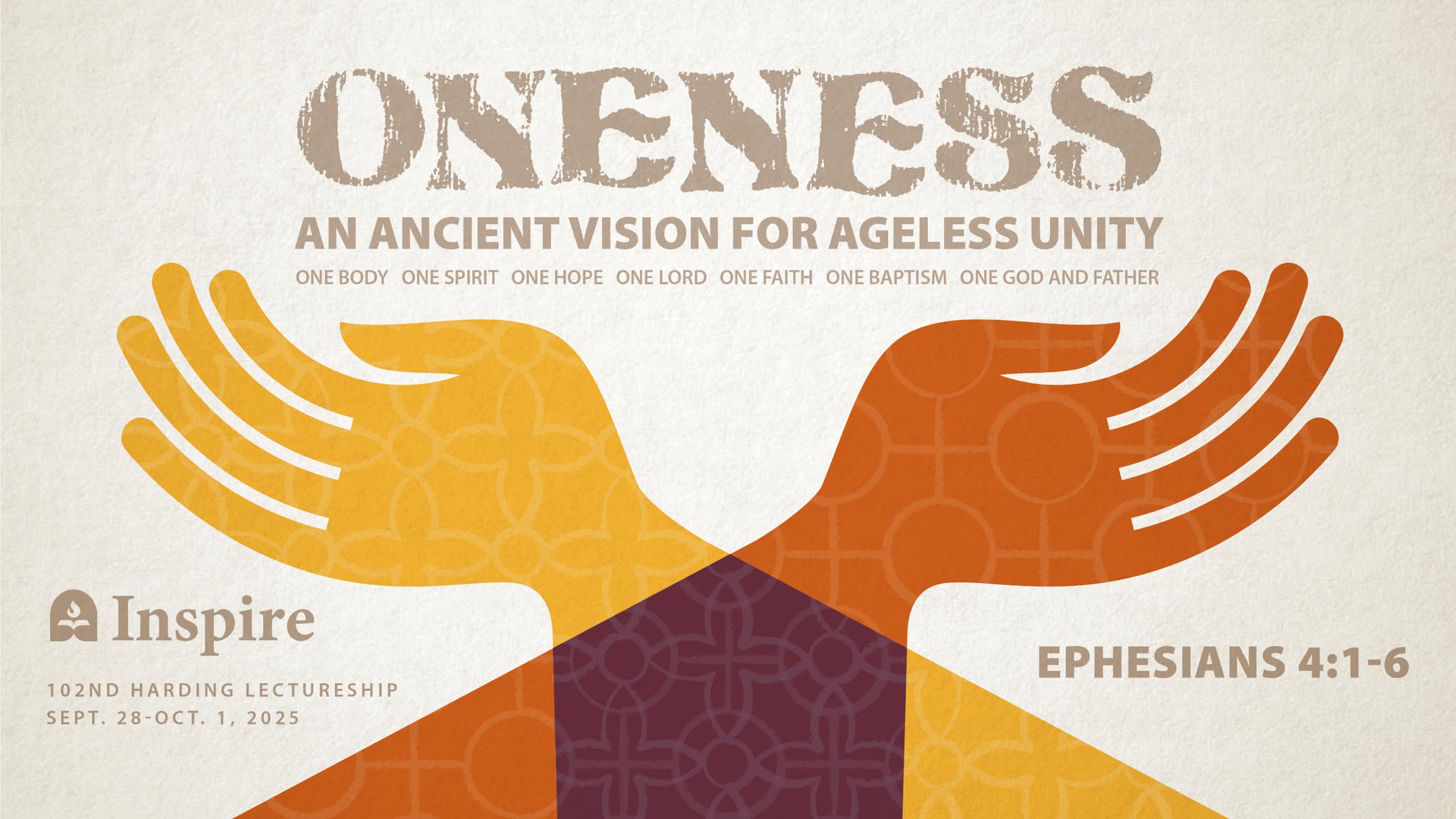
The theme of the Inspire Lectureship this year was Oneness: An Ancient Vision for Ageless Unity, and focused on the 7 Ones of Ephesians 4 as a source of unity among God’s people. As part of that emphasis on unity, the Lectureship Committee seemed to make a concerted effort to cross some traditional divides, inviting a large number of ethnically diverse presenters (African American, Latino, and Native American, among others), as well as some speakers from outside the fellowship of Churches of Christ (albeit, ones with broad theological kinship, like the Independent Christian Churches or a local nondenominational church). This latter move generated great controversy on social media, which I thought was unfortunate. Focusing on that controversy is not the main point of this post, but I feel I would be remiss if I ignored it and pretended it didn’t happen, so here are some brief thoughts:[1] 

  1. I coauthored a book earlier this year on the history of Churches of Christ and the American Restoration Movement, and how unity was an early and driving goal of that movement. I have written before how unity itself is a doctrine, a teaching of Jesus, and how we must take it seriously if we desire to follow Him. With that in mind, it is more than a little ironic that those purporting to be faithful caused an online uproar in response to a concerted effort to seriously reflect on the doctrine of unity.
  2. Many of the critics hold the opinion that only members of Churches of Christ should be allowed to speak at Harding’s Lectureship (and, to be more accurate, only members of the right kind of Churches of Christ). They are certainly entitled to that perspective, but objectively, it is a sectarian one.
  3. Some of the critics suggested that this Lectureship reflected a dangerous slide down the slippery slope to liberalism for Harding, and that they were not sure if they could continue to support the school. These warnings could be taken more seriously if the same critics had not been saying the same things for years; as it is, it comes across as disingenuous.
  4. For all of the controversy, I found this year’s Lectureship to be remarkably similar to previous ones. It did not seem to be edgy, and when I spoke to others in attendance, they agreed. Furthermore, for a school purportedly sliding into liberalism, it was surprising on the first night to hear the school president share Harding’s new Statement of Faith that requires alignment from faculty and staff on a historically Christian sexual ethic (Harding has never done this in the past, so this represents a markedly theological conservative move), the president affirm a continued commitment to a cappella worship and male spiritual leadership, and the keynote speaker reject theological progressivism as an exit to non-faith (see below).

Now, on to the main thing!


With the new format that was adopted last year, there is a greater emphasis on multi-session tracks than standalone lectures. For a variety of reasons (sometimes I wanted to be sure to stop in for a session to greet a presenter I knew; other times I had meetings that interrupted my schedule), I ended up often hopping around and catching bits and pieces of different tracks. I still heard good content, but overall I lament my haphazard approach because I know I would have gotten more out of the week if I would have stayed with a few of the tracks for their entirety.

I got to attend a variety of lectures and classes, and here is a brief recap of what I went to, along with some takeaway quotes:

One Body, Rubel Shelly: Shelly has been a longtime preacher and academic within Churches of Christ, and as you will see, I heard from him multiple times at this year’s lectureship. He offered the opening keynote and I thought did a great job at challenging us to appreciate the very notion of unity:

“Few topics in the Churches of Christ are as divisive as unity.”

“We are one body whether we like it or not.”

“The greater concern than accepting someone Jesus rejected is rejecting someone Jesus accepted.”

“It’s not about us being right and everyone else being wrong, but Christ being right and all of us being wrong.”

I thought one of the best parts of Rubel’s presentation was his warning against theological progressivism, which he referred to as the opening of the door for people to exit to non-faith. This warning might come as a surprise to many within Churches of Christ who consider Shelly himself to be a progressive, but this is kind of the point: there is a desperate need in our churches to be able to distinguish between orthodoxy and progressivism. For a variety of reasons, most within our churches are not well equipped see the difference between practices that go against our traditions and convictions (that we often label as “progressivism”) and true progressivism, which is faith-destroying. Maybe I’ll write more on this sometime, but I thought this was a valuable admonition.

S.R. Cassius and the Fight against Racism in America, Edward Robinson: Dr. Robinson is the preeminent historian of African American Churches of Christ, and did a three-part series on noted African American leaders in Churches of Christ. He was also a former professor of mine in grad school, and I loved his class on the American Restoration Movement.

I was only able to attend one of Robinson’s sessions, which was on S.R. Cassius, a bi-racial preacher in Churches of Christ in the late 1800s and early 1900s. Unlike the more famous Marshal Keeble who came after him, Cassius openly and consistently criticized racism, and worked more diligently than anyone else in Churches of Christ to lift up his race.

One Baptism, Scott Adair: Scott teaches in the College of Bible and Ministry at Harding, and offered the Monday morning keynote. Scott talked about how in the ancient world, the way you walked revealed something about who you were. Paul uses “walk” thirty times in the New Testament, and in Ephesians, addresses the idea of walking a lot. Unfortunately, after receiving our commission at baptism, we often walk like the world.

In Ephesians, Paul is not trying to baptize people; he’s talking to baptized people. And as baptized people, we should know that baptism is supposed to remind us of who we are:

  • At baptism, we make a confession of Jesus as one Lord. We are loyal servants of the crucified and risen Savior, so we should act accordingly.
  • We are baptized in the name of the Father, Son, and Holy Spirit—the one God. This reminds us that we are beloved children, and the one Spirit seals us with the one hope.
  • Baptism is a reenactment of the death, burial, and resurrection of Jesus, the core historical event the one faith rests upon.
  • We are baptized by someone else; someone else re-presents the church, the one body to us. The church is the presence of God in the world.

“Our calling: we are washed, resurrected sons and daughters of God who are empowered by the Spirit to re-present Christ to the world.”

The Future of Churches of Christ: Proposals for Unity, Keith Stanglin, Scott Adair, Rubel Shelly: This was a three-part series over the course of three days where each day one speaker would present his ideas and the other two would respond. Unfortunately, it was a popular series in a too-small room, and I wasn’t able to attend one of the presentations (Adair’s).

Keith Stanglin went first, and presented the common argument that the Restoration goal of achieving unity through restoration has not worked. Churches of Christ today represent significant diversity, but the tension between unity and restoration is still present. Furthermore, Stanglin argued that it wasn’t the Bible that united first-century Christians, because the New Testament wasn’t completed yet. Instead, it was the common belief in the core content of Christian proclamation, the common confession of the apostolic faith. Ultimately, Stanglin’s argument is that unity should be based on something like the Apostle’s Creed, which sums up the earliest proclamations of the gospel.

“The faith confessed at baptism should be a sufficient test of unity.”

“Everyone including God recognizes the difference between ignorance and willful disobedience.”

“Is there room for a category that is not essential but still worth defending?”

In Shelly’s session, what stood out to me was his suggestions that we need to start with Ephesians 4.1-3 before skipping ahead to the “seven ones” of Ephesians 4.4. Unity begins not with doctrine, but with a spirit of humility, gentleness, patience, and bearing with one another in love. The reality is that we can agree about the seven ones, but still violate Ephesians 4.1-3.

“We would do well to pray the prayer that Jesus prayed in John 17. It must be possible or Jesus wouldn’t pray for it.”

One Lord, Rodney Dulin: Rodney serves as the Senior Minister for the Central Pointé Church of Christ in Dallas and delivered the Monday evening keynote. Dulin emphasized that our salvation is centered on the person and work of the one Lord, Jesus Christ.

The early Christian confession that Jesus is Lord was significant and controversial no matter who you were—for Gentiles, it meant that Caesar was not Lord, and for Jews, it identified Jesus with the God of the Hebrew Scriptures. We reference Jesus as Lord and Savior; Him being Savior is what He did for us; Him being Lord is what we do for Him—we must respond to the rule and reign of our Lord.

“It doesn’t matter if you went to Penn State or the state pen, if you’ve been baptized…you belong to the one church.”

Where on Earth is Heaven? Rubel Shelly: This was a three-part series of which I was only able to catch the first session. Much of this was introduction where Shelly was laying the groundwork for what he was going to say next (which I missed), but he did a good job of showing how Plato’s views significantly affected Christian thought in a way that departed from biblical teaching:

  • The material world is deficient and negative to spirituality (in extreme forms, matter is evil)
  • The human soul is immortal (a necessary conclusion for Plato because of the transmigration of souls)
  • Our new bodies will be “ethereal” and escape the flesh (envisioned the world of “forms” beyond matter)
  • The goal of life is to escape Earth/flesh/matter (the biblical goal is quite the opposite!)

I wish I would have been able to take in more of this track, but ultimately, Rubel affirms what I argue for in this series (see especially this post on our resurrection bodies).

One Faith, Olu Shabazz: Shabazz serves as the Senior Minister and Evangelist for the Harlem Church of Christ in New York City, and delivered the Tuesday morning keynote. He emphasized how the “7 Ones” speak to the exclusivity of apostolic Christianity, which distinctly contrasts with the subjectivity of our own time. It is simply not possible to look at the “one faith” of Ephesians 4 and come away thinking that just any path will lead to God; when man rejects the one faith, he establishes his own religion instead.

“If your truth is not God’s truth, then it is no truth at all.”

The Anxious Generation: The Challenge of Collective Action, Monte Cox and Rachel Wisdom: Monte serves as the Dean of the College of Bible and Ministry at Harding, and Rachel, his daughter, is a school counselor in a nearby town. Their track focused on big ideas from Jonathan Haidt’s The Anxious Generation, a book I love and reviewed here.

Because I had already read the book and am very familiar with Haidt’s ideas, I decided not to attend this entire track, but just went to one session (so I could be with my wife, who attended this track). The session I went to, “The Challenge of Collective Action,” was great, and it made me regret missing the other sessions. Cox and Wisdom were a brilliant combination, and clearly enjoyed presenting together. They were witty and knew the material well. The material itself was not new for those who had read the book, but Wisdom’s insights from her school context were helpful, and it is always good to be reminded of important things that you already know.

One helpful reminder from Haidt is the metaphor of parenting as carpentry or gardening. Carpenters follow detailed plans with precise measurements, and if they follow the plans precisely, they get the result they desire. Gardeners realize that they are not ultimately in control of producing growth, but that instead their job is to create an environment where healthy growth can occur. Many people try to parent as carpenters, following the right plan and controlling all the variables to produce the perfect, ideal children, but parenting is more like gardening than carpentry: as parents, our job is to provide a healthy environment where children can thrive, and not try to micromanage the outcome. Though Haidt is not a person of faith, I think there is deep biblical wisdom in this admonition, as we know that we are ultimately in control of very little, and that our task to is to be faithful in our opportunities and trust God to yield the results that honor Him, including with our children! As a parent who is often inclined toward carpentry, this is a very helpful metaphor and reminder.

The Restoration of Israel, the Kingdom of God, and the Church in Luke–Acts, Mark Black: Mark Black is a long-time professor at Lipscomb University (His older brother Allen was one of my professors at HST). Black shared a ton of information, but ultimately was reflecting the work of Jacob Jervell, a Norwegian theologian who argued that the church in Acts is the beginning of the fulfillment of promises made to Israel. His views have largely won the day in the academy, but are not necessarily as widely understood in the church.

I couldn’t even begin to write down all that Dr. Black shared, but here were some concluding remarks (some of which are fairly provocative for a variety of reasons). If the church is essentially restored Israel…

  1. We shouldn’t call ourselves the New Israel.
  2. The Old Testament has not been abolished.
  3. God didn’t change His ways with the Messiah; His interactions with humanity have always been based on grace.
  4. The church does not replace Israel.
  5. The are no Christians outside of the church anymore than there are Jews outside of the people of Israel.
  6. The mission of the church remains the same mission of Israel—bless all the nations and bring them into God’s people.
  7. We should take kingdom language literally—the land itself will be restored.
  8. There is no “right” proscribed method of church leadership.

Some of these conclusions seem evident to me, and others less so; I wish there would have been more time for all of these to be unpacked! But this was a rich session with lots of important ideas that would help the average church member to better understand the story of Scripture and the implications of it.

Who Are You Really? Accepted and Secure in Christ (Eph. 1.3-14), Evan Todachine: Evan preaches at the Kayenta church of Christ on the Navajo Reservation in Northeast Arizona. I first met Evan when my former church began to support his work in Arizona, and I wanted to reconnect with him and support him as he spoke as part of the Youth Ministry track.

Evan talked about the idea of identity and what that looks like in a Navajo context (you introduce yourselves through your clan identity), and how we live in a world that is obsessed with identity, but according to the Bible, identity is God-declared rather than self-defined.

“Until we know who Christ is, we will always struggle with identity.”

Does a Man’s Color Matter? Olu Shabazz: I went to a couple sessions from this track, and it was fascinating—Bro. Shabazz shared his experience growing up in a family in the Nation of Islam and also discussed Black Hebrew Israelites. This was part of a larger discussion about ethnic identity and whether or how a person’s skin color matters. God created humans as “trichotomy beings,” or, in the words of Shabazz, “You are a spirit that has a soul that lives in a body.”

This is another session where I would have enjoyed being able to sit down and have a follow-up discussion with the speaker. I believe Bro. Shabazz would argue that our embodied experiences matter and that we should seek to understand one another based on those experiences, but that one’s skin color doesn’t give particular insight into spiritual truth or special access to God.

Does God Predestine Individuals to Salvation or Condemnation? Kevin Burr: Kevin is one of my best friends, and is now a Bible professor at Harding. He tackled a historically controversial question regarding predestination, and did a great job. His basic thesis is not particularly controversial to me: the Bible teaches predestination and free will. Here are some key points:

  • Scripture repeatedly affirms God’s election of Israel, and Paul knows this—He believes God’s election of those in Christ is based on this.
  • Choice and love are essential, necessary actions in establishing and continuing a relationship.
  • Paul understands a “corporate election” model for Israel, and preserves corporate election for the church. I have held to a model of corporate election for a long time, but it was new to me that Paul bases his understanding of this in God’s relationship with Israel. It seems obvious to me now!
  • God’s predestination has room for human agency; if your view of predestination rejects human agency, then Paul’s words are nonsense.

One Hope, Matt Love: Matt preaches for the Beebe Church of Christ and also teaches at Harding School of Theology, and wrapped up the Lectureship with the Wednesday evening keynote. Matt offered some poignant thoughts on hope as an essential element of the Christian faith that we are perhaps in danger of losing. Noting the increasing move toward happy funerals that avoid the heaviness of death:

“We have a big problem and it is death…but Jesus rose and we will too. Your entire life was supposed to point people to Jesus, and your final gift is to point people to Jesus one last time.”

Perhaps, one of our problems is that we have hoped in the wrong things…hoping that “our team” (Churches of Christ) would win, hoping that this Christian life would be easy, hoping that death wasn’t waiting for us at the end of this:

“When the time comes, will we let go of our other hopes for the sake of one hope?”

“When it comes to our faith, there is only one basket to put our eggs in…. Our hope is not in the idea of God, but God. Not church, doctrines, or religious systems; our hope is in a single person—the Lord Jesus Christ.”


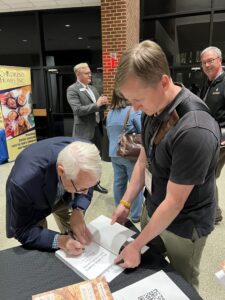
Dr. Black signing my copy of the new book in his honor.

In addition to attending all of the lectures described above, a highlight of Lectureship was a presentation of a festschrift (a book of essays in honor of someone) to Dr. Allen Black. Dr. Black, as mentioned above, was one of my professors at Harding School of Theology. He had a profound impact on my life, faith, and ministry, and several of his former students banded together to write and produce Teaching God’s Sons and Daughters: Essays in Honor of Allen Black. 

This was presented during one of the evening keynotes, and when prompted, dozens of Dr. Black’s former students stood up. Dr. Black was overjoyed and overwhelmed, and it was a touching moment.

As mentioned previously, I wish I would have done a better job planning out my week, but I still got to hear a lot of good sessions at Inspire this year, and it was a blessing to see so many old friends and professors. For me, autumn is a season of blessing, and the Harding Lectureship is one of the many great blessings I enjoy in my life.


[1] I am employed (albeit, in a very part-time fashion) by Harding University, so I should note that I am in no way speaking on behalf of the school in an official capacity. Furthermore, I had nothing to do with the planning of the Lectureship, so I was not responsible for anything that happened, and nor am I automatically defensive of it. My thoughts here are my own.

Recent Publications

I have not written as much in this space over the last few months as I would have liked. Part of that is related to the regular busyness of full-time ministry, adjunct teaching, and being a dad, but part of it is also tied to an increased amount of writing and editing that I have done this year:


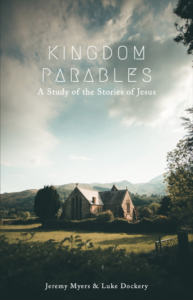
Earlier this year, I announced the publication of a new book on the parables of Jesus, co-written with Jeremy Myers and published through Deeper Youth Ministry. This was a fun project to work on, and I think it is a really helpful and accessible resource for Bible classes. From the back of the book:

The parables of Jesus are beloved by many, but are not always well understood. It is commonly believed that Jesus taught with simple stories in order to make it easy for His audience to understand, but while the stories do tend to be simple, the parables of Jesus are often anything but easy. In fact, Scripture repeatedly records the confusion of Jesus’s audience when He teaches in parables, and even relates Jesus explaining that He speaks in parables specifically because He knows some of His audience won’t be able to hear and understand them.

Kingdom Parables guides students through a close study of Jesus’s parables, not with an expectation that they will be easy to understand, but that they will offer important teaching about the kingdom of God and how God expects citizens of His kingdom to live.

The book is available in paperback on Amazon, and in digital format on the Deeper Youth Ministry website.


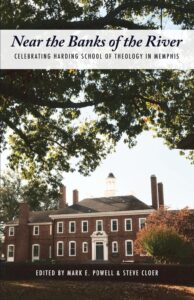
In April, Regnum media released a special volume to honor Harding School of Theology, which is moving from Memphis, TN to Searcy, AR this fall. Near the Banks of the River: Celebrating Harding School of Theology in Memphis was a tribute to the work of HST, and brought together excellent essays by several distinguished HST graduates in various fields. I helped to edit this volume, and also did the layout and design. From the back of the book:

For 66 years, from 1958-2024, Harding School of Theology in Memphis has had a national and global impact training over 1800 graduates and 4700 students. A large percentage of influential ministers, academic thought-leaders, and innovative practitioners in Churches of Christ trace their roots back to HST. As the school prepares to transition to Searcy, Arkansas in fall 2024, this collection of original essays celebrates the influence of HST in Memphis and looks to the future of theological education and missional leadership.

Near the Banks of the River is available in paperback on Amazon.


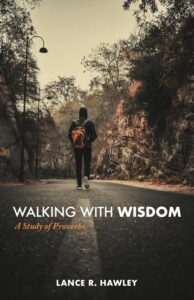
Just this month, Regnum released our most recent volume, Walking with Wisdom: A Study of Proverbs, by Lance Hawley. Dr. Hawley is an excellent professor at Harding School of Theology, and produced a scholarly yet accessible work. I worked on the editing, layout, and design of this project as well. From the back of the book:
The people of God may desire to make good and faithful decisions, but actually doing so takes wisdom and courage.The Book of Proverbs aims at cultivating wisdom, insight, and understanding in its readers, so that they will choose the way of God instead of the way of folly. It is ancient wisdom that wants all people to know the joys of Wisdom’s party.

In Walking with Wisdom, Lance Hawley guides readers through the book of Proverbs with a special emphasis on its significance for contemporary life. It is ideal for small group studies, Bible classes, and personal study. The book includes chapters on what Proverbs has to say about relationships, money, and wise speech, along with chapters on how to cultivate and celebrate wisdom.

Walking with Wisdom is also available on Amazon in paperback (Kindle version is forthcoming).


Now that my summer youth ministry grind is over, I hope to get back to writing here with some degree of regularity, but as you can see, I have managed to keep busy!

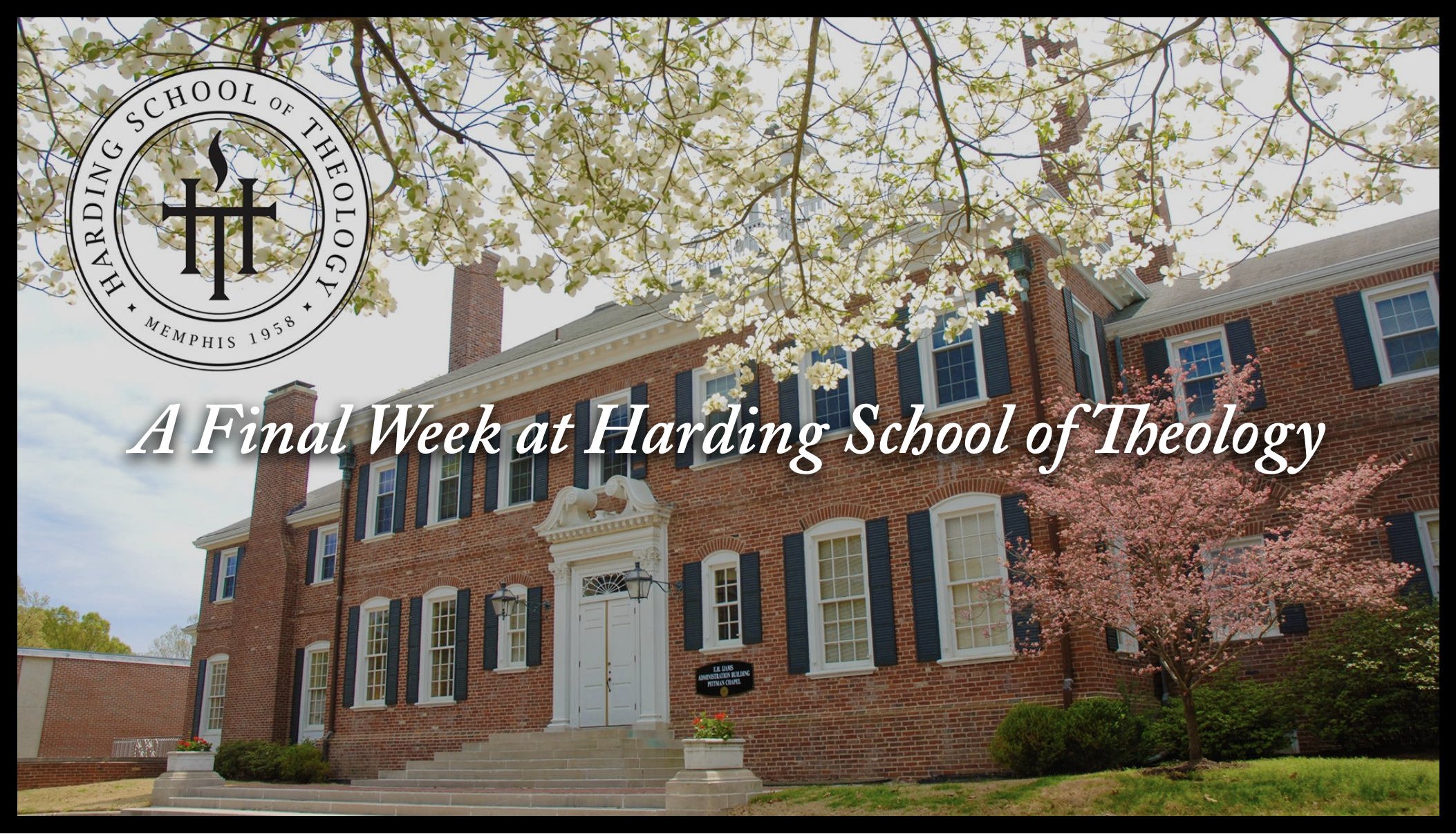
A Final Week at Harding School of Theology

Back in October, I was blessed to be able to spend a week on the campus of Harding School of Theology in Memphis, where I audited a week-long intensive course, “Christian Formation of Children.” This was a great blessing to me for multiple reasons.

First, I was a student there from 2010-2018 (yes, I know it was a long time) before receiving my MDiv, and it was an incredibly formative place for me (more on that below). Second, I got to spend the week with my wife Caroline, who was enrolled in the same class as a credit student. In all my time as a student at HST, I always left my wife at home with the kids while I would go to Memphis for intensive course weeks, and I felt like I finally got to share this part of my life with her. We sat next to each other in class during the day, ate at all my favorite Memphis restaurants, did homework in the library, and walked through the neighborhoods around campus together. Third, it seems quite possible that this will be my last opportunity to spend any significant time on the HST campus in Memphis, with the announcement that HST will be moving to Searcy in Fall 2024. Finally, it was a great class!

Much has been written and said about HST moving from Memphis to Searcy, and I’m not sure I have anything of significance to add to that conversation. I remain personally unconvinced that this move is what is best for the school, but I also acknowledge that I am not an insider in this discussion and that there are many factors and variables of which I am probably unaware. I do know that, in a climate where seminaries associated with Churches of Christ are closing (see Austin Graduate Seminary and Oklahoma Christian Graduate School of Theology), I am grateful that HST is not closing its doors, and I am confident that God will continue to use the school to bless churches and train ministers in its new location.


As I mentioned above, HST was a deeply formative place for me. I went to Harding University for undergrad and had a wonderful experience there. I met Caroline there as many lifelong friends. It was at Harding that I developed my deep love for ultimate frisbee, and also where I began to make my faith my own. I learned a lot of things in various classes, but I would also say that I didn’t make deep connections with faculty members or older mentors (largely my own fault). I entered and graduated HU with very little idea of what I wanted to do in life.

Harding School of Theology was different. I began there later in life (I was 27), and had already been in youth ministry for a few years. Honestly, I began my degree because I was seeking credentials so I could teach at the college level someday. My plan was to get in and get out as soon as possible and move on to the next thing. That is not at all what happened, but I got so much more in the bargain:

  • I have very fond memories of my intensive course weeks in Memphis, which were some of the most challenging weeks of my life, but also some of the best weeks of my life. There I met a new set of lifelong friends, and many of these were friends who were similarly “in the trenches” of ministry and knew about its challenges, but also its value. Somewhere along the way, I largely forgot about the dream of teaching, and developed my love for congregational ministry. More specifically, it was work for classes at HST that led to the youth ministry-related research that would ultimately change my life in profound ways.
  • There, I met a set of mentors who would pour into me both in and out of the classroom. They would push me academically, spiritually, and theologically, but always in ways that were respectful and affirming to my faith. I have written before about the idea of “deconstruction,” which is a very slippery concept, but it would be fair to say that HST significantly contributed to the deconstruction of my faith in the healthiest sense: it became my own, mature faith.
  • When I began at HST, Caroline and I were still relatively newlyweds and weren’t parents yet. Life would get real for us soon after, though. My HST community would mourn a miscarriage with us, celebrate the birth of our first daughter, and then pray faithfully for her and us as we learned that she had a rare genetic condition and began the life-altering journey of being parents to a precious daughter with special needs.

As I was reflecting on my time at Harding School of Theology, I realized that, through all of what I mentioned above, HST gave me the twin gifts of humility and confidence. That may seem like a strange pair, but they actually fit together quite well. Regarding humility, my graduate school training helped me to understand how little I really knew and convinced me of the need to be a lifelong learner. Regarding confidence, my time at HST helped me to develop a really solid foundation of biblical, theological, and ministerial skills. I didn’t know everything, but there were some things I did know, really important things that I could build my life around. And even though I’m never going to master Scripture or ministry, I developed skills to study Scripture well and do ministry faithfully. Humility and confidence are wonderful gifts that I received and which I have tried to use faithfully in service of God’s Kingdom, and I can confidently say that I wouldn’t still be in ministry without my training at HST.

For all these reasons and more, the HST campus in Memphis is hallowed grounds for me. It was a great blessing, albeit a bittersweet one, to spend a week there with my wife whose sacrifices made it possible for me to attend graduate school in the first place, and who has been my partner in ministry and in all things.


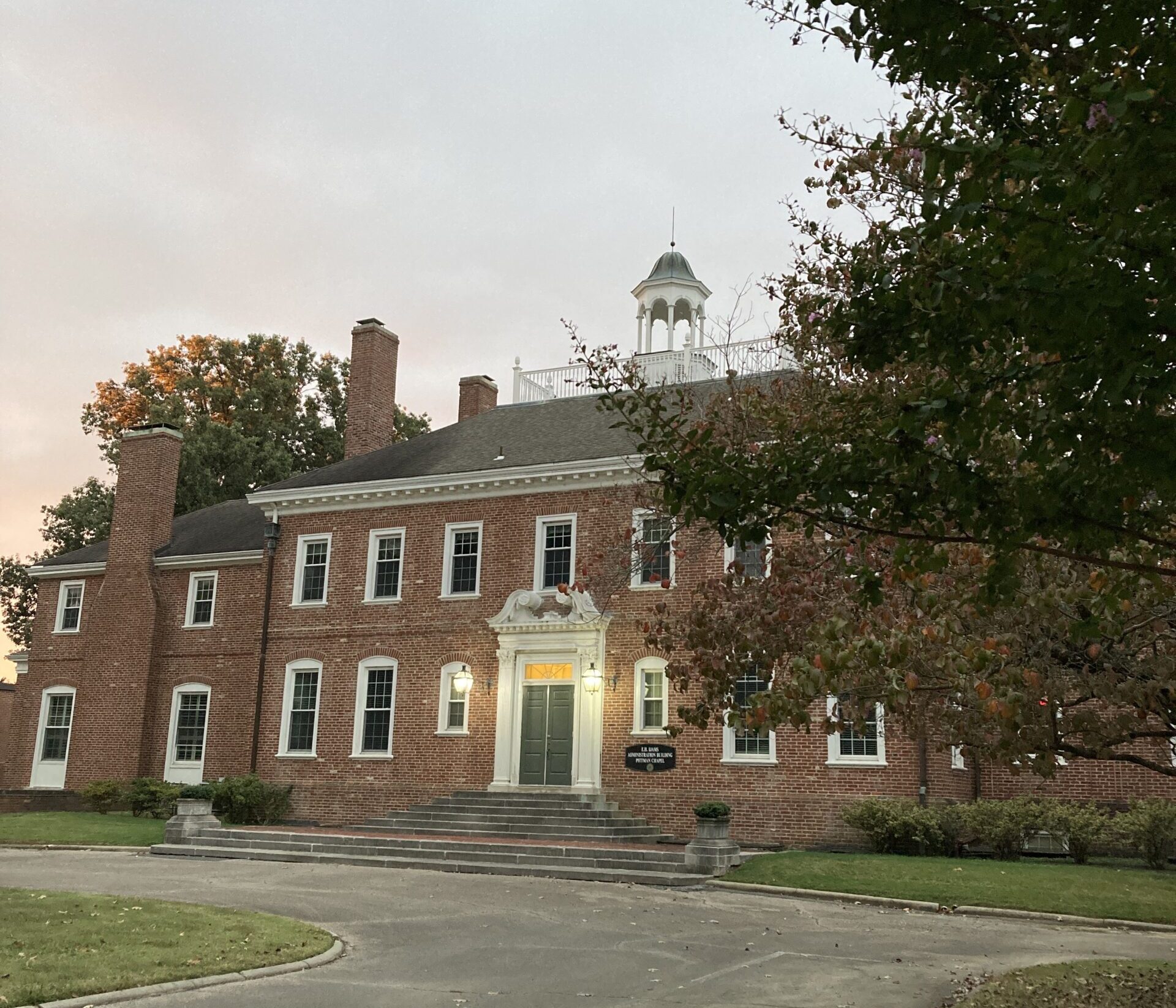
The HST Mansion serves as the administration building of the school and is also where chapel is held. I took this photo after one of my early morning walks before class. October was a beautiful time to be in Memphis.

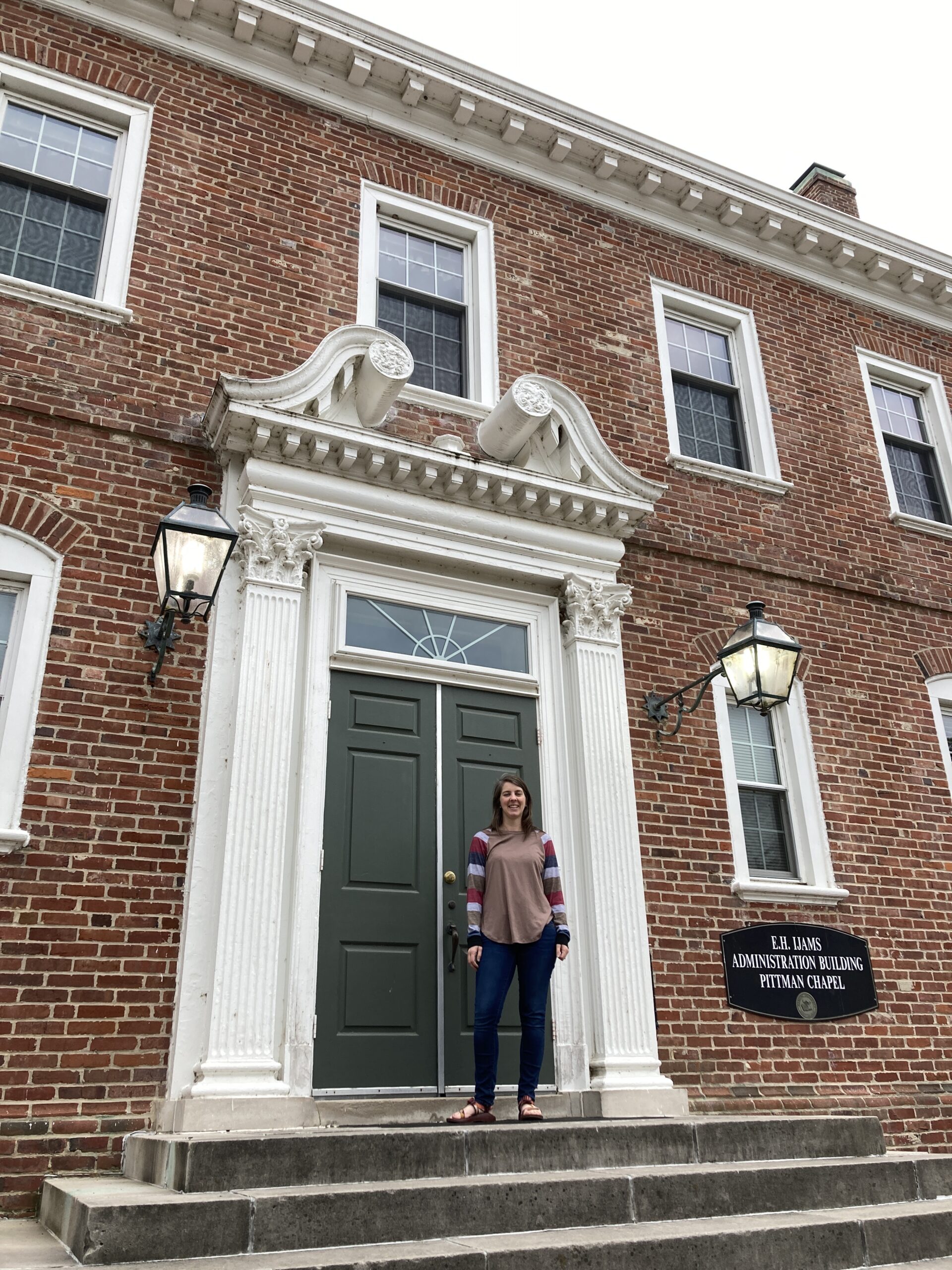
My very favorite person in one of my very favorite places!

« Older posts

© 2026 The Doc File

Theme by Anders Noren — Up ↑