The online journal of Luke Dockery

Tag: Jesus (Page 3 of 15)

Do Not Be Anxious about Your Life

This is an edited version of a sermon that I recently preached at Cloverdale Church of Christ.

I think that some people are naturally inclined toward worry, and I confess that I am one of those people. For as far back as I can remember, I have always struggled with worrying about things. This is still true today. In fact, over the last several months (with brief interludes), I have been stressed about a lot of different things and worried about fulfilling all of the commitments that I’ve made. And, of course, I know it’s not healthy to carry so much stress, so at times I worry about that too! I’m stressed out about how much stress I have! What an ironic and annoying cycle that is.

I suspect that I’m not the only one who struggles with this. Not the only person who feels stressed out and overstretched, not the only person who worries about people I love, not the only person who is uncertain about the future and the world in which we live, not the only person who is tempted to be anxious about a lot of things. I suspect that because we live in anxious times.

Anxious Times

Social psychologist Jonathan Haidt recently published a book, The Anxious Generation, that chronicles the alarming state of mental health among Generation Z, those individuals roughly between the ages of 10-25. By virtually any measure of mental health—psychological disorders, diagnoses of anxiety and depression, instances of non-fatal self-harm, and suicide rates—Gen Z is in a rough spot. Haidt ties this significantly to smartphones and social media because it was around 2010—when smartphones with social media apps became prevalent—that all of these measures began to spike upward. But there are other correlating factors too: drastically reduced amounts of sleep (which basically makes every aspect of life worse), breakdown of real-life interpersonal relationships, and certain parenting trends. An additional factor that I would add, which Haidt (who is not religious) leaves out: research consistently indicates a wide array of positive traits (including positive mental health outcomes) related to religious faith, but we live in a rapidly secularizing society where faith is on the decline. That is certainly part of the picture as well.

And while Haidt’s research focuses on Generation Z, these spikes in anxiety and depression are present in other generations as well. The spikes may not be quite as severe, but they’re there and they are significant. 

What sorts of things make you anxious?

  • Maybe it’s financial issues: will your paycheck stretch enough to be able to last for the whole month? Are you putting enough aside to live on when you retire? Is retirement even an option? 
  • Forget about retirement: maybe you’re anxious simply about the prospect of being able to get a job that will support a family. Maybe you’re worried about all of the schooling that lies between you and that job and all of the stress that comes with it.
  • Maybe it’s relational: maybe you are concerned about your relationship with your spouse, or your boyfriend or girlfriend, or your roommate, or your boss, or your co-workers, or your parents, or your children, or you adult children.
  • Maybe you are concerned about the health of a family member, or your own health—a recent diagnosis.
  • Maybe you’re worried about the upcoming election season—the direction of our country, the future of our nation.

We live in anxious times, and there is so much that can drive us to anxiety and worry if we let it. But Jesus has something to say about this. He has counsel for us to consider. Before we get into that, there are two things I want to mention briefly, just so you can be sure of what I’m not trying to say:

  • I don’t believe that Jesus’s teaching about anxiety means that you are a deficient Christian if you struggle with this or that it is wrong for you to seek help from a licensed counselor. Not at all. If you have an anxiety disorder, going to get help with that disorder is an exercise in actually trying to obey what Jesus says here. 
  • Also, not all worries and concerns are the same. The Bible actually speaks positively about Paul’s anxiety for the churches (2 Cor 11.28) and Timothy’s anxiety for the welfare of the Philippians (Phil. 2.20). Some issues are more worthy of our concern than others. But even in those areas, I think what Jesus says here is still helpful.

What Jesus Wants Us to Remember in Anxious Times

22 And he said to his disciples, “Therefore I tell you, do not be anxious about your life, what you will eat, nor about your body, what you will put on. 23 For life is more than food, and the body more than clothing. 24 Consider the ravens: they neither sow nor reap, they have neither storehouse nor barn, and yet God feeds them. Of how much more value are you than the birds! 25 And which of you by being anxious can add a single hour to his span of life? 26 If then you are not able to do as small a thing as that, why are you anxious about the rest? 27 Consider the lilies, how they grow: they neither toil nor spin, yet I tell you, even Solomon in all his glory was not arrayed like one of these. 28 But if God so clothes the grass, which is alive in the field today, and tomorrow is thrown into the oven, how much more will he clothe you, O you of little faith! 29 And do not seek what you are to eat and what you are to drink, nor be worried. 30 For all the nations of the world seek after these things, and your Father knows that you need them. 31 Instead, seek his kingdom, and these things will be added to you.

32 “Fear not, little flock, for it is your Father’s good pleasure to give you the kingdom. 33 Sell your possessions, and give to the needy. Provide yourselves with moneybags that do not grow old, with a treasure in the heavens that does not fail, where no thief approaches and no moth destroys. 34 For where your treasure is, there will your heart be also.

(Luke 12.22-34)

In this passage, beginning in Luke 12.22, Jesus tells His disciples, “Do not be anxious about your life, what you will eat, nor about your body, what you will put on.” It’s probably worth noting up front that Jesus is very aware that there are things in life that will prompt us to worry.

Look at the life of Jesus: did He experience financial insecurity? Of course: He was essentially homeless during His public ministry, and had to rely on the generosity of others or the occasional coin from the mouth of a fish to cover His expenses. Did He have relational problems? His brothers thought he was crazy, his cousin John was murdered, and one of His followers betrayed Him. Did he carry a lot of stress related to work? Well, His job was to be the Savior of the entire world, so yes, I think you could say that there was stress involved in work of that magnitude. 

Jesus wasn’t sheltered from the anxiety we feel. He lived in anxious times, too.

From Luke 12, here’s what Jesus wants us to remember in anxious times:

(1) Your Father knows, and He loves you.

We need to note that Jesus addresses this entire section of teaching to disciples—people who know God as their Father and are seeking to entrust Him with their lives. I say this because, if you don’t know God as your Father, I do genuinely believe that there is a lot to be worried about. Not just because of your eternal destination, but on a fundamental level, without God as your Father, you basically believe that it’s all up to you. You’re on your own in this life and you have to figure out your troubles yourself. 

But if we are disciples of Jesus, it should be different. God provides for the ravens, and He values us much more than they—we shouldn’t worry about our food. God clothes the lilies of the field and makes them beautiful, and values us much more than they—we shouldn’t worry about our clothing.

Jesus says in Luke 12.30 that “the nations of the world”—the Gentiles, those who don’t know God—they worry about these things. And that makes sense: they don’t know God as their Father. But it doesn’t make sense for those of us who claim God as our Father to worry about these things. If we are believers, we shouldn’t live like atheists. 

God is our Father. He knows what we need, and He loves us.

(2) Worrying doesn’t help.

Jesus asks in Luke 12.25, “Which of you by being anxious can add a single hour to his span of life?” Jesus is underscoring here the impotence, the powerlessness of worry—which of your problems can you solve by worrying about them?

A lot of the time we worry about things that are cloaked in the uncertainty of the future: an important meeting or presentation that is coming up, a difficult conversation that you are dreading, or the results from a medical scan that might change your life. But really, worrying about the future is just a way for us to increase the amount of trouble we have without solving anything. After all, if what we are worried about doesn’t come to pass, then we have worried for no reason. If the thing we are worried about does come to pass, we’ve robbed ourselves of peace of mind without positively affecting the situation in any way.

Worrying doesn’t help things. 

(3) Seek first God’s kingdom. 

Instead of being preoccupied with the worries and concerns of this world, we should instead seek God’s kingdom (Luke 12.31). Another way we could say this as disciples of Jesus is that we should emulate His way of life and make His priorities our priorities. 

And if we do that, Jesus says, all of these other things that we need will be added to us. And, by the way, don’t think that this emphasis on the kingdom means that we should add the kingdom to the list of things that plague us with anxiety—that kind of misses the point. Instead, we should seek the kingdom knowing that it is our Father’s “good pleasure to give it to us” (12.32).

We live in anxious times. But remember, Jesus says: your Father knows and He loves you, worrying doesn’t help, seek first God’s kingdom, and the other things will be added to us.

Where Do We Go From Here?

As we seek to apply Jesus’s teaching to our lives, here are a few things to consider:

(1) Take your worries to your Father.

Anxieties will come. We live in anxious times and there’s much to worry about if we indulge those impulses. When you feel the burdens and stresses of life weighing you down, when you feel the stress and anxiety spiking your blood pressure, take it to God in prayer.

Earlier I mentioned the experience of Jesus and the anxieties He must have felt, but generally speaking, He never let it show. But that changed on the night He was betrayed, in the Garden of Gethsemane—it all seemed to come crashing down. Jesus was clearly anxious as He anticipated the horrendous death that was approaching. So what did He do? He took it to the Father, and in so doing, received the strength He needed to face what was coming.

It has been true in my life that I tend to worry less when I pray more.

(2) Count your blessings, not your concerns.

I don’t know about you, but one of the hardest times for me can be at night, lying awake, worrying about all the things I need to get done, all the problems I need to solve, all the people I need to fix (ha!). 

As I am tempted to just lay there, doom cycling through all of my concerns, I’ve found that a helpful practice instead is to focus on my blessings rather than my worries. Sometimes I’ll work my way through the alphabet, thinking of a blessing in my life that begins with each letter. 

This accomplishes multiple purposes: it distracts me from the things I was obsessively worrying about, it reminds me of blessings that I may have otherwise overlooked, and it shifts my focus from the things in life that I think I have to take care of to the Father who takes care of me. (And it puts me to sleep, which is an added bonus!)

It has been true in my life that I tend to worry less when I thank God more.

(3) Freely give of your money, possessions, and time.

Jesus especially focuses on material possessions when talking about things that we shouldn’t worry about. It is no coincidence that right before this, we have the Parable of the Rich Fool, who tries to hoard wealth in an effort to provide peace and security for his life, and at the end of this passage, beginning in 12.33, Jesus says, “Sell your possessions, and give to the needy. Provide yourselves with moneybags that do not grow old, with a treasure in the heavens that does not fail, where no thief approaches and no moth destroys. For where your treasure is, there will your heart be also.”

If our lives revolve around the acquisition of wealth, comfort, status, and security, then that’s where our hearts will and we will be consumed by anxiety for those things. But if our lives revolve around God’s kingdom, then we will freely give those things away and in the process, they will lose their hold over us. Where your treasure is, there will your heart be also.

It has been true in my life that I tend to worry less when I give more.

Jesus says, “Do not be anxious about your life.” He says that not to shame you, but to save you.

Jonah Naps in a Boat

The importance of Bible reading was impressed upon me from a young age, so I had the benefit of reading through the entire Bible several times before I graduated from high school. Of course, this is a good practice, but reading the Bible for yourself can be an unsettling experience. When you read Scripture for yourself, you learn that there are parts of the Bible that are rough around the edges, parts that are entirely foreign to modern ideas, and parts that are certainly not meant for young readers. Furthermore, you learn that a lot of biblical characters who are often presented as heroes in children’s storybooks and Sunday school classes aren’t very heroic at all!

I remember the first time I read the book of Jonah for myself as a kid and moved beyond a storybook understanding of Jonah. Far from the simplistic “good guy makes a mistake but then repents and obeys God” storyline, Jonah is a more complex book, and Jonah himself is a less likable character than what is often assumed. I find this book to be fascinating, and I have actually written about Jonah several times over the years.

As I was reading through Jonah again recently, I was struck by this episode, which occurs after Jonah ignores God’s command to preach to Nineveh and instead boards a ship bound for Tarshish:

4 But the Lord hurled a great wind upon the sea, and there was a mighty tempest on the sea, so that the ship threatened to break up. 5 Then the mariners were afraid, and each cried out to his god. And they hurled the cargo that was in the ship into the sea to lighten it for them. But Jonah had gone down into the inner part of the ship and had lain down and was fast asleep. 6 So the captain came and said to him, “What do you mean, you sleeper? Arise, call out to your god! Perhaps the god will give a thought to us, that we may not perish.”

(Jonah 1.4-6)

What made this stand out to me was how closely it parallels with a similar event from the life of Jesus, where Jesus is on a boat with His disciples on the Sea of Galilee when a storm comes up (Matthew 8.23-27; Mark 4.35-41; Luke 8.22-25). Jesus’s disciples are alarmed, but Jesus takes a nap…just like Jonah did![1]

It’s easy to just dismiss these details as coincidence, but as I have written before, the Bible is a literary masterpiece, and we should should be suspicious of these seeming coincidences: usually, the author is trying to tell us something. In this case, there are many points of comparison between the two events. The following table comes from Kevin Youngblood’s excellent commentary, Jonah: God’s Scandalous Mercy:[2]

Jonah boards a ship bound for Tarshish in order to run away from God’s call to preach to Nineveh; Jesus appears to get on a boat in order to avoid the crowds pressing around Him. While on board their respective boats, both Jonah and Jesus fall asleep while violent storms threaten to sink them. The pagan sailors on board with Jonah and Jesus’s disciples both fear for their lives and awaken them to alert them of the danger and seek their assistance. Both of the protagonists know what to do in order to calm the storm and take appropriate action: Jonah has his shipmates toss him into the sea, while Jesus orders the waves to submit to His authority. Both sets of shipmates are awestruck by the divine power they have witnessed.

What are we to make of these similarities? Well, we should begin by noting that in the gospels, Jesus compares Himself to Jonah in multiple places. Here is one example:

38 Then some of the scribes and Pharisees answered him, saying, “Teacher, we wish to see a sign from you.” 39 But he answered them, “An evil and adulterous generation seeks for a sign, but no sign will be given to it except the sign of the prophet Jonah. 40 For just as Jonah was three days and three nights in the belly of the great fish, so will the Son of Man be three days and three nights in the heart of the earth. 41 The men of Nineveh will rise up at the judgment with this generation and condemn it, for they repented at the preaching of Jonah, and behold, something greater than Jonah is here.

(Matthew 12.38-41)

Jesus highlights a comparison, indicating that Jonah’s three days and nights in the “tomb” of the great fish is a foreshadowing of His own three days and nights in the tomb. But He also emphasizes a contrastin that, despite His greatness compared to Jonah, the generation to which He is preaching will not repent as the Ninevites did for Jonah.

With this in mind, the deep sleep that comes over Jonah and Jesus on their boats symbolizes the “death” and return that both will soon experience, and in the gospels, this episode paves the way for Jesus’s later teaching on the sign of Jonah.[3]

But the carefully crafted narrative is not just about emphasizing the similarities between Jesus and Jonah; the distinction between the two is of paramount importance. Jonah is sleeping on a boat ultimately as a symptom of his determination to escape God’s calling for his life. God wants to use Jonah as an instrument of His astounding mercy, and Jonah wants no part of that. He runs away, hides in sleep, and ultimately, calls his shipmates to throw him into the sea, confident that he will die, but that death would be better than preaching to the hated Ninevites.

Jesus, on the other hand, embraces His calling rather than seeking to escape it. Rather than whip up the popular fervor of the crowds and harness that frenzied energy into a typical messianic rebellion, Jesus leaves and boards a ship with his disciples. There, He is able to be calm, not only because He is the Master of raging tempests, but also because He knows His death is already set. It will not come in a boat, but rather will be characterized by three days in a tomb followed by a return (as with Jonah).

As Jesus awakens and calms the storm, His disciples are awestruck, asking one another, “Who is This?” (Mark 4.41). Jesus has just given them a key data point in their assessment of His identity and mission. Their ongoing journey to discover who Jesus is will be a winding and stumbling one, and they will only come to fully understand His identity after His death and resurrection. This is what the Father had called Him to do, and indeed, his calling and identity were fundamentally linked.[4]

And so they are for God’s people. We are defined by the calling that God places upon our lives to live as disciples of His Son and agents of reconciliation in His world. But there is a choice to make: like Jonah, we can ignore that calling and seek to escape it, or like Jesus, we can embrace that calling and become who we were always intended to be.


In this loose series of Scripture Reflections, I am sharing brief thoughts spurred on by my Bible reading. By way of reminder, my goal for these brief posts is two-fold:

(1) To remark on aspects of the biblical text that I find to be of interest that the reader may or may not have thought about previously.

(2) When possible, to point to the work and person of Jesus Christ. I believe the Bible is a unified story that points to Jesus, which means that He is frequently alluded to or foreshadowed in some way throughout the biblical canon.


[1] I think this is a wonderful narrative from which we can learn much, and have written on it in the past. See, “Why Are You Afraid?” and “Asleep in the Storm.”

[2] Kevin J. Youngblood, Jonah: God’s Scandalous Mercy, Hearing the Message of Scripture Commentary Series (Grand Rapids, MI: Zondervan, 2013), 90.

[3] Youngblood, 90.

[4] Youngblood, 91.

Lord’s Supper Meditations

The Lord’s Supper is a central act of Christian worship, calling to mind the redemptive death of Christ on the cross, and also anticipating His return, when believers will feast with Him again. One of my favorite things about the worship of Churches of Christ is that the Lord’s Supper is observed weekly, which was a practice of the early church.

While it is good to observe the Lord’s Supper regularly, doing so with such frequency can also make it formulaic, and many congregations employ the practice of having a short reading from Scripture or biblical message to help focus the minds of those who are about to partake.

On the Free Resources page of this site, I have now added a series of Lord’s Supper Meditations that I have offered in the past. Feel free to use these in your setting (whether publicly or privately) if they can be helpful to you. I hope to add more to this list as time goes on:

Discerning the Body (PDF): In 1 Corinthians 11, Paul seeks to correct the selfish way in which some of the Christians in Corinth are observing the Lord’s Supper by reminding them of its vertical and horizontal dimensions.


Enthroned (PDF): The crucifixion of Jesus was a subversive exaltation. The enthronement of the King of the Jews casts doubt upon the ways in which the world elevates and seeks to accumulate power.


God Provides the Sacrifice (PDF): The Binding of Isaac in Genesis 22 foreshadows another sort of offering, on another sort of altar. In both instances, it is God who provides the sacrifice, but the Son is not always spared.


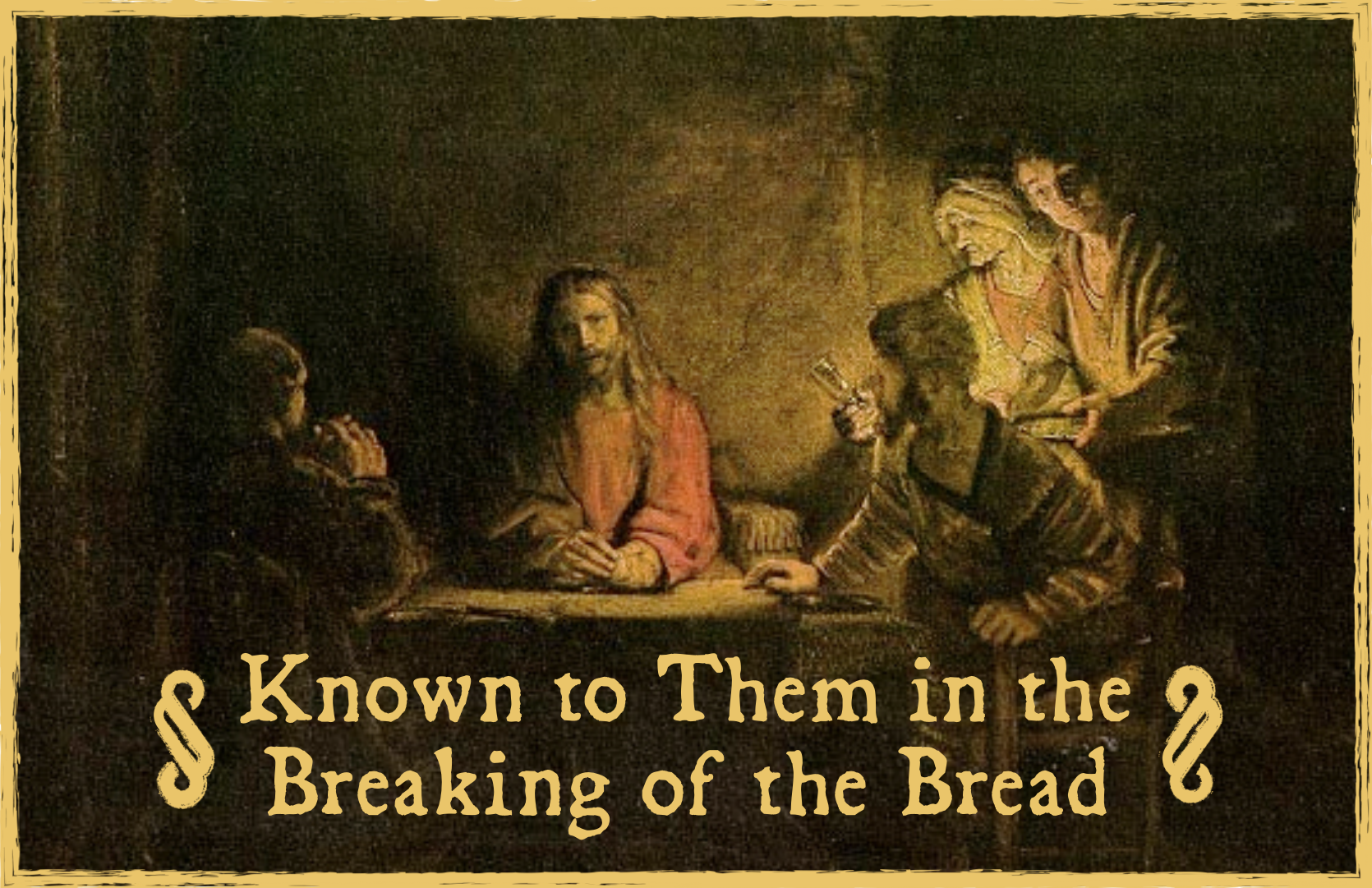
Known to Them in the Breaking of the Bread (PDF): For the disciples that Jesus met on the road to Emmaus following His resurrection, it was at the table that Jesus was made known to them. It is the same for us.


Reconciliation through the Cross (PDF): In a bitterly-divided world, the observance of the Lord’s Supper can seem impractical and disconnected. Really, though, nothing could be more needed or relevant.

God’s Idea of a King

Near the end of Deuteronomy, the second giving of God’s law to the Israelite people as they prepare to enter the Promised Land, there is an interesting section on how Israel’s kings are supposed to act.

14 “When you come to the land that the LORD your God is giving you, and you possess it and dwell in it and then say, ‘I will set a king over me, like all the nations that are around me,’ 15 you may indeed set a king over you whom the LORD your God will choose. One from among your brothers you shall set as king over you. You may not put a foreigner over you, who is not your brother. 16 Only he must not acquire many horses for himself or cause the people to return to Egypt in order to acquire many horses, since the LORD has said to you, ‘You shall never return that way again.’ 17 And he shall not acquire many wives for himself, lest his heart turn away, nor shall he acquire for himself excessive silver and gold.

18 “And when he sits on the throne of his kingdom, he shall write for himself in a book a copy of this law, approved by the Levitical priests. 19 And it shall be with him, and he shall read in it all the days of his life, that he may learn to fear the LORD his God by keeping all the words of this law and these statutes, and doing them, 20 that his heart may not be lifted up above his brothers, and that he may not turn aside from the commandment, either to the right hand or to the left, so that he may continue long in his kingdom, he and his children, in Israel.

(Deuteronomy 17.14-20)

Among other things, it is emphasized here that the king is not to acquire horses from Egypt, nor acquire many wives for himself, nor acquire excessive silver and gold. Instead of these things, he should focus on God’s law.

Often, especially in children’s bibles and other less thoughtful interpretations of Scripture, Solomon is held up as an exemplary king. Certainly, Solomon starts well, as he asks God for an understanding heart and is commended by God for doing so, but the continuing narrative of Solomon runs like a systematic checklist of all the things that Israelite kings are not supposed to do:

  • Solomon accumulates excessive amounts of wealth (1 Kings 9.14, 28; 10.14-25)
  • Solomon acquires war horses from Egypt (1 Kings 10.28-29)
  • Solomon takes many wives for himself (1 Kings 11.1-3)
  • Solomon ignores God’s law (1 Kings 11.4-8)

Clearly, Solomon is not God’s idea of a king.

Jesus is.

Though taken to Egypt as an infant to escape Herod’s murderous paranoia, Jesus reenacts the story of Israel, departing from Egypt. Jesus never returns to Egypt or flirts with doing so, and is never enticed by the wealth or military power that Egypt so often represents in the biblical story. In fact, the only instance we have of Jesus riding an animal is not a powerful Egyptian war horse, but a simple donkey—Jesus arrives in Jerusalem on Palm Sunday, not in kingly fashion, but on a lowly beast of burden.

Jesus clearly valued relationships, as evidenced by the apostles to whom He devoted much time and all the people with whom He interacts and to whom He shows such care. But Jesus never married, and certainly never took many wives, swayed neither by sexual appetite nor the desire for political alliances. Jesus is portrayed as a husband, but His bride is the church—the people of God—for whom He selflessly gives all.

And far from acquiring excessive silver and gold, Jesus, who possessed all wealth and privilege, emptied Himself, took the form of a servant, and lived as an itinerant, homeless preacher.

Jesus did focus on God’s law, though. He regularly attended synagogue, knew Scripture by heart, and presented Himself as its ultimate interpreter.

It is a common interpretative misstep to think we are supposed to view biblical characters as heroes, when often, upon closer inspection, these “heroes” actually reveal profound human weakness and our desperate need for a Savior. Such is the case of Solomon, who, far from being a hero, is actually portrayed as a king who utterly fails God’s job description.

What does God’s idea of a king look like?

Jesus of Nazareth.


In this loose series of Scripture Reflections, I am sharing brief thoughts spurred on by my Bible reading. By way of reminder, my goal for these brief posts is two-fold:

(1) To remark on aspects of the biblical text that I find to be of interest that the reader may or may not have thought about previously.

(2) When possible, to point to the work and person of Jesus Christ. I believe the Bible is a unified story that points to Jesus, which means that He is frequently alluded to or foreshadowed in some way throughout the biblical canon.

“God Saw the People of Israel—and God Knew”

The early chapters of Exodus recount a dark period in the history of Israel.

Abraham’s descendants had arrived in Egypt through the influence of Joseph, who from his high position as Pharaoh’s right-hand man, had provided for the survival of his family (and many others) during a time of famine. Joseph’s brothers and their families stayed in Egypt, and grew and multiplied over time.

That was at the end of Genesis, but now, at the beginning of Exodus, a lot of time has passed and a new Pharaoh has come to power who doesn’t know Joseph or care about his family or descendants. This new Pharaoh is only concerned about the size and vigor of the Israelites, and so he decides to enslave them and force them into harsh labor. Even worse, he commands that Hebrew baby boys shouldn’t be allowed to live.

In Exodus 2, we have the famous story of the birth of Moses, and also the story of Moses killing an Egyptian when he grows up and then fleeing to the wilderness.

It is in this context that there is a brief note at the end of Exodus 2, as people find their servitude to be unbearable and, as a result, cry out to God:

During those many days the king of Egypt died, and the people of Israel groaned because of their slavery and cried out for help. Their cry for rescue from slavery came up to God. And God heard their groaning, and God remembered his covenant with Abraham, with Isaac, and with Jacob. God saw the people of Israel—and God knew.

(Exodus 2.23-25)

This is easy to overlook, but so powerful—the people cry out to God, and God hears their cry. He sees their suffering and is aware of what is going on. God saw the people of Israel—and God knew.

Of course, God responds to their problem by raising Moses to be his people’s great liberator. This plan would take time to develop, as we know that Moses spent 40 years in the wilderness before returning to Egypt, but the plan was in motion, and Moses would lead the Israelites from slavery to freedom. God saw the people of Israel—and God knew.

But, if you continue in the story of God’s people as told in the Hebrew Bible, you know that this is hardly the end of the people’s problems. There would be many more times in which the people would cry out to God and God would respond. The response wouldn’t always come in the way or the timeframe that the people expected, but God saw the people of Israel—and God knew.

Ultimately, though, we see this truth played out in the person of Jesus.

For generations, God’s people groaned under the burden of the consequences of their sinfulness: captivity in foreign lands, a lackluster return to their promised land, a temple and a nation that was a shell of their former glory, a persistent vulnerability to the pull of sin, and a desperate need for the Davidic descendant, the Messianic king for whom they had waited so long.

Deeply aware of humanity’s slavery to sin, in His own time and in His own way, God responded: the Son put on flesh and lived as a human. Through the incarnation of Jesus, God saw—and God knew in a new and special way, through His own experience of the human condition (Hebrews 4.15). While identifying with our human frailties, Jesus was different in that He lived without sin. He died to release us from our own captivity to sin, and was vindicated by the Father in His resurrection.

But there is more!

Before His crucifixion, Jesus told His disciples that He would be leaving, but that when He did, a Helper would come—God’s Holy Spirit—who would be with them (John 15). The Holy Spirit indwells followers of Jesus and, indeed, helps us in many ways. One of those ways is in our own communication with God:

Likewise the Spirit helps us in our weakness. For we do not know what to pray for as we ought, but the Spirit himself intercedes for us with groanings too deep for words.

(Romans 8.26)

Did you catch that? As we struggle through this life and our ongoing battle with sin, we are at times at a loss for what to pray. But the Spirit Himself intercedes for us with groanings too deep for words. The Israelites groaned to God for help; now, through the power of the Spirit, we don’t just groan to God, God groans in us…to Himself!

The Israelites groaned to God for help; now, through the power of the Spirit, we don’t just groan TO God, God groans IN us…TO Himself! Share on X

But still, there is more!

While we are assured that Jesus has defeated Satan, sin, and death, and the presence of the Spirit in our live serves as a down payment on our salvation, we continue to live in a broken world where there is still much about which we may rightly cry out to God. Against that reality, the promise of Scripture and the source of Christian hope is that Jesus will return one day, the cosmos will be redeemed, and every tear will be wiped from the eyes of God’s people.

The timeline may be different from what we expect, so we wait…and wait. But we can be confident, because God saw—and God knew.


In this loose series of Scripture Reflections, I am sharing brief thoughts spurred on by my Bible reading. By way of reminder, my goal for these brief posts is two-fold:

(1) To remark on aspects of the biblical text that I find to be of interest that the reader may or may not have thought about previously.

(2) When possible, to point to the work and person of Jesus Christ. I believe the Bible is a unified story that points to Jesus, which means that He is frequently alluded to or foreshadowed in some way throughout the biblical canon.


Photo Credit for the image above goes to Ferrell Jenkins. The image comes from the tomb of Vizier Rekhmire (ca. 1470-1445 BC), and depicts a brickmaking and building scene featuring slaves from the rough period of Israelite bondage in Egypt.

« Older posts Newer posts »

© 2026 The Doc File

Theme by Anders Noren — Up ↑