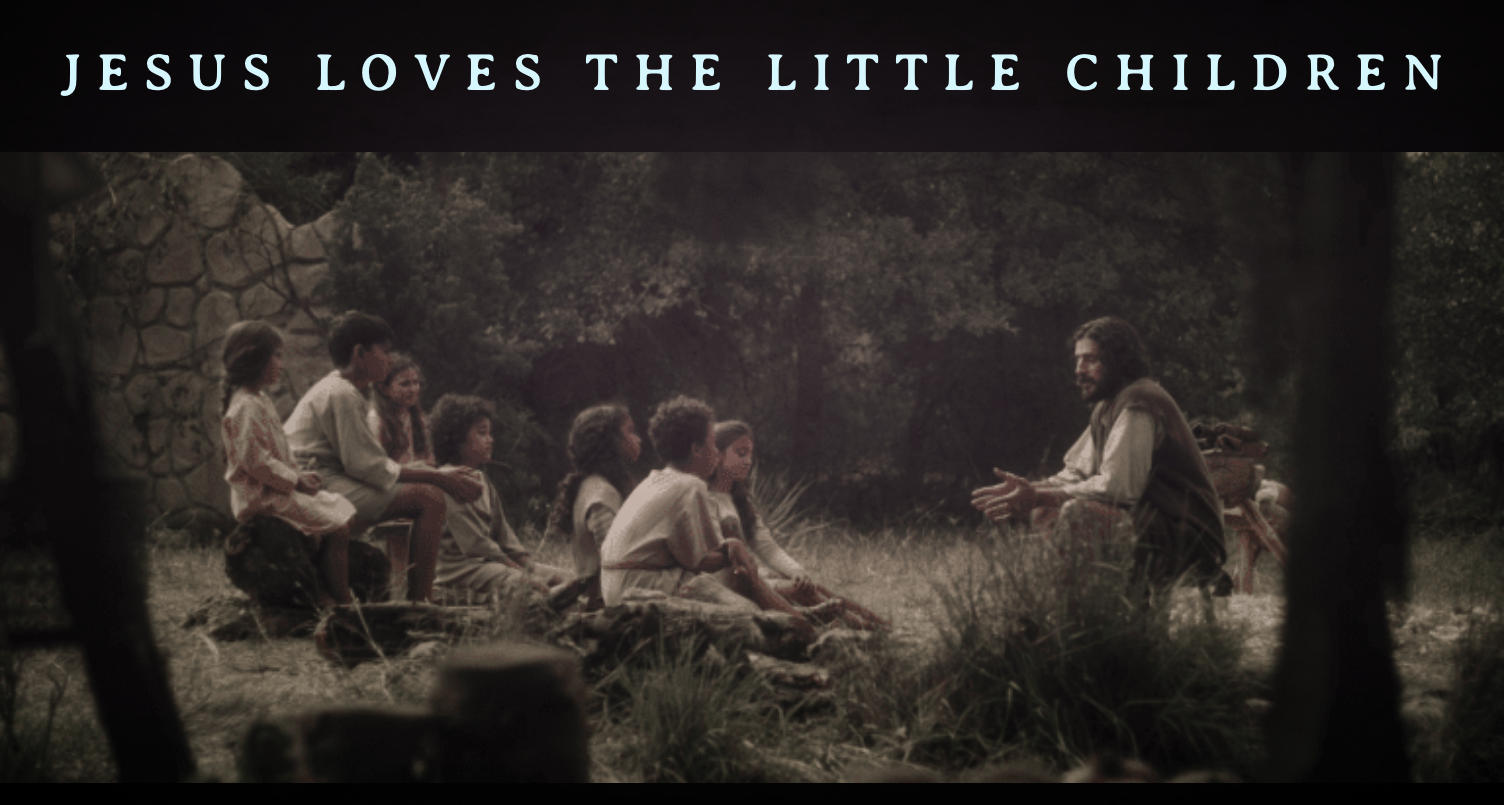
I am a youth minister, and the central task of my ministry is helping young people develop a mature faith in Jesus Christ that will last throughout their lives. The Bible has a lot to say about that, and over and over teaches that two groups—the physical family and the faith family—share the responsibility for passing faith to the next generation. The Bible also talks about Jesus interacting with children, and I think those interactions also provide some theological foundations for the way we should treat young people in our families and in our churches.
The gospel writers go out of their way to tell a similar story time and time again.[1] People bring their children to Jesus so that He can bless them. The disciples assume that kids are beneath the notice of a great rabbi, and so they try to turn them away. Jesus, however, rebukes the apostles, and uses the situation as a teaching opportunity.
There are a few principles that we can glean from these situations:
Children are really important to Jesus. In ancient cultures, children (especially sons) were valued as heirs, but generally speaking, they were not valued as individuals until they reached adulthood. The apostles thought that Jesus was too busy to be bothered by children, but Jesus turned that thinking on its head by stopping whatever He was doing and receiving the kids who were brought to Him. Clearly, Jesus thought that children were important and of great value.
The kingdom of heaven belongs to children. Repeatedly, Jesus makes the point that His disciples must become like little children in order to enter His kingdom. Just as children are vulnerable and trustingly dependent on their parents, so we as disciples of Jesus Christ need to acknowledge our ultimate helplessness and totally depend on our Heavenly Father. This is an especially counter-cultural message for those of us who live in a society that holds up self-sufficiency and independence as virtues to be emulated.[2] Instead of these values, Jesus says that citizens of the Kingdom should rely entirely upon the King.
Treating children well is connected to treating Jesus well. As mentioned above, children did not occupy an enviable position in ancient cultures. They were the least important and least powerful members of their communities. Repeatedly, though, Jesus emphasizes the upside-down values of His kingdom, where those who give up their lives for His sake are saved, and those who humbly serve and welcome the weak and powerless are considered to be great. Furthermore, Jesus goes on to say that to welcome people like this, including children, is the same as welcoming Him and His Father.
These principles should cause us to pause and ask ourselves some important questions:
Do we treat our children like they are important to us? In a society in which youth is idolized and parents often live vicariously through the athletic accomplishments of their kids, this may seem like a ludicrous question at first, but hear me out. As parents, are we willing to interrupt our busy schedules, stop what we are doing, and deliberately focus on passing faith onto our kids? As churches, are we willing to alter the things we are doing in order to build lasting faith in our kids, even if it is harder and less efficient than entirely outsourcing their spiritual training to a youth minister?
Do we include our children in God’s kingdom? It is common to hear well-meaning Christians talk about young people as the “church of tomorrow”. I understand what is meant by that statement, and certainly we do want our children to be active leaders in the church of tomorrow. At the same time, I think it reveals some faulty thinking, because a key part of building faith in young people is for them to be active in the life of the church now. Do we enable and encourage our kids to be active in the worship, service, training, and fellowship of God’s kingdom now, while they are young, or do we make them wait until they are adults before we include them?
Do we enable and encourage our kids to be active in the worship, service, training, and fellowship of God’s kingdom *now*, while they are young, or do we make them wait until they are adults before we include them? Share on XAre we treating Jesus well by treating His children well? No one likes to be accused of not treating their children well. Having said that, if, as a physical family or as a faith family, we are engaged in practices that make it less likely that our kids will develop a lifelong faith, can we really claim to be treating our children well? And based on the words of Jesus Himself, if we aren’t treating our children well, what does that suggest about how we are treating Him?
Based on the words of Jesus Himself, if we aren’t treating our children well, what does that suggest about how we are treating Him? Share on XI think all of these questions bring us to the idea of stewardship. God has entrusted us—both in our physical families and in our church families—with His children. We tend to think of them as ours, but truly, ultimately, they are His. “Our” children belong to God. Jesus’ interactions with children in Scripture and the questions above call us to reflect upon our roles as stewards: how are we taking care of God’s kids?
[1] See Matthew 18.1-6; 19.13-15; Mark 9.35-37; 10.13-16; Luke 9.46-48; 18.15-17.
[2] Stephen W. Dixon, “What’s So Special About Children? A Reconsideration of the Use Made of Scriptures such as Matthew 18:1-5 in Advocating the Importance of Children for the Church,” Journal of Childhood and Religion 5, no. 1 (January 2014): 28, 33.
The image above comes from Season One, Episode Three of The Chosen, “Jesus Loves the Little Children”. It is a beautiful episode which, I believe, does an excellent job of conveying the special concern that Jesus had for children and the attention he paid to them.






 Several weeks back, I finished







