The online journal of Luke Dockery

Tag: Jesus (Page 9 of 15)

Politics From A Christian Perspective: Biblical Principles

As I mentioned in the introductory post to this series, I am working on ironing out some of my thoughts on Christian faith and political engagement. I laid out several reasons why I think this is a complicated issue, but ultimately, I do believe that Scripture has much to say that should inform the way that Christians view and interact with politics. My goal is to briefly review several biblical principles that should influence Christian political views and, when appropriate, discuss these how principles interact with our current political situation.


Jesus Is Lord

I touched on this in the last post, but I believe that all Christian interaction with politics must begin here, with what is, perhaps, the central statement of Christianity: Jesus is Lord. This is an inherently political claim, and if we miss that truth, we not only start off on the wrong foot politically, but we are also disconnected theologically from the story of Christianity and the church that we read about in the New Testament.

“Lord” is an interesting word; to us, it is almost exclusively a religious term. We tend to think of it as a synonym for “God”, but really, “Lord” was a favorite title of Jesus in the early church. And it’s not primarily a religious title, either; it was a title with distinctly political overtones. “Lord” was the official title for the Roman Emperor: laws, edicts and decrees were signed “Lord Caesar.” This means that when early Christians called Jesus “Lord”, they were making a political statement: by saying that Jesus was Lord, they were simultaneously saying that Caesar was not.[1] Jesus was the One who had absolute authority over their lives, He set the standards by which they were to live, He was the One to whom they owed primary allegiance, and it was He who sat on the throne of the universe.

As a Christian, it is really important that I remember that, regardless of who claims worldly positions of power—Nero in Rome, Napoleon in France, Hitler in Germany, or whoever wins the US Presidential election—Jesus is still Lord. His reign is secure, His victory is certain, and it is to Him that I pledge my primary allegiance, and in Him that I place my hope and trust. All of this may sound like a no-brainer to Christians, but it is easily forgotten anytime a well-meaning Christian suggests that “This is the most important election in history because X” or “If X wins the election we are in trouble because Y.”

Jesus is Lord. That reality helps me to view the human political arena in a different light, and should free me from the hysteria that plagues it.

Citizens of the Kingdom

If Jesus is Lord, that means that He has rule and authority, and the Bible describes this in terms of a “kingdom.” Jesus came preaching about His kingdom, describing what it is like and how citizens of His kingdom should live. The kingdom of God is not bound by place, time, or ethnicity, but rather, encompasses all those who have submitted to His Lordship and seek to live according to His will. It is a multi-ethnic, supra-national reality that confounds the sovereignty of earthly nation-states.

That means that Christians—citizens of God’s kingdom—living in earthly nation-states occupy a peculiar position. One ancient Christian describes it this way:

“[Christians] live in their own countries as though they were only passing through. They play their full role as citizens, but labor under all the disabilities of aliens. Any country can be their homeland, but for them their homeland, wherever it may be, is a foreign country.”[2]

In other words, Christians live all over the world, and while they may hold citizenship in any nation, their core identity should be as citizens of God’s kingdom.

I am an American, and I value my American citizenship, but my citizenship in God’s kingdom should be more central to my identity than my American-ness. That means that I should feel more kinship with a fellow Christian living in Russia, China, or Iraq than an unbelieving fellow American who lives on my own street. It also means that, from a Christian perspective, American values are not inherently good, and must be weighed against the standards of God’s kingdom.

So, for example, from a Christian perspective, “America first” policies—while they may be politically expedient and bring blessing to those residing within the borders of the United States—must inherently be viewed with skepticism. Also, the American love for (obsession with?) freedom and rights must be tempered by the kingdom value that the exercise of our rights must not come at the expense of our neighbors (1 Corinthians 8); love is more important than liberty.

As a Christian, I must seek first God’s kingdom, and apply myself to live by the values of that kingdom. When I do so, I can rest content in the knowledge that I am living as salt and light in the world and bringing glory to my Father who is in Heaven.

Love Of Neighbor

The previous value leads naturally to this one, that Christians are called to love our neighbors. Jesus says that the greatest commandment is that we love God with all that we have,[3] and the second is like it, that we love our neighbors as ourselves. In further teaching in the Sermon on the Mount and in the Parable of the Good Samaritan, Jesus makes clear that all people count as our neighbors (even our enemies!). Of course, the importance of loving our neighbors is not an idea that was novel to Christianity; it was taught in the Hebrew Bible as well. As Paul says in Galatians 5.14, “For the whole law is fulfilled in one word: “You shall love your neighbor as yourself.”

Furthermore, while we are called to love everyone, the Bible teaches repeatedly that we are to give special care and attention to those who are marginalized and oppressed. The Hebrew Bible frequently discusses the need to make special provision for the triad of the widow, the orphan, and the foreigner/stranger. Israelite farmers were to tend their land in such a way that they left some of their harvest for the poor. Jesus tells His followers that they will be judged for the way they treat the hungry, the thirsty, the stranger, the naked, and the prisoner. Paul tells Corinthian Christians that those without honor should be treated with special honor.

This is all closely related to the idea of justice. Justice has become a charged word in our current cultural climate, but that’s too bad, because it is an important biblical concept. In both Hebrew and Greek, the word justice is closely related to the word righteousness, and a simple (but, I believe, accurate) way to understand these words is that righteousness refers to us having a right relationship with God (characterized by loving God with all that we have) and justice refers to us having a right relationship with others (characterized by loving our neighbors as ourselves).

While there may be a host of disagreements about how best to show our love for neighbor and bring about justice through good policy, Christians should absolutely be able to agree on the principle of neighborly love.

Love of neighbor and showing special concern for the marginalized and oppressed should absolutely cause us to oppose abortion and work for that tragic practice to be ended. But it should also cause us to apply the “Pro-Life” label more broadly than it often is: Christians don’t care for babies only when they are in the womb![4] We care for infants who need adopting. We care for children who need healthcare. We care for families living in poverty who consider abortion to be their only option. We care for men and women from poor backgrounds (or, from any backgrounds) who make bad decisions and end up in prison. We care for men, women, and children from other nations who yearn to enter our nation in search of a better life. We care for people of all races and ethnicities and lament when some suffer from inequities. We care for elderly adults who want to live dignified and valued lives.

And—don’t miss this!—we care for those who disagree with us, whether about this, or any other biblical principle.


We have already established that, as Christians, we are fundamentally citizens of a different sort of kingdom, and that Jesus is our Lord. As kingdom citizens, we live out kingdom values, and a primary kingdom value as we live in a society and interact with other people is love of neighbor.

At the same time, the reality is that I am also a citizen of the United States, and with that comes certain opportunities and responsibilities. The next several principles reflect that reality and relate to how we are to view the nation(s) in which we live and our role as “dual citizens”.


Character of Leaders

The moral perfection, abounding love, and abiding wisdom of Jesus means that Christians do not have to worry about the character of our King, but when it comes to earthly leaders, all of them have their failings and shortcomings. That doesn’t mean, however, that the moral character of leaders does not matter or should not be taken into account.

In the Hebrew Bible, we can think of men like Pharaoh in the days of Moses who, in addition to his wickedness in oppressing the Israelites in slavery, also brought untold suffering upon his own people through his pride and stubbornness. Pharaoh’s lack of moral character certainly mattered; a leader with a more pliant heart would have spared his people much pain.

But we can see even clearer examples when we look at the kings of Israel.[5] Repeatedly, kings are evaluated in Scripture based on their faithfulness to God and whether or not they led their people toward devotion to Yahweh, or toward the worship of pagan idols. A few kings received sterling marks, others were a mixed bag, and others were condemned for their wickedness. Jeroboam receives special notoriety: as the first king of the Northern Kingdom of Israel, Jeroboam was given special opportunity by God but squandered it. He was known as the king who “made Israel to sin”, and became the standard by which other bad kings were measured. The principle seems clear: the Bible does not shy away from evaluating the character of kings, and associates bad moral character with bad results for the nation.

From a Christian perspective, the character of our leaders should matter, because it matters to God.

My first formative political memories came at a time when Bill Clinton was the President of the United States. While in office, President Clinton was involved in a sex scandal, and the resounding cry from conservative Christians was that Clinton’s moral failings had negative effects upon the entire nation, and rendered him unfit for office. The argument went: If this sort of thing is winked at in the White House, what message does it send our children? I was a young teenager at the time, but the argument totally made sense to me. It seemed valid.

Imagine my feelings of whiplash when 20 years later, a candidate with similar moral failings came to prominence, but now represented the opposite party. Instead of repeating the argument that had been made two decades earlier, many of the same conservative Christians were now singing a different tune: Everyone is a sinner; who are you to judge? We are electing a President, not a preacher/pastor/Pope! 

This blatant hypocrisy has done so much damage to the esteem and moral authority of religious conservatives (especially in the eyes of people of my generation and younger), but beyond that, it is biblically false. The Bible simply doesn’t teach that we are powerless to evaluate moral character since everyone sins! In fact, not only does the Bible not teach that all sins are the same in God’s eyes, Jesus tells us that, while it is not our place to judge the eternal destinies of people, we are to evaluate people’s character, which can be known by their fruits.

Now, it’s certainly possible that there are times when we may find ourselves in a position where we look at two candidates and simply cannot discern any significant difference in their character.[6] But the notion that policies matter while personal character does not is not a biblical principle.

Babylon, Not Israel

In the Hebrew Bible, God called a man named Abraham to follow Him, made a covenant with him, and promised him that his descendants would become a great nation and that all peoples of the earth would be blessed through him. Abraham’s descendants—the Israelites—are God’s chosen people, and much of the story of the Old Testament is God’s faithful love for His people despite their own faithlessness. In the New Testament, God does not abandon His people, but the story of Israel does take an exciting plot twist. Jesus—the descendant of Abraham and God in the flesh—bursts onto the scene, a King from the line of David who fulfills the law and shows just how it is that all peoples of the earth will be blessed through Abraham’s descendants: Israel itself is renewed and restored, but no longer will the identity of God’s people be determined by ethnicity, but rather by faithful allegiance to Lord Jesus.

Since it is Abraham’s spiritual descendants who comprise God’s people, in plain terms, this means that the United States of America is not the heir of the Kingdom of Israel. It is not the Kingdom of God. In fact, if we want a biblical parallel for the US, it’s not Israel; it’s Babylon. This statement, though perhaps shocking to some, is a well-known and often repeated teaching of Scripture: the kingdoms of men, which rise and fall, are distinct from God’s kingdom, which will never be destroyed. This is the point of prophecies in Daniel where one great nation after another topples into oblivion. This is the point of the Revelation of John, which, though dripping with anti-Roman imagery and sentiment, refers to “Babylon” as a way of saying here we go again: earthly kingdoms are oppressive, are in opposition to God’s kingdom, and are corrupted by the influence of the ruler of this world.

That doesn’t mean that all earthly kingdoms are equally bad, or that it is wrong to care about the nation in which you live, or that it is inherently wrong to serve in government or the armed forces. In my view, the United States of America is one of the kindest and most benevolent forms of Babylon that has ever existed; but it is still Babylon.

This realization, in addition to tempering whatever loyalty or allegiance we feel to our earthly nations (see “Citizens of the Kingdom” above), should also help us to observe those nations at arm’s length, and evaluate their history and current practices from a Christian perspective. In my case, I should not feel the need to defend everything the US does or has done; if a practice is just and brings blessing to people, I should feel free to praise it. On the other hand, if a practice is oppressive and brings harm, I should feel free to critique it.

And more than that, realizing that America is not the Kingdom of God frees me from a great deal of anxiety. As I look around in the country in which I live, I am struck by how un-Christian it is in all sorts of ways, but that’s what I should expect, because I live in Babylon. Why should I expect the country in which I live to look like the Kingdom of God? Because it’s not that. As Christians, we need to quit being surprised when lost people act like they’re lost. How else are they going to act? 

Once we realize this, we can quit wringing our hands about how bad things are and get busy doing God’s business: living as part of a counter-culture kingdom and spreading it throughout the world as we introduce people to Jesus.

Seek The Welfare of the City

The fact that our primary allegiance is to another King and another kingdom does not mean that we are to disdain the “Babylons” in which we sojourn during our earthly lives. In Jeremiah 29, Jeremiah delivers a message from God to Israelites who have been taken into captivity in Babylon. He does not tell them to foment rebellion or withdraw from society and isolate themselves. Instead, he says:

4 “Thus says the Lord of hosts, the God of Israel, to all the exiles whom I have sent into exile from Jerusalem to Babylon: 5 Build houses and live in them; plant gardens and eat their produce. 6 Take wives and have sons and daughters; take wives for your sons, and give your daughters in marriage, that they may bear sons and daughters; multiply there, and do not decrease. 7 But seek the welfare of the city where I have sent you into exile, and pray to the Lord on its behalf, for in its welfare you will find your welfare.”

(Jeremiah 29.4-7)

While living in Exile, God’s people were to put down roots and do what they could to benefit the city in which they lived. We see this principle lived out in the lives of Daniel, Shadrach, Meshach, and Abednego, who served as government officials in Babylon. We see it in the life of Queen Esther, who used her royal position to save her people. And although he lived in a different time period, we see the same principle lived out in the life of Joseph, who in his high position in Pharaoh’s administration served his country, saved his family, and enriched his master.

This principle is important to keep in mind, especially for people who tend to be cynical about politics (like me!). Perhaps because I see political systems as so tainted and imperfect and because I seek to place my hope in Jesus instead, it can be easy for me to disdain politics altogether, forgetting that political policies actually impact people’s lives for better or worse. The biblical testimony is that we are to seek the welfare of the society in which we live and the neighbors who live around us, and that God’s people sometimes are called to do this through political involvement. 

Render to Caesar

In Matthew 22, Jesus’ enemies sought to entrap Him by asking whether or not it was lawful to pay taxes to Caesar. After Jesus pointed out that it was Caesar’s image that appears on coins, he said, “Render to Caesar the things that are Caesar’s, and to God the things that are God’s.”

This response indicates that, while our ultimate allegiance belongs to God, we are still obligated to the state in a lesser sense. In addition to paying taxes, this means that we are to “be subject to governing authorities”, that we are to “honor the emperor”, and that we are to pray for “kings and those in authority” (Romans 13.1-7; 1 Peter 2.13-17; 1 Timothy 2.1-2).

Although there are challenging aspects to these passages,[7] taken together, they suggest that our allegiance to Christ and His kingdom doesn’t mean that Christians are bad citizens of the nations in which we live. On the contrary, as people who love our neighbors, seek the welfare of our communities, live in subjection to our governments, and pray for and honor our leaders, Christians are ideal citizens. We live that way, though, not in blind allegiance to the state, but rather because our King tells us to do so.


As I said in the opening paragraph of this post, Scripture has much to say that should inform the way that Christians view and interact with politics, and in this post, I have tried to briefly review several relevant biblical principles.[8] Here’s the problem, though: in the US, neither of our two major political parties consistently upholds these biblical principles, so how do we take a Christian perspective with us into the voting booth? In the final post of this series, I won’t try to give a  definitive answer to that question, but I will seek to provide a brief overview and evaluation of several different voting strategies that Christians often use.

At the end of the day, voting is a matter of conscience, but I believe that thoughtful reflection on biblical principles can help us to be more confident that we are engaging in politics from a Christian perspective.


Read the entire series:


[1] Some may want to push back against the notion of some sort of rivalry between Jesus and earthly rulers, but it is clearly present in the biblical text. Herod the Great wanted Jesus killed as an infant because He saw the prophesied “King of the Jews” as a rival. It was ultimately the accusation hurled at Pontius Pilate by Jewish leaders that if he released Jesus he was “no friend of Caesar” that motivated him to sign off on Jesus’ crucifixion. “King of the Jews” was written on Jesus’ cross as He was crucified—the charge for which He was executed.

Certainly, Jesus was and is a different sort of King than earthly rulers, but that doesn’t mean that there is no conflict between their respective claims of authority.

[2]  Epistle to Diognetus 5.5. This anonymous, early Christian document likely dates to the second or third century AD.

[3] The declaration that “Jesus is Lord”—properly lived out—is a reflection of the greatest commandment.

[4] Republicans (including Christians) often come under fire for being “Anti-Abortion” rather than truly being “Pro-Life”. I think there is some validity to that claim, and I think Christians would do well to consciously and vocally support a consistent Pro-Life ethic, “from womb to tomb”. Having said that, I have very little patience for Democrats who lecture Republicans about their inconsistency on this point while still supporting the practice of abortion themselves. Put differently, “Pro-Life” must mean more than “Anti-Abortion”, but it cannot mean less than that.

[5] As I mentioned in the first post, the Kingdom of Israel represents a context distinct from our own (it was a theocracy, and Israel represented God’s chosen people), but through the lens of Israel, I think we can still learn about how God views human leadership.

[6] In fact, that’s where I found myself in 2016.

[7] For example, as the Book of Acts makes clear, our obligation to the state is always held in relative position to our allegiance to God. When there is a conflict between the two, “we must obey God rather than men.”

[8] By no means is this intended to be an exhaustive list. As I was finishing up this post, it occurred to me that I could have also included creation care or generosity or stewardship—all of these are also biblical principles that interact with politics as well. And, surely, there are many other relevant biblical principles besides these. The point of this post was not to attempt to discern every biblical principle that might inform a Christian’s political perspective, but rather to prompt some reflection on a few major principles, and also to illustrate the fact that Scripture has much light to aid us before we enter into the murkiness of the political realm, if we will just avail ourselves to it.

Jesus, Lighthouses, and Seeing Through the Fog

I recently finished Seeing Jesus from the East: A Fresh Look at History’s Most Influential Figure, by Ravi Zacharias and Abdu Murray. I thought it was a helpful read, though perhaps not as good as Misreading Scripture with Western Eyes: Removing Cultural Blinders to Better Understand the Bible by E. Randolph Richards and Brandon J. O’Brien, which covers similar, though not identical, ground.

In short, Seeing Jesus from the East seeks to put Jesus back into His original context, and shows how this middle-eastern teacher whose ideas form the foundation for much of Western society appeals to both East and West, addressing the shame and guilt of humanity. Again, it is a helpful read.

For me, though, one of the most compelling aspects of the book was not directly connected to the East/West issues related to Christianity at all, but rather, was the conveying of a simple parable:

“The story is told of a little seaside town where the fog was sometimes so thick that ships were prevented from making it safely into port. The townsfolk decided to build a lighthouse. On the day that lighthouse was finished, they celebrated with bands playing, bells ringing, and trumpets sounding. The mayor cut a ribbon to inaugurate the lighthouse. 

That night, a huge fog descended once again. Two visitors who had attended the ceremony said to one another, “The light shines, the bells ring, the horns blow, but the fog comes in just the same.”

They missed the point. The lighthouse was never intended to keep the fog from coming in; it was designed to guide ships safely into harbor through the fog. 

The Son of God came not to keep the fog from descending, but to help the human heart see through the fog.”

I think this conveys a powerful truth related to the way the gospel is presented (or, too often, misrepresented). Sometimes, the impression is given that if someone becomes a Christian, all of their troubles will disappear and life we be happy and easy. While it is true that being in Christ, having the Holy Spirit working in our lives and living in community and fellowship with other Christians are wonderful spiritual blessings, both eternally and in the here and now, being a Christian doesn’t inoculate us against the hardships of life. The fog comes in just the same.

But Jesus helps us see through the fog. He doesn’t tell us that the pain does not hurt or that the world is not broken, but He does promise to hurt with us, and ultimately, to heal the brokenness.

The Christian life is not painless, but it is hopeful.

The Christian life is not painless, but it is hopeful. Share on X

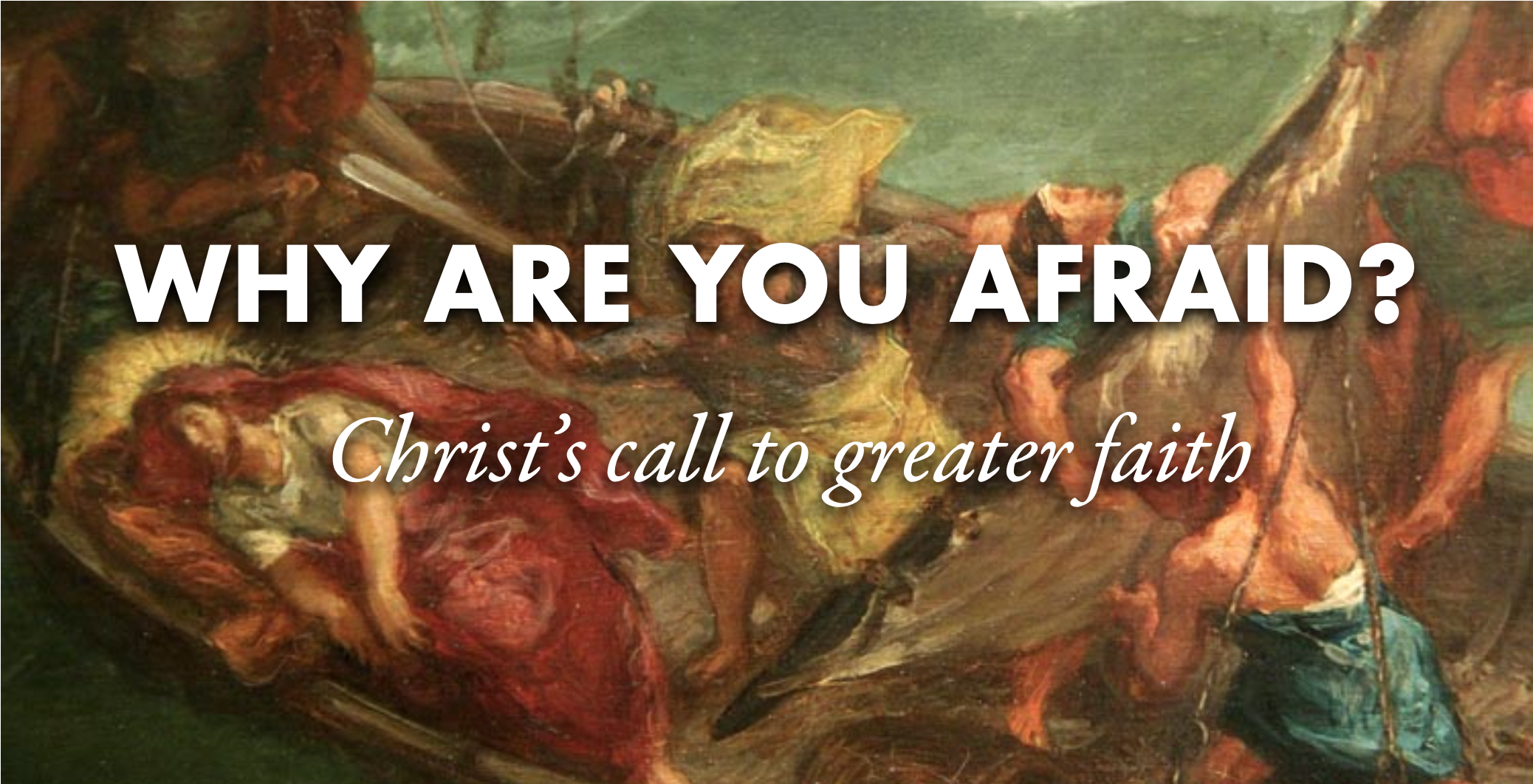
Why Are You Afraid?

In Matthew’s gospel, he follows the Sermon on the Mount in chapters 5-7 with his account of some of the extraordinary miracles that Jesus performs in chapters 8-9. The power of Christ overcomes a variety of maladies: He cleanses lepers, heals paralysis, casts out demons, restores the blind and mute, and brings a little girl back from the dead.

It is in this context that Matthew tells the story of Jesus miraculously calming a storm:

And when He got into the boat His disciples followed Him. And behold, there arose a great storm on the sea, so that the boat was being swamped by the waves; but He was asleep.

And they went and woke Him, saying, “Save us Lord; we are perishing.”

And He said to them, “Why are you afraid, O you of little faith?” Then He rose and rebuked the winds and the sea, and there was a great calm. And the men marveled, saying, “What sort of man is this, that even winds and sea obey Him?”

(Matthew 8.23-27)

There are several lessons we could take from this remarkable event, but I just want to focus on one. Jesus’ disciples are so terrified that they wake Him up in fear of their lives. His response is astounding: “Why are you afraid?” He asks. At first glance, it seems that Jesus is being incredibly obtuse—a great storm had arisen and the boat was being swamped by the waves; obviously the disciples are afraid because of the storm!

But Jesus was not obtuse; indeed, He was the most perceptive of all men. He certainly understood why His disciples were afraid, and so His question must have been about something else. He wasn’t seeking information; rather, He was prompting transformation.

When Jesus asked His disciples why they were afraid, He wasn’t seeking information; He was prompting transformation. Share on X

The second part of Jesus’ statement is telling, as He calls His disciples “you of little faith.” Tied to His question in this way, the implication is clear: if the disciples had more faith, they would not be afraid! Jesus’ disciples had just witnessed His marvelous power in a variety of different situations. This should have bolstered their faith and enabled them to realize that their Teacher was more powerful than the storm which threatened them!

Currently, our world is under siege by a viral pandemic. Millions are sick; hundreds of thousands have died. Millions more have lost jobs, or at least had their incomes diminished. Virtually all of us have had our lives altered in some way. Our plans have been canceled, we are stuck in our homes, we are having to distance ourselves from family and friends. Our worship routines have been disrupted.

What is unique about the current situation is only the scope of the storm; the reality is that, in a variety of ways, we are constantly buffeted by the storms of this life, and the waves threaten to swamp us:

  • A middle-aged man learns that he has been laid off from his job and is plagued by financial uncertainty as he wonders how he will provide for his family.
  • A woman learns that her husband of twenty years, the love of her life, has been carrying on an affair with another woman.
  • Two young parents learn that their infant son has a genetic condition which will greatly limit his life.
  • A single mother of two teenage boys is diagnosed with stage four cancer and told that there is no hope.
  • A house fire destroys a family’s home and all of their earthly possessions.

When the storms of life come, like the disciples, our tendency is to run to Jesus and ask Him to save us. And I wonder if He responds similarly: “Why are you afraid, O you of little faith?”

It’s not that Jesus doesn’t understand our storms—the good news of the Incarnation is that Jesus stepped into the human condition in a unique way. He understands our fears, our trials, and our heartaches. He sympathizes with our weaknesses (Hebrews 4.15). But the same Jesus also says, “In the world you will have tribulation. But take heart; I have overcome the world.” (John 16.33b).

The Christ who calms storms knows what frightens us, but He also asks us to realize: truly, ultimately, with Jesus on our side, the scary things of life aren’t scary! He is more powerful than the storm!

Lord, increase our faith!


In this loose series of Scripture Reflections, I am sharing brief thoughts spurred on by my Bible reading this year. By way of reminder, my goal for these brief posts is two-fold:

(1) To remark on aspects of the biblical text that I find to be of interest that the reader may or may not have thought about previously.

(2) When possible, to point ahead to the work and person of Jesus Christ. I believe the Bible is a unified story that points to Jesus, which means that He is frequently alluded to or foreshadowed in some way throughout the biblical canon.

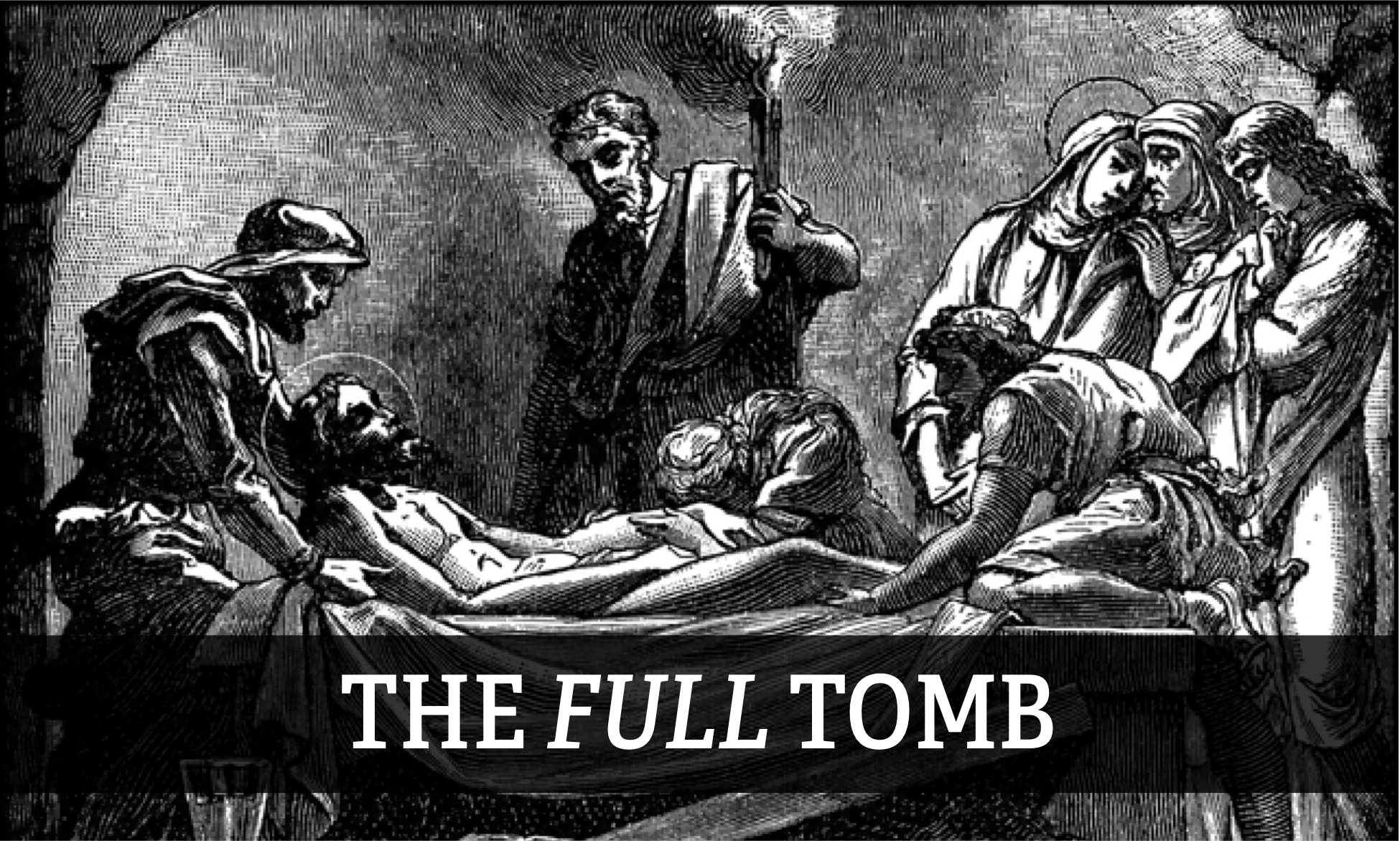
The Full Tomb

Christianity is, fundamentally, about an empty tomb. Following His crucifixion, Jesus was raised from the dead, and as I have written before, this changes everything. This is the central feature of the Christian faith, and the veracity of any of Christianity’s claims depend upon this, first. Paul says in 1 Corinthians 15 that if Jesus wasn’t raised from the dead, then our faith is worthless.

Having said all of that, I think we are sometimes so quick to emphasize the empty tomb that we fail to truly appreciate that there was a time—even if it was a relatively brief time—when the tomb wasn’t empty. It was occupied. It contained the beaten, battered body of Jesus, and the shattered hopes and dreams of His followers.

There was a time when the tomb wasn’t empty. It was occupied. It contained the beaten, battered body of Jesus, and the shattered hopes and dreams of His followers. Share on X

We like to rush from the crucifixion to the resurrection, and I guess that makes sense, because the in-between time wasn’t easy. For those who had left all they had to follow Jesus, a Jesus in the tomb meant that they had backed the wrong horse; they had gambled everything and lost. The One who they thought was the long-awaited Messiah was just another in a long line of failures.

We live in an in-between time, too, and it isn’t easy, either.

The resurrection of Jesus is the first-fruits of our own, and points ahead to a time when sin, Satan, and death will be defeated, and every tear will be wiped from our eyes. But in the present, many of us mourn beside tombs that are as full as the tomb of Jesus was prior to His vacating it. Many of us stumble through our days, staggering under the weight of shattered hopes and dreams.

Just as Sunday came for the disciples of Jesus, and Jesus Himself was vindicated as the risen Savior when it did, so, we, too, await the coming of a Someday when our faith will become sight, and all of God’s faithful will rise as Jesus did.

But until then, it is worth reflecting on the fact that there are many full tombs, that evil maintains a foothold in our world, and that we weep with those who weep.

Resurrection is coming, but you have to wade through the in-between time first.

Resurrection is coming, but you have to wade through the in-between time first. Share on X

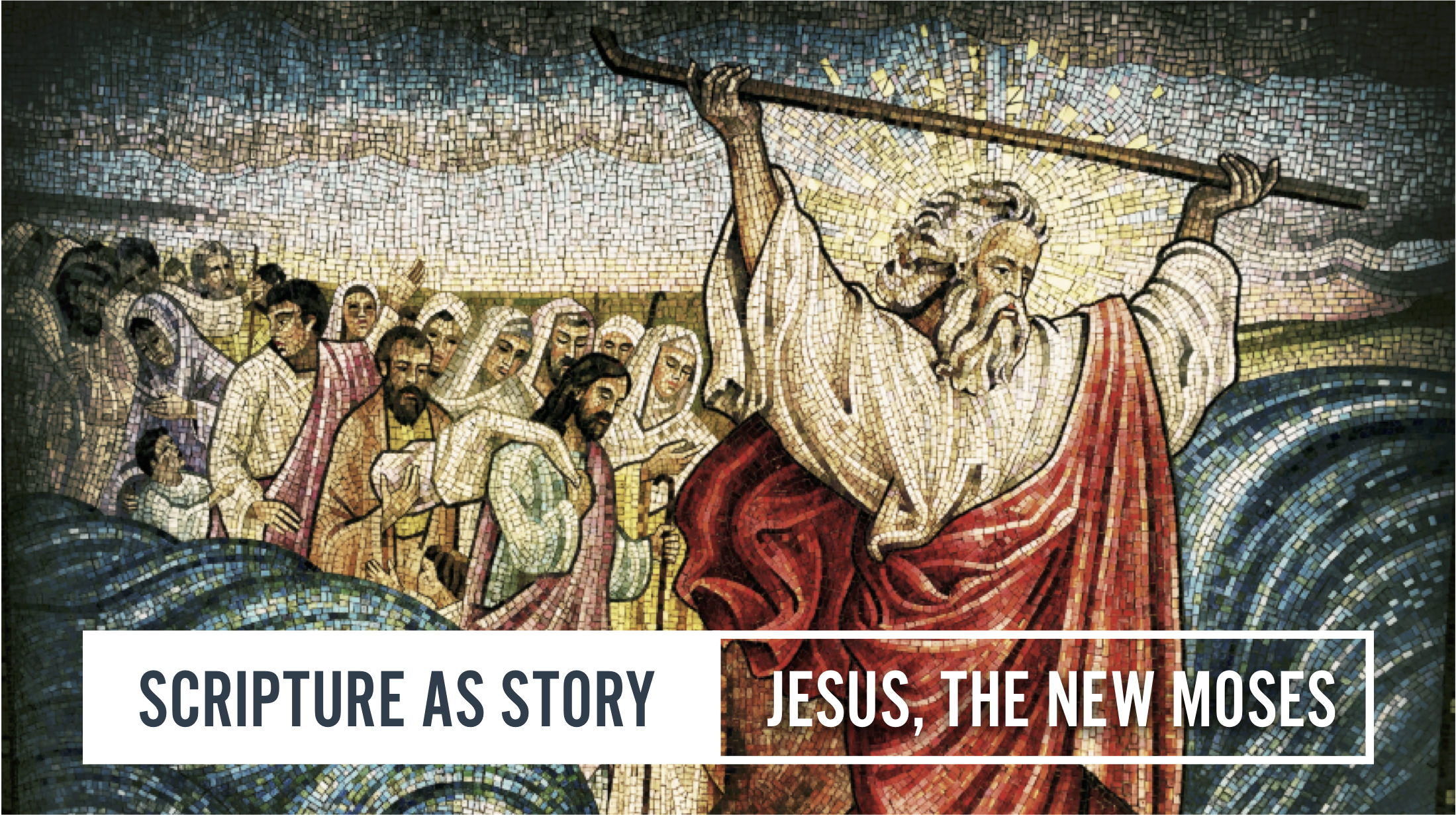
Scripture As Story: Jesus, the New Moses

Introduction

Today we continue our series on Scripture As Story, where we are emphasizing that the Bible is literature, and that we read the Bible better and more faithfully when we keep that in mind.

Last time, we looked at some specific techniques that we see the authors of Scripture using to help them tell their stories and share their teachings about God in a more compelling way. Today, I want to apply that understanding by using a case study to show how reading the Bible as literature and paying attention to the literary techniques that the Biblical authors use can actually help us to better understand the important lessons they are trying to teach us.

Specifically in this post, we are going to look at the connections that the writers of the Gospels (especially Matthew) make between Moses and Jesus, and what we can learn from those connections.[1] In Deuteronomy 18.15-16, Moses says that God was going to “raise up a prophet like me from among” Israel, and the Gospel writers go out of their way to connect Jesus to this prophecy, and claim that Jesus was, indeed, the prophet like Moses.

In John 1.21, 25, John the Baptist is asked if he is this prophet, and he says he’s not, but that he is preparing the way for Someone who is greater than he. In John 1.45, Philip tells Nathanael about Jesus, and says that He is the One “of whom Moses in the Law and also the prophets wrote.”

In Acts, Luke is even more explicit. In Acts 3.19-22:

“Repent therefore, and turn back, that your sins may be blotted out, that times of refreshing may come from the presence of the Lord, and that he may send the Christ appointed for you, Jesus, whom heaven must receive until the time for restoring all the things about which God spoke by the mouth of his holy prophets long ago. Moses said, ‘The Lord God will raise up for you a prophet like me from your brothers. You shall listen to him in whatever he tells you.”

Matthew doesn’t explicitly connect Jesus back to Deuteronomy 18, but he actually goes to greater lengths than the other Gospel writers to show the connections between Jesus and Moses. It is generally acknowledged that Matthew is writing to a primarily Jewish audience, and that He is concerned with connecting Jesus to the story of Israel, and one of the way’s he is going to do that is by repeatedly making comparisons between Jesus and Moses. 

Comparing Jesus and Moses

As we look at the way that Scripture presents the lives of Moses and Jesus, what are some similarities that we notice? I don’t claim that this is an exhaustive list, but take a look at the significant overlap between the way Scripture portrays their lives:

Moses Jesus
An evil king (Pharaoh) killed all the male Hebrew babies, but he was saved (Exodus 1.22) An evil king (Herod) tried to kill all the male babies around Bethlehem, but He was saved (Matthew 2.16)
He was hidden from Pharaoh (Exodus 2.2) An angel said to hide Him from Herod (Matthew 2.13)
Fled from Egypt, but later returned (Exodus 2.15; 4.18) Fled to Egypt, but later return to Israel (Matthew 2.13-23)
Gave up the riches and benefits of Egypt (Hebrews 11.24-26) Gave up the riches and benefits of Heaven (John 1.1-3; Philippians 2.5-8)
Became a shepherd (Exodus 3.1) Described Himself as the Good Shepherd (John 10.11)
His mission: redeem Israel from slavery to Egypt His mission: redeem humanity from slavery to sin
Often rejected by his own people Often rejected by His own people
Judged the people (Exodus 18.13-23) Will judge all people (Matthew 7.21-23; 25.31-46)
Goes up on a mountain to receive God’s law (Exodus 20-31) Goes up on a mountain to give God’s law (Matthew 5-7)
Fasted for 40 days on the mountain (Exodus 24.18) Fasted for 40 days in the wilderness (Matthew 4.2)
Performed signs/miracles Performed signs/miracles
Mediator of the covenant through the blood of young bulls (Exodus 24.8) Mediator of the covenant through His own blood (Matthew 26.28)
Delivers the five books of the Torah (Genesis-Deuteronomy) Delivers five extended sets of teaching/instruction (Matt. 5-7, 10, 13, 18, 24-25)
Lifted up the bronze snake in the wilderness (Numbers 21.9) In a similar way, He Himself was “lifted up” (John 3.14)
Commissions Joshua Commission disciples

Perhaps you find yourself thinking, “Well, that this is an interesting list, but what does it mean? How does this list of comparisons help us better understand who Jesus is?”

Why It Matters

What all of these comparisons help us to see is that, similar to Moses, Jesus is a multi-faceted character, and we better understand who Jesus is and what He came to accomplish if we can appreciate the many different roles that He fulfilled.

Liberator

The primary reason that we know about Moses in the first place is that God recruits him to liberate the people of Israel, who are helplessly trapped in the bonds of Egyptian slavery. Moses is a liberator.

Jesus, too, is a liberator, who came to earth on a mission to set people free from slavery, a slavery not from some oppressive foreign government or tyrant, but slavery from sin (Romans 6.6-7, 17-18).

Jesus liberates us from the power of sin.

Prophet

We actually began our discussion in Deuteronomy, where Moses says that a prophet like himself would come, and that this is Jesus.

Jesus was the ultimate prophet. A lot of times, when we hear the word “prophet” we think of someone who has a crystal ball or something and who can predict the future, but really, that is not a very helpful image when we talk about prophets in the Bible. Sure, at times, they predicted future events, and certainly Jesus did that, but the primary job of a prophet was to deliver a message to the people on behalf of God. Most of the time it wasn’t about the future; it was about what was going on right then that God wanted them to know.

And Jesus was the ultimate prophet; in a way that had never been done before or since, He fully revealed the message of God: who God is, what God is like, and what God wants from His people. 

Jesus was the prophet of prophets.

Lawgiver

Of course, one of the main things we associate with Moses is the giving of the 10 Commandments. God passed His law on to Moses on Mt. Sinai, and it was Moses’ job to share that with the people.

As we have already discussed, in Matthew 5, Jesus goes “up on a mountain” and there, He delivers teaching/instruction/law to His disciples.[2] He tells them that He did not come to abolish the Old Law but to fulfill it, and then He goes on to present Himself as the ultimate Lawgiver: “you have heard that it was said, but I say to you…”

Jesus is the One with authority—final authority—to interpret God’s Law. He is the Lawgiver—the One to whom we must listen.

Shepherd

Certainly Moses was literally a shepherd before God recruited him to lead the people of Israel, but after he became their leader he did so as a shepherd, willing to offer his own life up for them.

Similarly, Jesus is our Good Shepherd. He guides us, and provides for us, but also takes care of us and protects us, ultimately offering up Himself on our behalf.

Miracle Worker

Through the power of God, Moses accomplished great signs and wonders: the plagues in Egypt, the parting of the Red Sea, getting water from the rock. These were miracles that showed the great power of God, proved the identity of Moses as God’s representative, and brought about relief to suffering people.

Jesus, too, is presented as a great worker of miracles. He fed the hungry, healed the sick, cast out demons, stilled storms, and brought people back from the dead. These miracles showed God’s power, they testified to Jesus’ identity as the Messiah and Son of God, and they brought about relief to suffering people. They showed people what God’s kingdom was like, and they were a taste of New Creation.

Jesus was a Miracle Worker.

Intercessor

We noted earlier about Moses mediating the covenant through the blood of young bulls. More than that, after the people of Israel sinned by worshipping the Golden Calf and God wanted to wipe them out, Moses directly interceded with God on their behalf, offering to take punishment for them.

Jesus is portrayed as the ultimate intercessor. He mediates the covenant through the sacrifice of Himself and intercedes for us. The wages of sin is death (Romans 6.23), but Jesus takes that payment for us. As 2 Corinthians 5.21 says, “God made Him who knew no sin to be sin on our behalf…”

Jesus is the intercessor.

Commissioner

When I hear the word commissioner I think of the chief official of Major League Baseball or the NBA or NFL because that is the title that they use, but that’s not the idea here. A commissioner is someone who gives a commission—a task to be completed by those who come after.

At the end of his life, Moses commissions Joshua to carry on his mission. He tells Joshua to lead the people into the promised land and take possession of it and to keep the commandments when they are there. Joshua is assured that he can carry out this commission because God will be with him.

Jesus relays the ultimate commission. He tells His disciples to go into all the world—the Christian mission is a great one, it knows no geographical limits or bounds. As Christians, we are not told that we will inherit a small strip of land in Palestine, but rather, that we will inherit the earth. The kingdom of God is to be spread in all parts of the world. Further, Jesus tells them to observe all that He has commanded, and Jesus gives His disciples confidence that they can complete this mission, telling them that He Himself will be with them.

Jesus is the ultimate commissioner.

Judge

In Exodus 18, we have the story of Moses judging the people. When the people had a dispute, they would bring it before Moses and he would apply God’s law to these situations. But the task of judging the people is overwhelming for Moses, and his father-in-law Jethro actually advises him to get some help to share the burden.

Jesus is the judge in the ultimate sense—not settling the petty earthly disputes between people, but instead determining their eternal destinations. He says that not all who call Him Lord will enter the kingdom of heaven, but rather, they who do the will of God (Matthew 7.21). He further states that the way we treat other people, especially the “least of these”—the poor, the outcast, the oppressed—reflects how we treat Jesus, and affects our eternal destinies.

Jesus is the ultimate judge.

Conclusion

The Gospel writers—especially Matthew—go to great pains to make comparisons between Jesus and Moses. This is not a coincidence; by comparing Jesus to Moses, a man who fulfilled so many different roles in the early days of the history of the people of Israel, the New Testament shows us the many different roles Jesus plays.

There are many, many people in the world today who want to hold Jesus up as a great moral teacher or a man with brilliant insight, maybe even a prophet in some sense, but who want to stop at that point. But the Gospels go to great literary lengths to establish that Jesus is much more than this:

  • Jesus is the liberator who sets us free from the slavery of sin.
  • Jesus is the prophet who fully revealed the message of God.
  • Jesus is the lawgiver who has the final authority to interpret God’s law.
  • Jesus is the shepherd who guides us, provides for us, and lays down His life for us.
  • Jesus is the miracle worker who shows the power of God and brings relief to those who are suffering, giving them a taste of new creation.
  • Jesus is the intercessor who mediates the covenant for us, and receives the punishment that we deserve.
  • Jesus is the commissioner who extends to us the mission of expanding the borders of God’s kingdom throughout the world.
  • Jesus is the judge who determines the eternal destinies of all people.

In addition to all of these roles, the Bible goes even further: Jesus is God’s Son, God in the flesh Himself. In this sense, Jesus cannot be compared to Moses, nor to anyone else. He is absolutely unique.

In the Story of Scripture, this is the character of Jesus, and His characterization has radical implications for our lives: Jesus is God’s Son, He is the one who interprets God’s law, He died on our behalf, and He is the One who will judge how we have lived our lives and will determine our eternal destinies—how we respond to Jesus makes all the difference.


[1]I am by no means the first person to notice the connections between Jesus and Moses, and in fact, several books have been written on the topic.

Some articles that were helpful to me in the composition of this blog post include Garrett Best, “Jesus As The New Moses,” Ministry of Study, https://ministryofstudy.wordpress.com/2014/10/06/jesus-as-the-new-moses/ (accessed October 9, 2018); Cale Clarke, “Is Jesus a “Second Moses”?,” Catholic Answers, https://www.catholic.com/magazine/online-edition/is-jesus-a-second-moses (accessed October 9, 2018); “In what ways was Moses like Jesus?,” Got Questions, https://www.gotquestions.org/Moses-and-Jesus.html (accessed October 9, 2018).

[2]We typically translate the Hebrew word torah as “Law”, but a better translation would probably be something like “teaching” or “instruction.” It feels weird to say that Jesus was delivering “Law” in the Sermon on the Mount, but He was certainly giving teaching and instruction. Like Moses, He was delivering Torah.

« Older posts Newer posts »

© 2026 The Doc File

Theme by Anders Noren — Up ↑