The online journal of Luke Dockery

Tag: New Creation

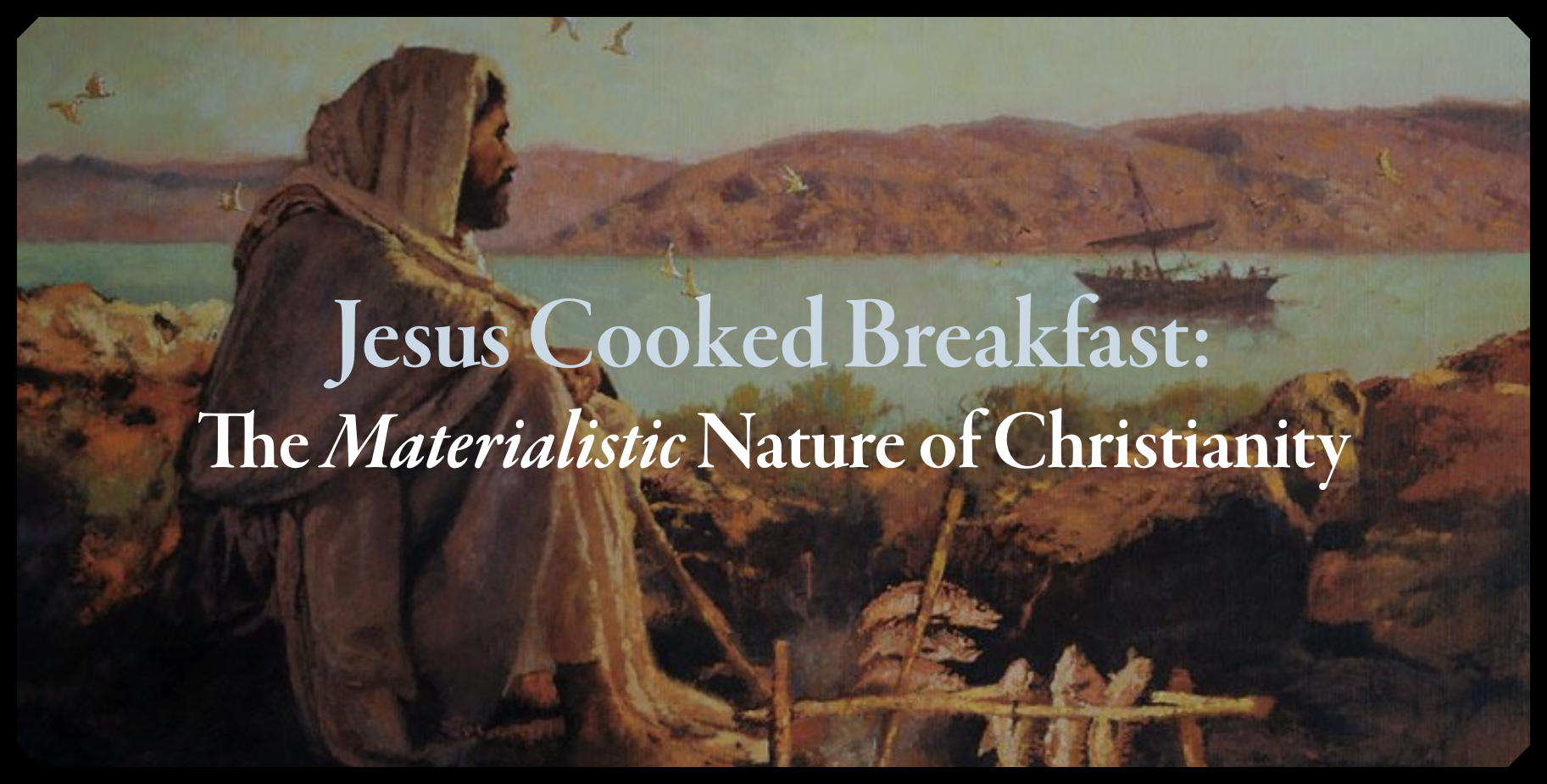
Jesus Cooked Breakfast: The Materialistic Nature of Christianity

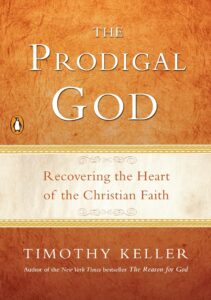
This is the third and final post in a short series based on a rereading of Tim Keller’s The Prodigal God. Although I liked the book well enough the first time, I found it to be particularly insightful the second time I read it; you can read the previous posts, “The Elder Brother We Need” and “Exiled from Home.”


Something that I have observed frequently in my life as a Christian is the elevation of “spiritual” things in a way that trivializes things that are material. This seemed normal and right to me for a long time, until I became a better student of theology and Christian history and realized that attempts to downplay “physical” and “material” things as unimportant are actually echoes of ancient Christian heresies like gnosticism or reflect influence from Greek platonism rather than being a genuine representation of the historic Christian faith, which emphasizes the goodness of creation and God’s intention to redeem it.

One of the things I loved about The Prodigal God was Keller’s section, “Salvation Is Material.”[1] In this section, he makes a brief but strong case for the material nature of Christianity. In fact, Keller claims that Christianity is perhaps the most materialistic of the world’s faiths. Here he does not mean materialism in the sense of being focused on wealth and possessions, but rather that the Christian faith values what is created and tangible.

Keller begins with the significance of meals in the Christian faith, and then traces God’s love for the material world through the biblical narrative (words in bold reflect my own emphasis):

A meal is a very physical experience. Jesus left a meal, the Lord’s Supper, to be remembered by, and the final goal of history is a meal, the wedding supper of the Lamb (Revelation 19). The resurrected Christ ate with his disciples when he met with them (Luke 24:42–43; John 21:9). What does it all mean? It is a sign that, for Jesus, this material world matters.

The book of Genesis tells us that when God made this world he looked upon the physical creation and called it “good.” He loves and cares for the material world. The fact of Jesus’s resurrection and the promise of a new heavens and new earth show clearly that he still cares for it. This world is not simply a theater for individual conversion narratives, to be discarded at the end when we all go to heaven. No, the ultimate purpose of Jesus is not only individual salvation and pardon for sins but also the renewal of this world, the end of disease, poverty, injustice, violence, suffering, and death. The climax of history is not a higher form of disembodied consciousness but a feast. God made the world with all its colors, tastes, lights, sounds, with all its life-forms living in interdependent systems. It is now marred, stained, and broken, and he will not rest until he has put it right.

Distinct from other world religions and philosophies, ministry of Jesus emphasized his care and concern for what happened to people in this material existence:

If the material world were only an allusion, as Eastern philosophy says, or only a temporary copy of the real, ideal world, as Plato says, then what happens in this world or in this life would be unimportant. All that would matter would be issues of soul or spirit. However, Jesus was not simply saved “in spirit” but was resurrected in body. God has made both soul and body and is going to redeem both soul and body. Everything about the ministry of Jesus demonstrated this fact. Jesus not only preached the world, but also healed the sick, fed the hungry, and cared for the needs of the poor.

In Matthew 25, Jesus describes Judgment Day. Many will stand there and call him “Lord,” but Jesus says, stunningly, that if they had not been serving the hungry, the refugee, the sick, and the prisoner, then they hadn’t been serving him (Matthew 25:34–40). This is no contradiction to what we have heard from Jesus in the Parable of the Prodigal Son. He is not saying that only the social workers get into heaven. Rather, he is saying that the inevitable sign that yo know you are a sinner saved by sheer, costly grace is a sensitive social conscience and a life poured out in deeds of service to the poor. Younger brothers are too selfish and elder brothers too self-righteous to care for the poor. 

I love what Keller says about the miracles of Jesus: rather than somehow overwhelming natural law and the way things are supposed to work, they were actually revelations of the way things are supposed to work—a restoration of the way God designed things from the beginning. And indeed, Jesus reveals a determination to deal with the broken aspects of life on earth, and his followers should have a similar determination:

Christianity, therefore, is perhaps the most materialistic of the world’s faiths. Jesus’s miracles were not so much violations of the natural order, but a restoration of the natural order. God did not create a world with blindness, leprosy, hunger, and death in it. Jesus’s miracles were signs that someday all these corruptions of his creation would be abolished. Christians therefore can talk of saving the soul and of building social systems that deliver safe streets and warm homes in the same sentence. With integrity.

Jesus hates suffering, injustice, evil, and death so much, he came and experienced it to defeat it and, someday, to wipe the world clean of it. Knowing all this, Christians cannot be passive about hunger, sickness, and injustice. Karl Marx and others have charged that religion is “the opiate of the masses.” That is, it is a sedative that makes people passive toward injustice, because there will be “pie in the sky bye and bye.” That may be true of some religions that teach people that this material world is unimportant or illusory. Christianity, however, teaches that God hates the suffering and oppression  of this material world so much, he was willing to get involved in it and to fight against it. Properly understood, Christianity is by no means the opiate of the people. It’s more like the smelling salts. 

The Christian faith, as revealed and embodied in Jesus of Nazareth, doesn’t pretend that suffering doesn’t matter or that it doesn’t exist. Rather, it helps wake us up to the reality of the brokenness of the world in which we live, and stirs us to action as representatives of a different sort of world where evil will be defeated and suffering will be no more.[2]

Tim Keller: Properly understood, Christianity is by no means the opiate of the people. It’s more like the smelling salts. Share on X

[1] The quoted portions are from Timothy Keller, The Prodigal God: Recovering the Heart of the Christian Faith (New York: Dutton, 2008), 110-13.

[2] In The Silver Chair in the Chronicles of Narnia, Puddleglum sticks his foot into the fire, and the suffering he experiences breaks the enchantment of evil that has overshadowed he and his companions. I believe C.S. Lewis was making a similar point to Keller, that suffering through a Christian lens “wakes us up” to the reality of the brokenness of our world.

Can These Bones Live?

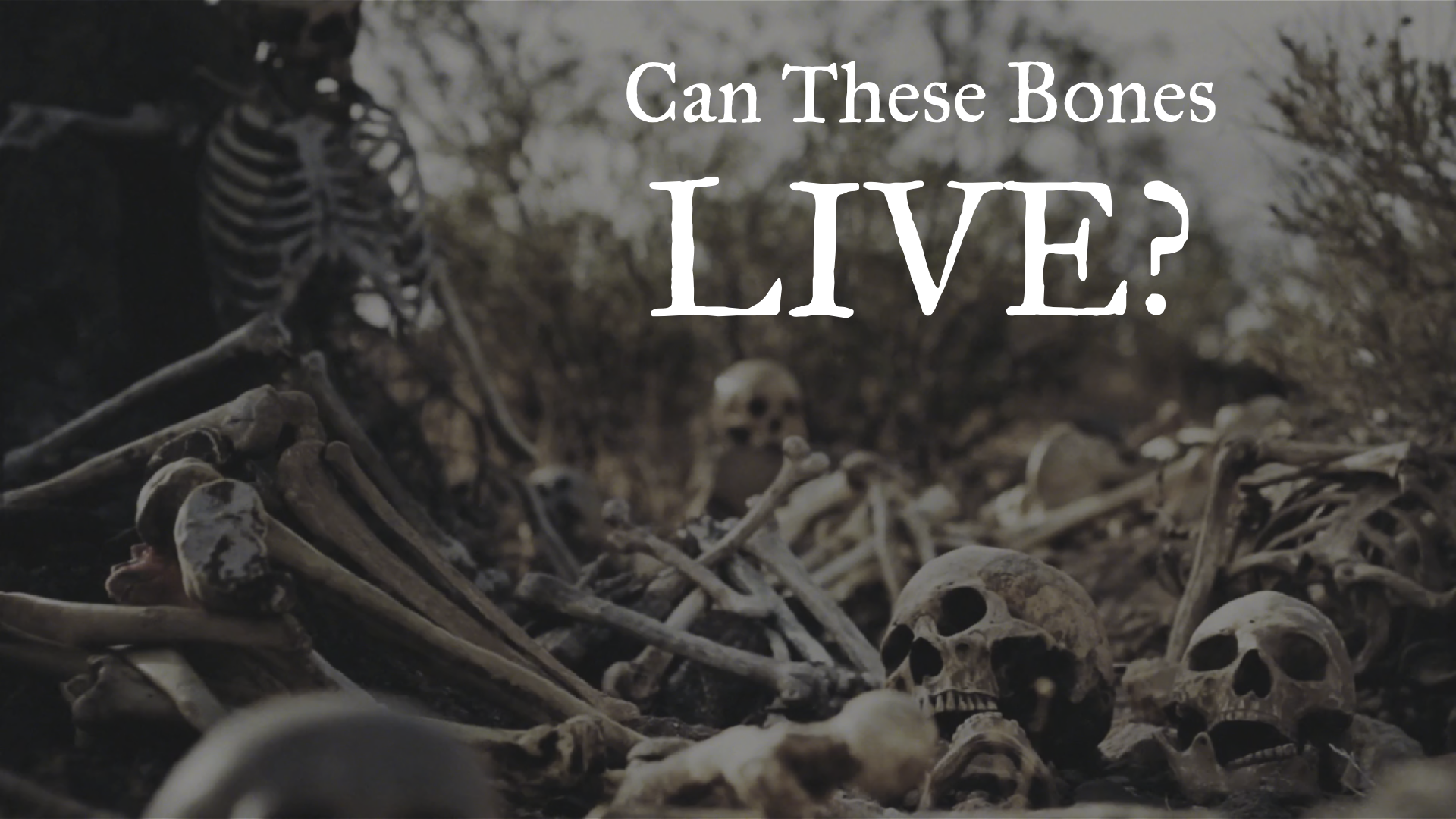
Ezekiel 37 recounts what must be one of the creepiest stories in the entire Bible:

1 The hand of the Lord was upon me, and he brought me out in the Spirit of the Lord and set me down in the middle of the valley; it was full of bones. 2 And he led me around among them, and behold, there were very many on the surface of the valley, and behold, they were very dry. 3 And he said to me, “Son of man, can these bones live?” And I answered, “O Lord God, you know.” 4 Then he said to me, “Prophesy over these bones, and say to them, O dry bones, hear the word of the Lord. 5 Thus says the Lord God to these bones: Behold, I will cause breath to enter you, and you shall live. 6 And I will lay sinews upon you, and will cause flesh to come upon you, and cover you with skin, and put breath in you, and you shall live, and you shall know that I am the Lord.”

7 So I prophesied as I was commanded. And as I prophesied, there was a sound, and behold, a rattling, and the bones came together, bone to its bone. 8 And I looked, and behold, there were sinews on them, and flesh had come upon them, and skin had covered them. But there was no breath in them. 9 Then he said to me, “Prophesy to the breath; prophesy, son of man, and say to the breath, Thus says the Lord God: Come from the four winds, O breath, and breathe on these slain, that they may live.” 10 So I prophesied as he commanded me, and the breath came into them, and they lived and stood on their feet, an exceedingly great army.

11 Then he said to me, “Son of man, these bones are the whole house of Israel. Behold, they say, ‘Our bones are dried up, and our hope is lost; we are indeed cut off.’ 12 Therefore prophesy, and say to them, Thus says the Lord God: Behold, I will open your graves and raise you from your graves, O my people. And I will bring you into the land of Israel. 13 And you shall know that I am the Lord, when I open your graves, and raise you from your graves, O my people. 14 And I will put my Spirit within you, and you shall live, and I will place you in your own land. Then you shall know that I am the Lord; I have spoken, and I will do it, declares the Lord.”

(Ezekiel 37.1-14)

This is a crazy story, but it’s actually quite fitting for Ezekiel’s crazy life: taken into captivity in Babylon, Ezekiel experiences frequent visions, is called to radical forms of preaching to a people who he knows will not listen or repent, and suffers great personal loss. And then, after all this, Ezekiel gets the news that Jerusalem has fallen—Babylon has conquered the city and destroyed the Temple.

This is the context for the creepy story in Ezekiel 37: Ezekiel is out in the middle of nowhere in a valley filled with dry, scorched bones. He is commanded to preach to them (which, by this point, probably doesn’t even seem that strange to him!) and the bones begin to rattle around and then come together, joined by ligaments, tendons, and muscles, and are covered with flesh. Then the breath of the wind comes upon them and they become living people. 

These dry bones in Ezekiel 37 are a metaphor for Israel’s spiritual state: exile and death, yes, but God’s Spirit is coming to bring His people back to life. It recalls the story in Genesis 2 where God creates humans out of dirt and breathes life into them with His Spirit. And the rest of the book of Ezekiel continues with a message of hope. Earlier, judgment was the emphasis: the people have been unfaithful, they haven’t loved God and other people, they won’t listen to correction, they have hard hearts of stone, and there will be consequences for their wickedness: Babylon is going to conquer them.

But now there is an emphasis on hope, because exile is not the end. The dry bones can live again. God is going to restore Israel, a new Israel with a new heart, He’s going to defeat evil in the nations, and He’s actually going to redeem all of creation as well. The book of Ezekiel ends with a vision of a new temple with a stream flowing out from it that becomes a mighty river that flows into the Dead Sea Valley—a desert place of barrenness where nothing can live in the water because it’s so salty—and it turns it into a lush paradise, a new garden of Eden called, “The Lord is there.”

And that’s how Ezekiel ends.

This story of dry bones coming to life in Ezekiel 37, a story of judgment and hope, exile and return, death and new life, is really a powerful summary of the whole story of the Bible. This is the story of Scripture over and over again. God asks Ezekiel, “Son of man, can these bones live?” and the answer is a resounding Yes!

  • Yes, when humans rebel and get kicked out of the garden, God promises to enact a plan to bring them back!
  • Yes, there is life and freedom after slavery in Egypt!
  • Yes, there is a return after exile in Babylon!
  • Yes, after the sinless Messiah is betrayed, arrested, beaten, and crucified, there is an empty tomb and a resurrected life!

And this isn’t just the story of the Bible, it’s our story too. Yours and mine. “Son of man, can these bones live?” Yes! 

  • Can a damaged friendship, a broken relationship, a betrayed marriage—can these come back to life? Is there any hope? Can these bones live? With God’s help, yes they can!
  • Can a church that is beset by controversy, quarreling, or just indifference, a church that dwindles and shrinks—is there any hope for such a church? Can these bones live? Yes, they can!
  • Can the sin that keeps you in bondage, the sin that enslaves you, that you say over and over that you won’t do it again and yet you keep coming back to it—can you ever be free of that? Can these bones live? Yes, they can!
  • As we go through this life filled with difficulties and delights, and as we march relentlessly toward the death that awaits all of us…is there anything for us beyond the grave? Can these bones live? Quite literally, yes they can!

Our story connects to God’s story. That’s part of what Paul talks about in Romans 6. There, he describes how when we are baptized into Christ, we die to sin. The old person we were who was enslaved to sin dies, and a new creation replaces that. This has implications for the present because right now, in our lives as parts of God’s new creation, we live differently, set free from sin. But it also has implications for the future because “if we have been united with Christ in a death like his, we shall certainly be united with Him in a resurrection like his” (Romans 6.5).

Christ died and was placed in a tomb, and then rose again to new life, not as some sort of spirit or ghost floating around, but with a new body. After His resurrection, Jesus specifically says that He’s not a ghost, that He has flesh and…bones.

One day you and I, if Jesus doesn’t return before then, will die. It may happen soon in a surprising way, or it may happen many years from now as our bodies age and weaken, we grow sick and feeble, and we pass away. Then our bodies will be buried in the ground and slowly begin to decompose. And eventually, we will be nothing more than dry bones.

Son of man, can these bones live?

If you belong to Jesus, the answer is Yes! Our bodies, which were “planted” in the ground corruptible and perishable, will be raised incorruptible and imperishable (1 Corinthians 15.42-44). God’s Spirit will breathe into them, and we will be alive again, suitable and prepared, ready for an eternity in God’s presence, in that new garden of Eden paradise that Ezekiel talked about: “The Lord is there.”

Son of man, can these bones live? The answer is Yes! This is God’s story, and it can be our story too.


In this loose series of Scripture Reflections, I am sharing brief thoughts spurred on by my Bible reading. By way of reminder, my goal for these brief posts is two-fold:

(1) To remark on aspects of the biblical text that I find to be of interest that the reader may or may not have thought about previously.

(2) When possible, to point to the work and person of Jesus Christ. I believe the Bible is a unified story that points to Jesus, which means that He is frequently alluded to or foreshadowed in some way throughout the biblical canon.


Creation and New Creation: Connections Between Genesis and Revelation

Introduction: The Bible as Literature

I recently preached a sermon in which I was discussing literary techniques that we see in Scripture. Sometimes people read the Bible in a flat, wooden sort of way, almost like they were reading a police report or something similar, where all you have is a list of facts and no sort of interpretation.

I think that is unfortunate, because the Bible is really a library of books all telling the same grand Story, and within that library, there are various types or genres of literature, and different genres of literature need to be read in certain ways if we are to understand and apply them faithfully. Much could be written both about different types of literature that we see in the Bible—wisdom literature, history, ancient biography, prophecy, poetry, apocalypse, epistles, etc.—and also different types of literary devices that biblical authors used to tell their stories in more powerful ways.*

Examining either of those in detail is beyond the scope of this post, but one literary technique that I do want to focus on here is what I call echoing, or the frequent practice of the authors of Scripture to refer back to an earlier event in the Bible by repeating certain language, or telling stories in similar ways, or comparing certain characters.


Creation and New Creation

One powerful example of echoing can be seen in a comparison between Genesis 1-3, which talks the Creation of the heavens and the earth, and Revelation 21-22, which talks about the New Creation of the New Heavens and New Earth. I shared this particular example in the sermon that I mentioned above, and considering the feedback I got from people who had never noticed these strong connections before, I thought it would be worth sharing here.

Simply put, in the description of the New Heavens and New Earth in Revelation 21-22, over and over again you have echoes of what occurred in the creation of the heavens and earth  Genesis 1-3:

  • In Genesis 1.4, there is a division of light and darkness; in Revelation 21.25, there is no night.
  • In Genesis 1.10, there is a division of land and sea; in Revelation 21.1, there is no more sea.
  • In Genesis 1.16, the rule of the sun and moon is described; in Revelation 21.23, we learn that there is no need for the sun or moon.
  • In Genesis 2.10, we are told about a river flowing out of the Garden of Eden; in Revelation 22.1, we are told about a river flowing from God’s throne.
  • Genesis 2.9 describes the Tree of Life in the midst of the garden; Revelation 22.2 describes the Tree of Life throughout the city.
  • Genesis 2.12 tells us that God and precious stones are in the land; Revelation 21.19 tells us that gold and precious stones are throughout.
  • God walks in the garden, among His creation as described in Genesis 3.8; Revelation 21.3 states that God’s dwelling will be with His people.
  • Following Adam and Eve’s sin, Genesis 3.17 states that the ground itself will be cursed; in the New Creation, there will be no more curse (Revelation 22.3).
  • As a result of sin and the curse, life in creation is characterized by pain and sorrow (Genesis 3.17-19); in the new creation, there will be no more sorrow, pain, or tears (Revelation 21.1-4).
  • Additionally, the sin results in death, described as a returning to the dust (Genesis 3.19); in the New Heavens and New Earth, there is no more death (Revelation 21.4).
  • Adam and Eve are banished from the garden, and cherubim guard the entrance to it (Genesis 3.24); angels actively invite into the city in Revelation 21.9.

There are actually many more points of comparison that could be made, but I think these are sufficient to prove the point: in Revelation, John is clearly describing the eternity that God’s people will spend with Him in the New Heavens and New Earth in language that echoes back to the story of creation and fall in Genesis 1-3.

In making these connections between Revelation and Genesis, John is making a significant and profound theological point: the creation that God created good but that was tainted by sin, He is going to redeem, recreate, and perfect!


*When I discuss Scripture as literature or as story, I am not suggesting that these characteristics somehow diminish its truth. I believe the Bible relates the truest Story of all, but it is still told as story, and employs a variety of literary techniques in the telling of it.

© 2026 The Doc File

Theme by Anders Noren — Up ↑