The online journal of Luke Dockery

Tag: Paul (Page 2 of 3)

Celebrating Resurrection With My Youth Group

This past weekend (Friday evening through Saturday night) was our youth ministry’s Spring Retreat. Spring Retreat is our biggest event of the semester and, from my perspective, perhaps our most important event of the year, because of the cohesion and togetherness it gives to our group.

You may be thinking that Easter weekend is not the ideal time to schedule a youth retreat, and I would agree with you, but this was the only weekend we could make it work with my seniors’ schedules, and we still managed to have a really good turnout. And, since we happened to be meeting together on Easter weekend, I decided to theme the retreat around the resurrection of Jesus.

Really, the timing almost seemed providential. Currently, on Wednesday nights we are doing a series on doubt. A common misconception is that having doubts or questions in our faith is somehow sinful or shows that our faith is deficient, when the reality is that doubt is simply a part of the journey of faith. According to research, though, teenage Christians typically don’t have a space where they feel comfortable talking about their doubts, and they try to ignore them hoping they will go away. This is actually really detrimental to faith, though, as openly discussing doubts and questions during teenage years is correlated with long-term faithfulness.

Having said all that, while we want to be able to discuss our doubts and not be threatened by them, even more we want to trust God in our doubts, and also be confident in our faith.

Enter the resurrection.


Our theme for the weekend was “Out of the Grave,” and we examined the resurrection in three different sessions:

(1) Resurrection on Trial

Occasionally you will hear from people who consider themselves to be Christians, but reject the idea that Jesus physically rose from the grave. They believe that Jesus was a good man, a great teacher, that He had some great ideas,  that in some sense He spiritually “saves” us and mystically “lives through us” but that whether or not He rose from the grave doesn’t really matter.

That’s not what Paul says, though. After describing the resurrection as “of first importance” in 1 Corinthians 15, Paul goes on to get even more specific. He says:

 “…If Christ has not been raised, then our preaching is in vain, your faith also is vain…if Christ has not been raised, your faith is worthless; you are still in your sins…if we have hoped in Christ in this life only, we are of all men most to be pitied.”

(1 Corinthians 15.14,17,19).

What Paul is saying here is that you can’t have it both ways. You can’t hedge your bets. When it comes to the resurrection, there are only two choices:

  1. Jesus was not raised from the dead. If this is true, then all of us are, according to Paul, pathetic people who are wasting our time—we’re following someone who won’t lead us anywhere. If this is true then Jesus was a man, just like us, not unique in any way. He may have been a good man with great insight who people like to quote, but He is also someone who doesn’t have the answers to life’s questions and has no right to tell people how to live.
  2. Jesus was raised from the dead. If this is true, then it is the single most important fact in history. It means that Jesus was different; He was unique. He has power over life and death, He has the answers to life’s questions, He has the right to tell us how to live, and nothing in life is more important than following Him.

It is important, then, that we get this right, because the stakes are really high. Fortunately, though, there’s actually an abundance of evidence for the resurrection, and we put the resurrection “on trial” in our first session. We discussed the Physical Evidence of the empty tomb and the grave clothes of Jesus, we talked about the Eyewitness Accounts and reasons why the eyewitnesses could be considered reliable, and we discussed the Circumstantial Evidence of the sudden spread of Christianity and the change in the lives of both disciples and skeptics.

These different types of evidence all agree: after being crucified, Jesus of Nazareth was raised from the dead on the third day. And this is good, good news. The best news of all: it means that Jesus has power over life and death, the answer to life’s questions, and nothing in life is more important than following Him! Jesus Christ is the foundation of the Christian faith, and we shouldn’t build our faith or our lives on anything less than Him!

(2) Sharing in Resurrection

In our second session, we focused on the words of Paul in Romans 6.1-14, where he says that baptism is the time when we participate in the death and resurrection of Jesus. Jesus died, was then buried, and rose again, and Paul says here that, as Christians, we are buried in the act of baptism—we go under the water—and when that happens, our old self dies, and we are raised to walk a new life.

In the act of baptism, we unite our history and our destiny with Christ. Paul says that if we have been united with Christ in a death like His (by being buried in baptism), then we will also be united in a resurrection like His (v. 5). 

In the act of baptism, we unite our history and our destiny with Christ. Share on X

Of course, Jesus died a literal death, and then was raised, bodily, to a new life, and would then never die again, because death no longer had dominion over him (v.9). Our death at baptism is not a literal death, but rather a death to sin. Baptism represents a fresh start and a new life. No longer are we enslaved to the power of Satan, sin, and death; now, we have received God’s grace and God’s Spirit, and sin no longer is our master:

“So you also must consider yourselves dead to sin and alive to God in Christ Jesus.”

(Romans 6.11)

Of course, this doesn’t just happen automatically. Sin can continue to be a problem in our lives, and we must fight against it:

“Let not sin therefore reign in your mortal body, to make you obey its passions. Do not present your members to sin as instruments for unrighteousness, but present yourselves to God as those who have been brought from death to life, and your members to God as instruments for righteousness.”

(Romans 6.12-13)

Christ’s death and resurrection, and our sharing in His death and resurrection through baptism, provide us with the opportunity for a new life and a fresh start, but we still have to determine to live that way. It’s a fight and a struggle; we must present our bodies and our lives not to sin, but to God, not as instruments of righteousness. We are never going to be able to live the Christian life without effort. It’s going to require determination, struggle, and sacrifice.

But here’s the really important thing: what was once an impossible task—because sin was our master—is now possible! Because, through baptism, we have been united with Christ in His death and resurrection, we are now new creations. We have received God’s grace and His Spirit, and now, it’s actually possible for us to resist the temptation of sin. 

We won’t do this perfectly, but we are given this promise:

For sin will have no dominion over you, since you are not under law but under grace.

(Romans 6.14)

Sin no longer has dominion; it is no longer our master. And in those times, when we struggle with sin and we fail, God’s grace is there, amazingly, to wash away that sin. We are new creations. We have died to sin, and been raised to a new life, like Jesus.

(3) Resurrection Hope

Finally, we looked at the rest of 1 Corinthians 15 and talked about the Christian hope that when Jesus returns, we will experience bodily resurrection.

It is clear from 1 Corinthians that the church in Corinth had a lot of problems, and one of the things they seemed to be struggling with was the idea of resurrection from the dead. Why did they struggle with this? Well, for the same reason people today struggle with it! People in the ancient world were not stupid or gullible, and they were much more familiar with death than we are today (where we do everything we can to distance and insulate ourselves from the reality of death). All sorts of illnesses and medical conditions that we can treat today were death sentences in the ancient world, so people saw a lot of death, and they knew that dead people stay dead and that dead bodies rotted.

This is what was so controversial about the claims of Christianity. It wasn’t controversial to say that people continue to exist in some way after death, or that our spirits leave the body at death and have an eternal existence somewhere—Greeks and Romans believed that already! But the Christian claim that Jesus rose from the dead and that His followers would be raised from the dead as well in their bodies was a shocking claim. 

Paul taught about the resurrection in Athens, and people thought he was crazy (Acts 17). Apparently some of the Christians in Corinth did too.

But Paul emphasized that this matters—if Jesus was not raised from the dead, then our faith is useless, and we are still in our sins. But…

“But in fact Christ has been raised from the dead, the firstfruits of those who have fallen asleep.”

(1 Corinthians 15.20)

We can be confident in the resurrection of Jesus (see above), and Paul says that His resurrection is the “firstfruits” of our own. Firstfruits are the beginnings of a crop that point to a larger harvest later. What Paul is saying here is clear: If Jesus Christ was not raised from the dead, then our faith is useless, but if Jesus Christ was raised from the dead, then we will be raised too.

If Jesus Christ was not raised from the dead, then our faith is useless, but if Jesus Christ WAS raised from the dead, then we will be raised too. Share on X

Later, Paul anticipates the question that he will get in response to teaching that our bodies will be raised: “How are the dead raised? With what kind of body will they come?” How can these dead, decaying bodies come back to life? Because they will be changed.

In this passage, Paul compares our physical bodies to a seed that is sown. This highlights a connection between our current bodies and our resurrection bodies, but also a change. Seeds are not the same as the wheat they produce, but they are closely related: they are made of the same “stuff”, and one has the necessary DNA for the production of the other. 

Paul says that those who are in Christ will be raised with “spiritual bodies.” We need to think about both of these words. The Christian hope is not to be disembodied spirits floating around in a non-material existence, but neither is the Christian hope to have the same old bodies that we have right now, which are “natural” or “fleshly”.

Paul is clear in these verses that there are some major differences between our current bodies, and our future, resurrection bodies (15.42-44):

  • Our current bodies are perishable, while our future bodies will be imperishable
  • Our current bodies are dishonorable, while our future bodies will be glorious
  • Our current bodies are weak, while our future bodies will be powerful
  • Our current bodies are natural, while our future bodies will be spiritual

When Paul says “spiritual body,” the emphasis is on what provides the driving force for the body—it is powered by God’s Spirit. Just as the Holy Spirit raised Jesus from the dead, it will be God’s Spirit that raises us up from the dead and gives power and life to our resurrection bodies. The resurrection is not about us being freed from our bodies to live as spirits; it is about our bodies being transformed into something glorious that is both similar to and different from our current bodies, like seeds are both similar to and different from the plants that they produce.

This is the Christian hope: Just like Jesus, we too will come out of the grave!

Our bodies will be changed. They will be sown perishable, but raised imperishable; sown dishonorable, but raised glorious; sown in weakness, but raised in power; sown natural, but raised spiritual. Our resurrection bodies will be suited for an eternal existence with God.


We had a great weekend! We studied, discussed, worshiped, meditated, played, laughed, ate and even slept.

Most importantly, though, we thought about and celebrated the central claim of the Christian faith. The reality is that there are things that I struggle with and have questions about, but at the end of the day, I believe that Jesus was dead…and then He wasn’t. And if the resurrection is true, then that’s something that I can build my life on, and even though there are things that I don’t understand, those things don’t unsettle my faith because the truth is…Jesus came out of the grave.

The reality is that there are things that I struggle with and have questions about, but at the end of the day, I believe that Jesus was dead…and then He wasn’t. Share on X
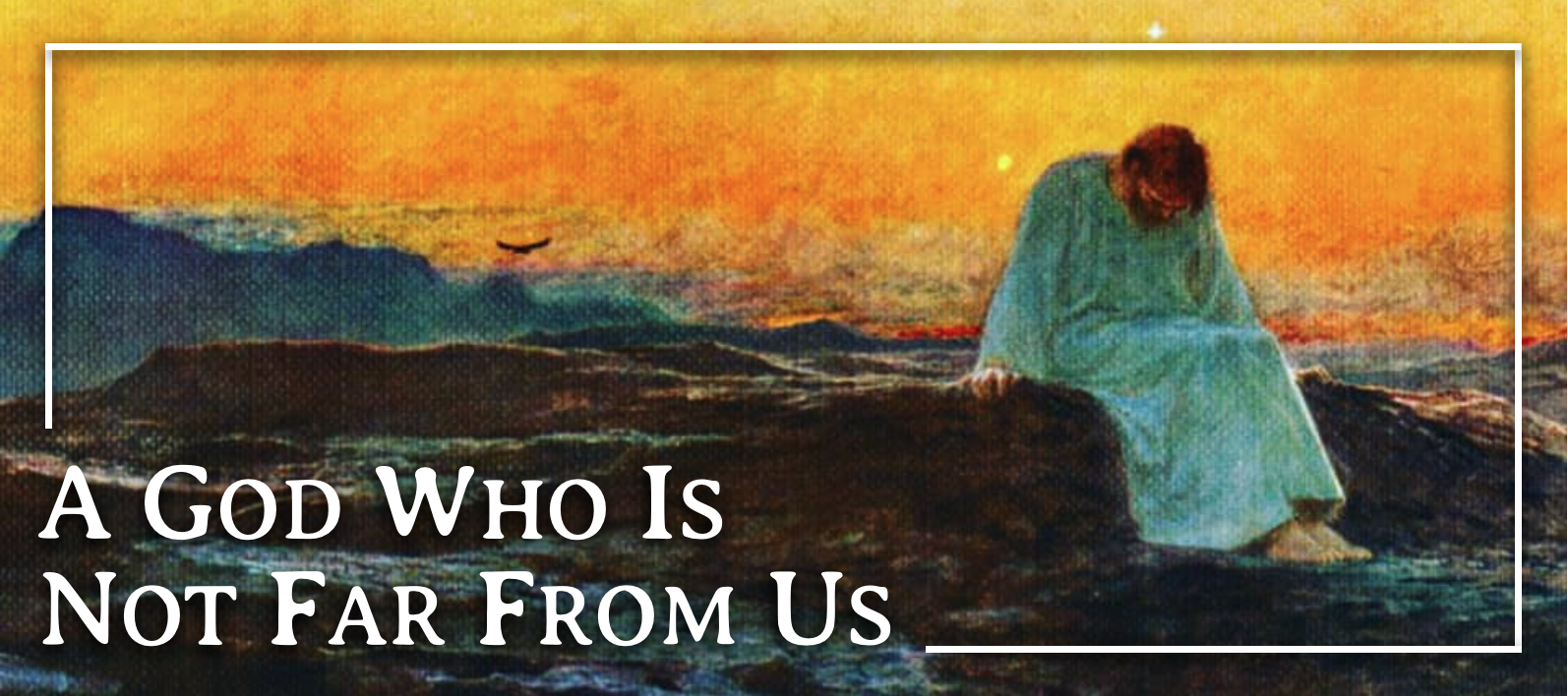

A God Who Is Not Far From Us

In a well-known passage in Acts 17, Paul addresses the Areopagus in Athens:

“Men of Athens, I perceive that in every way you are very religious. For as I passed along and observed the objects of your worship, I found also an altar with this inscription, ‘To the unknown god.’ What therefore you worship as unknown, this I proclaim to you. The God who made the world and everything in it, being Lord of heaven and earth, does not live in temples made by man, nor is he served by human hands, as though he needed anything, since he himself gives to all mankind life and breath and everything.”

The Greeks were a very religious people—I can remember studying in school about the various gods and goddesses in the Greek pantheon—and Athens was filled with temples, statues, and idols in honor of them. Apparently, in addition to these deities, they even worshipped an “unknown god”, apparently to ensure that they didn’t leave anyone out. But the point that Paul tries to make to the Athenians in Acts 17 is that they did leave Someone out—the most important Someone of all—the God who made the world and everything in it. Of this God, the Greeks were ignorant.

Being ignorant of God—what He is like and what He desires of us—is a problem that was not specific to the Greeks. It’s a recurring problem that has appeared throughout history. And when it’s up to us to determine what God is like and what He wants, we frequently end up in some pretty dark places.


Chichén Itzá was a pre-Columbian Mayan cultural center located on the Northern Yucatán peninsula in modern-day Mexico. Today it is a popular tourist attraction and every year thousands of people go and visit the ruins.

The Yucatán is a dry area with no rivers above ground, but despite this, Chichén Itzá was able to thrive as a major Mayan city because of the existence of a certain type of geological formation called a cenote. A cenote is a sinkhole which had formed in the limestone foundation and contained groundwater. There are several cenotes throughout the Yucatán, and at Chichén Itzá, there were two cenotes that were substantial in size and would likely have contained adequate drinking water year-round for the people of the city.

Cenote Sagrado, believed to be the home of the Mayan rain god, Chaac.

However, of the two cenotes, only one was used for drinking water, because one of them was believed to be the home of the Mayan rain god, Chaac. In order to keep Chaac happy and the rain plentiful (and plentiful rain was a big deal in such a dry area), the Mayan people would offer human sacrifices. These sacrifices—often children—would be weighted down with gold and silver jewelry and then tossed down into the cenote where Chaac was thought to live. Hundreds of years later when the area was excavated by archaeologists, many tiny skeletons, as well as the treasure that dragged them to their deaths, were found.

Senseless deaths…sacrifices made in order to appease a god they didn’t understand, whose will they had to guess at.

We hear that and perhaps it’s easy for us to dismiss that example as being far removed from our own circumstances, something done long ago by “primitive” people. It’s not an isolated incident, though. People have often justified terrible actions because they thought they were doing what God wanted: fighting in the Crusades…buying and selling people based on the color of their skin…blowing up abortion clinics…flying airplanes into skyscrapers. When it’s up to us to determine what God is like and what He wants, sometimes we end up in some pretty dark places.

When it’s up to us to determine what God is like and what He wants, sometimes we end up in some pretty dark places. Share on X

But reading further in Acts 17, Paul says that it doesn’t have to be this way—we don’t have to be ignorant of God. He tells the people of Athens that God is “not far from each one of us”, and that we are His offspring. And then, speaking of Jesus, Paul goes on to say that God “has fixed a day on which he will judge the world in righteousness by a man whom he has appointed; and of this he has given assurance to all by raising him [Jesus] from the dead.”

Paul’s claim that God is not far from us finds fuller expression in the classic passage on the Incarnation in John 1. There, in verse 14 we read, “The Word became flesh and made his dwelling among us.”

A lot of times when speaking about the Incarnation, we talk about that first part: the Word becoming flesh. That’s certainly an important concept, but I want to focus on the second clause: the Word made His dwelling among us. Here John is using tabernacle language to explain how God came down to be among His people in a new and special way. A more literal translation would be something like, “He pitched His tent among us.”

In The Message, Eugene Peterson says that “the Word became flesh and moved into our neighborhood”, and I love that sentiment—through Jesus, God is no longer a mysterious stranger Whom we don’t understand, because He lives right down the street from us—we can see what God is like for ourselves!

The wonderful news of the Incarnation is that the God who does not wish to be far from each of us put on flesh, and Jesus took up residence in our neighborhood. From that proximity, we can see Jesus clearly, and we are never left to wonder what God is like, or what He wants from us.

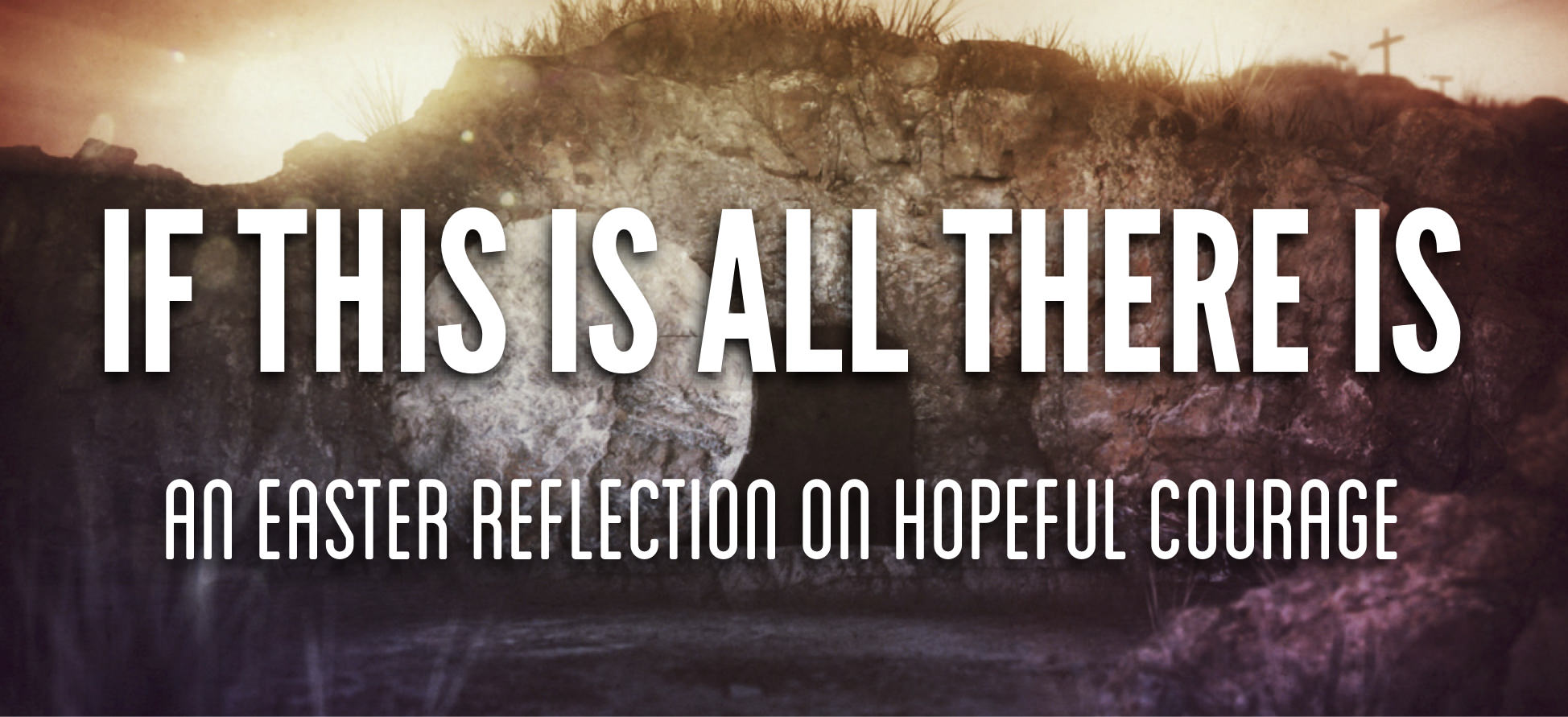
If This Is All There Is: An Easter Reflection on Hopeful Courage

After describing the resurrection as “of first importance” in 1 Corinthians 15, Paul goes on to get even more specific:

 “…If Christ has not been raised, then our preaching is in vain, your faith also is vain…if Christ has not been raised, your faith is worthless; you are still in your sins…if we have hoped in Christ in this life only, we are of all men most to be pitied.”

(1 Corinthians 15.14,17,19)

I once had a very well-meaning Sunday school teacher who said something to the effect that if it turns out that Christianity is not true, there is still no better way to live. His basic point, I think, was that a life characterized by Christian virtue, service, and sacrifice is a worthwhile way to spend our time on earth, even if we are ultimately incorrect about everything we claim and there is no eternity in view afterwards. I appreciate the sentiment, but I disagree, and the reason I disagree is that in light of Paul’s words above, I am pretty sure he would disagree.

If Jesus was not raised and this is all there is, Paul wouldn’t say, “Oh well, we were mistaken, but there’s no better way that we could have lived.” Instead, he would say that life was all a tragic joke, and that Christians were the butt of it. Of all people, we are most to be pitied.

This, I think, is cause for reflection: what if this is all there is?

If this is all there is, my career is a waste of time. I am nothing more than a delusional mentor to young people, feeding them false information and false hope, encouraging them to grow up to be as deluded as I am.

If this is all there is, I am foolish for staying in such a meaningless career that doesn’t compensate me nearly as well as countless others would.

If this is all there is, efforts at self-denial make no sense. Why should I deny myself anything? I have a limited time of existence, and I need to make the most of it by doing what I want, for as long as I can, as often as I can.

If this is all there is, then my beautiful daughter’s diseased and disabled life is the random byproduct of cosmic chance. There is no meaning, and no hope for something better in the future.

If this is all there is, any notion of turning the other cheek or loving my enemies is dangerous nonsense that should be disregarded immediately. Love those who would do me harm? Not retaliate when I am attacked? These are not natural responses, and they are not generally beneficial to me.

If this is all there is, why should I forgive? Oh sure, there are people who are an important part of my life who I want to be on good terms with and sometimes forgiveness is necessary to keep the peace and make life more pleasant. But a lot of times it is easier to write people off and forget about them than to forgive them.

If this is all there is, why spend so much time and effort in how I interact with people? Why be so careful about what I say and how I say it on social media? Why be careful about the way I act when I drive? Why be careful about the way I respond to people with whom I disagree?

If this is all there is, why the sleepless nights of concern over my students and the decisions they make, or over problems at church?

If this is all there is, I am giving up a lot of good opportunities for sleep on Sunday mornings.

If this is all there is, why spend my life doing anything but those things that make me happy, or bring me some level of satisfaction, or enforce my standards and values upon the world?

But.

I do not believe this is all there is.

Because the tomb was empty.

That gives me hope that there is more to the Story than the Broken Now, and that hope gives me the courage to continue to live in a way that makes no sense if this is all there is.

Lessons from David: God Can Use Unlikely People

Lessons from David

As I mentioned last week, the life of King David provides some remarkable lessons for people of faith today. This will not be an exhaustive series (there’s much more that can be learned from David than what we are able to cover here), but I do want to highlight some of the most important ones.

Today I want to talk about a lesson that the Bible teaches over and over again: God uses unlikely candidates to accomplish His will.

After King Saul disobeyed God, God send His prophet Samuel to anoint a new king for Israel from the sons of Jesse the Bethlehemite. Samuel goes to Bethlehem and Jesse brings his sons out, one by one, for Samuel to see. When Eliab, Jesse’s oldest son, comes out, Samuel was impressed; apparently this man looked like a king:

“But the LORD said to Samuel, ‘Do not look at his appearance or at the height of his stature, because I have rejected him; for God sees not as man sees, for man looks at the outward appearance, but the LORD looks at the heart.’” (1 Samuel 16.7)

Samuel sees Jesse’s seven oldest sons, but God rejects them all as king.

Apparently, the thought of David—the baby, the shepherd boy—being the one God was interested in hadn’t even entered Jesse’s mind, because he wasn’t even there; he was out with the sheep. So Jesses sends for him, and sure enough, David is the one God chooses, and the one Samuel anoints to be the next king of Israel.

David goes on to defeat Goliath, become a mighty warrior, and as King, leads Israel in many successful military campaigns, but if it had been left up to Samuel, David would’ve just stayed in the field with the sheep.

For God sees not as man sees, for man looks at the outward appearance, but the LORD looks at the heart.

God spoke these words in reference to David, but they don’t just apply to him. The fact is that God can use anyone, no matter what they look like on the outside, to further His will. In fact, God has almost always used men and women from unimpressive circumstances on the outside to accomplish His goals:

  • Moses was a murderer and an exile, a man who was apparently afraid to even speak in public. And yet, with God’s help, Moses stood up to Pharaoh, likely the most powerful man in the world at that time, freed the children of Israel, and then led them in their trek through the wilderness.
  • Rahab was a lowly prostitute, but she hid the Israelite spies and was pivotal in the Israelites’ great victory over the walled city of Jericho, and thus, their occupation of the land of Canaan.
  • Esther certainly looked impressive on the outside: in fact, she became queen only because she had won a beauty contest. But she had no political aspirations and was afraid to even speak to the king, but God used her to save the Jewish people.
  • Peter was an uneducated (probably), coarse fisherman who, even despite spending a lot of time with Jesus, just seemed to mess up all the time. He was always sticking his foot in his mouth, and deserted Jesus when things got touch. But on the Day of Pentecost when the Church was established, Peter preached the first gospel sermon and 3,000 were added to the Church.
  • Paul was present at the stoning of Stephen. He persecuted Christians and threw them in jail, and would later refer to himself as the chief of sinners. But God used Paul to speak the gospel message to countless Gentiles, and Paul became the greatest missionary the world has ever known.

The examples go on and on, but the principle remains the same: God uses unlikely candidates to accomplish His will. This was true with David, it was true throughout the Bible, and it is true today.

You might see yourself as lacking talent or ability, but God sees you as someone who He can use to accomplish great things for His Kingdom:

“For we are His workmanship, created in Christ Jesus for good works, which God prepared beforehand so that we would walk in them.” (Ephesians 2.10)

That verse seems pretty clear to me. No matter what you think about yourself or what you think your shortcomings are, God designed you to be useful! There are things that you can do (and maybe that only you can do) for His cause!

God uses unlikely candidates to accomplish His will!

When Nero Was On The Throne

It has been interesting to me over the last 12 hours or so to read Facebook status updates and tweets from my Christians friends about yesterday’s presidential election. The fact that some of these Christians are celebrating the reelection of President Obama while others are lamenting it tell me that either:

  1. Applying Christian values to voting is a difficult and murky process.
  2. Christians aren’t very aware of what “Christian values” actually are.
  3. Both 1 and 2 are partially true.

But I digress. If your candidate won yesterday, be happy, be thankful, and try not to gloat too much. If your candidate did not win yesterday (and if you are in this group, you are the real audience for this post), remember that as a Christian, you can glorify God by showing respect to the one who is in authority, even if he wasn’t your choice:

“Let every person be subject to the governing authorities. For there is no authority except from God, and those that exist have been instituted by God. Therefore whoever resists the authorities resists what God has appointed, and those who resist will incur judgment. For rulers are not a terror to good conduct, but to bad. Would you have no fear of the one who is in authority? Then do what is good, and you will receive his approval, for he is God’s servant for your good. But if you do wrong, be afraid, for he does not bear the sword in vain. For he is the servant of God, an avenger who carries out God’s wrath on the wrongdoer. Therefore one must be in subjection, not only to avoid God’s wrath but also for the sake of conscience. For because of this you also pay taxes, for the authorities are ministers of God, attending to this very thing. Pay to all what is owed to them: taxes to whom taxes are owed, revenue to whom revenue is owed, respect to whom respect is owed, honor to whom honor is owed.”

(Romans 13.1-7)

Paul’s words here are pretty hard to swallow for Christians who struggle to respect and submit to their leaders. When we think about leaders that we don’t like much, it can be difficult for us to affirm statements like, “the authorities are ministers of God” and that resisting them means that we are resisting “what God has appointed”. But that’s exactly what Paul says.

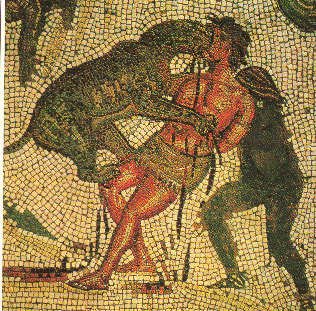
Mosaic depicting a Christian martyr

And to those who are inclined to think that Paul just didn’t understand about bad leaders, realize that he wrote these words to the Christians in Rome while Nero was Emperor. Nero was a vile man and a dedicated persecutor of Christians who was known for using the bodies of captured Christians as fuel for the fires which lit his garden at night. No President that our nation has ever had could hold a candle to Nero when it comes to sheer wickedness*, and it was most likely during the reign of Nero that Paul himself was executed. And yet, to a man such as this, Paul urges Christians to be in subjection.

If your candidate didn’t win yesterday, it’s okay to be disappointed. It’s okay to disagree with the policies of the current President, and it’s okay to hope for a better outcome next time. But respect your President, and be in subjection to him. Even if it is hard.


*Please do not interpret this to mean that I am suggesting that President Obama is somehow equivalent to Nero. I am not.

« Older posts Newer posts »

© 2026 The Doc File

Theme by Anders Noren — Up ↑