The online journal of Luke Dockery

Tag: Racism (Page 3 of 4)

Martin Luther King Jr. and Jackie Robinson

Last week I wrote about Jackie Robinson’s integration of Major League Baseball in 1947 and mentioned that, after Martin Luther King Jr., Robinson was the most important figure in the American Civil Rights movement.
Today, while reading an article (which I recommend, by the way) about Jackie’s widow, Rachel Robinson, I came upon this quotation about Robinson from Dr. King:

“Back in the days when integration wasn’t fashionable, he underwent the trauma and humiliation and the loneliness which comes with being a pilgrim walking the lonesome byways toward the high road of freedom. He was a sit-inner before the sit-ins, a freedom rider before the Freedom Rides.”

For more information regarding Robinson’s pioneering efforts in the field of Civil Rights, see this interesting blog post I came across.
Jackie Robinson and Martin Luther King Jr. receiving honorary
Doctor of Laws degrees from Howard University in 1957.

The Best Day In Baseball History


This is an updated version of a post from last year.

Sixty-three years ago today, on April 15, 1947, Jackie Robinson integrated Major League Baseball.Robinson’s 10-year career had an unquestioned and inestimable impact on the Civil Rights movement in the United States. In the words of Princeton professor and civil rights activist Cornel West:

“More even than either Abraham Lincoln and the Civil War, or Martin Luther King, Jr. and the Civil Rights movement, Jackie Robinson graphically symbolized and personified the challenge to the vicious legacy and ideology of White supremacy in American history.”

The skill and grace with which he played and the way he handled himself on and off the field forced many Americans to face difficult questions about race for the first time, and ultimately resulted in the changing of the hearts and minds of millions.

Jackie Robinson made baseball, in fact, what it had always claimed to be—the national pastime.

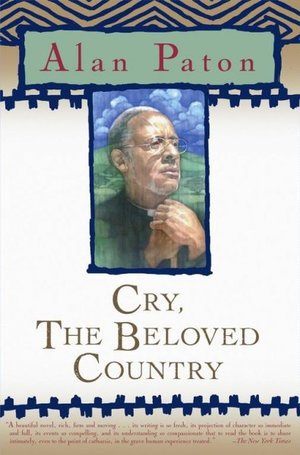
Cry, The Beloved Country

I read Alan Paton’s Cry, The Beloved Country at the beginning of the summer and meant to write about it long before now, but then the summer busyness that comes with youth ministry set in and I’m just now getting around to it.

Simply put, this is one of my all-time favorite books. I love Paton’s poetic style of writing, and I thought the story was incredibly moving and powerful.

Cry, The Beloved Country is set in South Africa in the late 1940s, before apartheid, but certainly in a time of profound racial strife. The main character in the book is Umfundisi Kumalo, an elderly Anglican priest (“umfundisi” is Afrikaans for “parson”) who leaves his native village to go to the great city of Johannesburg in search of his son Absalom, who he hasn’t seen or heard from in a long time. Kumalo has never really been away from his village before, and the old priest is completely overwhelmed by the size of the city, and the different customs and behaviors he sees there.

The book touches on several heavy themes—racism, theology, politics, the breakdown of the native village, crime, environmental concerns, and others—but I just want to focus on one quotation that I really liked.

While in Johannesburg, Kumalo becomes close friends with Umfundisi Msimangu, a younger priest who helps him in his search and comforts him as he endures one heartbreaking discovery after another. Time and time again, Msimangu goes out of his way to help Kumalo in any way that he can.

At one particular moment in the book, the old priest is so moved by the overwhelming love and kindness that the younger priest shows him that he begins to pay him a compliment. Kumalo tells Msimangu that he has never known anyone like him, but before he can go on, the young priest interrupts his compliment and rebukes him, saying, “I am a weak and sinful man, but God put His hands on me, that is all.”

I think there’s profound meaning there. Often, I think the world can be put off by Christianity because people assume that Christians consider themselves to be better than everyone else (and certainly some do). Instead, we should have the attitude of Msimangu. He wasn’t willing to take credit for his good deeds, but instead said that it was God’s influence in his life that made those deeds possible. That’s how we should be. We should strive to show the world that any difference or “betterness” on our part isn’t because of us—it’s because Jesus changes our hearts and allows us to be different.

“I am a weak and sinful man, but God put His hands on me, that is all.”

Happy Jackie Robinson Day!

Sixty-two years ago today, on April 15, 1947, Jackie Robinson integrated Major League Baseball.

Robinson’s 10-year career had an unquestioned and inestimable impact on the Civil Rights movement in the United States. The skill and grace with which he played and the way he handled himself on and off the field forced many Americans to face difficult questions about race for the first time, and ultimately resulted in the changing of the hearts and minds of millions.

I’ve written more on Jackie Robinson here, but I just wanted to take note of today’s significance.

The New President

I’m getting pretty tired of political posts—hopefully after I get the series on abortion finished up we can talk about more pleasant things for a while.

But first, even though I’m not a supporter of Barack Obama, I would be remiss if I didn’t say something about last night’s historic election.

It’s pretty amazing that just 40 years removed from segregation and lynchings, the American people have chosen an African-American as the next President of the United States, and the fact that he’s not my ideal candidate for the first black President does nothing to change that.

I disagree with many of Obama’s positions, but I don’t think that his election is the end of the world. I tend to think that many of the fears that people have concerning an Obama presidency won’t come to pass. I certainly hope that’s the case.

The ideas of change and hope have been a big part of Obama’s campaign. For my part, I hope that it is more than just political rhetoric, and that he works to bring about the unity and lasting peace that he talked about so much.

« Older posts Newer posts »

© 2026 The Doc File

Theme by Anders Noren — Up ↑







