The online journal of Luke Dockery

Tag: Racism (Page 2 of 4)

Larry Doby and the Importance of Forgettable Excellence

1951 Bowman Larry Doby

Over the years, I’ve written a lot on this blog about Jackie Robinson, who has long been one of my heroes. In 1947, Robinson broke Major League Baseball’s color barrier, making it possible for African Americans to play big league baseball, and actually making baseball what it had long claimed to be—the national pastime.

Robinson was a great baseball player, and was the perfect choice as the pioneer who would integrate baseball. He was determined to succeed on the field, and his considerable skills helped. He was a good line drive hitter, a versatile fielder, and an absolute terror with his legs. His daring maneuvers on the base paths thrilled fans, and brought a new style of playing to the conservative Major League circuit. He was great off the field as well: good-looking, articulate, and poised. 

But probably, you know a lot about Jackie Robinson already, because he has gotten a lot of fanfare over the years.

You might not know as much about Larry Doby.

Larry Doby was Jackie Robinson’s American League counterpart. In July 1947, Doby broke the color barrier in the AL when he cracked the lineup for the Cleveland Indians for the first time. In his first appearance he struck out, but he would go on to have a great career of his own as a 7-time All-Star and an eventual Hall of Famer. By some measurements, he even had a better career than Robinson did.

But Robinson came first; Doby was only second. Robinson was the flashier player; Doby was more in the background. Robinson has become an honored figure, a hero to millions; Doby has been forgotten by most people.

So it goes.

But I guess the point I want to make in this post is how incredibly important the Larry Dobys of the world are. As great as Jackie Robinson was, if Larry Doby and a bunch of other African American players behind him weren’t ready to come in and prove that Robinson wasn’t a fluke, it all would have been for nothing. A lot of those players have been forgotten, but their impact and legacy lives on.

And I think about the example of Larry Doby and how it applies to other areas of life, and especially to God’s Kingdom, because when you think about all the parts of Christ’s Body, not too many people get to be Jackie Robinson. Certainly, there are a few—immensely talented, flashy, charismatic, known and admired and remembered by all—but not many.

On the other hand, there are a lot of Larry Dobys—talented in their own right, but not as flashy, not as well-known. Just committed disciples who live lives of dogged, forgettable excellence for the cause of Christ. And who change the world in the process.

Praise God for the Larry Dobys!
The Fall of Man and the Sociological Consequences of Sin

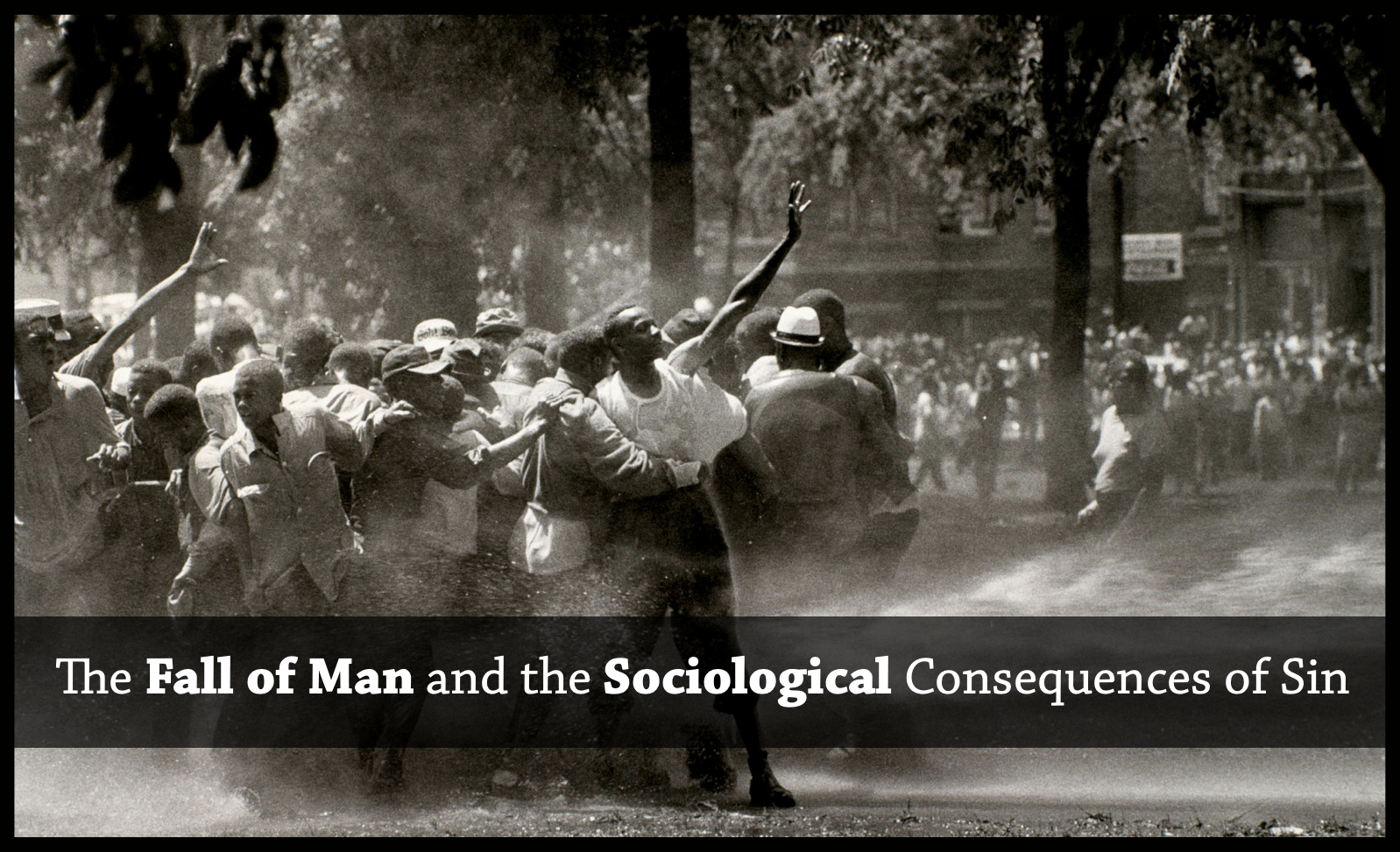
In our continuing discussion of the Fall of Man in Genesis 3 and the widespread devastation of sin, we have already covered the theological and personal consequences of Adam and Eve’s misdeed; in this post we turn to the sociological fallout of that sin, or the way that sin affects our relationships with one another.

Returning to our text, we can see this dimension clearly played out in verses 11-13:

“[God] said, ‘Who told you that you were naked? Have you eaten of the tree of which I commanded you not to eat?’ The man said, ‘The woman whom you gave to be with me, she gave me fruit of the tree, and I ate.’ Then the Lord God said to the woman, ‘What is this that you have done?’ The woman said, ‘The serpent deceived me, and I ate.’”

People were created to live in community with one another. Specifically, Eve was created to be the perfect partner for Adam (Genesis 2.18-25). But when God confronts Adam and Eve with their sin, something very significant (and unfortunate) happens: the unity that had previously existed between Adam and Eve is shattered as Adam immediately blames his wife for the sin which they had committed together.

This brings a conflict and disharmony between them that would be passed down over time (Genesis 3.16), and we can see it unfold in the pages of Genesis in the accounts of numerous broken relationships—Cain’s murder of his brother, the depraved society of Sodom and Gomorrah, the distorted relationships between Sarah and Hagar, Jacob and Esau, Jacob and Laban, Joseph and his brothers, and more. But the problems certainly don’t stop there—this same conflict and disharmony continue to darken and distort our world today.

Our world is deeply flawed by sin, and this manifests itself everyday sociologically, as we treat one another in a wide array of horrible, messed up ways:

  • On an international level, countries wage war and kill because of conflict over ideology or resources.
  • Systemic evils such as poverty, abortion, racism, sex trafficking, government corruption, lotteries, and more stem from our exploitation of our neighbors in order that we might obtain our own selfish desires.
  • Horrific acts of incomprehensible violence fill our news cycles. Mass shootings at elementary schools, the use of passenger airliners as terrorist missiles, bombings at marathon finish lines and incomprehensible barbarity at soccer matches shock and dismay us and cause us to weep.
  • Our interpersonal relationships are also a mess. Dishonesty, reckless ambition, and violence abound. The (supposedly) lifelong bonds of marriage are broken on a whim.

And the sum result: our society as a whole stagnates and decays, as people live lives marked by self-interest and fear of one another. The community for which we were created is broken.

Sin destroys our relationships with one another.

Destroying the Works of Satan

A couple of weeks ago I had the opportunity to speak at a youth rally and my topic was the purpose of the church. I talked about how the church is God’s vehicle for saving the world today (through the preaching of the gospel), for influencing the world and trying to make it a better place (through service), and equipping Christians for those first two tasks (through education and discipleship).

And those are all pretty standard ideas—we hear about those things a lot when we talk about what the church should do. But the church has another important purpose that is often neglected in such discussions: the mission of the church is to oppose and destroy the works of Satan.

In 1 John 3.8, John said that Jesus came to earth so that “He might destroy the works of the devil.” In Ephesians 6.12, Paul says that our struggle as Christians is not against flesh and blood, but against the forces of darkness.

These verses make it clear that as the church, we are a part of a spiritual battle against Satan and his influence. Moral corruption and sin are the works of the Devil (and we focus on things like that a lot),  but so are things like disease, starvation, poverty, terrorism, and racism.

When you look at all the sad and messed up stuff that happens in our world—do you think God likes that stuff? Of course not! Children starving to death in the developing world, or innocent people being killed because of racial wars, or bombs going off at marathon finish lines—those are works of Satan, and when we take part in efforts to fight against those things, we are fulfilling the purpose of the church in opposing and destroying the works of the Devil.

To me, realizing that when we fight against evil, we’re part of a cosmic struggle and are fighting against Satan himself gives us a whole new level of motivation for doing it. The decisions we make each and every day are important because we have the opportunity to stand up against evil.

A cosmic struggle against evil: think about that the next time one of your friends tells a racist joke—are you going to sit there and laugh at the works of Satan, or realizing that God loves all people regardless of race and that racism comes from Satan, are you going to speak up and put a stop to it?

Or the next time you have an opportunity to give to people, maybe people living on the other side of the world who have less than you do—are you going to be willing to use what you have to fight against the works of Satan like poverty and starvation, or are you going to hold onto those things so you can continue to pursue the idolatry of the “American dream”?

Studies show that a whole bunch of teens leave the church after high school, and I think a big reason for that is because it just doesn’t seem like the work of the church is all that important. After all, if we narrow down what church is to only a couple hours of activity a week, of course its importance is going to be diminished. But when we realize the cosmic nature of the struggle we are involved in—saving the world, serving the world, training Christians to do those things, and opposing the works of Satan—we see that the church is absolutely a cause worth giving our lives to.

Daring and Determination: Essential Characteristics of Christianity

As any regular readers of The Doc File know, I am a huge fan of Jackie Robinson. In addition to being a world-class athlete, Hall of Fame baseball player, and, behind Martin Luther King Jr., the most influential player in the American Civil Rights Movement, he was also a man of great personal character.

I recently came across the photo at the top of the page of Jackie on the base paths. It’s a picture I love because I think it so well captures two of Jackie’s characteristics which were integral to his success and are also necessary in the daily life of the Christian: daring and determination.

Daring

Integrating Major League Baseball left Robinson open to constant torment and abuse. Racist fans heckled and berated him constantly, opposing managers would threaten not to play the Dodgers if Jackie was in the lineup, and baserunners from other teams would try to spike him with their cleats. None of that was a surprise—Dodgers GM Branch Rickey had warned Robinson in detail of the kind of abuse he would face if decided to take part in the “Great Experiment” and become the player to break the color barrier in Major League Baseball—but Jackie Robinson was willing to take the risk.

In addition to his daring in integrating the big leagues in the first place, Robinson was also daring in the way he played he game. Bringing the style of the Negro Leagues to Major League Baseball, Robinson was a terror on the basepaths, stealing bases, distracting pitchers, and stealing signs.

Christians need to be daring as well. To a large degree, I believe a Christian’s influence in the world is nullified when she or he refuses to be daring. Doing things that make you feel uncomfortable like sharing your faith with a friend or co-worker or taking an unpopular moral stand when others refuse to requires daring. Being willing to attempt great things that you’re not sure you are capable of doing like adopting a child or teaching a Bible class also requires daring. Attempting to fulfill the mission given to us by Christ of seeking and saving the lost requires a great deal of daring!

Author John Augustus Shedd once famously said, “A ship in harbor is safe, but that is not what ships are built for.” It is a great quotation! Too often, I think that Christians look at the church as a safe harbor, and because they like the safety, they fail to venture outside of its (figurative) walls. Certainly the church is a safe place, but it should be a place where Christians are equipped to engage, change, and save the world, not where they can hide from it.

It’s not “safe” out in the world, but it is where our light is most needed. Christians must be daring!

Determination

In the picture above, the look in Jackie’s eyes oozes focus and determination. On the basepaths, he was completely locked in to his psychological and physical battle with the pitcher, and was determined to defeat him.

It’s interesting—baseball really wasn’t Robinson’s best sport. In college at UCLA, Jackie lettered in four different sports. In track and field, he won the national championship in the broad jump in 1940. In football, he led the nation in punt return average in 1939 and 1940 and led UCLA in rushing, passing, total offense, scoring, and punt returns in 1940. In basketball, Robinson led the Southern Division of the Pacific Coast Conference in scoring in both 1940 and 1941. Baseball was his fourth best sport! 

Later on, after spending some time in the military during WWII, Robinson honed his baseball skills playing in the Negro Leagues, but here’s the point I’m getting at: I’m really not sure that Jackie Robinson should’ve been a Hall of Fame caliber baseball player, but he was just so determined to succeed! Robinson knew that he carried the weight of the hopes of Black America on his shoulders, and he was determined that he would not let them down. So his determination led to great success.

Christians also need to be people of determination. You can’t accidentally live a faithful Christian life—it requires the determination on a daily basis to live a life of discipleship regardless of cost or consequence.

That’s counter-intuitive for us today (especially the part about cost or consequence) because we live in a consumer culture where different products are constantly vying for our attention and loyalty—if you’re not losing enough weight on your diet, quit it and try a new one. If you don’t like your cell phone plan, drop it and switch over to a competitor. If going to church doesn’t seem to be improving the quality of your life, cut it out and try something else…when taken to the extreme, we become people devoid of commitment or determination, and, quite simply, people who give up too easily.

It is not easy to be a Christian, but Jesus never promised that it would be. Faithful discipleship requires determination!

Jackie Robinson’s ability to change the world certainly involved his natural talents and abilities, but equally if not more important were his character traits of daring and determination. If Christians, as citizens of the Kingdom of God are going to engage the world and change it for good, then we have to possess those same characteristics in abundance.

Branch Rickey’s Original Plan for Integrating Baseball

Baseball historian John Thorn has written a fascinating article on a forgotten piece of baseball history—Branch Rickey’s master plan to integrate Major League Baseball.
Of course, we know the integration of MLB through the collaborative efforts of Rickey and Jackie Robinson was an unqualified success, but it didn’t go the way Rickey originally intended:

“…Rickey had never planned for one black man to deal with all the problems [of integrating the game] alone; he had meant to announce the simultaneous signing of several others.”

You can read the rest of Thorn’s article here.
« Older posts Newer posts »

© 2026 The Doc File

Theme by Anders Noren — Up ↑