The online journal of Luke Dockery

Tag: Restoration Movement (Page 1 of 2)

2025 Blog Review

I think reflection is a healthy practice, and I like to end each year by looking back and reviewing my year of blogging here at The Doc File (Here are some previous reviews from 2024, 2023, 2022, 2021, 2020, 2019, 2018, 2016, 2015, and 2012).

Overview

In 2024 I only wrote 19 times, and a goal for this past year was to write more frequently. I will end 2025 with 29 posts, which is hardly setting any sort of world records, but it does reflect an increase of over 50% from last year.

Top Posts

By traffic totals, here are my most-read posts during 2025 (posts in bold were actually written this year):

  1. So You Want to Hire a Youth Minister, August 18, 2025
  2. Where Do Churches of Christ Come From? Teaching Restoration Movement History…to Teenagers, February 11, 2025
  3. A New Heaven & A New Earth Series, April 29, 2020
  4. 2025 Harding University Lectureship Recap, December 1, 2025
  5. The Department of Government Efficiency…and The Parable of the Weeds, February 26, 2025
  6. Ecclesiastes on Independence Day, July 4, 2023
  7. A New Heaven & A New Earth: What the Bible Teaches about Eternity, April 9, 2020
  8. Reading in 2024, January 3, 2025
  9. The Mutual Admiration of Alexander Campbell and Barton W. Stone, February 14, 2017
  10. “He Loved Them to the End”, August 6, 2021

Five of the top posts from 2025 were actually written this year, and it is always good to see new content get some traction:

At the same time, part of the reason for preserving almost 20 years of posts on this site is for people to be able to go back and read things they missed, and I am always gratified when older posts are read by new people. The series I wrote in 2020 on renewed eschatology continues to get a lot of views (taking two of the top ten spots). I also shared a couple of old posts around Valentine’s Day (The Mutual Admiration of Alexander Campbell and Barton W. Stone) and the 4th of July (Ecclesiastes on Independence Day) that attracted a lot of readers.

Blog Series

In 2025, I contributed to one ongoing Blog Series, completed a new mini-series, and began a new ongoing project. I added four more posts to the Scripture Reflections series:

This brings the series to a total to 30 posts. I plan to continue adding to this indefinitely, and suspect that it will eventually turn into a book project.

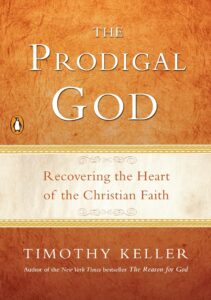
This past year I re-read Tim Keller’s modern classic, The Prodigal God. Though it wasn’t my intention to do so before reading the book, I was so struck by aspects of it that I ended up writing a brief, three-part series to emphasize some key ideas:

Finally, just this month I embarked on a new series that I anticipate continuing in future years. Christmas Carol Theology takes a closer look at some seasonal favorites and examines how they can help us to better understand the nature of God and/or what it means to follow Him. This year I wrote three posts for that series:


So, that was The Doc File in 2025! I always enjoy writing in this space, and it has become a formative spiritual discipline for me to process my thoughts here over the years. Lord willing, I hope to continue to do so for a long time. As always, I am thankful for your readership and support!

Origin Story featured in The Christian Chronicle

Back in March, I wrote about the release of Origin Story: Churches of Christ and the Restoration Movement. This book, which I co-authored with my good friend Jared Pack, is, as far as I know unique in that is seeks to present a history of Churches of Christ specifically geared towards teenagers. Published by Deeper Youth Ministry, the book has sold pretty well and received some good reviews, but I was pleasantly surprised when The Christian Chronicle reviewed it in a recent issue.

The reviewer, Zack Martin, is an instructor of historical theology and dean of students at Heritage Christian University in Florence, Alabama, and had several kind things to say:

[Dockery and Pack] are honest about how unity and restoration are in tension with one another in the life of a Christian; however, that should never stop one from seeking to live in balance with these two biblical ideas.

Due to the struggle between the two ideas, the Restoration Movement has consistently favored one over the other throughout its history. The results have not always been pretty, but the authors do not shy away from the unpleasant aspects of the movement, such as the presence of controversial figures or issues like segregation.

Also important is the book’s examination of the Restoration Movement within the broader context of church history. Churches of Christ will often start in the first century and then skip to 19th century America. But this book reminds the reader that historical events and movements do not happen in a vacuum.

This book is written and designed with young people in mind. But it can also be used for an adult Bible class or personal study for adults who want to learn more about their spiritual heritage and identity.

I am very thankful for Dockery and Pack and for this project. I hope that our fellowship supports this work not only because it is presented in an entertaining format, but also because it will help reshape Churches of Christ in the way of the true restoration plea.

I am thankful for the kind review, and the broader exposure given to the book. For the record, I don’t make a penny off any of these book sales; my motivation is simply to see more churches and students within Churches of Christ learn something about our history in the Restoration Movement, and appreciate the value of the restoration plea: the desire to bring about unity among God’s people by adhering to the clear teachings of Jesus and the apostles and the practices of the early church.

You can order the book from Amazon here, or read the full review at The Christian Chronicle here.

Church Camp Baptisms and Mountaintop Christianity

Note: this post is a little more disjointed than much of what I write, but it accurately reflects the way in which I have been wrestling with this topic back-and-forth for some time.

Church camp is a significant part of the yearly youth ministry calendar, and a pretty standard feature of church camp (at least in my experience) are camp baptisms. The next statement I make may be jarring to some of you, and I want to clearly state that if you were baptized at church camp and had your sins washed away and hold to that moment as the time when you committed your life to Jesus, that is great, and I applaud you. Having said that, here comes the (perhaps) jarring statement: I am not a huge fan of camp baptisms.

There are several reasons for this:

  1. Camp baptisms usually happen away from the presence of the camper’s parents, and since parents are the primary spiritual influencers of their children, not having them present for such a major step is not ideal.
  2. Camp is an emotionally-charged environment, and it can be easy to get caught up in the camp experience and make a decision that no longer seems so pressing or important a few weeks later when camp is over and the emotional experience has faded.
  3. Many times camp baptisms happen in clusters: several kids from one cabin or one friend group will all decide to get baptized together or within a couple of days of one another and the question arises: do these students really want to give their lives to Christ, or are they just doing what all of their friends are doing?
  4. The purely pragmatic reason: personal experience shows that a lot of time these baptisms don’t really “stick” in the sense that they are often false starts that don’t lead to a life of faithfulness (probably because of some combination of reasons 1-3).

At this point, youth ministry veterans are likely reflecting on these reasons and nodding in agreement—they have seen it all before, too many times to count!

Having acknowledged all this, I now want to push back against what I have just said.


A few years ago, I was talking to a young man (out of college, in his 20s) who was questioning his baptism largely for the reasons mentioned above. He did it at church camp when he was young and he didn’t know a lot at the time—what if he was just caught up in the emotions of the moment and decided to get baptized because other people were?

And, of course, these are some of my own concerns.


Churches of Christ are spiritual descendants of the Stone-Campbell Restoration Movement, a primitivist, back-to-the-Bible movement whose aim was to bring about unity among followers of Jesus by simply trying to be the church that we read about in the Bible. At the same time, that Movement developed in a specific time and place, and was certainly influenced by that historical context. For the sake of this post, that influence can be seen in at least two ways.

First, it was a movement that prized logic and reason. Intellectually and philosophically, the early leaders of the Stone-Campbell Movement were greatly influenced by the Enlightenment. This doesn’t mean that they universally condemned emotion, but rationality and clear thinking were highly valued.

Second, as a product of the American frontier, the Stone-Campbell Movement also valued the rugged individualism that was so characteristic of American society. People were free to read the Bible and interpret it for themselves, and should base their beliefs on Scripture rather than the teachings of some priest or state church.

Against such a backdrop, is it any wonder that I am immediately suspicious of decisions to follow Jesus that seem to be largely influenced by emotion and the influence of what other people are doing?


My favorite thing about my spiritual heritage is that the Stone-Campbell Movement is, fundamentally, a back-to-the-Bible movement, so as I was talking to my friend who was questioning his own baptism, I immediately thought of Scripture, and specifically, the Book of Acts, where we have so many accounts of people giving their lives to following Jesus.

One of the prime examples is in Acts 2, where Peter preaches to a large crowd on Pentecost, basically telling them that the Jesus they had crucified was the Messiah and Son of God, and that He had been raised from the dead and was sitting at the right hand of God:

37 Now when they heard this they were cut to the heart, and said to Peter and the rest of the apostles, “Brothers, what shall we do?” 38 And Peter said to them, “Repent and be baptized every one of you in the name of Jesus Christ for the forgiveness of your sins, and you will receive the gift of the Holy Spirit. 39 For the promise is for you and for your children and for all who are far off, everyone whom the Lord our God calls to himself.” 40 And with many other words he bore witness and continued to exhort them, saying, “Save yourselves from this crooked generation.” 41 So those who received his word were baptized, and there were added that day about three thousand souls.

(Acts 2.37-41)

Two details pertaining to our present conversation that jump out of this text: (1) Peter’s audience was cut to the heart, and (2) 3,000 responded and were baptized. In other words, in this biblical example of conversion, those who made the decision to be baptized were clearly influenced by emotion and almost certainly by the example of others as well.


The issue of church camp baptisms is clearly tied to what might generally be referred to as “Mountaintop Christianity”, the idea that we have mountaintop experiences—intense, emotional events where we encounter God in a powerful way.

Traditionally, youth ministry has largely been structured around mountaintop experiences and scheduling these sorts of events—mission trips, youth rallies, spiritual retreats, and, yes, church camp—throughout the year. The idea is to provide meaningful spiritual experiences and hope that they will contribute to lifelong discipleship. For example, just last week, I spent a week camping, hiking, and climbing a literal mountain with some of my students. It was a wonderful week characterized by deepened relationships with one another and with God.

The problem, of course, is that you cannot live on the mountain. At some point, you have to come back down to real life, and just like the fading glory of Moses’s face after he spent time with God on Sinai, over time, the spiritual clarity and closeness experienced at church camp or on the mission trip begins to fade. Students are left to limp along until their next spiritual fix at the next mountaintop experience—unless, of course, they have graduated and had their last such experience. It seems likely to me that this is another reason that teens struggle with faithfulness after high school.


So what should we do? The experience you get on the mountaintop clearly isn’t sustainable; should we eliminate such emotional experiences altogether? When kids want to get baptized at church camp, should we prevent them from doing so?

I don’t think so.

Let’s remember, God is the Originator of the mountaintop experience! His encounters with Moses left him fundamentally changed. In the New Testament, Peter, James, and John were blown away by their own mountaintop experience when Jesus was transfigured before them.

And perhaps most fundamentally of all, God mandated mountaintop experiences in the communal life and yearly rhythms of the people of Israel with the pilgrimage feasts of Passover, Pentecost, and Tabernacles. Three times per year, they were to travel to Jerusalem; you think traveling with thousands of your fellow Israelites to visit the Temple in Jerusalem and commemorate great events in your national history would constitute a mountaintop experience? Would it stir up your spiritual devotion and strengthen your identity as part of God’s people? Surely it would.

But, when you returned home, would the feeling fade away after a while? Would it be difficult to go back to normal life?


So, what are we to make of all this? Sometimes, church camp baptisms seem to be decisions made on the spur of the moment, driven by emotion and the influence of others. All too often, the conviction behind the decision fades away once camp is over. And yet, we undoubtedly have biblical conversion accounts driven by emotion and the influence of others.

Similarly, a spiritual diet of mountaintop binges offset by long periods of famine seems to be unsustainable and, likely, spiritually damaging. And yet, we see the principle of spiritual highs in Scripture, even established by God Himself.

I am not sure what to make of it all, but here are a few ideas:

  1. We should emphasize discipleship over conversion. I truly believe that a large part of our struggle is that we have focused too much on converting people and not enough on discipling them. Conversion may occur in hyper-emotional mountaintop experiences, but discipleship occurs every day, on the mountains, in the valleys, and in the monotony of the plateaus as well. In the example of 3,000 being baptized on the Day of Pentecost (Acts 2.41), that mountaintop experience was followed by the habitual practices of teaching, fellowship, the breaking of bread, praising God, and prayers (Acts 2.42, 46-47). These are practices of discipleship. When I talk to young people who are considering baptism, increasingly, I focus on the cost of discipleship and the demands of following Jesus long term, after the water has dried and the emotions have faded.
  2. We don’t want to manipulate people, but we should seek to minister to the whole person, including the emotions. In other words, I don’t believe that we should always be carefully crafting events and experiences in order to trigger an emotional response, but neither should we ignore the emotional aspect of people or dismiss it as irrelevant. God created us as whole persons, emotions included.
  3. We should rejoice when people are influenced for good by the community of faith. When you stop to think about it, this is kind of a no-brainer. As parents, we want our kids to be surrounded by good influences who will point them to Jesus. As a dad, minister, and Christian in general, I am very mindful of the influence I have on others and want to point them to Jesus. Of course I don’t want to coerce people into becoming followers of Jesus, but I absolutely want to influence others in that direction. When that occurs, it should be cause for rejoicing, not for questioning the motives of the convert.
  4. We shouldn’t eliminate the mountains in life, but should use those experiences to enlighten the valleys. Spiritual mountaintop experiences are not the problem; indeed, as we saw, they are biblical. The problem is the expectation that all of life will be a mountaintop. Rather than eliminate these experiences, we should embrace them, but we should also prepare students for the times when things are not as easy or inspiring. The spiritual truths and spiritual vibrancy that we learn and experience on the mountain can give us clarity for the more difficult times in life.
  5. We should provide mountaintop experiences for adults too. If going from a regular diet of mountaintop experiences in youth group to never having them as adults is jarring (it is), but mountaintop experiences themselves are biblical and beneficial (they are), then the solution isn’t to get rid of them; it is to include them in adult life as well. One of the great personal blessings of youth ministry is that, as an adult, I still regularly get to participate in things like this. Whether it is participating in church-wide retreats, mission trips, attending lectureships, or volunteering to serve at a summer camp, these experiences provide needed spiritual encouragement for adults just as they do with teenagers.

A New Heaven & A New Earth Part 11: Voices From the Past

This post is part of an ongoing series. You can find links to all the posts here.

We have spent a lot of time now looking at the idea of renewed eschatology from a variety of different perspectives, and for some readers, a lot of different pieces are starting to click into place and make a lot of sense.

But something that may be bothering you (it certainly bothered me as I was studying through this): “If this is the correct view, why am I just now hearing about this? I mean, Christianity has been around for 2000 years, and we’re just now understanding what the Bible actually teaches about eternity?!”

The question, “why am I just now hearing about this?”, is a difficult one, but the short answer is that the view of eternity where this world will be destroyed and then we will go off to heaven and have some sort of eternal spiritual existence with God has been the dominant view within conservative, evangelical Christianity for all of our lives.

But here is the important idea I want to emphasize: just because this idea is relatively new to you, or because it was new to me when I first heard it does not at all mean that it is a new idea.

I am very suspicious of brand new ideas in Christianity. When someone suggests an interpretation of a particular verse that I can’t find anywhere else, that makes me very suspicious. I am supposed to believe that in the whole history of Christianity, this guy is the first person to come along and actually figure out what this means? But that’s not the case here, and what I want to emphasize in this post is that the renewed earth perspective is not new at all. It is actually a very old understanding of what the Bible teaches about eternity.

Now, I am not going to trace this perspective in detail for 2,000 years, because for the majority of people, that would be mind-numbingly boring. However, I do want to give you some examples from different time periods to emphasize that this is not a new idea.


Early Church

Irenaus is one of what we call the “Church Fathers”, Christians who lived and wrote in the first few centuries. Irenaus wrote a famous work called Against Heresies in the late 100s, in which he opposed false teachings that had arisen. One very popular heresy was called gnosticism and it held, among other things, that material creation is evil. Irenaus rejected this notion, and argued that the Bible teaches that creation is good. He also says:

  • The righteous will “rise again to behold God in this creation which is renovated…”[1]
  • Speaking of Jesus’ words in Matthew 26.27-30 (I will not drink again of this fruit of the vine until that day when I drink it new with you in my Father’s kingdom), he says “[Jesus] cannot by any means be understood as drinking of the fruit of the vine when settled down with his disciples above in a super-celestial place; nor, again, are they who drink it devoid of flesh, for to drink of that which flows from the vine pertains to flesh, and not spirit.”[2]
  • “For neither is the substance nor the essence of the creation annihilated.”[3]

Irenaus viewed resurrection as a bodily experience that was directly tied to the restoration of all creation. Clearly, the renewed earth perspective is an ancient view.[4]

Reformation

You are likely familiar with the Protestant Reformation that began in the 1500s. Two of the major figures of the Reformation were Martin Luther and John Calvin. These two men differed in significant ways, but they  make similar, interesting statements in their commentary on 2 Peter 3 (a text we looked at earlier):

“…some may disquiet themselves as to whether the saints shall exist in heaven or on the earth. The text seems to imply that man shall dwell upon the earth, yet so that all heaven and earth shall be a paradise where God dwells…”[5]

“Of the elements of the world I shall only say this one thing, that they are to be consumed, only that they may be renovated, their substance still remaining the same, as it may be easily gathered from…other passages.”[6]

If you have been following along with this series, these ideas will seem very familiar.

Now, Luther and Calvin agreeing with the NHNE perspective doesn’t automatically make it correct. Indeed, these men hold a variety of views that I disagree with on various topics. My point here is not that we should believe in renewed eschatology because Luther and Calvin did; rather, I am simply illustrating that this is by no means a new perspective.

Restoration Movement

In Churches of Christ, we are spiritual descendants of the Stone-Campbell Restoration Movement. If you know me well or have read The Doc File for long, you know that I am extremely interested in the history of our movement. Imagine my surprise and fascination when I discovered that the renewed earth perspective that we have been talking about was held by influential early leaders in our movement!

Alexander Campbell was likely the single most influential thinker in the history of the Stone-Campbell Movement. Campbell was famous in the 19th century, and disseminated his perspectives as an orator, editor, debater, educator, and author. Among the many topics he touched on in his vast array of writings was eschatology and the renewal of creation:

“The Bible begins with the generations of the heavens and the earth; but the Christian revelation ends with the regenerations or new creation of the heavens and the earth. This [is] the ancient promise of God confirmed to us by the Christian Apostles. The present elements are to be changed by fire. The old or antediluvian earth was purified by water; but the present earth is reserved for fire, with all the works of man that are upon it. It shall be converted into a lake of liquid fire. But the dead in Christ will have been regenerated in body before the old earth is regenerated by fire. The bodies of the saints will be as homogeneous with the new earth and heavens as their present bodies are with the present heavens and earth. God re-creates, regenerates, but annihilates nothing; and, therefore, the present earth is not to be annihilated. The best description we can give of this regeneration is in the words of one who had a vision of it on the island of Patmos. He describes it as far as it is connected with the New Jerusalem, which is to stand upon the new earth, under the canopy of the new heaven.”[7]

“The impression prevails in many minds, that the earth is to be annihilated. Such is not our belief. There is a vast difference between annihilation, and change, or general alteration. This earth will, unquestionably be burned, yet, through the process of variation and reconstruction of its elements, God will fashion the earth and heavens anew, and fill them with tenants to glorify His name forever.”[8]

Walter Scott was another key early Restoration leader.[9] Unlike Campbell, Scott’s focus was particularly on evangelism, and his use of simple, memorable methods led to thousands upon thousands of baptisms in the Western Reserve. Scott was also a theologian who mused on the nature of eternity. From Embracing Creation:

“Just as the present world was “formed out of the ruins of the first and original one, so the third and future world shall, by the power of God, be constructed from the ashes of the present one.” The “present habitable globe,” like the primitive one, will be destroyed, but “from the ashes will rise another heaven and another earth…the abode of [the] righteous.” This is “the new heavens and new earth…created as the second coming of our Lord Jesus Christ.” This “new earth” is the inheritance promised Abraham (Rom. 4.13) and it is the “hope of all Christians.”[10]

In case the above language is confusing, Scott is reflecting on ideas from 2 Peter 3. He is referencing the “destruction” of the world through the flood, and then the future “destruction” by fire. This accounts for his three worlds.

David Lipscomb was an influential leader in Southern Churches of Christ following the Civil War (so, a different generation of leadership than Campbell and Scott). Lipscomb was primarily an educator, and also served as the longtime editor of the Gospel Advocate. In his words:

“God is holy. As a pure and holy being, he cannot tolerate guilt and sin. The two cannot permanently dwell together in the universe. When sin came into the world, God left this world as a dwelling place. He cannot dwell in a defiled and sin-polluted temple. He has since dwelt on this earth only in sanctified altars and temples separated from the world and consecrated to his service. He will again make this earth his dwelling place, but it will be only when sin has been purged out and it has been consecrated anew as the new heaven and new earth in which dwelleth righteousness.”[11]

James A. Harding was a contemporary and close associate of Lipscomb, but while Lipscomb functioned primarily as a teacher and editor, Harding was a traveling preacher. His thoughts on renewed creation closely resembled Lipscomb’s:

“But—thanks be to God—through Jesus Christ grace came with a mighty hand to meet this great, dark, cursing, onrushing tide of woe and death, to roll it back, to free men from death and the earth from every curse of sin, and to give to it a glory and beauty never dreamed of by Adam and Eve in the midst of their Edenic home. This earth, with its surrounding heaven, is to be made over, and on the fair face of the new earth God himself will dwell with all the sons and daughters of men who have been redeemed through grace…through Adam we lost the garden of Eden; through Christ we gain the paradise of God.”[12]

“…the earth is God’s nursery, his training grounds, made primarily for the occupancy of his children, for their education, development and training until they shall have reached their majority, until the end of the Messianic age has come; then it is to be purified a second time by a great washing, a mighty flood, but this time in a sea of fire. Then God will take up his abode himself with his great family upon this new, this renovated and purified earth.”[13]

Jimmy Allen was one of my favorite teachers at Harding University; he was legendary there for his class on the Book of Romans. He was a longtime teacher at Harding, but was most famous for being a revival-style evangelist in the tradition of Billy Graham. Back in the 1960s, he would preach to overflowing arenas and baptized thousands.

Here are some thoughts from Allen in his commentary on Romans (and also, from 2 Peter):

“The point about groaning creation is that when man fell, the earth was cursed, when man is glorified, the earth will also be glorified…This means, if I am correct, that at the end of time our present system will not be annihilated…

What are the “new heavens” and “new earth” (II Pet. 3:13)? There are at least two Greek words that are translated as new. One is “neos” and the other is “kainos.” A few times they are used interchangeably…However, there is a difference in the two words. “‘Kainos’ denotes new, of that which is unaccustomed or unused, not new in time, recent, but new as to form or quality, of different nature from what is contrasted as old… ‘Neos’ signifies new in respect of time, that which is recent” (Vine, III, pp. 109-110).

The word translated as “new” in connection with the earth at II Pet. 3:13 is not “neos,” signifying an object that is “brand-new” like the Ford pickup truck that has been in my carport the last couple of weeks. Rather, it is “kainos,” meaning new as to its form, quality, or nature. We will have new bodies in the next life in that they will be changed from what they are now. Similarly, we will have a new earth in eternity in that it will be this one changed by fire into what is glorious and incorruptible.”[14]

These influential leaders from Restoration Movement history are certainly not infallible, but for me, as someone who has great respect for Campbell, Lipscomb, Harding, and others, it was a relief to see that they held these views. In a sense, it was almost like it “gave me permission” to believe this myself: “we” had historically believed this!

Again, all of these quotations—from the Early Church, the Reformation, and from Stone-Campbell Movement history—do not prove anything about the accuracy of the New Heavens/New Earth perspective. That stands or falls based on what Scripture teaches, and we have spent several posts examining that case. But these quotations do demonstrate that this is not a new perspective, and for those in churches of Christ, this is a perspective that has historical roots in our own heritage.


[1] Irenaeus, Against Heresies Book V, Chapter 32, http://www.newadvent.org/fathers/0103532.htm

[2] Irenaeus, Against Heresies Book V, Chapter 33, http://www.newadvent.org/fathers/0103533.htm

[3] Irenaeus, Against Heresies Book V, Chapter 36, http://www.newadvent.org/fathers/0103533.htm

[4]Other Church Fathers refer to elements of renewed eschatology as well. Papias (Eusebius, Fragments of Papias VI) was a historical premillennialist, and understood that there would be a personal reign of Christ on earth after the resurrection. The author of the Epistle of Barnabas (late first century, early second century document) believed that Christians in eternity would reign over birds, fish, and beasts, clearly suggesting a material existence.

[5] Martin Luther, Commentary on Peter and Jude (Grand Rapids, MI: Kregel Publications, 1990): 285.

[6] John Calvin, Commentaries on the Catholic Epistles (New York: Cosimo, 2007): 421.

[7] Alexander Campbell, Christian System (Pittsburg, PA: Forrester & Campbell, 1839): 257.

[8] Alexander Campbell, Familiar Lectures on the Pentateuch (H.S. Bosworth, 1887): 310.

[9] Scott, along with Alexander Campbell, Thomas Campbell (Alexander’s father), and Barton W. Stone (the “Stone” in “Stone-Campbell Movement”) are often referred to as “the big four”. Scott is less remembered than the other three, but was of tremendous importance in the solidification and spread of the Movement and its ideals.

[10] This quotation comes from John Mark Hicks, Bobby Valentine, and Mark Wilson, Embracing Creation: God’s Forgotten Mission, (Abilene, TX: Leafwood: 2016): 203. The quotations referenced herein are from Walter Scott,“Of a Succession of Worlds, and of the Great Physical Destinies of Our Globe, as Spoken of in the Scriptures,” The Evangelist 6 (January 1838): 3-5, (February 1838): 34-35, and (April 1838): 77.

[11] David Lipscomb, Salvation from Sin (Nshville: McQuiddy, 1913): 35-36.

[12] James A Harding, “Three Lessons from the Book of Romans,” in Biographies and Sermons, ed. F.D. Srygley (Nashville: McQuiddy, 1898), 249.

[13] James A. Harding, “What Are We Here For?” The Way 5 [3 December 1903], 1041).

[14] Jimmy Allen, Romans: The Clearest Gospel of All (Searcy, AR, 2005): 178-80.

Mooresville Church of Christ and President James Garfield

I am a little late in posting this, but over Thanksgiving break, I was able to visit the tiny village of Mooresville in North Central Alabama. Listed on the National Register of Historic Places, many pre-Civil War buildings are still preserved in Mooresville.

I was interested in stopping there to pay a visit to the Mooresville Church of Christ, which has been meeting here since 1854. Even more interesting, James Garfield, who would go on to be President of the United States, preached here in 1861, while he was serving as a general in the Union Army. Many people are unaware that Garfield was a gospel preacher in the Restoration Movement.

To read more about the history of the Mooresville church, click here.

« Older posts

© 2026 The Doc File

Theme by Anders Noren — Up ↑