
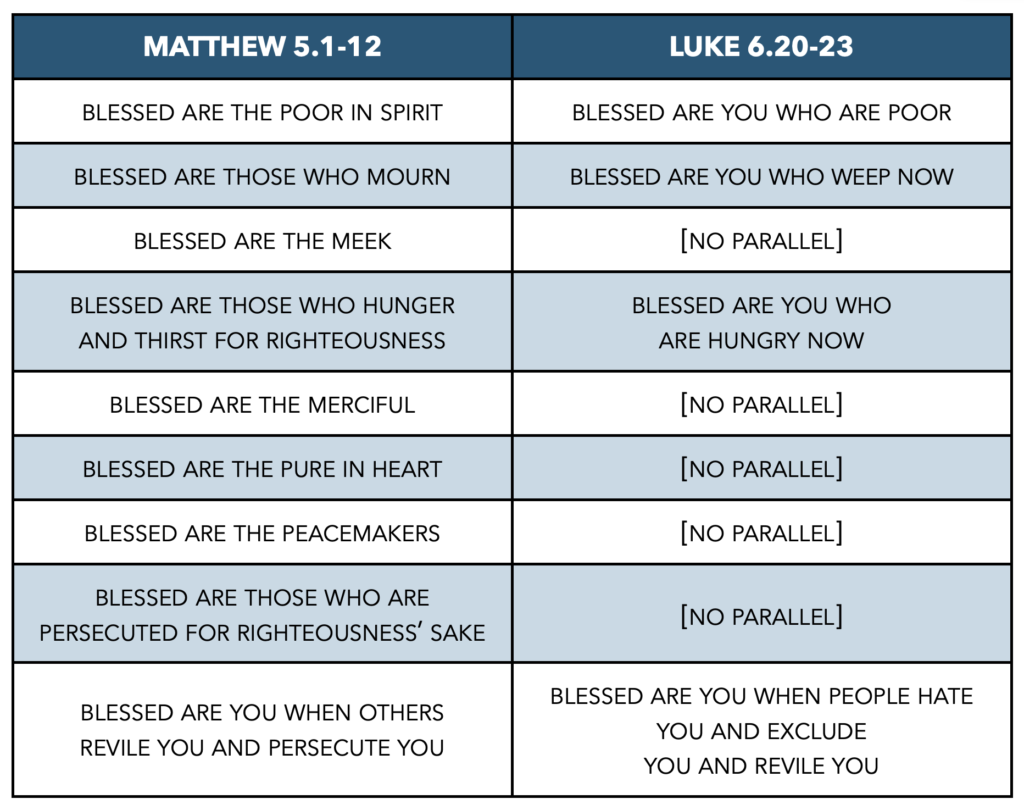
As discussed in the introductory post of this series, Jesus’s Beatitudes in the Sermon on the Mount are basically a description of what a good life really looks like from God’s perspective. Jesus redefines what blessedness is, and provides an alternative set of values for His followers, those who desire to be a part of His alternative community. Here are the Beatitudes we have discussed thus far:
Blessed Are The Meek
“Blessed are the meek, for they shall inherit the earth.”
(Matthew 5.5)
This beatitude is challenging for us to understand because the word “meek” is not one that we commonly use or understand very well. A lot of times when we think of meekness, we associate it with people who are quiet, mild-mannered, and weak-willed, but meekness, at least in the Bible, does not mean weakness or cowardice.[1] To better understand the meaning here, it would help us to look at the word itself, and the Old Testament context from which Jesus borrows it.
In Greek, the word translated “meek” (πραυς/praus) is also used to describe a wild horse that has been tamed.[2] So the idea is not people of weak character or no backbone, but rather, those who, “having been tamed by God, are the masters of their spirits.”[3] Also, Jesus was a Jewish teacher instructing a Jewish audience, and when He talks about the meek inheriting the earth, He is actually quoting from Psalm 37.11, a text His audience would have known well. In that context, the psalm refers to the righteous poor, who are being threatened and oppressed by the wicked wealthy. In the face of such oppression, the meek do not worry about evildoers, but instead trust in God, knowing that He will root out the wicked.[4] In many ways, this beatitude seems to parallel the first one, with meekness and being poor in spirit essentially referring to the same characteristic of those who radically trust in God, and both are promised an inheritance from God.[5]
Meekness describes those who, in the face of insult and injury, are able to remain patient and composed rather than flying off the handle. Share on XIn light of all this, meekness actually suggests strength of character, not weakness. It describes those who, in the face of insult and provocation, are able to remain calm and composed rather than flying off the handle. Meekness is not the surrender of our rights, but it is the ability to overlook slights, knowing that God is in charge and will ultimately vindicate us. As one commentator states:
“[Meekness] is proof of true greatness of soul. It comes from a heart too great to be moved by little insults. It looks upon those who offer them with pity. He that is constantly ruffled; that suffers every little insult or injury to throw him off his guard and to raise a storm of passion within, is at the mercy of every mortal that choose to disturb him.”[6]
Again, we can see how the characteristics that Jesus describes in the Beatitudes are radically counter-cultural. We live in a highly anxious society where so many people seem to be constantly offended by everything. In such a climate, it may seem a brave thing to constantly complain about how everyone is annoying and offending you, but when you think about it, this is actually a very weak position to be in: you are admitting that other people have constant control over your emotions and responses. Those who are meek, on the other hand, boldly refuse to give others control over their emotions and responses. Instead, empowered by the knowledge that God is in control and will ultimately vindicate them, the meek are strong enough in character to shake off the slights and insults of others, even from those who, from a worldly perspective, might be in a position of superiority over them.
Those who are meek boldly refuse to give others control over their emotional responses. Share on XIn God’s eyes, those who are meek are living the good life, and they are promised an inheritance from the Father.
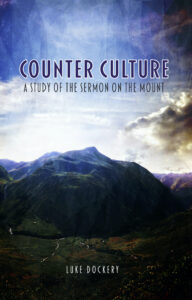 If you enjoyed this post, you might enjoy my book on the Sermon on the Mount, Counter Culture: A Study of the Sermon on the Mount.
Although this book was written specifically as an aid to teaching the Sermon on the Mount to junior high and high school students, it is also useful for personal Bible study, and the depth of the material makes it a great resource for adult Bible classes.
[1] Larry Chouinard, Matthew, The College Press NIV Commentary (Joplin, MO, College Press, 1997), 97.
[2] Jack P. Lewis, The Gospel According to Matthew, Part I, The Living Word Commentary (Austin, TX: Sweet Publishing, 1976), 81.
[3] Lewis, 81.
[4] Ibid., 81; Warren Carter, “Power and Identities: The Contexts of Matthew’s Sermon on the Mount,“ in Preaching the Sermon on the Mount: The World It Imagines, ed. David Fleer and Dave Bland (St. Louis: Chalice Press, 2007), 18.
[5] Chouinard, 96; Francis Wright Beare, The Gospel According to Matthew: A Commentary (Oxford: Basil Blackwell, 1981), 130.
[6] Albert Barnes, Matthew and Mark, Notes on the New Testament (Grand Rapids, MI: Baker Book House, 1949), 44.

 In this loose series of
 I am excited to announce the release of a new book,







