
As discussed in the introductory post of this series, Jesus’s Beatitudes in the Sermon on the Mount are basically a description of what a good life really looks like from God’s perspective. Jesus redefines what blessedness is, and provides an alternative set of values for His followers, those who desire to be a part of His alternative community:
Blessed Are Those Who Mourn
“Blessed are those who mourn, for they shall be comforted.”
(Matthew 5.4)
This seems like one of the most paradoxical statements of the Beatitudes: in what sense can those who mourn somehow be happy? What kind of mourning is Jesus talking about here? There are multiple aspects of life about which we could mourn:
- Mourning for the general sorrows of life. Sad and heartbreaking things occur in life, and citizens of God’s kingdom are not immune from these tragedies. There is a sense in which we can learn a lot from sorrow in our lives:

- Mourning for the sin in our lives. Sin grieves the Father and cost the Son His life. As citizens of the kingdom, an appropriate view of sin will cause us to grieve over its presence in our lives and seek to repent of it.
- Mourning for the suffering of others in our broken world. Scripture presents our world as being a place where Satan, sin, and death currently reign, and because of that, people suffer in a variety of ways. “Participants in the kingdom of God are genuinely grieved by the general tyranny of sin characteristic of this present evil age.”[1]
So, which of these different types of mourning is Jesus actually talking about here? Probably all of them.[2] For citizens of God’s kingdom, there are many things in this present life worth mourning about. We are not spared from the sorrows that others face, but we experience additional sources of mourning because we grieve the sin in our lives and are aware of and lament the deep brokenness of the world in which we live.
Jesus promises, however, that those who mourn will be comforted.
I think that God is especially near when we mourn, even though at those times it might not seem like He is close at all. We see over and over again in Scripture that God Himself mourns. Jesus was prophesied to be a Man of sorrows who was acquainted with grief (Isaiah 53.3), and He was also supposed to be the Comforter of Israel who would bind up the brokenhearted (Isaiah 61.1; cf. Luke 2.25). God is close to those who mourn, and seeks to comfort us when we do. Currently, I believe this comfort comes from the presence of His Spirit in our lives, the balm of Christian community, and the hope of resurrection.
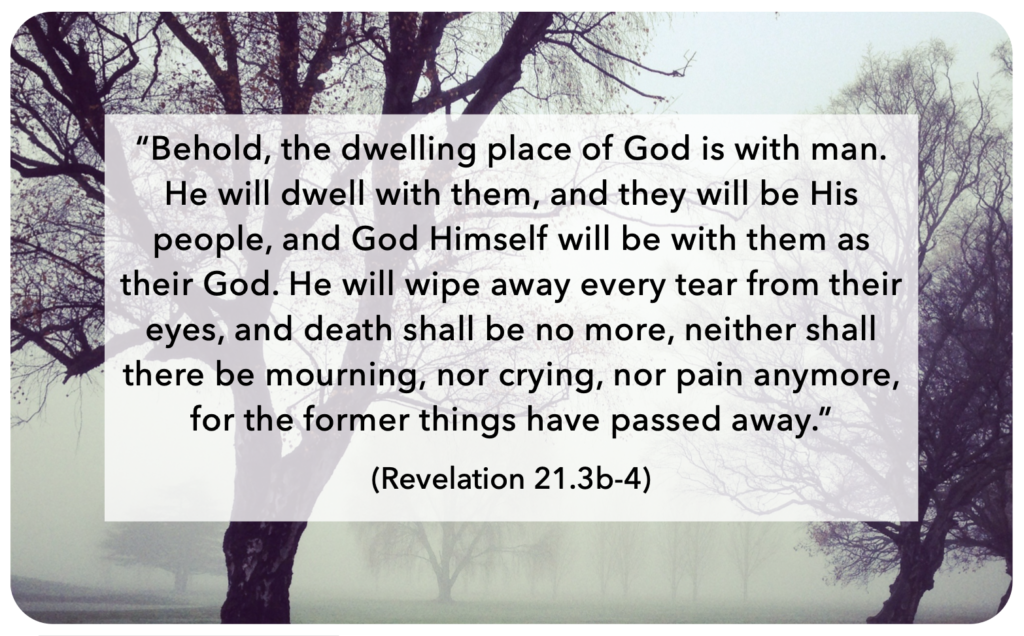
Ultimately, though, this comfort will come when Jesus returns, God’s kingdom is fully established, and sin and death are abolished. When that happens, we will find comfort because the causes of our mourning will be no more.
 If you enjoyed this post, you might enjoy my book on the Sermon on the Mount, Counter Culture: A Study of the Sermon on the Mount.
Although this book was written specifically as an aid to teaching the Sermon on the Mount to junior high and high school students, it is also useful for personal Bible study, and the depth of the material makes it a great resource for adult Bible classes.
[1] Larry Chouinard, Matthew, The College Press NIV Commentary (Joplin, MO, College Press, 1997), 96.
[2] William Barclay, The Gospel of Matthew Volume 1, The Daily Study Bible (Philadelphia, Westminster Press, 1956), 88-90; J.W. McGarvey, Matthew and Mark, The New Testament Commentary (Delight, AR: Gospel Light Publishing Company, 1875), 49; Jack P. Lewis, The Gospel According to Matthew, Part I, The Living Word Commentary (Austin, TX: Sweet Publishing, 1976), 80. James Burton Coffman, Commentary on the Gospel of Matthew, (Austin, TX: Firm Foundation Publishing House, 1968), 51.







