The online journal of Luke Dockery

Tag: Beatitudes (Page 1 of 3)

2023 Blog Review

I like to end the year by looking back and reviewing my year of blogging here at The Doc File (Here are some previous reviews from 2022, 2021, 2020, 2019, 2018, 2016, 2015, and 2012).

Overview

There were a lot of topics that I intended to write about in 2023, but time got away from me and I wrote less than I hoped. Nevertheless, I wrote 30 posts this past year, which is more than I managed in 2022 (20) or 2021 (28). Baby steps in the right direction still count as progress, I guess.

Top Posts

By traffic totals, here are my most-read posts during 2023:

  1. Jesus, Christmas, and Hanukkah, December 18, 2015
  2. Raising Up Ministers: Six Unhelpful Trends in Churches of Christ, March 2, 2023
  3. A New Heaven & A New Earth Series, April 29, 2020
  4. A New Heaven & A New Earth: What the Bible Teaches about Eternity, April 9, 2020
  5. Youth Ministry & Gen Z,, May 16, 2023
  6. Reading in 2022, January 3, 2023
  7. Church Is Good for Your Kids, August 23, 2023
  8. Reading and Walking in 2022, January 6, 2023
  9. Forty., August 2, 2023
  10. A New Heaven & A New Earth Part 2: Distractions, April 16, 2020

Six of the top posts from 2023 were actually written this year, and it is always good to see new content get some traction:

  • Raising Up Ministers: Six Unhelpful Trends in Churches of Christ reflected on the minister shortage within Churches of Christ. This topic has been written about and discussed a lot (too much?), but one aspect of the conversation that I hadn’t seen emphasized as much was the raising up of young people to go into ministry. I am confident that we are not doing this as well as we once did, and I offered several reasons for why that is.
  • Youth Ministry & Gen Z looked at some research from the Barna Group that describes characteristics of Gen Z students (the generational cohort that is currently present in our youth groups). The basic premise here is that the better we understand these students, the better we can minister to them. Broadly speaking, Gen Z students have several challenging characteristics that clash with Christianity, but they also resonate with Christianity in important ways.
  • I have developed certain traditions of posts that I write each year, and these have developed somewhat of a following over time. Reading in 2022 and Reading and Walking in 2022 were both popular (the 2023 versions are right around the corner!).
  • Church Is Good for Your Kids is a brief post that reflected on research that indicates that, well, church is good for your kids! As one author states, “There is a growing body of evidence that regular religious practice is measurably good for the health, happiness, and pro-social behavior of our kids.”[1]
  • Forty. I had a milestone birthday in 2023, which naturally prompted me to some reflection.

At the same time, part of the reason for preserving over 15 years of posts on this site is for people to be able to go back and read things they missed, and I am always gratified when older posts are read by new people. The series I wrote in 2020 on renewed eschatology continues to get a lot of views, but I was blown away by the response to Jesus, Christmas, and Hanukkah. This is a post I actually wrote about eight years ago, but I shared it again this year and it got a surprising amount of attention.

Blog Series

In 2023, I completed one series and contributed multiple times to another, ongoing one:

The Beatitudes: Kingdom Character: This nine-part series was a close look at the Beatitudes in the Sermon on the Mount, which is Jesus’s description of what it looks like to be a citizen in His kingdom.

Studying the Sermon on the Mount in detail was transformative for me several years ago, and it is always beneficial for me to come back and reflect on Jesus’s teaching here. This series was not very popular and didn’t have a wide readership. This was disappointing to me, but I think is also reflective of the time in which we live: living according to the Sermon on the Mount isn’t very exciting for most people.

Scripture Reflections: I added five more posts to this ongoing series in 2023 (The Poor You Always Have with You, Three Gardens, Known to Them in the Breaking of the Bread, “Your Labor Is Not in Vain”, and “He Remembers that We Are Dust”) bringing the total to 20 posts. I plan to continue adding to this indefinitely.


So, that was The Doc File in 2023! It is my plan to continue writing in this space in 2024 (hopefully more often, but I never know what the new year will bring). It has become a formative spiritual discipline for me to process my thoughts here over the years, and as many readers have told me, it is helpful to you too! I am honored and humbled by those sorts of comments, and am thankful for your readership and support!


[1] Rebecca McLaughlin, 10 Questions Every Teen Should Ask (and Answer) about Christianity (Wheaton, IL: Crossway, 2021), 14.

Blessed Are Those Who Are Persecuted

As discussed in the introductory post of this series, Jesus’s Beatitudes in the Sermon on the Mount are basically a description of what a good life really looks like from God’s perspective. Jesus redefines what blessedness is, and provides an alternative set of values for His followers, those who desire to be a part of His alternative community. Here are the Beatitudes we have discussed thus far:


Blessed Are Those Who Are Persecuted

“Blessed are those who are persecuted for righteousness’ sake, for theirs is the kingdom of heaven. Blessed are you when others revile you and persecute you and utter all kinds of evil against you falsely on My account. Rejoice and be glad, for your reward is great in heaven, for so they persecuted the prophets who were before you.”

(Matthew 5.10-12)

The last two beatitudes are closely related, so we will discuss them together, and this will conclude our study of the Beatitudes. Both say that God’s favor rests upon those who are persecuted on account of Jesus.

These verses do not indicate that disciples of Jesus are to have a persecution complex, always imagining that people are mistreating us. Neither are we to go looking for persecution by behaving in ways that are over the top or offensive.[1] However, if in the course of living as disciples of Jesus (by exhibiting the characteristics we have been talking about) we are persecuted or mistreated, Jesus says that we are blessed in this.

It might seem strange for us to think that simply by living the way Jesus calls us to, we could face persecution. But it is important to remember that the values of Jesus’s kingdom are completely at odds with the values of the world, and when we seek to live according to kingdom values, it threatens the way the world works. This was true for Jesus, who was ultimately killed by the collaboration of Jewish and Roman leaders who were in power and were threatened by Him, and also for His disciples, many of whom were martyred for their faith.[2]

Honestly, for those of us who are Americans, we don’t have a very good understanding of what it means to be persecuted for our faith because we live in a country that provides us with a great deal of religious freedom—you have likely heard someone pray before, “God, we thank You that we are able to worship without fear of persecution.” However, in the early days of Christianity, Christians were often cast out of society, beaten, imprisoned, and even killed because of their faith, and this is still the reality for many Christians in the world today.

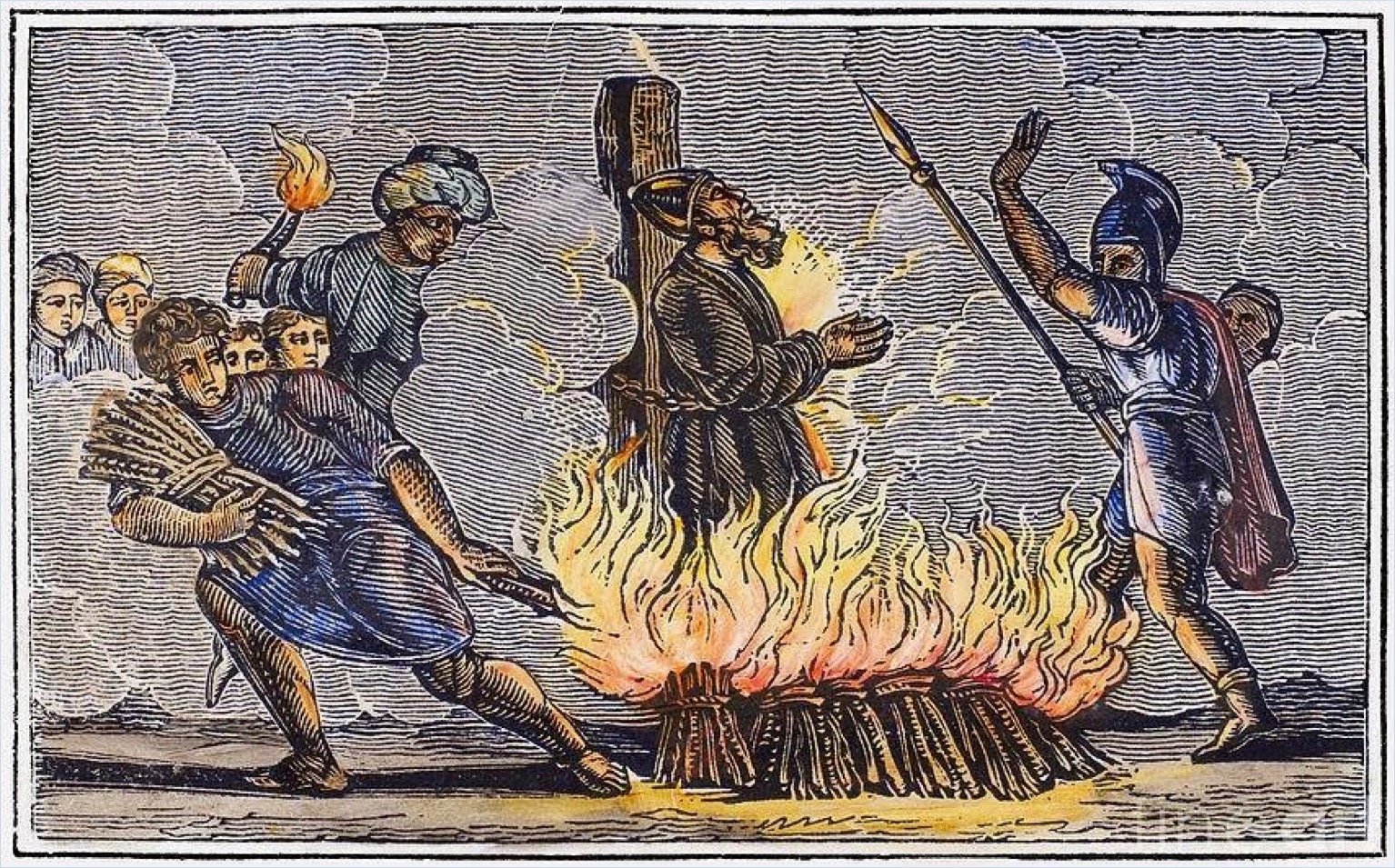
One of the most famous of the early Christian martyrs was Polycarp, who was an elder of the church in Smyrna. Because of his faith, he was taken before the Roman authorities and given the choice to make a sacrifice to Caesar as a god or to die. Polycarp’s response is famous:

“Eighty and six years have I served Christ, and He has done me no wrong. How can I blaspheme my King who saved me?”

Based on his refusal to worship the emperor, Polycarp was brought to be burned at the stake. In his last words, he said,

“O Lord God Almighty, the Father of Thy well-beloved and ever-blessed Son, by whom we have received the knowledge of Thee…I thank Thee that Thou hast graciously thought me worthy of this day and of this hour.”

Polycarp is an example of someone living as a citizen of God’s kingdom.[3]

The Martyrdom of Polycarp

Of course, that is not our experience in the United States, and sometimes, I think we have become too attached to our persecution-free environment. To be clear, I enjoy the religious freedom that I have as a U.S. citizen and am not eager for a day when I am persecuted for my faith, but sometimes I feel that Christians are overly concerned and fearful about the possibility of us losing our religious freedoms and facing persecution. We need to remember that Jesus calls those who suffer for His sake “blessed” because they will be rewarded in eternity, and that eternal reward empowers us to endure suffering in the present.[4]

Sometimes Christians are overly concerned about the possibility of losing religious freedom and facing persecution. We need to remember that Jesus calls those who suffer for His sake “blessed”. Share on X

A Final Word

The characteristics that Jesus describes as blessed in the Beatitudes are shocking to us because these values are so misaligned with the values of our own society. They would have been shocking to Jesus’s original audience as well. Often, people will describe Jesus’s kingdom as being “Upside-Down”, because it is so at odds with the kingdoms of this world. But really, from the proper perspective, it is our world as it is that is truly Upside-Down; Jesus came to set it to rights, to turn what is Upside-Down, Rightside-Up.

When disciples of Jesus are characterized by the values described in the Beatitudes, we join Jesus in setting the world to rights.

When disciples of Jesus are characterized by the values described in the Beatitudes, we join Jesus in setting the world to rights. Share on X

If you enjoyed this post, you might enjoy my book on the Sermon on the Mount, Counter Culture: A Study of the Sermon on the Mount. 

Although this book was written specifically as an aid to teaching the Sermon on the Mount to junior high and high school students, it is also useful for personal Bible study, and the depth of the material makes it a great resource for adult Bible classes.


[1] Albert Barnes, Matthew and Mark, Notes on the New Testament (Grand Rapids, MI: Baker Book House, 1949), 46.

[2] Warren Carter, “Power and Identities: The Contexts of Matthew’s Sermon on the Mount,” in Preaching the Sermon on the Mount: The World It Imagines, ed. David Fleer and Dave Bland (St. Louis: Chalice Press, 2007), 20.

[3] William Barclay, The Gospel of Matthew Volume 1, The Daily Study Bible (Philadelphia, Westminster Press, 1956), 111.

[4] Larry Chouinard, Matthew, The College Press NIV Commentary (Joplin, MO, College Press, 1997), 100.

The Beatitudes: Blessed Are the Peacemakers

As discussed in the introductory post of this series, Jesus’s Beatitudes in the Sermon on the Mount are basically a description of what a good life really looks like from God’s perspective. Jesus redefines what blessedness is, and provides an alternative set of values for His followers, those who desire to be a part of His alternative community. Here are the Beatitudes we have discussed thus far:


Blessed Are the Peacemakers

“Blessed are the peacemakers, for they shall be called sons of God.”

(Matthew 5.9)

Jesus says that God’s favor rests upon those who make peace.

God cares deeply about peace.

“Peace” is something that is talked about a lot, but it is important for us to realize that this word is used to convey different ideas at times, and we need to make sure that we have a clear picture of what Jesus is talking about in this context.

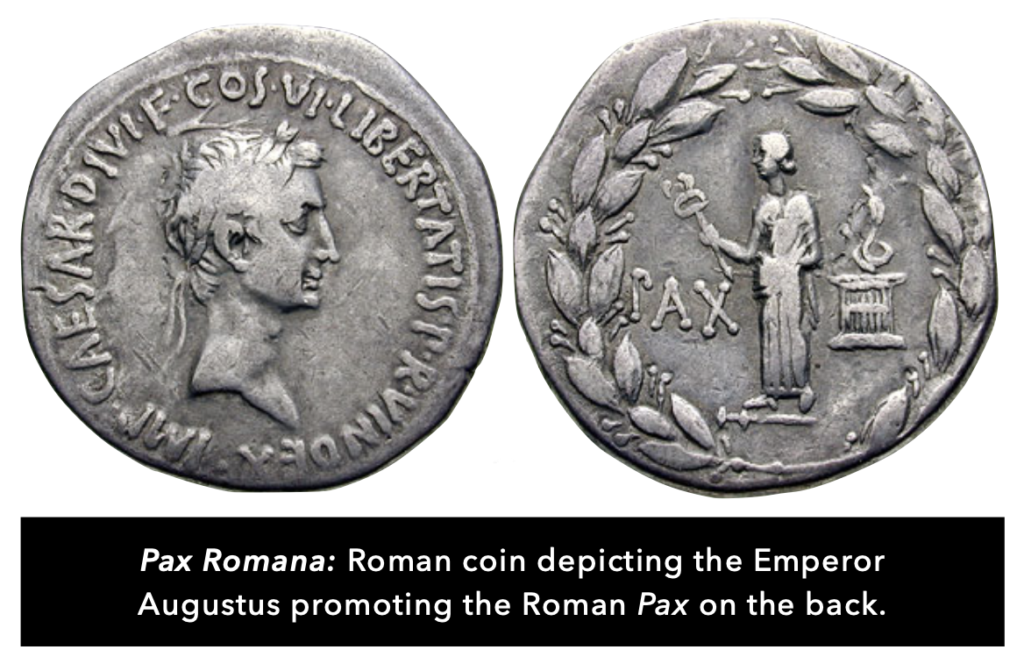
During the time that Jesus lived, peace was greatly emphasized, because the Roman Empire was enjoying the Pax Romana, or “Roman Peace.” The Pax Romana lasted for several decades and was a time of stability and prosperity in the Empire in which there was relative peace and no major wars. This peace came at a high price, however, as it was made possible only through brutal military conquest, the forced subjugation of conquered peoples, and the confiscation of their land.[1]

Of course, this is not the kind of peace that Jesus is talking about. Jesus does not call for His followers to make peace through military might. Furthermore, in the Bible, “peace” is not simply the absence of war; peace suggests wholeness and well-being, and healthy and just relationships with one another.[2] Related to that, biblical peace—wholeness, justice, healthy relationships—does not come from pretending problems don’t exist. Jesus is the Prince of Peace, and He came to make reconciliation with God possible, but He didn’t gloss over the reality of sin; He confronted people with it, and was killed as a result.

Peace-making is not pretending that problems don’t exist. Share on X

A good modern-day example is Rosa Parks, who in 1955 refused to give up her bus seat to a white passenger. That act had far-reaching consequences (Parks was arrested, and it was a key early event in the American Civil Rights Movement), and some people called her a troublemaker because she didn’t just do what she was told to “keep the peace.” But peace doesn’t come from pretending that there is no problem. As long as African-Americans were forced to sit at the back of busses or give up their seats to white people, true peace was not possible. Refusing to give up a seat on the bus was actually a part of peacemaking because it was an effort to bring about wholeness and justice in society.

Jesus wants His followers to be people who actively work to make peace in their relationships and in their communities. Of course, we should try to get along with others and we should not go around trying to stir up strife for the fun of it, but we do need to be people who work to bring about real reconciliation in situations where people are at disharmony with one another.[3]

Jesus wants His followers to be people who actively work to make peace in their relationships and in their communities. Share on X

Peacemakers are called children of God because they are like God. After all, God’s supreme mission is to bring about reconciliation in the world. As William Barclay says, “The man who divides men is doing the devil’s work; the man who unites men is doing God’s work.”[4]


If you enjoyed this post, you might enjoy my book on the Sermon on the Mount, Counter Culture: A Study of the Sermon on the Mount. 

Although this book was written specifically as an aid to teaching the Sermon on the Mount to junior high and high school students, it is also useful for personal Bible study, and the depth of the material makes it a great resource for adult Bible classes.


[1] Warren Carter, “Power and Identities: The Contexts of Matthew’s Sermon on the Mount,” in Preaching the Sermon on the Mount: The World It Imagines, ed. David Fleer and Dave Bland (St. Louis: Chalice Press, 2007), 21.

[2] William Barclay, The Gospel of Matthew Volume 1, The Daily Study Bible (Philadelphia, Westminster Press, 1956), 103: “In the Bible peace means not only freedom from all trouble; it means enjoyment of all good.”

[3] Albert Barnes, Matthew and Mark, Notes on the New Testament (Grand Rapids, MI: Baker Book House, 1949), 45.

[4] Barclay, 105.

The Beatitudes: Blessed Are the Pure in Heart

As discussed in the introductory post of this series, Jesus’s Beatitudes in the Sermon on the Mount are basically a description of what a good life really looks like from God’s perspective. Jesus redefines what blessedness is, and provides an alternative set of values for His followers, those who desire to be a part of His alternative community. Here are the Beatitudes we have discussed thus far:


Blessed Are the Pure in Heart

“Blessed are the pure in heart, for they shall see God.”

(Matthew 5.8)

In the sixth Beatitude, Jesus addresses those who are “pure in heart.” Often when we see terms like this in Scripture, we assume it is talking about something like moral perfection. This phrase does not suggest someone who is sinless, but rather, refers to those who act with loyalty, integrity, and from pure motives.[1] Psalm 24 talks about the man with a pure heart being someone who does not devote himself to what is false and does not swear deceitfully. A person who is pure in heart is someone whose entire life, “public and private, is transparent before God and men. Their very heart—including their thoughts and motives—is pure, unmixed with anything devious.”[2]

Being “pure in heart” doesn’t refer to moral perfection, but to those who act with loyalty, integrity, and from pure motives. Share on X

Have you ever known someone who was supposedly your friend, but you weren’t sure that you could really trust them? Or maybe someone who did something nice for you, but you weren’t sure that you could trust their motives because perhaps they were doing it in order to get something in return? This is the opposite of being “pure in heart.” The reality is that being pure in heart is not a common trait in today’s world; there are not that many people that we would describe without hesitation as having loyalty, integrity, and pure motives.

To help us get a better picture of what it looks like to be pure in heart, it might help to think of children with special needs.[3] My daughter Kinsley has a genetic condition that causes her to have a lot of disabilities, and it can be easy to focus on the negatives of her condition. At the same time, she is also “disabled” from being deceitful, dishonest, or acting from impure motives: if she is happy, or if she loves you, she’ll show you that. If she’s upset about something, she’ll let you know. She won’t secretly or deviously do anything, because that’s simply not in her nature. The label “disabled” gets applied to her frequently, but when it comes to being pure in heart, she is much more able than her father is! This is not to suggest, of course, that only people with disabilities can be pure in heart, but rather that children with special needs help us to see the purity and single-mindedness that Jesus talks about.

From experience, we know that when we act in a double-minded way, are manipulative, or behave deceitfully, misery tends to follow. On the other hand, those who are pure in heart are blessed, and Jesus says that such people will see God. This is not meant to imply some sort of visionary experience, but rather, is another way of stating that the kingdom of heaven belongs to people such as this.[4]


If you enjoyed this post, you might enjoy my book on the Sermon on the Mount, Counter Culture: A Study of the Sermon on the Mount. 

Although this book was written specifically as an aid to teaching the Sermon on the Mount to junior high and high school students, it is also useful for personal Bible study, and the depth of the material makes it a great resource for adult Bible classes.


[1] Larry Chouinard, Matthew, The College Press NIV Commentary (Joplin, MO, College Press, 1997), 99. See also Jack P. Lewis, The Gospel According to Matthew, Part I, The Living Word Commentary (Austin, TX: Sweet Publishing, 1976), 82; Herschel H. Hobbs, An Exposition of the Gospel of Matthew (Grand Rapids, Baker Book House, 1965), 61.

[2] John R.W. Stott, Christian Counter-Culture: The Message of the Sermon on the Mount (Downers Grove, IL, InterVarsity Press, 1978), 49.

[3] Chris Seidman and Joshua Graves, Heaven on Earth: Realizing the Good Life Now (Nashville, TN, Abingdon Press, 2012), 81-85.

[4] Francis Wright Beare, The Gospel According to Matthew: A Commentary (Oxford: Basil Blackwell, 1981), 133.

The Beatitudes: Blessed Are the Merciful

As discussed in the introductory post of this series, Jesus’s Beatitudes in the Sermon on the Mount are basically a description of what a good life really looks like from God’s perspective. Jesus redefines what blessedness is, and provides an alternative set of values for His followers, those who desire to be a part of His alternative community. Here are the Beatitudes we have discussed thus far:


Blessed Are the Merciful

“Blessed are the merciful, for they shall receive mercy.”

(Matthew 5.7)

Having already pronounced blessing on the poor in spirit, those who mourn, the meek, and those who hunger and thirst for righteousness, next, Jesus proclaims that God’s favor is found in being merciful. Mercy is an idea that is likely more familiar to us than some of the other beatitudes; it involves offering kindness, goodwill, and forgiveness to others.

This is another reminder of how different the standards of God’s kingdom are from the standards of the world. The world of the first century was a harsh, unforgiving place, and mercy was not always considered to be a virtue, because it involved showing favor to someone who had done nothing to deserve what was being given.[1] In some ways, our world is not so different today. While people often give lip service to the ideas of tolerance and giving people a second chance, the explosive growth of cancel culture (on the socio-political right and left) reveals how very unmerciful we are often inclined to be.

In contrast to this, what God does in our world through Jesus Christ “creates a world marked by mercy rather than revenge, meanness, selfishness, or exploitative power over others.”[2] Thus, as we look around and see other people who are struggling or suffering in some way, our response as followers of Jesus should be mercy: we are so affected by the sufferings of others that we don’t just feel bad for them; we do what we can to help them (cf. Luke 10.25-37).[3]

One of the major reasons that mercy is a characteristic of citizens of God’s kingdom is because it is a characteristic of God Himself. God shows kindness to us in the blessings He showers upon us each day, in His desire to have a relationship with us, and in His preparation of an eternal home for us. He extends good will to us in that even though we commit sin and separate ourselves from Him, He is always willing to take us back and reestablish the relationship (cf. Luke 15). And made possible by the sacrifice of Jesus on the cross, God offers us forgiveness for the sins we commit. When we are people of mercy who show mercy to others, we imitate the nature of God. We don’t show mercy because people deserve it—mercy is a gift, not a wage—we show mercy because that’s what God does, and as His children, we want to be like Him.[4]

When we are people of mercy who show mercy to others, we imitate the nature of God. Share on X Christians don’t show mercy because people deserve it—mercy is a gift, not a wage—we show mercy because that’s what God does, and as His children, we want to be like Him. Share on X

Jesus’ words here prohibit any sort of unmerciful behavior from those who would be His followers, and His promise that the merciful will receive mercy foreshadows what He will say later in Matthew 6, that those who forgive others will themselves receive forgiveness from the Father.[5]

Indeed, the stakes couldn’t be higher: if we want to be recipients of God’s mercy, we must dispense mercy when we have the opportunity.


If you enjoyed this post, you might enjoy my book on the Sermon on the Mount, Counter Culture: A Study of the Sermon on the Mount. 

Although this book was written specifically as an aid to teaching the Sermon on the Mount to junior high and high school students, it is also useful for personal Bible study, and the depth of the material makes it a great resource for adult Bible classes.


[1] Chris Seidman and Joshua Graves, Heaven on Earth: Realizing the Good Life Now (Nashville, TN, Abingdon Press, 2012), 64.

[2] Warren Carter, “Power and Identities: The Contexts of Matthew’s Sermon on the Mount,” in Preaching the Sermon on the Mount: The World It Imagines, ed. David Fleer and Dave Bland (St. Louis: Chalice Press, 2007), 19.

[3] Albert Barnes, Matthew and Mark, Notes on the New Testament (Grand Rapids, MI: Baker Book House, 1949), 45; Rubel Shelly, The Beatitudes: Jesus’ Formula for Happiness (Nashville, TN, 20th Century Christian, 1982), 54.

[4] Seidman and Graves, 68.

[5] James Burton Coffman, Commentary on the Gospel of Matthew, (Austin, TX: Firm Foundation Publishing House, 1968), 53; Francis Wright Beare, The Gospel According to Matthew: A Commentary (Oxford: Basil Blackwell, 1981), 133.

« Older posts

© 2026 The Doc File

Theme by Anders Noren — Up ↑