
As discussed in the introductory post of this series, Jesus’s Beatitudes in the Sermon on the Mount are basically a description of what a good life really looks like from God’s perspective. Jesus redefines what blessedness is, and provides an alternative set of values for His followers, those who desire to be a part of His alternative community. Here are the Beatitudes we have discussed thus far:
- Blessed Are the Poor in Spirit
- Blessed Are Those Who Mourn
- Blessed Are the Meek
- Blessed Are Those Who Hunger and Thirst for Righteousness
Blessed Are the Merciful
“Blessed are the merciful, for they shall receive mercy.”
(Matthew 5.7)
Having already pronounced blessing on the poor in spirit, those who mourn, the meek, and those who hunger and thirst for righteousness, next, Jesus proclaims that God’s favor is found in being merciful. Mercy is an idea that is likely more familiar to us than some of the other beatitudes; it involves offering kindness, goodwill, and forgiveness to others.
This is another reminder of how different the standards of God’s kingdom are from the standards of the world. The world of the first century was a harsh, unforgiving place, and mercy was not always considered to be a virtue, because it involved showing favor to someone who had done nothing to deserve what was being given.[1] In some ways, our world is not so different today. While people often give lip service to the ideas of tolerance and giving people a second chance, the explosive growth of cancel culture (on the socio-political right and left) reveals how very unmerciful we are often inclined to be.
In contrast to this, what God does in our world through Jesus Christ “creates a world marked by mercy rather than revenge, meanness, selfishness, or exploitative power over others.”[2] Thus, as we look around and see other people who are struggling or suffering in some way, our response as followers of Jesus should be mercy: we are so affected by the sufferings of others that we don’t just feel bad for them; we do what we can to help them (cf. Luke 10.25-37).[3]
One of the major reasons that mercy is a characteristic of citizens of God’s kingdom is because it is a characteristic of God Himself. God shows kindness to us in the blessings He showers upon us each day, in His desire to have a relationship with us, and in His preparation of an eternal home for us. He extends good will to us in that even though we commit sin and separate ourselves from Him, He is always willing to take us back and reestablish the relationship (cf. Luke 15). And made possible by the sacrifice of Jesus on the cross, God offers us forgiveness for the sins we commit. When we are people of mercy who show mercy to others, we imitate the nature of God. We don’t show mercy because people deserve it—mercy is a gift, not a wage—we show mercy because that’s what God does, and as His children, we want to be like Him.[4]
When we are people of mercy who show mercy to others, we imitate the nature of God. Share on X Christians don’t show mercy because people deserve it—mercy is a gift, not a wage—we show mercy because that’s what God does, and as His children, we want to be like Him. Share on XJesus’ words here prohibit any sort of unmerciful behavior from those who would be His followers, and His promise that the merciful will receive mercy foreshadows what He will say later in Matthew 6, that those who forgive others will themselves receive forgiveness from the Father.[5]
Indeed, the stakes couldn’t be higher: if we want to be recipients of God’s mercy, we must dispense mercy when we have the opportunity.
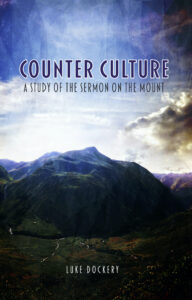 If you enjoyed this post, you might enjoy my book on the Sermon on the Mount, Counter Culture: A Study of the Sermon on the Mount.
Although this book was written specifically as an aid to teaching the Sermon on the Mount to junior high and high school students, it is also useful for personal Bible study, and the depth of the material makes it a great resource for adult Bible classes.
[1] Chris Seidman and Joshua Graves, Heaven on Earth: Realizing the Good Life Now (Nashville, TN, Abingdon Press, 2012), 64.
[2] Warren Carter, “Power and Identities: The Contexts of Matthew’s Sermon on the Mount,” in Preaching the Sermon on the Mount: The World It Imagines, ed. David Fleer and Dave Bland (St. Louis: Chalice Press, 2007), 19.
[3] Albert Barnes, Matthew and Mark, Notes on the New Testament (Grand Rapids, MI: Baker Book House, 1949), 45; Rubel Shelly, The Beatitudes: Jesus’ Formula for Happiness (Nashville, TN, 20th Century Christian, 1982), 54.
[4] Seidman and Graves, 68.
[5] James Burton Coffman, Commentary on the Gospel of Matthew, (Austin, TX: Firm Foundation Publishing House, 1968), 53; Francis Wright Beare, The Gospel According to Matthew: A Commentary (Oxford: Basil Blackwell, 1981), 133.








0 Comments
1 Pingback