The online journal of Luke Dockery

Tag: King Jesus (Page 1 of 3)

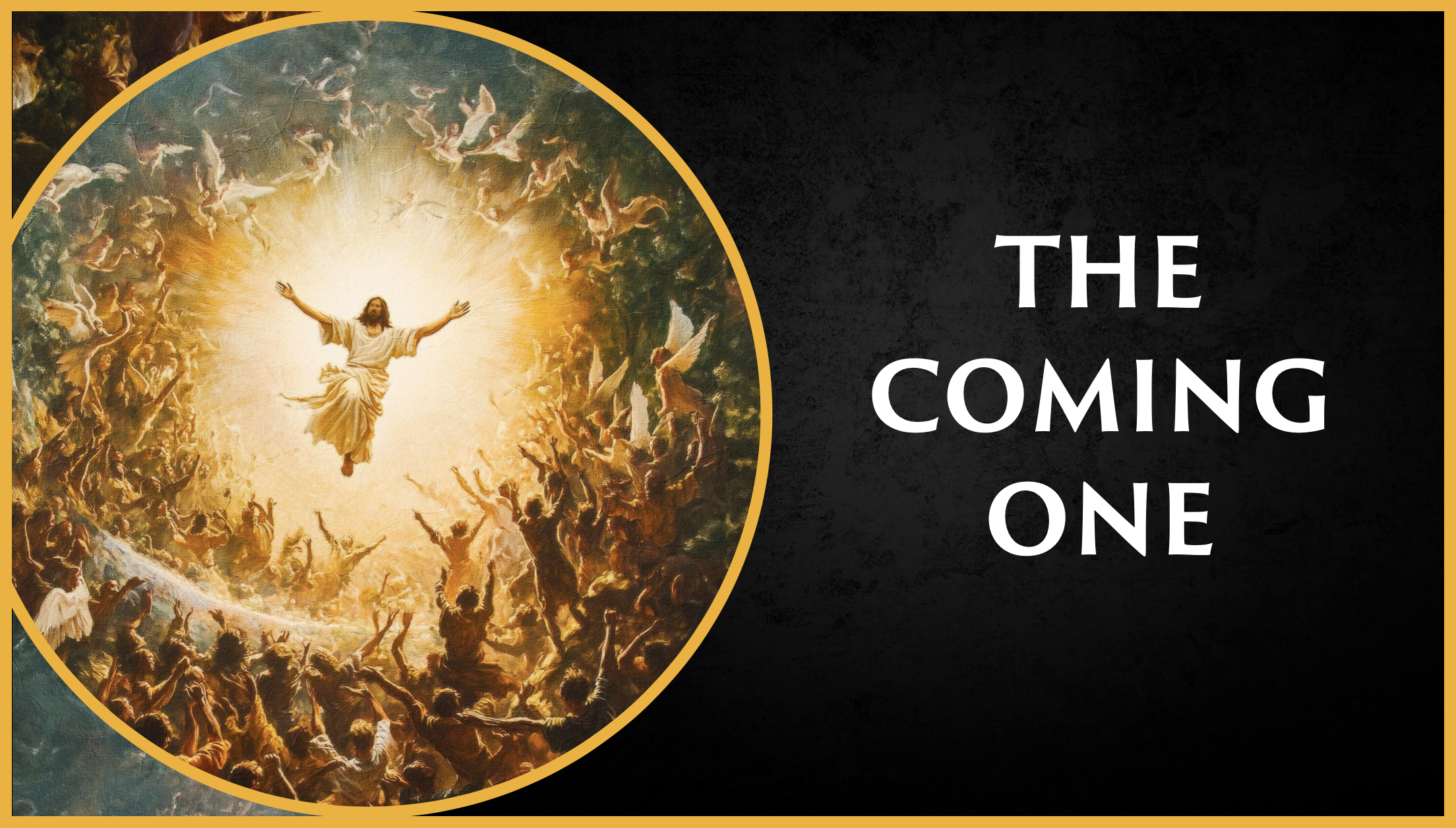
The Coming One

Revelation is a challenging book. It is written as apocalypse—a specific literary genre that leans heavily into historical context. The problem is that most readers are not familiar with the genre or the historical context, so Revelation remains largely impenetrable, susceptible to the wild speculation of religious charlatans and geopolitical prognosticators.

Regardless of the difficulties, most Christians are at least vaguely aware of the broad point of the book—there is a cosmic spiritual struggle going on between Jesus and the forces of darkness (the great dragon and his allies). The forces of darkness are powerful and seductive. They are actively recruiting followers of the Slain Lamb to commit treason and switch sides, and at times, it can seem like this is the smart move because it appears that the dragon is winning.

“Don’t be deceived!” says John in his apocalypse, and indeed, he reveals the reality of the situation: it is important that we choose wisely about whose side we are on in this cosmic struggle, because it is God’s side that will be overwhelmingly victorious.

At times, Christians can lose sight of this essential aspect of the Christian story. Often when we think of Jesus, we look back to the things Jesus did—His incarnation, ministry, miracles, crucifixion, and resurrection. Sometimes, we look around at our current lives and the ways Jesus gives meaning, comfort, and support to our existence right now. All of this is good, but while Christianity is a historically rooted faith that empowers meaningful life in the present, it is ultimately a future-facing endeavor: Jesus is coming again, and when He returns, He will fix the brokenness of the world and set it right.

This truth is underscored by one of Jesus’s titles that occurs multiple times in the book of Revelation, and is in the Gospels as well: ho erchomenos (Ὁ ἐρχόμενος), which translates as “The One who is to come” or more directly, “The Coming One.”[1] 

8 “I am the Alpha and the Omega,” says the Lord God, “who is and who was and who is to come, the Almighty.”

(Revelation 1.8)

2 Now when John heard in prison about the deeds of the Christ, he sent word by his disciples 3 and said to him, “Are you the one who is to come, or shall we look for another?”

(Matthew 11.2-3)

Jesus is The Coming One; His awaited arrival is a key aspect of His characterization, and while the title remains the same, the two verses quoted above (and others like them) describe two different comings. The first coming, of course, began at His incarnation. It was the arrival of the Jewish Messiah from the line of David, the one who would fulfill the faithfulness that Israel had always lacked. Jesus of Nazareth perfectly imaged the Father, sacrificed His life on behalf of the world, and conquered evil, sin, and death in His resurrection.

He then ascended to heaven, which leads to the Second Coming, because Jesus promised a return. He remains the Coming One, because He is coming again. This is an aspect of the Son that is somewhat out of vogue into today’s world (even among Christians!). Perhaps this is because He has been so long in coming that we are a bit embarrassed about it. Doesn’t it seem that He is perhaps, well, late? Don’t worry about that, Peter says:

8 But do not overlook this one fact, beloved, that with the Lord one day is as a thousand years, and a thousand years as one day. 9 The Lord is not slow to fulfill his promise as some count slowness, but is patient toward you, not wishing that any should perish, but that all should reach repentance.

(2 Peter 3.8–9)

Or perhaps we deemphasize this because the Second Coming is tied to judgment—King Jesus will eradicate evil when He returns, and that necessarily involves a quarantine of all those who reject His authority and want nothing to do with Him. Such notions are unpopular in a tolerant, pluralistic world where everyone is encouraged to live out their own truths.

Regardless of our emphasis, however, Scripture is clear: Jesus is the Coming One. He came before, and He is coming again. It’s who He is.

Scripture is clear: Jesus is the Coming One. He came before, and He is coming again. It’s who He is. Share on X

Despite the many centuries of waiting, many were not ready when He came the first time. We cannot make the same mistake:

10 But the day of the Lord will come like a thief, and then the heavens will pass away with a roar, and the heavenly bodies will be burned up and dissolved, and the earth and the works that are done on it will be exposed.

11 Since all these things are thus to be dissolved, what sort of people ought you to be in lives of holiness and godliness, 12 waiting for and hastening the coming of the day of God, because of which the heavens will be set on fire and dissolved, and the heavenly bodies will melt as they burn! 13 But according to his promise we are waiting for new heavens and a new earth in which righteousness dwells.

(2 Peter 3.10–13)

We must be ready. He is, and was, and is to come. The Coming One.


In this loose series of Scripture Reflections, I am sharing brief thoughts spurred on by my Bible reading. By way of reminder, my goal for these brief posts is two-fold:

(1) To remark on aspects of the biblical text that I find to be of interest that the reader may or may not have thought about previously.

(2) When possible, to point to the work and person of Jesus Christ. I believe the Bible is a unified story that points to Jesus, which means that He is frequently alluded to or foreshadowed in some way throughout the biblical canon.


[1] Fleming Rutledge, Advent: The Once and Future Coming of Jesus Christ (Grand Rapids: Eerdmans, 2018), 279n6, called my attention to this title.

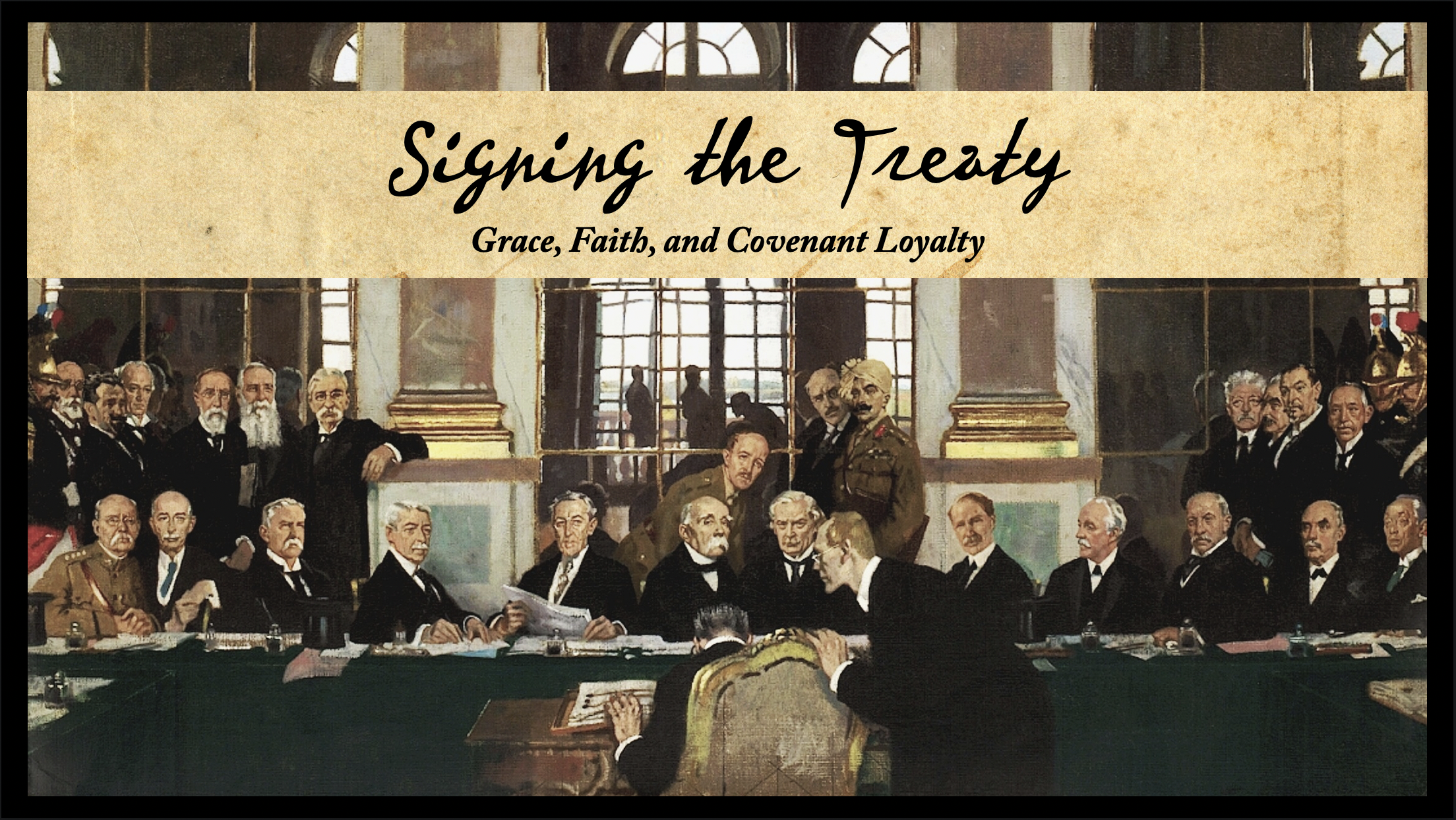
Signing the Treaty: Grace, Faith, and Covenant Loyalty

Introduction

Conflict and disagreement are inevitable consequences of humans being in close contact with one another, and a result of that is that we have developed a variety of ways to “make up” after we have had some sort of quarrel or falling out.

Occasionally, I’ll get into some sort of fight with my seven-year old son. Sometimes, this is because he is in trouble for something; sometimes, it is because he is in trouble but I am also in trouble because I haven’t handled the situation well because I have lost my temper or spoken to him too sharply. And we’ll say sorry, but it’s still a little tense…and then I’ll ask him, “Do you want to go play Legos?” We run upstairs, play Legos together, and make amends in the process.

After European settlers began to spend time with Native Americans, they became aware of the practice of “burying the hatchet,” where warring indigenous groups would literally put away or bury their weapons as an indication of peace. “Bury the hatchet” remains an English idiom that means “to make peace.”[1] We also have the expression “kiss and make up,” which conveys a similar sort of idea. I’ve never actually seen little kids told or forced to kiss each other, but I’ve absolutely seen kids told to hug each other or shake hands after a fight.

In his classic book, Peace Child, missionary Don Richardson shares a make-up custom from remote New Guinea. When neighboring villages were at war, the way to guarantee peace was through the “peace child”. The different villages would swap infants and raise them as their own. As long as these adopted children were taken care of, the peace between the two villages was secure.[2]

All of these different examples of making up after a fight or disagreement are, in a loose sense, a form of peace treaty, or we might even say “covenant.” These two words, broadly defined, are actually synonyms: a treaty or a covenant is an agreement between two parties, where each party commits to certain things. 

I want to look at some different examples of covenants or treaties throughout history, to help us better understand the way that God approaches us relationally, and how He expects us to respond.


Suzerain/Vassal Treaties

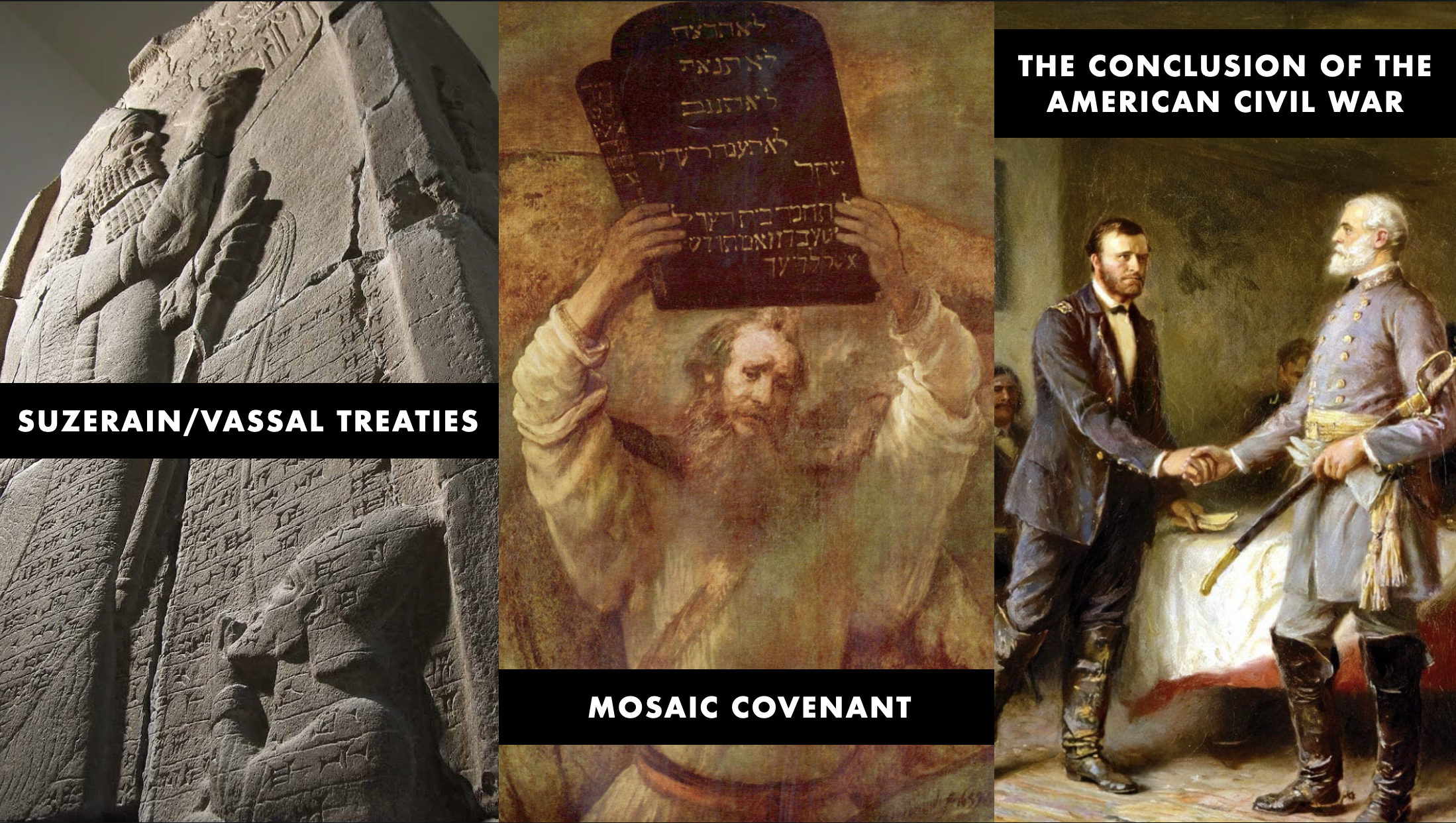
The first type of treaty comes from the Ancient Near East, in the Hittite Empire (modern day Turkey), and is called a Suzerain/Vassal treaty.[3] Basically, this is a treaty or covenant between unequal partners: you have a stronger king or nation (the Suzerain) that would establish a covenant or treaty with a weaker king or nation (the Vassal). 

Each party would have certain requirements they had to keep in order to remain faithful to the treaty:

  • The two parties would keep their own national borders and remain separate nations, but would become military allies. One would come to the aid of the other when needed. Specifically, since the suzerain was more powerful, this provided great security and military protection for the vassal state.
  • In return, the vassal owed the suzerain financial tribute and loyalty—vassals could only have one suzerain (ancient records reveal that the suzerain was often referred to as “lord” or “father”). For a vassal to take another suzerain would be treasonous.
  • Suzerains, on the other hand, would often have treaties with multiple vassals; if one vassal had an issue with another, they would bring it to the suzerain to resolve (This is similar to what happens when a brother and sister are having a fight; they complain to Mom and Dad in hopes of a resolution.).

Mosaic Covenant

Many people have never heard of a Suzerain/Vassal Treaty before, but are likely familiar with one if they have spent much time reading the Hebrew Bible/Old Testament: The Mosaic Covenant or the Law of Moses.

Basically, after Yahweh, the God of Abraham, Isaac, and Jacob calls Moses from the burning bush and rescues the Israelites out of Egypt (10 Plagues, Parting of the Red Sea, etc.), He calls Moses up to Mount Sinai in order to establish a covenant with the Israelites: He will be their God, and they will be His people.

And the way He structures the covenant closely matches as Suzerain/Vassal Treaty. This is not surprising—God comes near to humans in ways that we can understand (indeed, that is what the incarnation of Jesus is about!), and so it makes sense that when God wanted to establish a relationship with the nation of Israel, He does so in a way that they understood: as the much more powerful party (the Suzerain) He makes an agreement with them in a way that would be familiar to them:

  • The covenant begins by introducing Yahweh as the suzerain: “I am Yahweh your God.” He then reminds them of their previous relationship, how He had rescued them from slavery in Egypt.
  • Then, there are the requirements for the covenant—what it means for Yahweh to be their God and for Israel to be His people.
  • There are provisions made for keeping the record of the treaty safe and reading it regularly to remind people of their obligations.
  • Yahweh calls heaven and earth as witnesses to the covenant, and then there is an extensive list of blessings that will come from covenant faithfulness, and curses that will come if the people are unfaithful.

All of these are classic characteristics of suzerain/vassal treaties.

In rescuing Israel from Egypt and “signing a treaty” with them, Yahweh proclaimed Himself as their Lord and Father, and He required their loyalty in return. Yahweh would protect them and give them land, and in return, they were required to be loyal and obedient to Him. This meant that they would worship no other gods, and also that they would act in certain ways to demonstrate their loyalty and obedience to Him (for example, by loving their neighbors and taking care of the poor in their midst).

God offered this covenant out of His grace—He was the powerful party and had no obligation, but chose to offer a treaty. The loyal obedience of the people was required in response to the treaty. 

The Conclusion of the American Civil War

The American Civil War, fought between 1861-1865, was awful. It was a bloody four-year conflict that claimed the lives of over 600,000 Americans, more than any other war. It was a war that divided the United States and pitted former countrymen against one another; states, towns, and even families were sometimes divided. 

Even though it ended over 150 years ago, it is a conflict that left deep wounds and long scars, some of which have still not fully healed. 

Interestingly, at the end of that conflict, there was no peace treaty that was signed, but there was a formal cessation of hostilities when General Robert E. Lee of the Army of Northern Virginia surrendered to General U.S. Grant, the commander of the Union Army at Appomattox, Courthouse on April 9, 1865.

There were still some similarities to treaties we have talked about, however:

  • There was clearly a stronger and a weaker party—at that point, the Union Army was considerably superior to the Confederate Army, which is what led to the surrender in the first place.
  • Also, certain provisions were granted to the surrendering soldiers: they were allowed to return home, to the land that they owned, and even allowed to keep their horses so they could use them to farm.
  • In return, though, the defeated Confederate soldiers had to be loyal to the suzerain nation: they had to vow not to take up arms against the Government of the United States. Later, before former Confederate soldiers were allowed to vote, they had to take oaths of loyalty to the United States.
Have You Signed Your Treaty?

So far, we have focused on trying to get a clear picture of what a treaty or covenant basically is, in order to set up this question: have you signed your treaty?

That may seem like a strange question, but consider:

(1) Scripture teaches—in multiple places—that in our sin, we are enemies of God:

21 Once you were alienated from God and were enemies in your minds because of your evil behavior.

(Colossians 1.21)

8 But God demonstrates his own love for us in this: While we were still sinners, Christ died for us. 9 Since we have now been justified by his blood, how much more shall we be saved from God’s wrath through him! 10 For if, while we were God’s enemies, we were reconciled to him through the death of his Son, how much more, having been reconciled, shall we be saved through his life!

(Romans 5.8-10)

1 What causes fights and quarrels among you? Don’t they come from your desires that battle within you? 2 You desire but do not have, so you kill. You covet but you cannot get what you want, so you quarrel and fight. You do not have because you do not ask God. 3 When you ask, you do not receive, because you ask with wrong motives, that you may spend what you get on your pleasures. 4 You adulterous people, don’t you know that friendship with the world means enmity against God? Therefore, anyone who chooses to be a friend of the world becomes an enemy of God.

(James 4.1-4)

The idea here is that our sin places us in opposition to God. In a sense, if we commit sin, that puts us at war with God. 

(2) But this is not what God wants: He wants peace and reconciliation, and in His grace, He offers us terms of peace…a treaty…a covenant. 

  • As in the suzerain/vassal treaty, our treaty with God is clearly not between two equal parties. God is far, far greater than we are. 
  • As in the suzerain/vassal treaty, God extends terms of peace to others as well: He wants all people to be saved and to be at peace with Him.
  • As in the suzerain/vassal treaty, God is our Lord and Father, but He must be the only one—it would be treasonous to have any other Lord.
  • As in the Mosaic covenant, God offers us peace based on what He has already done for us: while we were still sinners, Jesus died for us. God has already gone to great lengths to make peace possible. 
  • As in the Mosaic covenant, God offers the treaty to us based on His grace, not based on anything we have done. But once we have signed the treaty with Him and entered His covenant, He expects us to be faithful to the covenant.
  • As in the conclusion to the American Civil War, we must surrender; we must lay down our arms and cease being enemies of God. We must pledge our loyalty to Him.

(3) God offers us a covenant, a peace treaty, a way to have our sin removed and to no longer be His enemy, and instead to become His servant—loyal subjects of our Lord and Father, our Suzerain King. 

That covenant or peace treaty is offered in God’s grace and is made possible by the death of Jesus on the cross. And we respond to that offer of covenant, we sign the treaty with faith. Faith is a pretty common word, especially in church, but I have become convinced that the English word faith is not a very helpful word when it comes to translating the Greek word in our Bibles that often gets translated as “faith”. Usually when people hear the word “faith”, they either think of something like blind faith—wildly believing something based on little evidence, or they think of something that is exclusively or primarily going on inside your brain (like, mentally saying “yes” to something). In the Bible, however, the Greek word pistis/πιστις means something else: it’s more like fidelity, or loyalty, or faithfulness, or allegiance.[4]

Think in terms of other covenants we have discussed earlier, and how important loyalty and/or allegiance are—suzerain/vassal treaties, the Mosaic Covenant, the conclusion of the American Civil War—all of these require the act of loyalty. 

So, how do we respond to God’s offer of a peace treaty? With “faith”, where faith means allegiance. And that involves multiple aspects:

  • Certainly, allegiance involves mental assent. We do have to believe and understand some basic things about who God is and what He has done for us through Jesus.
  • Allegiance also involves a public proclamation of loyalty. Christians publicly proclaim our allegiance to Jesus by confessing Him as Lord, and are being baptized as an expression of that allegiance.
  • And allegiance also involves embodied loyalty, which just means that we must live out what we claim to believe. It’s not enough to just agree in your head that Jesus is Lord or to say it publicly; we have to live as loyal citizens of our King. Remember, we cannot have more than one Lord and King—if someone were to look at your life, would they see you as a loyal subject of King Jesus, or would they assume that you were a part of the kingdom of the world?

Conclusion

Here is a reminder of our situation: on our own, we are trapped by our own sin, and we are enemies of God. But that’s not what God wants, and He has gone to extraordinary lengths to make peace with us. Through the death and resurrection of the Son, God stands before us, offering an olive branch, a peace treaty…but it’s up to us to sign it:

  • Do you know and believe the Gospel? Do you believe that Jesus the king preexisted with the Father, took on human flesh, fulfilling God’s promises to David, died for sins in accordance with the Scriptures, was buried, was raised on the third day in accordance with the Scriptures, appeared to many, is seated at the right hand of God as Lord, and will come again to judge?
  • Have you publicly proclaimed your loyalty? Have you confessed Jesus as Lord and been baptized, having your sins washed away, and ending your enemy status?
  • Are you living out your loyalty every day, showing by the things that you do and (and don’t do!) who your Lord is, and where your loyalty lies?

God stands before us with an offer of peace, but we must accept it!


[1] See https://en.wikipedia.org/wiki/Burying_the_hatchet

[2] Don Richardson, Peace Child: An Unbelievable Story of Primitive Jungle Treachery (Glendale, CA: G/L Regal Books, 1974).

[3] See Russ Meek, “The Suzerain Vassal Treaty (Covenant) in the Old Testament”, https://russmeek.com/2020/10/the-suzerain-vassal-treaty-covenant-in-the-old-testament/; Brian Keith Hudson, “The Suzerain/Vassal Covenants”, https://www.ancient-hebrew.org/culture/suzerain-vassal-covenants.htm

[4] For more on “faith” as “allegiance” and the three-part response of mental assent, public proclamation, and embodied loyalty, see Matthew Bates, Salvation By Allegiance Alone: Rethinking Faith, Works, and the Gospel of Jesus the King (Grand Rapids: Baker Academic, 2017).
Blessed Are Those Who Are Persecuted

As discussed in the introductory post of this series, Jesus’s Beatitudes in the Sermon on the Mount are basically a description of what a good life really looks like from God’s perspective. Jesus redefines what blessedness is, and provides an alternative set of values for His followers, those who desire to be a part of His alternative community. Here are the Beatitudes we have discussed thus far:


Blessed Are Those Who Are Persecuted

“Blessed are those who are persecuted for righteousness’ sake, for theirs is the kingdom of heaven. Blessed are you when others revile you and persecute you and utter all kinds of evil against you falsely on My account. Rejoice and be glad, for your reward is great in heaven, for so they persecuted the prophets who were before you.”

(Matthew 5.10-12)

The last two beatitudes are closely related, so we will discuss them together, and this will conclude our study of the Beatitudes. Both say that God’s favor rests upon those who are persecuted on account of Jesus.

These verses do not indicate that disciples of Jesus are to have a persecution complex, always imagining that people are mistreating us. Neither are we to go looking for persecution by behaving in ways that are over the top or offensive.[1] However, if in the course of living as disciples of Jesus (by exhibiting the characteristics we have been talking about) we are persecuted or mistreated, Jesus says that we are blessed in this.

It might seem strange for us to think that simply by living the way Jesus calls us to, we could face persecution. But it is important to remember that the values of Jesus’s kingdom are completely at odds with the values of the world, and when we seek to live according to kingdom values, it threatens the way the world works. This was true for Jesus, who was ultimately killed by the collaboration of Jewish and Roman leaders who were in power and were threatened by Him, and also for His disciples, many of whom were martyred for their faith.[2]

Honestly, for those of us who are Americans, we don’t have a very good understanding of what it means to be persecuted for our faith because we live in a country that provides us with a great deal of religious freedom—you have likely heard someone pray before, “God, we thank You that we are able to worship without fear of persecution.” However, in the early days of Christianity, Christians were often cast out of society, beaten, imprisoned, and even killed because of their faith, and this is still the reality for many Christians in the world today.

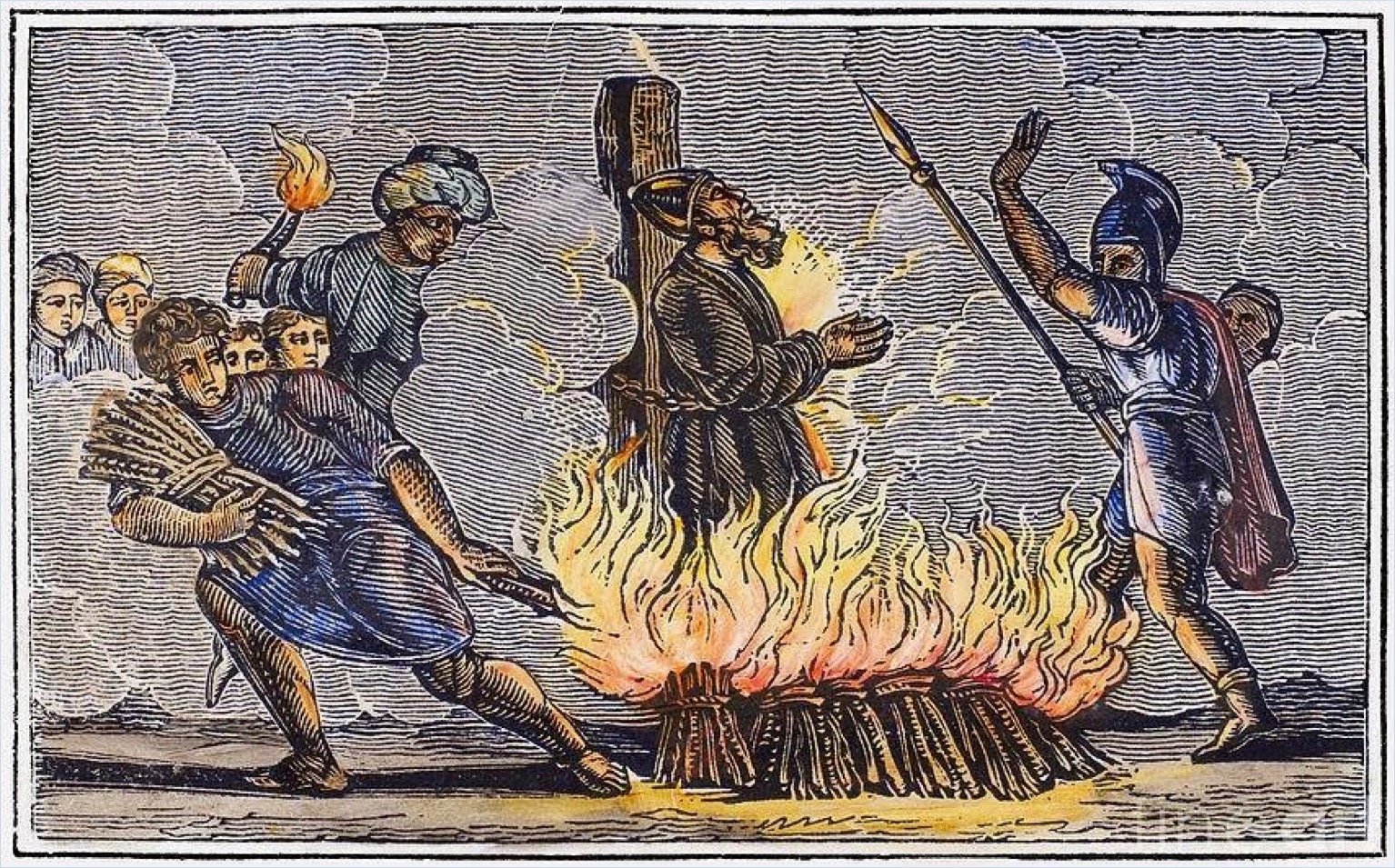
One of the most famous of the early Christian martyrs was Polycarp, who was an elder of the church in Smyrna. Because of his faith, he was taken before the Roman authorities and given the choice to make a sacrifice to Caesar as a god or to die. Polycarp’s response is famous:

“Eighty and six years have I served Christ, and He has done me no wrong. How can I blaspheme my King who saved me?”

Based on his refusal to worship the emperor, Polycarp was brought to be burned at the stake. In his last words, he said,

“O Lord God Almighty, the Father of Thy well-beloved and ever-blessed Son, by whom we have received the knowledge of Thee…I thank Thee that Thou hast graciously thought me worthy of this day and of this hour.”

Polycarp is an example of someone living as a citizen of God’s kingdom.[3]

The Martyrdom of Polycarp

Of course, that is not our experience in the United States, and sometimes, I think we have become too attached to our persecution-free environment. To be clear, I enjoy the religious freedom that I have as a U.S. citizen and am not eager for a day when I am persecuted for my faith, but sometimes I feel that Christians are overly concerned and fearful about the possibility of us losing our religious freedoms and facing persecution. We need to remember that Jesus calls those who suffer for His sake “blessed” because they will be rewarded in eternity, and that eternal reward empowers us to endure suffering in the present.[4]

Sometimes Christians are overly concerned about the possibility of losing religious freedom and facing persecution. We need to remember that Jesus calls those who suffer for His sake “blessed”. Share on X

A Final Word

The characteristics that Jesus describes as blessed in the Beatitudes are shocking to us because these values are so misaligned with the values of our own society. They would have been shocking to Jesus’s original audience as well. Often, people will describe Jesus’s kingdom as being “Upside-Down”, because it is so at odds with the kingdoms of this world. But really, from the proper perspective, it is our world as it is that is truly Upside-Down; Jesus came to set it to rights, to turn what is Upside-Down, Rightside-Up.

When disciples of Jesus are characterized by the values described in the Beatitudes, we join Jesus in setting the world to rights.

When disciples of Jesus are characterized by the values described in the Beatitudes, we join Jesus in setting the world to rights. Share on X

If you enjoyed this post, you might enjoy my book on the Sermon on the Mount, Counter Culture: A Study of the Sermon on the Mount. 

Although this book was written specifically as an aid to teaching the Sermon on the Mount to junior high and high school students, it is also useful for personal Bible study, and the depth of the material makes it a great resource for adult Bible classes.


[1] Albert Barnes, Matthew and Mark, Notes on the New Testament (Grand Rapids, MI: Baker Book House, 1949), 46.

[2] Warren Carter, “Power and Identities: The Contexts of Matthew’s Sermon on the Mount,” in Preaching the Sermon on the Mount: The World It Imagines, ed. David Fleer and Dave Bland (St. Louis: Chalice Press, 2007), 20.

[3] William Barclay, The Gospel of Matthew Volume 1, The Daily Study Bible (Philadelphia, Westminster Press, 1956), 111.

[4] Larry Chouinard, Matthew, The College Press NIV Commentary (Joplin, MO, College Press, 1997), 100.

The Beatitudes: Blessed Are the Peacemakers

As discussed in the introductory post of this series, Jesus’s Beatitudes in the Sermon on the Mount are basically a description of what a good life really looks like from God’s perspective. Jesus redefines what blessedness is, and provides an alternative set of values for His followers, those who desire to be a part of His alternative community. Here are the Beatitudes we have discussed thus far:


Blessed Are the Peacemakers

“Blessed are the peacemakers, for they shall be called sons of God.”

(Matthew 5.9)

Jesus says that God’s favor rests upon those who make peace.

God cares deeply about peace.

“Peace” is something that is talked about a lot, but it is important for us to realize that this word is used to convey different ideas at times, and we need to make sure that we have a clear picture of what Jesus is talking about in this context.

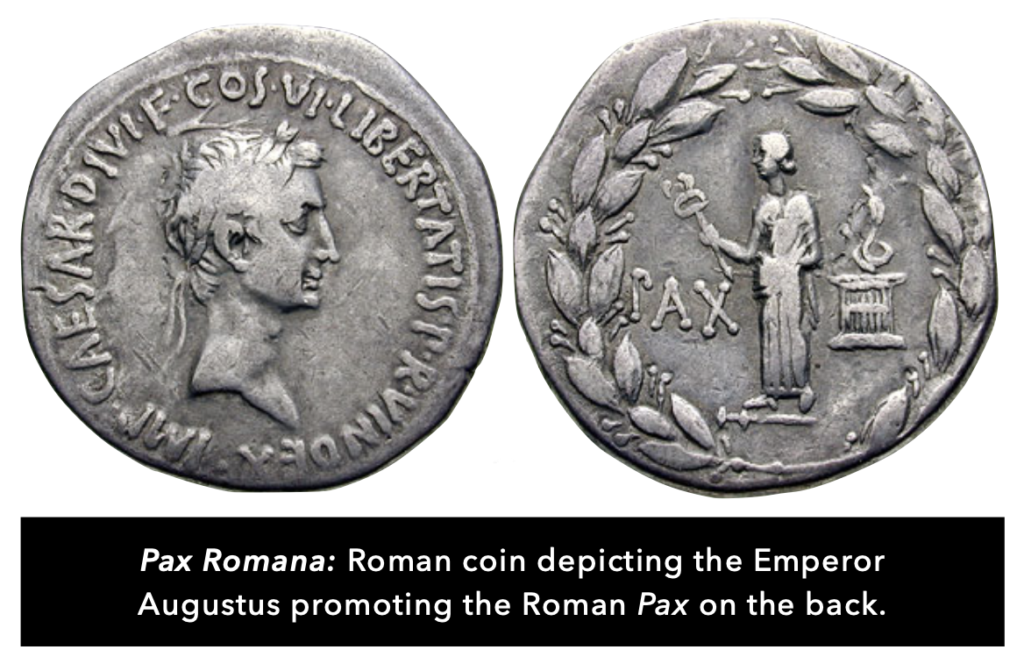
During the time that Jesus lived, peace was greatly emphasized, because the Roman Empire was enjoying the Pax Romana, or “Roman Peace.” The Pax Romana lasted for several decades and was a time of stability and prosperity in the Empire in which there was relative peace and no major wars. This peace came at a high price, however, as it was made possible only through brutal military conquest, the forced subjugation of conquered peoples, and the confiscation of their land.[1]

Of course, this is not the kind of peace that Jesus is talking about. Jesus does not call for His followers to make peace through military might. Furthermore, in the Bible, “peace” is not simply the absence of war; peace suggests wholeness and well-being, and healthy and just relationships with one another.[2] Related to that, biblical peace—wholeness, justice, healthy relationships—does not come from pretending problems don’t exist. Jesus is the Prince of Peace, and He came to make reconciliation with God possible, but He didn’t gloss over the reality of sin; He confronted people with it, and was killed as a result.

Peace-making is not pretending that problems don’t exist. Share on X

A good modern-day example is Rosa Parks, who in 1955 refused to give up her bus seat to a white passenger. That act had far-reaching consequences (Parks was arrested, and it was a key early event in the American Civil Rights Movement), and some people called her a troublemaker because she didn’t just do what she was told to “keep the peace.” But peace doesn’t come from pretending that there is no problem. As long as African-Americans were forced to sit at the back of busses or give up their seats to white people, true peace was not possible. Refusing to give up a seat on the bus was actually a part of peacemaking because it was an effort to bring about wholeness and justice in society.

Jesus wants His followers to be people who actively work to make peace in their relationships and in their communities. Of course, we should try to get along with others and we should not go around trying to stir up strife for the fun of it, but we do need to be people who work to bring about real reconciliation in situations where people are at disharmony with one another.[3]

Jesus wants His followers to be people who actively work to make peace in their relationships and in their communities. Share on X

Peacemakers are called children of God because they are like God. After all, God’s supreme mission is to bring about reconciliation in the world. As William Barclay says, “The man who divides men is doing the devil’s work; the man who unites men is doing God’s work.”[4]


If you enjoyed this post, you might enjoy my book on the Sermon on the Mount, Counter Culture: A Study of the Sermon on the Mount. 

Although this book was written specifically as an aid to teaching the Sermon on the Mount to junior high and high school students, it is also useful for personal Bible study, and the depth of the material makes it a great resource for adult Bible classes.


[1] Warren Carter, “Power and Identities: The Contexts of Matthew’s Sermon on the Mount,” in Preaching the Sermon on the Mount: The World It Imagines, ed. David Fleer and Dave Bland (St. Louis: Chalice Press, 2007), 21.

[2] William Barclay, The Gospel of Matthew Volume 1, The Daily Study Bible (Philadelphia, Westminster Press, 1956), 103: “In the Bible peace means not only freedom from all trouble; it means enjoyment of all good.”

[3] Albert Barnes, Matthew and Mark, Notes on the New Testament (Grand Rapids, MI: Baker Book House, 1949), 45.

[4] Barclay, 105.

The Beatitudes: Blessed Are the Pure in Heart

As discussed in the introductory post of this series, Jesus’s Beatitudes in the Sermon on the Mount are basically a description of what a good life really looks like from God’s perspective. Jesus redefines what blessedness is, and provides an alternative set of values for His followers, those who desire to be a part of His alternative community. Here are the Beatitudes we have discussed thus far:


Blessed Are the Pure in Heart

“Blessed are the pure in heart, for they shall see God.”

(Matthew 5.8)

In the sixth Beatitude, Jesus addresses those who are “pure in heart.” Often when we see terms like this in Scripture, we assume it is talking about something like moral perfection. This phrase does not suggest someone who is sinless, but rather, refers to those who act with loyalty, integrity, and from pure motives.[1] Psalm 24 talks about the man with a pure heart being someone who does not devote himself to what is false and does not swear deceitfully. A person who is pure in heart is someone whose entire life, “public and private, is transparent before God and men. Their very heart—including their thoughts and motives—is pure, unmixed with anything devious.”[2]

Being “pure in heart” doesn’t refer to moral perfection, but to those who act with loyalty, integrity, and from pure motives. Share on X

Have you ever known someone who was supposedly your friend, but you weren’t sure that you could really trust them? Or maybe someone who did something nice for you, but you weren’t sure that you could trust their motives because perhaps they were doing it in order to get something in return? This is the opposite of being “pure in heart.” The reality is that being pure in heart is not a common trait in today’s world; there are not that many people that we would describe without hesitation as having loyalty, integrity, and pure motives.

To help us get a better picture of what it looks like to be pure in heart, it might help to think of children with special needs.[3] My daughter Kinsley has a genetic condition that causes her to have a lot of disabilities, and it can be easy to focus on the negatives of her condition. At the same time, she is also “disabled” from being deceitful, dishonest, or acting from impure motives: if she is happy, or if she loves you, she’ll show you that. If she’s upset about something, she’ll let you know. She won’t secretly or deviously do anything, because that’s simply not in her nature. The label “disabled” gets applied to her frequently, but when it comes to being pure in heart, she is much more able than her father is! This is not to suggest, of course, that only people with disabilities can be pure in heart, but rather that children with special needs help us to see the purity and single-mindedness that Jesus talks about.

From experience, we know that when we act in a double-minded way, are manipulative, or behave deceitfully, misery tends to follow. On the other hand, those who are pure in heart are blessed, and Jesus says that such people will see God. This is not meant to imply some sort of visionary experience, but rather, is another way of stating that the kingdom of heaven belongs to people such as this.[4]


If you enjoyed this post, you might enjoy my book on the Sermon on the Mount, Counter Culture: A Study of the Sermon on the Mount. 

Although this book was written specifically as an aid to teaching the Sermon on the Mount to junior high and high school students, it is also useful for personal Bible study, and the depth of the material makes it a great resource for adult Bible classes.


[1] Larry Chouinard, Matthew, The College Press NIV Commentary (Joplin, MO, College Press, 1997), 99. See also Jack P. Lewis, The Gospel According to Matthew, Part I, The Living Word Commentary (Austin, TX: Sweet Publishing, 1976), 82; Herschel H. Hobbs, An Exposition of the Gospel of Matthew (Grand Rapids, Baker Book House, 1965), 61.

[2] John R.W. Stott, Christian Counter-Culture: The Message of the Sermon on the Mount (Downers Grove, IL, InterVarsity Press, 1978), 49.

[3] Chris Seidman and Joshua Graves, Heaven on Earth: Realizing the Good Life Now (Nashville, TN, Abingdon Press, 2012), 81-85.

[4] Francis Wright Beare, The Gospel According to Matthew: A Commentary (Oxford: Basil Blackwell, 1981), 133.

« Older posts

© 2026 The Doc File

Theme by Anders Noren — Up ↑