The online journal of Luke Dockery

Tag: Jesus (Page 1 of 15)

The Joy Is Stronger (If I Have Eyes to See It)

Some things that bring me down:

  • AI-generated everything wherever I look
  • Spending time scrolling on social media
  • The division and malice throughout our society
  • When Christians don’t act like Jesus
  • Sickness and death

Some things that bring me joy:

  • Spending time with my wife and kids
  • Reading a good book
  • Baseball
  • When Christians remind me of Jesus
  • The sure hope of resurrection

The joy is stronger, and it is there, all around me, if I have the eyes to see it. Will you join me?

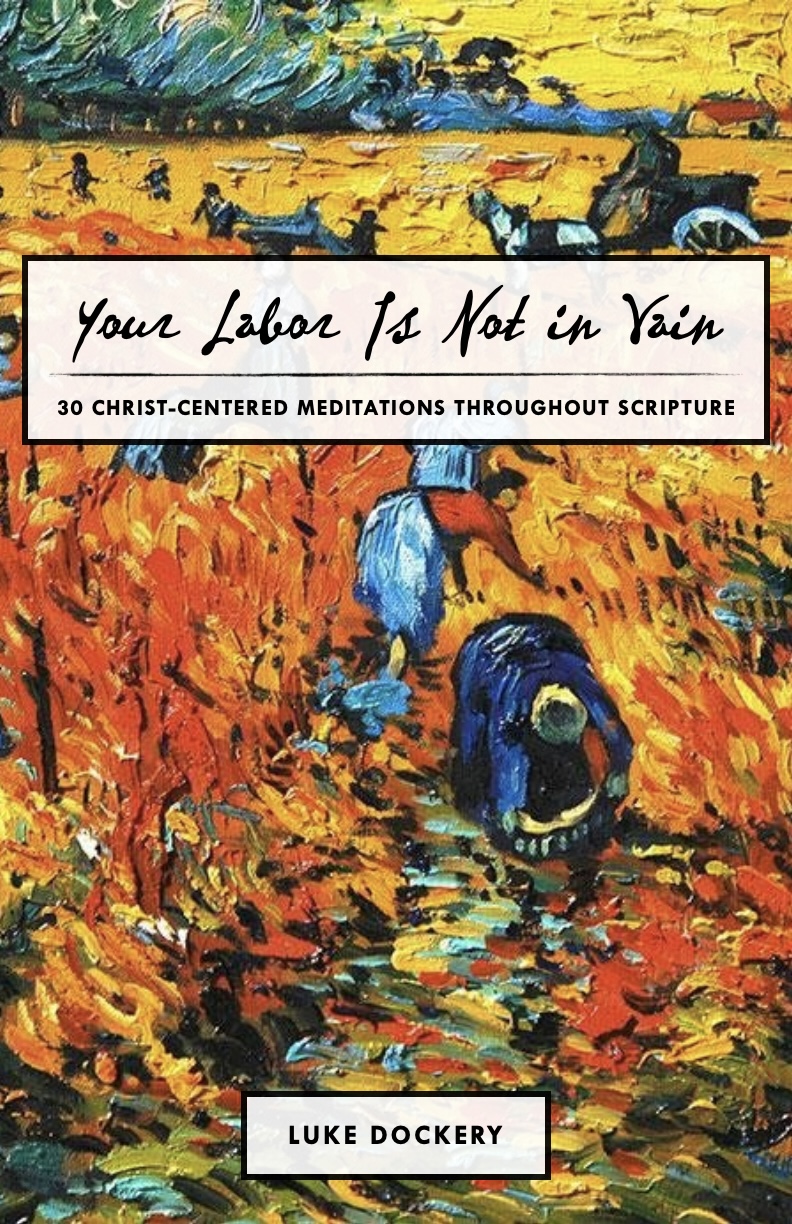
Your Labor Is Not in Vain: 30 Christ-Centered Reflections Throughout Scripture

I am excited to announce that I have a new book out—Your Labor Is Not in Vain: 30 Christ-Centered Meditations Throughout Scripture. In some ways, this was a project years in the making, as the meditations are actually a compilation of blog posts that were initially written for my Scripture Reflections series here on The Doc File. Those posts have been edited, supplemented, and compiled together to create a volume that is intended to be both interesting and spiritually formative. From the Preface of the book:

The Bible is such a fascinating masterpiece, written by dozens of authors over hundreds and hundreds of years, but also guided and woven together by a divine hand. Scripture is a bottomless treasure that reveals new delights on each journey through it, and my ongoing study of and reflection on it has truly been a delight for me and has helped me to know God better and grow closer to Him.

My hope is that my humble efforts in this book will similarly help you to become fascinated by Scripture, and to more deeply love the God to whom Scripture points.

From the back of the book:

What if the Bible is both more connected and more fascinating than you realize?

The Bible is not meant to be read as a loose collection of disconnected stories, teachings, and moral lessons. It is a unified story, woven together across centuries and pointing ultimately to Jesus. Once we begin to see those connections, familiar passages take on new meaning, and obscure passages can suddenly come alive.

Your Labor Is Not in Vain is a collection of thirty meditations drawn from Luke Dockery’s twenty years of writing and studying Scripture. Beginning in Genesis and moving through the biblical story, these reflections explore intriguing details, surprising connections, and overlooked themes that reveal the beauty and coherence of Scripture—and, again and again, point us toward Jesus.

What does Jacob’s ladder have to do with Jesus? Why does the Bible contain so many genealogies? How can death be both an enemy and a pathway to victory? What does the resurrection have to do with the ordinary work we do for the Lord? And what does it look like to live faithfully as a citizen of God’s kingdom?

These short meditations invite you to slow down, look again, and discover something new in familiar passages of Scripture. Reflection questions and prayer prompts at the end of each chapter make the book useful for personal devotion, small groups, Bible classes, and family conversations.

Above all, Your Labor Is Not in Vain is an invitation to become more fascinated by Scripture, to marvel at the way its story fits together, and to see Jesus more clearly throughout its pages. Whether you have been reading the Bible for decades or are just beginning to discover its story, these reflections will encourage you to read with fresh eyes—and to delight in the inexhaustible treasures of God’s Word.

If this intrigues you at all, I hope you will give it a look!

Purchase the Book

Paperback: Amazon $12.99

Wise as Serpents, Gentle as Doves: Christian Engagement in the Public Square

In Matthew 10, Jesus sends his apostles out on what is often referred to as the “Limited Commission.” It is “limited” compared to the more famous Great Commission in Matthew 28, where Jesus sends His disciples into all the world. Here, He restricts the purview of their mission, telling them not to go to the Gentiles or Samaritans but rather to the “lost sheep of the house of Israel” (10.6). They are to proclaim the message of the kingdom of God, heal the sick, and cast out demons, and Jesus gives them other traveling instructions (10.7-14).

And, He makes it clear that He is sending them out into hostile territory, “as sheep in the midst of wolves,” so they need to be thoughtful and careful about how they act. He tells them to be wise as serpents (or “shrewd” depending on your translation) and as gentle (or “innocent” or “harmless”) as doves. Really, they need to act as Jesus Himself does, who was always full of discernment (John 2.25), but was also gentle and lowly in heart (Matthew 11.29).


It seems to me that these words, given by Jesus to His disciples long ago in a specific context, are important and instructive for disciples today as we enter into the public square, the marketplace of ideas, that is social media.

We live in troubled times. That should not be surprising, as disciples of Jesus have always lived in troubled times, but due in part to the constant connectivity of the digital age, our blunted attention spans, and our stunted spiritual formation, we are constantly flitting from one trouble to the next, outraged or despairing about one thing or another, and compelled to let everyone know how we feel.

And I don’t mean to give the impression that there is nothing going on worth feeling concern—or even outrage or despair—about. In any given week, our attention is pulled toward international conflicts, political scandals, inflammatory national rhetoric, and violent encounters tied to immigration and enforcement. The specific examples change almost daily, but the effect is the same: it is a lot.

In response to these stimuli, I have certainly seen a great amount of digital ink spilled by Christians on my social media feeds…but I haven’t observed much evidence of Christians being “wise as serpents, gentle as doves” in those spaces:

  • It is not wise for Christians to rush to judgment when a story breaks when there have been so many examples of the narratives around these sorts of stories significantly changing from what was originally reported.
  • It is not gentle for Christians to callously dismiss violent deaths of protesters with a quick reference to Romans 13.
  • It is not wise for Christians to blindly accept a photo, video, or source when we know that there is so much AI-generated content and misinformation sewering up the Internet.
  • It is not gentle for Christians to invite anyone who disagrees with them to unfriend or block them.
  • It is not wise for Christians to naively accept the claims of an agenda-driven administration that seems to think the truth is whatever they want it to be (a temptation that has proven to be both bipartisan and perennial).
  • It is not gentle for Christians to dehumanize illegal immigrants or the ICE agents seeking to apprehend them.
  • It is not wise for Christians to naively assume that those in opposition to the current administration are somehow virtuous and truthful when they have repeatedly given evidence to the contrary.

The world is a dark and troubled place, and the people of the world will rage and dispute. Following the directives of Jesus our King, Christians must strive to do better. Being wise as serpents and gentle as doves is one way that we can be salt and light in our world and distinguish ourselves from the prevailing cycle of verbal escalation.

The world is a dark and troubled place, and the people of the world will rage and dispute. Following the directives of Jesus our King, Christians must strive to do better. Share on X

That doesn’t mean it is wrong to share your thoughts. Indeed, I have read multiple posts, from different perspectives, that were measured in their tone and careful in their attempts to discern truth. But for all of us, there is a pressing need to examine whether our impulse to speak is being formed by the Spirit of Christ or manipulated by our social media algorithms.

Our world really doesn’t need more people with hot takes, lines drawn in the sand, and proclamations of outrage. It does need Christians who can demonstrate wisdom and gentleness—disciples who remember that we are still sheep among wolves, sent by Jesus to bear faithful witness to the world rather than to join sides in a war of outrage.

Our world really doesn’t need more people with hot takes, lines drawn in the sand, and proclamations of outrage. It does need Christians who can demonstrate wisdom and gentleness. Share on X

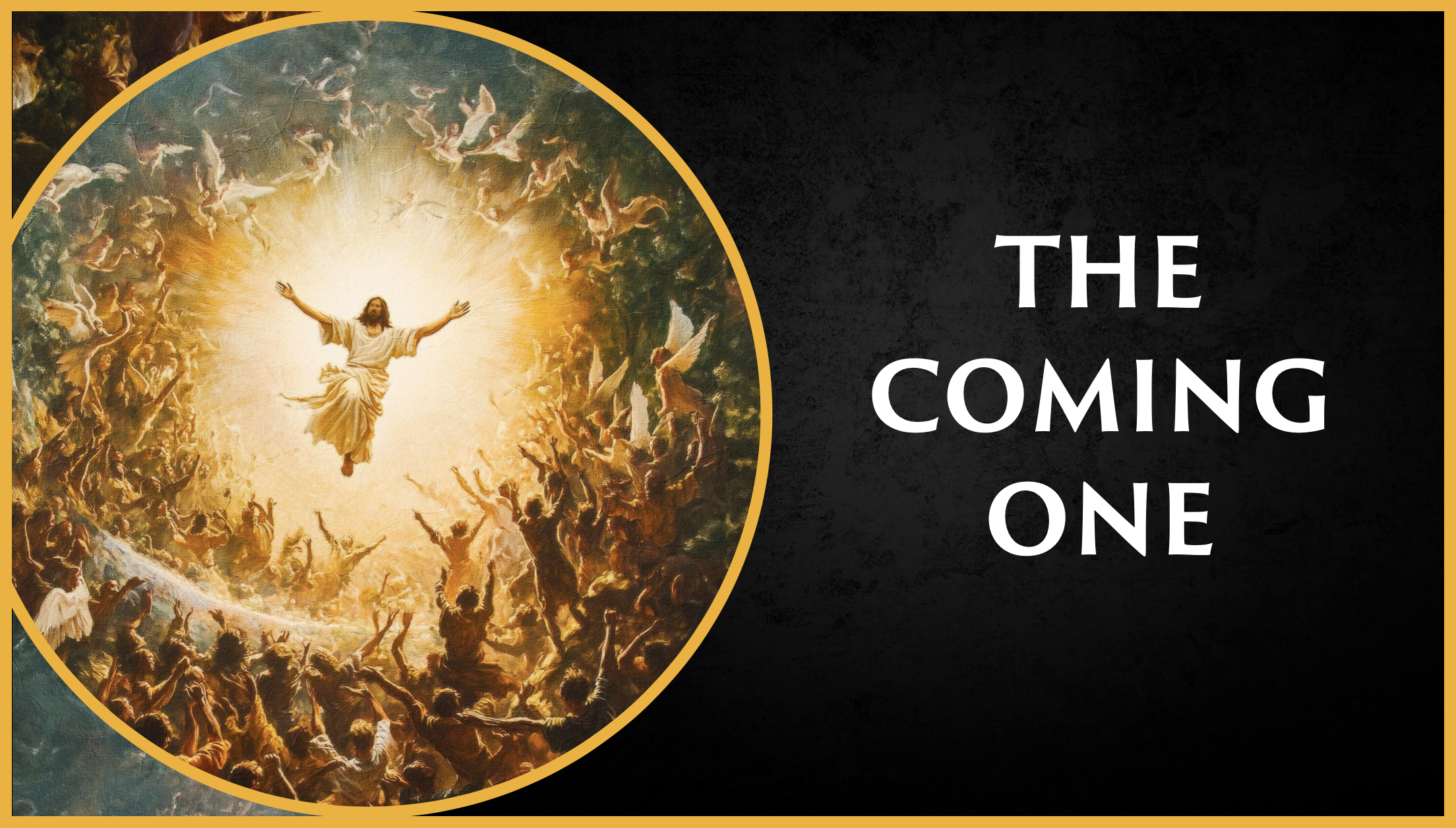
The Coming One

Revelation is a challenging book. It is written as apocalypse—a specific literary genre that leans heavily into historical context. The problem is that most readers are not familiar with the genre or the historical context, so Revelation remains largely impenetrable, susceptible to the wild speculation of religious charlatans and geopolitical prognosticators.

Regardless of the difficulties, most Christians are at least vaguely aware of the broad point of the book—there is a cosmic spiritual struggle going on between Jesus and the forces of darkness (the great dragon and his allies). The forces of darkness are powerful and seductive. They are actively recruiting followers of the Slain Lamb to commit treason and switch sides, and at times, it can seem like this is the smart move because it appears that the dragon is winning.

“Don’t be deceived!” says John in his apocalypse, and indeed, he reveals the reality of the situation: it is important that we choose wisely about whose side we are on in this cosmic struggle, because it is God’s side that will be overwhelmingly victorious.

At times, Christians can lose sight of this essential aspect of the Christian story. Often when we think of Jesus, we look back to the things Jesus did—His incarnation, ministry, miracles, crucifixion, and resurrection. Sometimes, we look around at our current lives and the ways Jesus gives meaning, comfort, and support to our existence right now. All of this is good, but while Christianity is a historically rooted faith that empowers meaningful life in the present, it is ultimately a future-facing endeavor: Jesus is coming again, and when He returns, He will fix the brokenness of the world and set it right.

This truth is underscored by one of Jesus’s titles that occurs multiple times in the book of Revelation, and is in the Gospels as well: ho erchomenos (Ὁ ἐρχόμενος), which translates as “The One who is to come” or more directly, “The Coming One.”[1] 

8 “I am the Alpha and the Omega,” says the Lord God, “who is and who was and who is to come, the Almighty.”

(Revelation 1.8)

2 Now when John heard in prison about the deeds of the Christ, he sent word by his disciples 3 and said to him, “Are you the one who is to come, or shall we look for another?”

(Matthew 11.2-3)

Jesus is The Coming One; His awaited arrival is a key aspect of His characterization, and while the title remains the same, the two verses quoted above (and others like them) describe two different comings. The first coming, of course, began at His incarnation. It was the arrival of the Jewish Messiah from the line of David, the one who would fulfill the faithfulness that Israel had always lacked. Jesus of Nazareth perfectly imaged the Father, sacrificed His life on behalf of the world, and conquered evil, sin, and death in His resurrection.

He then ascended to heaven, which leads to the Second Coming, because Jesus promised a return. He remains the Coming One, because He is coming again. This is an aspect of the Son that is somewhat out of vogue into today’s world (even among Christians!). Perhaps this is because He has been so long in coming that we are a bit embarrassed about it. Doesn’t it seem that He is perhaps, well, late? Don’t worry about that, Peter says:

8 But do not overlook this one fact, beloved, that with the Lord one day is as a thousand years, and a thousand years as one day. 9 The Lord is not slow to fulfill his promise as some count slowness, but is patient toward you, not wishing that any should perish, but that all should reach repentance.

(2 Peter 3.8–9)

Or perhaps we deemphasize this because the Second Coming is tied to judgment—King Jesus will eradicate evil when He returns, and that necessarily involves a quarantine of all those who reject His authority and want nothing to do with Him. Such notions are unpopular in a tolerant, pluralistic world where everyone is encouraged to live out their own truths.

Regardless of our emphasis, however, Scripture is clear: Jesus is the Coming One. He came before, and He is coming again. It’s who He is.

Scripture is clear: Jesus is the Coming One. He came before, and He is coming again. It’s who He is. Share on X

Despite the many centuries of waiting, many were not ready when He came the first time. We cannot make the same mistake:

10 But the day of the Lord will come like a thief, and then the heavens will pass away with a roar, and the heavenly bodies will be burned up and dissolved, and the earth and the works that are done on it will be exposed.

11 Since all these things are thus to be dissolved, what sort of people ought you to be in lives of holiness and godliness, 12 waiting for and hastening the coming of the day of God, because of which the heavens will be set on fire and dissolved, and the heavenly bodies will melt as they burn! 13 But according to his promise we are waiting for new heavens and a new earth in which righteousness dwells.

(2 Peter 3.10–13)

We must be ready. He is, and was, and is to come. The Coming One.


In this loose series of Scripture Reflections, I am sharing brief thoughts spurred on by my Bible reading. By way of reminder, my goal for these brief posts is two-fold:

(1) To remark on aspects of the biblical text that I find to be of interest that the reader may or may not have thought about previously.

(2) When possible, to point to the work and person of Jesus Christ. I believe the Bible is a unified story that points to Jesus, which means that He is frequently alluded to or foreshadowed in some way throughout the biblical canon.


[1] Fleming Rutledge, Advent: The Once and Future Coming of Jesus Christ (Grand Rapids: Eerdmans, 2018), 279n6, called my attention to this title.

Jesus Cooked Breakfast: The Materialistic Nature of Christianity

This is the third and final post in a short series based on a rereading of Tim Keller’s The Prodigal God. Although I liked the book well enough the first time, I found it to be particularly insightful the second time I read it; you can read the previous posts, “The Elder Brother We Need” and “Exiled from Home.”


Something that I have observed frequently in my life as a Christian is the elevation of “spiritual” things in a way that trivializes things that are material. This seemed normal and right to me for a long time, until I became a better student of theology and Christian history and realized that attempts to downplay “physical” and “material” things as unimportant are actually echoes of ancient Christian heresies like gnosticism or reflect influence from Greek platonism rather than being a genuine representation of the historic Christian faith, which emphasizes the goodness of creation and God’s intention to redeem it.

One of the things I loved about The Prodigal God was Keller’s section, “Salvation Is Material.”[1] In this section, he makes a brief but strong case for the material nature of Christianity. In fact, Keller claims that Christianity is perhaps the most materialistic of the world’s faiths. Here he does not mean materialism in the sense of being focused on wealth and possessions, but rather that the Christian faith values what is created and tangible.

Keller begins with the significance of meals in the Christian faith, and then traces God’s love for the material world through the biblical narrative (words in bold reflect my own emphasis):

A meal is a very physical experience. Jesus left a meal, the Lord’s Supper, to be remembered by, and the final goal of history is a meal, the wedding supper of the Lamb (Revelation 19). The resurrected Christ ate with his disciples when he met with them (Luke 24:42–43; John 21:9). What does it all mean? It is a sign that, for Jesus, this material world matters.

The book of Genesis tells us that when God made this world he looked upon the physical creation and called it “good.” He loves and cares for the material world. The fact of Jesus’s resurrection and the promise of a new heavens and new earth show clearly that he still cares for it. This world is not simply a theater for individual conversion narratives, to be discarded at the end when we all go to heaven. No, the ultimate purpose of Jesus is not only individual salvation and pardon for sins but also the renewal of this world, the end of disease, poverty, injustice, violence, suffering, and death. The climax of history is not a higher form of disembodied consciousness but a feast. God made the world with all its colors, tastes, lights, sounds, with all its life-forms living in interdependent systems. It is now marred, stained, and broken, and he will not rest until he has put it right.

Distinct from other world religions and philosophies, ministry of Jesus emphasized his care and concern for what happened to people in this material existence:

If the material world were only an allusion, as Eastern philosophy says, or only a temporary copy of the real, ideal world, as Plato says, then what happens in this world or in this life would be unimportant. All that would matter would be issues of soul or spirit. However, Jesus was not simply saved “in spirit” but was resurrected in body. God has made both soul and body and is going to redeem both soul and body. Everything about the ministry of Jesus demonstrated this fact. Jesus not only preached the world, but also healed the sick, fed the hungry, and cared for the needs of the poor.

In Matthew 25, Jesus describes Judgment Day. Many will stand there and call him “Lord,” but Jesus says, stunningly, that if they had not been serving the hungry, the refugee, the sick, and the prisoner, then they hadn’t been serving him (Matthew 25:34–40). This is no contradiction to what we have heard from Jesus in the Parable of the Prodigal Son. He is not saying that only the social workers get into heaven. Rather, he is saying that the inevitable sign that yo know you are a sinner saved by sheer, costly grace is a sensitive social conscience and a life poured out in deeds of service to the poor. Younger brothers are too selfish and elder brothers too self-righteous to care for the poor. 

I love what Keller says about the miracles of Jesus: rather than somehow overwhelming natural law and the way things are supposed to work, they were actually revelations of the way things are supposed to work—a restoration of the way God designed things from the beginning. And indeed, Jesus reveals a determination to deal with the broken aspects of life on earth, and his followers should have a similar determination:

Christianity, therefore, is perhaps the most materialistic of the world’s faiths. Jesus’s miracles were not so much violations of the natural order, but a restoration of the natural order. God did not create a world with blindness, leprosy, hunger, and death in it. Jesus’s miracles were signs that someday all these corruptions of his creation would be abolished. Christians therefore can talk of saving the soul and of building social systems that deliver safe streets and warm homes in the same sentence. With integrity.

Jesus hates suffering, injustice, evil, and death so much, he came and experienced it to defeat it and, someday, to wipe the world clean of it. Knowing all this, Christians cannot be passive about hunger, sickness, and injustice. Karl Marx and others have charged that religion is “the opiate of the masses.” That is, it is a sedative that makes people passive toward injustice, because there will be “pie in the sky bye and bye.” That may be true of some religions that teach people that this material world is unimportant or illusory. Christianity, however, teaches that God hates the suffering and oppression  of this material world so much, he was willing to get involved in it and to fight against it. Properly understood, Christianity is by no means the opiate of the people. It’s more like the smelling salts. 

The Christian faith, as revealed and embodied in Jesus of Nazareth, doesn’t pretend that suffering doesn’t matter or that it doesn’t exist. Rather, it helps wake us up to the reality of the brokenness of the world in which we live, and stirs us to action as representatives of a different sort of world where evil will be defeated and suffering will be no more.[2]

Tim Keller: Properly understood, Christianity is by no means the opiate of the people. It’s more like the smelling salts. Share on X

[1] The quoted portions are from Timothy Keller, The Prodigal God: Recovering the Heart of the Christian Faith (New York: Dutton, 2008), 110-13.

[2] In The Silver Chair in the Chronicles of Narnia, Puddleglum sticks his foot into the fire, and the suffering he experiences breaks the enchantment of evil that has overshadowed he and his companions. I believe C.S. Lewis was making a similar point to Keller, that suffering through a Christian lens “wakes us up” to the reality of the brokenness of our world.

« Older posts

© 2026 The Doc File

Theme by Anders Noren — Up ↑