The online journal of Luke Dockery

Category: Christian Living (Page 5 of 36)

Tell the Next Generation

The following is a modified version of a recent sermon that I preached at the Cloverdale church.

A Maskil of Asaph.
1 Give ear, O my people, to my teaching;
incline your ears to the words of my mouth!
2 I will open my mouth in a parable;
I will utter dark sayings from of old,
3 things that we have heard and known,
that our fathers have told us.
4 We will not hide them from their children,
but tell to the coming generation
the glorious deeds of the LORD, and his might,
and the wonders that he has done.
5 He established a testimony in Jacob
and appointed a law in Israel,
which he commanded our fathers
to teach to their children,
6 that the next generation might know them,
the children yet unborn,
and arise and tell them to their children,
7 so that they should set their hope in God
and not forget the works of God,
but keep his commandments;
8 and that they should not be like their fathers,
a stubborn and rebellious generation,
a generation whose heart was not steadfast,
whose spirit was not faithful to God. 
(Psalm 78.1-8)

Psalm 78 emphasizes the intergenerational nature of God’s people, and the way that faith in God is passed from generation to generation. In just a couple of verses, Psalm 78.5-6, you see possibly 3-4 generations being represented!

I have written extensively about my philosophy of youth ministry, which guides the aim and purpose of our youth ministry at Cloverdale. In short, we hope to minister to young people within the context of family, and by family I mean both physical families and also the faith family. Scripture teaches that parents have the task of raising their kids in the Lord, so we want to recognize parents as the primary spiritual influences on their children and we want to equip them to do that task well. Scripture also teaches that the faith family—whether the people of Israel in the Old Testament or the church in the New Testament—also shares the task of collectively passing along faith to the next generation. 

What is neat about Psalm 78 is that it clearly emphasizes both parts—the physical family and the faith family. There is discussion of fathers teaching their children, but the context here is clearly communal—the people of Israel are supposed to engage in this together and pass on God’s teachings and precepts to the next generation.

The reality is that “we stand between past generations and the generations to come. We are entrusted by those who have gone before us with great and important truths…” and these truths must be passed on to those who come next.[1]

I am a huge fan of the Olympic Games. I prefer the Summer Olympics over the Winter Olympics, but I’ll watch almost anything—nothing brings out my patriotism more than cheering for the United States to win medals in obscure events! I especially enjoy the track and field events, and the U.S. tends to excel in track and field, especially in sprint events. A notable exception, though, is in the men’s 4x100m sprint relay.

You may be familiar this event, where there is a team of four runners who each run 100 meters and hand a baton off to their teammate when their leg of the relay begins. Historically, this was a strong event for the U.S. team as well, and we had more gold medals than any other country (at one point, we had won the gold medal in eight consecutive Olympics!). But the last time we won a medal was in 2004. Since then, it has been a string of failures. The problem is not that the U.S. doesn’t have four really fast 100m sprinters—we usually have the fastest or second fastest team in the world. The problem is that we are really bad at passing the baton. Sometimes the U.S. team drops the baton and gets disqualified. Sometimes we pass it too early or too late and get disqualified. Sometimes we try to pass it and miss and then have to try two or three times and by the time we have finally passed it, we have slowed down so much that we lose. It’s really frustrating to watch (and I suspect that if it’s frustrating for me when I have invested 15 minutes of emotion into it every four years, it’s even more frustrating for the athletes who have dedicated themselves to this every waking moment for those four years!).

The failure to pass the baton.

We talk sometimes about the life of faith as a race—that’s a metaphor that Paul uses repeatedly—but there is a sense in which it is also a relay race. In one sense, it is a race that you run on your own, and that you have to finish well, but in another sense, the life of faith is about something that is handed to you, and which you, in turn, are expected to pass on to someone else. 

That’s true in multiple ways. Some of this is related to stage of life. When you’re really young, you are more of a recipient—faith is being passed along to you. Then, at a certain point, there’s a time when you are maybe more focused on passing on to those who come after you. But also this relay metaphor plays out dynamically—not just in my past growing up, but in my life right now I have people who continue to pass the baton of faith to me, and I’m also running with it as best as I can, and I’m passing it along to others—to my kids, to the teens I work with, to college students and interns, but also to all of those who read this too, right? 

In the intergenerational family of faith, faith is passed on to the next generation, and also back and forth between generations.

Let’s look at Psalm 78 more closely, and see what sorts of things we need to tell the next generation.

A Big Picture of Psalm 78

Psalm 78 is 72 verses long, so we are not going to examine it in depth, but I would like to take a few moments to get our bearings and look at it a little more closely. Psalm 78 is a psalm of Asaph, someone we don’t know much about. We don’t know when it was written—some scholars argue that it may date back to the time of David, while others have it dated much later. Psalm 78 is a historical psalm; historical psalms use Israel’s history to show God’s provision for His people. We definitely have that in Psalm 78, which recounts God’s faithfulness and Israel’s consistent struggle to be obedient. 

If we were to provide a basic outline of Psalm 78, it might look something like this:

Psalm 78.1-8: The Call to Teach the Next Generation

The psalm begins with an appeal to listen to the wisdom and lessons from Israel’s history, as well as a command to teach future generations about God’s actions in order to avoid the rebelliousness of their ancestors and inspire obedience instead.

Psalm 78.9-64: A History of Unfaithfulness

The bulk of the psalm is an ongoing chronicle of the unfaithfulness of the Israelite nation. 

  • Psalm 78.9-11 details the failures of the tribe of Ephraim to trust and obey God despite His wonders. Ephraim as the largest tribe is given prominence here, and many scholars think it is being used as a representative of Israel as a whole.
  • Psalm 78.12-16 discusses God’s miraculous works in Egypt, recounting the plagues and the deliverance from slavery that God brought about through Moses, and the way He led them by cloud and fire and gave them water from the rock.
  • Psalm 78.17-31 picks up our historical retelling with the wilderness wanderings and the complaints of the people for bread and meat, and the way that God provided manna and quail for them but also punished their ingratitude.
  • Psalm 78.32-39 discusses the consequences of their sin, and how Israel’s repentance was often shallow and insincere, and yet God still shows them compassion.
  • Psalm 78.40-55 returns to the theme of God’s deliverance and judgment upon Egypt and the way that God brought Israel into the Promised Land and drove out nations before them.
  • Psalm 78.56-64 reveals that being in the Promised Land doesn’t change things, though: the people rebel against God and provoke Him with idol worship, and God ultimately allows the Ark of the Covenant to be captured and His people to be defeated (1 Samuel 4).

Psalm 78.65-72: God’s Response to the Unfaithfulness

And then, finally, we have God’s response to all of this unfaithfulness: He still rises up and defeats Israel’s enemies, and He chooses the tribe of Judah and David as His shepherd to lead His people faithfully. Despite Israel’s faithlessness, God is faithful, and He moves the plot of divine rescue forward.

What We Should Tell the Next Generation

So, as we reflect on the content of this psalm, what do we need to tell the next generation? Remember, that’s how the psalm begins: with a call to teach the next generation, and then we have this recounting of the history of the relationship between God and Israel. 

From this psalm, I think maybe we can see three big ideas or strategies that we need to pass on to the next generation.

The next generation needs to know the great things God has done.

So much of this psalm is a recounting of the marvelous and wonderful things that God has done throughout the history of Israel. He stepped into their bleak situation of slavery in Egypt and through a series of devastating plagues and the parting of the Red Sea, God proclaimed victory over Pharaoh and freedom for His people. In a bleak and barren wilderness, God provided for His newly freed people, quenching their thirst with water from the rock and satisfying their hunger with manna from heaven and quail from the skies. On their own and with no clue where they were going, God stayed with His people, leading them in a pillar of cloud by day and a pillar of fire by night. He took them to the Promised Land and delivered it to them, driving out nations greater and mightier than they.

The next generation needs to know about the great things that God has done. So much of the children’s education program at our church does this. From a young age, our kids learn stories about God and the great things He has done. In Kindergarten and especially in our Graceland program for elementary students, they move on to learning about God’s big story, the unified story of Scripture from Genesis to Revelation that points to and culminates in Jesus and His mission to redeem and reconcile God’s creation back to Himself.

And so many of our families do this at home with their own children. 

But also…while we share these ancient stories of what God has done, we also need to share much more recent stories. Stories of God’s faithfulness in our church family, and in the lives of our parents and grandparents, and of ourselves. If you have been a Christian for very long…you have stories. Stories of how God changed your life from the way you used to be. Stories about situations that seemed hopeless where you had no way out, but God worked it out. Stories of illnesses healed, marriages saved, lives transformed.

God didn’t quit doing amazing things when the canon of Scripture closed; He still does them and we need to share those stories.

God didn’t quit doing amazing things when the canon of Scripture closed; He still does them and we need to share those stories. Share on X

The next generation needs to know.

The next generation needs to know the consequences of unfaithfulness.

Psalm 78 also spends a lot of time talking about the unfaithfulness of the people of Israel and the consequences of that unfaithfulness.

In the opening section, the ancestors of the psalmist’s audience are described as “a stubborn and rebellious generation, a generation whose heart was not steadfast, whose spirit was not faithful to God” (78.8). They rebelled against God in the desert, provoking His wrath. He continued to care for them, and they continued to grumble and they suffered as a consequence. Psalm 78.31-34 references times of punishment where people died in the wilderness because of their rebellion, and if you know the historical events of Exodus and Numbers, there were plenty of those times.

And, although it is not explicitly mentioned here, even the reference to Israel’s time in the wilderness would call to mind in the psalmist’s audience the reason they were in the wilderness for so long in the first place—because they rebelled against God and refused to enter the Promised Land at first, and so an entire generation died out in the wilderness as a consequence. Once they entered the Promised Land they still had times of setback because of their disobedience, and of course, the time of the Judges was one series of heartbreak after another, all leading up to the time of David. 

One of the repeated motifs of the biblical narrative is that sin leads not to a blessing but to a curse. There are consequences to sin, and the next generation needs to hear about this. Certainly, they need to hear these biblical stories, negative examples that should drive us to a wiser course of action. That’s what Asaph the psalmist does here.

But also, they need to hear our stories. Our children and grandchildren, and also just younger Christians, those who we are seeking to pass the baton of faith along to, need to hear our own stories of sinful rebellion and the consequences of that. 

That makes us uncomfortable. Many of us assume that we need to keep that stuff to ourselves. We fear that if we let our kids or other young believers know that we have sin in our lives too, they might interpret it as license or encouragement to commit those same sins themselves! And, of course, that’s not what we want!

But that’s not what the research shows. Research indicates that parents who are open with their kids about their own faith struggles and past failures actually contribute to a mature and lasting faith in their children! And that shouldn’t surprise us, because that’s the practice that is modeled here in this psalm!

On the other hand, when we don’t share those stories, we give younger Christians the impression that we don’t have struggles—and then, when they experience problems themselves (often very similar to problems we experienced in the past or still wrestle with) they think that we can’t understand and they don’t talk to us about them. 

Of course with all of this, you have to use wisdom and discernment. There is a time and place for everything and depending on the context, it may not be appropriate to share certain things. But the next generation needs to know about the consequences of unfaithfulness. In Scripture and in our own lives.

The next generation needs to know about the character of God.

When you read the Old Testament historical narrative of the people of Israel, or when you read Psalm 78, which kind of serves as a cliff notes version of that historical narrative, you are struck by the faithlessness and rebellion of the people, but what stands out about God is not His wrath, vengeance, or vindictive nature, but His compassion, mercy, and grace. God is constantly restraining Himself, holding back from the punishment that He has every right to give. He frequently provides a blessing when the people deserve a curse instead. 

A good summary of this is Psalm 78.36-39:

36 But they flattered him with their mouths;
they lied to him with their tongues.
37 Their heart was not steadfast toward him;
they were not faithful to his covenant.
38 Yet he, being compassionate,
atoned for their iniquity
and did not destroy them;
he restrained his anger often
and did not stir up all his wrath.
39 He remembered that they were but flesh,
a wind that passes and comes not again.

Even when the people were flattering God with their mouths and extending to Him only shallow forms of faith and repentance, God was still compassionate. He provides atonement, and remembers that we are but flesh.

The next generation needs to know about the character of God. 

I remember in my freshman Bible class at Harding, I sat on the front row of a class of approximately 90-100 students. One morning, the professor asked us to indicate by show of hands who was confident that they were saved. I raised my hand, and then turned around and was shocked to see that only three or four other students in the whole room had their hands raised (and this shook my confidence a bit!). Keep in mind that this was a room full of students who had been raised in the church and had made a faith commitment to Christ and had been baptized. I don’t know the stories of each person in that classroom, but in a group that size, we can make some pretty safe assumptions, and I can only think that there were a lot of people in that room who didn’t understand the character of God!

Because let’s be clear: if my salvation is based upon my goodness and moral perfection, and if the God I serve is sitting up in heaven looking to zap me with a lightning bolt whenever I do something to annoy him, I don’t have a chance. I would have no reason to be confident in my salvation.

But the God I serve is not Zeus; it’s Yahweh. And He’s not looking to destroy me; He’s looking to save Me. My salvation is not based upon my goodness, but upon His.

The God I serve is not Zeus; it’s Yahweh. He’s not looking to destroy me; He’s looking to save Me. My salvation is not based upon my goodness, but upon His. Share on X
8 The LORD is merciful and gracious,
slow to anger and abounding in steadfast love.
9 He will not always chide,
nor will he keep his anger forever.
10 He does not deal with us according to our sins,
nor repay us according to our iniquities.
11 For as high as the heavens are above the earth,
so great is his steadfast love toward those who fear him;
12 as far as the east is from the west,
so far does he remove our transgressions from us.
13 As a father shows compassion to his children,
so the LORD shows compassion to those who fear him.
14 For he knows our frame;
he remembers that we are dust.
(Psalm 103.8-14)

I’m so thankful that my parents had passed on to me something about the character of God. When I raised my hand, it wasn’t because I thought I was especially good—I knew I wasn’t—but I knew God was good, I knew I was trying to follow Him, and I knew that Scripture promises that if we walk in the light as he is in the light, we have fellowship with one another, and the blood of Jesus his Son continually cleanses us from all sin” (1 John 1.7).

This is the character of the God we serve. The next generation desperately needs to hear about this.

Conclusion

So, what are we to do with Psalm 78? How should we seek to apply it to our lives as followers of Jesus? I suggest one simple action item: talk about faith with someone from another generation.

Talk about the great things God has done. Talk about the consequences of sin. Talk about the character of God. You can do it in a Bible class you teach, you can do it as you tuck your kids into bed, you can do it in a Small Group, you can do it over coffee, you can do it in a Discipleship Group, you can do it in many different places. Talk about faith with someone from another generation.

And then, do it again. And again. Make it a regular part of your life.

Tell the next generation…about the great things God has done…about the consequences of sin…about the character of the God we serve.


[1] Albert Barnes, Psalms II, Notes on the Old Testament (Grand Rapids, MI: Baker Book House, 1949), 292.

Crusaders, Incomplete Baptisms, and the Parts We Keep from God

There is a legend that before going into battle, Crusaders would be baptized, pledging their lives to Jesus. But, as the legend goes, as they marched through the baptismal waters, they would hold their swords above their heads as they plunged into the water. It’s as if they were keeping that part of themselves from God—their weapon hands needed to be kept free from divine interference so they could do their killing properly.

I’m not sure if the legend is true. It can be easy to pick on those involved in the Crusades, which are often condemned as a sort of Christian holocaust. Actual historical study of the Crusades paint a more nuanced and complex picture, but the fact remains that the Crusades don’t represent a highpoint in Christian history. Furthermore, I’ve read another version of the legend that has Charlemagne doing this with his troops before battle, and he lived a few hundred years before the First Crusade. Perhaps the multiple attestation gives credence to some Christian soldiers doing this at their baptisms at some point in time. It seems quite possible to me, because it is just the sort of thing that people would do.

As John Mark Comer says in reference to this legend in his book, Live No Lies:

Legend or history, the imagery is piercing. We all do this. We might not hold up a sword; for us it could be a debit card, a relationship, a sexual ethic, a wound, an entertainment habit, a political or even a theological position. It could be anything. But how often do we say, if not in a word, then by our actions, Not this Jesus. Not this.[1]

I don’t know how that strikes you, but for me, it was a punch in the gut. It’s easy to look at the story of someone holding a sword hand out of the baptismal waters and see the clear hypocrisy, the deficient discipleship, but what about our own lives? As Comer points out, there are a lot of parts of ourselves that we can be tempted to try to keep from God and hold onto ourselves. That’s the problem, though: Christ must be Lord of all, or He is Lord of nothing. Following Jesus only when it is convenient isn’t really following Him at all.

Christ must be Lord of all, or He is Lord of nothing. Following Jesus only when it is convenient isn’t really following Him at all. Share on X

Lord, let me keep nothing back from You. Help me to give it all.


[1] John Mark Comer, Live No Lies (USA: WaterBrook, 2021), 250. This was one of my Top 10 books from this past year.

Do Not Be Anxious about Your Life

This is an edited version of a sermon that I recently preached at Cloverdale Church of Christ.

I think that some people are naturally inclined toward worry, and I confess that I am one of those people. For as far back as I can remember, I have always struggled with worrying about things. This is still true today. In fact, over the last several months (with brief interludes), I have been stressed about a lot of different things and worried about fulfilling all of the commitments that I’ve made. And, of course, I know it’s not healthy to carry so much stress, so at times I worry about that too! I’m stressed out about how much stress I have! What an ironic and annoying cycle that is.

I suspect that I’m not the only one who struggles with this. Not the only person who feels stressed out and overstretched, not the only person who worries about people I love, not the only person who is uncertain about the future and the world in which we live, not the only person who is tempted to be anxious about a lot of things. I suspect that because we live in anxious times.

Anxious Times

Social psychologist Jonathan Haidt recently published a book, The Anxious Generation, that chronicles the alarming state of mental health among Generation Z, those individuals roughly between the ages of 10-25. By virtually any measure of mental health—psychological disorders, diagnoses of anxiety and depression, instances of non-fatal self-harm, and suicide rates—Gen Z is in a rough spot. Haidt ties this significantly to smartphones and social media because it was around 2010—when smartphones with social media apps became prevalent—that all of these measures began to spike upward. But there are other correlating factors too: drastically reduced amounts of sleep (which basically makes every aspect of life worse), breakdown of real-life interpersonal relationships, and certain parenting trends. An additional factor that I would add, which Haidt (who is not religious) leaves out: research consistently indicates a wide array of positive traits (including positive mental health outcomes) related to religious faith, but we live in a rapidly secularizing society where faith is on the decline. That is certainly part of the picture as well.


And while Haidt’s research focuses on Generation Z, these spikes in anxiety and depression are present in other generations as well. The spikes may not be quite as severe, but they’re there and they are significant. 

What sorts of things make you anxious?

  • Maybe it’s financial issues: will your paycheck stretch enough to be able to last for the whole month? Are you putting enough aside to live on when you retire? Is retirement even an option? 
  • Forget about retirement: maybe you’re anxious simply about the prospect of being able to get a job that will support a family. Maybe you’re worried about all of the schooling that lies between you and that job and all of the stress that comes with it.
  • Maybe it’s relational: maybe you are concerned about your relationship with your spouse, or your boyfriend or girlfriend, or your roommate, or your boss, or your co-workers, or your parents, or your children, or you adult children.
  • Maybe you are concerned about the health of a family member, or your own health—a recent diagnosis.
  • Maybe you’re worried about the upcoming election season—the direction of our country, the future of our nation.

We live in anxious times, and there is so much that can drive us to anxiety and worry if we let it. But Jesus has something to say about this. He has counsel for us to consider. Before we get into that, there are two things I want to mention briefly, just so you can be sure of what I’m not trying to say:

  • I don’t believe that Jesus’s teaching about anxiety means that you are a deficient Christian if you struggle with this or that it is wrong for you to seek help from a licensed counselor. Not at all. If you have an anxiety disorder, going to get help with that disorder is an exercise in actually trying to obey what Jesus says here. 
  • Also, not all worries and concerns are the same. The Bible actually speaks positively about Paul’s anxiety for the churches (2 Cor 11.28) and Timothy’s anxiety for the welfare of the Philippians (Phil. 2.20). Some issues are more worthy of our concern than others. But even in those areas, I think what Jesus says here is still helpful.

What Jesus Wants Us to Remember in Anxious Times

22 And he said to his disciples, “Therefore I tell you, do not be anxious about your life, what you will eat, nor about your body, what you will put on. 23 For life is more than food, and the body more than clothing. 24 Consider the ravens: they neither sow nor reap, they have neither storehouse nor barn, and yet God feeds them. Of how much more value are you than the birds! 25 And which of you by being anxious can add a single hour to his span of life? 26 If then you are not able to do as small a thing as that, why are you anxious about the rest? 27 Consider the lilies, how they grow: they neither toil nor spin, yet I tell you, even Solomon in all his glory was not arrayed like one of these. 28 But if God so clothes the grass, which is alive in the field today, and tomorrow is thrown into the oven, how much more will he clothe you, O you of little faith! 29 And do not seek what you are to eat and what you are to drink, nor be worried. 30 For all the nations of the world seek after these things, and your Father knows that you need them. 31 Instead, seek his kingdom, and these things will be added to you.

32 “Fear not, little flock, for it is your Father’s good pleasure to give you the kingdom. 33 Sell your possessions, and give to the needy. Provide yourselves with moneybags that do not grow old, with a treasure in the heavens that does not fail, where no thief approaches and no moth destroys. 34 For where your treasure is, there will your heart be also.

(Luke 12.22-34)

In this passage, beginning in Luke 12.22, Jesus tells His disciples, “Do not be anxious about your life, what you will eat, nor about your body, what you will put on.” It’s probably worth noting up front that Jesus is very aware that there are things in life that will prompt us to worry.

Look at the life of Jesus: did He experience financial insecurity? Of course: He was essentially homeless during His public ministry, and had to rely on the generosity of others or the occasional coin from the mouth of a fish to cover His expenses. Did He have relational problems? His brothers thought he was crazy, his cousin John was murdered, and one of His followers betrayed Him. Did he carry a lot of stress related to work? Well, His job was to be the Savior of the entire world, so yes, I think you could say that there was stress involved in work of that magnitude. 

Jesus wasn’t sheltered from the anxiety we feel. He lived in anxious times, too.

From Luke 12, here’s what Jesus wants us to remember in anxious times:

(1) Your Father knows, and He loves you.

We need to note that Jesus addresses this entire section of teaching to disciples—people who know God as their Father and are seeking to entrust Him with their lives. I say this because, if you don’t know God as your Father, I do genuinely believe that there is a lot to be worried about. Not just because of your eternal destination, but on a fundamental level, without God as your Father, you basically believe that it’s all up to you. You’re on your own in this life and you have to figure out your troubles yourself. 

But if we are disciples of Jesus, it should be different. God provides for the ravens, and He values us much more than they—we shouldn’t worry about our food. God clothes the lilies of the field and makes them beautiful, and values us much more than they—we shouldn’t worry about our clothing.

Jesus says in Luke 12.30 that “the nations of the world”—the Gentiles, those who don’t know God—they worry about these things. And that makes sense: they don’t know God as their Father. But it doesn’t make sense for those of us who claim God as our Father to worry about these things. If we are believers, we shouldn’t live like atheists. 

God is our Father. He knows what we need, and He loves us.

(2) Worrying doesn’t help.

Jesus asks in Luke 12.25, “Which of you by being anxious can add a single hour to his span of life?” Jesus is underscoring here the impotence, the powerlessness of worry—which of your problems can you solve by worrying about them?

A lot of the time we worry about things that are cloaked in the uncertainty of the future: an important meeting or presentation that is coming up, a difficult conversation that you are dreading, or the results from a medical scan that might change your life. But really, worrying about the future is just a way for us to increase the amount of trouble we have without solving anything. After all, if what we are worried about doesn’t come to pass, then we have worried for no reason. If the thing we are worried about does come to pass, we’ve robbed ourselves of peace of mind without positively affecting the situation in any way.

Worrying doesn’t help things. 

(3) Seek first God’s kingdom. 

Instead of being preoccupied with the worries and concerns of this world, we should instead seek God’s kingdom (Luke 12.31). Another way we could say this as disciples of Jesus is that we should emulate His way of life and make His priorities our priorities. 

And if we do that, Jesus says, all of these other things that we need will be added to us. And, by the way, don’t think that this emphasis on the kingdom means that we should add the kingdom to the list of things that plague us with anxiety—that kind of misses the point. Instead, we should seek the kingdom knowing that it is our Father’s “good pleasure to give it to us” (12.32).

We live in anxious times. But remember, Jesus says: your Father knows and He loves you, worrying doesn’t help, seek first God’s kingdom, and the other things will be added to us.

Where Do We Go From Here?

As we seek to apply Jesus’s teaching to our lives, here are a few things to consider:

(1) Take your worries to your Father.

Anxieties will come. We live in anxious times and there’s much to worry about if we indulge those impulses. When you feel the burdens and stresses of life weighing you down, when you feel the stress and anxiety spiking your blood pressure, take it to God in prayer.

Earlier I mentioned the experience of Jesus and the anxieties He must have felt, but generally speaking, He never let it show. But that changed on the night He was betrayed, in the Garden of Gethsemane—it all seemed to come crashing down. Jesus was clearly anxious as He anticipated the horrendous death that was approaching. So what did He do? He took it to the Father, and in so doing, received the strength He needed to face what was coming.

It has been true in my life that I tend to worry less when I pray more.

(2) Count your blessings, not your concerns.

I don’t know about you, but one of the hardest times for me can be at night, lying awake, worrying about all the things I need to get done, all the problems I need to solve, all the people I need to fix (ha!). 

As I am tempted to just lay there, doom cycling through all of my concerns, I’ve found that a helpful practice instead is to focus on my blessings rather than my worries. Sometimes I’ll work my way through the alphabet, thinking of a blessing in my life that begins with each letter. 

This accomplishes multiple purposes: it distracts me from the things I was obsessively worrying about, it reminds me of blessings that I may have otherwise overlooked, and it shifts my focus from the things in life that I think I have to take care of to the Father who takes care of me. (And it puts me to sleep, which is an added bonus!)

It has been true in my life that I tend to worry less when I thank God more.

(3) Freely give of your money, possessions, and time.

Jesus especially focuses on material possessions when talking about things that we shouldn’t worry about. It is no coincidence that right before this, we have the Parable of the Rich Fool, who tries to hoard wealth in an effort to provide peace and security for his life, and at the end of this passage, beginning in 12.33, Jesus says, “Sell your possessions, and give to the needy. Provide yourselves with moneybags that do not grow old, with a treasure in the heavens that does not fail, where no thief approaches and no moth destroys. For where your treasure is, there will your heart be also.”

If our lives revolve around the acquisition of wealth, comfort, status, and security, then that’s where our hearts will and we will be consumed by anxiety for those things. But if our lives revolve around God’s kingdom, then we will freely give those things away and in the process, they will lose their hold over us. Where your treasure is, there will your heart be also.

It has been true in my life that I tend to worry less when I give more.

Jesus says, “Do not be anxious about your life.” He says that not to shame you, but to save you.

Lord’s Supper Meditations

The Lord’s Supper is a central act of Christian worship, calling to mind the redemptive death of Christ on the cross, and also anticipating His return, when believers will feast with Him again. One of my favorite things about the worship of Churches of Christ is that the Lord’s Supper is observed weekly, which was a practice of the early church.

While it is good to observe the Lord’s Supper regularly, doing so with such frequency can also make it formulaic, and many congregations employ the practice of having a short reading from Scripture or biblical message to help focus the minds of those who are about to partake.

On the Free Resources page of this site, I have now added a series of Lord’s Supper Meditations that I have offered in the past. Feel free to use these in your setting (whether publicly or privately) if they can be helpful to you. I hope to add more to this list as time goes on:

Discerning the Body (PDF): In 1 Corinthians 11, Paul seeks to correct the selfish way in which some of the Christians in Corinth are observing the Lord’s Supper by reminding them of its vertical and horizontal dimensions.


Enthroned (PDF): The crucifixion of Jesus was a subversive exaltation. The enthronement of the King of the Jews casts doubt upon the ways in which the world elevates and seeks to accumulate power.


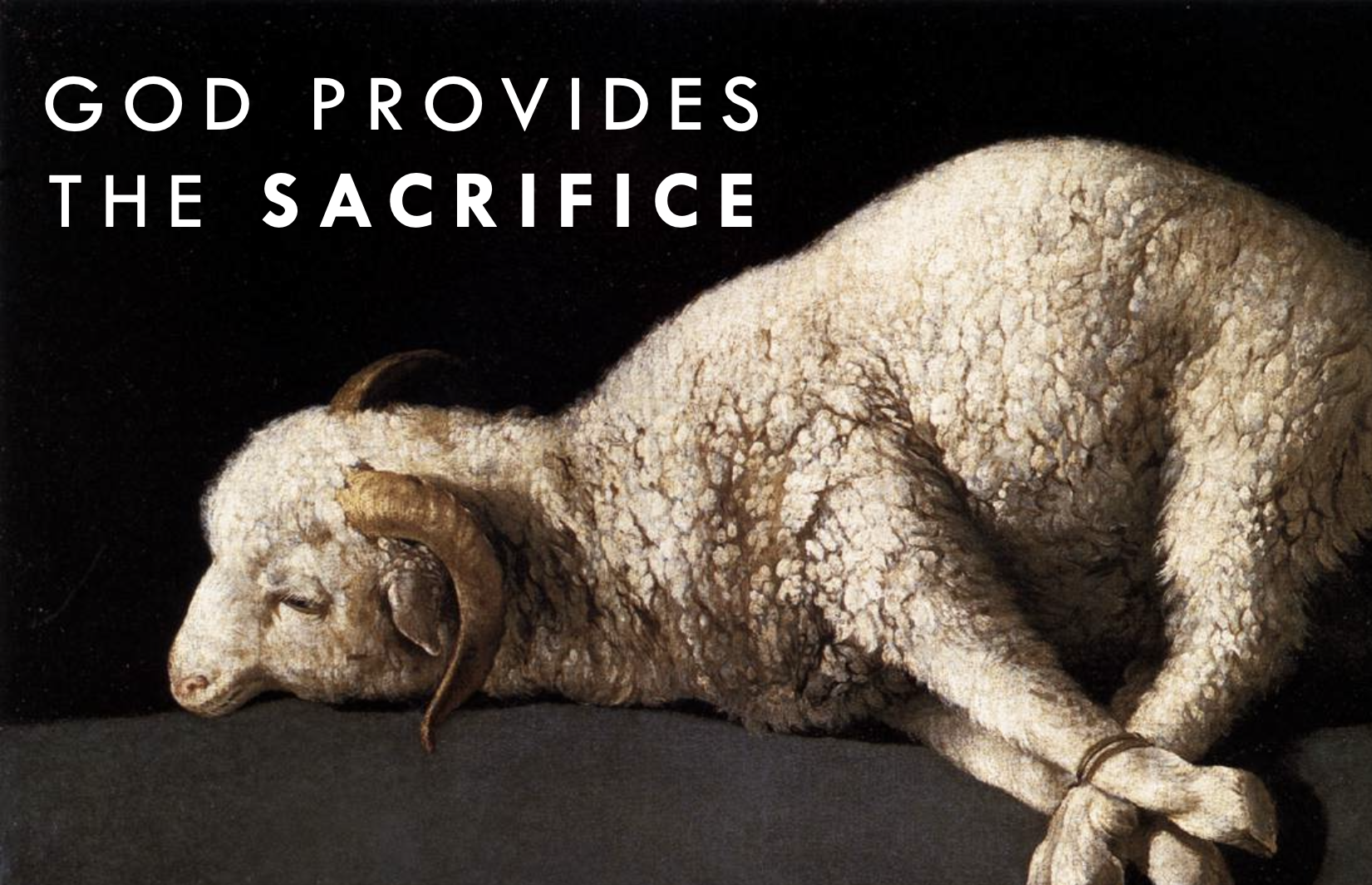
God Provides the Sacrifice (PDF): The Binding of Isaac in Genesis 22 foreshadows another sort of offering, on another sort of altar. In both instances, it is God who provides the sacrifice, but the Son is not always spared.


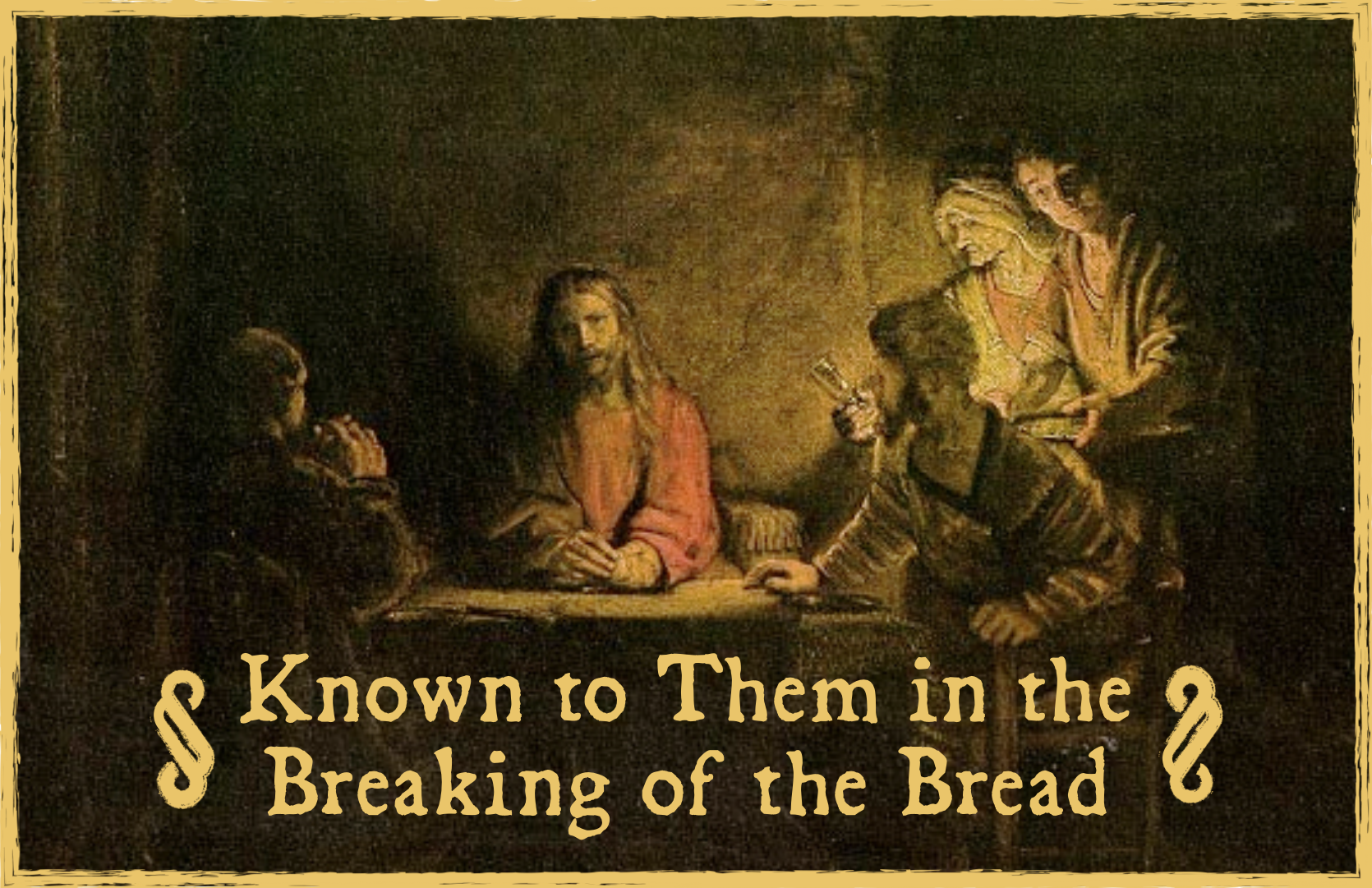
Known to Them in the Breaking of the Bread (PDF): For the disciples that Jesus met on the road to Emmaus following His resurrection, it was at the table that Jesus was made known to them. It is the same for us.


Reconciliation through the Cross (PDF): In a bitterly-divided world, the observance of the Lord’s Supper can seem impractical and disconnected. Really, though, nothing could be more needed or relevant.

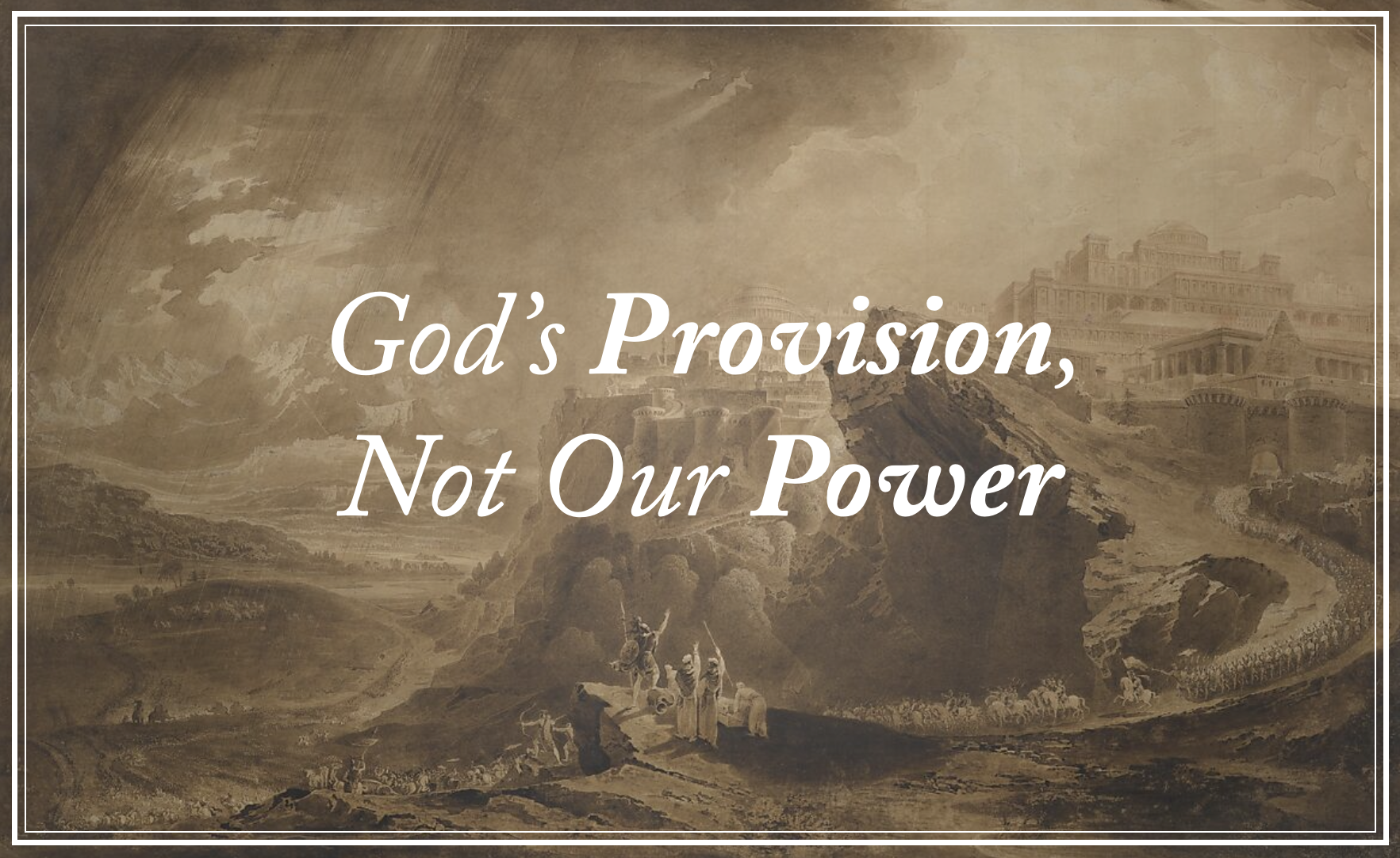
God’s Provision, Not Our Power

At the end of the book of Joshua, the people of Israel find themselves in the promised land of Canaan, and their mission has been largely successful. Joshua, knowing that his time as Israel’s leader is growing short, renews the covenant with the people:

1 Joshua gathered all the tribes of Israel to Shechem and summoned the elders, the heads, the judges, and the officers of Israel. And they presented themselves before God. 2 And Joshua said to all the people, “Thus says the LORD, the God of Israel, ‘Long ago, your fathers lived beyond the Euphrates, Terah, the father of Abraham and of Nahor; and they served other gods. 3 Then I took your father Abraham from beyond the River and led him through all the land of Canaan, and made his offspring many. I gave him Isaac. 4 And to Isaac I gave Jacob and Esau. And I gave Esau the hill country of Seir to possess, but Jacob and his children went down to Egypt. 5 And I sent Moses and Aaron, and I plagued Egypt with what I did in the midst of it, and afterward I brought you out.

6 “‘Then I brought your fathers out of Egypt, and you came to the sea. And the Egyptians pursued your fathers with chariots and horsemen to the Red Sea. 7 And when they cried to the LORD, he put darkness between you and the Egyptians and made the sea come upon them and cover them; and your eyes saw what I did in Egypt. And you lived in the wilderness a long time. 8 Then I brought you to the land of the Amorites, who lived on the other side of the Jordan. They fought with you, and I gave them into your hand, and you took possession of their land, and I destroyed them before you. 9 Then Balak the son of Zippor, king of Moab, arose and fought against Israel. And he sent and invited Balaam the son of Beor to curse you, 10 but I would not listen to Balaam. Indeed, he blessed you. So I delivered you out of his hand. 11 And you went over the Jordan and came to Jericho, and the leaders of Jericho fought against you, and also the Amorites, the Perizzites, the Canaanites, the Hittites, the Girgashites, the Hivites, and the Jebusites. And I gave them into your hand. 12 And I sent the hornet before you, which drove them out before you, the two kings of the Amorites; it was not by your sword or by your bow. 13 I gave you a land on which you had not labored and cities that you had not built, and you dwell in them. You eat the fruit of vineyards and olive orchards that you did not plant.’

(Joshua 24.1-13)

Joshua recounts for the people their story since God had called their ancestor Abraham, a pagan, and guided him to Canaan where He blessed him with land and offspring. Abraham begets Isaac, and Isaac begets Jacob. Jacob and his children end up down in Egypt where they are eventually oppressed, but God provides for them by raising up Moses and Aaron, bringing plagues upon Egypt and freeing His people. He parts the Red Sea and saves them from the Egyptian army. The people live in the wilderness for a long time, where God takes care of them and helps them overcome their enemies. Then, God leads them into the promised land, and God drives out their enemies before them—it is not by their sword or bow that they have success, but God’s provision for them.

Joshua rehearses this story to remind the people that it is God’s provision, not their power, that has led them to the blessings they currently enjoy. It was not something they did; it was not based on some remarkable quality within the people of Israel themselves.

Joshua knows that his time as their leader is drawing to a close, and he wants to motivate them to faithfulness after he is gone. It is essential that the people realize their dependence on God—their welfare as a nation depends on their faithfulness to a God who provides for them.

This idea—that it is not our power, but God’s provision, that leads to our well-being—is not unique to Joshua or this particular time period. Rather, it is a consistent theme of Scripture that comes to its fulfillment in Jesus. As Paul famously states:

8 For by grace you have been saved through faith. And this is not your own doing; it is the gift of God, 9 not a result of works, so that no one may boast.

(Ephesians 2.8-9)

Our salvation is God’s gift, made possible by the work of Jesus Christ. It is not our own doing. There is no cause for us to boast, because we have done nothing. It is all about God’s provision; not our own power.


In this loose series of Scripture Reflections, I am sharing brief thoughts spurred on by my Bible reading. By way of reminder, my goal for these brief posts is two-fold:

(1) To remark on aspects of the biblical text that I find to be of interest that the reader may or may not have thought about previously.

(2) When possible, to point to the work and person of Jesus Christ. I believe the Bible is a unified story that points to Jesus, which means that He is frequently alluded to or foreshadowed in some way throughout the biblical canon.

« Older posts Newer posts »

© 2026 The Doc File

Theme by Anders Noren — Up ↑