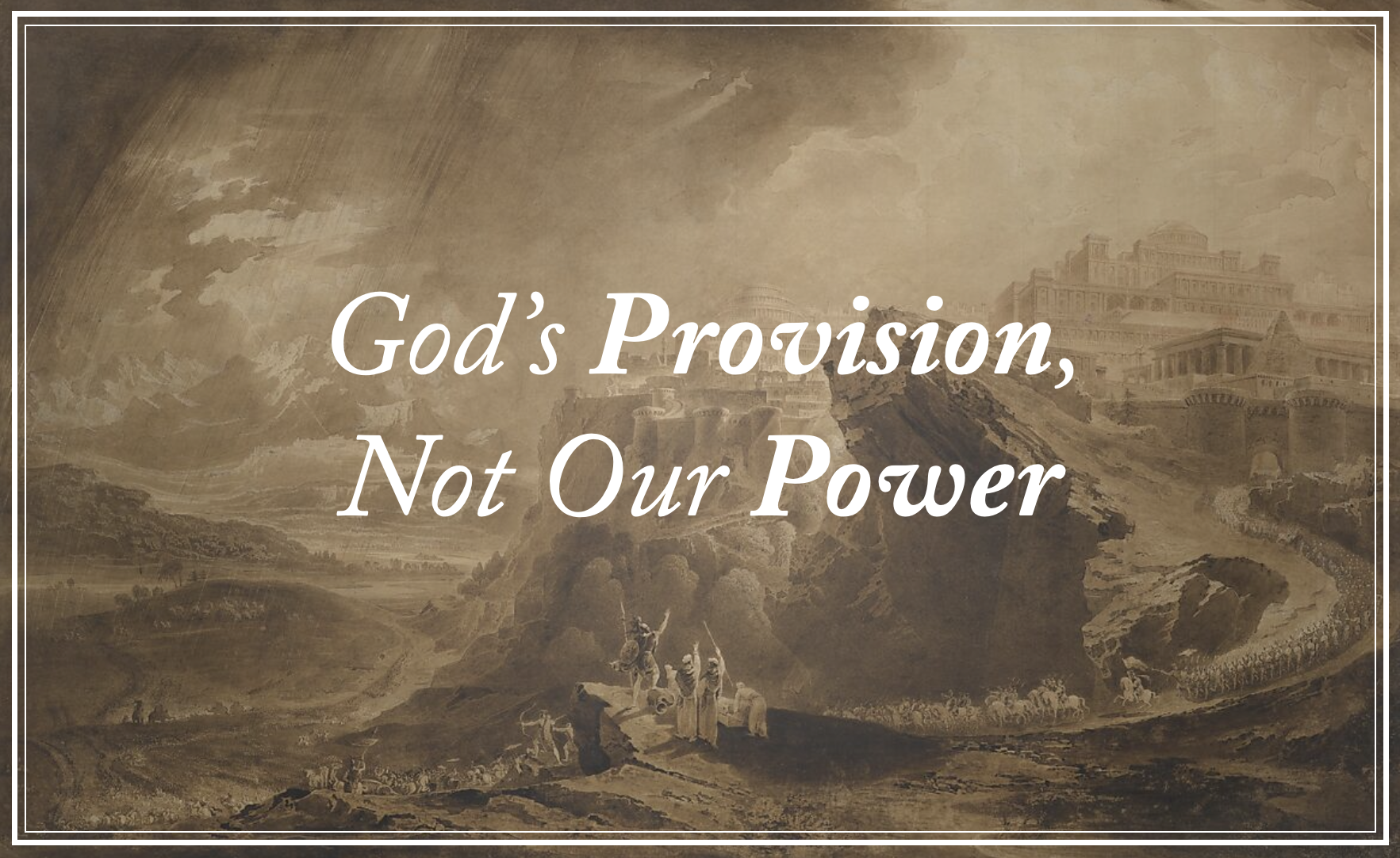
At the end of the book of Joshua, the people of Israel find themselves in the promised land of Canaan, and their mission has been largely successful. Joshua, knowing that his time as Israel’s leader is growing short, renews the covenant with the people:
1 Joshua gathered all the tribes of Israel to Shechem and summoned the elders, the heads, the judges, and the officers of Israel. And they presented themselves before God. 2 And Joshua said to all the people, “Thus says the LORD, the God of Israel, ‘Long ago, your fathers lived beyond the Euphrates, Terah, the father of Abraham and of Nahor; and they served other gods. 3 Then I took your father Abraham from beyond the River and led him through all the land of Canaan, and made his offspring many. I gave him Isaac. 4 And to Isaac I gave Jacob and Esau. And I gave Esau the hill country of Seir to possess, but Jacob and his children went down to Egypt. 5 And I sent Moses and Aaron, and I plagued Egypt with what I did in the midst of it, and afterward I brought you out.
6 “‘Then I brought your fathers out of Egypt, and you came to the sea. And the Egyptians pursued your fathers with chariots and horsemen to the Red Sea. 7 And when they cried to the LORD, he put darkness between you and the Egyptians and made the sea come upon them and cover them; and your eyes saw what I did in Egypt. And you lived in the wilderness a long time. 8 Then I brought you to the land of the Amorites, who lived on the other side of the Jordan. They fought with you, and I gave them into your hand, and you took possession of their land, and I destroyed them before you. 9 Then Balak the son of Zippor, king of Moab, arose and fought against Israel. And he sent and invited Balaam the son of Beor to curse you, 10 but I would not listen to Balaam. Indeed, he blessed you. So I delivered you out of his hand. 11 And you went over the Jordan and came to Jericho, and the leaders of Jericho fought against you, and also the Amorites, the Perizzites, the Canaanites, the Hittites, the Girgashites, the Hivites, and the Jebusites. And I gave them into your hand. 12 And I sent the hornet before you, which drove them out before you, the two kings of the Amorites; it was not by your sword or by your bow. 13 I gave you a land on which you had not labored and cities that you had not built, and you dwell in them. You eat the fruit of vineyards and olive orchards that you did not plant.’
(Joshua 24.1-13)
Joshua recounts for the people their story since God had called their ancestor Abraham, a pagan, and guided him to Canaan where He blessed him with land and offspring. Abraham begets Isaac, and Isaac begets Jacob. Jacob and his children end up down in Egypt where they are eventually oppressed, but God provides for them by raising up Moses and Aaron, bringing plagues upon Egypt and freeing His people. He parts the Red Sea and saves them from the Egyptian army. The people live in the wilderness for a long time, where God takes care of them and helps them overcome their enemies. Then, God leads them into the promised land, and God drives out their enemies before them—it is not by their sword or bow that they have success, but God’s provision for them.
Joshua rehearses this story to remind the people that it is God’s provision, not their power, that has led them to the blessings they currently enjoy. It was not something they did; it was not based on some remarkable quality within the people of Israel themselves.
Joshua knows that his time as their leader is drawing to a close, and he wants to motivate them to faithfulness after he is gone. It is essential that the people realize their dependence on God—their welfare as a nation depends on their faithfulness to a God who provides for them.
This idea—that it is not our power, but God’s provision, that leads to our well-being—is not unique to Joshua or this particular time period. Rather, it is a consistent theme of Scripture that comes to its fulfillment in Jesus. As Paul famously states:
8 For by grace you have been saved through faith. And this is not your own doing; it is the gift of God, 9 not a result of works, so that no one may boast.
(Ephesians 2.8-9)
Our salvation is God’s gift, made possible by the work of Jesus Christ. It is not our own doing. There is no cause for us to boast, because we have done nothing. It is all about God’s provision; not our own power.
 In this loose series of Scripture Reflections, I am sharing brief thoughts spurred on by my Bible reading. By way of reminder, my goal for these brief posts is two-fold:
(1) To remark on aspects of the biblical text that I find to be of interest that the reader may or may not have thought about previously.
(2) When possible, to point to the work and person of Jesus Christ. I believe the Bible is a unified story that points to Jesus, which means that He is frequently alluded to or foreshadowed in some way throughout the biblical canon.







