The online journal of Luke Dockery

Tag: Scripture Reflections (Page 1 of 7)

Your Labor Is Not in Vain: 30 Christ-Centered Reflections Throughout Scripture

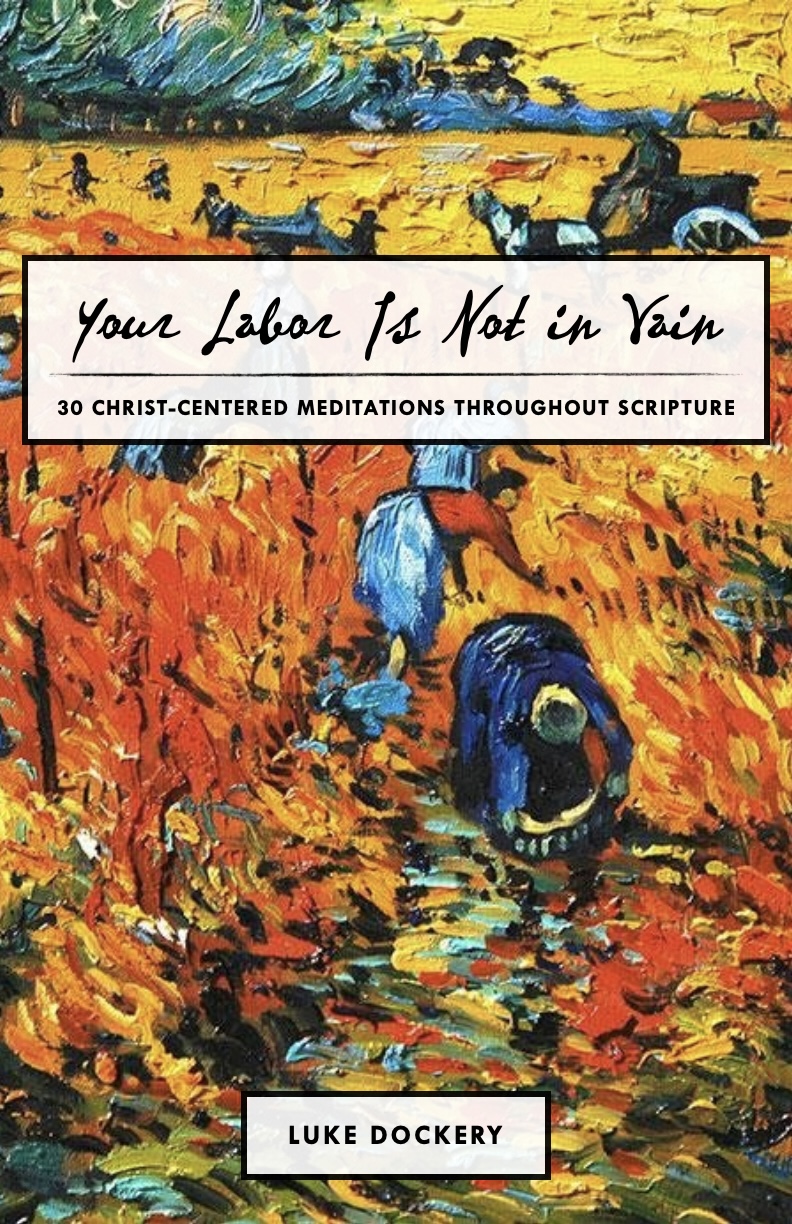
I am excited to announce that I have a new book out—Your Labor Is Not in Vain: 30 Christ-Centered Meditations Throughout Scripture. In some ways, this was a project years in the making, as the meditations are actually a compilation of blog posts that were initially written for my Scripture Reflections series here on The Doc File. Those posts have been edited, supplemented, and compiled together to create a volume that is intended to be both interesting and spiritually formative. From the Preface of the book:

The Bible is such a fascinating masterpiece, written by dozens of authors over hundreds and hundreds of years, but also guided and woven together by a divine hand. Scripture is a bottomless treasure that reveals new delights on each journey through it, and my ongoing study of and reflection on it has truly been a delight for me and has helped me to know God better and grow closer to Him.

My hope is that my humble efforts in this book will similarly help you to become fascinated by Scripture, and to more deeply love the God to whom Scripture points.

From the back of the book:

What if the Bible is both more connected and more fascinating than you realize?

The Bible is not meant to be read as a loose collection of disconnected stories, teachings, and moral lessons. It is a unified story, woven together across centuries and pointing ultimately to Jesus. Once we begin to see those connections, familiar passages take on new meaning, and obscure passages can suddenly come alive.

Your Labor Is Not in Vain is a collection of thirty meditations drawn from Luke Dockery’s twenty years of writing and studying Scripture. Beginning in Genesis and moving through the biblical story, these reflections explore intriguing details, surprising connections, and overlooked themes that reveal the beauty and coherence of Scripture—and, again and again, point us toward Jesus.

What does Jacob’s ladder have to do with Jesus? Why does the Bible contain so many genealogies? How can death be both an enemy and a pathway to victory? What does the resurrection have to do with the ordinary work we do for the Lord? And what does it look like to live faithfully as a citizen of God’s kingdom?

These short meditations invite you to slow down, look again, and discover something new in familiar passages of Scripture. Reflection questions and prayer prompts at the end of each chapter make the book useful for personal devotion, small groups, Bible classes, and family conversations.

Above all, Your Labor Is Not in Vain is an invitation to become more fascinated by Scripture, to marvel at the way its story fits together, and to see Jesus more clearly throughout its pages. Whether you have been reading the Bible for decades or are just beginning to discover its story, these reflections will encourage you to read with fresh eyes—and to delight in the inexhaustible treasures of God’s Word.

If this intrigues you at all, I hope you will give it a look!

Purchase the Book

Paperback: Amazon $12.99

The God of Tears

Psalm 56 is accredited to King David, and in the title description,[1] it is mentioned that he wrote this when the Philistines seized him in Gath (1 Samuel 21.10-15). This is a time period when David is on the run from King Saul, and he flees to Saul’s enemies, the Philistines, looking for asylum. There, too, he finds himself surrounded by enemies.

He then proceeds with a lament psalm, bringing before God the injustices and difficulties of his life:

1 Be gracious to me, O God, for man tramples on me;
    all day long an attacker oppresses me;
2 my enemies trample on me all day long,
    for many attack me proudly.
3 When I am afraid,
    I put my trust in you.
4 In God, whose word I praise,
    in God I trust; I shall not be afraid.
    What can flesh do to me?

5 All day long they injure my cause;
    all their thoughts are against me for evil.
6 They stir up strife, they lurk;
    they watch my steps,
    as they have waited for my life.
7 For their crime will they escape?
    In wrath cast down the peoples, O God!

(Psalm 56.1-7)

This is all done in a context of great trust in God, who David believes to be his ally and more powerful than his enemies (Psalm 56.11). Then, David says something interesting:

8 You have kept count of my tossings;
    put my tears in your bottle.

(Psalm 56.8)

The first part of verse 8, that God sees David and is aware of the wanderings and abuse he has suffered at the hands of Saul, reminds us of the repeated theme that God sees what is happening to His people and will act accordingly.[2]

The second idea in this verse is intriguing: David imploring God to put his tears in His bottle. The idea here is that David wants God to take account of his tears and remember them, but it prompted me to reflect on the idea of God being a “God of tears.”

The God of the Bible is not a cold, unmovable, impassive deity.[3] This seems clear from reading the Hebrew Bible, where God is frequently moved to emotion—including sorrow—by the actions of His people. But it is most clearly seen in Jesus. Jesus is prophetically described as a “man of sorrows” (Isaiah 53.3). He describes those who mourn as blessed (Matthew 5.4). He famously wept at the tomb of His friend Lazarus. On the night of His betrayal, Jesus wept tears like blood in the Garden of Gethsemane. Surely the tears of the Son, the Messiah from the line of David, were kept in the Father’s bottle as well.

God stores up these tears, not because He delights in them, but because He is determined to do something about them—He will wipe them away:

4 He will wipe away every tear from their eyes, and death shall be no more, neither shall there be mourning, nor crying, nor pain anymore, for the former things have passed away.

(Revelation 21.4)

Our heavenly Father is not a cold, unmovable, impassive deity. He is a God of Tears. He takes not of them now, and promises to remove them in the future.


In this loose series of Scripture Reflections, I am sharing brief thoughts spurred on by my Bible reading. By way of reminder, my goal for these brief posts is two-fold:

(1) To remark on aspects of the biblical text that I find to be of interest that the reader may or may not have thought about previously.

(2) When possible, to point to the work and person of Jesus Christ. I believe the Bible is a unified story that points to Jesus, which means that He is frequently alluded to or foreshadowed in some way throughout the biblical canon.


[1] Scholars debate how to interpret the titles given to various psalms. Tremper Longman III, How to Read the Psalms (Downers Grove, IL: IVP Academic, 1988), 38-42, takes a moderate position: “After all the evidence has been surveyed, it is best to treat the titles as noncanonical, but reliable early tradition.” In other words, it is reasonable to assume that Psalm 56 is a psalm of David, and is connected to the historical context it claims.

[2] Examples of this abound in the biblical record: God sees the plight of the desperate Hagar in the wilderness in Genesis 16 and she calls Him “the God who sees.” When the people of Israel find themselves enslaved in Egypt, “God saw the people of Israel—and God knew.” When Hannah desperately prays to God for a son, God sees her plight, etc.

[3] The doctrine of the impassibility of God is complicated (and disputed), but properly understood, it does not suggest that God is devoid of emotion.

Two Pictures of Humanity

Creation Stories

It is commonly understood that the first two chapters of Genesis give us two creation accounts, but there is not much consensus as to how these two accounts are to be understood in relation to one another.

Some have suggested that these two accounts are from two different sources, presented side-by-side by a later editor, perhaps Moses or someone else. Of those who hold this view, some find the two accounts to be complementary, while others see them in great tension with one another. Others see the two accounts as coming from a single source and meshing seamlessly together, but with two different purposes: Genesis 1 takes the 30,000 foot view, providing a summary of the seven days and describing how God fashioned a good creation out of what was previously “formless and void”, while Genesis 2 zooms in, describing the creation of humanity in more detail.

I incline toward the latter view, though I don’t claim to know for certain. What I do feel confident about is that Genesis 1 and 2 give us two different perspectives on humanity that need to be held together in tension if we are to understand who we are.

In Genesis 1, humanity is presented as the pinnacle of God’s creation, formed on the sixth day. Male and female are “created in God’s image”, a theologically pregnant term that conveys great meaning. To be Imago Dei, means that we resemble our Father and that we are His representatives to rule over His creation in His name as He would have us to do. Creation is good, but when God reflects on humanity, He rates us as very good. What a glorious status we possess—God-imaging creatures.

But Genesis 2 tells us another aspect of the story, because humans are also…dirt. God forms the man out of the dust of the ground. This is actually where the name Adam comes from; he is formed from the ground (Hebrew: adamah). And what is it that humanity is called to do? If Genesis 1 gives us the lofty idea of ruling creation, in Genesis 2 it looks a lot more like…gardening. We are reminded of our earthy, creaturely nature, and it is fitting that, drawn from the dust of creation itself, we should be called to minister and serve in the context of that creation.[1]

In summary, we might say that Genesis 1 presents the grandeur of humanity, while Genesis 2 reminds us of our humility. If Genesis 1 raises us up to the heavens, Genesis 2 brings us back down to earth. This is the odd paradox of humanity—fashioned in the image of the Creator of the universe, but fashioned from dirt.

Genesis 1 presents the grandeur of humanity, while Genesis 2 reminds us of our humility. If Genesis 1 raises us up to the heavens, Genesis 2 brings us back down to earth. Share on X

Adam’s Story, Our Story, Christ’s Story

As we reflect on the nature of humanity, we can see this truth for ourselves, right? We catch glimpses of the glory of humanity—the capacity for extraordinary generosity or sacrifice, stunning creativity or beauty—but also of human frailty, failure, and folly. There are moments where we see marvelous things that other people accomplish, and we can feel immensely proud: “One of us did that!” But then there are other moments when we hang our heads in shame at the depths of human depravity.

In Prince Caspian, C.S. Lewis captures this seeming paradox in a conversation between Aslan and the young Caspian:[2]

“You come of the Lord Adam and the Lady Eve,” said Aslan. “And that is both honour enough to erect the head of the poorest beggar, and shame enough to bow the shoulders of the greatest emperor on earth. Be content.”

As the Narnia books so often do, this idea reflects biblical teaching. As the psalmist puts it in Psalm 84.4-6:

4 What is man that you are mindful of him,
and the son of man that you care for him?
5 Yet you have made him a little lower than the heavenly beings
and crowned him with glory and honor.
6 You have given him dominion over the works of your hands;
you have put all things under his feet…

Ultimately, this paradox, this tension baked into the creation narratives of Genesis 1-2, points ahead to and is fulfilled in Jesus Christ. This is made helpfully clear when the Hebrews writer takes the psalm quoted above and applies it directly to Jesus in Hebrews 2:

9 But we do see Jesus, who was made lower than the angels for a little while, now crowned with glory and honor because he suffered death, so that by the grace of God he might taste death for everyone.

Paul makes a similar point in Philippians 2.5-11, borrowing from what is believed by many to be an ancient Christian hymn:

5 Have this mind among yourselves, which is yours in Christ Jesus, 6 who, though he was in the form of God, did not count equality with God a thing to be grasped, 7 but emptied himself, by taking the form of a servant, being born in the likeness of men. 8 And being found in human form, he humbled himself by becoming obedient to the point of death, even death on a cross. 9 Therefore God has highly exalted him and bestowed on him the name that is above every name, 10 so that at the name of Jesus every knee should bow, in heaven and on earth and under the earth, 11 and every tongue confess that Jesus Christ is Lord, to the glory of God the Father.

Jesus perfectly images the Father, showing us exactly what it looks like to carry out our God-given vocation. But He does so as a lowly human, made of dust, subject to pain, fatigue, grief, and suffering.

Or, to use the words of Lewis once more: “The Son of God became a man to enable men to become sons of God.”[3]


In this loose series of Scripture Reflections, I am sharing brief thoughts spurred on by my Bible reading. By way of reminder, my goal for these brief posts is two-fold:

(1) To remark on aspects of the biblical text that I find to be of interest that the reader may or may not have thought about previously.

(2) When possible, to point to the work and person of Jesus Christ. I believe the Bible is a unified story that points to Jesus, which means that He is frequently alluded to or foreshadowed in some way throughout the biblical canon.


[1] Many scholars have pointed out that the “gardening” task of humanity is also a priestly task, and that Adam and Eve are given the job of ministering in the “Temple” of Eden. Indeed, the words translated “to work” (Hebrew: ‘abad) and “to keep” (Hebrew: shamar), are commonly used in religious contexts related to the ministerial work of priests and Levites. See Shara Drimalla and BibleProject Team, “Were Adam and Eve Priests in Eden?” BibleProject, April 12, 2021, https://bibleproject.com/articles/were-adam-and-eve-priests-eden/

[2] C.S. Lewis, Prince Caspian (New York: HarperTrophy, 1951), 233.

[3] C. S. Lewis, Mere Christianity (New York: HarperOne, 1952), 178.

2025 Blog Review

I think reflection is a healthy practice, and I like to end each year by looking back and reviewing my year of blogging here at The Doc File (Here are some previous reviews from 2024, 2023, 2022, 2021, 2020, 2019, 2018, 2016, 2015, and 2012).

Overview

In 2024 I only wrote 19 times, and a goal for this past year was to write more frequently. I will end 2025 with 29 posts, which is hardly setting any sort of world records, but it does reflect an increase of over 50% from last year.

Top Posts

By traffic totals, here are my most-read posts during 2025 (posts in bold were actually written this year):

  1. So You Want to Hire a Youth Minister, August 18, 2025
  2. Where Do Churches of Christ Come From? Teaching Restoration Movement History…to Teenagers, February 11, 2025
  3. A New Heaven & A New Earth Series, April 29, 2020
  4. 2025 Harding University Lectureship Recap, December 1, 2025
  5. The Department of Government Efficiency…and The Parable of the Weeds, February 26, 2025
  6. Ecclesiastes on Independence Day, July 4, 2023
  7. A New Heaven & A New Earth: What the Bible Teaches about Eternity, April 9, 2020
  8. Reading in 2024, January 3, 2025
  9. The Mutual Admiration of Alexander Campbell and Barton W. Stone, February 14, 2017
  10. “He Loved Them to the End”, August 6, 2021

Five of the top posts from 2025 were actually written this year, and it is always good to see new content get some traction:

At the same time, part of the reason for preserving almost 20 years of posts on this site is for people to be able to go back and read things they missed, and I am always gratified when older posts are read by new people. The series I wrote in 2020 on renewed eschatology continues to get a lot of views (taking two of the top ten spots). I also shared a couple of old posts around Valentine’s Day (The Mutual Admiration of Alexander Campbell and Barton W. Stone) and the 4th of July (Ecclesiastes on Independence Day) that attracted a lot of readers.

Blog Series

In 2025, I contributed to one ongoing Blog Series, completed a new mini-series, and began a new ongoing project. I added four more posts to the Scripture Reflections series:

This brings the series to a total to 30 posts. I plan to continue adding to this indefinitely, and suspect that it will eventually turn into a book project.

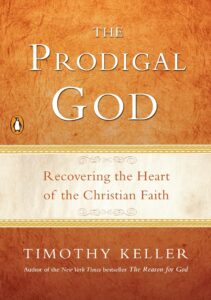
This past year I re-read Tim Keller’s modern classic, The Prodigal God. Though it wasn’t my intention to do so before reading the book, I was so struck by aspects of it that I ended up writing a brief, three-part series to emphasize some key ideas:

Finally, just this month I embarked on a new series that I anticipate continuing in future years. Christmas Carol Theology takes a closer look at some seasonal favorites and examines how they can help us to better understand the nature of God and/or what it means to follow Him. This year I wrote three posts for that series:


So, that was The Doc File in 2025! I always enjoy writing in this space, and it has become a formative spiritual discipline for me to process my thoughts here over the years. Lord willing, I hope to continue to do so for a long time. As always, I am thankful for your readership and support!

Enemies at the Table

Psalm 23 is famous and iconic: the image of Yahweh as a shepherd who provides all that we need, gives us rest and protection, and accompanies us through the darkest valleys of life. It is a comforting passage that emphasizes God’s love for us and the total sufficiency of His care and provision.

In Psalm 23.5, the metaphor seems to shift.[1] “You prepare a table before me in the presence of my enemies….” Certainly, this is still in keeping with the idea of God’s provision, but there is a heightened element with the allusion to enemies. Psalm 23 is subtitled “a Psalm of David,” and David was a character who certainly faced a series of enemies throughout his life, and had times of hardship where he experienced hunger and privation.

But what are we to make of the notion of feasting in front of our enemies? Is this a display of Yahweh’s support and vindication, perhaps coupled with a sense of triumph and gloating over our enemies? Many commentators think so. Here is a typical example:

“[The enemies] were compelled to look on and see how God provided for him. It was manifest that this was from God; it was a proof of the Divine favour; it furnished an assurance that he who had done this would never leave him to want. The friends of God are made to triumph in the very presence of their foes. Their enemies are compelled to see how he interposes in their behalf, how he provides for them, and how he defends them. Their final triumph in the day of judgment will be in the very presence of all their assembled enemies, for in their very presence he will pronounce the sentence which will make their eternal happiness sure….”[2]

I don’t necessarily have problems with this. Clearly, the picture here emphasizes God’s provision, and the provision itself signifies the vindication of David the Psalmist as a friend of God. And I confess that my initial, surface-level reading suggests at least a hint of gloating and triumphalism that I find a little distasteful—after all, don’t we teach our kids to be kind and humble in victory, rather than rubbing it in the faces of their opponents? Doesn’t Jesus tell us to love our enemies? Is it loving to gloat? Indeed, C.S. Lewis famously criticized this part of Psalm 23 on these grounds.[3]

With all of this in mind, I can’t help but wonder if there is more going on here—if only we had some additional instruction or example of dining in the presence of enemies that would bring some clarity to the situation! I don’t think the interpretation quoted above is incorrect, but I do wonder if it is incomplete.


Eating at tables was a large part of Jesus’s ministry. He performed His first miracle at a wedding in Cana, He told parables about feasts and banquets, and He instituted the Lord’s Supper in the context of a Passover meal.

He also dined frequently…with enemies. Some of those were enemies of established religious and moral order and respectability—Jesus repeatedly received criticism for eating with “tax collectors and sinners” (Matthew 9.10-17; Mark 2.15-22; Luke 5.29-39). In Luke 19, He famously visited the home of the diminutive chief tax collector Zacchaeus, and there He again was criticized for dining with a sinner. But the meal seems to have a transformative effect on Zacchaeus, who declares himself to be a changed man, and Jesus asserts that this is exactly the reason why He came—to seek and save the lost (Luke 19.10). Jesus had invited Himself over to Zacchaeus’s house, but it was in order to invite Zacchaeus to receive salvation.

Another time, Jesus dined at the home of Simon the Pharisee, a member of the sect that so frequently opposed Jesus (Luke 7.36-49). In other words, He dine with a different sort of enemy. While there, a “sinful woman” came and washed Jesus’s feet with her tears, dried them with her hair, and poured perfume on them. Simon is scandalized by this, and Jesus then tells him a parable to illustrate that it is those who recognize their need for forgiveness who are most motivated to love God in return. He is almost pleading with Simon to reevaluate the spiritual condition of His life.

And of course, on the last night before His crucifixion, Jesus spent the evening sharing a meal with His disciples. Of course, these were not Jesus’s enemies—at least, they were not supposed to be. But within a matter of hours, these friends would desert Him, and one of them, Judas Iscariot, would betray Him. But still, Jesus chooses to eat with these men, and He encourages them to love one another and to be unified.

Reflecting on all of this, it seems clear from Jesus’s own practice: He does not eat with enemies to humiliate them; rather, in humility, He eats with them to invite them into the fellowship of God and His people. “He eats to woo and win them, not to belittle or degrade.”[4]

In light of the practice of Jesus Himself, the Good Shepherd, it does make me rethink aspects of the interpretation of Psalm 23 mentioned above. As promised, God prepares a table before us in the presence of our enemies, but what if we dine in the presence of our enemies not to make our enemies become ashamed, but to make our enemies become our friends?

Indeed, this is the way of Jesus.

What if we dine in the presence of our enemies not to make our enemies become ashamed, but to make our enemies become our friends? Share on X

In this loose series of Scripture Reflections, I am sharing brief thoughts spurred on by my Bible reading. By way of reminder, my goal for these brief posts is two-fold:

(1) To remark on aspects of the biblical text that I find to be of interest that the reader may or may not have thought about previously.

(2) When possible, to point to the work and person of Jesus Christ. I believe the Bible is a unified story that points to Jesus, which means that He is frequently alluded to or foreshadowed in some way throughout the biblical canon.


[1] Scholars debate this, with some suggesting that the shepherd metaphor persists throughout the entire psalm. That doesn’t seem to be the case to me.

[2] Albert Barnes, Psalms I, Notes on the Old Testament (Grand Rapids, MI: Baker Book House, 1950), 213.

[3] C.S. Lewis, Reflection on the Psalms (San Francisco: HarperOne, 2017), 24-25: “The poet’s enjoyment of his present prosperity would not be complete unless those horrid Joneses (who used to look down their noses at him) were watching it all and hating it. This may not be so diabolical as the passages I have quoted above; but the pettiness and vulgarity of it, especially in such surroundings, are hard to endure.” I think Lewis misses the mark here, but I get where he is coming from. 

[4] David Gibson, “Why C.S. Lewis Was Wrong about Psalm 23,” Crossway, October 27, 2023, https://www.crossway.org/articles/why-c-s-lewis-was-wrong-about-psalm-23/.
« Older posts

© 2026 The Doc File

Theme by Anders Noren — Up ↑