The online journal of Luke Dockery

Tag: Scripture Reflections (Page 2 of 7)

God Provides the Sacrifice

Genesis 22 is one of the most moving and haunting chapters of Scripture; it recounts the story of Akedah, or the Binding of Isaac, as Abraham is commanded to take his son and offer him as a sacrifice on an altar on Mount Moriah.

1 After these things God tested Abraham and said to him, “Abraham!” And he said, “Here I am.” 2 He said, “Take your son, your only son Isaac, whom you love, and go to the land of Moriah, and offer him there as a burnt offering on one of the mountains of which I shall tell you.”

(Genesis 22.1-2)

This must have been an agonizing task for Abraham, as he is called to offer his beloved son, the one for whom he had so long waited, the one on whom all his future hopes rested. The narrative is told slowly, with painstaking detail, heightening the tension and the growing sense of tragedy.

3 So Abraham rose early in the morning, saddled his donkey, and took two of his young men with him, and his son Isaac. And he cut the wood for the burnt offering and arose and went to the place of which God had told him. 4 On the third day Abraham lifted up his eyes and saw the place from afar. 5 Then Abraham said to his young men, “Stay here with the donkey; I and the boy will go over there and worship and come again to you.” 6 And Abraham took the wood of the burnt offering and laid it on Isaac his son. And he took in his hand the fire and the knife. So they went both of them together. 7 And Isaac said to his father Abraham, “My father!” And he said, “Here I am, my son.” He said, “Behold, the fire and the wood, but where is the lamb for a burnt offering?” 8 Abraham said, “God will provide for himself the lamb for a burnt offering, my son.” So they went both of them together.

9 When they came to the place of which God had told him, Abraham built the altar there and laid the wood in order and bound Isaac his son and laid him on the altar, on top of the wood. 10 Then Abraham reached out his hand and took the knife to slaughter his son. 11 But the angel of the LORD called to him from heaven and said, “Abraham, Abraham!” And he said, “Here I am.” 12 He said, “Do not lay your hand on the boy or do anything to him, for now I know that you fear God, seeing you have not withheld your son, your only son, from me.” 13 And Abraham lifted up his eyes and looked, and behold, behind him was a ram, caught in a thicket by his horns. And Abraham went and took the ram and offered it up as a burnt offering instead of his son. 14 So Abraham called the name of that place, “The LORD will provide”; as it is said to this day, “On the mount of the LORD it shall be provided.”

(Genesis 22.3-14)

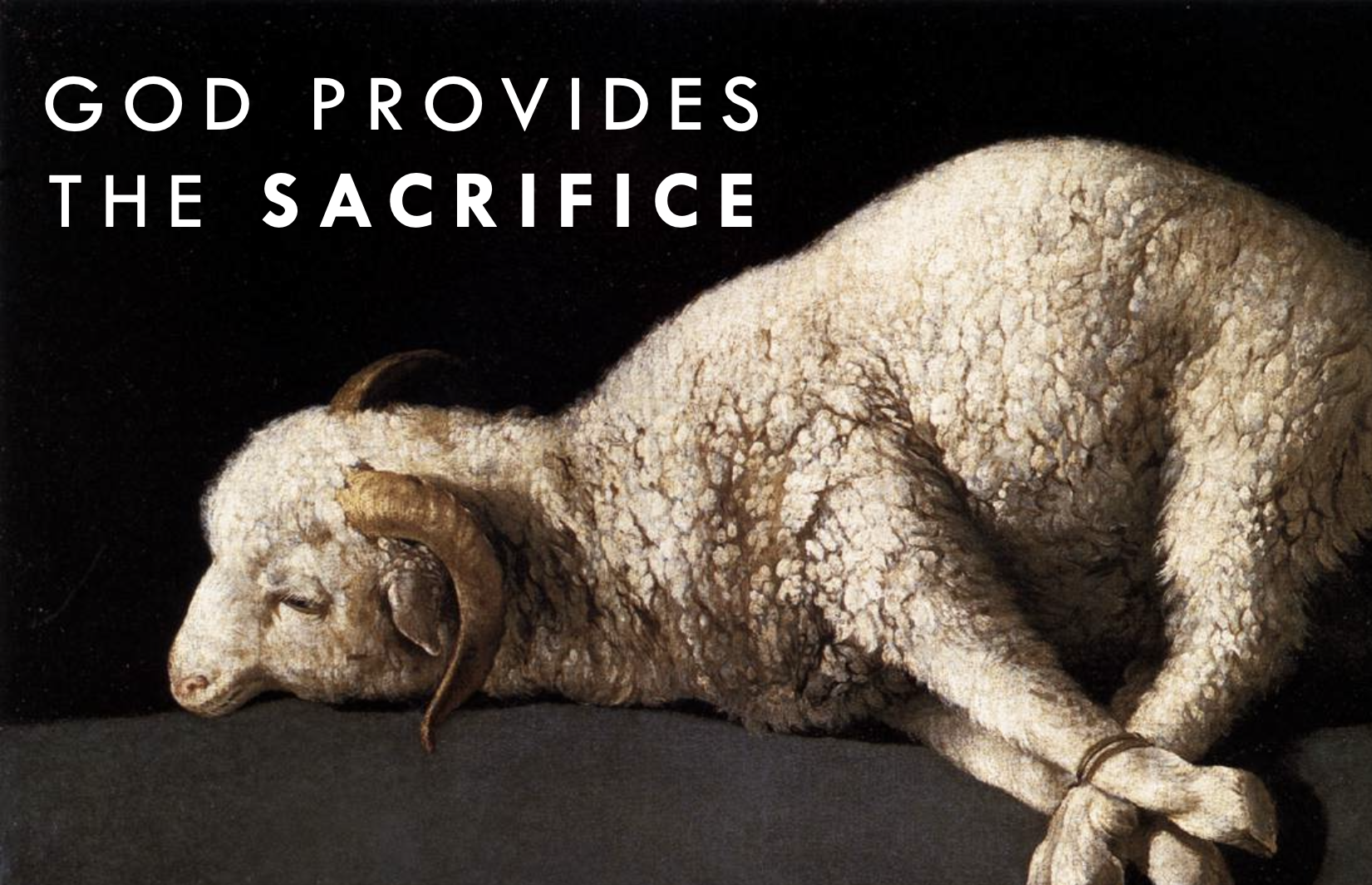
But, as tragic as this story could have been, things turn out okay: Isaac is not offered as a sacrifice because God steps in and provides another sacrifice, a ram that had been caught in a thicket. The father did not have to witness the death of his beloved son.

Abraham looks around and calls the name of that place, “The LORD will provide.”


We fast forward hundreds of years to a very similar mountain[1] on another altar of sorts, where Jesus, the beloved Son, the One for whom the world had so long waited, the One on whom all future hopes rested, hangs on a cross.

But this time, there is no alternative sacrifice. The Father does witness the death of His beloved Son because Jesus Himself is the alternative. The LORD did provide, and He provided the Lamb slain from the foundation of the world…to take the place of Isaac…to take the place of each of us.

Unlike with Isaac, this time, there is no alternative sacrifice. The Father does witness the death of His beloved Son because Jesus Himself is the alternative. Share on X

God provides the sacrifice because God Himself is the sacrifice, absorbing the darkness of the world into Himself.


In this loose series of Scripture Reflections, I am sharing brief thoughts spurred on by my Bible reading. By way of reminder, my goal for these brief posts is two-fold:

(1) To remark on aspects of the biblical text that I find to be of interest that the reader may or may not have thought about previously.

(2) When possible, to point to the work and person of Jesus Christ. I believe the Bible is a unified story that points to Jesus, which means that He is frequently alluded to or foreshadowed in some way throughout the biblical canon.


[1] Scholars debate the relative locations of Mount Moriah and Golgotha, but many believe them to be the same place.

Chief of Sinners: The Paradox of Sanctification

Sanctification refers to the ongoing transformative process of a Christian being made holy through the work of God’s Spirit as He gradually brings us into conformity with Christ. In other words, it is the work of God’s Spirit in partnership with our spirit to make us more like Jesus. This is not something that happens overnight; it is a gradual process that takes time. Nevertheless, as Christians, we should be able to look back and see the spiritual growth that has happened in our lives over time.


One of the interesting characteristics of Paul’s letters taking up such a significant portion of the New Testament and the fact that these letters were written over 15 years or so is that certain letters can be tied to specific circumstances in Paul’s life, and sometimes we can even detect change or development in his thinking over time.

One of these interesting items occurs in the ways in which Paul refers to himself. Consider the following three self-descriptions, arranged in chronological order:

For I am the least of the apostles, unworthy to be called an apostle, because I persecuted the church of God.

(1 Corinthians 15.9)

1 Corinthians is one of Paul’s earlier letters, probably written between AD 53-55. Here, at the end of this letter as he begins to teach on the resurrection of Jesus and the implications of that, he refers to himself as the least of the apostles, not even worthy of the title because of his past as a persecutor of the church.

To me, though I am the very least of all the saints, this grace was given, to preach to the Gentiles the unsearchable riches of Christ…

(Ephesians 3.8)

Ephesians is likely written 8-10 years later, somewhere around AD 60-62. Here, Paul doesn’t even mention his status as an apostle, but describes himself in lowlier terms as the “very least of all the saints.” Of all Christians, Paul sees himself as the least!

The saying is trustworthy and deserving of full acceptance, that Christ Jesus came into the world to save sinners, of whom I am the foremost.

(1 Timothy 1.15)

Finally, in one of his last letters, likely soon before his execution, Paul describes himself as the worst of all sinners. This is the lowliest title of all.

What is going on here? Is Paul somehow getting worse and worse? That’s not how sanctification is supposed to work—you’re supposed to become more like Jesus over time! Is Paul getting it all backwards?

I don’t think so.

I heard one speaker explain it like this: The longer we spend in the light, the more we become aware of the depth of our darkness.[1] Paul had spent decades traveling the world, planting churches, and risking his life for the cause of Christ, but the longer he spent following Jesus, the more clearly he came to see his own shortcomings.

The longer we spend in the light, the more we become aware of the depth of our darkness. Share on X

As I reflect on this, it is certainly true in my own life as well. I was baptized at 14, which means that roughly 2/3 of my life has been lived as a pledged follower of Jesus. I can look back at the person I was at 14…21…30, etc., and I can see ways that God has brought about great growth in my life. I believe that I look more like Jesus now than I did in those earlier stages of my life.

And yet…I’ve never been more aware of my deep sinfulness than I am now.

The reality is that it can be pretty easy to feel good about ourselves if we selectively compare ourselves to others around us, but others have never been the standard for our character; Jesus is. And the reality is that the longer I spend looking intently at Jesus, the more I realize how often I don’t look like Him.

The longer I spend looking intently at Jesus, the more I realize how often I don’t look like Him. Share on X

If, by God’s grace, I am allowed to remain another 10, 20, or 40 years, I expect that God’s Spirit will continue to work in my life, and that I will slowly, painfully, begin to look more like Jesus and less like Luke. But I also expect that I will be even more aware of my sinfulness than I am today.


In this loose series of Scripture Reflections, I am sharing brief thoughts spurred on by my Bible reading. By way of reminder, my goal for these brief posts is two-fold:

(1) To remark on aspects of the biblical text that I find to be of interest that the reader may or may not have thought about previously.

(2) When possible, to point to the work and person of Jesus Christ. I believe the Bible is a unified story that points to Jesus, which means that He is frequently alluded to or foreshadowed in some way throughout the biblical canon.


[1] I am indebted to Daniel Parrish, youth minister of the Robinson and Center Church of Christ in Conway, Arkansas, for pointing this out.

2024 Blog Review

I think reflection is a healthy practice, and I like to end each year by looking back and reviewing my year of blogging here at The Doc File (Here are some previous reviews from 2023, 2022, 2021, 2020, 2019, 2018, 2016, 2015, and 2012).

Overview

This past year—especially the first three-fourths of it—was extremely busy for me, and that negatively impacted how often I was able to write in this space. I will end the year with 19 posts, which is the fewest since 2019, when I wrote only 17 times. A goal for the new year is to prioritize writing more than I did last year.

Top Posts

By traffic totals, here are my most-read posts during 2024 (posts in bold were actually written this year):

  1. A New Heaven & A New Earth Series, April 29, 2020
  2. Reading in 2023, January 9, 2024
  3. A New Heaven & A New Earth: What the Bible Teaches about Eternity, April 9, 2020
  4. 2024 Harding University Lectureship Recap, December 19, 2024
  5. Jesus, Christmas, and Hanukkah, December 18, 2015
  6. Ranking Walt Disney World Parks, March 22, 2024
  7. A Great Week of Youth Ministry, March 2, 2024
  8. Politics from a Christian Perspective: Introduction, October 20, 2020
  9. A New Heaven & A New Earth Part 5: “Problem” Texts—John 14.1-3, May 8, 2020
  10. A New Heaven & A New Earth Part 6: The Redemption of All Things, May 14, 2020

Four of the top posts from 2023 were actually written this year, and it is always good to see new content get some traction:

  • I have developed certain traditions of posts that I write each year, and these have developed somewhat of a following over time. Reading in 2023 reviewed the books I read over the previous year, along with my favorites for 2023 (the 2024 version of this post is right around the corner!). I also review Harding’s Lectureship each year, and this year’s post got some traction, most likely because it discussed some controversy.
  • At the end of 2023, my family got to take an awesome trip to Disney World in Florida, and Ranking Walt Disney World Parks was a fun post that helped me to relive some of those memories and preserve my definitive rankings of the different parks.
  • A Great Week of Youth Ministry was one of my favorite posts to write, as it helped me reflect upon and process a particularly full and meaningful week of youth ministry and bask in the blessings of this wonderful vocation to which I have been called.

At the same time, part of the reason for preserving over 15 years of posts on this site is for people to be able to go back and read things they missed, and I am always gratified when older posts are read by new people. The series I wrote in 2020 on renewed eschatology continues to get a lot of views (taking four of the top ten spots), as does my post on Jesus, Christmas, and Hanukkah. Additionally, during this year’s election season, I reshared my series on Politics from a Christian Perspective, which garnered a decent amount of attention.

Blog Series

I didn’t do as much with ongoing Blog Series in 2024, but I did continue to contribute to Scripture Reflections. I added six more posts to this ongoing series over the past year:

This brings the series to a total to 26 posts. I plan to continue adding to this indefinitely, and suspect that it will eventually turn into a book project.


So, that was The Doc File in 2024! As mentioned above, it was a somewhat modest year for my blog, and I hope to write more here in 2025, and to make some adjustments to my regular schedule to help with that. This has become a formative spiritual discipline for me to process my thoughts here over the years, and so I want to intentionally support that practice. As always, I am thankful for your readership and support!

Linking Heaven and Earth: Jacob’s Ladder and Jesus

The Gospel of John is one of my favorite books in the Bible, and one of its special characteristics is that, more than any other, it emphasizes the divinity of Jesus. This is done over and over again and in many different ways, but one interesting way it does so is through an allusion in John 1.47-51.

Here, Jesus calls Philip to follow Him, and then Philip subsequently goes and recruits a man named Nathanael as well. Nathanael is skeptical that Jesus, from the lowly town of Nazareth, could be the Messiah whom Moses and the prophets had proclaimed, and so Philip invites him to go and see Jesus for himself:

47 Jesus saw Nathanael coming toward him and said of him, “Behold, an Israelite indeed, in whom there is no deceit!” 48 Nathanael said to him, “How do you know me?” Jesus answered him, “Before Philip called you, when you were under the fig tree, I saw you.” 49 Nathanael answered him, “Rabbi, you are the Son of God! You are the King of Israel!’’

(John 1.47-49)

Although Nathanael was really impressed that Jesus knew what he had been doing before they had even met, Jesus basically told him that he hadn’t seen anything yet:

50 Jesus answered him, “Because I said to you, ‘I saw you under the fig tree,’ do you believe? You will see greater things than these.” 51 And he said to him, “Truly, truly, I say to you, you will see heaven opened, and the angels of God ascending and descending on the Son of Man.”

(John 1.50-51)

If you know are familiar with the narratives of Genesis, then the imagery of heaven opening up and angels ascending and descending is probably very familiar to you, and it almost certainly would have been familiar to Nathanael. It is most likely an allusion to Genesis 28, where Jacob, while on a journey to Haran to stay with his uncle Laban (and ultimately get married), stops to sleep for the night, using a stone for a pillow:

12 And he dreamed, and behold, there was a ladder set up on the earth, and the top of it reached to heaven. And behold, the angels of God were ascending and descending on it!

(Genesis 28.12)

At the top of the ladder, the LORD appears, and basically reaffirms to Jacob the same promises that He had previously made to Abraham and Isaac. When Jacob awakens from his sleep, he realizes that something significant has happened:

16b “‘Surely the LORD is in this place, and I did not know it.’ And he was afraid and said, ‘How awesome is this place! This is none other than the house of God, and this is the gate of heaven.’”

(Genesis 28.16b)

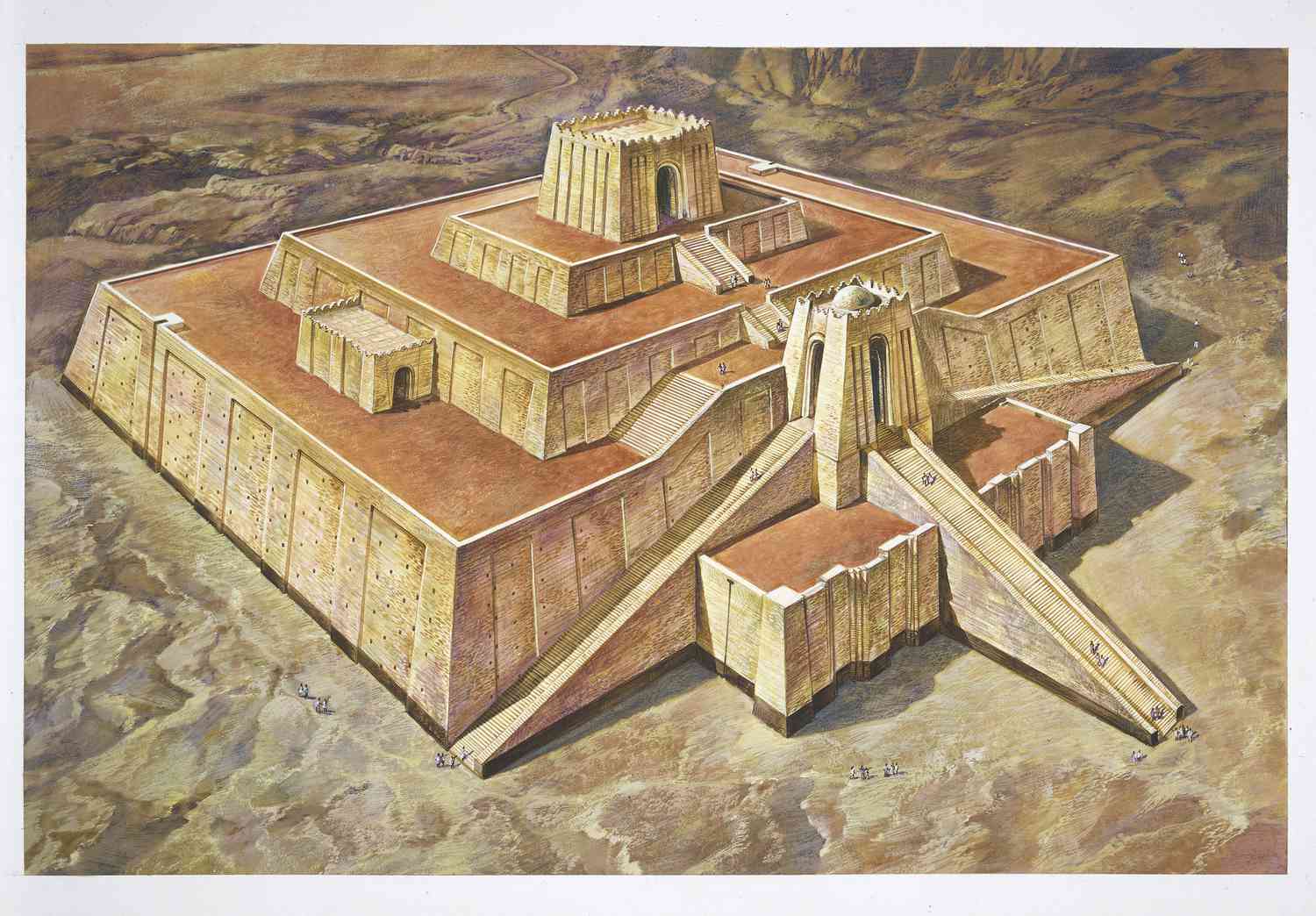
The next morning Jacob takes his stone pillow and sets it up as a monument, naming the place “Bethel,” which means “house of God.” This approximates temple language, and likely gives us a better picture of what Jacob’s dream looked like. Scholars suggest that what Jacob saw was not a “ladder” as we think of it, but a ziggurat, a Mesopotamian step-pyramid/temple.[1] In the cosmology of the ancient world, temples were overlapping spaces that linked heaven and earth, God’s space and human space. Ziggurats, in particular, had extensive staircases that were designed to connect divine space with human space and enable gods to “come down” to their temples.

Ancient ziggurats had extensive steps, ideal for the ascending and descending that Jacob witnessed in his dream.

As already suggested above, the language of Genesis 28.12 and John 1.51 is so similar that it seems clear that Jesus was intentionally alluding to Jacob’s dream. So what does the connection mean?

In Jacob’s dream, a “ladder” connected earth (where Jacob is) and heaven (where the LORD is), and angels ascend and descend upon the ladder. Jacob is awed by what he sees. In John 1, Jesus paints a similar picture for Nathanael: the heavens open, and the angels of God are ascending and descending. The difference is that now, instead of ascending and descending upon a ladder, the angels are doing so upon the Son of Man—Jesus Himself.

The implication is that Jesus is the new “ladder”, the New Bethel, the new house of God. 

This is the greater thing that Nathanael will get to see: just as Bethel was the place where the heavens were connected to earth, so Jesus is the medium through which heaven and earth, God and man, are brought together.[2]

Just as Bethel was the place where the heavens were connected to earth, so Jesus is the medium through which heaven and earth, God and man, are brought together. Share on X

The Gospel of John affirms here—as it does elsewhere—that Jesus was absolutely unique. As the Son of God, His roots were in heaven, but as a human, He also put down roots on earth. This is the wonderful mystery of the Incarnation, the Word becoming flesh, and is what enabled Him to carry out the work of reconciling creation to its Creator (cf. 2 Corinthians 5.18-19).


In this loose series of Scripture Reflections, I am sharing brief thoughts spurred on by my Bible reading. By way of reminder, my goal for these brief posts is two-fold:

(1) To remark on aspects of the biblical text that I find to be of interest that the reader may or may not have thought about previously.

(2) When possible, to point to the work and person of Jesus Christ. I believe the Bible is a unified story that points to Jesus, which means that He is frequently alluded to or foreshadowed in some way throughout the biblical canon.


[1] For example, see Scott Aniol, “What Was Jacob’s Ladder?”, By the Rivers of Babylon, October 9, 2024.

[2] F. F. Bruce, The Gospel of John, (Grand Rapids: Eerdmans, 1983), 62: “In this application of Jacob’s vision, however, the union between earth and heaven is effected by the Son of Man: he is the mediator between God and the human race.”

Can These Bones Live?

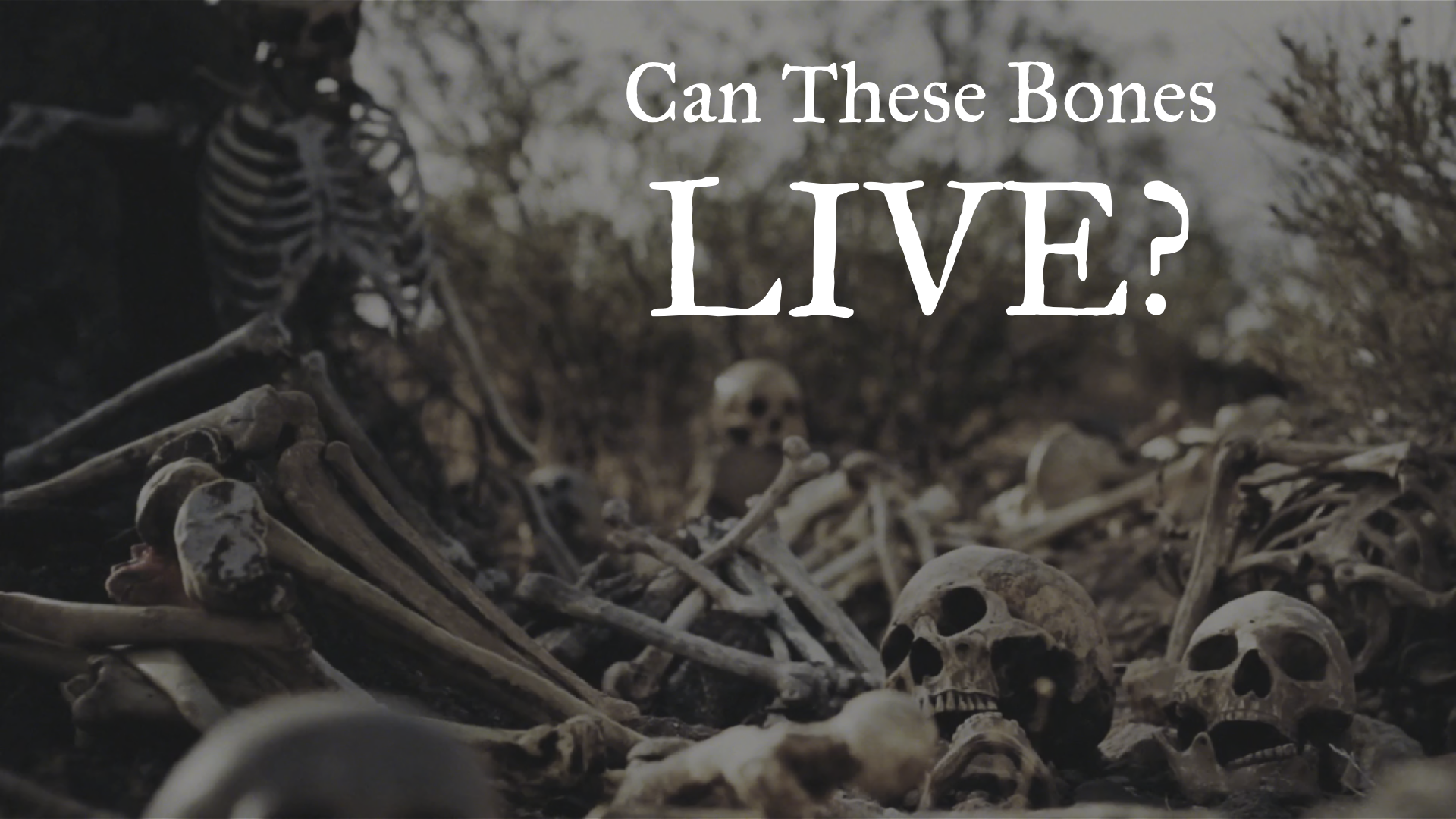
Ezekiel 37 recounts what must be one of the creepiest stories in the entire Bible:

1 The hand of the Lord was upon me, and he brought me out in the Spirit of the Lord and set me down in the middle of the valley; it was full of bones. 2 And he led me around among them, and behold, there were very many on the surface of the valley, and behold, they were very dry. 3 And he said to me, “Son of man, can these bones live?” And I answered, “O Lord God, you know.” 4 Then he said to me, “Prophesy over these bones, and say to them, O dry bones, hear the word of the Lord. 5 Thus says the Lord God to these bones: Behold, I will cause breath to enter you, and you shall live. 6 And I will lay sinews upon you, and will cause flesh to come upon you, and cover you with skin, and put breath in you, and you shall live, and you shall know that I am the Lord.”

7 So I prophesied as I was commanded. And as I prophesied, there was a sound, and behold, a rattling, and the bones came together, bone to its bone. 8 And I looked, and behold, there were sinews on them, and flesh had come upon them, and skin had covered them. But there was no breath in them. 9 Then he said to me, “Prophesy to the breath; prophesy, son of man, and say to the breath, Thus says the Lord God: Come from the four winds, O breath, and breathe on these slain, that they may live.” 10 So I prophesied as he commanded me, and the breath came into them, and they lived and stood on their feet, an exceedingly great army.

11 Then he said to me, “Son of man, these bones are the whole house of Israel. Behold, they say, ‘Our bones are dried up, and our hope is lost; we are indeed cut off.’ 12 Therefore prophesy, and say to them, Thus says the Lord God: Behold, I will open your graves and raise you from your graves, O my people. And I will bring you into the land of Israel. 13 And you shall know that I am the Lord, when I open your graves, and raise you from your graves, O my people. 14 And I will put my Spirit within you, and you shall live, and I will place you in your own land. Then you shall know that I am the Lord; I have spoken, and I will do it, declares the Lord.”

(Ezekiel 37.1-14)

This is a crazy story, but it’s actually quite fitting for Ezekiel’s crazy life: taken into captivity in Babylon, Ezekiel experiences frequent visions, is called to radical forms of preaching to a people who he knows will not listen or repent, and suffers great personal loss. And then, after all this, Ezekiel gets the news that Jerusalem has fallen—Babylon has conquered the city and destroyed the Temple.

This is the context for the creepy story in Ezekiel 37: Ezekiel is out in the middle of nowhere in a valley filled with dry, scorched bones. He is commanded to preach to them (which, by this point, probably doesn’t even seem that strange to him!) and the bones begin to rattle around and then come together, joined by ligaments, tendons, and muscles, and are covered with flesh. Then the breath of the wind comes upon them and they become living people. 

These dry bones in Ezekiel 37 are a metaphor for Israel’s spiritual state: exile and death, yes, but God’s Spirit is coming to bring His people back to life. It recalls the story in Genesis 2 where God creates humans out of dirt and breathes life into them with His Spirit. And the rest of the book of Ezekiel continues with a message of hope. Earlier, judgment was the emphasis: the people have been unfaithful, they haven’t loved God and other people, they won’t listen to correction, they have hard hearts of stone, and there will be consequences for their wickedness: Babylon is going to conquer them.

But now there is an emphasis on hope, because exile is not the end. The dry bones can live again. God is going to restore Israel, a new Israel with a new heart, He’s going to defeat evil in the nations, and He’s actually going to redeem all of creation as well. The book of Ezekiel ends with a vision of a new temple with a stream flowing out from it that becomes a mighty river that flows into the Dead Sea Valley—a desert place of barrenness where nothing can live in the water because it’s so salty—and it turns it into a lush paradise, a new garden of Eden called, “The Lord is there.”

And that’s how Ezekiel ends.

This story of dry bones coming to life in Ezekiel 37, a story of judgment and hope, exile and return, death and new life, is really a powerful summary of the whole story of the Bible. This is the story of Scripture over and over again. God asks Ezekiel, “Son of man, can these bones live?” and the answer is a resounding Yes!

  • Yes, when humans rebel and get kicked out of the garden, God promises to enact a plan to bring them back!
  • Yes, there is life and freedom after slavery in Egypt!
  • Yes, there is a return after exile in Babylon!
  • Yes, after the sinless Messiah is betrayed, arrested, beaten, and crucified, there is an empty tomb and a resurrected life!

And this isn’t just the story of the Bible, it’s our story too. Yours and mine. “Son of man, can these bones live?” Yes! 

  • Can a damaged friendship, a broken relationship, a betrayed marriage—can these come back to life? Is there any hope? Can these bones live? With God’s help, yes they can!
  • Can a church that is beset by controversy, quarreling, or just indifference, a church that dwindles and shrinks—is there any hope for such a church? Can these bones live? Yes, they can!
  • Can the sin that keeps you in bondage, the sin that enslaves you, that you say over and over that you won’t do it again and yet you keep coming back to it—can you ever be free of that? Can these bones live? Yes, they can!
  • As we go through this life filled with difficulties and delights, and as we march relentlessly toward the death that awaits all of us…is there anything for us beyond the grave? Can these bones live? Quite literally, yes they can!

Our story connects to God’s story. That’s part of what Paul talks about in Romans 6. There, he describes how when we are baptized into Christ, we die to sin. The old person we were who was enslaved to sin dies, and a new creation replaces that. This has implications for the present because right now, in our lives as parts of God’s new creation, we live differently, set free from sin. But it also has implications for the future because “if we have been united with Christ in a death like his, we shall certainly be united with Him in a resurrection like his” (Romans 6.5).

Christ died and was placed in a tomb, and then rose again to new life, not as some sort of spirit or ghost floating around, but with a new body. After His resurrection, Jesus specifically says that He’s not a ghost, that He has flesh and…bones.

One day you and I, if Jesus doesn’t return before then, will die. It may happen soon in a surprising way, or it may happen many years from now as our bodies age and weaken, we grow sick and feeble, and we pass away. Then our bodies will be buried in the ground and slowly begin to decompose. And eventually, we will be nothing more than dry bones.

Son of man, can these bones live?

If you belong to Jesus, the answer is Yes! Our bodies, which were “planted” in the ground corruptible and perishable, will be raised incorruptible and imperishable (1 Corinthians 15.42-44). God’s Spirit will breathe into them, and we will be alive again, suitable and prepared, ready for an eternity in God’s presence, in that new garden of Eden paradise that Ezekiel talked about: “The Lord is there.”

Son of man, can these bones live? The answer is Yes! This is God’s story, and it can be our story too.


In this loose series of Scripture Reflections, I am sharing brief thoughts spurred on by my Bible reading. By way of reminder, my goal for these brief posts is two-fold:

(1) To remark on aspects of the biblical text that I find to be of interest that the reader may or may not have thought about previously.

(2) When possible, to point to the work and person of Jesus Christ. I believe the Bible is a unified story that points to Jesus, which means that He is frequently alluded to or foreshadowed in some way throughout the biblical canon.


« Older posts Newer posts »

© 2026 The Doc File

Theme by Anders Noren — Up ↑