The online journal of Luke Dockery

Tag: Scripture Reflections (Page 3 of 7)

Jonah Naps in a Boat

The importance of Bible reading was impressed upon me from a young age, so I had the benefit of reading through the entire Bible several times before I graduated from high school. Of course, this is a good practice, but reading the Bible for yourself can be an unsettling experience. When you read Scripture for yourself, you learn that there are parts of the Bible that are rough around the edges, parts that are entirely foreign to modern ideas, and parts that are certainly not meant for young readers. Furthermore, you learn that a lot of biblical characters who are often presented as heroes in children’s storybooks and Sunday school classes aren’t very heroic at all!

I remember the first time I read the book of Jonah for myself as a kid and moved beyond a storybook understanding of Jonah. Far from the simplistic “good guy makes a mistake but then repents and obeys God” storyline, Jonah is a more complex book, and Jonah himself is a less likable character than what is often assumed. I find this book to be fascinating, and I have actually written about Jonah several times over the years.

As I was reading through Jonah again recently, I was struck by this episode, which occurs after Jonah ignores God’s command to preach to Nineveh and instead boards a ship bound for Tarshish:

4 But the Lord hurled a great wind upon the sea, and there was a mighty tempest on the sea, so that the ship threatened to break up. 5 Then the mariners were afraid, and each cried out to his god. And they hurled the cargo that was in the ship into the sea to lighten it for them. But Jonah had gone down into the inner part of the ship and had lain down and was fast asleep. 6 So the captain came and said to him, “What do you mean, you sleeper? Arise, call out to your god! Perhaps the god will give a thought to us, that we may not perish.”

(Jonah 1.4-6)

What made this stand out to me was how closely it parallels with a similar event from the life of Jesus, where Jesus is on a boat with His disciples on the Sea of Galilee when a storm comes up (Matthew 8.23-27; Mark 4.35-41; Luke 8.22-25). Jesus’s disciples are alarmed, but Jesus takes a nap…just like Jonah did![1]

It’s easy to just dismiss these details as coincidence, but as I have written before, the Bible is a literary masterpiece, and we should should be suspicious of these seeming coincidences: usually, the author is trying to tell us something. In this case, there are many points of comparison between the two events. The following table comes from Kevin Youngblood’s excellent commentary, Jonah: God’s Scandalous Mercy:[2]

Jonah boards a ship bound for Tarshish in order to run away from God’s call to preach to Nineveh; Jesus appears to get on a boat in order to avoid the crowds pressing around Him. While on board their respective boats, both Jonah and Jesus fall asleep while violent storms threaten to sink them. The pagan sailors on board with Jonah and Jesus’s disciples both fear for their lives and awaken them to alert them of the danger and seek their assistance. Both of the protagonists know what to do in order to calm the storm and take appropriate action: Jonah has his shipmates toss him into the sea, while Jesus orders the waves to submit to His authority. Both sets of shipmates are awestruck by the divine power they have witnessed.

What are we to make of these similarities? Well, we should begin by noting that in the gospels, Jesus compares Himself to Jonah in multiple places. Here is one example:

38 Then some of the scribes and Pharisees answered him, saying, “Teacher, we wish to see a sign from you.” 39 But he answered them, “An evil and adulterous generation seeks for a sign, but no sign will be given to it except the sign of the prophet Jonah. 40 For just as Jonah was three days and three nights in the belly of the great fish, so will the Son of Man be three days and three nights in the heart of the earth. 41 The men of Nineveh will rise up at the judgment with this generation and condemn it, for they repented at the preaching of Jonah, and behold, something greater than Jonah is here.

(Matthew 12.38-41)

Jesus highlights a comparison, indicating that Jonah’s three days and nights in the “tomb” of the great fish is a foreshadowing of His own three days and nights in the tomb. But He also emphasizes a contrastin that, despite His greatness compared to Jonah, the generation to which He is preaching will not repent as the Ninevites did for Jonah.

With this in mind, the deep sleep that comes over Jonah and Jesus on their boats symbolizes the “death” and return that both will soon experience, and in the gospels, this episode paves the way for Jesus’s later teaching on the sign of Jonah.[3]

But the carefully crafted narrative is not just about emphasizing the similarities between Jesus and Jonah; the distinction between the two is of paramount importance. Jonah is sleeping on a boat ultimately as a symptom of his determination to escape God’s calling for his life. God wants to use Jonah as an instrument of His astounding mercy, and Jonah wants no part of that. He runs away, hides in sleep, and ultimately, calls his shipmates to throw him into the sea, confident that he will die, but that death would be better than preaching to the hated Ninevites.

Jesus, on the other hand, embraces His calling rather than seeking to escape it. Rather than whip up the popular fervor of the crowds and harness that frenzied energy into a typical messianic rebellion, Jesus leaves and boards a ship with his disciples. There, He is able to be calm, not only because He is the Master of raging tempests, but also because He knows His death is already set. It will not come in a boat, but rather will be characterized by three days in a tomb followed by a return (as with Jonah).

As Jesus awakens and calms the storm, His disciples are awestruck, asking one another, “Who is This?” (Mark 4.41). Jesus has just given them a key data point in their assessment of His identity and mission. Their ongoing journey to discover who Jesus is will be a winding and stumbling one, and they will only come to fully understand His identity after His death and resurrection. This is what the Father had called Him to do, and indeed, his calling and identity were fundamentally linked.[4]

And so they are for God’s people. We are defined by the calling that God places upon our lives to live as disciples of His Son and agents of reconciliation in His world. But there is a choice to make: like Jonah, we can ignore that calling and seek to escape it, or like Jesus, we can embrace that calling and become who we were always intended to be.


In this loose series of Scripture Reflections, I am sharing brief thoughts spurred on by my Bible reading. By way of reminder, my goal for these brief posts is two-fold:

(1) To remark on aspects of the biblical text that I find to be of interest that the reader may or may not have thought about previously.

(2) When possible, to point to the work and person of Jesus Christ. I believe the Bible is a unified story that points to Jesus, which means that He is frequently alluded to or foreshadowed in some way throughout the biblical canon.


[1] I think this is a wonderful narrative from which we can learn much, and have written on it in the past. See, “Why Are You Afraid?” and “Asleep in the Storm.”

[2] Kevin J. Youngblood, Jonah: God’s Scandalous Mercy, Hearing the Message of Scripture Commentary Series (Grand Rapids, MI: Zondervan, 2013), 90.

[3] Youngblood, 90.

[4] Youngblood, 91.

God’s Idea of a King

Near the end of Deuteronomy, the second giving of God’s law to the Israelite people as they prepare to enter the Promised Land, there is an interesting section on how Israel’s kings are supposed to act.

14 “When you come to the land that the LORD your God is giving you, and you possess it and dwell in it and then say, ‘I will set a king over me, like all the nations that are around me,’ 15 you may indeed set a king over you whom the LORD your God will choose. One from among your brothers you shall set as king over you. You may not put a foreigner over you, who is not your brother. 16 Only he must not acquire many horses for himself or cause the people to return to Egypt in order to acquire many horses, since the LORD has said to you, ‘You shall never return that way again.’ 17 And he shall not acquire many wives for himself, lest his heart turn away, nor shall he acquire for himself excessive silver and gold.

18 “And when he sits on the throne of his kingdom, he shall write for himself in a book a copy of this law, approved by the Levitical priests. 19 And it shall be with him, and he shall read in it all the days of his life, that he may learn to fear the LORD his God by keeping all the words of this law and these statutes, and doing them, 20 that his heart may not be lifted up above his brothers, and that he may not turn aside from the commandment, either to the right hand or to the left, so that he may continue long in his kingdom, he and his children, in Israel.

(Deuteronomy 17.14-20)

Among other things, it is emphasized here that the king is not to acquire horses from Egypt, nor acquire many wives for himself, nor acquire excessive silver and gold. Instead of these things, he should focus on God’s law.

Often, especially in children’s bibles and other less thoughtful interpretations of Scripture, Solomon is held up as an exemplary king. Certainly, Solomon starts well, as he asks God for an understanding heart and is commended by God for doing so, but the continuing narrative of Solomon runs like a systematic checklist of all the things that Israelite kings are not supposed to do:

  • Solomon accumulates excessive amounts of wealth (1 Kings 9.14, 28; 10.14-25)
  • Solomon acquires war horses from Egypt (1 Kings 10.28-29)
  • Solomon takes many wives for himself (1 Kings 11.1-3)
  • Solomon ignores God’s law (1 Kings 11.4-8)

Clearly, Solomon is not God’s idea of a king.

Jesus is.

Though taken to Egypt as an infant to escape Herod’s murderous paranoia, Jesus reenacts the story of Israel, departing from Egypt. Jesus never returns to Egypt or flirts with doing so, and is never enticed by the wealth or military power that Egypt so often represents in the biblical story. In fact, the only instance we have of Jesus riding an animal is not a powerful Egyptian war horse, but a simple donkey—Jesus arrives in Jerusalem on Palm Sunday, not in kingly fashion, but on a lowly beast of burden.

Jesus clearly valued relationships, as evidenced by the apostles to whom He devoted much time and all the people with whom He interacts and to whom He shows such care. But Jesus never married, and certainly never took many wives, swayed neither by sexual appetite nor the desire for political alliances. Jesus is portrayed as a husband, but His bride is the church—the people of God—for whom He selflessly gives all.

And far from acquiring excessive silver and gold, Jesus, who possessed all wealth and privilege, emptied Himself, took the form of a servant, and lived as an itinerant, homeless preacher.

Jesus did focus on God’s law, though. He regularly attended synagogue, knew Scripture by heart, and presented Himself as its ultimate interpreter.

It is a common interpretative misstep to think we are supposed to view biblical characters as heroes, when often, upon closer inspection, these “heroes” actually reveal profound human weakness and our desperate need for a Savior. Such is the case of Solomon, who, far from being a hero, is actually portrayed as a king who utterly fails God’s job description.

What does God’s idea of a king look like?

Jesus of Nazareth.


In this loose series of Scripture Reflections, I am sharing brief thoughts spurred on by my Bible reading. By way of reminder, my goal for these brief posts is two-fold:

(1) To remark on aspects of the biblical text that I find to be of interest that the reader may or may not have thought about previously.

(2) When possible, to point to the work and person of Jesus Christ. I believe the Bible is a unified story that points to Jesus, which means that He is frequently alluded to or foreshadowed in some way throughout the biblical canon.

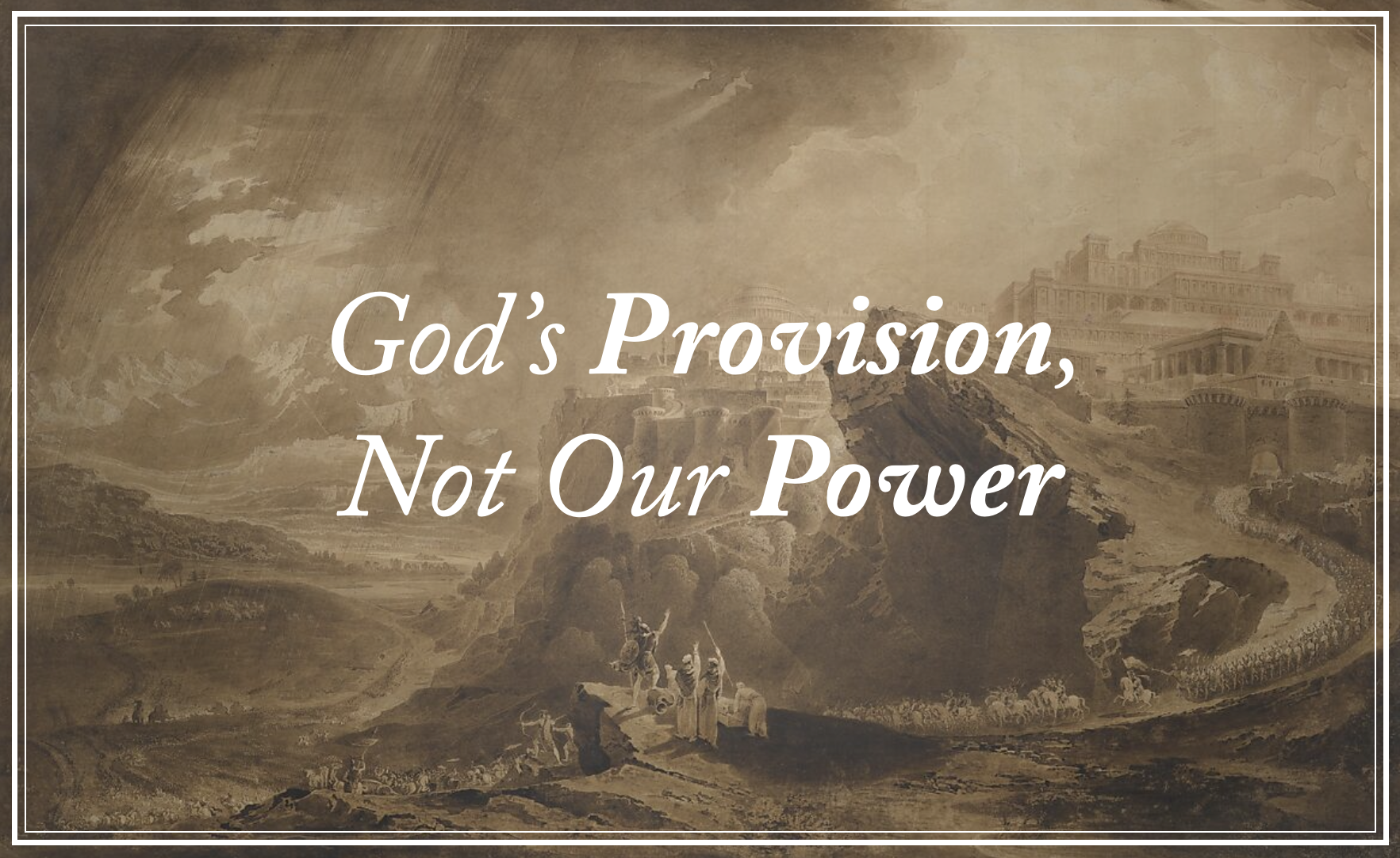
God’s Provision, Not Our Power

At the end of the book of Joshua, the people of Israel find themselves in the promised land of Canaan, and their mission has been largely successful. Joshua, knowing that his time as Israel’s leader is growing short, renews the covenant with the people:

1 Joshua gathered all the tribes of Israel to Shechem and summoned the elders, the heads, the judges, and the officers of Israel. And they presented themselves before God. 2 And Joshua said to all the people, “Thus says the LORD, the God of Israel, ‘Long ago, your fathers lived beyond the Euphrates, Terah, the father of Abraham and of Nahor; and they served other gods. 3 Then I took your father Abraham from beyond the River and led him through all the land of Canaan, and made his offspring many. I gave him Isaac. 4 And to Isaac I gave Jacob and Esau. And I gave Esau the hill country of Seir to possess, but Jacob and his children went down to Egypt. 5 And I sent Moses and Aaron, and I plagued Egypt with what I did in the midst of it, and afterward I brought you out.

6 “‘Then I brought your fathers out of Egypt, and you came to the sea. And the Egyptians pursued your fathers with chariots and horsemen to the Red Sea. 7 And when they cried to the LORD, he put darkness between you and the Egyptians and made the sea come upon them and cover them; and your eyes saw what I did in Egypt. And you lived in the wilderness a long time. 8 Then I brought you to the land of the Amorites, who lived on the other side of the Jordan. They fought with you, and I gave them into your hand, and you took possession of their land, and I destroyed them before you. 9 Then Balak the son of Zippor, king of Moab, arose and fought against Israel. And he sent and invited Balaam the son of Beor to curse you, 10 but I would not listen to Balaam. Indeed, he blessed you. So I delivered you out of his hand. 11 And you went over the Jordan and came to Jericho, and the leaders of Jericho fought against you, and also the Amorites, the Perizzites, the Canaanites, the Hittites, the Girgashites, the Hivites, and the Jebusites. And I gave them into your hand. 12 And I sent the hornet before you, which drove them out before you, the two kings of the Amorites; it was not by your sword or by your bow. 13 I gave you a land on which you had not labored and cities that you had not built, and you dwell in them. You eat the fruit of vineyards and olive orchards that you did not plant.’

(Joshua 24.1-13)

Joshua recounts for the people their story since God had called their ancestor Abraham, a pagan, and guided him to Canaan where He blessed him with land and offspring. Abraham begets Isaac, and Isaac begets Jacob. Jacob and his children end up down in Egypt where they are eventually oppressed, but God provides for them by raising up Moses and Aaron, bringing plagues upon Egypt and freeing His people. He parts the Red Sea and saves them from the Egyptian army. The people live in the wilderness for a long time, where God takes care of them and helps them overcome their enemies. Then, God leads them into the promised land, and God drives out their enemies before them—it is not by their sword or bow that they have success, but God’s provision for them.

Joshua rehearses this story to remind the people that it is God’s provision, not their power, that has led them to the blessings they currently enjoy. It was not something they did; it was not based on some remarkable quality within the people of Israel themselves.

Joshua knows that his time as their leader is drawing to a close, and he wants to motivate them to faithfulness after he is gone. It is essential that the people realize their dependence on God—their welfare as a nation depends on their faithfulness to a God who provides for them.

This idea—that it is not our power, but God’s provision, that leads to our well-being—is not unique to Joshua or this particular time period. Rather, it is a consistent theme of Scripture that comes to its fulfillment in Jesus. As Paul famously states:

8 For by grace you have been saved through faith. And this is not your own doing; it is the gift of God, 9 not a result of works, so that no one may boast.

(Ephesians 2.8-9)

Our salvation is God’s gift, made possible by the work of Jesus Christ. It is not our own doing. There is no cause for us to boast, because we have done nothing. It is all about God’s provision; not our own power.


In this loose series of Scripture Reflections, I am sharing brief thoughts spurred on by my Bible reading. By way of reminder, my goal for these brief posts is two-fold:

(1) To remark on aspects of the biblical text that I find to be of interest that the reader may or may not have thought about previously.

(2) When possible, to point to the work and person of Jesus Christ. I believe the Bible is a unified story that points to Jesus, which means that He is frequently alluded to or foreshadowed in some way throughout the biblical canon.

“God Saw the People of Israel—and God Knew”

The early chapters of Exodus recount a dark period in the history of Israel.

Abraham’s descendants had arrived in Egypt through the influence of Joseph, who from his high position as Pharaoh’s right-hand man, had provided for the survival of his family (and many others) during a time of famine. Joseph’s brothers and their families stayed in Egypt, and grew and multiplied over time.

That was at the end of Genesis, but now, at the beginning of Exodus, a lot of time has passed and a new Pharaoh has come to power who doesn’t know Joseph or care about his family or descendants. This new Pharaoh is only concerned about the size and vigor of the Israelites, and so he decides to enslave them and force them into harsh labor. Even worse, he commands that Hebrew baby boys shouldn’t be allowed to live.

In Exodus 2, we have the famous story of the birth of Moses, and also the story of Moses killing an Egyptian when he grows up and then fleeing to the wilderness.

It is in this context that there is a brief note at the end of Exodus 2, as people find their servitude to be unbearable and, as a result, cry out to God:

During those many days the king of Egypt died, and the people of Israel groaned because of their slavery and cried out for help. Their cry for rescue from slavery came up to God. And God heard their groaning, and God remembered his covenant with Abraham, with Isaac, and with Jacob. God saw the people of Israel—and God knew.

(Exodus 2.23-25)

This is easy to overlook, but so powerful—the people cry out to God, and God hears their cry. He sees their suffering and is aware of what is going on. God saw the people of Israel—and God knew.

Of course, God responds to their problem by raising Moses to be his people’s great liberator. This plan would take time to develop, as we know that Moses spent 40 years in the wilderness before returning to Egypt, but the plan was in motion, and Moses would lead the Israelites from slavery to freedom. God saw the people of Israel—and God knew.

But, if you continue in the story of God’s people as told in the Hebrew Bible, you know that this is hardly the end of the people’s problems. There would be many more times in which the people would cry out to God and God would respond. The response wouldn’t always come in the way or the timeframe that the people expected, but God saw the people of Israel—and God knew.

Ultimately, though, we see this truth played out in the person of Jesus.

For generations, God’s people groaned under the burden of the consequences of their sinfulness: captivity in foreign lands, a lackluster return to their promised land, a temple and a nation that was a shell of their former glory, a persistent vulnerability to the pull of sin, and a desperate need for the Davidic descendant, the Messianic king for whom they had waited so long.

Deeply aware of humanity’s slavery to sin, in His own time and in His own way, God responded: the Son put on flesh and lived as a human. Through the incarnation of Jesus, God saw—and God knew in a new and special way, through His own experience of the human condition (Hebrews 4.15). While identifying with our human frailties, Jesus was different in that He lived without sin. He died to release us from our own captivity to sin, and was vindicated by the Father in His resurrection.

But there is more!

Before His crucifixion, Jesus told His disciples that He would be leaving, but that when He did, a Helper would come—God’s Holy Spirit—who would be with them (John 15). The Holy Spirit indwells followers of Jesus and, indeed, helps us in many ways. One of those ways is in our own communication with God:

Likewise the Spirit helps us in our weakness. For we do not know what to pray for as we ought, but the Spirit himself intercedes for us with groanings too deep for words.

(Romans 8.26)

Did you catch that? As we struggle through this life and our ongoing battle with sin, we are at times at a loss for what to pray. But the Spirit Himself intercedes for us with groanings too deep for words. The Israelites groaned to God for help; now, through the power of the Spirit, we don’t just groan to God, God groans in us…to Himself!

The Israelites groaned to God for help; now, through the power of the Spirit, we don’t just groan TO God, God groans IN us…TO Himself! Share on X

But still, there is more!

While we are assured that Jesus has defeated Satan, sin, and death, and the presence of the Spirit in our live serves as a down payment on our salvation, we continue to live in a broken world where there is still much about which we may rightly cry out to God. Against that reality, the promise of Scripture and the source of Christian hope is that Jesus will return one day, the cosmos will be redeemed, and every tear will be wiped from the eyes of God’s people.

The timeline may be different from what we expect, so we wait…and wait. But we can be confident, because God saw—and God knew.


In this loose series of Scripture Reflections, I am sharing brief thoughts spurred on by my Bible reading. By way of reminder, my goal for these brief posts is two-fold:

(1) To remark on aspects of the biblical text that I find to be of interest that the reader may or may not have thought about previously.

(2) When possible, to point to the work and person of Jesus Christ. I believe the Bible is a unified story that points to Jesus, which means that He is frequently alluded to or foreshadowed in some way throughout the biblical canon.


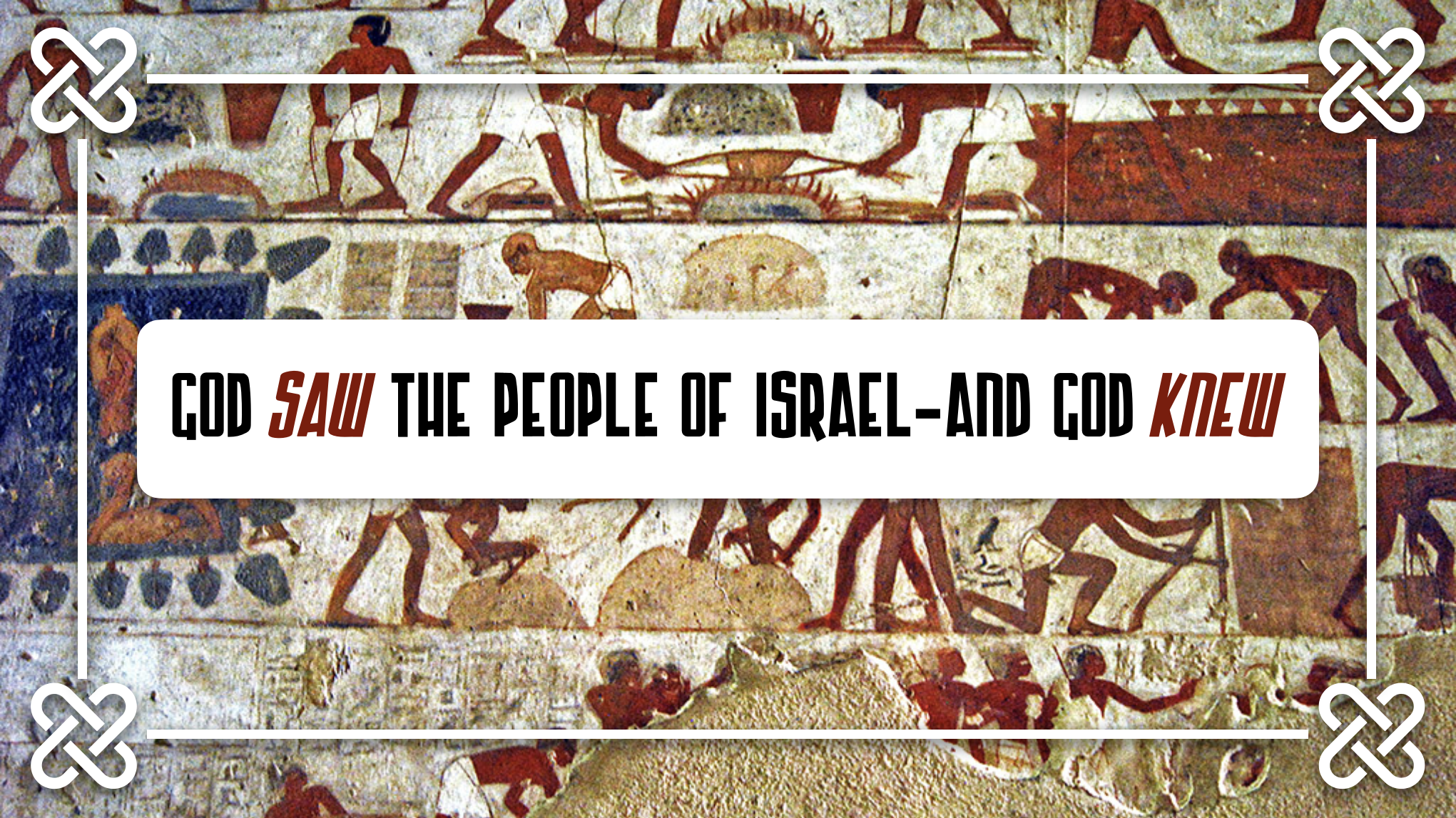
Photo Credit for the image above goes to Ferrell Jenkins. The image comes from the tomb of Vizier Rekhmire (ca. 1470-1445 BC), and depicts a brickmaking and building scene featuring slaves from the rough period of Israelite bondage in Egypt.

2023 Blog Review

I like to end the year by looking back and reviewing my year of blogging here at The Doc File (Here are some previous reviews from 2022, 2021, 2020, 2019, 2018, 2016, 2015, and 2012).

Overview

There were a lot of topics that I intended to write about in 2023, but time got away from me and I wrote less than I hoped. Nevertheless, I wrote 30 posts this past year, which is more than I managed in 2022 (20) or 2021 (28). Baby steps in the right direction still count as progress, I guess.

Top Posts

By traffic totals, here are my most-read posts during 2023:

  1. Jesus, Christmas, and Hanukkah, December 18, 2015
  2. Raising Up Ministers: Six Unhelpful Trends in Churches of Christ, March 2, 2023
  3. A New Heaven & A New Earth Series, April 29, 2020
  4. A New Heaven & A New Earth: What the Bible Teaches about Eternity, April 9, 2020
  5. Youth Ministry & Gen Z,, May 16, 2023
  6. Reading in 2022, January 3, 2023
  7. Church Is Good for Your Kids, August 23, 2023
  8. Reading and Walking in 2022, January 6, 2023
  9. Forty., August 2, 2023
  10. A New Heaven & A New Earth Part 2: Distractions, April 16, 2020

Six of the top posts from 2023 were actually written this year, and it is always good to see new content get some traction:

  • Raising Up Ministers: Six Unhelpful Trends in Churches of Christ reflected on the minister shortage within Churches of Christ. This topic has been written about and discussed a lot (too much?), but one aspect of the conversation that I hadn’t seen emphasized as much was the raising up of young people to go into ministry. I am confident that we are not doing this as well as we once did, and I offered several reasons for why that is.
  • Youth Ministry & Gen Z looked at some research from the Barna Group that describes characteristics of Gen Z students (the generational cohort that is currently present in our youth groups). The basic premise here is that the better we understand these students, the better we can minister to them. Broadly speaking, Gen Z students have several challenging characteristics that clash with Christianity, but they also resonate with Christianity in important ways.
  • I have developed certain traditions of posts that I write each year, and these have developed somewhat of a following over time. Reading in 2022 and Reading and Walking in 2022 were both popular (the 2023 versions are right around the corner!).
  • Church Is Good for Your Kids is a brief post that reflected on research that indicates that, well, church is good for your kids! As one author states, “There is a growing body of evidence that regular religious practice is measurably good for the health, happiness, and pro-social behavior of our kids.”[1]
  • Forty. I had a milestone birthday in 2023, which naturally prompted me to some reflection.

At the same time, part of the reason for preserving over 15 years of posts on this site is for people to be able to go back and read things they missed, and I am always gratified when older posts are read by new people. The series I wrote in 2020 on renewed eschatology continues to get a lot of views, but I was blown away by the response to Jesus, Christmas, and Hanukkah. This is a post I actually wrote about eight years ago, but I shared it again this year and it got a surprising amount of attention.

Blog Series

In 2023, I completed one series and contributed multiple times to another, ongoing one:

The Beatitudes: Kingdom Character: This nine-part series was a close look at the Beatitudes in the Sermon on the Mount, which is Jesus’s description of what it looks like to be a citizen in His kingdom.

Studying the Sermon on the Mount in detail was transformative for me several years ago, and it is always beneficial for me to come back and reflect on Jesus’s teaching here. This series was not very popular and didn’t have a wide readership. This was disappointing to me, but I think is also reflective of the time in which we live: living according to the Sermon on the Mount isn’t very exciting for most people.

Scripture Reflections: I added five more posts to this ongoing series in 2023 (The Poor You Always Have with You, Three Gardens, Known to Them in the Breaking of the Bread, “Your Labor Is Not in Vain”, and “He Remembers that We Are Dust”) bringing the total to 20 posts. I plan to continue adding to this indefinitely.


So, that was The Doc File in 2023! It is my plan to continue writing in this space in 2024 (hopefully more often, but I never know what the new year will bring). It has become a formative spiritual discipline for me to process my thoughts here over the years, and as many readers have told me, it is helpful to you too! I am honored and humbled by those sorts of comments, and am thankful for your readership and support!


[1] Rebecca McLaughlin, 10 Questions Every Teen Should Ask (and Answer) about Christianity (Wheaton, IL: Crossway, 2021), 14.

« Older posts Newer posts »

© 2026 The Doc File

Theme by Anders Noren — Up ↑