The online journal of Luke Dockery

Tag: Scripture Reflections (Page 4 of 7)

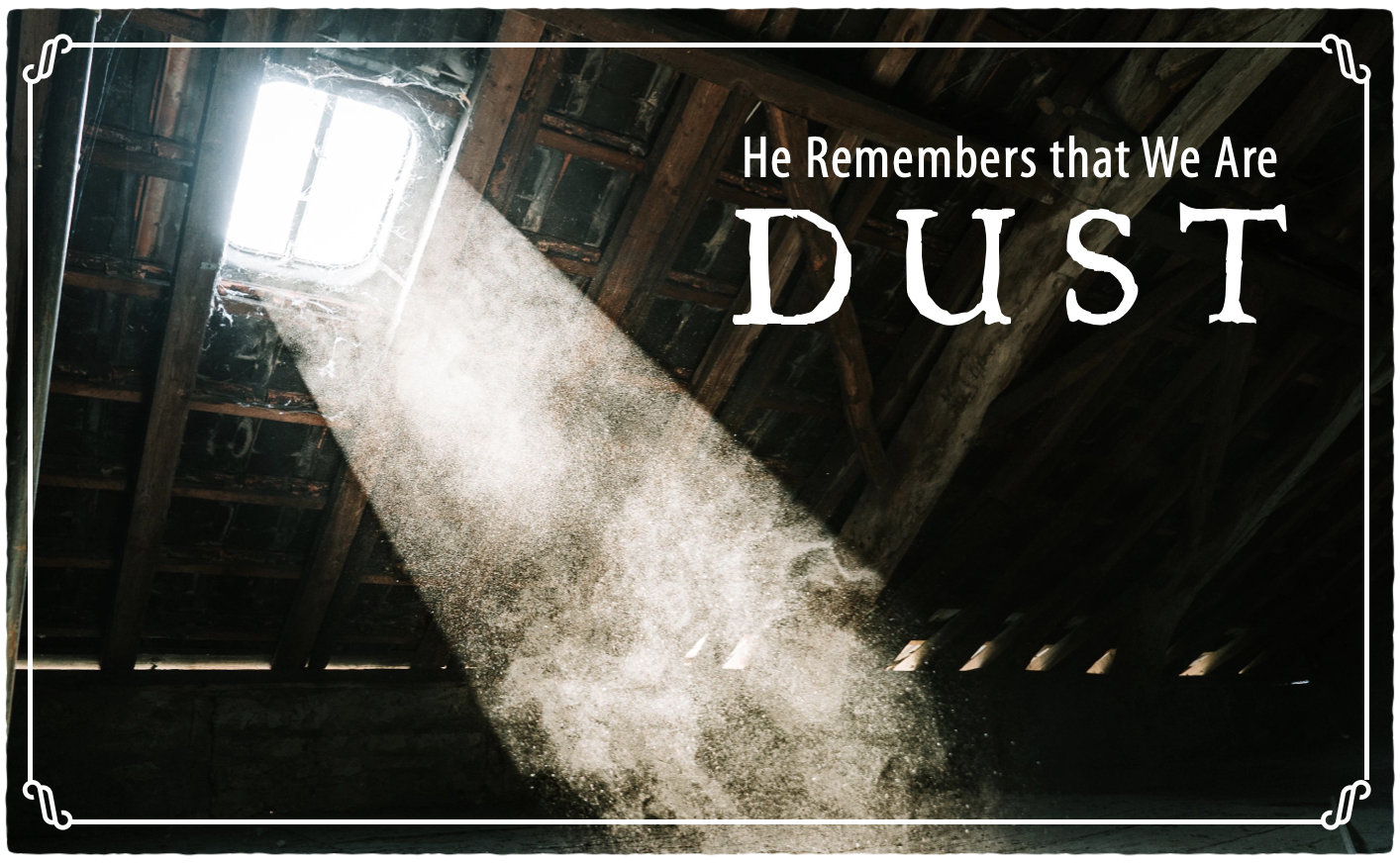
“He Remembers that We Are Dust”

Psalm 103 is one of my favorites. It speaks forcefully of God’s mercy and steadfast love:

8 The LORD is merciful and gracious,
slow to anger and abounding in steadfast love.
9 He will not always chide,
nor will he keep his anger forever.
10 He does not deal with us according to our sins,
nor repay us according to our iniquities.
11 For as high as the heavens are above the earth,
so great is his steadfast love toward those who fear him;
12 as far as the east is from the west,
so far does he remove our transgressions from us.
13 As a father shows compassion to his children,
so the LORD shows compassion to those who fear him.
14 For he knows our frame;
he remembers that we are dust.
15 As for man, his days are like grass;
he flourishes like a flower of the field;
16 for the wind passes over it, and it is gone,
and its place knows it no more.
17 But the steadfast love of the LORD is from everlasting to everlasting on those who fear him,
and his righteousness to children’s children,
18 to those who keep his covenant
and remember to do his commandments.
19 The LORD has established his throne in the heavens,
and his kingdom rules over all.
(Psalm 103.8-19)

Fundamental to God’s nature is His mercy and grace. This is stated in Psalm 103.8 and is repeated in some form multiple times throughout the Old Testament (cf. Exodus 34.6; Numbers 14.18; Nehemiah 9.31; Psalm 86.15; Joel 2.13; Jonah 4.2). Because of His nature, God does not deal with us according to our sins, but instead removes them far from us: as far as the East is from the West.

This is beautiful and profound, but there is more. In addition to God’s inherent predisposition toward mercy and forgiveness, the Psalmist also tells us this in v. 14:

14 For he knows our frame;
he remembers that we are dust.

(Psalm 103.14)

God, as our Creator, knows us intimately. He remembers that we are dust.

In one sense, this has a literal meaning. Genesis 2.7 speaks of Yahweh forming “the man of dust from the ground” and breathing into his nostrils the breath of life. Later on, after the humans fail at the Tree of Knowledge of Good and Evil, as part of the curse that God pronounces, He tells Adam, “For you are dust, and to dust you shall return” (Genesis 3.19b).

We are formed of the same stuff as the rest of creation, and when we die, our bodies wither away and eventually decompose into dust.

But there is surely a metaphorical meaning here as well: God remembers our inherent frailty. While humankind is created in God’s image (Genesis 1.26-27) and given the significant vocation of bearing the divine image in creation, we are, ultimately, dusty creatures: we fall short and fail to live up to the potential that God has placed within us.

God knows this well. He knows, better than anyone, that we are “just human”, and it motivates His compassion and mercy toward us.

God knows we are dust. He knows, better than anyone, that we are “just human”, and it motivates His compassion and mercy toward us. Share on X

The reality is that ever since our original Dusty Ancestors, the sons and daughters of men have failed in the vocation that has been given to us, fallen victim to the siren call of sin, and found ourselves in desperate need of God’s compassion and mercy. And this, of course, is why God Himself became dust, and the Son of Man embodied human existence. Finally, there was one who, while still dust, perfectly bore the divine image, lived a sinless life, and effected God’s gracious desire to remove our sins as far as the East is from the West through His crucifixion and victory over death.

I am routinely frustrated that I am dust, both literally and metaphorically. But thanks to these words from Scripture, I can take comfort: God knows this about me better than I know it myself. When I fall short, He understands and personally makes up for my deficit.

God knows that I am dust, and when I fall short, He understands and personally makes up for my deficit. Share on X

In this loose series of Scripture Reflections, I am sharing brief thoughts spurred on by my Bible reading. By way of reminder, my goal for these brief posts is two-fold:

(1) To remark on aspects of the biblical text that I find to be of interest that the reader may or may not have thought about previously.

(2) When possible, to point to the work and person of Jesus Christ. I believe the Bible is a unified story that points to Jesus, which means that He is frequently alluded to or foreshadowed in some way throughout the biblical canon.
“Your Labor Is Not in Vain”

First Corinthians 15 stands as one of the great chapters of Scripture. Paul begins the chapter by talking of the resurrection of Christ as being “of first importance” to the Christian faith.

He moves from that to the theme of general resurrection that the followers of Jesus will experience. Paul argues that these two events—the resurrection of Christ and the resurrection of Christ’s followers—are inextricably linked. If Jesus was not raised from the dead, then neither will His followers be, and they are of all people to be most pitied. But if Jesus was raised, then He is the firstfruits of resurrection, and His followers will be raised as well.

From there, He progresses to discuss the nature of the resurrection body that believers will enjoy. This is no immaterial existence, but rather, a bodily resurrection. The body that was sown (buried) was perishable, but is raised imperishable; sown in dishonor, but raised in glory; sown in weakness, but raised in power; sown a natural body, but raised a spiritual body.

And then, at the end of the chapter, there is this rousing statement. Because resurrection is the Christian hope, and because it signifies victory over death and the removal of its sting:

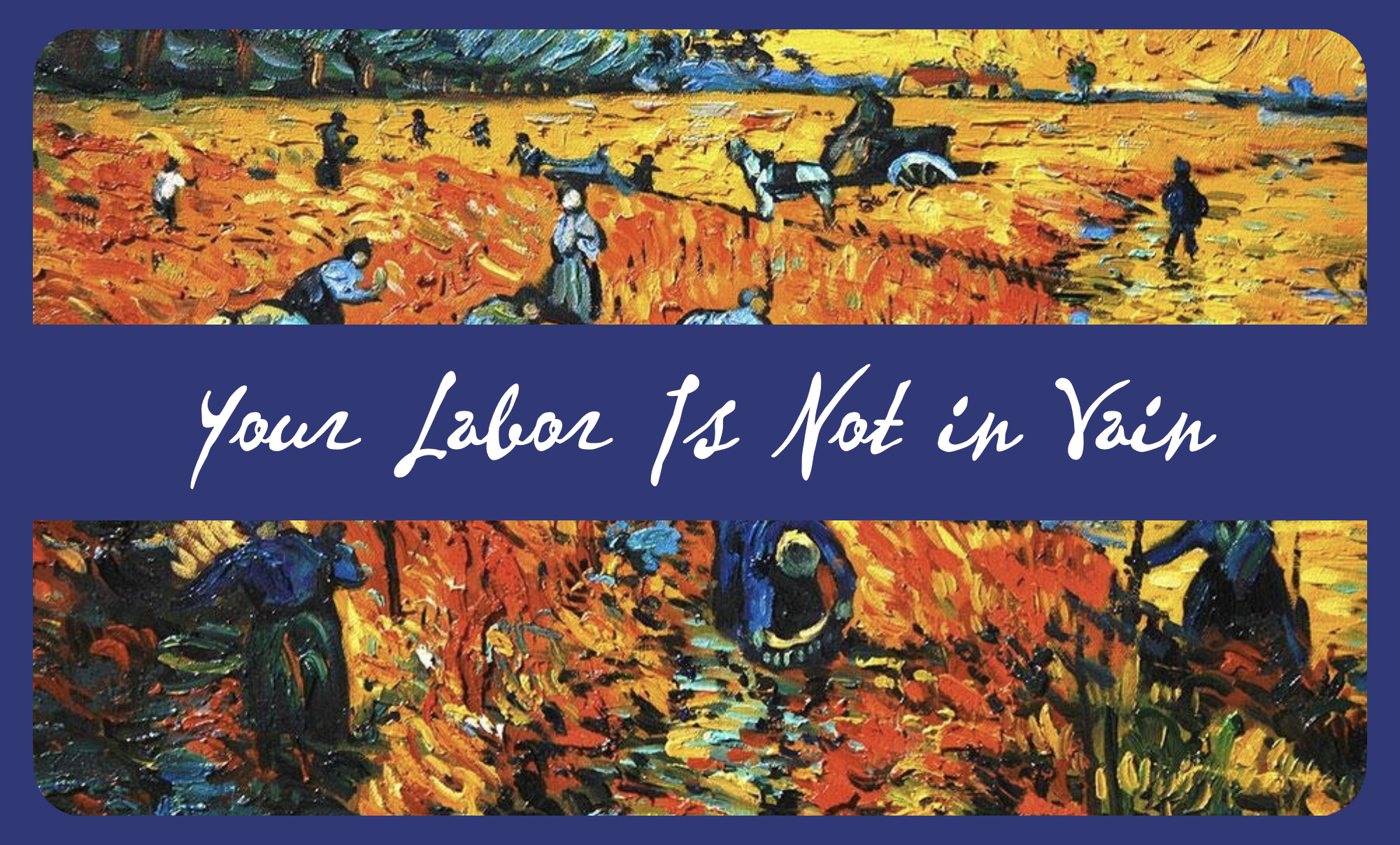
Therefore, my beloved brothers, be steadfast, immovable, always abounding in the work of the Lord, knowing that in the Lord your labor is not in vain.

(1 Corinthians 15.58)

Though often overlooked, I think this is one of the great promises of Scripture: In the Lord, your labor is not in vain. Ever since I heard a sermon on this text at a Harding Lectureship, it has been a stirring passage for me, but it was more recently as I studied for our youth retreat on resurrection that I discovered an additional meaningful connection.

Earlier in the chapter, Paul had stated that “if Christ has not been raised, then our preaching is in vain and your faith is in vain” (1 Corinthians 15.14). The word translated as “vain” is the Greek word κενος, which means “empty, foolish, worthless.” If Christ is still in the tomb, faith in Him is foolish and worthless.

Paul subtly reverses this idea in the final verse of the chapter with his great promise. This promise does not occur in a vacuum; it is directly tied to what has come before. Therefore—because of the resurrection of Jesus and the resurrection that Christians anticipate as well, we can be steadfast in our work for the Lord, knowing that in the Lord, our labor is not in…vain. Again, we have the Greek word κενος—because we live and work in light of the resurrection of Jesus Christ, our labor is not foolish or worthless.

These are profound, empowering, and encouraging words, and I confess: at times, they are hard for me to believe. So often, it can seem that our labor in the Lord isn’t worth much. Here are some of my experiences; see if you can relate:

  • I spend years investing in teenagers and teaching them about Jesus, only to see some of them turn away from Him as they grow older.
  • I see marriages of couples that I have loved and worked with disintegrate in bitterness and unfaithfulness.
  • I invest countless hours in creating a church ministry or set of procedures only to see them carelessly ignored or laid aside.
  • I witness people I regarded as dear friends in Christ choose a different path in life and then want nothing to do with me anymore.
  • I labor to build unity in the church or greater knowledge in people I teach but seem to make no progress.

Honestly, all of these efforts can feel…worthless. And if Christ was not raised, then all my labor would be worthless. But Christ has been raised. And I will be raised too.

And somehow, empowered by the same Spirit that brought new life to Christ’s broken body, my labor for the Lord is not in vain! Instead, in a way that I don’t fully understand and seems quite mysterious to me, my efforts for the Lord—which seem paltry and unsuccessful from my perspective—are enveloped in the trajectory of new creation and used by King Jesus in the building and expansion of His kingdom.

What a promise! Praise God for His glorious assurance that, in light of the resurrection of His Son by the power of His Spirit, our labor is not in vain!

Do not grow weary in your labor for the Lord. Because resurrection has changed the universe, it always matters.

Do not grow weary in your labor for the Lord. Because resurrection has changed the universe, it always matters. Share on X

In this loose series of Scripture Reflections, I am sharing brief thoughts spurred on by my Bible reading. By way of reminder, my goal for these brief posts is two-fold:

(1) To remark on aspects of the biblical text that I find to be of interest that the reader may or may not have thought about previously.

(2) When possible, to point to the work and person of Jesus Christ. I believe the Bible is a unified story that points to Jesus, which means that He is frequently alluded to or foreshadowed in some way throughout the biblical canon.

Known to Them in the Breaking of the Bread

Luke 24.13-35 recounts the story of Jesus appearing to two disciples on the road to Emmaus following His resurrection.

These two disciples were downcast and dejected. Jesus appears to them and begins walking with them, but they are kept from recognizing Him. When He asks them what is wrong, they respond by explaining the events that had recently occurred in Jerusalem: the Jesus who they had believed to be the Messiah and in whom they had placed their hopes had been killed. Adding to their confusion, there was now a report from some of the women in their group that Jesus’ tomb was empty, and an angel had reported that He had risen from the dead. 

The unrecognized Jesus chides them, and then begins to explain how all of the Hebrew scriptures pointed to Himself, and revealed that He must suffer, die, and be raised. The disciples are blown away by the teaching, and invite this mysterious stranger to stay with them once they reach their destination.

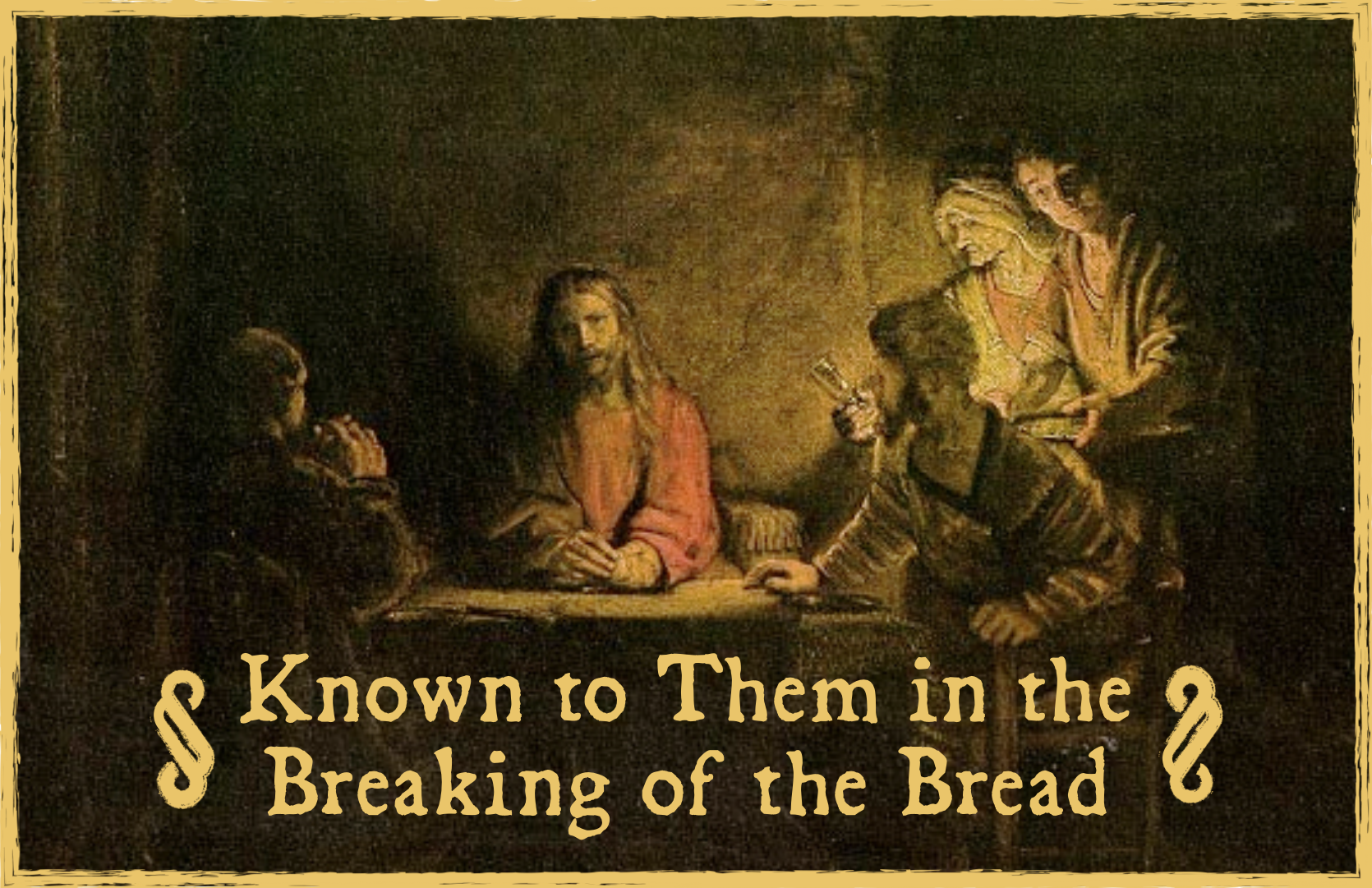
Jesus does so, and when they gather around the table, he takes the bread, blesses it, breaks it, and gives it to them. And suddenly they recognize Him. Jesus vanishes, and the two disciples return to Jerusalem to tell the apostles that Jesus is risen and had appeared to them:

Then they told what had happened on the road, and how he was known to them in the breaking of the bread.

(Luke 24.35)

The post-resurrection appearances of Jesus are interesting. It is clear that Jesus is different than He previously was, but also, He is…the same. He still has holes in His hands and sides. He is recognizable at times. He eats, and has flesh and bones.

But at other times, He is not recognizable. He suddenly appears in the midst of His disciples despite locked doors, and and at other times, He disappears. In Luke 24, He walks with two of His disciples for a long time and teaches them, but it is only in the breaking of the bread that they recognize Him.

Jesus is a multi-faceted character who did and accomplished much, and if we are not careful, we can focus on some of those characteristics and accomplishments and miss out on really knowing Jesus.

Jesus was certainly a wise teacher, but He was more than that. He was a miracle worker, but He was more than that. He was a religious leader and a brilliant theologian, but He was more than that. He was a leader of men, but He was more than that. He was a political theorist (though not in the way we would use that term), but He was more than that. 

Jesus was the Son of God, who emptied Himself, and came to live as a servant. He was obedient to the Father’s will and was willing to suffer on the cross, and on the cross, overcame the dark power of sin. Through His resurrection, He defeated the power of death. 

Sometimes, we don’t recognize Jesus. Sometimes, we look at the world around us, and we fail to see Him. Sometimes, we do not see Him in our circumstances; indeed, God feels very distant at times. Sometimes, we may catch glimpses of God in the beauty of Creation, but we don’t really know Him through that. 

At the table, though, Jesus is made known to us. As we eat of the bread and drink of the cup, we are reminded that God’s Son came into this world and lived as one of us. He stepped into our suffering and experienced it for Himself. We remember that, through the cross, Jesus set us free from sin’s bondage and condemnation, and through His resurrection, He offers us victory over death. 

When we pause our hectic lives and come together to take of the bread and the cup, we are able to see Jesus most clearly, and to recognize what He has done, and what He will do.

Sometimes we don’t recognize Jesus in the circumstances of our lives, but at the table, we are able to see Him clearly and to recognize what He has done and what He will do. Share on X

In this loose series of Scripture Reflections, I am sharing brief thoughts spurred on by my Bible reading. By way of reminder, my goal for these brief posts is two-fold:

(1) To remark on aspects of the biblical text that I find to be of interest that the reader may or may not have thought about previously.

(2) When possible, to point to the work and person of Jesus Christ. I believe the Bible is a unified story that points to Jesus, which means that He is frequently alluded to or foreshadowed in some way throughout the biblical canon.

Three Gardens

It’s a well-known story: Jesus is in the Garden of Gethsemane on the evening He was betrayed. He is there with Peter, James, and John, who He asks to watch with Him, but they struggle to understand the significance of the moment and fall asleep. Meanwhile, Jesus is praying earnestly as He anticipates what is about to happen to Him:

Then Jesus went with them to a place called Gethsemane, and he said to his disciples, “Sit here, while I go over there and pray.” And taking with him Peter and the two sons of Zebedee, he began to be sorrowful and troubled. Then he said to them, “My soul is very sorrowful, even to death; remain here, and watch with me.” And going a little farther he fell on his face and prayed, saying, “My Father, if it be possible, let this cup pass from me; nevertheless, not as I will, but as you will.” And he came to the disciples and found them sleeping. And he said to Peter, “So, could you not watch with me one hour? Watch and pray that you may not enter into temptation. The spirit indeed is willing, but the flesh is weak.” Again, for the second time, he went away and prayed, “My Father, if this cannot pass unless I drink it, your will be done.” And again he came and found them sleeping, for their eyes were heavy. So, leaving them again, he went away and prayed for the third time, saying the same words again. Then he came to the disciples and said to them, “Sleep and take your rest later on. See, the hour is at hand, and the Son of Man is betrayed into the hands of sinners. Rise, let us be going; see, my betrayer is at hand.”

(Matthew 26.36-46)

“Nevertheless not as I will, but as You will.”

Jesus has a desire, a preference, a will: He would rather not die on the cross, taking the guilt and shame of all of humanity upon Himself. In His human form, in this willing circumstance of self-limitation, death on the cross doesn’t seem like a good thing. But the Son defers to the Father and will follow His way.

This episode in a garden stands in sharp contrast to an earlier event in another garden, way back at the beginning of the biblical narrative, where we find Adam and Eve in the paradise of Eden. There, the two young humans see something that looks good to them—the fruit of a certain tree. God had already defined it as not good for them, but they decide to follow their own way instead. Disaster ensues.

The failure in the first garden is the source of what becomes a steady and mighty stream of human failures growing over time, and making the success of Jesus in His garden crucible all the more impressive. Based on His submission to the Father’s will, the sinless Jesus is crucified. He is then vindicated in His resurrection and ascends upon high where He is seated at the right hand of the Father as Lord, and He will come again as Judge. And when He does, the dwelling place of God will be with people (Revelation 21.3), in a third garden, a garden-city: a holy city with high walls, open gates, the river of the water of life, and the tree of life (Revelation 21-22).

There, made possible by the victory of Christ, sin and death will be no more, and neither will be the selfish pursuit of our own will. We will finally resemble the Last Adam, instead of the First, following the Father’s way, instead of our own.

One day, we will finally resemble the Last Adam instead of the first, following the Father’s way, instead of our own. Share on X

In this loose series of Scripture Reflections, I am sharing brief thoughts spurred on by my Bible reading. By way of reminder, my goal for these brief posts is two-fold:

(1) To remark on aspects of the biblical text that I find to be of interest that the reader may or may not have thought about previously.

(2) When possible, to point to the work and person of Jesus Christ. I believe the Bible is a unified story that points to Jesus, which means that He is frequently alluded to or foreshadowed in some way throughout the biblical canon.

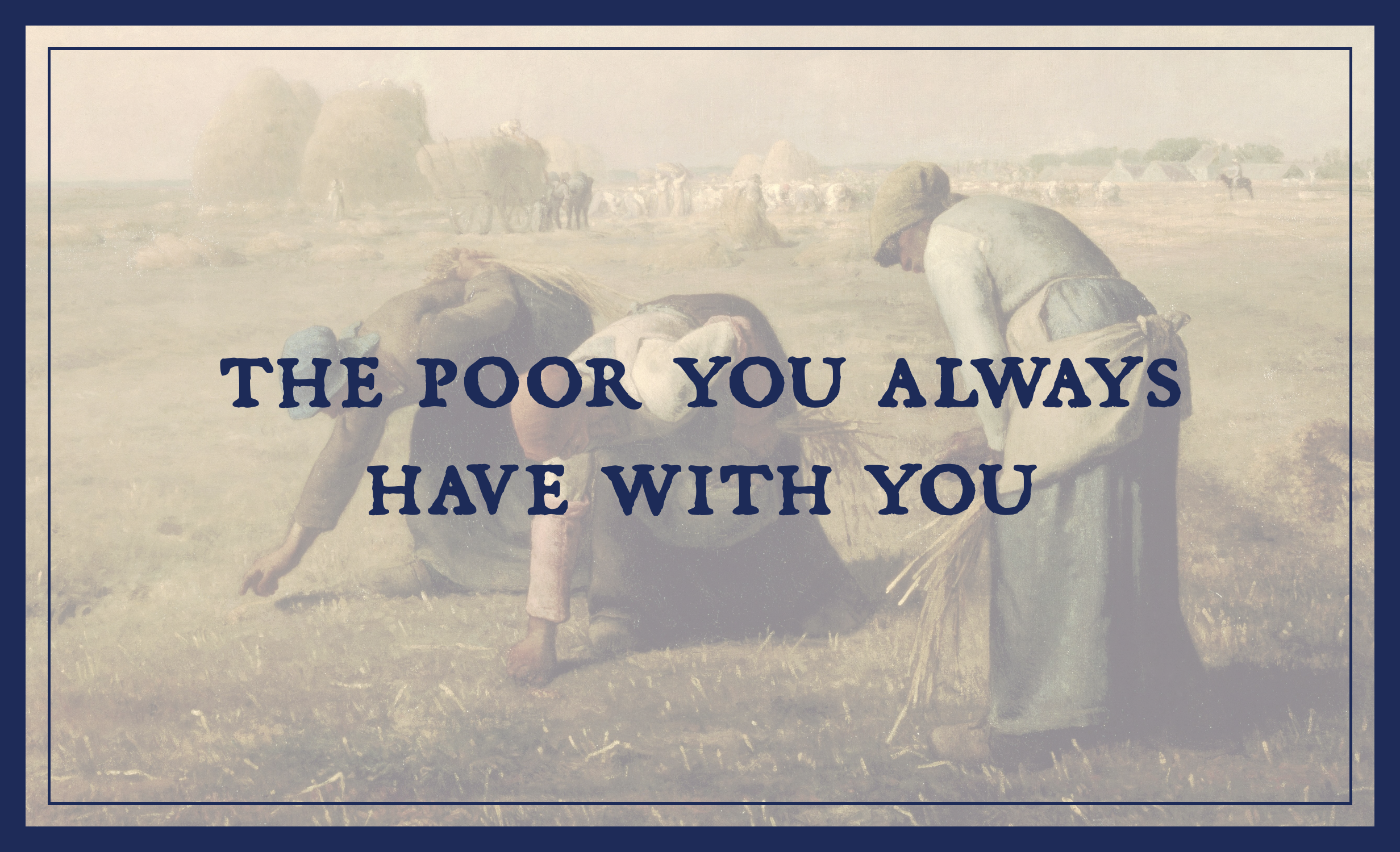
The Poor You Always Have With You

In a recent reading of Deuteronomy, I was struck by the following passage, specifically because of how it connected to other passages in the New Testament:

If among you, one of your brothers should become poor, in any of your towns within your land that the LORD your God is giving you, you shall not harden your heart or shut your hand against your poor brother, but you shall open your hand to him and lend him sufficient for his need, whatever it may be.

Take care lest there be an unworthy thought in your heart and you say, “The seventh year, the year of release is near,” and your eye look grudgingly on your poor brother, and you give him nothing, and he cry to the LORD against you, and you be guilty of sin. You shall give to him freely, and your heart shall not be grudging when you give to him, because for this the LORD your God will bless you in all your work in all that you undertake.

For there will never cease to be poor in the land. Therefore I command you, “You shall open wide your hand to your brother, to the needy and to the poor, in your land.”

(Deuteronomy 15.7-11)

One of the repeated themes of Torah is God’s concern for those on the margins of society, especially the poor, widows, orphans, and immigrants. Out of that concern, God clearly and repeatedly shares His expectation that His people will seek to take care of the poor in their land. This is to be accomplished in many ways, from the practice of gleaning, to levirate marriage, to sabbath years where debts are forgiven, to the general practice of prohibiting interest when loans are given.

But it was the beginning of the last verse that caught my attention—“For there will never cease to be poor in the land”—because of its similarity to something Jesus says in the Gospels. Matthew and John seem to recount versions of the same incident.[1] Jesus is eating a meal in Bethany when a woman (in John’s account, she is identified as Mary, the sister of Martha and Lazarus) comes in and anoints Jesus with expensive ointment, and wipes His feet with her hair.

The disciples see this and respond indignantly, suggesting how wasteful this was—the money spent for this ointment could have been given to the poor instead.[2] Jesus tells His disciples to leave her alone, praising the beautiful and extravagant thing that Mary has done for Him: “For the poor you always have with you, but you do not always have Me.”

I’ve heard these passages discussed before in a way that almost seems to make Jesus uncaring toward the poor, i.e., “You can help the poor anytime, so it’s really not a big deal,” but I think that really misses the mark. Jesus is talking here in terms of urgency, rather than importance: He is about to be crucified, and there won’t be a later opportunity to do what Mary has done. It’s not that helping the poor is unimportant; it’s just that the only opportunity to do so isn’t right now, unlike the opportunity to anoint Jesus.

This is further underscored when you realize how closely Jesus’ words seem to be based directly on this passage in Deuteronomy. Poverty is a real, persistent problem, and this side of eternity, there will always be people in need. This shouldn’t cause us to despair or somehow make us less inclined to help. Rather, the opposite is true: the ever-presence of the needy should make us ever-ready to help. It may not always present as an urgent issue (because you will have constant, repeated opportunities to help those mired in poverty), but it is certainly important: God’s heart for the needy is revealed repeatedly in the Torah, and Jesus affirms the same idea Himself. The poor will always be with us, so God’s people should always be for them.

The ever-presence of the needy should make us ever-ready to help. Share on X The poor will always be *with* us, so God’s people should always be *for* them. Share on X

In this loose series of Scripture Reflections, I am sharing brief thoughts spurred on by my Bible reading. By way of reminder, my goal for these brief posts is two-fold:

(1) To remark on aspects of the biblical text that I find to be of interest that the reader may or may not have thought about previously.

(2) When possible, to point to the work and person of Jesus Christ. I believe the Bible is a unified story that points to Jesus, which means that He is frequently alluded to or foreshadowed in some way throughout the biblical canon.



[1] There is some disagreement about whether or not Matthew 26.6-13 and John 12.1-8 recount the same incident. There are differences: Matthew locates the event at the home of Simon the Leper, while John implies (but does not state) that the location is the home of Mary, Martha, and Lazarus. Furthermore, John identifies Mary as the one who anoints Jesus’ with perfume, while Matthew leaves the anointer unnamed. In Matthew, Jesus’ head is anointed, while in John, it is His feet. There are other, small differences as well. Nevertheless, the overall similarity between the two incidents is striking, and the differences can be accounted for in plausible ways. For the sake of this post, I will just treat it as one event described in two different Gospels.

[2] John informs us that it was Judas Iscariot who spoke out in criticism, but that his concern was not really for the poor, but rather, his own greed: as the treasurer for the group, he had access to the money bag and used to steal from it. Selling the ointment and giving the money to Jesus—ostensibly to care for the poor—would have benefited the thieving Judas.

« Older posts Newer posts »

© 2026 The Doc File

Theme by Anders Noren — Up ↑