The online journal of Luke Dockery

Category: Christianity (Page 11 of 64)

Book Review: Hebrews: Grace and Gratitude

I recently finished David DeSilva’s Hebrews: Grace and Gratitude; I was using it as a resource to aid in teaching the book of Hebrews to my high school students. DeSilva is an impressive biblical scholar and prolific author, and I was intrigued to see how his work would translate to a popular-level, shorter work (136 pages). On the whole, I was very impressed—Hebrews: Grace and Gratitude hits the key points of the dense and sometimes hard-to-access theology of Hebrews, while still being accessible for the average Christian (though I did have to re-contextualize it somewhat for my teens).

DeSilva works his way broadly through the text of Hebrews, but does so through the lenses of Grace and Gratitude (which, obviously, serve as the subtitle of the book). Basically, DeSilva argues that the audience of Hebrews (likely made up of Jews and Gentiles) found themselves in a situation where they were being pressured by their friends and neighbors to give up on their faith in Jesus. The author of Hebrews wants to assure his readers that whatever ostracism they risk for their faith, it is absolutely worth it. Through Jesus, God has lavished blessings upon His people, but this grace of God initiates a relationship with His people that requires a life of gratitude in response.

This situation is remarkably relevant for Christians in the West, DeSilva argues, who are rarely persecuted for their faith, but are often subtly pressured to make less of Jesus, to downplay our faith in some way, or simply to focus on other things.

“Following Jesus means committing yourself to him completely. Does Jesus really offer you enough to make it worth investing that much—your whole life? Do you find yourself pulling back from serving Christ and bearing witness to Christ as fully as you feel called because you’re concerned that your neighbors and associates might start viewing you less favorably? Do you tend to give God what is left over from your time and energy after giving the lion’s share to everything else? Do you ever wonder if perhaps God desires and deserves more from you, given what God has done and promises to do for you according to our faith?” (9)

DeSilva repeatedly emphasized (because the Hebrews writer emphasizes) the value of the gifts that his audience has received; these are worth whatever trials or sufferings we have to do in order to cling to them!

“How could it ever be a good investment, therefore, to acquire a larger share of what is temporary at the cost of relinquishing a share of what is eternal—or of alienating the one who is eternal?” (26)

DeSilva is well-versed in the historical backgrounds of the New Testament world, which shines through in various places in the book. Understanding the ancient context gives us a much better understanding of the implications of grace/gifts as described in Hebrews:

“It was common knowledge in the first century that to accept such a gift was also to accept an obligation to the giver. The greater the gift or assistance given (the “grace” shown), the greater was the obligation to show gratitude. Between two people, the giving and receiving of a gift involved more than the transfer of a commodity. It initiated a relationship that would continue to be refreshed as the recipient made a return of some kind, prompting future gifts or assistance, which would then be reciprocated, and so on. These relationships tended to form long-lasting alliances. When one party in the relationship was significantly inferior to the other in terms of resources, political influence, and the like, he or she could still make an appropriate return toward the giver, and looking for opportunities to perform services for the giver. The two parties might not exchange gifts of anything approaching equal value, but they should each show equal commitment to the relationship.” (62)

“Grace was well received only when it produced a grateful spirit and nurtured a relationship of loyalty and mutual assistance. For someone to accept favor and gifts and later insult the giver, break faith with him or her, or refuse him or her a service would be unthinkable.” (63)

Hebrews talks about the inferiority of the Old Covenant compared with the New, because of its inability to make people “perfect” (Hebrews 7.11, 18; 10.1). But this “perfection” is not a reference to moral flawlessness; rather, it is talking about maturity or completion. While the Old Covenant brought people no closer to the presence of God, the New Covenant, mediated through the blood of the perfect High Priest, does exactly that.

“The term [perfection] has connotations in English that the corresponding Greek family of words lacks. For example, there is no sense in Greek that perfection means doing everything correctly all the time or lining up flawlessly with an elevated standard.…Rather, the Greek words translated as “perfection” or related terms tend t speak of something arriving at its ultimate goal or being fully-realized. Thus for the child, “perfection” means to become a full-fledged adult.…For the child of God, perfection means to be gathered into God’s everlasting house and homeland.” (78-79)

Realizing the great value of God’s gifts helps to give believers motivation for a life of gratitude, and a framework for how we move through life:

“The preacher challenges all Christians to decide for whose approval they will live. If we look for God’s approval in everything we do, asking what will lead God to say, “Well done,” we will enjoy the peace of single-mindedness and integrity of life. When faced with a decision, which choice would God applaud? When faced with temptation, what will lead to God’s affirmation rather than self-condemnation? When reviewing our choice of career, our living and spending habits, our use of time—where does God affirm us, and where have we been living to please ourselves or to find affirmation by living up to the standards promoted by media?” (110-11)

And finally, a conclusion that summarizes Hebrews through the lens that DeSilva employs throughout:

“The underlying message of the Letter to the Hebrews is ultimately one of grace. It is not, however, about grace merely as something that benefits us, but about grace as something that, having benefited us, shapes the whole of our lives into a consistent walk and witness of gratitude to God and to the Savior who reconnected us with God. The preacher focuses our hearts and minds on the magnitude of  the favors we have received and are yet to receive from God so that we might fathom  and feel more fully the magnitude of the gratitude that is God’s due and give ourselves just as fully to God and God’s cause in our world. It is a call to remain in grace by persevering in gratitude.”(135-36)

Confession: despite my years as a Bible student and minister, I had not studied Hebrews in any significant way (though I had read it many times), and I had certainly not taught through it. Hebrews is a dense book, relying significantly on a deep knowledge of the Hebrew Bible that most Christians just do not have. I simply did not have time in my teaching schedule to teach through it chapter by chapter, so I was intrigued when I saw this accessible study by a respected scholar who broke down this masterpiece into six lessons.

I was blessed by reading it! I came to a better understanding and appreciation of Hebrews, and enjoyed teaching it to my students. If you are looking for a brief, readable book that will help you study through Hebrews (on your own or as a resource to teach from), I recommend Hebrews: Grace and Gratitude.

The Beatitudes: Blessed Are the Merciful

As discussed in the introductory post of this series, Jesus’s Beatitudes in the Sermon on the Mount are basically a description of what a good life really looks like from God’s perspective. Jesus redefines what blessedness is, and provides an alternative set of values for His followers, those who desire to be a part of His alternative community. Here are the Beatitudes we have discussed thus far:


Blessed Are the Merciful

“Blessed are the merciful, for they shall receive mercy.”

(Matthew 5.7)

Having already pronounced blessing on the poor in spirit, those who mourn, the meek, and those who hunger and thirst for righteousness, next, Jesus proclaims that God’s favor is found in being merciful. Mercy is an idea that is likely more familiar to us than some of the other beatitudes; it involves offering kindness, goodwill, and forgiveness to others.

This is another reminder of how different the standards of God’s kingdom are from the standards of the world. The world of the first century was a harsh, unforgiving place, and mercy was not always considered to be a virtue, because it involved showing favor to someone who had done nothing to deserve what was being given.[1] In some ways, our world is not so different today. While people often give lip service to the ideas of tolerance and giving people a second chance, the explosive growth of cancel culture (on the socio-political right and left) reveals how very unmerciful we are often inclined to be.

In contrast to this, what God does in our world through Jesus Christ “creates a world marked by mercy rather than revenge, meanness, selfishness, or exploitative power over others.”[2] Thus, as we look around and see other people who are struggling or suffering in some way, our response as followers of Jesus should be mercy: we are so affected by the sufferings of others that we don’t just feel bad for them; we do what we can to help them (cf. Luke 10.25-37).[3]

One of the major reasons that mercy is a characteristic of citizens of God’s kingdom is because it is a characteristic of God Himself. God shows kindness to us in the blessings He showers upon us each day, in His desire to have a relationship with us, and in His preparation of an eternal home for us. He extends good will to us in that even though we commit sin and separate ourselves from Him, He is always willing to take us back and reestablish the relationship (cf. Luke 15). And made possible by the sacrifice of Jesus on the cross, God offers us forgiveness for the sins we commit. When we are people of mercy who show mercy to others, we imitate the nature of God. We don’t show mercy because people deserve it—mercy is a gift, not a wage—we show mercy because that’s what God does, and as His children, we want to be like Him.[4]

When we are people of mercy who show mercy to others, we imitate the nature of God. Share on X Christians don’t show mercy because people deserve it—mercy is a gift, not a wage—we show mercy because that’s what God does, and as His children, we want to be like Him. Share on X

Jesus’ words here prohibit any sort of unmerciful behavior from those who would be His followers, and His promise that the merciful will receive mercy foreshadows what He will say later in Matthew 6, that those who forgive others will themselves receive forgiveness from the Father.[5]

Indeed, the stakes couldn’t be higher: if we want to be recipients of God’s mercy, we must dispense mercy when we have the opportunity.


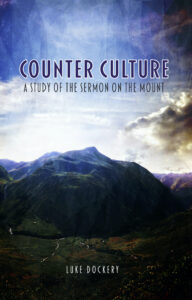
If you enjoyed this post, you might enjoy my book on the Sermon on the Mount, Counter Culture: A Study of the Sermon on the Mount. 

Although this book was written specifically as an aid to teaching the Sermon on the Mount to junior high and high school students, it is also useful for personal Bible study, and the depth of the material makes it a great resource for adult Bible classes.


[1] Chris Seidman and Joshua Graves, Heaven on Earth: Realizing the Good Life Now (Nashville, TN, Abingdon Press, 2012), 64.

[2] Warren Carter, “Power and Identities: The Contexts of Matthew’s Sermon on the Mount,” in Preaching the Sermon on the Mount: The World It Imagines, ed. David Fleer and Dave Bland (St. Louis: Chalice Press, 2007), 19.

[3] Albert Barnes, Matthew and Mark, Notes on the New Testament (Grand Rapids, MI: Baker Book House, 1949), 45; Rubel Shelly, The Beatitudes: Jesus’ Formula for Happiness (Nashville, TN, 20th Century Christian, 1982), 54.

[4] Seidman and Graves, 68.

[5] James Burton Coffman, Commentary on the Gospel of Matthew, (Austin, TX: Firm Foundation Publishing House, 1968), 53; Francis Wright Beare, The Gospel According to Matthew: A Commentary (Oxford: Basil Blackwell, 1981), 133.

Ecclesiastes on Independence Day

Ecclesiastes has become one of my favorite biblical books. I have studied it a lot, and have actually released two books on Ecclesiastes in recent months, so it has a way of always being near the forefront of my mind.

The author of Ecclesiastes does not give his name, but instead calls himself Qoheleth (pronounced ko-hell-it), a Hebrew word meaning “gatherer” (Ecclesiastes is the Greek form of the Hebrew word Qoheleth). Likely, this is a reference to his gathering of observations and proverbs about wisdom to share with others, which is why the word is often translated as “Teacher.”

Many people assume that the Teacher of Ecclesiastes is some sort of cynical pessimist who is always criticizing, and ultimately sees no redeeming value in life. I would argue, however, that such people have not read Ecclesiastes closely enough. Indeed, the Teacher points out many negative elements of human existence. Life is brief and mysterious, and there are many things that we do not understand and that don’t turn out the way we think they should. The Teacher unflinchingly confronts the harsh realities of life.

In the face of these harsh realities, however, the Teacher doesn’t advocate despair, apathy, or cynicism; he urges…joy! Life is hard and there are things that are less than ideal, but that doesn’t negate the real, tangible blessings that God has bestowed upon us, and we should be grateful for and appreciate those things.


Today is July 4, Independence Day. When I was a kid, the 4th of July was an uncomplicated holiday for me. It was about going down to the country to be with my family and shoot off fireworks.

But Independence Day commemorates a historical event and, therefore, calls for reflection. As I have gotten older, those reflections have led to complicated thoughts and emotions. I have patriotic feelings, prompted by the blessings I experience as an American citizen, and recognition of good things that the United States has done in its history. But I also have feelings of regret, as I reflect on 200+ years of American history and the various times and instances in which we have failed to live up to our ideals of “life, liberty, and the pursuit of happiness” for all Americans. And beyond that, I have deep feelings of ambivalence, as my identity as a Christian calls me to question the validity of the revolution that produced the United States, and my primary allegiance to King Jesus means that I can only “pledge allegiance to the flag” in a very qualified way.


What does any of this have to do with Ecclesiastes? Quite a bit, I think.

Some will spend Independence Day glorifying the principles, ideals, and exploits of the United States, willfully blind to its many historical and current shortcomings. Others will spend the day in lament, critical of its many failings and finding nothing to celebrate.

I don’t think Qoheleth would do either of these, though. I think he would be the first to honestly admit that the US has often failed to live up to its best principles and that we still have a long way to go. Instead of being cynical about that reality, though, he would look for the joy. In addition to the critique, he would also acknowledge the good that the US has done for its citizens and in the world, thank God for the blessing of living in a land of opportunity, and enjoy a hot dog with friends and family.

Here’s wishing you a safe, enjoyable, and thoughtful Independence Day! May God be praised for the blessings He has heaped upon us, and may we use those blessings to demonstrate our love for our neighbors.

The Beatitudes: Blessed Are Those Who Hunger and Thirst for Righteousness

As discussed in the introductory post of this series, Jesus’s Beatitudes in the Sermon on the Mount are basically a description of what a good life really looks like from God’s perspective. Jesus redefines what blessedness is, and provides an alternative set of values for His followers, those who desire to be a part of His alternative community. Here are the Beatitudes we have discussed thus far:


Blessed Are Those Who Hunger and Thirst for Righteousness

“Blessed are those who hunger and thirst for righteousness, for they shall be satisfied.”

(Matthew 5.6)

When we think of “righteousness,” we primarily think of it as a spiritual or religious word that refers to our moral condition and our relationship with God. That is not incorrect, but in both Hebrew and Greek, the words translated as “righteousness” in our Bibles also convey the meaning “justice.” Those two ideas—righteousness and justice—seem fairly distinct to us, but it is significant that in both of the primary original languages of Scripture, they are closely connected.[1]

Righteousness and justice seem fairly distinct to us, but it is significant that in both of the primary original languages of Scripture, they are closely connected. Share on X

So when Jesus discusses hungering and thirsting for “righteousness,” He is most likely referring to those who are seeking to live in a way that results in right relationship with both God (righteousness) and other people (justice). This also makes a lot of sense in the context of Jesus saying that the two greatest commandments are loving God with everything we have and loving our neighbors as ourselves (Matthew 22.37-39). When we place these two commandments at the center of our lives, then we are pursuing righteousness. Or, put differently, a good way to think of righteousness is that Jesus is “calling for any and all action that attempt[s] to make things right in the world.”[2]

When we place the two greatest commandments at the center of our lives, then we are pursuing righteousness. Share on X

Another key idea to this beatitude is the idea of having “hunger and thirst” for righteousness. Living in the financially-blessed conditions of the United States, most of us really know very little about what it means to be hungry or thirsty. The hunger of the ancient world was not a gentle growling of the stomach reminding us that we haven’t eaten for a few hours. Indeed, most people barely had enough to eat to get by, and meals of more than enough (like what I get any time I go to a fast food restaurant) were very rare indeed. Similarly, whenever I am thirsty, I can generally get access to clean drinking water within a matter of minutes. Again, this was not the case in the ancient world.[3] So the idea here is not someone who has a mild desire for righteousness, but rather, someone who desperately craves it.

There’s an old story about a young man who went to see a wise old man to ask him about the right way to live.[4] The wise man led him down to a river, and together they walked out into it. When the water was deep enough, the wise man suddenly grabbed the young man, pushed him under the water and held his head submerged! Naturally, the young man began to struggle with all his might to escape and get his head above water again. He finally managed to get free, and broke the surface of the water, gasping for breath. As he gulped down the precious air, the wise man said, “When you thought you were about to drown, what did you want more than anything else?” “Air!” the young man responded. The old man replied: “When you want righteousness as much as you wanted air just now, it will become a possibility for you. But not before.”

How much do you desire to be right with God and other people? As much as a starving person wants food? As much as a drowning person wants air? Because that is the characteristic of citizens of the kingdom that Jesus is describing here.

Undoubtedly, that is a high standard to set, but there should also be some comfort to us in this verse because it affirms the virtue of the pursuit of righteousness rather than simply attaining it. Because of our imperfect natures, we often fall short of what we desire to achieve, but it is important to notice here that Jesus pronounces blessing on those who seek righteousness.[5] In other words, don’t beat yourself up over your failings; instead, pick yourself up and continue the pursuit for righteousness, because it is that pursuit that Jesus calls “blessed.” Hunger and thirst for it.

God promises that if you do, you will be satisfied.


If you enjoyed this post, you might enjoy my book on the Sermon on the Mount, Counter Culture: A Study of the Sermon on the Mount. 

Although this book was written specifically as an aid to teaching the Sermon on the Mount to junior high and high school students, it is also useful for personal Bible study, and the depth of the material makes it a great resource for adult Bible classes.


[1] Larry Chouinard, Matthew, The College Press NIV Commentary (Joplin, MO, College Press, 1997), 98, suggests that justice is more on Jesus’ mind in this instance, but I am not sure that there is anything to suggest that both (closely-related) ideas could not be what He was communicating.

[2] Chris Seidman and Joshua Graves, Heaven on Earth: Realizing the Good Life Now (Nashville, TN, Abingdon Press, 2012), 58.

[3] William Barclay, The Gospel of Matthew Volume 1, The Daily Study Bible (Philadelphia, Westminster Press, 1956), 94.

[4] See Rubel Shelly, The Beatitudes: Jesus’ Formula for Happiness (Nashville, TN, 20th Century Christian, 1982), 47-48.

[5] Ibid., 96.

The Beatitudes: Blessed Are the Meek

As discussed in the introductory post of this series, Jesus’s Beatitudes in the Sermon on the Mount are basically a description of what a good life really looks like from God’s perspective. Jesus redefines what blessedness is, and provides an alternative set of values for His followers, those who desire to be a part of His alternative community. Here are the Beatitudes we have discussed thus far:


Blessed Are The Meek

“Blessed are the meek, for they shall inherit the earth.”

(Matthew 5.5)

This beatitude is challenging for us to understand because the word “meek” is not one that we commonly use or understand very well. A lot of times when we think of meekness, we associate it with people who are quiet, mild-mannered, and weak-willed, but meekness, at least in the Bible, does not mean weakness or cowardice.[1] To better understand the meaning here, it would help us to look at the word itself, and the Old Testament context from which Jesus borrows it.

In Greek, the word translated “meek” (πραυς/praus) is also used to describe a wild horse that has been tamed.[2] So the idea is not people of weak character or no backbone, but rather, those who, “having been tamed by God, are the masters of their spirits.”[3] Also, Jesus was a Jewish teacher instructing a Jewish audience, and when He talks about the meek inheriting the earth, He is actually quoting from Psalm 37.11, a text His audience would have known well. In that context, the psalm refers to the righteous poor, who are being threatened and oppressed by the wicked wealthy. In the face of such oppression, the meek do not worry about evildoers, but instead trust in God, knowing that He will root out the wicked.[4] In many ways, this beatitude seems to parallel the first one, with meekness and being poor in spirit essentially referring to the same characteristic of those who radically trust in God, and both are promised an inheritance from God.[5]

Meekness describes those who, in the face of insult and injury, are able to remain patient and composed rather than flying off the handle. Share on X

In light of all this, meekness actually suggests strength of character, not weakness. It describes those who, in the face of insult and provocation, are able to remain calm and composed rather than flying off the handle. Meekness is not the surrender of our rights, but it is the ability to overlook slights, knowing that God is in charge and will ultimately vindicate us. As one commentator states:

“[Meekness] is proof of true greatness of soul. It comes from a heart too great to be moved by little insults. It looks upon those who offer them with pity. He that is constantly ruffled; that suffers every little insult or injury to throw him off his guard and to raise a storm of passion within, is at the mercy of every mortal that choose to disturb him.”[6]

Again, we can see how the characteristics that Jesus describes in the Beatitudes are radically counter-cultural. We live in a highly anxious society where so many people seem to be constantly offended by everything. In such a climate, it may seem a brave thing to constantly complain about how everyone is annoying and offending you, but when you think about it, this is actually a very weak position to be in: you are admitting that other people have constant control over your emotions and responses. Those who are meek, on the other hand, boldly refuse to give others control over their emotions and responses. Instead, empowered by the knowledge that God is in control and will ultimately vindicate them, the meek are strong enough in character to shake off the slights and insults of others, even from those who, from a worldly perspective, might be in a position of superiority over them.

Those who are meek boldly refuse to give others control over their emotional responses. Share on X

In God’s eyes, those who are meek are living the good life, and they are promised an inheritance from the Father.


If you enjoyed this post, you might enjoy my book on the Sermon on the Mount, Counter Culture: A Study of the Sermon on the Mount. 

Although this book was written specifically as an aid to teaching the Sermon on the Mount to junior high and high school students, it is also useful for personal Bible study, and the depth of the material makes it a great resource for adult Bible classes.


[1] Larry Chouinard, Matthew, The College Press NIV Commentary (Joplin, MO, College Press, 1997), 97.

[2] Jack P. Lewis, The Gospel According to Matthew, Part I, The Living Word Commentary (Austin, TX: Sweet Publishing, 1976), 81.

[3] Lewis, 81.

[4] Ibid., 81; Warren Carter, “Power and Identities: The Contexts of Matthew’s Sermon on the Mount,“ in Preaching the Sermon on the Mount: The World It Imagines, ed. David Fleer and Dave Bland (St. Louis: Chalice Press, 2007), 18.

[5] Chouinard, 96; Francis Wright Beare, The Gospel According to Matthew: A Commentary (Oxford: Basil Blackwell, 1981), 130.

[6] Albert Barnes, Matthew and Mark, Notes on the New Testament (Grand Rapids, MI: Baker Book House, 1949), 44.

« Older posts Newer posts »

© 2026 The Doc File

Theme by Anders Noren — Up ↑