The online journal of Luke Dockery

Category: Christianity (Page 56 of 64)

Viewing Your Church Leaders as More than the Customer Service Department

We live in a consumer culture which, among other things, means that we are constantly buying things, using them up, and then buying more. In a consumer culture, the idea of customer satisfaction and the practice of customer service is incredibly important—if you want customers to purchase and consume your product or use your service instead of those of your competitors, then you either have to focus on having a better or cheaper product/service than they do, or treating your customers better than they do (or, ideally, both!).

As a consumer, I value customer service highly. I’ve mentioned before how I love Amazon because of their outstanding customer service. They make it easy (and usually free) to return items and they’ve even paid the shipping before for me to return items even when it was my fault.

And there’s nothing wrong with any of that.

The problem though is that we take our consumer mindset and try to apply it to church as well. You see this all the time: when looking for a new congregation to be a part of, families “shop” around for a church and compare different congregations like they would products in a store.

And to a degree, that’s a necessary thing—when looking for a church, you need to find one you agree with theologically, and you need to find a community of believers where you can fit in and form relationships. But it can also be a dangerous thing, I think, when churches are evaluated only from the perspective of what they have to offer you (as a consumer), rather than you asking yourself how your gifts and talents could be added to make the work of a particular congregation more effective (to paraphrase JFK: “Ask not what your church can do for you; ask what you can do for your church.”).

Another part of this consumer mindset in the church is that it basically turns church leadership into the customer service department. In his book, A Church That Flies: A New Call to Restoration in the Churches of Christ, Tim Woodroof says something that I think is incredibly important (even though it’s not at all the focus of the book). Basically, he says that it’s amazing how many church members are willing to voice their opinions and complain to their elders* but are very reluctant to listen and learn from them. In my experience, this is absolutely true—church members are very quick to run to elders with their complaints, but very slow to seek their counsel and advice. And that’s a shame.

We have four elders at Farmington, and I know all of them well. None of them are perfect, and they all have flaws (as they would freely admit). But all of them are good, mature Christian men who deeply care about the spiritual well-being of the flock they oversee. As a group, they complement one another well, and would be a valuable resource to any church member who is struggling.

And probably the same could be said for the leadership at your church, which means they deserve more than to be treated like the church customer service department. Think about that the next time you have a complaint.

*One of the distinctive marks of churches of Christ is that we seek to follow a model of church leadership, found in the New Testament, where each congregation or church is autonomous and led by a group of men known as elders (or shepherds, or bishops, or overseers).


Winter Retreat Recap: SHINE

This past weekend was our annual youth group Winter Retreat. This is one of my favorite youth group events of the year, because we are able to take a break from our regular schedules for a weekend and focus on other things instead. It is always a time where the kids in our group grow closer together, get spiritually re-engergized, and have a ton of fun.

This year, the theme of our retreat was “SHINE,” and we talked about light and darkness from a spiritual perspective. Throughout Scripture, God is consistently portrayed using the metaphor of light, and as followers of God, Christians are to be people of light as well.

Our teachings on this topic were organized around three lessons which showed the progression of the theme throughout the weekend:

(1) The Shining Face of Moses (Exodus 33.18-23; Exodus 34.28-35). After Moses leads the people out of Egypt, he spends 40 days and 40 nights with God on Mt. Sinai while God gives the Law to him. Moses is protected in the crevice of a rock, and is only able to see the back of God’s glory as He passes, but the glory of God is so bright that it leaves Moses with a face that literally shines. He even wears a veil to cover his face. Being in the presence of God changes us.

(2) The Shining Light Comes to Earth (John 1.1-14; The Nativity Story). With the birth of Jesus, God reveals His glory and brings His Light to the earth in a new and special way. Jesus was fully God and fully man at the same time, and this means that the life of Jesus gives us the perfect example of how we can live in our dark world and still shine God’s Light.

(3) Shining God’s Light to Others (John 8.12; John 9.5; Matthew 5.14-16; Philippians 2.14-15; 1 John 1.5-7). After talking about the greatness of God’s glory and how that glory was brought to earth in a special way through the Incarnation of Jesus Christ, our last lesson brought all this together, and focus on our main task as Christians: shining the light of God into our dark world.

Instead of presenting this material in a traditional lecture format, our teens were broken into discussion groups based on age, and processed and learned the material that way. We then combined the separate groups for a larger group discussion, which (hopefully) helped to reinforce the material.

It was a great weekend! We had a lot of fun, and I am optimistic that the teens learned a lot as well.

Seeing Our Problems As Blessings

Something that I realized once in a rare moment of clarity was how, as Americans, we are so incredibly blessed that even most of our “problems”—the things we worry and complain about—are really just outgrowths of our blessings.

Let me give a few examples:

  1. The main complaints you hear from college students center on (a) how expensive college is and (b) how difficult and stressful college coursework is (I have been guilty of both of these complaints in my life). But from another perspective, it’s easy to see how fortunate we are to live in a country where the government provides a great deal of assistance in paying for college and basically gives students as much time as they need to pay it back. Furthermore, whatever temporary stresses and hardships college work can bring on someone is more than made up for by the opportunities a college education affords. Having the opportunity to go to college is a great blessing!
  2. You hear people complain all the time about their cars (I especially hear this from teenagers!)—about how they are too small, or too old, or not cool enough, or get poor gas mileage, etc.—when the idea of owning a car is literally unimaginable to most people in the world. Owning a car is a great blessing!
  3. People complain about their jobs—about low pay, or how boring it is, or how mean their bosses are, or how annoying their coworkers are—when there are people all over the world who are unemployed and in desperate need of work. Having a job is a great blessing!
  4. Parents often spend a great deal of time worrying about their children. They worry about how their kids do in school, if they have the right kind of friends, if they have enough friends, getting them to every sports practice on time so the coach will give them playing time and they can grow up to become the next superstar in their sport. Some parents have children with health concerns, and worry about the uncertainty associated with that (this one strikes home with me). But all of these worries are only made possible by the fact that parents have children in the first place, and children are truly one of the great, great blessings of life!
  5. And finally, from a spiritual standpoint, I hear Christians complain all the time about problems that exist in the church of which they are a part—people they don’t like, bad sermons, unfriendliness, lack of programs—when there are millions of people throughout the world who have never even heard of Christ, or even if they have heard and decided to follow Him, have no local congregation of the church to be a part of. You wouldn’t be able to complain about your church if you didn’t have one; having a church family is a great blessing!

Obviously, I am speaking in generalizations here, and each of us has trials and issues that we have to face in our own lives. But on the whole, we are so incredibly blessed…I don’t know what we’d do if we had to deal with real problems on a daily basis.

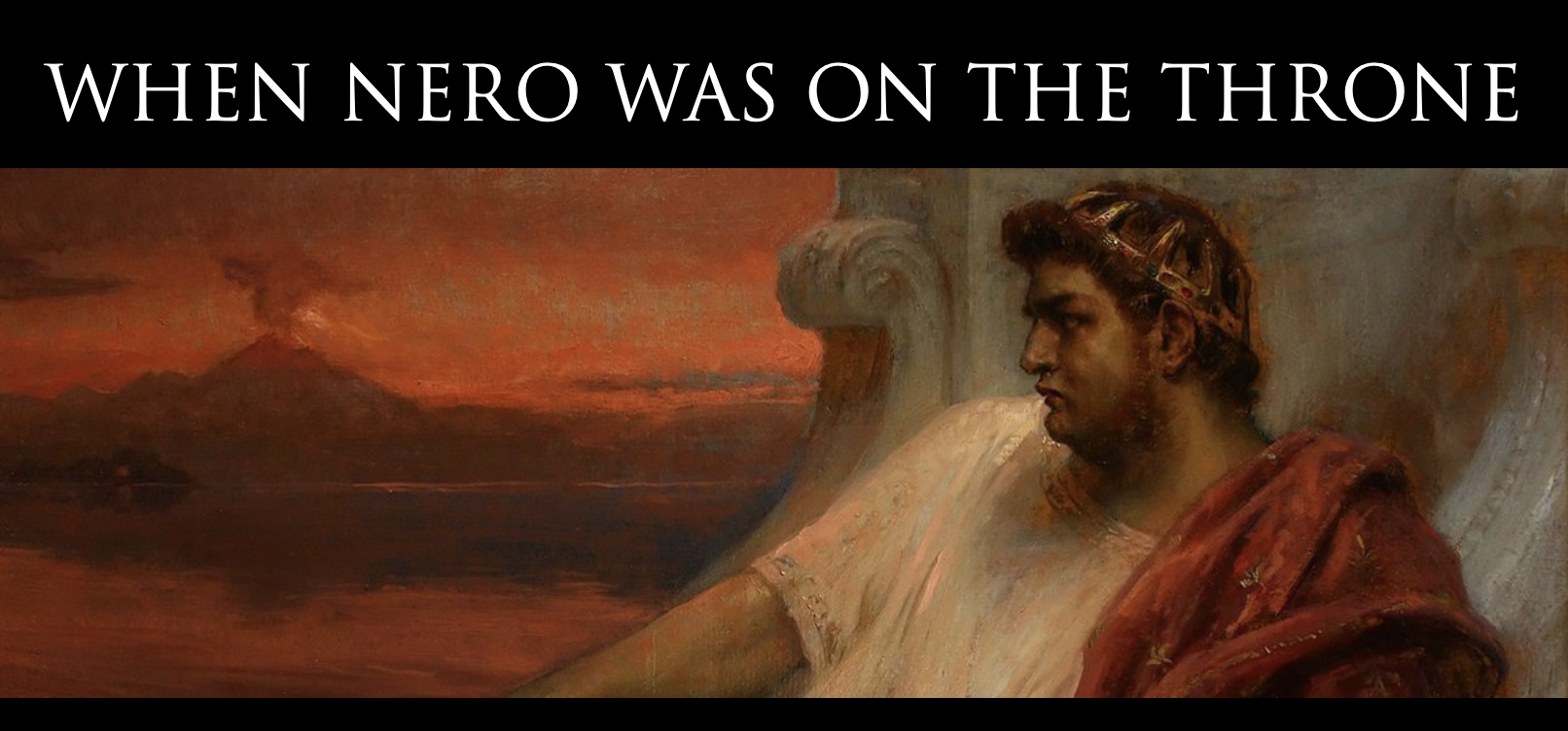
When Nero Was On The Throne

It has been interesting to me over the last 12 hours or so to read Facebook status updates and tweets from my Christians friends about yesterday’s presidential election. The fact that some of these Christians are celebrating the reelection of President Obama while others are lamenting it tell me that either:

  1. Applying Christian values to voting is a difficult and murky process.
  2. Christians aren’t very aware of what “Christian values” actually are.
  3. Both 1 and 2 are partially true.

But I digress. If your candidate won yesterday, be happy, be thankful, and try not to gloat too much. If your candidate did not win yesterday (and if you are in this group, you are the real audience for this post), remember that as a Christian, you can glorify God by showing respect to the one who is in authority, even if he wasn’t your choice:

“Let every person be subject to the governing authorities. For there is no authority except from God, and those that exist have been instituted by God. Therefore whoever resists the authorities resists what God has appointed, and those who resist will incur judgment. For rulers are not a terror to good conduct, but to bad. Would you have no fear of the one who is in authority? Then do what is good, and you will receive his approval, for he is God’s servant for your good. But if you do wrong, be afraid, for he does not bear the sword in vain. For he is the servant of God, an avenger who carries out God’s wrath on the wrongdoer. Therefore one must be in subjection, not only to avoid God’s wrath but also for the sake of conscience. For because of this you also pay taxes, for the authorities are ministers of God, attending to this very thing. Pay to all what is owed to them: taxes to whom taxes are owed, revenue to whom revenue is owed, respect to whom respect is owed, honor to whom honor is owed.”

(Romans 13.1-7)

Paul’s words here are pretty hard to swallow for Christians who struggle to respect and submit to their leaders. When we think about leaders that we don’t like much, it can be difficult for us to affirm statements like, “the authorities are ministers of God” and that resisting them means that we are resisting “what God has appointed”. But that’s exactly what Paul says.

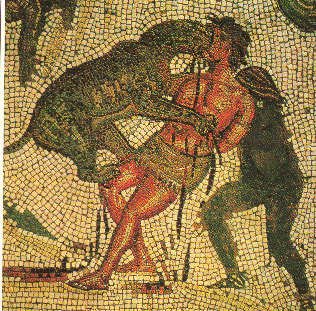
Mosaic depicting a Christian martyr

And to those who are inclined to think that Paul just didn’t understand about bad leaders, realize that he wrote these words to the Christians in Rome while Nero was Emperor. Nero was a vile man and a dedicated persecutor of Christians who was known for using the bodies of captured Christians as fuel for the fires which lit his garden at night. No President that our nation has ever had could hold a candle to Nero when it comes to sheer wickedness*, and it was most likely during the reign of Nero that Paul himself was executed. And yet, to a man such as this, Paul urges Christians to be in subjection.

If your candidate didn’t win yesterday, it’s okay to be disappointed. It’s okay to disagree with the policies of the current President, and it’s okay to hope for a better outcome next time. But respect your President, and be in subjection to him. Even if it is hard.


*Please do not interpret this to mean that I am suggesting that President Obama is somehow equivalent to Nero. I am not.

Friday Summary Report, November 2

Today’s installment will be brief, as I am in the midst of a particularly busy day:

(1) Yesterday, Harding University (my alma mater) announced that Bruce McLarty has been selected as the next President of the school. It has been interesting to me to read the array of responses from various parties about the announcements. I think Bruce firmly grasps Harding’s identity in the context of Churches of Christ, Christian colleges, and education in general, and it is my belief that he will continue to steer Harding on the unique course which it has chosen. In general, my feeling is this: if you love what Harding is, then I think Bruce is a great choice; if you are critical of Harding, then probably he is not your ideal candidate. Personally, I am excited.

(2) Here is an outstanding post from Scott Bond on “Why Little Girls Need Their Dad.” As a fairly recent father of a little girl, the post was especially meaningful for me, but I think it’s a good read for any Christian father.

(3) Last month set an all-time record in traffic here at The Doc File. This was a pleasant surprise, as my school workload really slowed down my posting after the first few days of the month. Thanks to all who continue to read!

(4) This post on Hashtag Media has gotten some attention. If you haven’t read it yet, check out the good things that these guys are doing.

« Older posts Newer posts »

© 2026 The Doc File

Theme by Anders Noren — Up ↑