The online journal of Luke Dockery

Category: Christianity (Page 6 of 64)

Exiled from Home

This is the second in a short series of posts based on a rereading of Tim Keller’s The Prodigal God. As I mentioned in the first post, although I liked the book the first time I read it, I suspect that I wasn’t quite at the place in life to fully appreciate it and I enjoyed it much more the second time around.
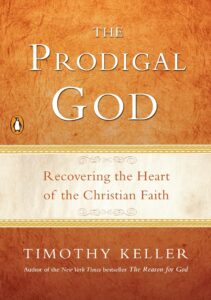


In The Prodigal God, Keller describes how all of us can identify with the younger brother. This doesn’t mean that we have dramatic departures from home, characterized by reckless, sinful living in the far country. Indeed, I personally don’t identify with this aspect of the younger son; it has always been the elder brother that strikes a little too close to home for me.

But there is another sense that we are like the younger brother: we feel like we are away from home, and there is a yearning that nothing quite seems to meet. Indeed, this element of being exiled from home is a key feature of the biblical narrative:[1]

We are all exiles, always longing for home. We are always traveling, never arriving. The houses and families we actually inhabit are only inns along the way, but they aren’t home. Home continues to evade us.

Why would “home” be so powerful and yet so elusive for us? The answer can be found as we examine one of the most pervasive themes of the Bible. The experience we have been describing is the trace in our souls of this larger story.

In the beginning of the book of Genesis we learn the reason why all people feel like exiles, like we aren’t really home. We are told there that we were created to live in the garden of God. That was the world we were built for, a place in which there was no parting from love, no decay or disease. It was all these things because it was life before the face of God, in his presence. There we were to adore and serve his infinite majesty, and to know, enjoy, and reflect his infinite beauty. That was our original home, the true country we were made for.

However, the Bible teaches that, as in Jesus’s parable, God was the “father” of that home and we chafed under his authority. We wanted to live without God’s interference, and so we turned away, became alienated from him, and lost our home for the same reason the younger brother lost his. The result was exile.

So, this is another element of tragedy that comes from the story of rebellion and fall in the Garden of Eden. In addition to the devastating effects of sin, the feeling of being exiled from home becomes a defining characteristic of our lives. Like the younger son, we rebel against our father, and like the younger son, we suffer from homelessness as a result.

The Bible says that we have been wandering as spiritual exiles ever since. That is, we have been living in a world that no longer fits our deepest longings. Though we long for bodies that “run and are not weary,” we have become subject to diseases, aging, and death. Though we need love that lasts, all our relationships are subject to the inevitable entropy of time, and they crumble in our hands. Even people who stay true to us die and leave us, or we die and leave them. Though we long to make a difference in the world through our work, we experience endless frustration. We never fully realize our hopes and dreams. We may work hard to re-create the home that we have lost, but, says the Bible, it only exists in the presence of the heavenly father from which we have fled.

Here, Keller comes to the crux of our existential crisis: we have been living in a world that no longer fits our deepest longings. Keller mentions three aspects of this:

  1. The physical decay of our bodies, ultimately resulting in death
  2. The disintegration of our valued relationships
  3. The ultimate futility of our desire to leave a legacy or make a difference in the world

This is straight out of the book of Ecclesiastes: the hebel or vanity of life.

This is an element of The Prodigal of God that resonates much more deeply as I read this now than when I was in my mid-20s. I am aware of the physical decay of my body and the overall fragility of life. I am not as fast as I used to be, I have to work harder to be strong, I get injured more easily, and it takes longer to recover. I am too keenly aware of people whose lives are snuffed out at a young age through accident, illness, or tragedy, and I have witnessed more and more people that I care about pass away.

In my mid-20s, my friendships seemed so healthy and even “old friendships” seemed very recent, but since then I have seen how they are “subject to the inevitable entropy of time.” I have witnessed the dissolution of the marriages of couples that I have loved, and the ending of many of my friendships—sometimes abruptly through events I don’t even understand, sometimes through a change in lifestyle and values, and sometimes just the slow fade caused by geographical distance. And, as Keller points out, even the very best and most faithful relationships end in death (theirs or ours).

In my mid-20s, it seemed like my whole life was ahead of me, and I had plenty of time to make my mark on the world (whatever that would look like). Now, I am days away from my 42nd birthday, decidedly middle-aged, and keenly aware that I am not going to find lasting significance in my work or accomplishments and that I will be forgotten shortly after I die (echoes of Ecclesiastes again). I am incapable of accomplishing everything I want to, regardless of how hard I work.

And these are universal feelings: 

This theme is played out again and again in the Bible. After Adam and Eve’s exile from the ultimate home, their son Cain was forced to restlessly wander the earth because he murdered his brother Abel. Later Jacob cheated his father and brother and fled into exile for years. After that, Jacob’s son Joseph and his family were taken from their homeland into Egypt because of a famine. There the Israelites were enslaved until, under Moses, they returned to their ancestral home. Centuries after this, David, before he became king, lived as a hunted fugitive. Finally the whole nation of Israel was exiled again, taken captive to Babylon by King Nebuchadnezzar.

It is no coincidence that story after story contains the pattern of exile. The message of the Bible is that the human race is a band of exiles trying to come home. The parable of the prodigal son is about every one of us.

Now, all of this sounds depressing, but none of this should drive us to despair. It should, however, help us “come to our senses” (Luke 15.17), realize how good things are with our Father, and come home to Him!

Or, in the words of C.S. Lewis: “If we find ourselves with a desire that nothing in this world can satisfy, the most probable explanation is that we were made for another world.”[2] These longings that we have are not inappropriate or outrageous, but we will not find them here.

So, the Christian is like the prodigal son: there is an uneasy realization that we are exiles far from home, and we are trying to get home to our Father (and the Elder Brother that we need). And one glorious day, we will be exiled no longer.


[1] The quoted portions are from Timothy Keller, The Prodigal God: Recovering the Heart of the Christian Faith (New York: Dutton, 2008), 95-98.

[2] C.S. Lewis, Mere Christianity (San Francisco: HarperOne, 2001), 136-37.

The Elder Brother We Need

Rereading books is such an interesting enterprise for me. Multiple times, I have been surprised at how much more I appreciate a book the second time I read it, and that is certainly the case with Timothy Keller’s The Prodigal God. I first read this book over 15 years ago when I was still a new minister, and back then, I thought it had some good things to say but wasn’t overly impressed. I reread it earlier this year, and several things have changed significantly since I first read it, including that I am now a father, I have been in the trenches of ministry for nearly two decades, I have developed a deep appreciation for the ministry and wisdom of Tim Keller, and I have developed a keen awareness of my own sinfulness. Taken together, this means that The Prodigal God struck me differently the second time through—I loved it.


In The Prodigal God, Keller uses Jesus’s famous parable of the Prodigal Son as a lens to examine the heart of the Christian gospel. It is a short book—less than 150 pages—and can easily be read in a few hours, but it is packed with wisdom and insight. I’d like to write a few short posts to focus on some of the ideas that struck me most.

In popular tellings of the Prodigal Son, much of the attention is given to the younger son, who demands his share of his father’s inheritance, moves off to a far country, squanders everything he has, and then returns home to his father when he is destitute. When he returns, his father welcomes him back and throws a party for him, and this element of the story emphasizes key aspects of the gospel story—our sinfulness and lack of gratitude, and the love, generosity, mercy, and forgiveness of God.

All of this is important, but of course, in Jesus’s telling of the story, there are two sons, and they are both important if we are to understand the nature of humanity and the truth of the gospel. There is also an elder brother who stays at home dutifully working for his father, and who is embittered when his younger brother returns and is celebrated by his dad. If the younger brother represents the “tax collectors and sinners” that Jesus spent so much time with, the elder brother represents the Pharisees and religious leaders who were dutiful but hard-hearted and misunderstood the nature of God.

From Keller:

By putting a flawed elder brother in the story, Jesus is inviting us to imagine and yearn for a true one.

And we have him. Think of the kind of brother we need. We need one who does not just go to the next country to find us but who will come all the way from heaven to earth. We need one who is willing to pay not just a finite amount of money, but, at the infinite cost of his own life to bring us into God’s family, for our debt is so much greater. Either as elder brothers or as younger brothers we have rebelled against the father. We deserve alienation, isolation, and rejection. The point of the parable is that forgiveness always involves a price—someone has to pay. There was no way for the younger brother to return to the family uniless the older brother bore the cost himself. Our true elder brother paid our debt, on the cross, in our place.

There Jesus was stripped naked of his robe and dignity so that we could be clothed with a dignity and standing we don’t deserve. On the cross Jesus was treated as an outcast so that we could be brought into God’s family freely by grace. There Jesus drank the cup of eternal justice so that we might have the cup of the Father’s joy.  There was no other way for the heavenly Father to bring us in, except at the expense of our true elder brother.[1]

Jesus is the elder brother we so desperately need: He goes to great lengths to pursue us, assumes our debt Himself, and celebrates our return.


[1] Timothy Keller, The Prodigal God: Recovering the Heart of the Christian Faith (New York: Dutton, 2008), 84-85.


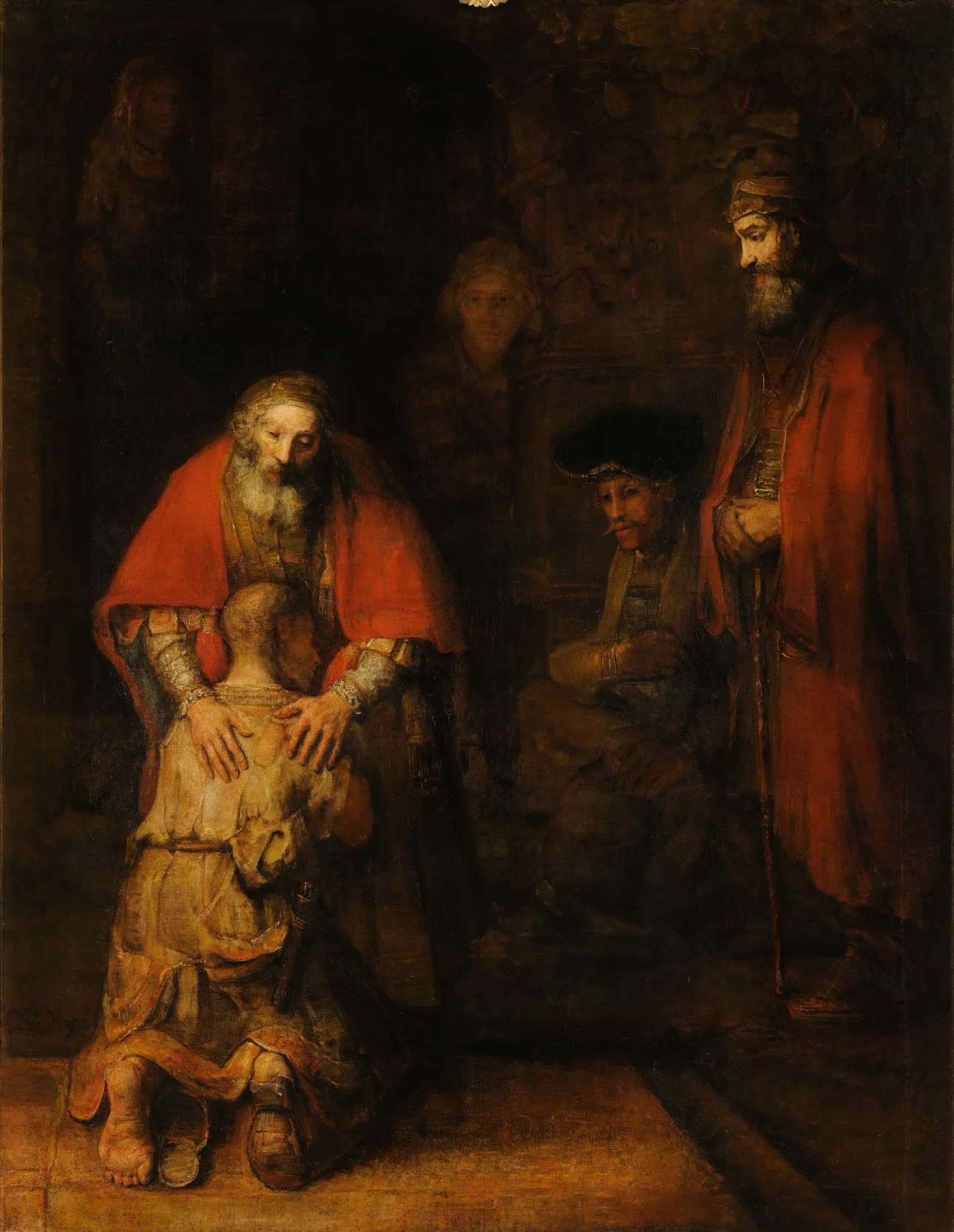
The image above is from Rembrandt’s 1669 masterpiece, “The Return of the Prodigal Son.” The elder brother stands on the right, literally and figuratively looking down on his younger brother.

The Model for Every Christian Preacher

What does the model Christian preacher look like? That question likely prompts various responses from different people. Some perhaps think of a polished communicator who is pleasing to listen to. Others might prefer someone with theological depth who delves into the biblical text in profound or novel ways. Some might yearn for nostalgia—a certain type of preaching that they miss from a bygone era. And still others might look for someone who is entertaining, who tells funny jokes and keeps our attention. 

With a little more reflection, we might say that, obviously, Jesus is the model Christian preacher. After all, Jesus is the model of all of Christian life, we are His disciples, and we seek to become like Him. No sermon has ever been as brilliant or powerful as the Sermon on the Mount, so this is obviously the correct answer, right?

What I wrote in the previous paragraph is true, but there is a really crucial way in which we cannot emulate Jesus when it comes to preaching—Jesus Himself is the focus of Christian preaching, the Son of God who, following His resurrection and ascension has been enthroned as the King of the universe, and has the ultimate authority to interpret to teach, command, and judge. 

On the contrary, when I preach, it is not myself that should be the focus, and the only authority that I have is that which is derived from God’s revealed word. In that sense, the model Christian preacher is not Jesus, but John the Baptist. 

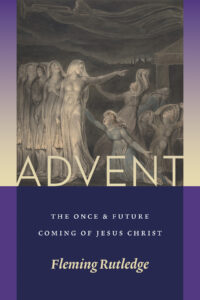
As Fleming Rutledge writes in Advent: The Once & Future Coming of Jesus Christ (emphasis mine):

All four New Testament Evangelists agree: there is no good news, no gospel of Jesus Christ, without John the Baptist. John’s whole life was lived with but one purpose; he was born, a man of destiny, to declare the imminent arrival of the coming Messiah. This voice crying in the wilderness, this “lantern which shone in front of the Son of God,” is extraordinary in many ways, but most of all for the single-mindedness with which he pursued his mission even to death, for John the Baptist feared no man, not even Herod the king, and no woman either, not even Herod’s wife, who in the end arranged to have his head cut off. But let us take note: this firebrand who recognized no superior was utterly submissive before the One whose coming he lived and died to illuminate. “John said to them, ‘One is coming who is mightier than I, and I am not fit to untie the thong of his sandal.’” (Luke 3:15-16).

To be the witness, to point away from himself to Jesus Christ—this is the destiny of John, and in these things, he is a model for every Christian preacher.[1]

The model Christian preacher, regardless of style, appearance, or skill, is one who draws the audience’s attention away from himself and instead points directly to Jesus Christ. And this is the challenge for all of us who have the privilege and the burden to preach—people should walk away from our sermons not reflecting upon our wit, brilliance, or skill, but upon Jesus Christ and Him crucified (cf. 1 Corinthians 2.1-2).

The model Christian preacher, regardless of style, appearance, or skill, is one who draws the audience’s attention away from himself and instead points directly to Jesus Christ. Share on X

[1] Fleming Rutledge, Advent: The Once and Future Coming of Jesus Christ (Grand Rapids: Eerdmans, 2018), 276.

Enemies at the Table

Psalm 23 is famous and iconic: the image of Yahweh as a shepherd who provides all that we need, gives us rest and protection, and accompanies us through the darkest valleys of life. It is a comforting passage that emphasizes God’s love for us and the total sufficiency of His care and provision.

In Psalm 23.5, the metaphor seems to shift.[1] “You prepare a table before me in the presence of my enemies….” Certainly, this is still in keeping with the idea of God’s provision, but there is a heightened element with the allusion to enemies. Psalm 23 is subtitled “a Psalm of David,” and David was a character who certainly faced a series of enemies throughout his life, and had times of hardship where he experienced hunger and privation.

But what are we to make of the notion of feasting in front of our enemies? Is this a display of Yahweh’s support and vindication, perhaps coupled with a sense of triumph and gloating over our enemies? Many commentators think so. Here is a typical example:

“[The enemies] were compelled to look on and see how God provided for him. It was manifest that this was from God; it was a proof of the Divine favour; it furnished an assurance that he who had done this would never leave him to want. The friends of God are made to triumph in the very presence of their foes. Their enemies are compelled to see how he interposes in their behalf, how he provides for them, and how he defends them. Their final triumph in the day of judgment will be in the very presence of all their assembled enemies, for in their very presence he will pronounce the sentence which will make their eternal happiness sure….”[2]

I don’t necessarily have problems with this. Clearly, the picture here emphasizes God’s provision, and the provision itself signifies the vindication of David the Psalmist as a friend of God. And I confess that my initial, surface-level reading suggests at least a hint of gloating and triumphalism that I find a little distasteful—after all, don’t we teach our kids to be kind and humble in victory, rather than rubbing it in the faces of their opponents? Doesn’t Jesus tell us to love our enemies? Is it loving to gloat? Indeed, C.S. Lewis famously criticized this part of Psalm 23 on these grounds.[3]

With all of this in mind, I can’t help but wonder if there is more going on here—if only we had some additional instruction or example of dining in the presence of enemies that would bring some clarity to the situation! I don’t think the interpretation quoted above is incorrect, but I do wonder if it is incomplete.


Eating at tables was a large part of Jesus’s ministry. He performed His first miracle at a wedding in Cana, He told parables about feasts and banquets, and He instituted the Lord’s Supper in the context of a Passover meal.

He also dined frequently…with enemies. Some of those were enemies of established religious and moral order and respectability—Jesus repeatedly received criticism for eating with “tax collectors and sinners” (Matthew 9.10-17; Mark 2.15-22; Luke 5.29-39). In Luke 19, He famously visited the home of the diminutive chief tax collector Zacchaeus, and there He again was criticized for dining with a sinner. But the meal seems to have a transformative effect on Zacchaeus, who declares himself to be a changed man, and Jesus asserts that this is exactly the reason why He came—to seek and save the lost (Luke 19.10). Jesus had invited Himself over to Zacchaeus’s house, but it was in order to invite Zacchaeus to receive salvation.

Another time, Jesus dined at the home of Simon the Pharisee, a member of the sect that so frequently opposed Jesus (Luke 7.36-49). In other words, He dine with a different sort of enemy. While there, a “sinful woman” came and washed Jesus’s feet with her tears, dried them with her hair, and poured perfume on them. Simon is scandalized by this, and Jesus then tells him a parable to illustrate that it is those who recognize their need for forgiveness who are most motivated to love God in return. He is almost pleading with Simon to reevaluate the spiritual condition of His life.

And of course, on the last night before His crucifixion, Jesus spent the evening sharing a meal with His disciples. Of course, these were not Jesus’s enemies—at least, they were not supposed to be. But within a matter of hours, these friends would desert Him, and one of them, Judas Iscariot, would betray Him. But still, Jesus chooses to eat with these men, and He encourages them to love one another and to be unified.

Reflecting on all of this, it seems clear from Jesus’s own practice: He does not eat with enemies to humiliate them; rather, in humility, He eats with them to invite them into the fellowship of God and His people. “He eats to woo and win them, not to belittle or degrade.”[4]

In light of the practice of Jesus Himself, the Good Shepherd, it does make me rethink aspects of the interpretation of Psalm 23 mentioned above. As promised, God prepares a table before us in the presence of our enemies, but what if we dine in the presence of our enemies not to make our enemies become ashamed, but to make our enemies become our friends?

Indeed, this is the way of Jesus.

What if we dine in the presence of our enemies not to make our enemies become ashamed, but to make our enemies become our friends? Share on X

In this loose series of Scripture Reflections, I am sharing brief thoughts spurred on by my Bible reading. By way of reminder, my goal for these brief posts is two-fold:

(1) To remark on aspects of the biblical text that I find to be of interest that the reader may or may not have thought about previously.

(2) When possible, to point to the work and person of Jesus Christ. I believe the Bible is a unified story that points to Jesus, which means that He is frequently alluded to or foreshadowed in some way throughout the biblical canon.


[1] Scholars debate this, with some suggesting that the shepherd metaphor persists throughout the entire psalm. That doesn’t seem to be the case to me.

[2] Albert Barnes, Psalms I, Notes on the Old Testament (Grand Rapids, MI: Baker Book House, 1950), 213.

[3] C.S. Lewis, Reflection on the Psalms (San Francisco: HarperOne, 2017), 24-25: “The poet’s enjoyment of his present prosperity would not be complete unless those horrid Joneses (who used to look down their noses at him) were watching it all and hating it. This may not be so diabolical as the passages I have quoted above; but the pettiness and vulgarity of it, especially in such surroundings, are hard to endure.” I think Lewis misses the mark here, but I get where he is coming from. 

[4] David Gibson, “Why C.S. Lewis Was Wrong about Psalm 23,” Crossway, October 27, 2023, https://www.crossway.org/articles/why-c-s-lewis-was-wrong-about-psalm-23/.

God Provides the Sacrifice

Genesis 22 is one of the most moving and haunting chapters of Scripture; it recounts the story of Akedah, or the Binding of Isaac, as Abraham is commanded to take his son and offer him as a sacrifice on an altar on Mount Moriah.

1 After these things God tested Abraham and said to him, “Abraham!” And he said, “Here I am.” 2 He said, “Take your son, your only son Isaac, whom you love, and go to the land of Moriah, and offer him there as a burnt offering on one of the mountains of which I shall tell you.”

(Genesis 22.1-2)

This must have been an agonizing task for Abraham, as he is called to offer his beloved son, the one for whom he had so long waited, the one on whom all his future hopes rested. The narrative is told slowly, with painstaking detail, heightening the tension and the growing sense of tragedy.

3 So Abraham rose early in the morning, saddled his donkey, and took two of his young men with him, and his son Isaac. And he cut the wood for the burnt offering and arose and went to the place of which God had told him. 4 On the third day Abraham lifted up his eyes and saw the place from afar. 5 Then Abraham said to his young men, “Stay here with the donkey; I and the boy will go over there and worship and come again to you.” 6 And Abraham took the wood of the burnt offering and laid it on Isaac his son. And he took in his hand the fire and the knife. So they went both of them together. 7 And Isaac said to his father Abraham, “My father!” And he said, “Here I am, my son.” He said, “Behold, the fire and the wood, but where is the lamb for a burnt offering?” 8 Abraham said, “God will provide for himself the lamb for a burnt offering, my son.” So they went both of them together.

9 When they came to the place of which God had told him, Abraham built the altar there and laid the wood in order and bound Isaac his son and laid him on the altar, on top of the wood. 10 Then Abraham reached out his hand and took the knife to slaughter his son. 11 But the angel of the LORD called to him from heaven and said, “Abraham, Abraham!” And he said, “Here I am.” 12 He said, “Do not lay your hand on the boy or do anything to him, for now I know that you fear God, seeing you have not withheld your son, your only son, from me.” 13 And Abraham lifted up his eyes and looked, and behold, behind him was a ram, caught in a thicket by his horns. And Abraham went and took the ram and offered it up as a burnt offering instead of his son. 14 So Abraham called the name of that place, “The LORD will provide”; as it is said to this day, “On the mount of the LORD it shall be provided.”

(Genesis 22.3-14)

But, as tragic as this story could have been, things turn out okay: Isaac is not offered as a sacrifice because God steps in and provides another sacrifice, a ram that had been caught in a thicket. The father did not have to witness the death of his beloved son.

Abraham looks around and calls the name of that place, “The LORD will provide.”


We fast forward hundreds of years to a very similar mountain[1] on another altar of sorts, where Jesus, the beloved Son, the One for whom the world had so long waited, the One on whom all future hopes rested, hangs on a cross.

But this time, there is no alternative sacrifice. The Father does witness the death of His beloved Son because Jesus Himself is the alternative. The LORD did provide, and He provided the Lamb slain from the foundation of the world…to take the place of Isaac…to take the place of each of us.

Unlike with Isaac, this time, there is no alternative sacrifice. The Father does witness the death of His beloved Son because Jesus Himself is the alternative. Share on X

God provides the sacrifice because God Himself is the sacrifice, absorbing the darkness of the world into Himself.


In this loose series of Scripture Reflections, I am sharing brief thoughts spurred on by my Bible reading. By way of reminder, my goal for these brief posts is two-fold:

(1) To remark on aspects of the biblical text that I find to be of interest that the reader may or may not have thought about previously.

(2) When possible, to point to the work and person of Jesus Christ. I believe the Bible is a unified story that points to Jesus, which means that He is frequently alluded to or foreshadowed in some way throughout the biblical canon.


[1] Scholars debate the relative locations of Mount Moriah and Golgotha, but many believe them to be the same place.

« Older posts Newer posts »

© 2026 The Doc File

Theme by Anders Noren — Up ↑