The online journal of Luke Dockery

Category: Christianity (Page 5 of 64)

Origin Story featured in The Christian Chronicle

Back in March, I wrote about the release of Origin Story: Churches of Christ and the Restoration Movement. This book, which I co-authored with my good friend Jared Pack, is, as far as I know unique in that is seeks to present a history of Churches of Christ specifically geared towards teenagers. Published by Deeper Youth Ministry, the book has sold pretty well and received some good reviews, but I was pleasantly surprised when The Christian Chronicle reviewed it in a recent issue.

The reviewer, Zack Martin, is an instructor of historical theology and dean of students at Heritage Christian University in Florence, Alabama, and had several kind things to say:

[Dockery and Pack] are honest about how unity and restoration are in tension with one another in the life of a Christian; however, that should never stop one from seeking to live in balance with these two biblical ideas.

Due to the struggle between the two ideas, the Restoration Movement has consistently favored one over the other throughout its history. The results have not always been pretty, but the authors do not shy away from the unpleasant aspects of the movement, such as the presence of controversial figures or issues like segregation.

Also important is the book’s examination of the Restoration Movement within the broader context of church history. Churches of Christ will often start in the first century and then skip to 19th century America. But this book reminds the reader that historical events and movements do not happen in a vacuum.

This book is written and designed with young people in mind. But it can also be used for an adult Bible class or personal study for adults who want to learn more about their spiritual heritage and identity.

I am very thankful for Dockery and Pack and for this project. I hope that our fellowship supports this work not only because it is presented in an entertaining format, but also because it will help reshape Churches of Christ in the way of the true restoration plea.

I am thankful for the kind review, and the broader exposure given to the book. For the record, I don’t make a penny off any of these book sales; my motivation is simply to see more churches and students within Churches of Christ learn something about our history in the Restoration Movement, and appreciate the value of the restoration plea: the desire to bring about unity among God’s people by adhering to the clear teachings of Jesus and the apostles and the practices of the early church.

You can order the book from Amazon here, or read the full review at The Christian Chronicle here.

Son of Samson? The Tragic Legacy of Doing What’s Right in Our Own Eyes

Samson is a tragic Old Testament figure. Far from being the hero that children’s storybooks often make him out to be, he is more of a cautionary tale of what happens when we give in to our own selfish desires rather listen to God’s call and direction for our life.

Samson was specially chosen by God: a miraculous offspring to a barren woman, set apart as a Nazirite all his days, with the mission of beginning to save the people of Israel from the Philistines (Judges 13.3-5). Famously, he is blessed with great strength by God, but he mainly uses it to pursue personal vengeance or evade consequences for his actions rather than any sort of concerted effort on behalf of the people of Israel. Further, he apparently despises his Nazirite vow, violating every element of it, from touching a lion corpse, to participating in drunken parties, to ultimately letting his hair be cut (Judges 14–16).

This latter event occurs while he is in the clutches of the femme fatale Delilah, and is the direct cause of his downfall. Samson is blinded and enslaved by the Philistines, but even in this lowly state, God works through him to bring about a final act of judgment on the Philistines (Judges 16.23-31).

And thus, the tragic tale of Samson comes to an end…or does it? I’ve read through the book of Judges numerous times, but on my last reading, I discovered something that I had never seen before.


Judges 17–21 are different from the rest of the book. Rather than providing narratives of different judges, these chapters relate stories to indicate the lawlessness of Israel in a time when “there was no king” and “everyone did what was right in their own eyes.”[1]  Judges 17–18 might be described as religious lawlessness, while chapters 19–21 are indicative of moral lawlessness. The point is that things have thoroughly gotten really bad in Israel, in all aspects of life.

But, are these chapters more directly connected with what has come before? Judges 17 introduces the character of Micah:

1 There was a man of the hill country of Ephraim, whose name was Micah. 2 And he said to his mother, “The 1,100 pieces of silver that were taken from you, about which you uttered a curse, and also spoke it in my ears, behold, the silver is with me; I took it.” And his mother said, “Blessed be my son by the LORD.” (Judges 17.1-2a)

The lawlessness of Israel is on immediate display here, as Micah steals from his own mother, but the interesting detail that should catch our attention is the amount that he stole: 1,100 pieces of silver. This same number appeared in the last chapter, as it was the amount that each of the “lords of the Philistines” promised to pay Delilah for delivering Samson into their hands.

So, is this a mere coincidence, or is the narrator deliberately linking Micah’s unnamed mother with the character of Delilah? Furthermore, is it possible that Samson himself could be the father of Micah? Scholars have suggested so:

“The Philistine lords each give Delilah eleven hundred pieces of silver, the same amount Micah steals. The question immediately arises as to why the amounts are the same. The easiest answer is that the narrator attempts to establish a connection between the two stories: that Samson is Micah’s father and Delilah, his mother.”[2]

In addition to the link of the amount of silver pieces, there are other points of connection:

  • The story is told directly after the Samson cycle in Judges 13–16.
  • Both Delilah and Micah’s mother are portrayed as unattached, and interfere with God’s religious activity among His people—Delilah compromises an Israelite judge, and Micah’s mother compromises Israelite religion by encouraging Micah to create an idol.[3]
  • There is a geographical link: the “hill country of Ephraim” is close to the Valley of Sorek where Samson meets Delilah.[4]
  • Micah has no named father; this would be the first case in Judges where a main male character did not have a named father. [5]
  • In the story, Micah will have significant dealings with the tribe of Dan, Samson’s own tribe.[6]

Micah himself is a shady character: after confessing to stealing from his mother, she returns some of the silver to him so he can make an idol from it. He then goes on to create a shrine in his house, and ordains one of his sons to become a priest. Later, when a Levite travels through town, Micah offers him a job as a priest in his heretical shrine, and thinks that somehow this will manipulate the LORD into blessing him (Judges 17.13). Blessing does not come, however, as a group of thuggish Danites arrive in Judges 18, and steal Micah’s new Levite priest from him and threaten him with violence. Again, it is a sad story that points to the lawlessness and depravity of Israel.

Connecting this story to Samson isn’t necessary to interpret it well, but is there anything gained from this connection? I think so. Part of the theme of the book of Judges is that Israel experiences a downward spiral of unfaithfulness—things get worse and worse as time goes on, and Israel’s spiritual dysfunction is intergenerational. We already have an example of one judge with a mixed record whose offspring is a villain (Gideon and Abimelech), and Samson and Micah could be a recapitulation of this theme. And perhaps, this is the big point: when even the leaders of God’s people do “what is right in their own eyes,” what hope is there for the next generation?

When even the leaders of God’s people do “what is right in their own eyes,” what hope is there for the next generation? Share on X

May God, in His grace, save us from such leaders, and for those of us who are leaders, may we seek what is right in God’s eyes rather than our own!


[1] Regardless of the inclinations of postmodern culture where everyone is encouraged to “live out their own truth,” the biblical narrative is clear: when everyone does what is right in their own eyes, the result is lawlessness and depravity.

[2] Rob Fleenor and Mark S. Ziese, Judges & Ruth, The College Press NIV Commentary (Joplin, MO: College Press, 2008), 249.

[3] Fleenor and Ziese, Judges & Ruth, 249.

[4] Ibid.

[5] Tammi Schneider, Judges, Berit Olam (Collegeville, MN: Liturgical Press, 1999), 232.

[6] Schneider, Judges, 232.

The Coming One

Revelation is a challenging book. It is written as apocalypse—a specific literary genre that leans heavily into historical context. The problem is that most readers are not familiar with the genre or the historical context, so Revelation remains largely impenetrable, susceptible to the wild speculation of religious charlatans and geopolitical prognosticators.

Regardless of the difficulties, most Christians are at least vaguely aware of the broad point of the book—there is a cosmic spiritual struggle going on between Jesus and the forces of darkness (the great dragon and his allies). The forces of darkness are powerful and seductive. They are actively recruiting followers of the Slain Lamb to commit treason and switch sides, and at times, it can seem like this is the smart move because it appears that the dragon is winning.

“Don’t be deceived!” says John in his apocalypse, and indeed, he reveals the reality of the situation: it is important that we choose wisely about whose side we are on in this cosmic struggle, because it is God’s side that will be overwhelmingly victorious.

At times, Christians can lose sight of this essential aspect of the Christian story. Often when we think of Jesus, we look back to the things Jesus did—His incarnation, ministry, miracles, crucifixion, and resurrection. Sometimes, we look around at our current lives and the ways Jesus gives meaning, comfort, and support to our existence right now. All of this is good, but while Christianity is a historically rooted faith that empowers meaningful life in the present, it is ultimately a future-facing endeavor: Jesus is coming again, and when He returns, He will fix the brokenness of the world and set it right.

This truth is underscored by one of Jesus’s titles that occurs multiple times in the book of Revelation, and is in the Gospels as well: ho erchomenos (Ὁ ἐρχόμενος), which translates as “The One who is to come” or more directly, “The Coming One.”[1] 

8 “I am the Alpha and the Omega,” says the Lord God, “who is and who was and who is to come, the Almighty.”

(Revelation 1.8)

2 Now when John heard in prison about the deeds of the Christ, he sent word by his disciples 3 and said to him, “Are you the one who is to come, or shall we look for another?”

(Matthew 11.2-3)

Jesus is The Coming One; His awaited arrival is a key aspect of His characterization, and while the title remains the same, the two verses quoted above (and others like them) describe two different comings. The first coming, of course, began at His incarnation. It was the arrival of the Jewish Messiah from the line of David, the one who would fulfill the faithfulness that Israel had always lacked. Jesus of Nazareth perfectly imaged the Father, sacrificed His life on behalf of the world, and conquered evil, sin, and death in His resurrection.

He then ascended to heaven, which leads to the Second Coming, because Jesus promised a return. He remains the Coming One, because He is coming again. This is an aspect of the Son that is somewhat out of vogue into today’s world (even among Christians!). Perhaps this is because He has been so long in coming that we are a bit embarrassed about it. Doesn’t it seem that He is perhaps, well, late? Don’t worry about that, Peter says:

8 But do not overlook this one fact, beloved, that with the Lord one day is as a thousand years, and a thousand years as one day. 9 The Lord is not slow to fulfill his promise as some count slowness, but is patient toward you, not wishing that any should perish, but that all should reach repentance.

(2 Peter 3.8–9)

Or perhaps we deemphasize this because the Second Coming is tied to judgment—King Jesus will eradicate evil when He returns, and that necessarily involves a quarantine of all those who reject His authority and want nothing to do with Him. Such notions are unpopular in a tolerant, pluralistic world where everyone is encouraged to live out their own truths.

Regardless of our emphasis, however, Scripture is clear: Jesus is the Coming One. He came before, and He is coming again. It’s who He is.

Scripture is clear: Jesus is the Coming One. He came before, and He is coming again. It’s who He is. Share on X

Despite the many centuries of waiting, many were not ready when He came the first time. We cannot make the same mistake:

10 But the day of the Lord will come like a thief, and then the heavens will pass away with a roar, and the heavenly bodies will be burned up and dissolved, and the earth and the works that are done on it will be exposed.

11 Since all these things are thus to be dissolved, what sort of people ought you to be in lives of holiness and godliness, 12 waiting for and hastening the coming of the day of God, because of which the heavens will be set on fire and dissolved, and the heavenly bodies will melt as they burn! 13 But according to his promise we are waiting for new heavens and a new earth in which righteousness dwells.

(2 Peter 3.10–13)

We must be ready. He is, and was, and is to come. The Coming One.


In this loose series of Scripture Reflections, I am sharing brief thoughts spurred on by my Bible reading. By way of reminder, my goal for these brief posts is two-fold:

(1) To remark on aspects of the biblical text that I find to be of interest that the reader may or may not have thought about previously.

(2) When possible, to point to the work and person of Jesus Christ. I believe the Bible is a unified story that points to Jesus, which means that He is frequently alluded to or foreshadowed in some way throughout the biblical canon.


[1] Fleming Rutledge, Advent: The Once and Future Coming of Jesus Christ (Grand Rapids: Eerdmans, 2018), 279n6, called my attention to this title.

So You Want to Hire a Youth Minister…

(About the picture: no, we don’t all look like this!)

On a fairly regular basis, I will have a church reach out to me to say something like this: “We are looking for a youth minister…I don’t suppose you would be interested? If not, is there someone good you can point us to or send our way?”

I tend to have several of these interactions because there are lots of churches looking for youth ministers, I have been a youth minister for a long time so there is an assumption that I am aware of potential candidates, and a lot of people know that I teach youth ministry at the college level and actively work to train youth ministry apprentices. Unfortunately, I usually don’t have great news for them. The reality is that there are more churches looking for youth ministers than there are youth ministers looking for churches. Our Christian colleges are seeking to train ministers and greatly incentivize students to study Bible and ministry, but there simply aren’t enough students to meet the demand. In my own case, in the six years I have been at my current position, I have mentored six young men who have all landed youth ministry jobs—the demand is so high that the last two accepted jobs months before they had graduated and finished with their apprenticeships!

In such a landscape, it is hard to find good candidates. The traditional approach of posting your job to some sort of listing service and then critically sifting through a stack of resumes to find the perfect fit isn’t likely to work anymore. I have witnessed even large, 1000+ member flagship congregations with impressive histories and reputations wait a year to find someone to fill their open positions. It is even harder for churches that are looking for a youth minister with significant experience—most of the youth ministry veterans I know are either well established at their churches and not interested in leaving, are transitioning to another kind of ministry, or are getting out of ministry altogether.


All of this may sound discouraging, but it’s important for churches to have a realistic understanding of the current landscape. Hiring a youth minister is not easy, but it is important, and it is a process that should be bathed in prayer. With all of that in mind, here are four strategies for churches in need of a youth minister:

(1) Keep the Youth Minister You Already Have

This may sound like a cop-out, and honestly it doesn’t apply to churches that already have a vacancy, but there is an important truth here that needs to be heard both by those looking to hire someone new and others who may be less than enthused with what they have and might wonder if the grass is greener elsewhere. There are exceptions to this, but churches tend to not have a great track record in how they treat ministers, and it is even worse for youth ministers, who tend to be younger, less experienced, and get paid less. There was a time when churches could burn through ministers confident that they could easily find the next guy to come along. That is not the case anymore.

If you have a youth minister who is struggling in various ways but is a loyal disciple of Jesus who loves kids, do everything you can to hold onto him. Provide him with mentoring or opportunities for further education to help him work on his weak areas. Encourage him by affirming the things he does well. Make sure to show that he is appreciated by paying him well (vacation, retirement, and insurance are parts of a compensation package too!). It is much easier to invest in the youth minister you already have and help him improve than to run him off and roll the dice on a new hire.

(2) Find Someone Good and Lure Them Away

So, I don’t feel great about this, because it kind of sounds like I am encouraging stealing good ministers from sister congregations! Certainly, that doesn’t seem like a very kingdom-minded approach. That’s not quite what I mean, though. Basically, this is where you try to use personal contacts of people in your congregation to reach out to youth ministers they know and respect who they think would do a good job and might have some incentive to move.

Perhaps it is not that they are unhappy in their current location, but maybe a move to your congregation would bring them closer to family, provide better opportunities for their own family, or give them the ability to grow and multiply their ministries. It is always risky to leave one successful ministry to go to another, but if there are some personal connections in place already, it can make the leap of faith more manageable.

(3) Alter Your Expectations

Look, everyone wants to find someone with good experience who is already married, has a couple of kids, and a wife who is eager to serve in 17 church ministries. But the reality is there aren’t many people like that out there who are looking, and if they are, everyone will be trying to hire them! Chances are that if you are a smaller church (100-200 people), you’re facing a youth ministry rebuild, or you have a track record of burning through youth ministers quickly, you are not the congregation they are going to choose.

Instead, be prepared to change your expectations somewhat. After all, the very best youth ministers in the world had to start somewhere, without experience. Jesus and Paul were not married, but most would argue that they did some decent ministry work in their day! Rather than setting your sights on an established “All-Star,” seek a younger minister who is eager to learn and grow into the role. A minister like this would need mentoring, perhaps additional schooling, and would need to be shown a great deal of patience, but the payoff can be huge![1]

It can be hard for a congregation that seems to be doing well and considers itself to be successful to accept the reality that they might have to “settle” for an inexperienced rookie, but again, the landscape is not what it once was. The good news is that especially if you are willing to hire someone younger, you can align your minister search with college graduation cycles and potentially hire someone before they graduate. Depending on how close they are geographically, they might even be able to come and do some events with your church and youth group between now and the time they graduate.[2]

(4) Raise Up Someone from within Your Congregation

Is there someone at your church that has a gifting or interest in working with teenagers? Affirm the giftedness you see within them (a key part of a calling to ministry is the testimony and affirmation of fellow believers), encourage them to consider the position, and provide them with the training they need to do the job. This could be on a part-time basis, but for the right person, it might represent a full career transition. I have known multiple people who have done this successfully. An advantage to this is that you potentially get the maturity that you are looking for, and someone who already knows the culture of the congregation and fits well within it (which is a major element of successful ministry). All they need is more focused biblical and youth ministry training, and that is readily available.

For the record, I think our churches in general need to start shifting toward this mindset of actively identifying people of character and passion within the congregation to raise up as ministers (whether preachers, youth ministers, children’s ministers, etc.) and equip them to do so. As mentioned above, our colleges simply cannot produce enough trained graduates to meet the great need on their own.

Hiring a youth minister is challenging in the best of circumstances, and these aren’t the best of circumstances. It requires patience, resilience, and a great deal of prayer. But if I found myself as a church leader or part of a search committee at a church that was looking, these are the strategies I would adopt.



[1] I’m biased because this was my own story. I’ll always be grateful to the Farmington Church of Christ, which took a chance on a young, untrained minister without experience and provided me space and grace to grow, and supported me going back to school for additional training.

[2] My last apprentice was hired last spring by a church even though he won’t graduate until this coming December. So, the church is having to wait several months for him, but he was able to work there over summer break. By the time he starts in January, he will already have had a full three-month stint working with the church and leading the youth group under his belt.


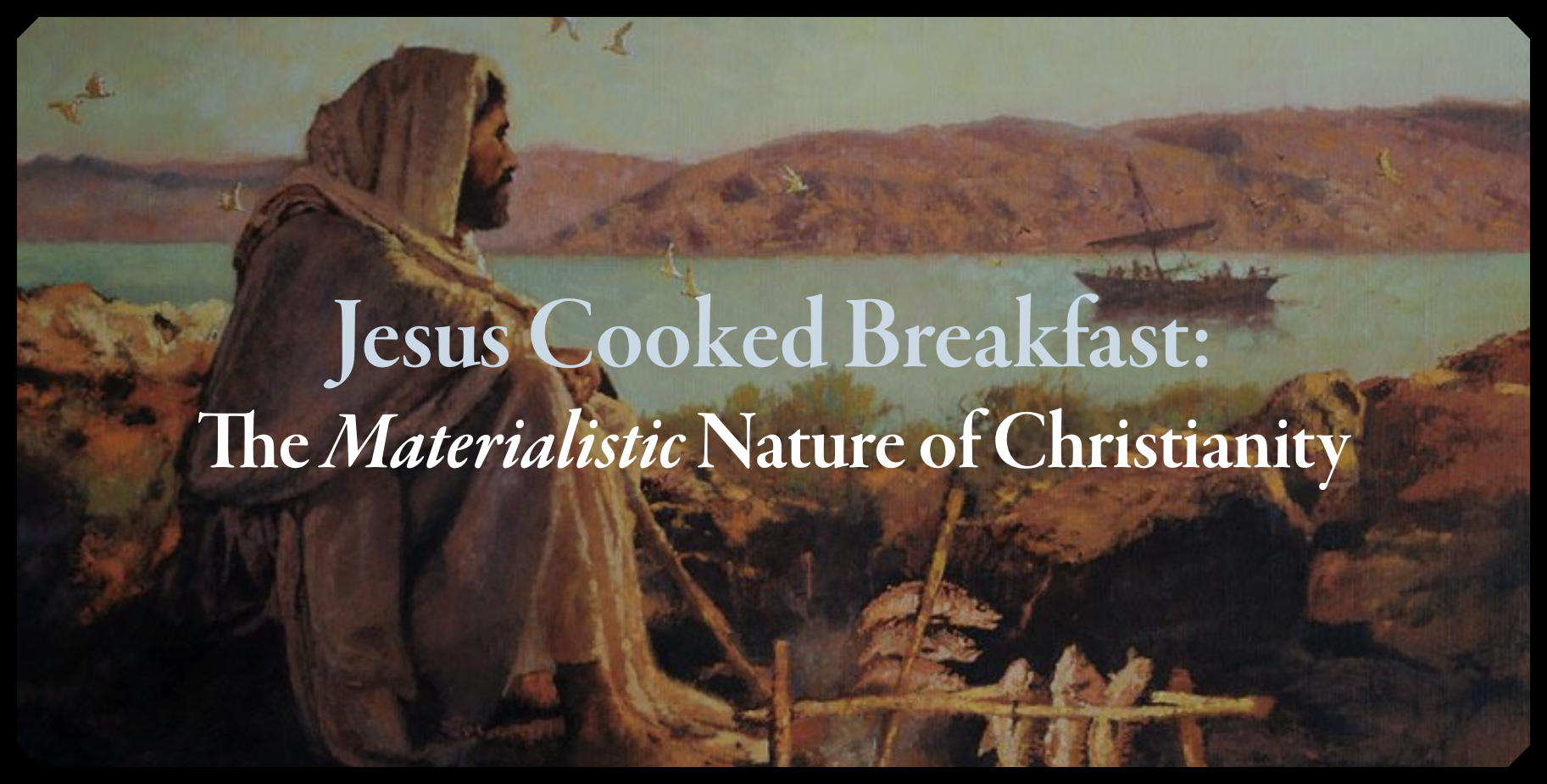
Jesus Cooked Breakfast: The Materialistic Nature of Christianity

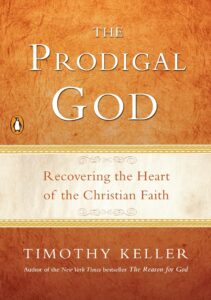
This is the third and final post in a short series based on a rereading of Tim Keller’s The Prodigal God. Although I liked the book well enough the first time, I found it to be particularly insightful the second time I read it; you can read the previous posts, “The Elder Brother We Need” and “Exiled from Home.”


Something that I have observed frequently in my life as a Christian is the elevation of “spiritual” things in a way that trivializes things that are material. This seemed normal and right to me for a long time, until I became a better student of theology and Christian history and realized that attempts to downplay “physical” and “material” things as unimportant are actually echoes of ancient Christian heresies like gnosticism or reflect influence from Greek platonism rather than being a genuine representation of the historic Christian faith, which emphasizes the goodness of creation and God’s intention to redeem it.

One of the things I loved about The Prodigal God was Keller’s section, “Salvation Is Material.”[1] In this section, he makes a brief but strong case for the material nature of Christianity. In fact, Keller claims that Christianity is perhaps the most materialistic of the world’s faiths. Here he does not mean materialism in the sense of being focused on wealth and possessions, but rather that the Christian faith values what is created and tangible.

Keller begins with the significance of meals in the Christian faith, and then traces God’s love for the material world through the biblical narrative (words in bold reflect my own emphasis):

A meal is a very physical experience. Jesus left a meal, the Lord’s Supper, to be remembered by, and the final goal of history is a meal, the wedding supper of the Lamb (Revelation 19). The resurrected Christ ate with his disciples when he met with them (Luke 24:42–43; John 21:9). What does it all mean? It is a sign that, for Jesus, this material world matters.

The book of Genesis tells us that when God made this world he looked upon the physical creation and called it “good.” He loves and cares for the material world. The fact of Jesus’s resurrection and the promise of a new heavens and new earth show clearly that he still cares for it. This world is not simply a theater for individual conversion narratives, to be discarded at the end when we all go to heaven. No, the ultimate purpose of Jesus is not only individual salvation and pardon for sins but also the renewal of this world, the end of disease, poverty, injustice, violence, suffering, and death. The climax of history is not a higher form of disembodied consciousness but a feast. God made the world with all its colors, tastes, lights, sounds, with all its life-forms living in interdependent systems. It is now marred, stained, and broken, and he will not rest until he has put it right.

Distinct from other world religions and philosophies, ministry of Jesus emphasized his care and concern for what happened to people in this material existence:

If the material world were only an allusion, as Eastern philosophy says, or only a temporary copy of the real, ideal world, as Plato says, then what happens in this world or in this life would be unimportant. All that would matter would be issues of soul or spirit. However, Jesus was not simply saved “in spirit” but was resurrected in body. God has made both soul and body and is going to redeem both soul and body. Everything about the ministry of Jesus demonstrated this fact. Jesus not only preached the world, but also healed the sick, fed the hungry, and cared for the needs of the poor.

In Matthew 25, Jesus describes Judgment Day. Many will stand there and call him “Lord,” but Jesus says, stunningly, that if they had not been serving the hungry, the refugee, the sick, and the prisoner, then they hadn’t been serving him (Matthew 25:34–40). This is no contradiction to what we have heard from Jesus in the Parable of the Prodigal Son. He is not saying that only the social workers get into heaven. Rather, he is saying that the inevitable sign that yo know you are a sinner saved by sheer, costly grace is a sensitive social conscience and a life poured out in deeds of service to the poor. Younger brothers are too selfish and elder brothers too self-righteous to care for the poor. 

I love what Keller says about the miracles of Jesus: rather than somehow overwhelming natural law and the way things are supposed to work, they were actually revelations of the way things are supposed to work—a restoration of the way God designed things from the beginning. And indeed, Jesus reveals a determination to deal with the broken aspects of life on earth, and his followers should have a similar determination:

Christianity, therefore, is perhaps the most materialistic of the world’s faiths. Jesus’s miracles were not so much violations of the natural order, but a restoration of the natural order. God did not create a world with blindness, leprosy, hunger, and death in it. Jesus’s miracles were signs that someday all these corruptions of his creation would be abolished. Christians therefore can talk of saving the soul and of building social systems that deliver safe streets and warm homes in the same sentence. With integrity.

Jesus hates suffering, injustice, evil, and death so much, he came and experienced it to defeat it and, someday, to wipe the world clean of it. Knowing all this, Christians cannot be passive about hunger, sickness, and injustice. Karl Marx and others have charged that religion is “the opiate of the masses.” That is, it is a sedative that makes people passive toward injustice, because there will be “pie in the sky bye and bye.” That may be true of some religions that teach people that this material world is unimportant or illusory. Christianity, however, teaches that God hates the suffering and oppression  of this material world so much, he was willing to get involved in it and to fight against it. Properly understood, Christianity is by no means the opiate of the people. It’s more like the smelling salts. 

The Christian faith, as revealed and embodied in Jesus of Nazareth, doesn’t pretend that suffering doesn’t matter or that it doesn’t exist. Rather, it helps wake us up to the reality of the brokenness of the world in which we live, and stirs us to action as representatives of a different sort of world where evil will be defeated and suffering will be no more.[2]

Tim Keller: Properly understood, Christianity is by no means the opiate of the people. It’s more like the smelling salts. Share on X

[1] The quoted portions are from Timothy Keller, The Prodigal God: Recovering the Heart of the Christian Faith (New York: Dutton, 2008), 110-13.

[2] In The Silver Chair in the Chronicles of Narnia, Puddleglum sticks his foot into the fire, and the suffering he experiences breaks the enchantment of evil that has overshadowed he and his companions. I believe C.S. Lewis was making a similar point to Keller, that suffering through a Christian lens “wakes us up” to the reality of the brokenness of our world.

« Older posts Newer posts »

© 2026 The Doc File

Theme by Anders Noren — Up ↑