The online journal of Luke Dockery

Category: Christianity (Page 8 of 64)

2024 Blog Review

I think reflection is a healthy practice, and I like to end each year by looking back and reviewing my year of blogging here at The Doc File (Here are some previous reviews from 2023, 2022, 2021, 2020, 2019, 2018, 2016, 2015, and 2012).

Overview

This past year—especially the first three-fourths of it—was extremely busy for me, and that negatively impacted how often I was able to write in this space. I will end the year with 19 posts, which is the fewest since 2019, when I wrote only 17 times. A goal for the new year is to prioritize writing more than I did last year.

Top Posts

By traffic totals, here are my most-read posts during 2024 (posts in bold were actually written this year):

  1. A New Heaven & A New Earth Series, April 29, 2020
  2. Reading in 2023, January 9, 2024
  3. A New Heaven & A New Earth: What the Bible Teaches about Eternity, April 9, 2020
  4. 2024 Harding University Lectureship Recap, December 19, 2024
  5. Jesus, Christmas, and Hanukkah, December 18, 2015
  6. Ranking Walt Disney World Parks, March 22, 2024
  7. A Great Week of Youth Ministry, March 2, 2024
  8. Politics from a Christian Perspective: Introduction, October 20, 2020
  9. A New Heaven & A New Earth Part 5: “Problem” Texts—John 14.1-3, May 8, 2020
  10. A New Heaven & A New Earth Part 6: The Redemption of All Things, May 14, 2020

Four of the top posts from 2023 were actually written this year, and it is always good to see new content get some traction:

  • I have developed certain traditions of posts that I write each year, and these have developed somewhat of a following over time. Reading in 2023 reviewed the books I read over the previous year, along with my favorites for 2023 (the 2024 version of this post is right around the corner!). I also review Harding’s Lectureship each year, and this year’s post got some traction, most likely because it discussed some controversy.
  • At the end of 2023, my family got to take an awesome trip to Disney World in Florida, and Ranking Walt Disney World Parks was a fun post that helped me to relive some of those memories and preserve my definitive rankings of the different parks.
  • A Great Week of Youth Ministry was one of my favorite posts to write, as it helped me reflect upon and process a particularly full and meaningful week of youth ministry and bask in the blessings of this wonderful vocation to which I have been called.

At the same time, part of the reason for preserving over 15 years of posts on this site is for people to be able to go back and read things they missed, and I am always gratified when older posts are read by new people. The series I wrote in 2020 on renewed eschatology continues to get a lot of views (taking four of the top ten spots), as does my post on Jesus, Christmas, and Hanukkah. Additionally, during this year’s election season, I reshared my series on Politics from a Christian Perspective, which garnered a decent amount of attention.

Blog Series

I didn’t do as much with ongoing Blog Series in 2024, but I did continue to contribute to Scripture Reflections. I added six more posts to this ongoing series over the past year:

This brings the series to a total to 26 posts. I plan to continue adding to this indefinitely, and suspect that it will eventually turn into a book project.


So, that was The Doc File in 2024! As mentioned above, it was a somewhat modest year for my blog, and I hope to write more here in 2025, and to make some adjustments to my regular schedule to help with that. This has become a formative spiritual discipline for me to process my thoughts here over the years, and so I want to intentionally support that practice. As always, I am thankful for your readership and support!

2024 Harding University Lectureship Recap

Every year, I write a post recapping Harding’s annual Bible Lectureship, which occurs in late September–early October. This year, due to significant busyness on my part, I did not get that done in a timely fashion. At this point, this post may not particularly relevant but it is still helpful to me to chronicle the event (and I don’t like leaving tasks unfinished).

Harding rebranded the Lectureship as “Inspire,” and with that came a slightly different approach with a greater emphasis on tracks rather than standalone lectures. The theme of this year was The Genesis of All Things, and focused on (surprise!) the book of Genesis.

I got to attend a variety of lectures and classes, and here is a brief recap of what I went to, along with some takeaway quotes:

Creation (Genesis 1-2), Devin & Elijah Swindle: Devin teaches Bible at Harding and directs the Center for Preaching, and his son Elijah is a senior Bible major. The evening keynotes traced the biblical metanarrative (Creation, Fall, Redemption, Mission), and the father-son duo tag-teamed the opening keynote of Lectureship and did a great job. They addressed how the biblical text provides answers to life’s big questions:

  1. God is the sovereign, only, benevolent Creator.
  2. We are royal priests made in God’s image.
  3. Our responsibilities are to promote God’s agenda, protect God’s creation, and provide blessing to God’s people.
  4. Of this He has given assurance to all through Jesus Christ, the incarnate Word of God and risen Lord.

Neller Preaching Workshop, John Walton: Walton is a renowned Old Testament scholar, influential for his work on Genesis and the Ancient Near East. I attended all three sessions he delivered at the Neller Preaching Workshop (“Preaching God’s Word from Genesis: Best Practices for Faithful Methodology,” “The Message of Scripture in Genesis 1-11,” and “The Message of Scripture in Genesis 12-50”), and two sessions that he gave the next day (“Recovering the Lost World of Genesis 1” and “Recovering the Lost World of Genesis 2-3”). I won’t try to review all of that material (I took pages and pages of notes), but instead just offer some general thoughts.

First, I should note that Harding came under some sharp criticism after Inspire for having Walton speak, purportedly because he was teaching theistic evolution. There were cries of lament that Harding had lost its way and no longer cared about the teachings of Scripture, and fervent appeals to Harding board members to straighten out the heresy. I don’t have the time or inclination to respond to all of that here, other than to say that I don’t have a lot of patience for the gatekeeping mentality that some (well-intentioned, I’m sure) believers have to always straighten out the (perceived) errors of others. I especially don’t have patience when that gatekeeping is based on false claims or, at the very least, on uncharitable takes. Speaking of Walton’s presentations specifically:

  1. Walton didn’t “teach theistic evolution.” He does, however, interpret Genesis 1-2 in such a way that it is not speaking of material origins, and thus, opens the door for alternate explanations (including theistic evolution).
  2. Walton takes the Bible very, very seriously. Part of what that means is that he is at great pains to read and interpret the biblical text the same way that the original audience would have heard and interpreted it. Literal reading of the English text divorced from its historical context is not the most faithful way to read it.
  3. Walton repeatedly stated that the strongest interpretation of a biblical text is the one with the most evidence. He encouraged his audience to test his own conclusions in their own study rather than blindly accept them.

I have read Walton’s material before and been blessed by it (he made my Top 10 book list in 2020), and I heard a lot of good content at the five lectures I attended. I also heard numerous things that made me scratch my head, and a few that I disagreed with and rejected. And such is the task of legitimate Bible study, or any exercise in critical thinking. We learn by being exposed to new ideas, wrestling with those, and ultimately, either (a) altering our previous perspectives to accommodate those new ideas, or (b) shoring up our previous perspectives through the process of examining those new ideas. Walton helped me do both of those things, and I was glad that I had the opportunity to hear him speak.

Fall (Genesis 3), Orpheus Heyward: Bro. Heyward speaks at a large and growing congregation in the Atlanta area, and delivered the Monday keynote. Heyward’s treatment of the fall was helpful, as he emphasized that salvation represents both a rescue and a recovery. Death being introduced into human existence as a result of the fall means that there is now something over which man does not have dominion; humanity needs someone who can recover that which was lost, and that someone has to conquer death. Jesus is the one who does this, tasting Death on our behalf, and destroying it as the last enemy, giving us back what we lost.

The Ink Is Dry, Rubel Shelly: Shelly has been a longtime preacher and academic within Churches of Christ, and he did three sessions related to his recent book, The Ink Is Dry, which basically holds to a historically orthodox Christian sexual ethic in dialogue with the wildly divergent sexual views in 21st-century America. This is a topic I have read quite a bit on, so there wasn’t too much here that was new, but these were excellent presentations, grounded in solid biblical and historical study.

“No one has ever made a positive case for same sex behavior from Scripture.”

“Christianity advances by persuasion, not civic legislation.”

“Holiness is to live with the grain of God’s own character.”

Jesus-Centered Youth Ministry, Daniel Parrish: Daniel is a friend and an excellent young minister, and spoke as part of the youth ministry track. He offered some really helpful principles to resist the temptation to “be God” in our own stories (this is something that youth ministers can certainly be susceptible to, building youth ministries that are centered on ourselves rather than Jesus):

  1. Check your posture. We can put ourselves under the illusion that we are higher than God, and feel like we can do youth ministry without trusting God. Spiritual disciplines help us to maintain a correct posture.
  2. Embrace your weaknesses. It is important for us to share our weaknesses in community—our message begins with our mess (1 Corinthians 12.9).
  3. Know who you are. We don’t have anything to prove if we trust that God values us. Serving did not cause Jesus to question His value; He knew the value He had in His Father’s eyes.

“Ultimately, youth ministry is about following Jesus and asking people to come with you.”

Best Practices for Fostering Lasting Faith in Children, Alicia Williamson: Alicia is a new member of the Bible faculty at Harding, and teaches a variety of courses including spiritual formation and children’s ministry. Her doctoral research focuses on spiritual formation in children and adolescents, and she used this session to highlight and summarize some of her research. I went to this session to learn, and also to support Alicia, who is one of my youth group parents. (Can I tell you how blessed/spoiled I am to have a resource like Alicia as we constantly work to improve our youth ministry?!)

Alicia’s class was excellent, and talked about the role that parents, grandparents, the church, and God’s creation all play in the spiritual formation of children.

“God has huge shoulders; He can handle our hard questions.”

Mission (Genesis 12), Nathan Bills: Nathan is the dean of the School of Human Development and associate professor of theology and ministry at Heritage Christian University College in Accra, Ghana. Nathan concluded the lectureship by speaking on the biblical theme of mission, emphasizing that blessing is the most used keyword in the story of the call of Abram in Genesis 12—blessing was always God’s goal. However, although God’s call to Abraham is about blessing, it begins with a departure—Abram is told to go! And so are we. As we are involved as agents in God’s mission of blessing the world, it necessitates that we go into the world to bring that blessing about.


In addition to attending all of the lectures described above, I also had the opportunity to speak on a panel discussion about Adult Education and Discipleship.

I got to hear a lot of good material at Inspire this year; I’m not sure how I feel about the new format, as I found it to be pretty exhausting to take in so many multi-part tracks. As always, it was a blessing to get to see so many old friends. Lectureship…er, I mean, Inspire, is always a highlight of my autumn.

Do Not Be Anxious about Your Life

This is an edited version of a sermon that I recently preached at Cloverdale Church of Christ.

I think that some people are naturally inclined toward worry, and I confess that I am one of those people. For as far back as I can remember, I have always struggled with worrying about things. This is still true today. In fact, over the last several months (with brief interludes), I have been stressed about a lot of different things and worried about fulfilling all of the commitments that I’ve made. And, of course, I know it’s not healthy to carry so much stress, so at times I worry about that too! I’m stressed out about how much stress I have! What an ironic and annoying cycle that is.

I suspect that I’m not the only one who struggles with this. Not the only person who feels stressed out and overstretched, not the only person who worries about people I love, not the only person who is uncertain about the future and the world in which we live, not the only person who is tempted to be anxious about a lot of things. I suspect that because we live in anxious times.

Anxious Times

Social psychologist Jonathan Haidt recently published a book, The Anxious Generation, that chronicles the alarming state of mental health among Generation Z, those individuals roughly between the ages of 10-25. By virtually any measure of mental health—psychological disorders, diagnoses of anxiety and depression, instances of non-fatal self-harm, and suicide rates—Gen Z is in a rough spot. Haidt ties this significantly to smartphones and social media because it was around 2010—when smartphones with social media apps became prevalent—that all of these measures began to spike upward. But there are other correlating factors too: drastically reduced amounts of sleep (which basically makes every aspect of life worse), breakdown of real-life interpersonal relationships, and certain parenting trends. An additional factor that I would add, which Haidt (who is not religious) leaves out: research consistently indicates a wide array of positive traits (including positive mental health outcomes) related to religious faith, but we live in a rapidly secularizing society where faith is on the decline. That is certainly part of the picture as well.

And while Haidt’s research focuses on Generation Z, these spikes in anxiety and depression are present in other generations as well. The spikes may not be quite as severe, but they’re there and they are significant. 

What sorts of things make you anxious?

  • Maybe it’s financial issues: will your paycheck stretch enough to be able to last for the whole month? Are you putting enough aside to live on when you retire? Is retirement even an option? 
  • Forget about retirement: maybe you’re anxious simply about the prospect of being able to get a job that will support a family. Maybe you’re worried about all of the schooling that lies between you and that job and all of the stress that comes with it.
  • Maybe it’s relational: maybe you are concerned about your relationship with your spouse, or your boyfriend or girlfriend, or your roommate, or your boss, or your co-workers, or your parents, or your children, or you adult children.
  • Maybe you are concerned about the health of a family member, or your own health—a recent diagnosis.
  • Maybe you’re worried about the upcoming election season—the direction of our country, the future of our nation.

We live in anxious times, and there is so much that can drive us to anxiety and worry if we let it. But Jesus has something to say about this. He has counsel for us to consider. Before we get into that, there are two things I want to mention briefly, just so you can be sure of what I’m not trying to say:

  • I don’t believe that Jesus’s teaching about anxiety means that you are a deficient Christian if you struggle with this or that it is wrong for you to seek help from a licensed counselor. Not at all. If you have an anxiety disorder, going to get help with that disorder is an exercise in actually trying to obey what Jesus says here. 
  • Also, not all worries and concerns are the same. The Bible actually speaks positively about Paul’s anxiety for the churches (2 Cor 11.28) and Timothy’s anxiety for the welfare of the Philippians (Phil. 2.20). Some issues are more worthy of our concern than others. But even in those areas, I think what Jesus says here is still helpful.

What Jesus Wants Us to Remember in Anxious Times

22 And he said to his disciples, “Therefore I tell you, do not be anxious about your life, what you will eat, nor about your body, what you will put on. 23 For life is more than food, and the body more than clothing. 24 Consider the ravens: they neither sow nor reap, they have neither storehouse nor barn, and yet God feeds them. Of how much more value are you than the birds! 25 And which of you by being anxious can add a single hour to his span of life? 26 If then you are not able to do as small a thing as that, why are you anxious about the rest? 27 Consider the lilies, how they grow: they neither toil nor spin, yet I tell you, even Solomon in all his glory was not arrayed like one of these. 28 But if God so clothes the grass, which is alive in the field today, and tomorrow is thrown into the oven, how much more will he clothe you, O you of little faith! 29 And do not seek what you are to eat and what you are to drink, nor be worried. 30 For all the nations of the world seek after these things, and your Father knows that you need them. 31 Instead, seek his kingdom, and these things will be added to you.

32 “Fear not, little flock, for it is your Father’s good pleasure to give you the kingdom. 33 Sell your possessions, and give to the needy. Provide yourselves with moneybags that do not grow old, with a treasure in the heavens that does not fail, where no thief approaches and no moth destroys. 34 For where your treasure is, there will your heart be also.

(Luke 12.22-34)

In this passage, beginning in Luke 12.22, Jesus tells His disciples, “Do not be anxious about your life, what you will eat, nor about your body, what you will put on.” It’s probably worth noting up front that Jesus is very aware that there are things in life that will prompt us to worry.

Look at the life of Jesus: did He experience financial insecurity? Of course: He was essentially homeless during His public ministry, and had to rely on the generosity of others or the occasional coin from the mouth of a fish to cover His expenses. Did He have relational problems? His brothers thought he was crazy, his cousin John was murdered, and one of His followers betrayed Him. Did he carry a lot of stress related to work? Well, His job was to be the Savior of the entire world, so yes, I think you could say that there was stress involved in work of that magnitude. 

Jesus wasn’t sheltered from the anxiety we feel. He lived in anxious times, too.

From Luke 12, here’s what Jesus wants us to remember in anxious times:

(1) Your Father knows, and He loves you.

We need to note that Jesus addresses this entire section of teaching to disciples—people who know God as their Father and are seeking to entrust Him with their lives. I say this because, if you don’t know God as your Father, I do genuinely believe that there is a lot to be worried about. Not just because of your eternal destination, but on a fundamental level, without God as your Father, you basically believe that it’s all up to you. You’re on your own in this life and you have to figure out your troubles yourself. 

But if we are disciples of Jesus, it should be different. God provides for the ravens, and He values us much more than they—we shouldn’t worry about our food. God clothes the lilies of the field and makes them beautiful, and values us much more than they—we shouldn’t worry about our clothing.

Jesus says in Luke 12.30 that “the nations of the world”—the Gentiles, those who don’t know God—they worry about these things. And that makes sense: they don’t know God as their Father. But it doesn’t make sense for those of us who claim God as our Father to worry about these things. If we are believers, we shouldn’t live like atheists. 

God is our Father. He knows what we need, and He loves us.

(2) Worrying doesn’t help.

Jesus asks in Luke 12.25, “Which of you by being anxious can add a single hour to his span of life?” Jesus is underscoring here the impotence, the powerlessness of worry—which of your problems can you solve by worrying about them?

A lot of the time we worry about things that are cloaked in the uncertainty of the future: an important meeting or presentation that is coming up, a difficult conversation that you are dreading, or the results from a medical scan that might change your life. But really, worrying about the future is just a way for us to increase the amount of trouble we have without solving anything. After all, if what we are worried about doesn’t come to pass, then we have worried for no reason. If the thing we are worried about does come to pass, we’ve robbed ourselves of peace of mind without positively affecting the situation in any way.

Worrying doesn’t help things. 

(3) Seek first God’s kingdom. 

Instead of being preoccupied with the worries and concerns of this world, we should instead seek God’s kingdom (Luke 12.31). Another way we could say this as disciples of Jesus is that we should emulate His way of life and make His priorities our priorities. 

And if we do that, Jesus says, all of these other things that we need will be added to us. And, by the way, don’t think that this emphasis on the kingdom means that we should add the kingdom to the list of things that plague us with anxiety—that kind of misses the point. Instead, we should seek the kingdom knowing that it is our Father’s “good pleasure to give it to us” (12.32).

We live in anxious times. But remember, Jesus says: your Father knows and He loves you, worrying doesn’t help, seek first God’s kingdom, and the other things will be added to us.

Where Do We Go From Here?

As we seek to apply Jesus’s teaching to our lives, here are a few things to consider:

(1) Take your worries to your Father.

Anxieties will come. We live in anxious times and there’s much to worry about if we indulge those impulses. When you feel the burdens and stresses of life weighing you down, when you feel the stress and anxiety spiking your blood pressure, take it to God in prayer.

Earlier I mentioned the experience of Jesus and the anxieties He must have felt, but generally speaking, He never let it show. But that changed on the night He was betrayed, in the Garden of Gethsemane—it all seemed to come crashing down. Jesus was clearly anxious as He anticipated the horrendous death that was approaching. So what did He do? He took it to the Father, and in so doing, received the strength He needed to face what was coming.

It has been true in my life that I tend to worry less when I pray more.

(2) Count your blessings, not your concerns.

I don’t know about you, but one of the hardest times for me can be at night, lying awake, worrying about all the things I need to get done, all the problems I need to solve, all the people I need to fix (ha!). 

As I am tempted to just lay there, doom cycling through all of my concerns, I’ve found that a helpful practice instead is to focus on my blessings rather than my worries. Sometimes I’ll work my way through the alphabet, thinking of a blessing in my life that begins with each letter. 

This accomplishes multiple purposes: it distracts me from the things I was obsessively worrying about, it reminds me of blessings that I may have otherwise overlooked, and it shifts my focus from the things in life that I think I have to take care of to the Father who takes care of me. (And it puts me to sleep, which is an added bonus!)

It has been true in my life that I tend to worry less when I thank God more.

(3) Freely give of your money, possessions, and time.

Jesus especially focuses on material possessions when talking about things that we shouldn’t worry about. It is no coincidence that right before this, we have the Parable of the Rich Fool, who tries to hoard wealth in an effort to provide peace and security for his life, and at the end of this passage, beginning in 12.33, Jesus says, “Sell your possessions, and give to the needy. Provide yourselves with moneybags that do not grow old, with a treasure in the heavens that does not fail, where no thief approaches and no moth destroys. For where your treasure is, there will your heart be also.”

If our lives revolve around the acquisition of wealth, comfort, status, and security, then that’s where our hearts will and we will be consumed by anxiety for those things. But if our lives revolve around God’s kingdom, then we will freely give those things away and in the process, they will lose their hold over us. Where your treasure is, there will your heart be also.

It has been true in my life that I tend to worry less when I give more.

Jesus says, “Do not be anxious about your life.” He says that not to shame you, but to save you.

Jonah Naps in a Boat

The importance of Bible reading was impressed upon me from a young age, so I had the benefit of reading through the entire Bible several times before I graduated from high school. Of course, this is a good practice, but reading the Bible for yourself can be an unsettling experience. When you read Scripture for yourself, you learn that there are parts of the Bible that are rough around the edges, parts that are entirely foreign to modern ideas, and parts that are certainly not meant for young readers. Furthermore, you learn that a lot of biblical characters who are often presented as heroes in children’s storybooks and Sunday school classes aren’t very heroic at all!

I remember the first time I read the book of Jonah for myself as a kid and moved beyond a storybook understanding of Jonah. Far from the simplistic “good guy makes a mistake but then repents and obeys God” storyline, Jonah is a more complex book, and Jonah himself is a less likable character than what is often assumed. I find this book to be fascinating, and I have actually written about Jonah several times over the years.

As I was reading through Jonah again recently, I was struck by this episode, which occurs after Jonah ignores God’s command to preach to Nineveh and instead boards a ship bound for Tarshish:

4 But the Lord hurled a great wind upon the sea, and there was a mighty tempest on the sea, so that the ship threatened to break up. 5 Then the mariners were afraid, and each cried out to his god. And they hurled the cargo that was in the ship into the sea to lighten it for them. But Jonah had gone down into the inner part of the ship and had lain down and was fast asleep. 6 So the captain came and said to him, “What do you mean, you sleeper? Arise, call out to your god! Perhaps the god will give a thought to us, that we may not perish.”

(Jonah 1.4-6)

What made this stand out to me was how closely it parallels with a similar event from the life of Jesus, where Jesus is on a boat with His disciples on the Sea of Galilee when a storm comes up (Matthew 8.23-27; Mark 4.35-41; Luke 8.22-25). Jesus’s disciples are alarmed, but Jesus takes a nap…just like Jonah did![1]

It’s easy to just dismiss these details as coincidence, but as I have written before, the Bible is a literary masterpiece, and we should should be suspicious of these seeming coincidences: usually, the author is trying to tell us something. In this case, there are many points of comparison between the two events. The following table comes from Kevin Youngblood’s excellent commentary, Jonah: God’s Scandalous Mercy:[2]

Jonah boards a ship bound for Tarshish in order to run away from God’s call to preach to Nineveh; Jesus appears to get on a boat in order to avoid the crowds pressing around Him. While on board their respective boats, both Jonah and Jesus fall asleep while violent storms threaten to sink them. The pagan sailors on board with Jonah and Jesus’s disciples both fear for their lives and awaken them to alert them of the danger and seek their assistance. Both of the protagonists know what to do in order to calm the storm and take appropriate action: Jonah has his shipmates toss him into the sea, while Jesus orders the waves to submit to His authority. Both sets of shipmates are awestruck by the divine power they have witnessed.

What are we to make of these similarities? Well, we should begin by noting that in the gospels, Jesus compares Himself to Jonah in multiple places. Here is one example:

38 Then some of the scribes and Pharisees answered him, saying, “Teacher, we wish to see a sign from you.” 39 But he answered them, “An evil and adulterous generation seeks for a sign, but no sign will be given to it except the sign of the prophet Jonah. 40 For just as Jonah was three days and three nights in the belly of the great fish, so will the Son of Man be three days and three nights in the heart of the earth. 41 The men of Nineveh will rise up at the judgment with this generation and condemn it, for they repented at the preaching of Jonah, and behold, something greater than Jonah is here.

(Matthew 12.38-41)

Jesus highlights a comparison, indicating that Jonah’s three days and nights in the “tomb” of the great fish is a foreshadowing of His own three days and nights in the tomb. But He also emphasizes a contrastin that, despite His greatness compared to Jonah, the generation to which He is preaching will not repent as the Ninevites did for Jonah.

With this in mind, the deep sleep that comes over Jonah and Jesus on their boats symbolizes the “death” and return that both will soon experience, and in the gospels, this episode paves the way for Jesus’s later teaching on the sign of Jonah.[3]

But the carefully crafted narrative is not just about emphasizing the similarities between Jesus and Jonah; the distinction between the two is of paramount importance. Jonah is sleeping on a boat ultimately as a symptom of his determination to escape God’s calling for his life. God wants to use Jonah as an instrument of His astounding mercy, and Jonah wants no part of that. He runs away, hides in sleep, and ultimately, calls his shipmates to throw him into the sea, confident that he will die, but that death would be better than preaching to the hated Ninevites.

Jesus, on the other hand, embraces His calling rather than seeking to escape it. Rather than whip up the popular fervor of the crowds and harness that frenzied energy into a typical messianic rebellion, Jesus leaves and boards a ship with his disciples. There, He is able to be calm, not only because He is the Master of raging tempests, but also because He knows His death is already set. It will not come in a boat, but rather will be characterized by three days in a tomb followed by a return (as with Jonah).

As Jesus awakens and calms the storm, His disciples are awestruck, asking one another, “Who is This?” (Mark 4.41). Jesus has just given them a key data point in their assessment of His identity and mission. Their ongoing journey to discover who Jesus is will be a winding and stumbling one, and they will only come to fully understand His identity after His death and resurrection. This is what the Father had called Him to do, and indeed, his calling and identity were fundamentally linked.[4]

And so they are for God’s people. We are defined by the calling that God places upon our lives to live as disciples of His Son and agents of reconciliation in His world. But there is a choice to make: like Jonah, we can ignore that calling and seek to escape it, or like Jesus, we can embrace that calling and become who we were always intended to be.


In this loose series of Scripture Reflections, I am sharing brief thoughts spurred on by my Bible reading. By way of reminder, my goal for these brief posts is two-fold:

(1) To remark on aspects of the biblical text that I find to be of interest that the reader may or may not have thought about previously.

(2) When possible, to point to the work and person of Jesus Christ. I believe the Bible is a unified story that points to Jesus, which means that He is frequently alluded to or foreshadowed in some way throughout the biblical canon.


[1] I think this is a wonderful narrative from which we can learn much, and have written on it in the past. See, “Why Are You Afraid?” and “Asleep in the Storm.”

[2] Kevin J. Youngblood, Jonah: God’s Scandalous Mercy, Hearing the Message of Scripture Commentary Series (Grand Rapids, MI: Zondervan, 2013), 90.

[3] Youngblood, 90.

[4] Youngblood, 91.

Lord’s Supper Meditations

The Lord’s Supper is a central act of Christian worship, calling to mind the redemptive death of Christ on the cross, and also anticipating His return, when believers will feast with Him again. One of my favorite things about the worship of Churches of Christ is that the Lord’s Supper is observed weekly, which was a practice of the early church.

While it is good to observe the Lord’s Supper regularly, doing so with such frequency can also make it formulaic, and many congregations employ the practice of having a short reading from Scripture or biblical message to help focus the minds of those who are about to partake.

On the Free Resources page of this site, I have now added a series of Lord’s Supper Meditations that I have offered in the past. Feel free to use these in your setting (whether publicly or privately) if they can be helpful to you. I hope to add more to this list as time goes on:

Discerning the Body (PDF): In 1 Corinthians 11, Paul seeks to correct the selfish way in which some of the Christians in Corinth are observing the Lord’s Supper by reminding them of its vertical and horizontal dimensions.


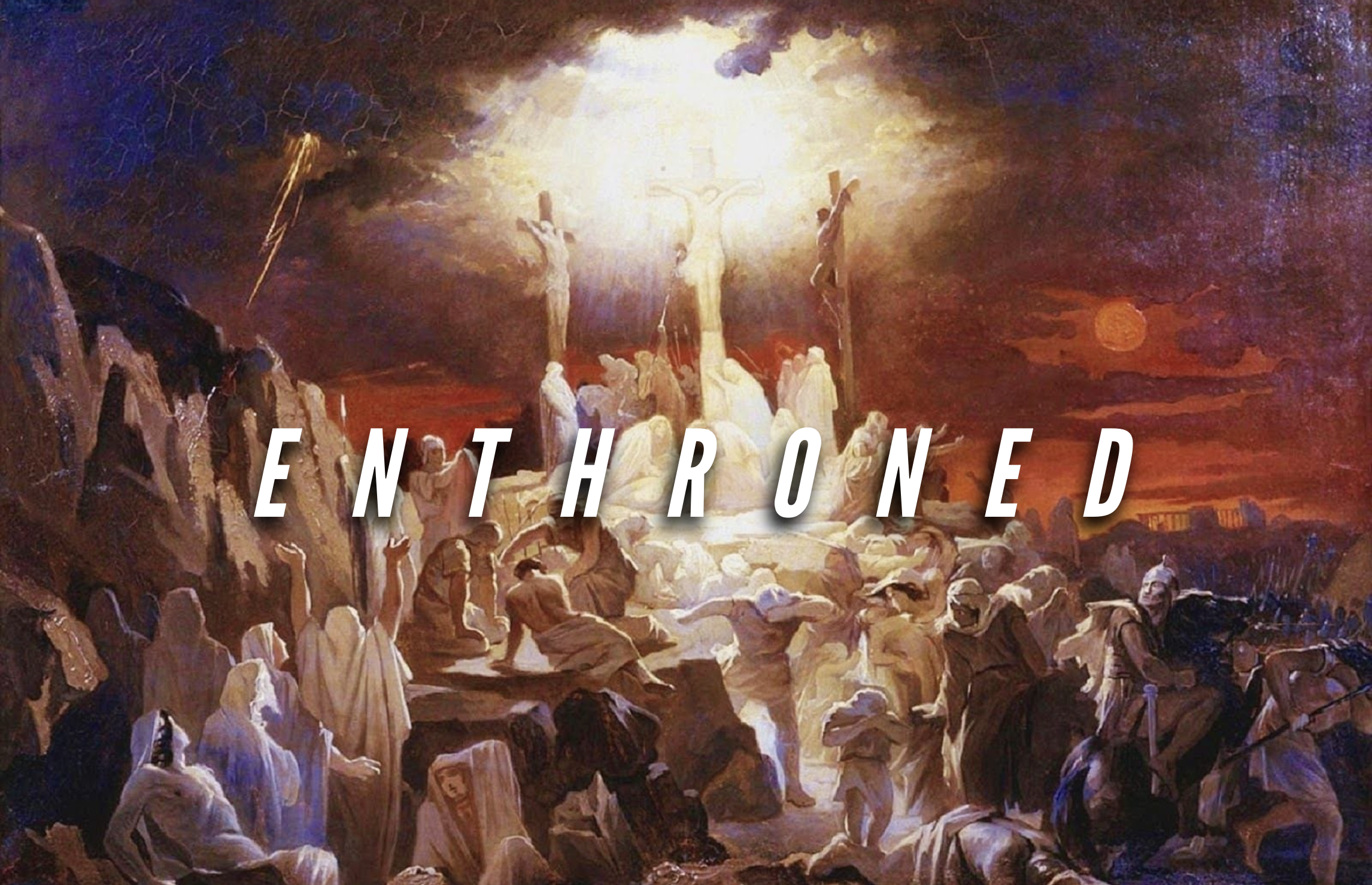
Enthroned (PDF): The crucifixion of Jesus was a subversive exaltation. The enthronement of the King of the Jews casts doubt upon the ways in which the world elevates and seeks to accumulate power.


God Provides the Sacrifice (PDF): The Binding of Isaac in Genesis 22 foreshadows another sort of offering, on another sort of altar. In both instances, it is God who provides the sacrifice, but the Son is not always spared.


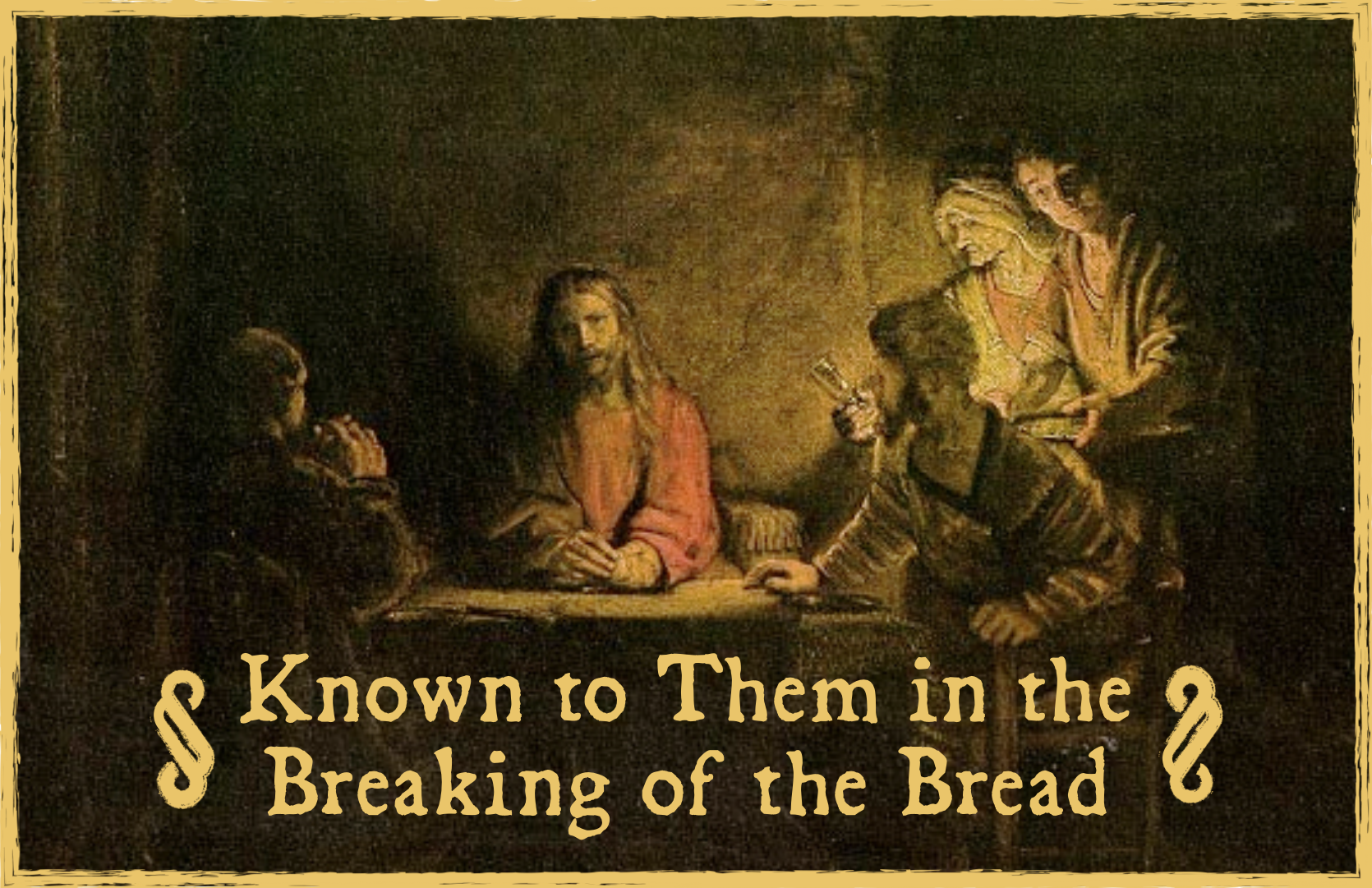
Known to Them in the Breaking of the Bread (PDF): For the disciples that Jesus met on the road to Emmaus following His resurrection, it was at the table that Jesus was made known to them. It is the same for us.


Reconciliation through the Cross (PDF): In a bitterly-divided world, the observance of the Lord’s Supper can seem impractical and disconnected. Really, though, nothing could be more needed or relevant.

« Older posts Newer posts »

© 2026 The Doc File

Theme by Anders Noren — Up ↑